Shortwave listening and everything radio including reviews, broadcasting, ham radio, field operation, DXing, maker kits, travel, emergency gear, events, and more
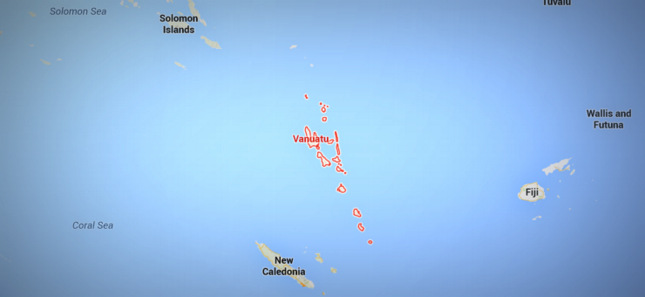
The recently appointed chair of the board of the Vanuatu Broadcasting and Television Corporation is confident nationwide coverage will be achieved by Radio Vanuatu soon.
The new government recently replaced the old board following concerns over the lack of the public broadcaster’s ability to reach the outer islands.
Its new chairperson Johnety Jerety said transmission had deteriorated over the years, mostly because of poor maintenance.
He said under the government’s hundred day plan nationwide coverage had to be implemented by July 1st.
But Mr Jerety said part of the problem was that people were buying cheap radios.
“They’re not compatible to meet the standard for our transmission system within here so that is why most of the ni-Van [indigenous people] within the islands are not able to have the coverage received throughout the island.”
Johnety Jerety said they were now advising people to buy short-wave radios that are compatible.
This article is a little vague, but I assume when the new chairperson, Johnety Jerety, is claiming that the problem with reception has to do with “cheap radios” perhaps he means receivers that don’t cover Vanuatu’s nighttime frequency of 3945 kHz? Almost all radios with shortwave should receive their 7260 kHz frequency. Of course, perhaps he simply means that fewer and fewer listeners are purchasing shortwave radios?
Vanuatu is certainly being heard around the world–indeed, only two days ago, SWLing Post contributor, Paul Walker, was over the moon when he snagged Vanuatu on 7260 kHz from Galena, Alaska. Paul wrote:
I bagged my most wanted shortwave station ever tonight!
Radio Vanuatu on 7260!!!! Heard something under a bunch of Asian hams. [Q]uite good considering they are only running 1.5 kw out of their licensed 10 kw (that’s what they told me after the cyclone awhile back).
Great catch, Paul!
I’m happy to read that Vanuatu is investing in their station once again.
Follow all Vanuatu updates using the tag: Radio Vanuatu
Many thanks to SWLing Post reader, Will Jones, who writes:
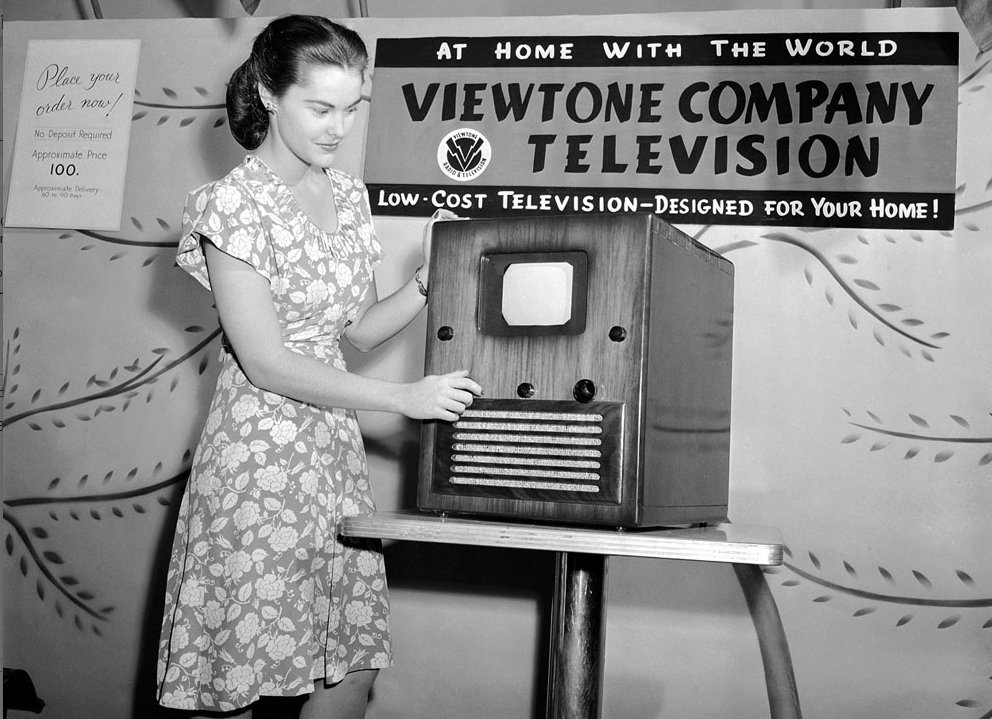
This television set [above], retailing for $100, is reportedly the first moderately priced receiver manufactured in quantity. Rose Clare Leonard watches the screen, which reproduces a 5×7 image, as she tunes in at the first public post-war showing at a New York department store, on August 24, 1945.
Although television was invented prior to World War II, the war prevented mass production. Soon after the war, sales and production picked up, and by 1948, regular commercial network programming had begun.
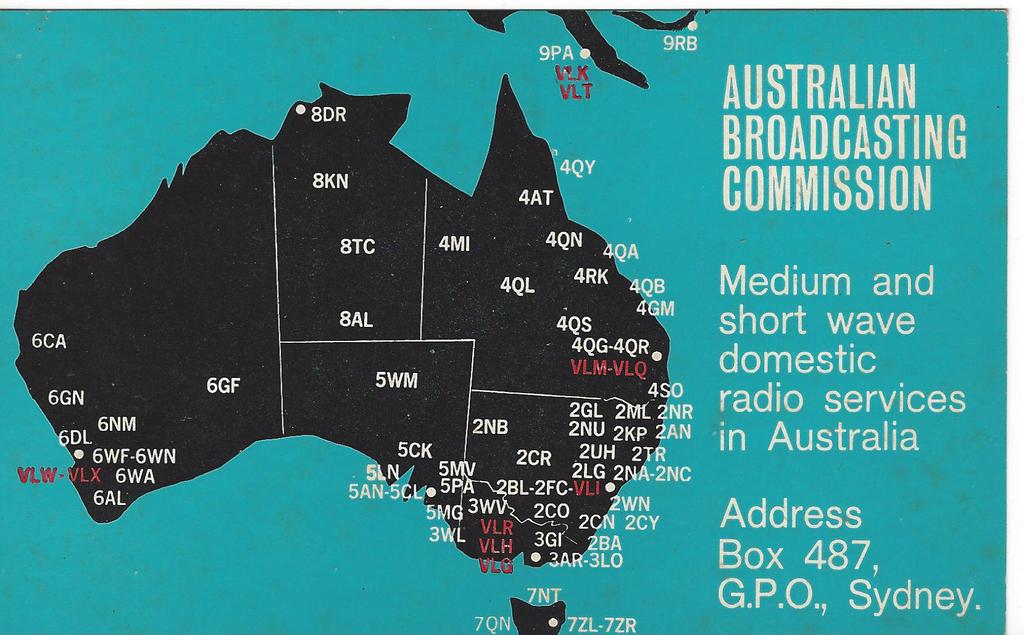
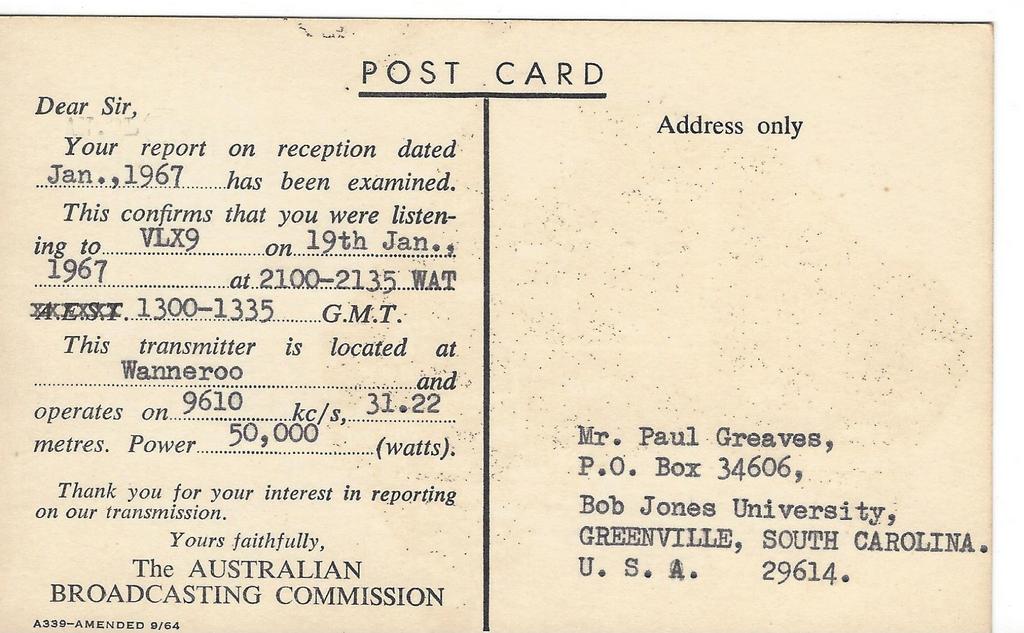
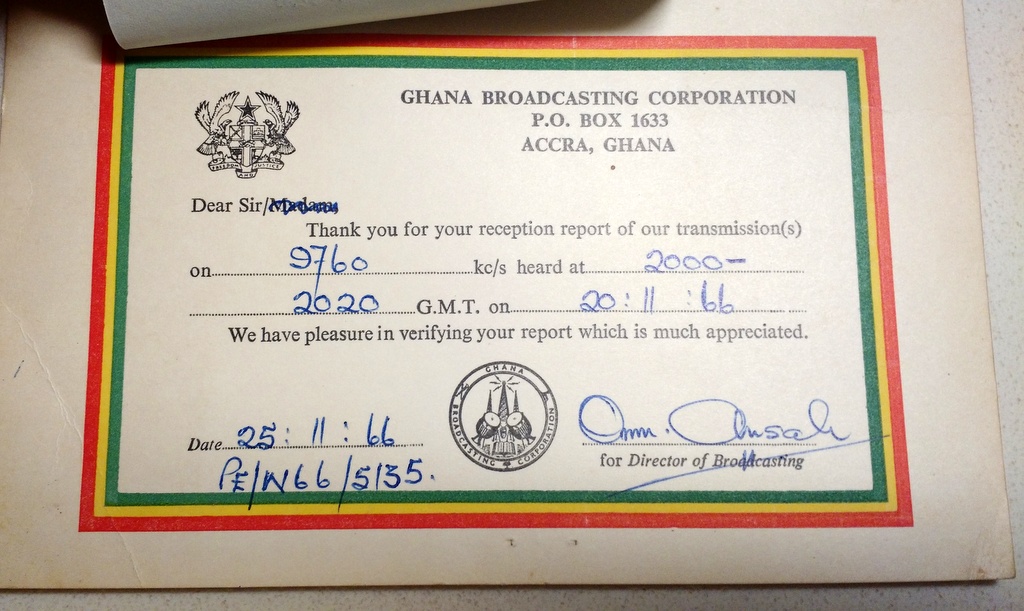
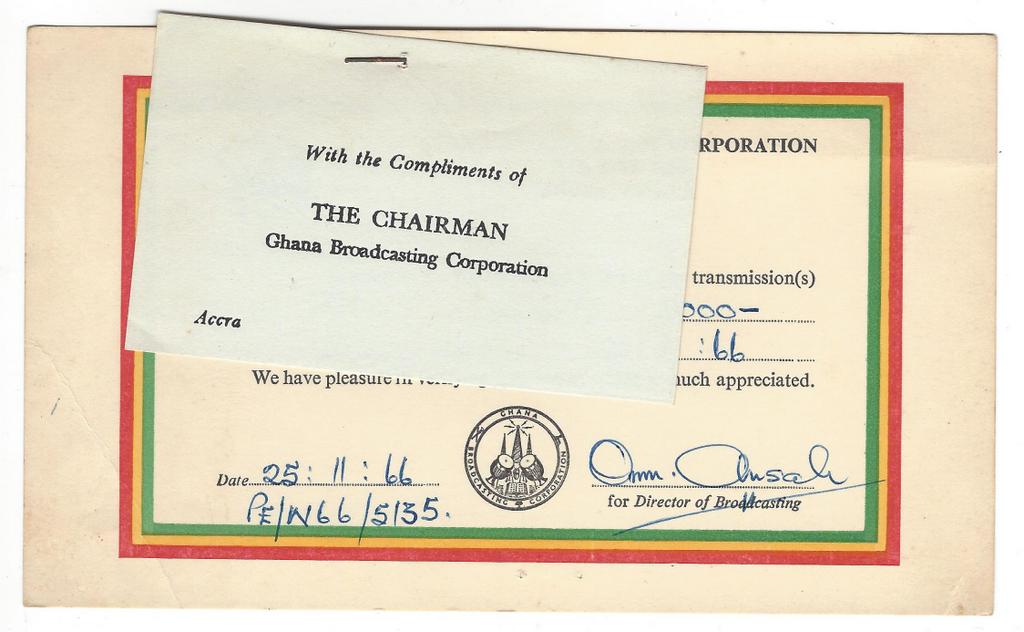
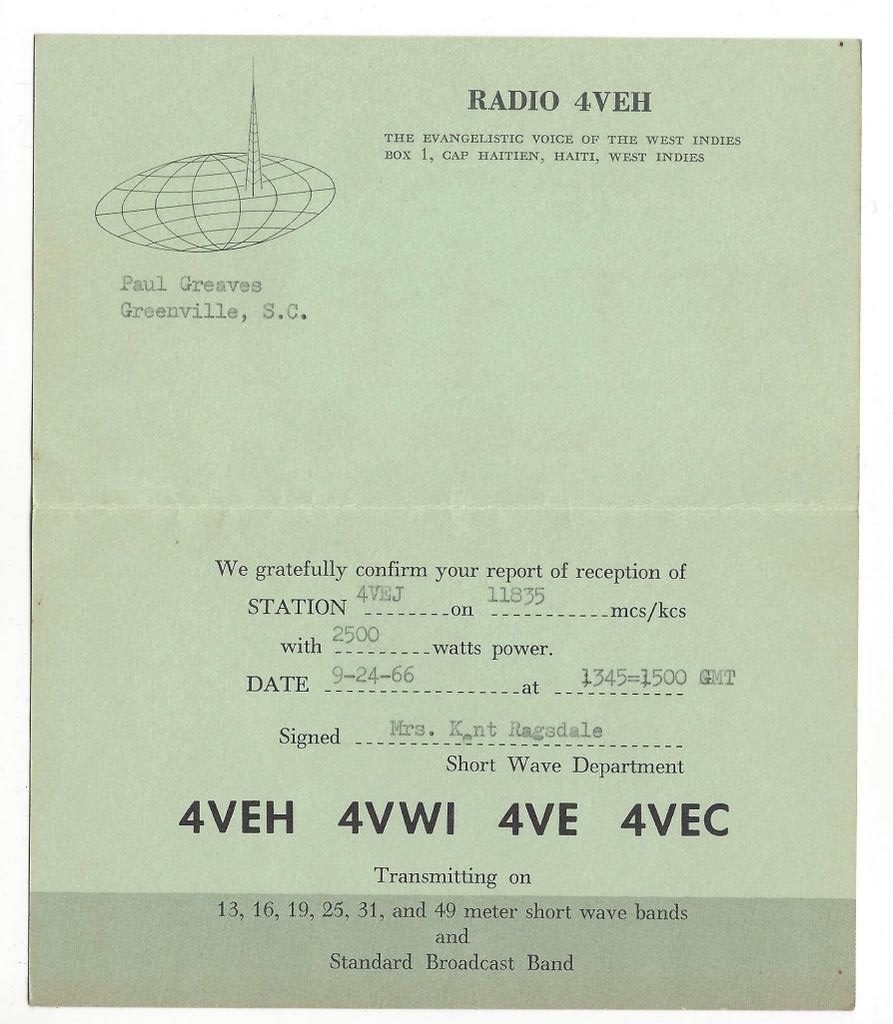
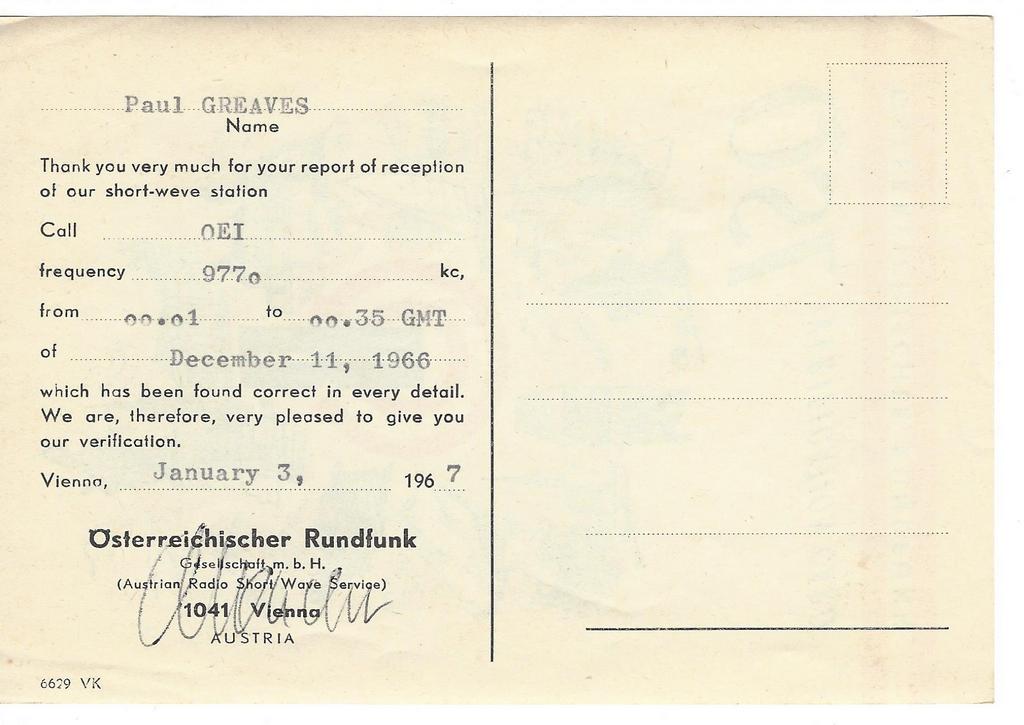
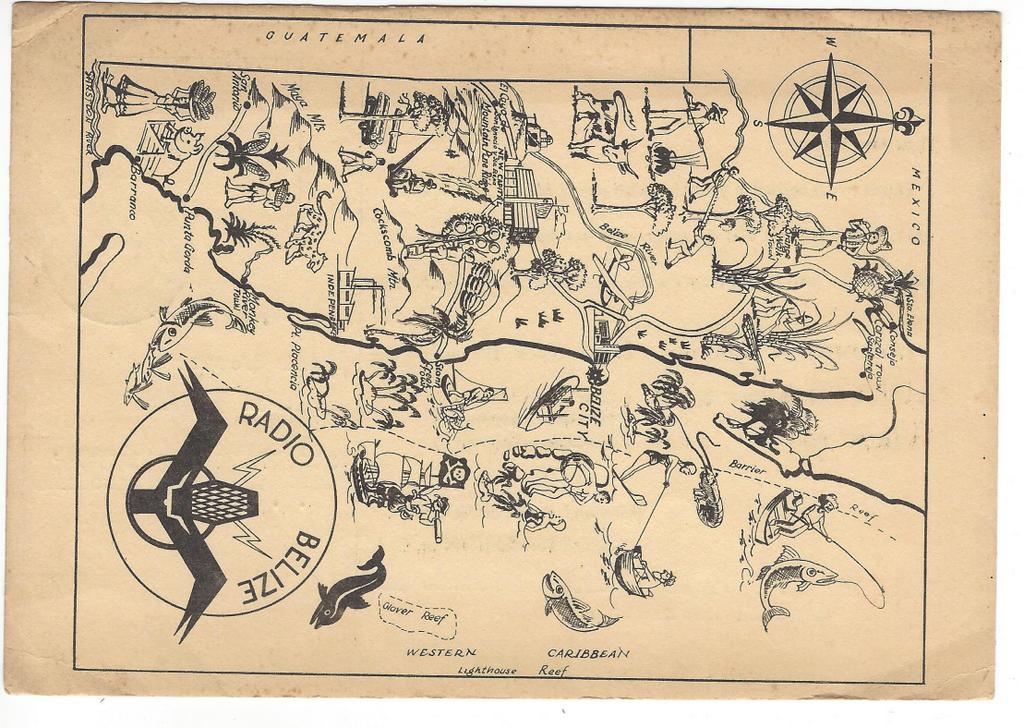
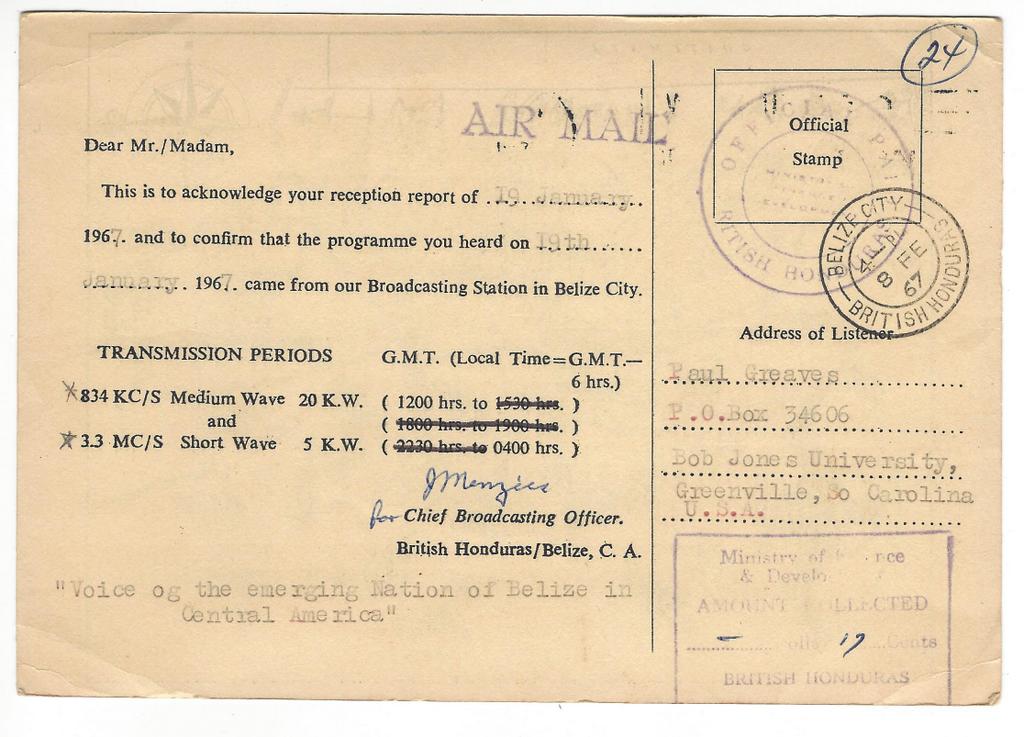
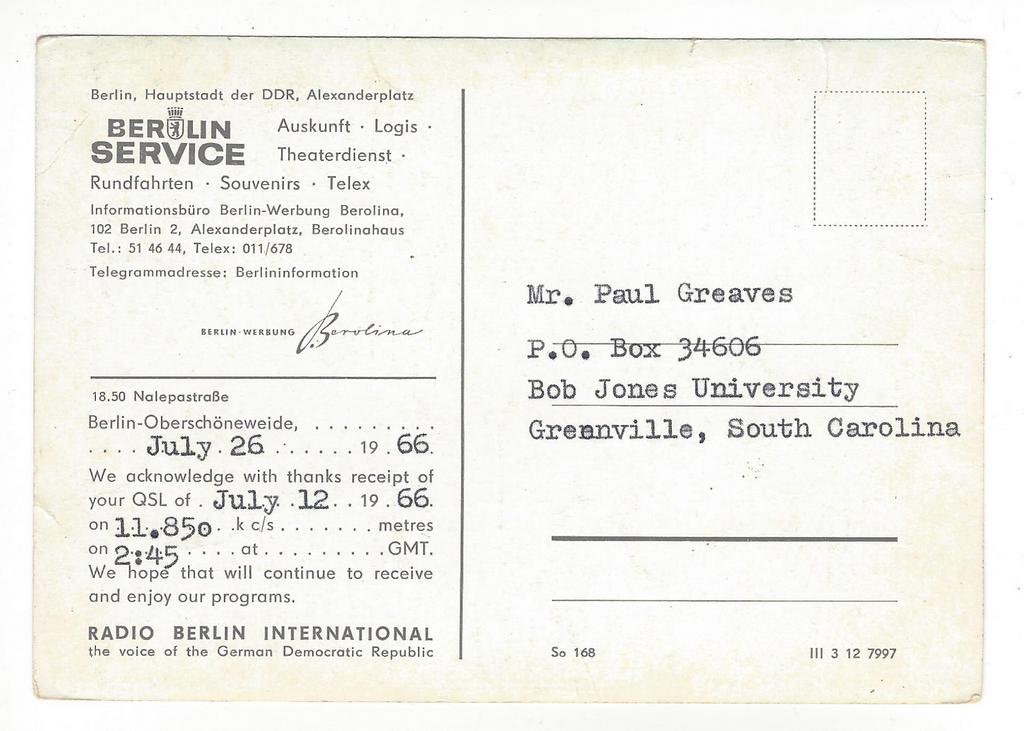
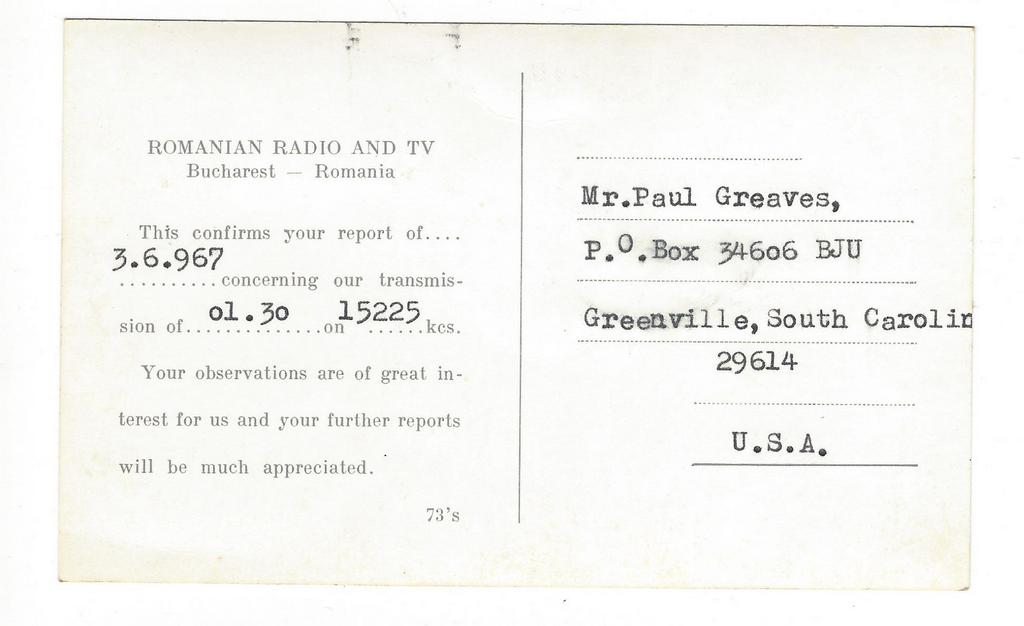
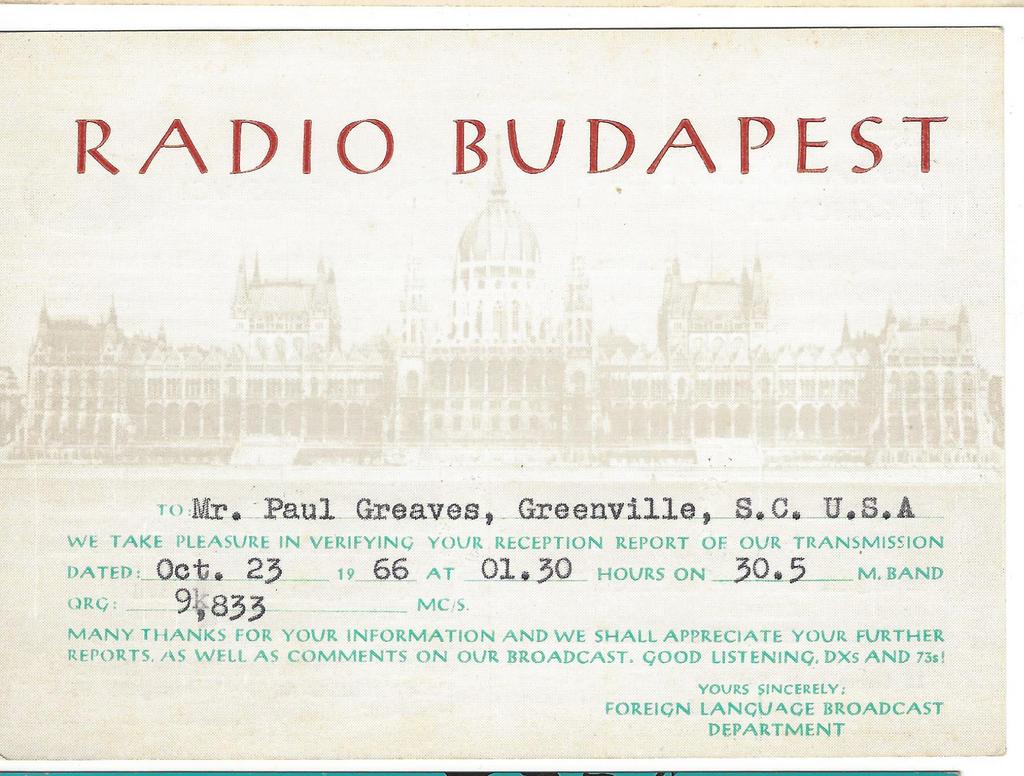
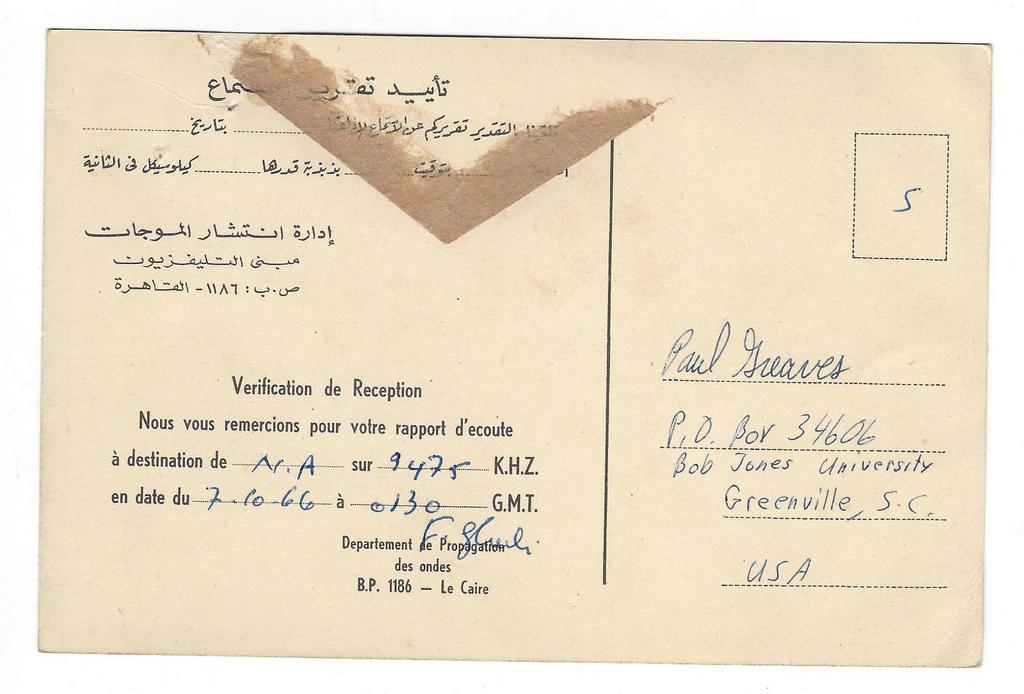
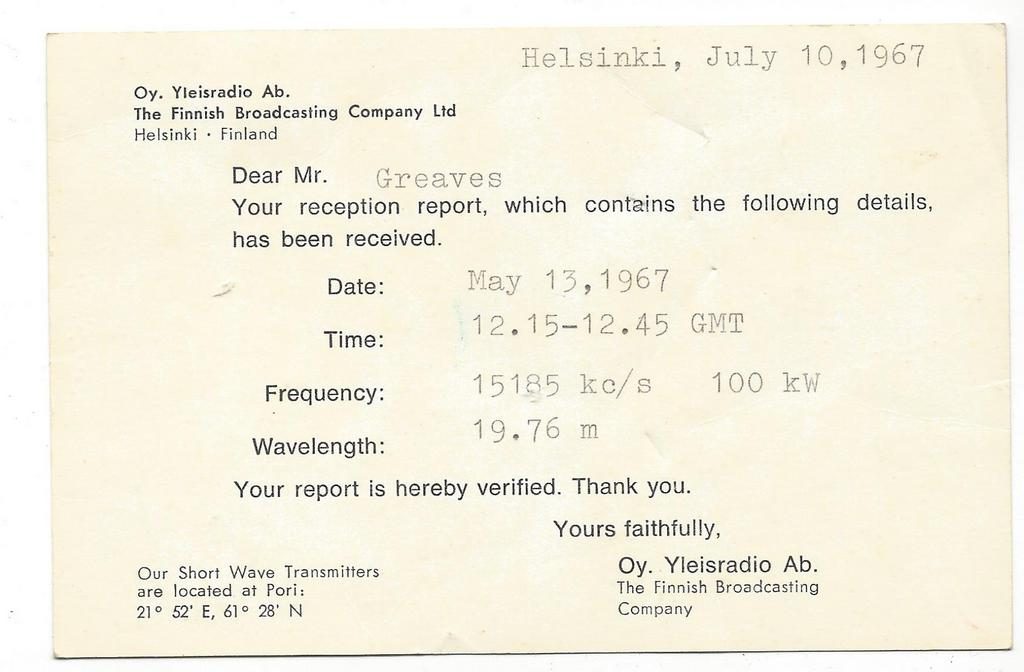
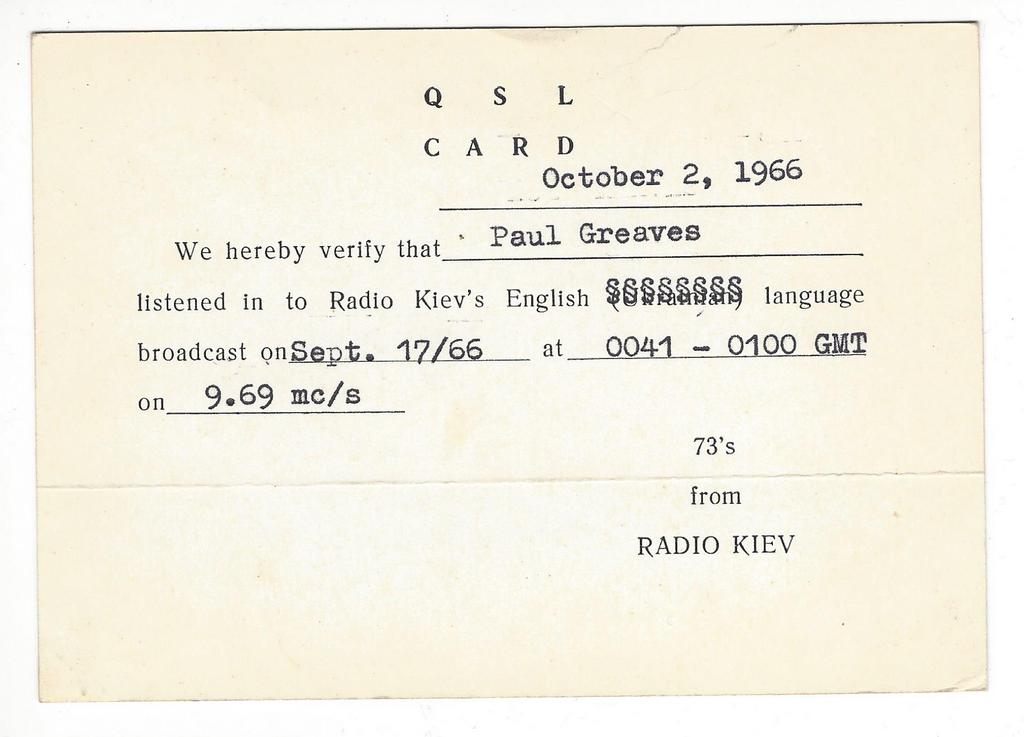
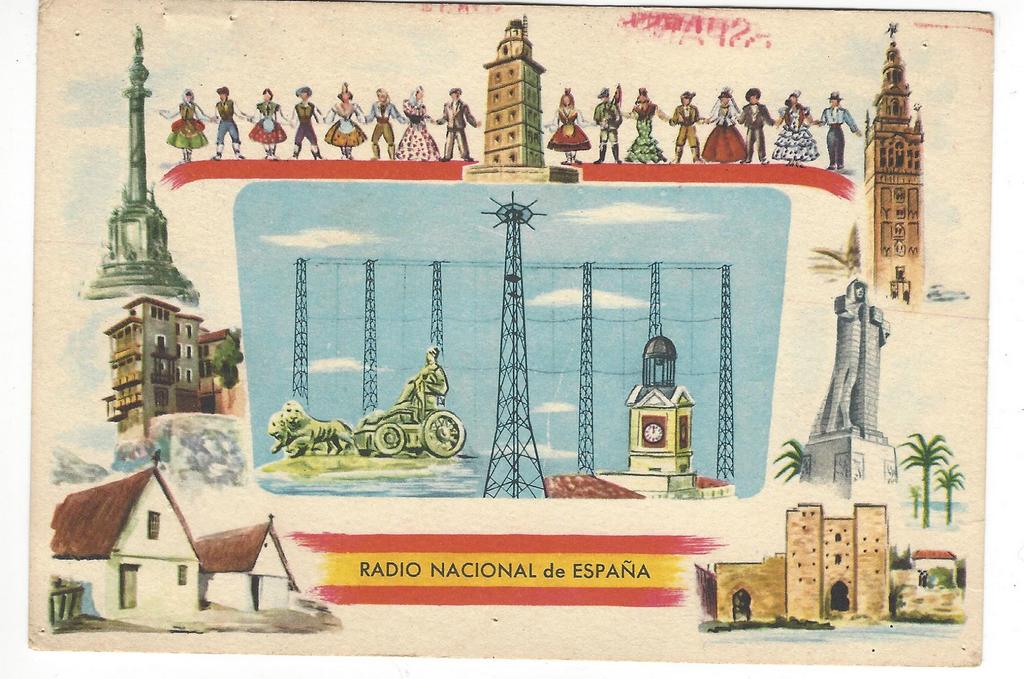
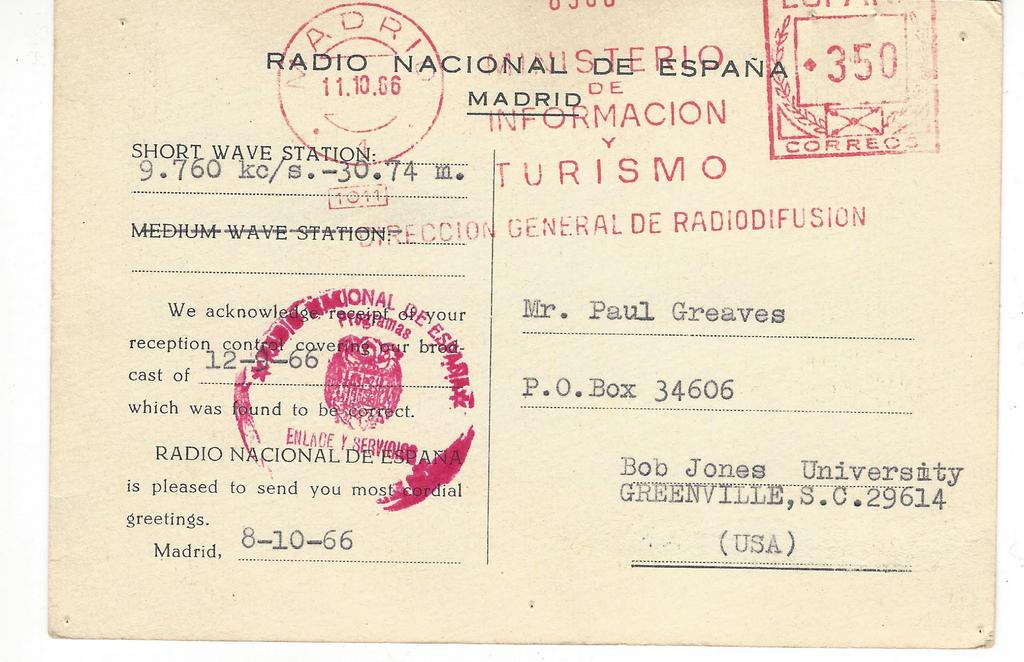
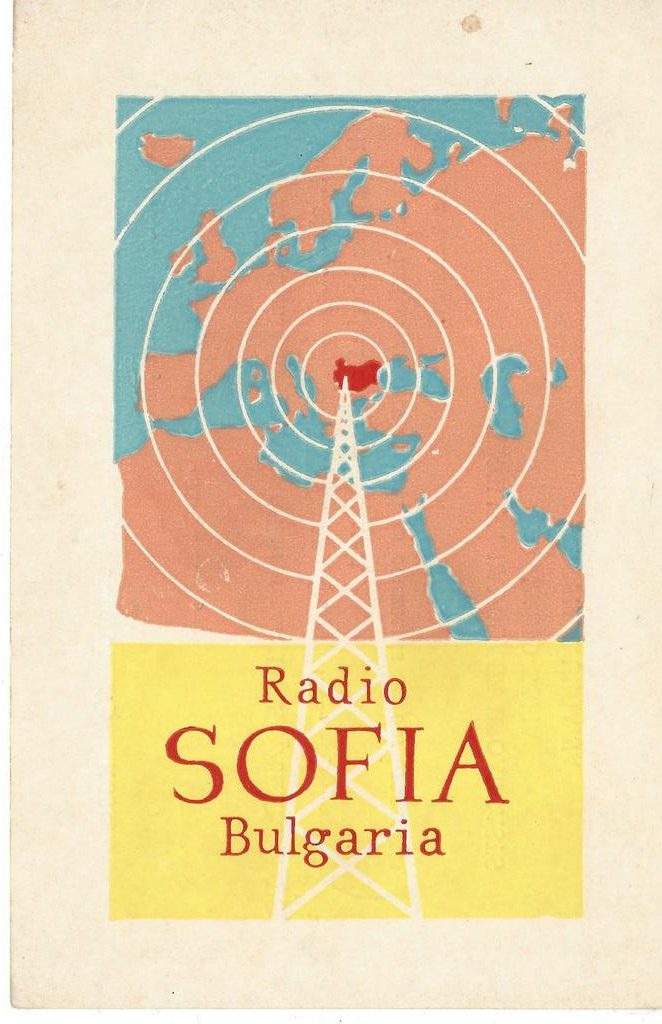
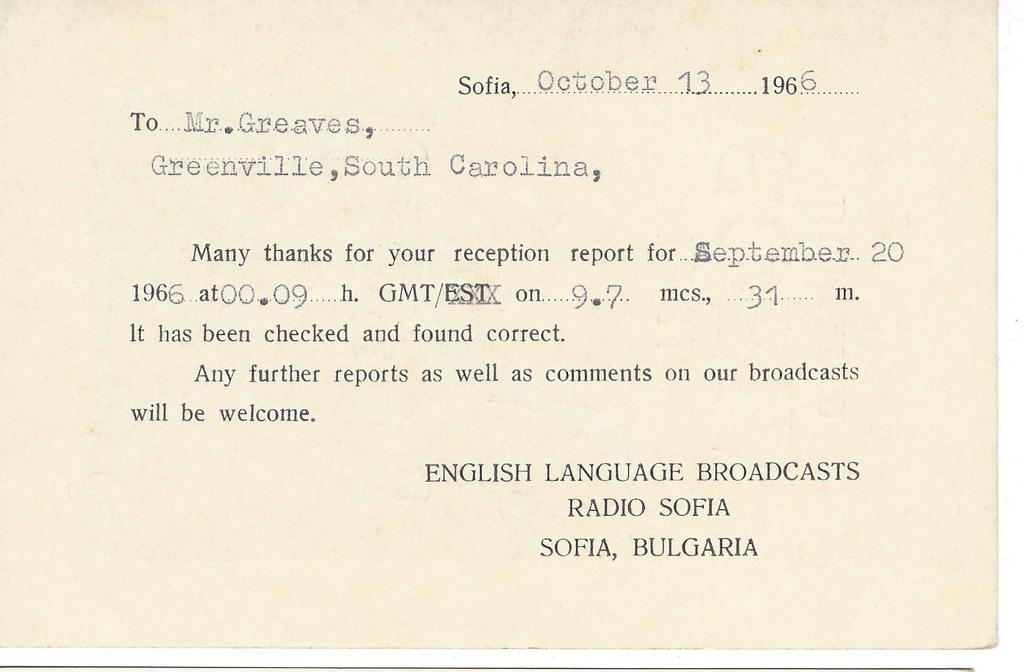
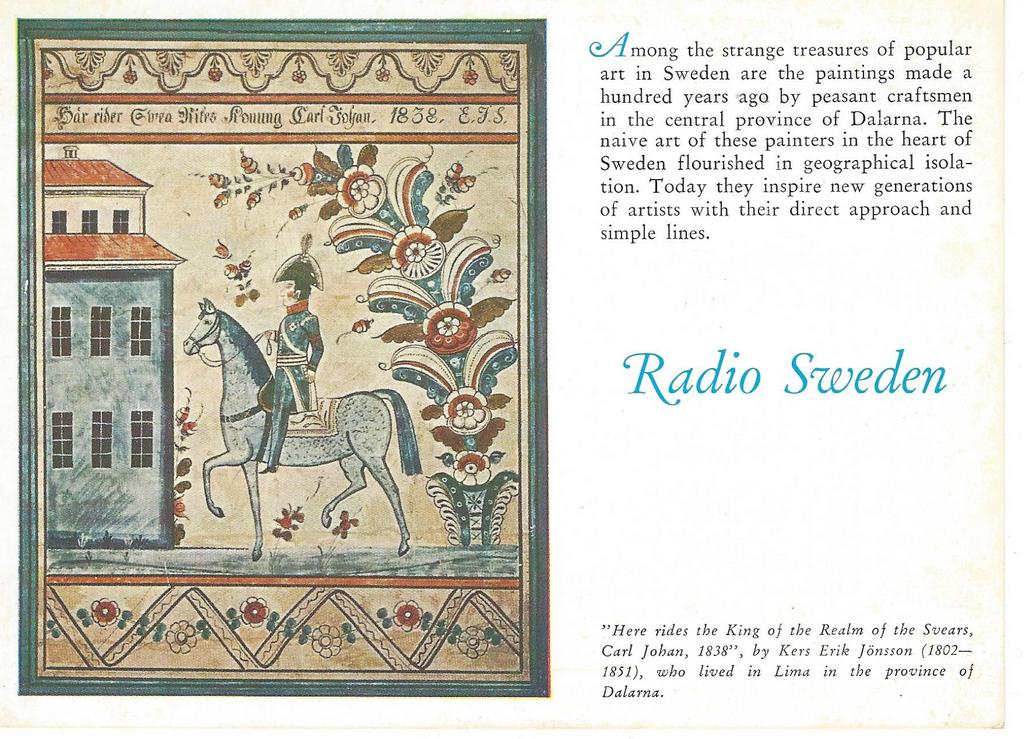
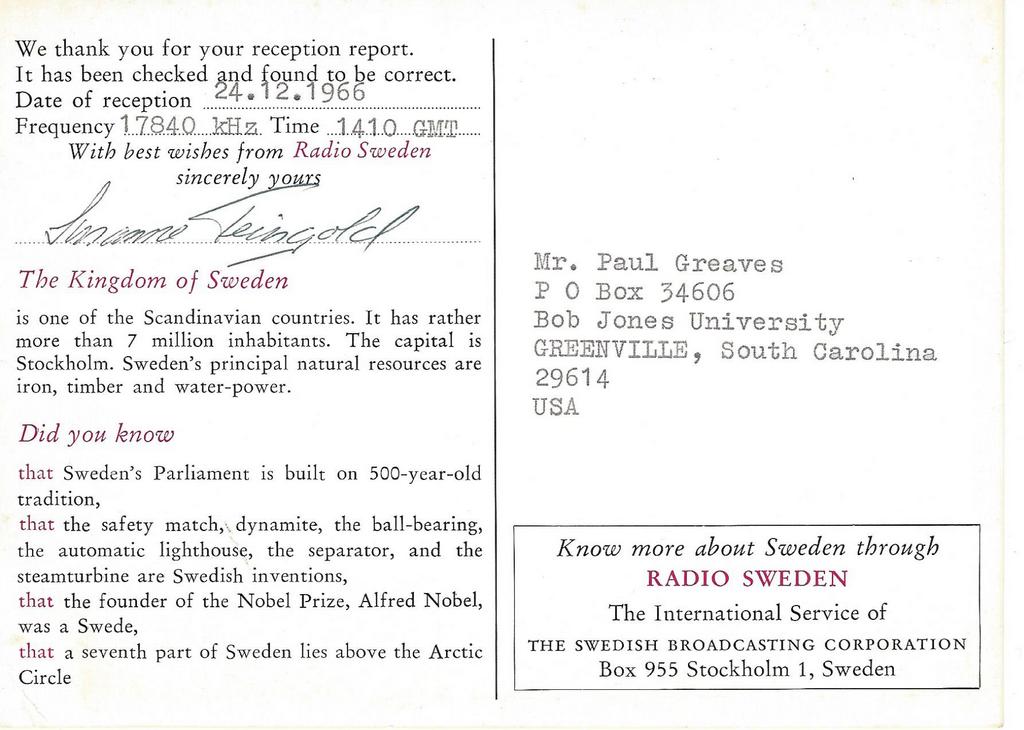
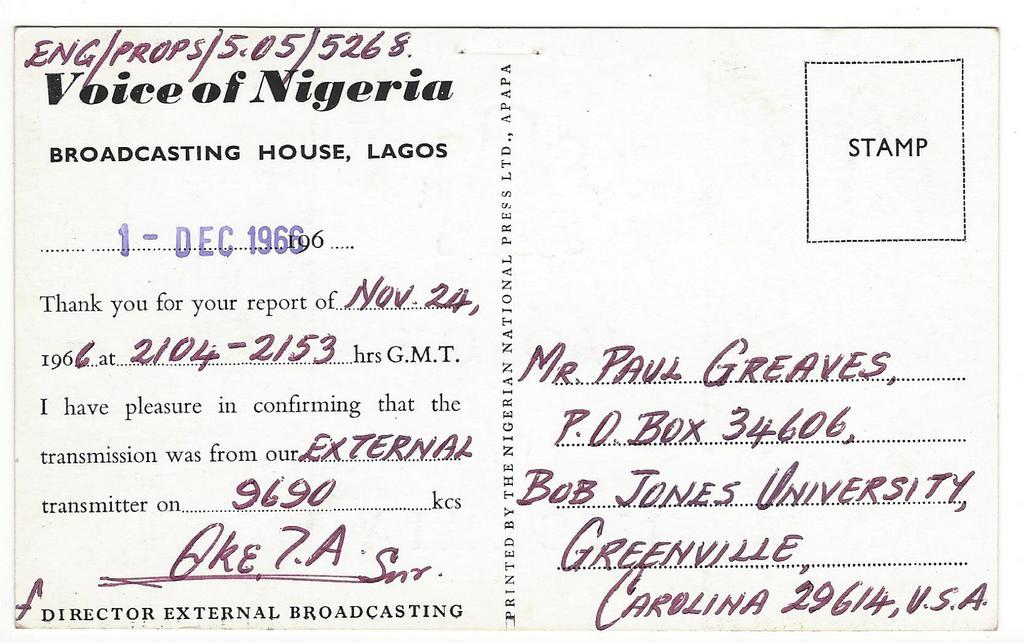
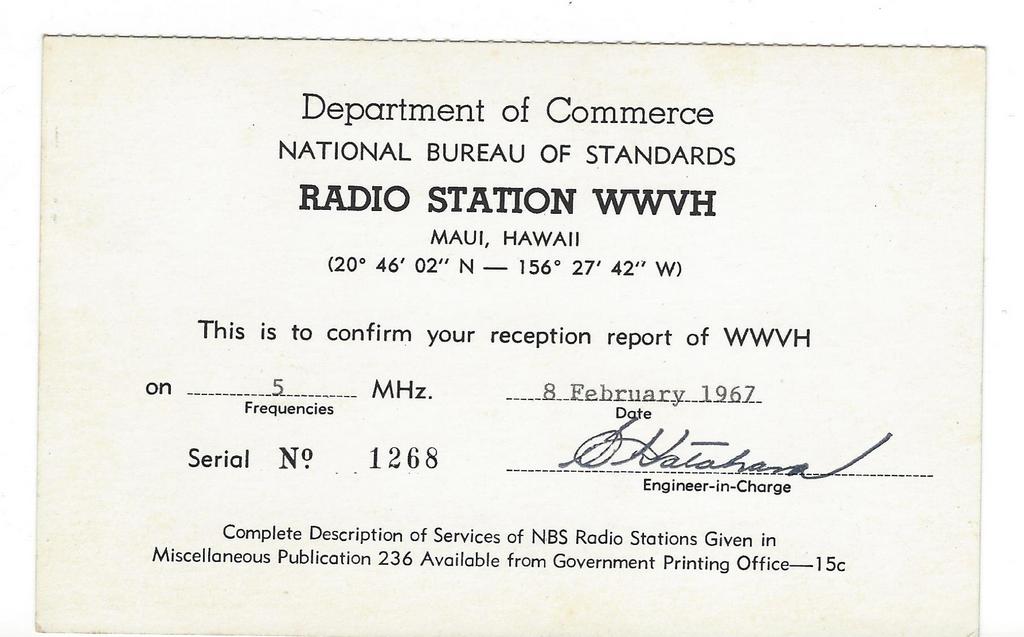
A couple months ago at my local ham radio club meeting (the NCDXCC), my buddy Paul Greaves (W4FC) mentioned that his passion for amateur radio DXing originated with shortwave broadcaster DXing. He told me:
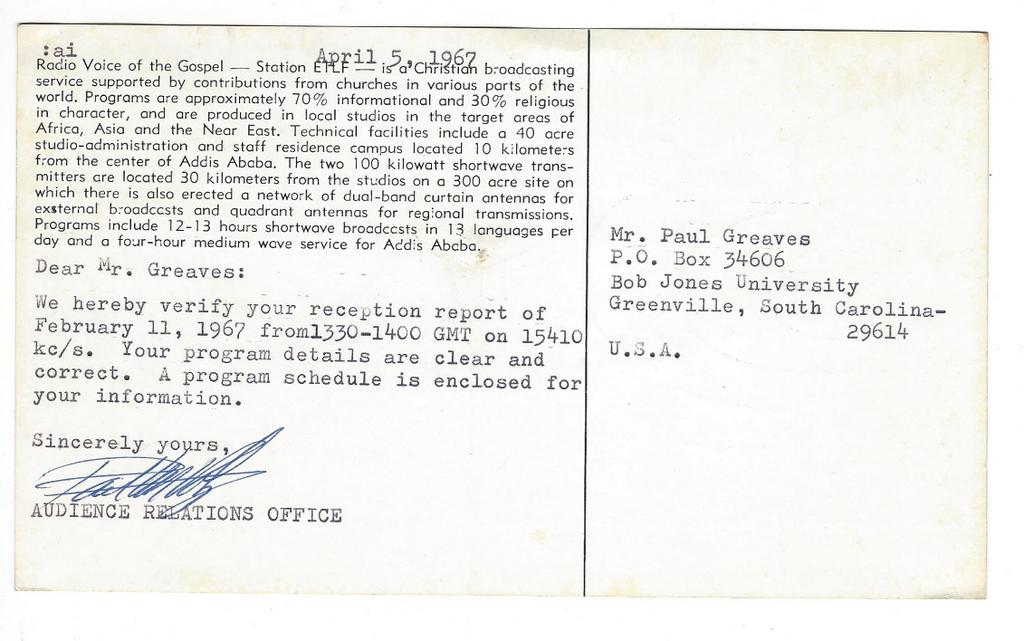
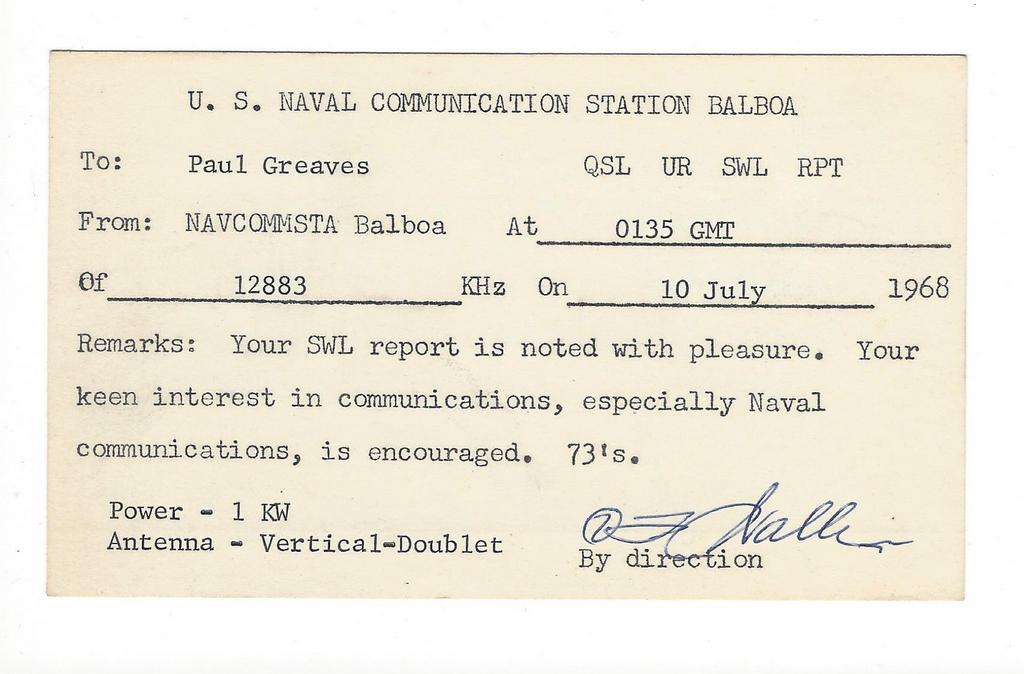
“When I was a teen I could hardly wait to check the PO Box to see what treasures were awaiting me. After getting a QSL card many times there were many more mailings with program schedules and propaganda. I even got Chairman Mao’s little Red Book.”
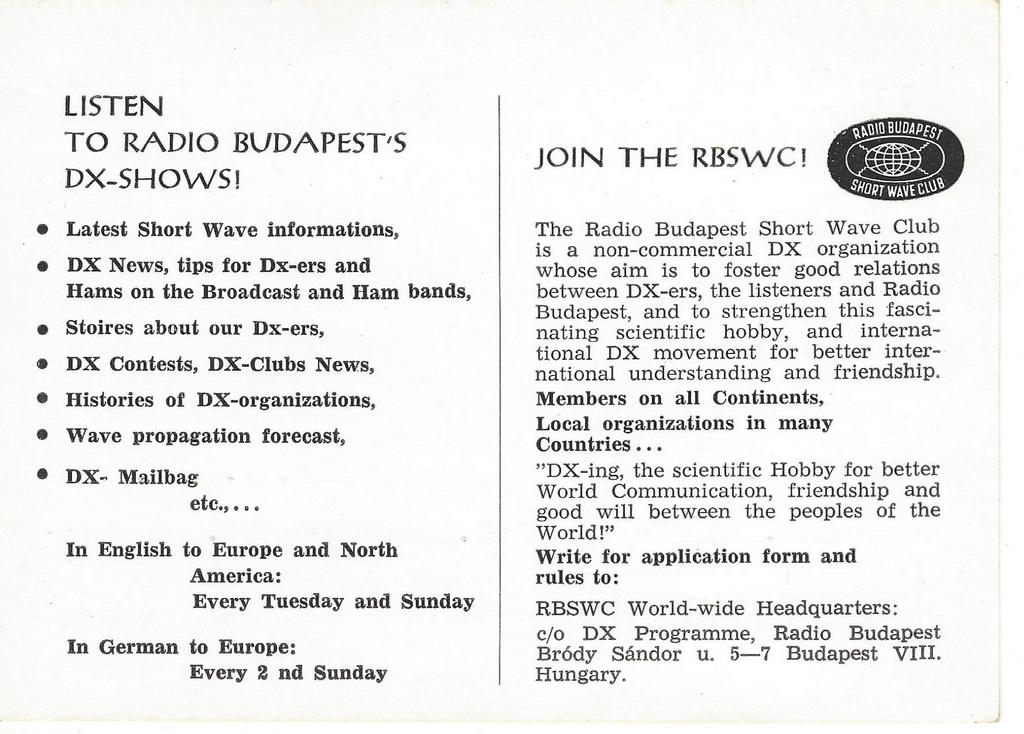
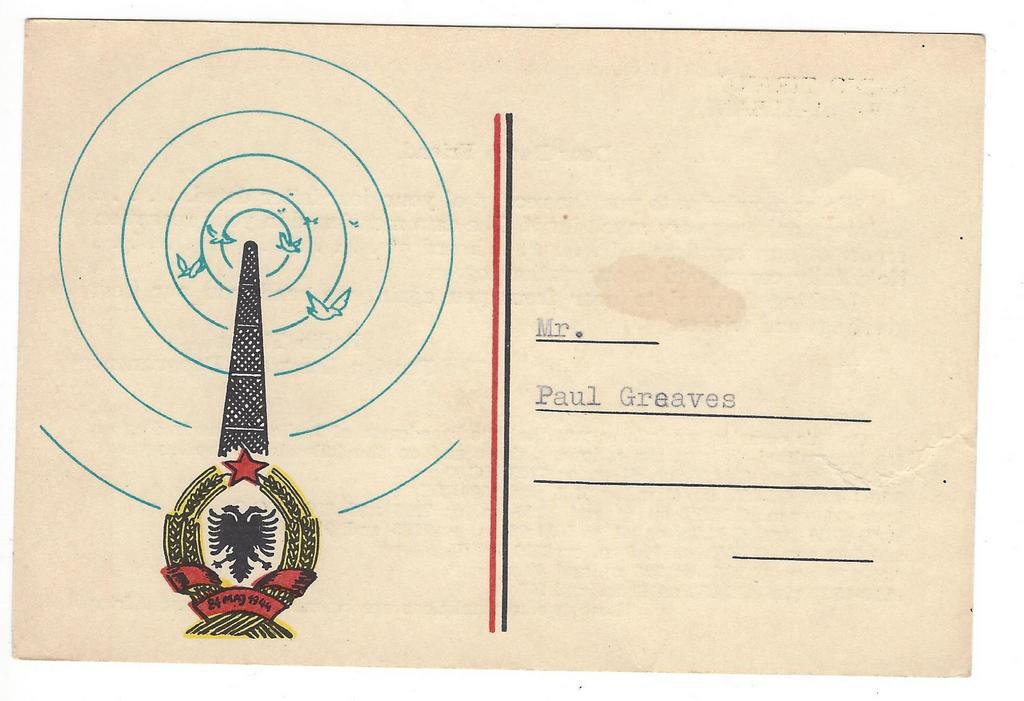
Paul noted that he had quite a few SWL QSL cards, so naturally I asked if he’d share a few of his favorites with the SWLing Post. He kindly obliged.
Click on the images below to enlarge.
Wow–thank you so much for sharing these, Paul! What a beautiful QSL collection!
Post readers: If you also have some classic SWL QSL cards you’d like to share here on the SWLing Post, please contact me!
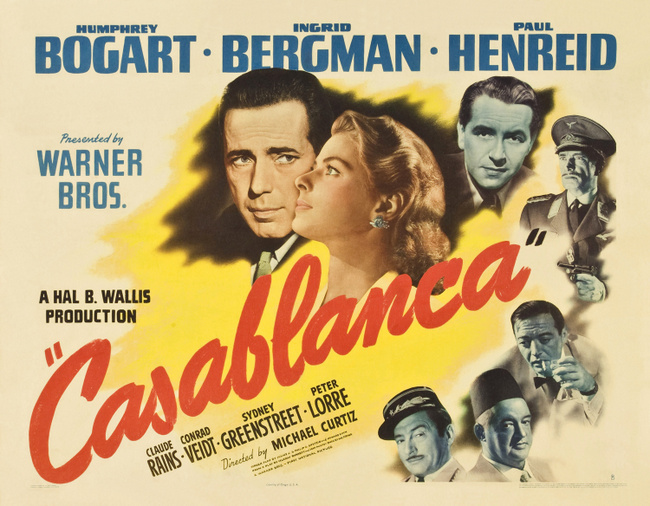
Last night at about 00:10 UTC, I was pleased to hear the interval signal of one of my favorite pirate radio stations: Radio Casablanca.
“Rick Blaine” fired up his AM transmitter and pumped out some amazing WWII era music on 6,940 kHz for about one hour and a half. Radio Casablanca only pops up a few times a year, so I always feel fortunate to grab the broadcast (click here to listen to previous recordings).
Signal strength varied over the course of the broadcast and the bands were quite noisy–still, the Casablanca signal punched through quite well at times.
Close your eyes and imagine what it must have been like to hear the great bands of the era over the shortwaves…
In the past, receiver shoot-outs in which I’ve provided sample audio for “blind” comparison––meaning, the listener does not know which audio sample is associated with which radio––have produced particularly positive feedback from Post readers.
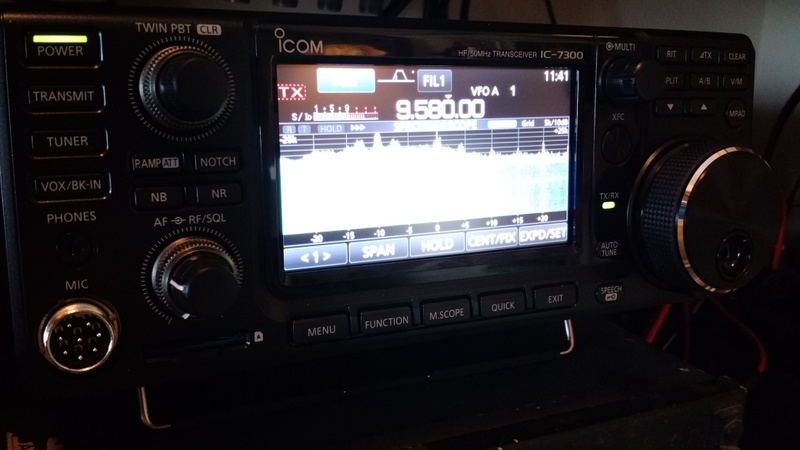
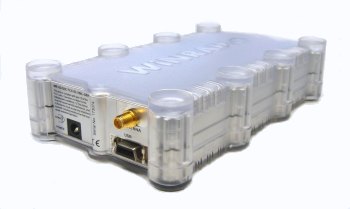
I have a number of SDRs (software defined radios) in the shack at the moment, but I picked the Excalibur because it’s the closest in price ($900 US) to the IC-7300 ($1500) as compared to my Elad FDM-S2 ($520) or the TitanSDR Pro ($2500).
Recording notes and disclaimers
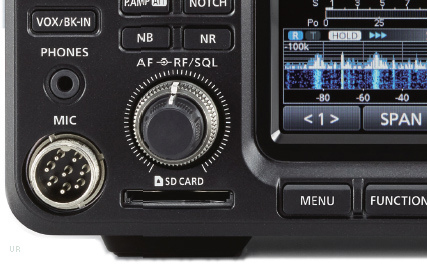
Both the WinRadio Excalibur and the Icom IC-7300 offer native digital audio recording (nice touch, Icom!). The Excalibur simply records the AF to a file on my PC’s hard drive, while the IC-7300 records the audio to an SD card which I can later transfer to my PC.
I’ve been using the Excalibur since 2012, so I’m very familiar with its recording feature. I was not, however, familiar with the IC-7300’s digital recorder, so prior to making recordings, I checked to make sure its recorded audio was a fair representation of its live audio. To my ear, the IC-7300 recorded audio was nearly identical to that of the live audio, so I used the 7300’s internal recorder rather than one of my external recorders.
Both receivers shared my large outdoor omni-directional horizontal delta loop antenna for each test.
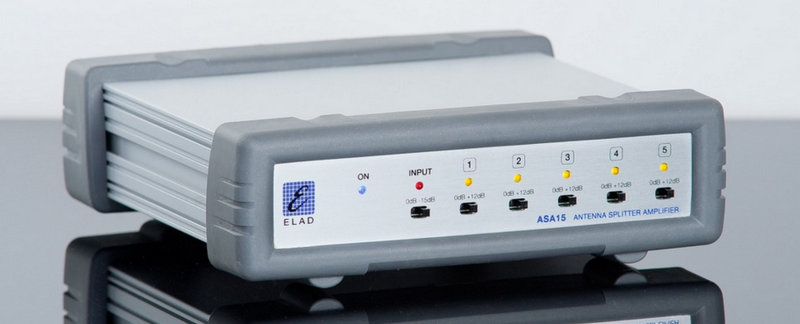
The Elad ASA15 Antenna Splitter Amplifier
To keep the comparison on as equal footing as possible, the receivers shared the same antenna through my Elad ASA15 antenna splitter amplifier. Though the ASA15 has both 12dB amplification and –15dB attenuation, I employed neither.
The ASA15 allowed me to make the following recordings simultaneously.
In each case, I tried to set up both radios using the same filter widths, gain, AGC settings, and (as much as possible), audio level. I didn’t engage a noise-reduction feature on either rig.
Note: the only exception to the radios’ equal treatment was in the AM mode recordings, in which I used the WinRadio’s AM Sync (AMS) mode. Why? Frankly speaking, 99% of the time during which I use the Excalibur, I do employ its AMS mode as its AM mode often sounds “hot” and over-driven when band conditions are as noisy, as they were last night.
The IC-7300 does not have AM synchronous detection (AMS mode), but I felt it compared very favorably to the Excalibur in AMS mode. The IC-7300 would have easily beat the Excalibur in this test had I only used the Excalibur’s AM mode. In the end, as a shortwave listener, the goal is to compare the total capabilities of broadcast performance between the two receivers (thus using sync mode if available, to maximize broadcast listening performance).
Please vote!
At the end of this post, I have an embedded a survey in which you can vote for the sample recordings you like best. Each recording is clearly labeled to denote that it’s either from “Radio A” or “Radio B” (I had my wife draw names from a hat to determine which radio would be labeled as A or B).
Since there are quite a few recordings, I’d suggest jotting down your notes separately before completing the survey.
The following recordings were made on the 40 meter ham radio band yesterday evening. Both radios have the same filter width: 250 Hz in CW, 3 kHz in SSB.
Note that the following mediumwave recordings were made during the morning hours (grayline). The strong station is the closest AM broadcaster to my home; it’s not a blow-torch “Class A” type station, merely the closest local broadcaster.
In the “weak” sample, I tuned to 630 kHz, where multiple broadcasters could be heard on frequency––but one was dominant.
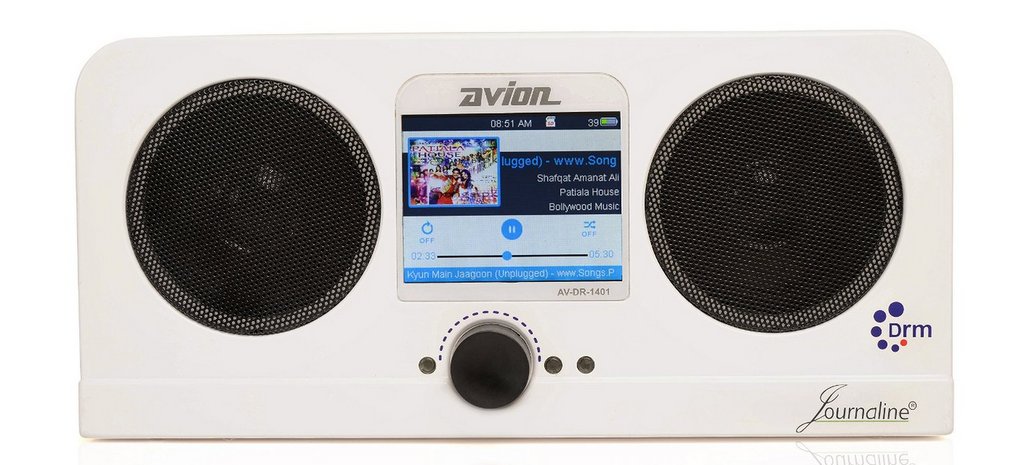
Many thanks to SWLing Post reader, Harald Kuhl, who notes that a new firmware update for the Avion AV-DR-1401 DRM receiver is now available for download via the following link: