Tag Archives: Radio Waves

Radio Waves: More RCI Services Come To An End, Pirate Radio Sound Tour, Shortwave Guitar Pedal, and Voyager 1 Detects Plasma “Hum”

Radio Waves:  Stories Making Waves in the World of Radio

Because I keep my ear to the waves, as well as receive many tips from others who do the same, I find myself privy to radio-related stories that might interest SWLing Post readers.  To that end: Welcome to the SWLing Post’s Radio Waves, a collection of links to interesting stories making waves in the world of radio. Enjoy!

Many thanks to SWLing Post contributors Marty, Richard Cuff, David Iurescia, and Doug Katz for the following tips:


RCI English section: goodbye (Radio Canada International)

Canada’s international broadcast service from the English language team of Radio Canada International has come to an end.

RCI, (originally the International Service, CBC-IS) was initially created towards the end of the Second World War. The purpose was to broadcast news and information from home via shortwave to Canadian military personnel fighting in Europe. It also began providing reliable news and information to recently liberated countries and to Germans still in the war.

That reliable news and information was considered of great value during the subsequent Cold War years, as several more languages were added to the service such as Russian, Ukrainian, Czech, Hungarian and Polish. Other languages sections included as Brazilian Portuguese and Japanese. With 14 language sections in 1990, and some 200 staff, the full English and French newsroom provided news of interest and importance for each language section specifically targeted to each of the various broadcast regions around the world.

Following a major budget cut of some 80 per cent in 2012, the shortwave and satellite service was terminated along with the majority of staff including the newsroom and some language sections. In recent years, only Chinese (Mandarin), Arabic, and Spanish remained along with English and French. RCI was transformed into a much smaller internet-based operation consisting of three people per language section.

In December 2020, the domestic public broadcaster CBC / Radio-Canada announced that the English and French sections of RCI would close for good in May. In their place curated stories from the domestic English and French public broadcaster will be provided.

A manager will now oversee the staff of eight who will adapt curated stories from the CBC and Radio-Canada into Mandarin, Arabic, and Spanish, along with Punjabi and Tagalog.

An effort was and is being made by the RCI Action Committee to preserve and even expand the service which has garnered great support from a former prime minister, former diplomats and many academics, but the end date has come. This is the last entry by the RCI English section.

From the English Section consisting of Lynn, Marc, and Levon, faithful and long-time popular replacement Terry Haig, and recently also Vincenzo Morello, and the many others over the all those years, we thank you for having shared our stories over these many years.[…]


The Pirate Radio Capital: A sound tour with David Goren, radio producer and audio archivist (CRJ.org)

In 2018, David Goren, a radio producer and audio archivist, created the Brooklyn Pirate Radio Sound Map to collect the sounds of dozens of pirated broadcasts from across the borough. Pirate stations earn their name by hitching a ride on already licensed radio frequencies that typically cost commercial stations millions of dollars to acquire and set up. Nowhere in the country are there more pirate radio stations than in New York, where they provide a vital service to immigrant populations.

Goren estimates that New York has about a hundred pirate stations, transmitting from rooftops and attics to listeners seeking news from around the city and back home, as well as

entertainment and religious programming. The broadcasts bypass socioeconomic barriers and provide a means to seize control of the flow of information. But they are now at risk of extinction: Before Donald Trump left the White House, he signed the Pirate Act, which increased the authority of the Federal Communications Commission to fight pirate operations through mandatory sweeps in cities with high concentrations of pirate radio use. Pirate stations today face fines of up to two million dollars. “The people running these stations, they don’t have two million dollars,” Goren said. Broadcasters that don’t make it onto his sound map could be lost forever.

Click here to read the full story and listen to the audio tour with David Goren.


Shortwave effects pedal (Recovery Effects)

Inspired by espionage devices used during World War II and the Cold War, Shortwave transforms audio into clandestine operations of the past; Russian number stations, mysterious sounds transmitted by radio, and eerie sounds stored on early portable recorders.

Choose between 2 types of noise and interference, and control it with the Exposure parameter. Velocity and Focus control the amount of pitch stabilization. Shortwave will add an interesting emotional response and atmosphere to dry, simple sounds, or destroy a signal like no other fuzz pedal can.

Hand-made in Seattle, WA. Shortwave operates on a standard “Boss” style 9vdc power supply (not included), but can also run at 18vdc for additional headroom. True bypass switching. Included a limited-lifetime warranty.

Enclosure size: 4.77″ x 2.6″ x 1.39″


In the emptiness of space, Voyager 1 detects plasma ‘hum’ (Cornell.edu)

Voyager 1 – one of two sibling NASA spacecraft launched 44 years ago and now the most distant human-made object in space – still works and zooms toward infinity.

As the craft toils, it has long since zipped past the edge of the solar system through the heliopause – the solar system’s border with interstellar space – into the interstellar medium. Now, its instruments have detected the constant drone of interstellar gas (plasma waves), according to Cornell-led research published May 10 in Nature Astronomy.

Examining data slowly sent back from more than 14 billion miles away, Stella Koch Ocker, a Cornell doctoral student in astronomy, has uncovered the emission. “It’s very faint and monotone, because it is in a narrow frequency bandwidth,” Ocker said. “We’re detecting the faint, persistent hum of interstellar gas.”

This work allows scientists to understand how the interstellar medium interacts with the solar wind, Ocker said, and how the protective bubble of the solar system’s heliosphere is shaped and modified by the interstellar environment.

Launched in September 1977, the Voyager 1 spacecraft flew by Jupiter in 1979 and then Saturn in late 1980. Travelling at about 38,000 mph, Voyager 1 crossed the heliopause in August 2012.

After entering interstellar space, the spacecraft’s Plasma Wave System detected perturbations in the gas. But, in between those eruptions – caused by our own roiling sun – researchers have uncovered a steady, persistent signature produced by the tenuous near-vacuum of space.

“The interstellar medium is like a quiet or gentle rain,” said senior author James Cordes, the George Feldstein Professor of Astronomy (A&S). “In the case of a solar outburst, it’s like detecting a lightning burst in a thunderstorm and then it’s back to a gentle rain.”

Ocker believes there is more low-level activity in the interstellar gas than scientists had previously thought, which allows researchers to track the spatial distribution of plasma – that is, when it’s not being perturbed by solar flares.[…]


Do you enjoy the SWLing Post?

Please consider supporting us via Patreon or our Coffee Fund!

Your support makes articles like this one possible. Thank you!

Radio Waves: CC Solar Review, National Amateur Radio Operators Day Proposed, Converting Vintage into WiFi, Bletchley Park Remembers WWII Op, and Turkey Celebrates 94 Years of Radio

Radio Waves:  Stories Making Waves in the World of Radio

Because I keep my ear to the waves, as well as receive many tips from others who do the same, I find myself privy to radio-related stories that might interest SWLing Post readers.  To that end: Welcome to the SWLing Post’s Radio Waves, a collection of links to interesting stories making waves in the world of radio. Enjoy!

Many thanks to SWLing Post contributors Paul, Richard Langley, Troy Riedel, and the Southgate ARC for the following tips:


New Solar Radio Is an Emergency Kit too (Radio World)

Solar-powered portable radios that put audio quality second are nothing new. But a solar-powered portable radio that sounds as good as a non-solar high-fidelity radio: This is worth talking about.

The new CCRadio Solar from C.Crane fits this double-barreled description. With its generous top-mounted solar panel (3.75 by 1.5 inches) plus back-mounted generator crank for recharging its Lithium-Ion battery pack, this is a radio for blackouts and other emergency situations.

After an initial conditioning charge-up of the Lithium-Ion battery from a 5V DC adaptor, just leave it in a sunny window, and the radio is always ready to go.

In non-emergency situations, the CCRadio Solar can be powered with three AA batteries or a 5V DC charger plugged into its micro-USB port.[…]

(Also, click here to read our review of the pre-production CC Solar.)

Congress Seeks to Designate National Amateur Radio Operators Day (In Compliance)

The U.S. Congress is reportedly taking steps to officially recognize the important contributions made by amateur radio operators.

According to an article on the website of the ARRL, Congresswoman Debbie Lesko (AZ) has introduced a bipartisan resolution to designate April 18, 2022 as National Amateur Radio Operators Day. April 18th is the anniversary of the founding of the International Amateur Radio Union (IARU) which was established in 1925.[…]

An Inside Job (IEEE Spectrum)

YOUR GRANDPARENTS’ ancient transistor radio might still turn on and tune in to stations broadcasting conventional AM or FM signals. But in this Internet age, a blizzard of content is available from sources accessible only via the Web. What’s more, instead of speakers that flood a room with sound, we’ve grown accustomed to personal listening using earbuds and headphones. Now engineers like Guillaume Alday, founder of Les Doyens in Bordeaux, France, have come to the radio’s rescue. Alday keeps old-school radios from slipping into obsolescence by retrofitting their innards with components that transform them into Wi-Fi- and Bluetooth- enabled devices.[…]

Bletchley Park: WW2 secret agent’s messages remembered (Southgate ARC)

The BBC reports the first message sent back to Britain by a ‘trailblazing’ special agent in World War Two has been commemorated, 80 years on, by radio amateurs using GB1SOE

Georges Begue, of the Special Operations Executive, was parachuted into occupied France in 1941 to set up wireless communications with the UK.

Amateur radio enthusiasts have marked his achievement by sending and receiving messages at Bletchley Park.

On Thursday and Friday May 6-7, Milton Keynes Amateur Radio Society is using replica equipment to transmit Morse code messages from the National Museum of Computing at Bletchley to fellow radio enthusiasts in central France, stationed less than a mile from where Begue landed.

Read the full BBC story at
https://www.bbc.co.uk/news/uk-england-beds-bucks-herts-57008943

Milton Keynes Amateur Radio Society GB1SOE
https://www.mkars.org.uk/index.php/2021/05/06/mkars-members-run-gb1soe-6th-and-7th-may-on-7-035mhz/

The National Museum of Computing at Bletchley Park
https://www.tnmoc.org/events/https/wwweventbritecouk/e/152664127515

Turkey marks 94th anniversary of its first radio broadcasting (Hurriyet Daily News)

Turkey celebrated Radio Day on the 94th anniversary of the start of radio broadcasting in the country.

“Radio broadcasting in Turkey started 94 years ago today with the first announcement,” Turkey’s Presidential Communication Director Fahrettin Altun wrote on Twitter.

“Our radios, which have been working devotedly to bring our beloved nation together with the truth for years, have become one of the most important parts of our lives,” he added.

Altun also congratulated all radio workers on Radio Day too.

Türkiye Radyolar? (Radios of Turkey) has started first radio test broadcasts in 1926, with a studio built in Istanbul. The first radio broadcast in the country, however, began on May 6, 1927.[…]


Do you enjoy the SWLing Post?

Please consider supporting us via Patreon or our Coffee Fund!

Your support makes articles like this one possible. Thank you!
Radio Waves: DIY Internet Radio With Real Buttons, Armed Forces Day Cross-Band Test, Tokyo Rose, Shortwave Collective, and RAC Portable Operations Challenge

Radio Waves:  Stories Making Waves in the World of Radio

Because I keep my ear to the waves, as well as receive many tips from others who do the same, I find myself privy to radio-related stories that might interest SWLing Post readers.  To that end: Welcome to the SWLing Post’s Radio Waves, a collection of links to interesting stories making waves in the world of radio. Enjoy!

Many thanks to SWLing Post contributors Paul, Dennis Dura, and David Goren for the following tips:


Internet radio with real buttons using Stream Deck (Bjørn Erling Fløtten)

How I used a Stream Deck Mini from Elgato in order to give my mother-in-law a super easy Internet radio experience.

By Bjørn Erling Fløtten, Trondheim, Norway. April 2021.

See also comments on Hacker News

Background

My mother-in-law is from Poland. When she stays in Norway in order to help us with babysitting she misses Polish radio. In principle this is easily accessible through the Internet now from all kind of devices.

BUT, my mother-in-law is not PC-literate, nor does she use a so called ‘smart’-phone. With my long experience in teaching people far younger than her simple mouse and keyboard techniques, I knew that operating Windows and finding Internet radio stations on her own would just be too cumbersome. I therefore had to create a super simple setup for her, and my hacker mind started to think.

(I did of course consider special purpose Internet radios. They should in theory be quite simple to operate, but they all have som kind of quirks that I did not like. And besides, constructing something of your own is of course always more satisfying.)

I want Real Buttons!

What I really wanted was big buttons with tactile feedback. I had earlier experienced with some Behringer products (sound mixing board) in order to demonstrate mathematical functions. The idea then was to use turning knobs and sliders in order to see how changing parameters changed the outcome of the function, especially graphs in 2D and 3D.

I thought this would be useful also for an Internet radio, but then I remembered having read about the Optimus Maximus keyboard (keyboard with programmable led icons on each key), and I thought such a product would be even better. This search led to Elgato and their Stream Deck Mini. This has 6 buttons, just enough for a radio. I might have preferred the bigger version with 15 buttons but their products are ridiculously expensive, so I had to be content with just 6 buttons.

In addition to the Stream Deck Mini my son donated his old school laptop with Windows 10 installed. It was a cheap ThinkPad L-series which, although 3 years old and somewhat battered from daily use to and from school, was quite capable of streaming some audio from the Internet. My son created a guest account in Windows 10 with auto login. He set ‘Fn lock’ as default, meaning that keys F1, F2 and F3 was volume off, down, up without having to press Fn. We also found a pair of speakers lying around in the house.

No programming necessary *

(* But understanding of HTML, URLs and Windows command line arguments is a requisite.)

Initially I thought I would make a Windows application for controlling which radio streams to play. But it turned out that Elgato’s accompanying software was quite capable by itself.

I assigned five of the six available buttons to launch the standard web browser (Google Chrome in this case) with a corresponding streaming URL (radio channel).

Continue reading the full article by clicking here.

Annual Armed Forces Day Cross-Band Test set for May 7 – 8 (Southgate ARC)

The US Department of Defense will host this year’s Armed Forces Day (AFD) Cross-Band Test, Friday and Saturday, May 7 – 8, in recognition of Armed Forces Day on May 15. The event is open to all radio amateurs.

For more than 50 years, military and amateur stations have taken part in this exercise, designed to include amateur radio and government radio operators alike.

The AFD Cross-Band Test is a unique opportunity to test two-way communications between military and amateur radio stations, as authorized under FCC Part 97 rules. These tests provide opportunities and challenges for radio operators to demonstrate individual technical skills in a tightly controlled exercise in which military stations will transmit on selected military frequencies and will announce the specific amateur radio frequencies being monitored.

The schedule of military/government stations taking part in the Armed Forces Day Cross-Band Test and information on the AFD message is available on the MARS website.

Complete the request form to obtain a QSL card. ARRL

“Tokyo Rose” – WW2 Traitor or Victim? (YouTube)

Shortwave Collective – FENCETENNA (YouTube)

RAC Canadian Portable Operations Challenge Award (Southgate ARC)

The RAC Challenge Award: An Overview
Radio Amateurs of Canada is pleased to present a new Canadian Portable Operations Challenge Award for RAC members.

The objective of the new “RAC Challenge Award” is to recognize and encourage portable operations by RAC members from locations throughout Canada.

The new program will begin on Canada Day, July 1, 2021 and we hope it will become an annual event for RAC members.

Note: the following information is tentative as the new Awards program is still being organized so please stay tuned to this webpage for future updates.

Portable Operations
Portable operations are those in which Amateurs take their equipment, antennas and power supply to a location away from their home station to operate. This includes mobile stations, backpackers, DXpeditions and participation in events such as those described below:

Parks On The Air (POTA), a worldwide program of park activations – https://parksontheair.com/
Quebec Parks On The Air (QcPOTA) April 1 to December 31
Field Day: June 26-27
There are several other programs that celebrate portable operations including Summits on the Air (SOTA), Islands on the Air (IOTA) and the International Lighthouses and Lightships Weekend.

Features of the “RAC Challenge”
The new “RAC Challenge” will recognize all portable operations in which RAC members participate and will have similar features as a contest. Amateur Radio contests in VHF, UHF and the Microwave bands all have categories for “Rovers” – who move from grid square to grid square and “Backpackers” – who seek out hilltops from which to operate with highly portable equipment and antennas.

For many satellite operators, making contact with as many grid squares as possible is a mark of success. Some of those operators go on satellite DXpeditions to activate rare grids or operate from the intersections of grids to offer multiple grids with a single contact. In addition to being fun, these activities provide an opportunity for Amateurs to experience what is required to set up and operate under challenging conditions – valuable experience for emergency preparedness.

For more on the RAC Challenge Award, please see:

https://www.rac.ca/rac-canadian-portable-operations-challenge-award/


Do you enjoy the SWLing Post?

Please consider supporting us via Patreon or our Coffee Fund!

Your support makes articles like this one possible. Thank you!
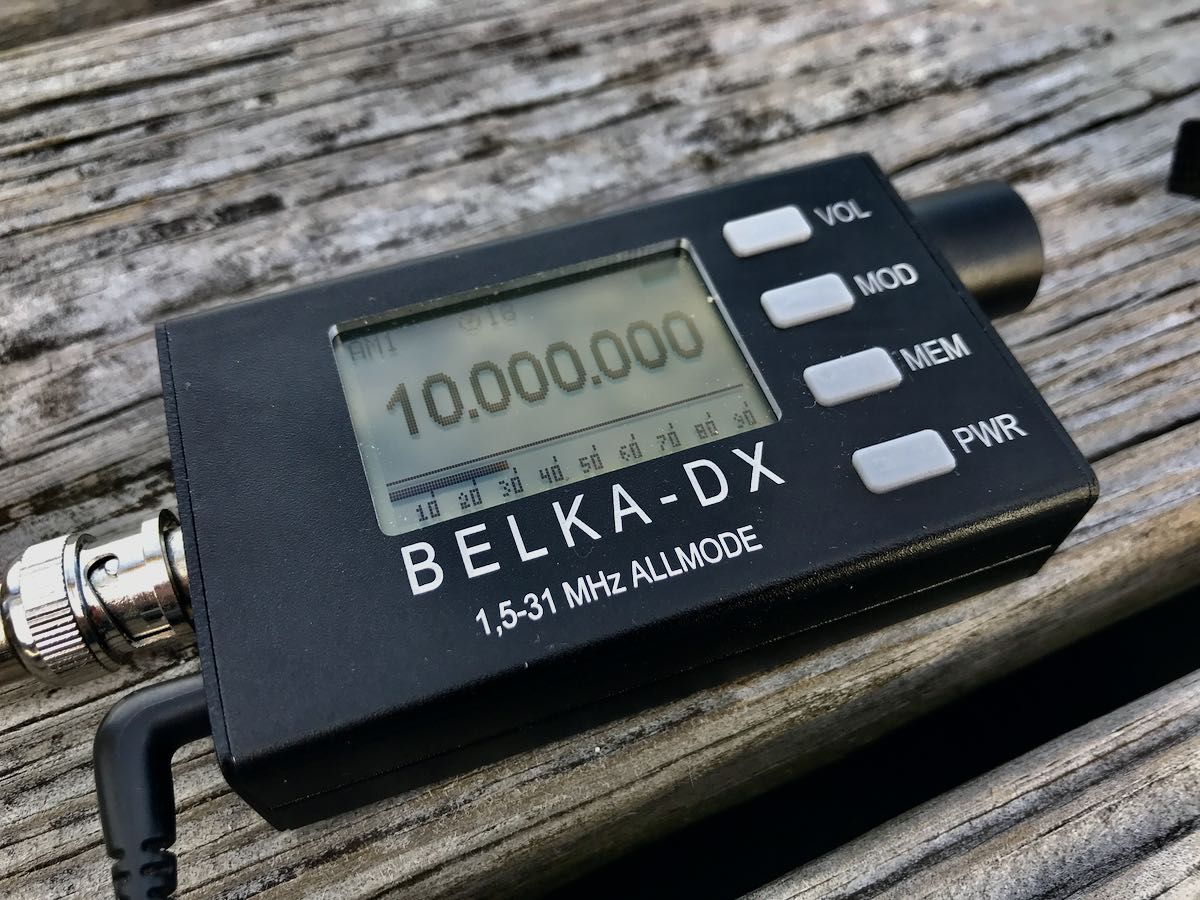
Radio Waves: Josh reviews the Belka-DX, Sinclair Fraunhofer DRM Partnership, Clear Net Frequencies Requested, and

Radio Waves:  Stories Making Waves in the World of Radio

Because I keep my ear to the waves, as well as receive many tips from others who do the same, I find myself privy to radio-related stories that might interest SWLing Post readers.  To that end: Welcome to the SWLing Post’s Radio Waves, a collection of links to interesting stories making waves in the world of radio. Enjoy!

Many thanks to SWLing Post contributors TomL, Alan, Bruce Atchison, and Troy Riedel for the following tips:


Belka DX Shortwave Receiver – Closest Thing To A Spy Radio? (HRCC via YouTube)

Sinclair Launches ATSC 3.0 Test Site; Partners With Fraunhofer On Mondiale Service Integration (ATSC)

HUNT VALLEY, Md.—Mark Aitken, senior vice president of advanced technology at the Sinclair Broadcast Group, flipped the switch on a 100w transmitter to begin broadcasting ATSC 3.0 from atop the station group’s corporate headquarters here with the express purpose of testing reception on small devices like its MarkONE 3.0-enabled smartphone and, in particular, integration of Digital Radio Mondiale (DRM) in its broadcast app.

The launch comes on the same day Sinclair and German technology research institute Fraunhofer IIS jointly announced they are working together to bring audio services using the DRM standard to ATSC 3.0. (Earlier this year, Sinclair rolled out 3.0 simulcasts of its Seattle radio stations with its DRM-based broadcast app.)

“We are actually building the DRM radio service into the [3.0] broadcast app environment,” says Aitken. “That means those [DRM] services will be carried in band and transported just like HEVC [high efficiency video coding] and [Dolby] AC-4.”[…]

Clear Frequencies Requested for Net Providing 24/7 Coverage of St Vincent Volcanic Eruption (RAC Newsletter)

For immediate release:
April 20, 2021 –

The Caribbean Emergency and Weather Net (CEWN) has been providing round-the-clock coverage during the La Soufriere volcanic eruption on the island of Saint Vincent and the Grenadines.

Several neighbouring islands are also being affected by the disaster.

When responding to disasters and emergencies such as this, the CEWN utilizes 3.815 MHz LSB and 7.188 MHz LSB. CEWN is requesting that Radio Amateurs not involved in the volcano response to keep these frequencies clear.

Geomagnetic storm warning (Spaceweather.com via Southgate ARC)

A CME is heading for Earth and it could spark a geomagnetic storm when it arrives on April 25th.

NOAA forecasters say moderately strong G2-class storms are possible, which means auroras could dip into northern-tier US states from Maine to Washington.

Full story and updates @ Spaceweather.com.


Do you enjoy the SWLing Post?

Please consider supporting us via Patreon or our Coffee Fund!

Your support makes articles like this one possible. Thank you!
Radio Waves: Dirty Transmitters, World Amateur Radio Day, Electronic Echoes, DRM via Android, and 10 More BBC AM Services Close

Radio Waves:  Stories Making Waves in the World of Radio

Because I keep my ear to the waves, as well as receive many tips from others who do the same, I find myself privy to radio-related stories that might interest SWLing Post readers.  To that end: Welcome to the SWLing Post’s Radio Waves, a collection of links to interesting stories making waves in the world of radio. Enjoy!

Many thanks to SWLing Post contributors Grayhat, David Iurescia, Bill Hemphill, Harald Kuhl, and Troy Riedel for the following tips:


Transmitter Noise / Dirty Transmitters: Receiver Performance has hit a Brick Wall (DJ0IP)

For the past 15 years, Ham Radio’s Mega-Focus on Receiver Dynamic Range (DR3) has resulted in the community ignoring other factors that are just as important to receiver performance.

Even though our receivers have made a quantum leap in performance in important parameters such as DR3, RMDR, etc., On-The-Air Reception has gotten worse.

Unless used at a multi-transmitter site, today’s typical user won’t detect a difference in the receiver performance between a radio with 90 dB DR3 and a radio with 110 dB DR3. That’s because Receiver Performance is not the limiting factor.[…]

World Amateur Radio Day 18 April 2021 (IARU REGION 2 Newsletter)

World Amateur Radio Day (WARD) is an opportunity to celebrate the many accomplishments and contributions of amateur radio to the communications technology revolution which has dramatically impacted the daily life of virtually everyone on the planet. Many of these technologies and techniques started as experiments, not by governments or commercial enterprises, but by radio amateurs.

WARD 2021 commemorates the 96th anniversary of the International Amateur Radio Union’s founding in 1925, where amateurs first met in Paris to band together to give voice to these early experimenters to national governments and international bodies representing all radio amateurs.

The almost universal adoption of mobile technology created ever increasing demand on a finite resource, the radio spectrum. Access to useable spectrum is the fundamental base on which amateur radio was built and continues to be developed. As a result, amateur radio is very different than decades ago. Embracing new technologies and techniques has greatly expanded what amateur radio is and opened further possibilities as to what it could be. The proliferation of technology also means that the ongoing experimentation and innovation in electronics, radio frequency technique and radio wave propagation is no longer only the traditional realm of the radio amateur but also includes university research satellites, the “maker” community, and other non-commercial experimenters: citizen scientists.

Looking ahead, this ongoing evolution of the telecommunications ecosystem makes it clear that the national Member Societies of the IARU and IARU itself must also continuously change and adapt. A century later, the future possibilities are as exciting as ever.

Celebrate World Amateur Radio Day. The pandemic and more localized natural disasters continue to demonstrate the value of ordinary citizens as technically skilled contributors to society. The original social network is robust. Expose someone new to amateur radio (properly distanced), get on the air and contact the many special event stations, on HF, VHF, or satellite.

Electronic Echoes (KPC Radio)

From SWLing Post contributor Bill Hemphill:

“I have run across an interesting set of audio interviews that were done by Aaron Castillo of kpcradio.com. This is an internet based radio station of Pierce College in California.

Aaron did a series of audio interviews in the fall of 2020 called Electronic Echoes. See following link:

https://kpcradio.com/author/aaron-castillo/


STARWAVES DRM SoftRadio App upgrades mobile devices to receive undistorted DRM Digital Radio anytime and anywhere (Fraunhofer Press Release)

Horgen/Switzerland, Erlangen/Germany: Starwaves, a developer and distributor of receiver technologies centered around the digital broadcast standard DRM (Digital Radio Mondiale), joined forces with Fraunhofer IIS, a leading supplier in the field of broadcast encoder and receiver components for DRM, to develop an Android app that allows DRM reception on mobile devices. Starwaves enables Android phones and tablets to receive entertainment, text information, and emergency warnings via DRM Digital Radio – without costly data plans, independent from cell phone network availability, and based on innovative Fraunhofer technology.

Digital Radio Mondiale (DRM) is the digital successor standard to the classic AM and FM radio services. In many parts of the world, terrestrial digital radio broadcasts are already an important and trusted source of entertainment and information. They do not require monthly payments and work reliably even if there are no cell networks available. Radio reception with mobile phones and tablets combines the mobility and flexibility of these devices with the benefits of free-to-air radio services.

Starwaves has been active in the field of DRM radio receivers for many years. The “STARWAVES DRM SoftRadio” app was developed in close cooperation with Fraunhofer IIS. Its goal is to ensure easy access to innovative DRM radio services for everybody. It is available from now in the Google and Amazon Android app stores. The app provides listeners with access to all the essential features of the DRM digital radio standard, across all transmission bands from DRM on long wave to FM band and VHF band-III.

Fraunhofer IIS is a significant co-developer of core digital radio technologies. This includes the innovative xHE-AAC audio codec, which provides high audio quality at lowest data rates, as well as the Journaline application, which gives radio listeners access to news, the latest sports updates, local weather forecasts, travel tips, and even radio schooling services without requiring internet access.

The app also supports many more DRM features such as the Emergency Warning Functionality (EWF), image slideshows, station logos, and service descriptions including Unicode support for worldwide application. To provide all these services, the app only requires a standard off-the-shelf SDR RF dongle that is attached to the device’s USB port.

“We are proud to launch the world’s first low-cost full-featured DRM digital radio reception solution for mobile devices, developed in close partnership with Fraunhofer IIS. Now everybody can easily upgrade their existing mobile phone and tablet to enjoy DRM digital radio with its undistorted audio quality and advanced features including Journaline,” says Johannes von Weyssenhoff, founder of Starwaves.

I order to meet the needs of everyday radio listeners and to clearly separate this app from the engineering-driven approaches of the past, usability was a primary development objective from day one. With only a few clicks on the clutter-free interface, users select their preferred radio service, navigate through the clearly structured menus, and gain instant access to the various advanced information services that DRM provides. By supporting multiple user interface languages, the app ensures optimized usability in many countries around the globe.

About STARWAVES

Found in 2005 in Bad Münder, Lower Saxony/Germany, Starwaves had set its focus on the development and distribution of receiver technologies around the digital broadcast standard DRM (Digital Radio Mondiale). As far back as 2003 after both organizations, the DRM Consortium and the WorldDAB Forum, had expressed their appeal to the industry at IFA in Berlin to develop and produce multi-standard receivers compatible with both their systems, Starwaves developed its model ”STARWAVES Prelude”, the world’s first DRM-DAB receiver and presented it at CeBIT 2004 in Hanover. In 2006 Starwaves was again in the headlines with the ”Carbox”: It was the world’s first automotive DRM-DAB receiver which then was produced in volumes and enjoyed by lots of listeners worldwide – including many DXers thanks to its excellent analogue Short-Wave capabilities as well.

Since 2008 Starwaves moved its focus to Africa where it developed and tested an innovative approach of broadcasting community television in the L-Band with DVB-T2 in cooperation with ICASA – another world premiere. After DRM was chosen the national standard in India in 2012 Starwaves relocated its headquarters to Switzerland and started developing a new generation of DRM receivers.

Starwaves also initiated Africa’s first DRM trial in the FM Band in Johannesburg/South Africa and completed it with local and international partners. The trial report contains valuable discoveries regarding the feasibility of DRM for community radio which guided the South African government to adopt DRM in the FM Band for community radio and secured the report becoming an internationally recognized piece of standard literature, recently endorsed by ITU. Today, Starwaves offers various DRM receivers and broadcast solutions for consumers and the professional broadcasting industry.

For more information, contact [email protected] or visit www.starwaves.com/de/starwaves-drm-softradio

Ten more stations turn off Medium Wave services (Radio Today)

Ten more local BBC radio stations are turning off their Medium Wave transmitters for good this year.

BBC Essex, BBC Radio Cambridgeshire, BBC Radio Devon, BBC Radio Leeds, BBC Radio Sheffield, BBC Hereford & Worcester, BBC Radio Stoke, BBC Radio Lancashire, BBC Radio Ulster and BBC Radio Foyle will be FM and digital only in May and June 2021.

In addition, BBC Radio Wales and BBC Radio Gloucestershire will reduce AM coverage.

The BBC’s intention to close MW transmitters was first announced ten years ago in 2011.[…]


Do you enjoy the SWLing Post?

Please consider supporting us via Patreon or our Coffee Fund!

Your support makes articles like this one possible. Thank you!
Radio Waves: SpaceX Encrypts Falcon 9 After Ham Downloads Data, Postcard From Titanic Op at Auction, History of Sound Art, and WNYC’s Early Recording

Radio Waves:  Stories Making Waves in the World of Radio

Because I keep my ear to the waves, as well as receive many tips from others who do the same, I find myself privy to radio-related stories that might interest SWLing Post readers.  To that end: Welcome to the SWLing Post’s Radio Waves, a collection of links to interesting stories making waves in the world of radio. Enjoy!

Many thanks to SWLing Post contributors Ulis (K3LU), Chris Walter, and Ron James  for the following tips:


SpaceX Encrypts Falcon 9 Telemetry After Amateur Radio Operators Download Data (Extreme Tech)

SpaceX doesn’t operate like a traditional aerospace company. For one, the CEO is usually hamming it up on Twitter during launches and providing details that would usually go in a press release. SpaceX also live streams almost all of its launches, even the prototypes that have an unfortunate tendency to blow up lately. It wasn’t even encrypting the Falcon 9 telemetry feed… until now. Unfortunately, some digging by amateur radio tinkerers seems to have convinced SpaceX to step up its security.

It all started a few weeks ago when several Redditors managed to lock onto the 2232.5 MHz telemetry downlink from a Falcon 9 upper stage. Right away, they were able to pull out a few interesting plaintext snippets from the unencrypted feed. With a little more work, the radio enthusiasts were able to capture some amazing images from the spacecraft’s cameras.

After that discovery was public, other SpaceX fans tried to grab some data from the Starship during its prototype tests. However, SpaceX had chosen to encrypt that data. Even with the right wireless equipment, the decoded signal was just noise. Now, it appears the same thing is happening with the Falcon 9. When attempting to pull data from the most recent Falcon 9 launch, the original signal snoopers discovered it had also been encrypted. A series of tweets from SpaceX engineers suggest the decoding of the telemetry signal was the reason for the change.[…]

Postcard from Titanic’s radio operator is being sold at auction (Stars And Stripes)

BOSTON — A postcard written by the Titanic’s senior radio operator just weeks before the ocean liner sank in the North Atlantic in 1912 has been put up for auction.

The card, with a glossy image of the ill-fated ship on the front, was written by Jack Phillips to his sister, Elsie Phillips, in March 1912 while awaiting the ship’s first sea trials, according to RR Auction in Boston.

“Very busy working late. Hope to leave on Monday & arrive Soton Wednesday afternoon. Hope you quite OK. Heard from Ethel yesterday,” he wrote. It’s signed “Love Jack.”

It is postmarked Belfast, where the Titanic was built, and has a canceled halfpenny stamp.

“Soton” is a contraction of Southampton, the English port city from where the Titanic departed on its maiden voyage. It sank in the early morning hours of April 15.

Phillips, who turned 25 on board, stayed at his post after the Titanic struck an iceberg to send calls for assistance to other ships in the area until water was lapping around his feet, according to RR Auction.

He made it off the ship after being told by the captain that he had done his duty, according to his biography in the British National Archives, but died of exposure in the frigid North Atlantic, according to RR Auction.

The postcard is being sold by the estate of Vera and John Gillespie, longtime members of the Massachusetts-based Titanic Historical Society, said Bobby Livingston, executive vice president at RR Auction.[…]

Radio Survivor Podcast #292: The History of Sound Art (Radio Survivor)

What is sound art? And what do we know about its origin story? We explore this question and more with our guest this week, artist and educator Judy Dunaway. An adjunct professor in the History of Art Department at Massachusetts College of Art and Design, Dunaway’s recent article, “The Forgotten 1979 MoMA Sound Art Exhibition,” is a fascinating look at the history of sound art and highlights important contributions by female artists. In our wide-ranging discussion, we also hear about Dunaway’s own artistic practice, from her work with latex balloons to transmission art to a “phone improv” show over BlogTalkRadio a decade ago.

Click here to check out this piece at Radio Survivor.


Overcoming the Limitations of Time (From the January/February 1940 WNYC Masterwork Bulletin)

A MATTER OF RECORD: Mighty useful gadgets are WNYC’s four new recording machines. They were used in a variety of interesting ways during the past year, so we decided that the how and the why of recording would be an appropriate subject for this, the third of our Behind the Microphone series dealing with the technical side of things at the Municipal Station.

One of the most valuable uses of the recording units is that they have partially enabled us to overcome the limitations of time — have made it possible to make available to our listeners important evening programs which we could not broadcast directly because of our fluctuating time allotment.

For instance, we could not pick up the ASCAP Music Festival Concerts from Carnegie Hall last Fall because WNYC was not on the air after 8:30 P. M.[1] What to do? The recorders to the rescue! The concerts were “broadcast” over our regular Carnegie Hall lines to the Municipal Building where they were transcribed on our two standard studio-type recording machines. Each transcription[2] was put on the air on the afternoon following the original perfor

Similarly, our two mobile recording units made possible an afternoon broadcast of the official opening of La Guardia Field which took place at midnight. Recording equipment is also used frequently to transcribe major programs “off the air” so that they may reach a larger audience through rebroadcast. There was the time, for example, when the Mayor’s office was the scene of a final report on the new Police and Fireman’s pension plan. Official reports on the balloting were recorded and rebroadcast at a time when the majority of the policemen and firemen affected could listen in.

We used to think recording an easy job: Just put the recording needle on the disk, turn a few buttons, and let ‘er go. After watching one of our expert recording engineers at work, we realized that it’s a delicate task, requiring special training and long practice.

Click here to read the full piece at WNYC.


Do you enjoy the SWLing Post?

Please consider supporting us via Patreon or our Coffee Fund!

Your support makes articles like this one possible. Thank you!
Radio Waves: Mahboob Radio Service, AméricaTeVé owner to buy Radio Caracol, Tele-medicine via HF, and Battleship USS IOWA Radio Tour

Radio Waves:  Stories Making Waves in the World of Radio

Because I keep my ear to the waves, as well as receive many tips from others who do the same, I find myself privy to radio-related stories that might interest SWLing Post readers.  To that end: Welcome to the SWLing Post’s Radio Waves, a collection of links to interesting stories making waves in the world of radio. Enjoy!

Many thanks to SWLing Post contributors Kris (G8AUU), Tracy Wood, and Dan Robinson for the following tips:


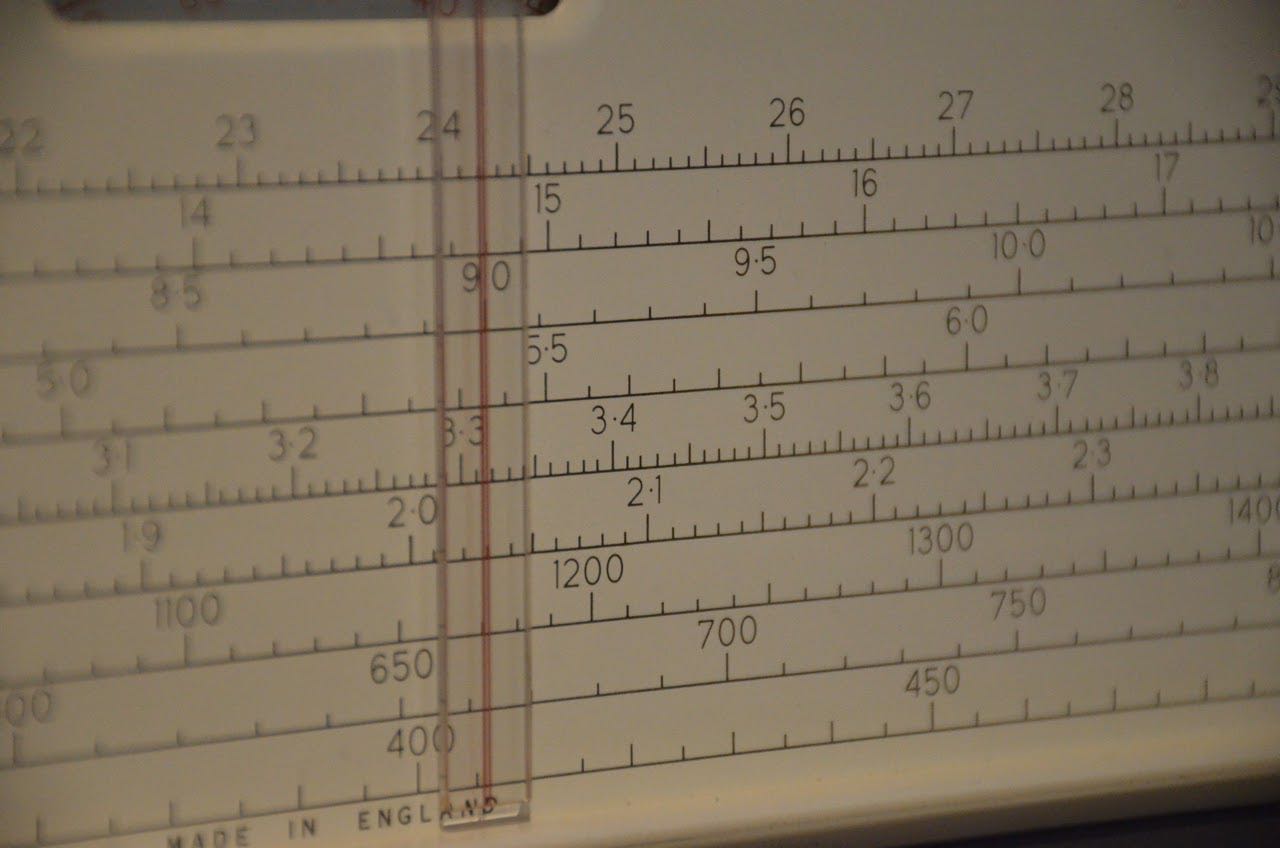
Aging brothers in Hyderabad run last radio repair shop in southern Indian state (Arab News)

NEW DELHI: “Mahboob Radio Service,” reads the faded panel on a small repair shop near the 16th-century Charminar mosque in the heart of the old town of Hyderabad.

The shop, which has been open since 1948, is filled with thousands of radio sets stacked in the small space where two aging brothers have been repairing radios for as long as they can remember.

The brothers, Mohammed Mujeebudin, 82, and Mohammed Moinuddin, 71, learned the craft from their father, who started selling and repairing radios in the 1920s after a trip to Bombay, where he bought his first set.

“My father started Mahboob Radio Service from Dabeerpura in Hyderabad before moving to the present location in Chatta Bazar in 1948,” Moinuddin said.

He remembered his father’s most prominent customers, such as Viceroy Mir Osman Ali Khan, who ruled Hyderabad until the princely state’s merger with India.

“He was our client, and we would repair his radios. Once the work was done, we would deliver the radio to the palace and receive some 20 or 30 rupees,” Moinuddin recalled.[…]

TV station owner AméricaTeVé owner exits Chapter 11, to buy radio station (Bizjournals.com)

The companies that own the AméricaTeVé and Teveo television stations have exited U.S. Bankruptcy Court and are preparing to make an acquisition.

America-CV Station Group, Caribevision Holdings, America-CV Network and Caribevision TV Network all filed Chapter 11 reorganization in 2019. The Hialeah-based companies own local stations WJAN (Channel 33 AméricaTeVé) and WFUN (Channel 48 Teveo), along with WJPX (AméricaTeVé Puerto Rico) in San Juan, Puerto Rico, and WPXO in New York.

[…]”América Teve has exited its Chapter 11 reorganization ahead of schedule and has paid off all of its debtors,” said attorney Marcell Felipe, who represents the company. “The company was recapitalized with new equity funded by Carlos Vasallo and the refinancing with Abanca of its valuable real estate holdings.”

Felipe confirmed that the company signed an agreement to purchase Radio Caracol 1260 AM in Miami to create a synergy between the radio station and its TV stations. The Spanish news/talk radio station was being sold by Grupo Latino de Radio, a subsidiary of Spanish media conglomerate PRISA.[…]

SWLing Post contributor, Tracy Wood, notes: “An interesting medium wave note for SWLing Post readers. AM 1260 WSUA in Miami (50kw day / 20kw night) has been used in the past to relay Radio Martí for a few hours at night.”

GBT Completed Prototype Design of its Long-Range Radio Mobile System (Intrado GlobeNewswire)

SAN DIEGO, April 08, 2021 (GLOBE NEWSWIRE) — GBT Technologies Inc. ( OTC PINK: GTCH ) (“GBT” or the “Company”), completed its prototype design of its long range radio mobile system. The prototype mobile unit will be a high-performance radio transceiver system that is designed for data and voice applications. It is expected to enable data and voice communication for long range applications targeting telemedicine support for the Company’s qTerm vital device including audio.

The design of the prototype mobile unit includes a transceiver targeted for systems to operate under licensed/unlicensed radio frequency bands, enabling ultra-long-range applications. The unit is designed to communicate in the HF (High Frequencies) frequencies bands to establish connection with a base unit transceiver through repeater unit(s) to reach ultra-long range. High clarity, signal reliability and security is expected to be achieved through the implementation of advanced circuitry within the system’s components. The design includes embedded software to manage the data and audio communication including data transfer to a backend server to process data. The design also provided for the mobile unit’s design, size and interface, taking into consideration performance and mobility. The operation of the mobile unit is expected to be done via an LCD touch screen providing user’s friendly interface and ease of use. Upon getting team’s FCC certification, an extensive mobile unit’s testing will start. GBT plans to test the entire system within a large city limits and national ranges.

“We are glad to announce that we completed the design of our prototype long range radio mobile unit. The prototype mobile unit is a key component since it is targeted to be portable aiming to bring modern life services around the globe. The design contemplates an acceptable physical size to be carried coupled with a high-power energy source and long range capability. As the system is targeted to work with the qTerm vital device, the design contemplates users being able to send vital information to professional health authorities for quick review and recommendations. In addition, the design has incorporated a voice communication will be available to discuss further steps and actions. We believe that in our days and age everyone should have access to modern amenities and the key is global communication. For us, the most important contribution of such system is the capability to save lives by enabling health and emergency services anywhere on earth” stated Danny Rittman, the Company’s CTO.

There is no guarantee that the Company will be successful in researching, developing or implementing this system. In order to successfully implement this concept, the Company will need to raise adequate capital to support its research and, if successfully researched, developed and granted regulatory approval, the Company would need to enter into a strategic relationship with a third party that has experience in manufacturing, selling and distributing this product. There is no guarantee that the Company will be successful in any or all of these critical steps.

Mobile unit prototype: https://www.globenewswire.com/NewsRoom/AttachmentNg/36d838e9-eb3a-423e-8b1a-058c420549a8[…]

Battleship USS IOWA Museum: IOWA’s Radios – Part 1 (YouTube)


Do you enjoy the SWLing Post?

Please consider supporting us via Patreon or our Coffee Fund!

Your support makes articles like this one possible. Thank you!