Tag Archives: Radio Waves

Radio Waves: Navajo Nation Airwaves, Yamata Transmitting Station at 80, ARRL & Maglite, FCC Proposed Revisions, and Why So Many Plugs?

Radio Waves:  Stories Making Waves in the World of Radio

Because I keep my ear to the waves, as well as receive many tips from others who do the same, I find myself privy to radio-related stories that might interest SWLing Post readers.  To that end: Welcome to the SWLing Post’s Radio Waves, a collection of links to interesting stories making waves in the world of radio. Enjoy!

Many thanks to SWLing Post contributors Aaron Kuhn, Ron Chester, Ronnie Smith, Dan Van Hoy, and Dennis Dura for the following tips:


The Airwaves of Navajo Nation (The Verge)

KTNN radio station’s headquarters in St. Michaels, Arizona is less than ten minutes away from the Navajo Nation capital of Window Rock, but its reach encompasses all 27,000 square miles of the Nation across four different states. The station has been broadcasting bilingual content in both the Navajo language, Diné Bizaad, and English for over 35 years. But the station is quiet nowadays — many staff members are working from home if they can. That includes Dee Dixon who, after 15 years at KTNN, had to install internet access to her home an hour and a half away in Dilkon, Arizona so she could broadcast her 6AM show.

Her regular listeners are scattered. During the day, KTNN covers the majority of the Navajo Nation across New Mexico, Arizona, Colorado, and Utah. One can also tune into KTNN’s programming online via livestream from anywhere in the world. It is not the region’s only media. A few regional newspapers cover the reservation extensively, and Navajo Nation is also the only tribe in the country that owns, funds, and operates its own television station. But none of these mediums produce stories primarily in Diné Bizaad: radio is the only way to hear the language in local media.

When the COVID-19 pandemic bore down on Navajo Nation in early 2020, Dixon noticed a distinct divide between her regular listeners at home on the reservation and those outside of it. As Dixon worked on translating public health announcements and taking calls on the air, she noticed an uptick in listeners tuning in from Florida, Maine, Alaska, Louisiana, and Montana. Those callers away from home were hungry for local updates to know what was going on within the Nation — an ambiguous virus that no one understood thoroughly just yet was spreading. People wanted to know if their families were safe and just how transmission was occurring in a place where households are far flung across vast swaths of desert. But Dixon realized as her local listeners, specifically elders, called in that they wanted something different from her: they did not want to hear about the virus whatsoever, no matter how high the rates of infection in Navajo Nation were.

“According to Navajo tradition, you’re not supposed to give a name to anything that is not good for the reservation,” Dixon says. “The virus was like a monster. Traditionally, the more you talk about something like that, the more you’re inviting it into your home.”

Navajo Nation is the second-largest Indigenous tribe in the country with about 300,000 enrolled members, over half of whom live on the reservation. Much of the land is rugged and rural. Of those on the reservation, about 27 percent of households do not have electricity. Cellphone service can be spotty to nonexistent.

But transistor and car radios do not require electricity to function. Radio waves are not dependent on cell towers. In fact, KTNN was the last station in the country licensed for a clear-channel radio signal at 50,000 watts — a strength used in the early 1900s to provide rural America with radio that wouldn’t be vulnerable to interference.[]

Japan’s only shortwave station still in business after 80 years (The Asahi Shimbun)

KOGA, Ibaraki Prefecture–Standing tall and proud over an area of 1 million square meters or so, a forest of steel towers in two-tone red and white is the dominant feature under the blue sky against the backdrop of Mount Tsukubasan.

This is KDDI Corp.’s Yamata Transmitting Station, the nation’s only facility broadcasting shortwave radio programs to overseas listeners.

The station started broadcasts on Jan. 1, 1941. The main building still retains a prewar ambience.

Shortwave radios were the primary means for people across the world to receive audio content from Japan without a large-scale facility before satellites and submarine cables came into existence.

The 1945 announcement of Japan’s surrender by Emperor Hirohito was transmitted from here to military personnel on overseas battlefronts.

When it was completed in 1940, Yamata, now part of Koga, was a typical farming village with a population of 4,536, of whom 90 percent were farmers, according to a 1941 local history pamphlet.

“A large area of flatland was available, and it was less prone to damage from snow and typhoons,” said Kazuhiro Matsui, 50, a senior official in charge of infrastructure, who served as a guide when the station was shown to media representatives in April. “I think it was the only place fit for the station in the country.”

The steel towers are arranged in such a way that 18 transmission antennas cover 360 degrees to send broadcasts as far north as Boston and London and as far west as Seoul and Nairobi.[]

ARRL Announces Partnership with Maglite (ARRL News)

ARRL  The National Association for Amateur Radio® and Mag Instrument, the US manufacturer of the MAGLITE® Flashlight have announced they have formed a partnership based on common interests in equipping people to be prepared for emergencies and to serve their communities in extreme situations such as natural disasters. ARRL members expand the reservoir of trained operators and technicians in radio communications and radio technology, and provide public service through the ARRL Amateur Radio Emergency Service® (ARES®). Maglite is the leading maker of U.S.-manufactured high-quality flashlights that have a deserved reputation for toughness and durability.

“Amateur radio operators, or ‘hams,’ help people in times of difficulty, often by supporting emergency communications when critical infrastructure is damaged, and by aiding first responders’ need to keep connected,” said Anthony Maglica, Founder, Owner and CEO of MAG Instrument Inc. “We manufacture a product that has been used in public safety for over 40 years, and we are very supportive of the incredible dedication of radio amateurs, so culturally this is a great alliance for both brands.”

“ARRL is delighted that Maglite recognizes the service and skill of ARRL members. This partnership will help us introduce amateur radio to more people,” said David Minster, NA2AA, ARRL CEO. Mag Instrument is creating a special laser-engraved Maglite® product collection for ARRL, as well as offering their members special pricing on a select line of Maglite gear. In turn, those purchases raise funds to support ARRL’s mission. Members can find details at www.arrl.org/benefits and by clicking “Member Discounts” in the left-hand navigation on that page.

Maglite is also promoting a special giveaway in recognition of 2021 ARRL Field Day (no purchase is necessary). Visit Maglite on the web for entry details and Terms and Conditions at https://maglite.com/pages/the-maglite-arrl-2021-field-day-giveaway.

ARRL, headquartered in Newington, Connecticut, counts the majority of active radio amateurs in the US among its ranks. Since its founding in 1914, ARRL and its members have advanced the art, science, and enjoyment of Amateur Radio.

For more information about ARRL visit www.arrl.org.

FCC Report 6/27: FCC Proposes Revisions To Seven Technical Rules (Radio Insight)

At the FCC’s upcoming July Open Meeting scheduled for July 13, Acting Chairwoman Jessica Rosenworcel has proposed voting on seven rule changes to eliminate those that are “redundant, outdated or in conflict” with other rules.

The seven changes are described as:

1. Eliminate the maximum rated transmitter power limit rule for AM stations set out in section 73.1665(b)[…]

2. Update the NCE FM community of license coverage requirement set out in sections73.316(c)(2)(ix)(B) and 73.1690(c)(8)(i) to match that used in section 73.515;

3. Eliminate the requirement that applicants demonstrate the effect of any FM applicant transmitting antenna on nearby FM or TV broadcast antennas set out in section 73.316(d);

4. Update the signal strength contour overlap requirements for NCE FM Class D stations set out in section 73.509(b) to harmonize with the contour overlap requirements for all other NCE FM stations, set out in section 73.509(a);

5. Eliminate the requirement for broadcast services to protect grandfathered common carrier services inAlaska operating in the 76-100 MHz frequency band set out in sections 73.501(b), 74.1202(b)(3), the secondsentence of 74.702(a)(1), and the second sentence of 74.786(b) given that there are no longer such commoncarrier services;

6. Amend the definition of an “AM fill-in area” set out in section 74.1201(j) to conform to section74.1201(g);

7. Amend the allocation and power limitations for broadcast stations within 320 kilometers of the Mexican and Canadian borders, set out in sections 73.207(b) and 74.1235(d), to comply with current treaty provision

[Read the full article with details about each proposed change at Radio Insight.]

Why Does the World Harbor So Many Different Voltages, Plugs, and Sockets? (IEEE Spectrum)

Blame it on the varied evolutionary history of electric power grids and the products that have grown up alongside them

Standardization makes life easier, but it is often impossible to introduce it to systems that have a messy evolutionary history. Electricity supply is a case in point.

Edison’s pioneering 1882 Pearl Street station transmitted direct current at 110 volts, and the same voltage was used when alternating current at 60 hertz took over in American homes. Later the standard was raised a bit to 120 V , and in order to accommodate heavy-duty appliances and electric heating, North American homes can also access 240 V. In contrast, in 1899 Berliner Elektrizitäts-Werke was the first European utility to switch to 220 V and this led eventually to the continent-wide norm of 230 V.

Japan has the lowest voltage (100 V) and the dubious distinction of operating on two frequencies. This, too, is a legacy from the earliest days of electrification, when Tokyo’s utility bought German 50-Hz generators and Osaka, 500 kilometers to the east, imported American 60-Hz machines. Eastern Honshu and Hokkaido island operate at 50 Hz. The rest of the country, to the west, is at 60 Hz, and the capacity of four frequency-converter stations allows only a limited exchange between the two systems.

Elsewhere, the world is divided between the minority of countries with voltages centered on 120 V (110–130 V and 60 Hz) and the majority using 230 V (220–240 V and 50 Hz). North and Central America and most countries of South America combine single voltages between 110 and 130 V and the frequency of 60 Hz; exceptions include Argentina and Chile (220/50), Peru (220/60), and Bolivia (230/50). Africa, Asia (aside from Japan), Australia, and Europe work with the higher voltages: 220 V in Russia and Ethiopia; 230V in South Africa; and 240 V in Brunei, Kenya, and Kuwait.[]


Do you enjoy the SWLing Post?

Please consider supporting us via Patreon or our Coffee Fund!

Your support makes articles like this one possible. Thank you!

Radio Waves: “Tuning In The World”, Subcarrier Signals, SSTV Event from the ISS, the Zeptosecond and Israel Army Radio Shut Down

Radio Waves:  Stories Making Waves in the World of Radio

Because I keep my ear to the waves, as well as receive many tips from others who do the same, I find myself privy to radio-related stories that might interest SWLing Post readers.  To that end: Welcome to the SWLing Post’s Radio Waves, a collection of links to interesting stories making waves in the world of radio. Enjoy!

Many thanks to SWLing Post contributors Tracy Wood, Dennis Dura, John Forsyth, and the Southgate ARC for the following tips:


Tuning In The World (Far From Home)

When David Goren was 13 years old, he and his family went to visit their Uncle Lou.

“He was usually just railing about my long hair or criticizing rock and roll,” he recalled. But this time was different. “He gave me an old radio of his that had a shortwave band on it. I really didn’t know what that was. I asked my dad, and he was like, ‘You won’t hear anything on that!’”

David was curious, though, so after he got home, he turned it on, started fidgeting with the dial, and was amazed to discover sounds and music from around the world![…]

Click here to read the full post and click here to subscribe to the Far From Home podcast.

Subcarrier Signals: The Unsung Heroes of the FM Dial (IEEE Spectrum)

How subcarrier radio signals made room for hidden FM stations—and helped ensure that everyone has access to the news

A version of this post originally appeared on Tedium, a twice-weekly newsletter that hunts for the end of the long tail.

In our modern era, we tend to choose devices with as many functions as possible, and we bristle at the thought of an object with a single use—hence why umbrellas can be so frustrating to carry around. But sometimes, a single use case is exactly the right level of functionality. This is something I’ve been thinking about recently after I got my hands on a fairly large radio that has literally one function: You turn it on and a specific station plays, and there’s no surface-level way to do anything else with it.

This is a weird device—but for its niche, this device, called a subcarrier radio, was perfect. And it was one of many niches that subcarrier radios made possible.

What the heck is a subcarrier radio signal?
In 1985, a South Florida Sun-Sentinel article discussed a potentially lucrative offering for the owners of FM radio stations: ways to make extra money from parts of the licensed signal they weren’t already using.

This phenomenon was not unusual at the time; the practice had been around for decades. But what the article highlighted were the numerous ways radio signals were being used that the average listener was likely not even aware of—for background music, for stock reports, even to transmit computerized data.

And while station owners weren’t earning a ton of extra money—a single lease brought in US$1,400 a month (about $3,500 today)—for a struggling station, the additional revenue could mean the difference between being in the red and being in the black.

The thing that allows many radio stations to monetize their signals in this way is, essentially, a technical gap inside the FM broadcast signal. These gaps, or subcarriers, are frequencies that aren’t being used for the primary signal but could find secondary uses in more specialized contexts.[]

Amateur Radio on Shuttle, Mir and ISS (Southgate ARC)

ARISS report there will be an ‘Amateur Radio on Shuttle, Mir and ISS’ Slow Scan TV (SSTV) event from June 21-26. Transmissions from the International Space Station will be on 145.800 MHz FM using PD120

The ARISS team will be transmitting SSTV images continuously from June 21 until June 26. The images will be related to some of the amateur radio activities that have occurred on the Space Shuttle, Mir space station and the International Space Station.

The schedule start and stop times are:

Monday, June 21 – Setup is scheduled to begin at 09:40 UTC (transmissions should start a little later).

Saturday, June 26 – Transmissions are scheduled to end by 18:30 UTC.
Downlink frequency will be 145.800 MHz and the mode should be PD120.

Those that recently missed the opportunity during the limited period of MAI transmissions should have numerous chances over the 6 day period to capture many (if not all 12) of the images.

Check the ARISS SSTV blog for the latest information
http://ariss-sstv.blogspot.com/

The signal should be receivable on a handheld with a 1/4 wave whip. If your rig has selectable FM filters try the wider filter for 25 kHz channel spacing.

You can get predictions for the ISS pass times at
https://www.amsat.org/track/

Useful SSTV info and links
https://amsat-uk.org/beginners/iss-sstv/

Meet the zeptosecond, the shortest unit of time ever measured (Space.com)

Scientists have measured the shortest unit of time ever: the time it takes a light particle to cross a hydrogen molecule.

That time, for the record, is 247 zeptoseconds. A zeptosecond is a trillionth of a billionth of a second, or a decimal point followed by 20 zeroes and a 1. Previously, researchers had dipped into the realm of zeptoseconds; in 2016, researchers reporting in the journal Nature Physics used lasers to measure time in increments down to 850 zeptoseconds. This accuracy is a huge leap from the 1999 Nobel Prize-winning work that first measured time in femtoseconds, which are millionths of a billionths of seconds.

It takes femtoseconds for chemical bonds to break and form, but it takes zeptoseconds for light to travel across a single hydrogen molecule (H2). To measure this very short trip, physicist Reinhard Dörner of Goethe University in Germany and his colleagues shot X-rays from the PETRA III at Deutsches Elektronen-Synchrotron (DESY), a particle accelerator in Hamburg.[]

Defense minister says he is sticking to plan to shut Army Radio (The Times of Israel)

Defense Minister Benny Gantz reiterated on Wednesday his belief that Army Radio should not continue in its current format as part of the Israel Defense Forces.

“I think that IDF soldiers must be kept as far as possible from any political involvement, and the station should be apolitical, and it has long stopped being so,” Gantz said in response to a query from Shas MK Moshe Abutbul on the Knesset floor. “I don’t think there is any way to operate Army Radio in its current form, largely due to the political angle.”[…]


Do you enjoy the SWLing Post?

Please consider supporting us via Patreon or our Coffee Fund!

Your support makes articles like this one possible. Thank you!
Radio Waves: The silence of RCI, Cox Radio Hit by Ransomware, Asheville Radio Museum Reopens, and New Aluminium-Ion Battery Chemistry

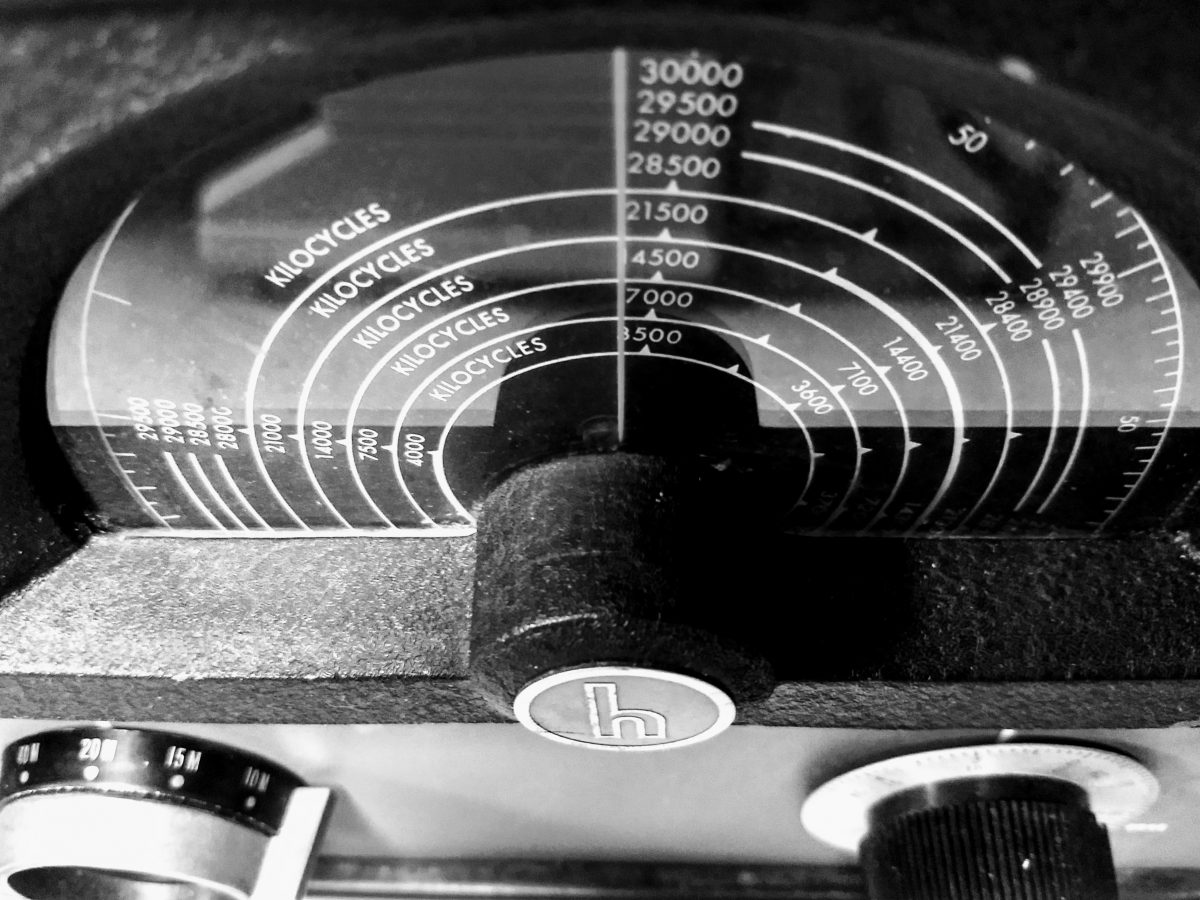
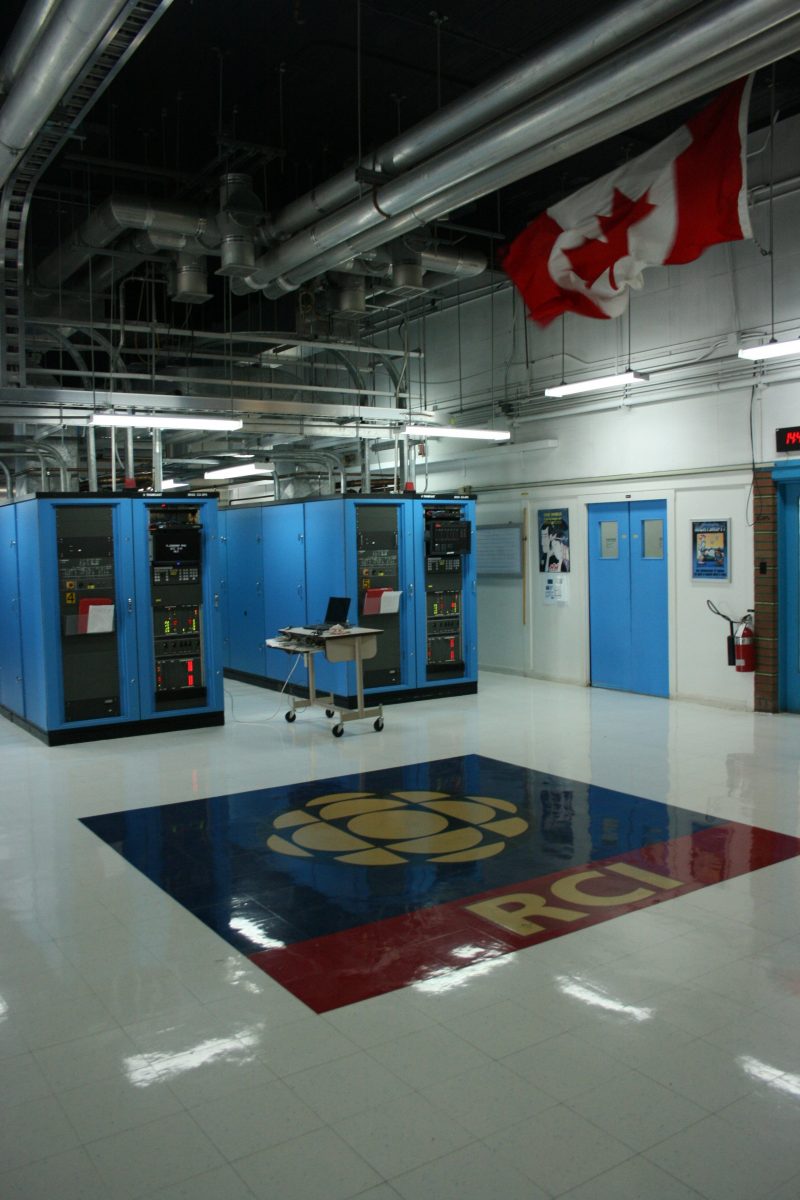
Photo from the RCI Sackville transmitter site in 2012, a few months prior to its closure.

Radio Waves:  Stories Making Waves in the World of Radio

Because I keep my ear to the waves, as well as receive many tips from others who do the same, I find myself privy to radio-related stories that might interest SWLing Post readers.  To that end: Welcome to the SWLing Post’s Radio Waves, a collection of links to interesting stories making waves in the world of radio. Enjoy!

Many thanks to SWLing Post contributors Troy Riedel, NT, Tracy Wood and the Southgate ARC for the following tips:


The silence of Radio Canada International (Open Canada)

The former head of CBC News laments the evisceration of CBC’s international service and Canada’s shrinking voice in the world

For a country that once regarded itself as one of the world’s leading middle powers, Canada’s voice on the international scene is a strikingly quiet one these days. It reminds me of the line from that famous “dead parrot” sketch in Monty Python: “bereft of life, it rests in peace.”

The latest sign of this is the decision by CBC/Radio-Canada to implement changes that have effectively smothered Radio Canada International (RCI), its fabled global audio and online service that has helped serve as “Canada’s Voice to the World” for more than a half century.

In a December announcement replete with CBC doublespeak, the CBC unveiled a “major transformation” of RCI that, it claimed, would ensure RCI remains “a strong and relevant voice” in this century’s media landscape. Not surprisingly, the practical impact of these changes is precisely the opposite.

Flipping RCI’s historic mission on its head, the service will now focus more on ethnic minorities within Canada rather than on continuing to produce programs tailored uniquely for international audiences. More than half of RCI’s beleaguered staff have been laid off.

This latest CBC battering of RCI — a pattern that has gone on for decades — triggered considerable criticism. In February, a group of 32 prominent Canadians sent an open letter to Prime Minister Justin Trudeau and other senior government ministers urging that the CBC scrap its planned strategy and appoint an independent committee to plan a rebuild of the international service: “In an interconnected world in search of truth, facts and honest journalism, countries like Canada cannot abdicate their role on the world stage.” Its signatories included former prime minister Joe Clark, former foreign affairs minister Lloyd Axworthy, former UN ambassador Stephen Lewis, actor Donald Sutherland and author Naomi Klein. Continue reading…

Live streams go down across Cox radio & TV stations in apparent ransomware attack (The Record)

Live streams for radio and TV stations owned by the Cox Media Group, one of the largest media conglomerates in the US, have gone down earlier today in what multiple sources have described as a ransomware attack.

The incident took place earlier this morning and impacted the internal networks and live streaming capabilities for Cox media properties, such as web streams and mobile apps. Official websites, telephone lines, and normal programming remained running but some live programming could not go on air as scheduled.

“This morning we were told to shut down everything and log out our emails to ensure nothing spread. According to my friends at affiliate stations, we shut things down in time to be safe and should be back up and running soon,” a Cox employee shared in a private conversation earlier today. Continue reading…

Asheville Radio Museum reopens to public after months-long pandemic closure (WLOS)

The Asheville Radio Museum reopened to the public Saturday, June 5, following a months-long closure due to the pandemic.

The museum, located on the campus of A-B Tech, and closed in November to follow the campus’s COVID-19 protocol to protect students and staff.

Asheville Radio Museum boasts a premier collection of vintage radios with the goal to educate, demonstrate and fascinate visitors about the importance of the radio, which was named the second most important invention of the twentieth century on the Science Channel.

Saturday’s reopening was highlighted by the addition of newly-procured radios as well as refreshed displays throughout the museum. Continue reading…

Aluminium-Ion battery development (Southgate ARC)

The Graphene Manufacturing Group in Brisbane, Australia together with the University of Queensland have according to the GMG website developed a Graphene Aluminium-Ion Battery energy storage technology that has up to three times the capacity of a lithium-ion battery and can charge up to sixty times faster.

The battery was created by inserting aluminium atoms into perforations made in graphene planes.
The company claims that because the batteries lack an upper Ampere limit that would otherwise cause spontaneous overheating, the batteries are also safer. The stable base materials also facilitate their recycling later.

The company hopes to bring these cells to market by the end of 2021 or early 2022

https://graphenemg.com/


Do you enjoy the SWLing Post?

Please consider supporting us via Patreon or our Coffee Fund!

Your support makes articles like this one possible. Thank you!
Radio Waves: Shedding Light on the Hindenburg, Chip Shortages, NPR at 50, and July 4th SAQ Grimeton Transmission

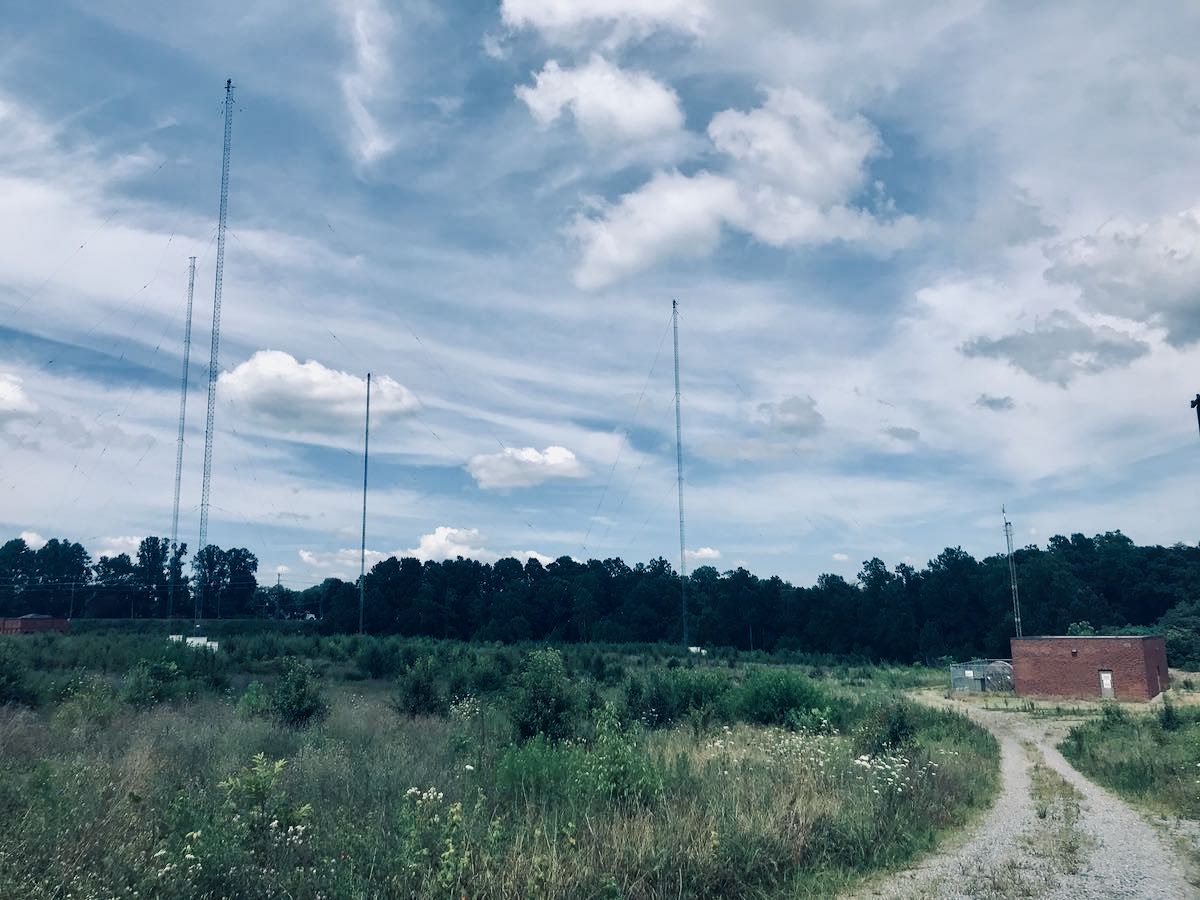
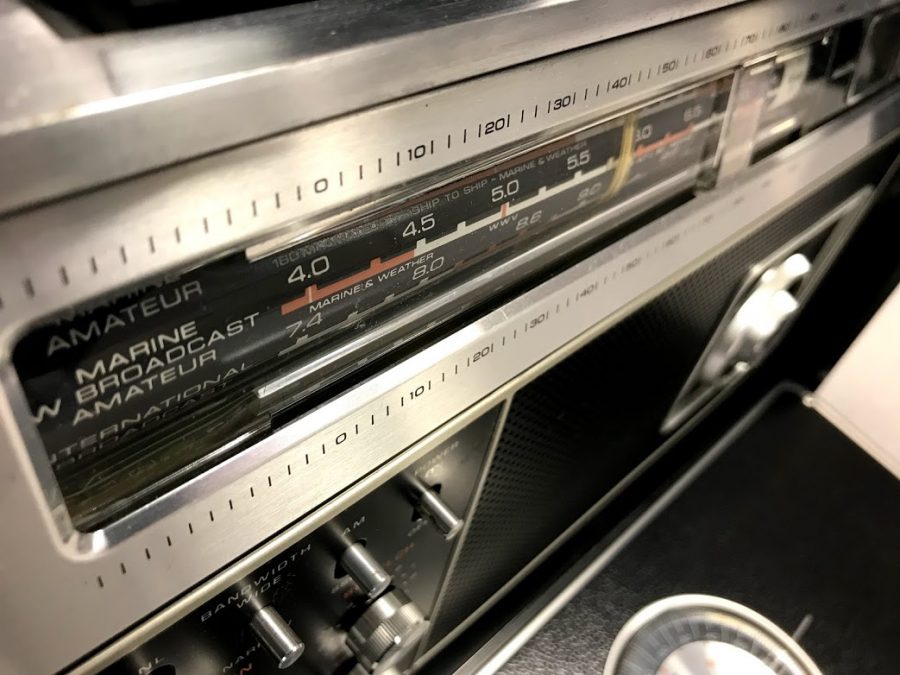
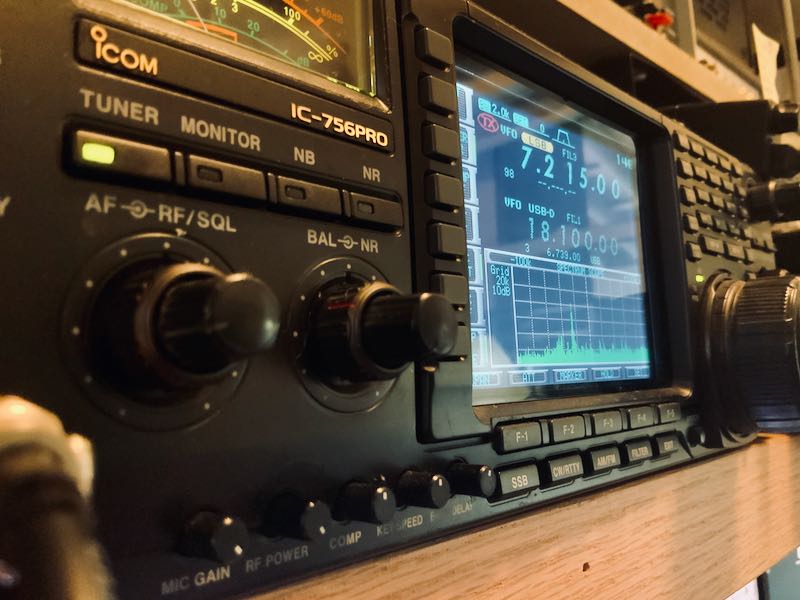
Icom IC-756 Pro Transceiver Dial

Radio Waves:  Stories Making Waves in the World of Radio

Because I keep my ear to the waves, as well as receive many tips from others who do the same, I find myself privy to radio-related stories that might interest SWLing Post readers.  To that end: Welcome to the SWLing Post’s Radio Waves, a collection of links to interesting stories making waves in the world of radio. Enjoy!

Many thanks to SWLing Post contributors Ron, Rich Cuff, and the Southgate ARC  for the following tips:


Radio Amateur’s Vintage Home Movie Film Sheds Light on Hindenburg Disaster (ARRL News)

Vintage home movie film provided by New Jersey radio amateur Bob Schenck, N2OO, was the highlight of a PBS documentary about the Hindenburg disaster. The film, shot by his uncle Harold Schenck, may provide clues as to what initiated the disastrous 1937 fire that destroyed the airship Hindenburg and claimed 35 lives as the German zeppelin was landing at Lakehurst, New Jersey. Harold Schenck tried to interest government investigators in his film, shot from a different angle than newsreel footage that begins only after the fire was well under way, but it was largely overlooked. “Nobody ever asked for it,” Bob Schenck explains in the documentary.

The Schenck film is the highlight of a PBS “NOVA” documentary, Hindenburg: The New Evidence, that investigates the issue in considerable depth in an effort to unlock the secrets of the cold case. The program aired on May 19 and remains available for streaming.

“My dad had bought this nifty Kodak camera — a wind-up movie camera, 8 millimeters — and he couldn’t come [to the Hindenburg landing] because he worked,” Bob Schenck recounted during the documentary. “So, he asked my uncle and my mom if they would take some shots and see the Hindenburg land.”

Bob Schenck approached Dan Grossman, an expert on airships, including Hindenburg, in 2012 during a commemoration of the disaster that forever memorialized radio reporter Herbert Morrison’s plaintive on-air reaction, “Oh, the humanity!” The NOVA documentary not only shares Schenck’s footage, which provided new clues to re-examine the cause of the explosion. The documentary also reviews scientific experiments that helped investigators come to a fresh understanding of what set off the fire. [Continue reading…]

Will chip shortage hit ham radios ? (Southgate ARC)

Glenn O’Donnell K3PP of Forrester Research notes the chip shortage may have a more serious impact than first thought and gives Amateur Radio rigs as an example of what might be affected

Self-described as a “ham radio nut,” O’Donnell discussed one of his hobbies to explain how the sway of tech titans could impact smaller companies as industries compete for limited resources.

“In this hobby, the newer radio “toys” are advanced technology, but the hottest radio might sell 5,000 units per year. If Apple wants 100 million chips, but the little ham radio company wants 5,000, Apple wins!” O’Donnell said.

Read the article at
https://www.techrepublic.com/article/global-chip-shortage-the-logjam-is-holding-up-more-than-laptops-and-cars-and-could-spoil-the-holidays/

NPR at 50: A Highly Selective History (Washington Post)

The network’s half-century evolution from an audio experiment to a media powerhouse

Today NPR is one of Washington’s most familiar and influential media companies, operating out of a gleaming, ultramodern broadcast facility on North Capitol Street. Its radio programs, online content, and podcasts reach millions of people around the world. But when it launched 50 years ago, in April 1971, National Public Radio was a decidedly scrappy enterprise.

How did a modest radio project from a bunch of audio idealists evolve into the multimedia behemoth that we now spend countless hours listening to? To celebrate NPR’s anniversary, we’ve put together a look at its history and transformation. Please note: If you would like to imagine the whole thing being read to you in the voices of Nina Totenberg and Robert Siegel, we won’t object. Click here to read the full article…

SAQ Grimeton Transmission on July 4th (Southgate ARC)

The annual transmission event on the Alexanderson Day with the Alexanderson Alternator from 1924, on VLF 17.2 kHz CW with the call sign SAQ, is scheduled for Sunday, July 4th, 2021.

The Alexander Grimeton Association are planning to carry out two broadcasts to the world from the old Alexanderson alternator SAQ. Only required staff will be in place, due to the ongoing pandemic.

Transmission schedule:

  • Startup and tuning at 10:30 CET (08:30 UTC) with a transmission of a message at 11:00 CET (09:00 UTC)
  • Startup and tuning at 13:30 CET (11:30 UTC) with a transmission of a message at 14:00 CET (12:00 UTC)

Live Video from World Heritage Grimeton Radio Station
Both transmission events can be seen live on our YouTube Channel.
The live video starts 5 minutes before the startup and tuning.
https://mailchi.mp/aff85163e64f/alexanderson-day-2021?e=2c0cbe870f


Do you enjoy the SWLing Post?

Please consider supporting us via Patreon or our Coffee Fund!

Your support makes articles like this one possible. Thank you!
Radio Waves: The Woodpecker, Gutter Antenna, Air Travel With Radios, and “A Spy in Every Embassy”

Radio Waves:  Stories Making Waves in the World of Radio

Because I keep my ear to the waves, as well as receive many tips from others who do the same, I find myself privy to radio-related stories that might interest SWLing Post readers.  To that end: Welcome to the SWLing Post’s Radio Waves, a collection of links to interesting stories making waves in the world of radio. Enjoy!

Many thanks to SWLing Post contributors Dennis Dura and Dan Robinson for the following tips:


The Russian Woodpecker: Official Bird Of The Cold War Nests In Giant Antenna (Hackaday)

On July 4th, 1976, as Americans celebrated the country’s bicentennial with beer and bottle rockets, a strong signal began disrupting shortwave, maritime, aeronautical, and telecommunications signals all over the world. The signal was a rapid 10 Hz tapping that sounded like a woodpecker or a helicopter thup-thupping on the roof. It had a wide bandwidth of 40 kHz and sometimes exceeded 10 MW.

This was during the Cold War, and plenty of people rushed to the conclusion that it was some sort of Soviet mind control scheme or weather control experiment. But amateur radio operators traced the mysterious signal to an over-the-horizon radar antenna near Chernobyl, Ukraine (then part of the USSR) and they named it the Russian Woodpecker. Here’s a clip of the sound.

The frequency-hopping Woodpecker signal was so strong that it made communication impossible on certain channels and could even be heard across telephone lines when conditions were right. Several countries filed official complaints with the USSR through the UN, but there was no stopping the Russian Woodpecker. Russia wouldn’t even own up to the signal’s existence, which has since been traced to an immense antenna structure that is nearly half a mile long and at 490 feet, stands slightly taller than the Great Pyramid at Giza.[]

Gutter Antenna, Ultimate Stealth Antenna? (Broken Signal)

Air Travel With Amateur Ham Radio Q&A (Ham Radio Crash Course)

A Spy in Every Embassy (Southgate ARC)

‘The intelligence coup of the century’. The extraordinary story of the longest running and most successful secret intelligence operation of the 20th Century.

For more than half a century, governments all over the world trusted a single company, Swiss-based Crypto AG, to keep the communications of their spies, soldiers and diplomats secret. But what none of its customers ever knew was that Crypto AG was owned for over 20 Cold War years by the CIA in partnership with the BND, the German Intelligence Service. The machines that many customers bought had deliberately weakened security – a window through which the CIA and BND could read the diplomatic traffic between their embassies, their trade negotiators and their own spies.

The BND sold out its share in 1993 for a tidy profit while the CIA continued until the company was broken up in 2018.

Crypto AG’s own secret was only cracked last year in a combined investigation by German ZDF television, Swiss SRF and the Washington Post following the discovery of a secret history, Operation Rubicon, that had been assembled by some of the operatives who had been involved in the deception.

A Spy in Every Embassy is the story of the story, presented by German intelligence journalist Peter F Muller, who produced last year’s television programme for ZDF, and British journalist David Ridd.

It gives the chronology of the manoeuvrings, arguments, successes and deceptions of the partnership that remained secret for a quarter of a century. Its revelations offer a new perspective on some of the landmark events of those decades – the Falklands War, the US bombing of Libya from British airfields, the negotiations that lead to the Camp David Accords and the Iranian Hostage crisis, as well as the daily churn of intelligence information from around the world about both friends and opponents.

The programme considers the collateral damage of deception on a grand scale. Most employees of Crypto AG knew nothing of the built-in weaknesses of the machinery they were building or trying to sell to governments in some very dangerous parts of the world.

Produced by John Forsyth
Assistant Producer: Alexandra Quinn
A Loftus Media production for BBC Radio 4
https://www.bbc.co.uk/programmes/m000w499

Extracts read by Lanna Joffrey, Annette Kossow, Blanca Belenguer, Mike Christofferson and Thilo Buergel.
Archive by kind permission of ZDF Television, Crypto Museum, Harry S Truman Library, National Security Agency Archive and Bletchley Park podcast.
https://www.bbc.co.uk/programmes/m000w499


Do you enjoy the SWLing Post?

Please consider supporting us via Patreon or our Coffee Fund!

Your support makes articles like this one possible. Thank you!
Radio Waves: More RCI Services Come To An End, Pirate Radio Sound Tour, Shortwave Guitar Pedal, and Voyager 1 Detects Plasma “Hum”

Radio Waves:  Stories Making Waves in the World of Radio

Because I keep my ear to the waves, as well as receive many tips from others who do the same, I find myself privy to radio-related stories that might interest SWLing Post readers.  To that end: Welcome to the SWLing Post’s Radio Waves, a collection of links to interesting stories making waves in the world of radio. Enjoy!

Many thanks to SWLing Post contributors Marty, Richard Cuff, David Iurescia, and Doug Katz for the following tips:


RCI English section: goodbye (Radio Canada International)

Canada’s international broadcast service from the English language team of Radio Canada International has come to an end.

RCI, (originally the International Service, CBC-IS) was initially created towards the end of the Second World War. The purpose was to broadcast news and information from home via shortwave to Canadian military personnel fighting in Europe. It also began providing reliable news and information to recently liberated countries and to Germans still in the war.

That reliable news and information was considered of great value during the subsequent Cold War years, as several more languages were added to the service such as Russian, Ukrainian, Czech, Hungarian and Polish. Other languages sections included as Brazilian Portuguese and Japanese. With 14 language sections in 1990, and some 200 staff, the full English and French newsroom provided news of interest and importance for each language section specifically targeted to each of the various broadcast regions around the world.

Following a major budget cut of some 80 per cent in 2012, the shortwave and satellite service was terminated along with the majority of staff including the newsroom and some language sections. In recent years, only Chinese (Mandarin), Arabic, and Spanish remained along with English and French. RCI was transformed into a much smaller internet-based operation consisting of three people per language section.

In December 2020, the domestic public broadcaster CBC / Radio-Canada announced that the English and French sections of RCI would close for good in May. In their place curated stories from the domestic English and French public broadcaster will be provided.

A manager will now oversee the staff of eight who will adapt curated stories from the CBC and Radio-Canada into Mandarin, Arabic, and Spanish, along with Punjabi and Tagalog.

An effort was and is being made by the RCI Action Committee to preserve and even expand the service which has garnered great support from a former prime minister, former diplomats and many academics, but the end date has come. This is the last entry by the RCI English section.

From the English Section consisting of Lynn, Marc, and Levon, faithful and long-time popular replacement Terry Haig, and recently also Vincenzo Morello, and the many others over the all those years, we thank you for having shared our stories over these many years.[]


The Pirate Radio Capital: A sound tour with David Goren, radio producer and audio archivist (CRJ.org)

In 2018, David Goren, a radio producer and audio archivist, created the Brooklyn Pirate Radio Sound Map to collect the sounds of dozens of pirated broadcasts from across the borough. Pirate stations earn their name by hitching a ride on already licensed radio frequencies that typically cost commercial stations millions of dollars to acquire and set up. Nowhere in the country are there more pirate radio stations than in New York, where they provide a vital service to immigrant populations.

Goren estimates that New York has about a hundred pirate stations, transmitting from rooftops and attics to listeners seeking news from around the city and back home, as well as

entertainment and religious programming. The broadcasts bypass socioeconomic barriers and provide a means to seize control of the flow of information. But they are now at risk of extinction: Before Donald Trump left the White House, he signed the Pirate Act, which increased the authority of the Federal Communications Commission to fight pirate operations through mandatory sweeps in cities with high concentrations of pirate radio use. Pirate stations today face fines of up to two million dollars. “The people running these stations, they don’t have two million dollars,” Goren said. Broadcasters that don’t make it onto his sound map could be lost forever.

Click here to read the full story and listen to the audio tour with David Goren.


Shortwave effects pedal (Recovery Effects)

Inspired by espionage devices used during World War II and the Cold War, Shortwave transforms audio into clandestine operations of the past; Russian number stations, mysterious sounds transmitted by radio, and eerie sounds stored on early portable recorders.

Choose between 2 types of noise and interference, and control it with the Exposure parameter. Velocity and Focus control the amount of pitch stabilization. Shortwave will add an interesting emotional response and atmosphere to dry, simple sounds, or destroy a signal like no other fuzz pedal can.

Hand-made in Seattle, WA. Shortwave operates on a standard “Boss” style 9vdc power supply (not included), but can also run at 18vdc for additional headroom. True bypass switching. Included a limited-lifetime warranty.

Enclosure size: 4.77″ x 2.6″ x 1.39″


In the emptiness of space, Voyager 1 detects plasma ‘hum’ (Cornell.edu)

Voyager 1 – one of two sibling NASA spacecraft launched 44 years ago and now the most distant human-made object in space – still works and zooms toward infinity.

As the craft toils, it has long since zipped past the edge of the solar system through the heliopause – the solar system’s border with interstellar space – into the interstellar medium. Now, its instruments have detected the constant drone of interstellar gas (plasma waves), according to Cornell-led research published May 10 in Nature Astronomy.

Examining data slowly sent back from more than 14 billion miles away, Stella Koch Ocker, a Cornell doctoral student in astronomy, has uncovered the emission. “It’s very faint and monotone, because it is in a narrow frequency bandwidth,” Ocker said. “We’re detecting the faint, persistent hum of interstellar gas.”

This work allows scientists to understand how the interstellar medium interacts with the solar wind, Ocker said, and how the protective bubble of the solar system’s heliosphere is shaped and modified by the interstellar environment.

Launched in September 1977, the Voyager 1 spacecraft flew by Jupiter in 1979 and then Saturn in late 1980. Travelling at about 38,000 mph, Voyager 1 crossed the heliopause in August 2012.

After entering interstellar space, the spacecraft’s Plasma Wave System detected perturbations in the gas. But, in between those eruptions – caused by our own roiling sun – researchers have uncovered a steady, persistent signature produced by the tenuous near-vacuum of space.

“The interstellar medium is like a quiet or gentle rain,” said senior author James Cordes, the George Feldstein Professor of Astronomy (A&S). “In the case of a solar outburst, it’s like detecting a lightning burst in a thunderstorm and then it’s back to a gentle rain.”

Ocker believes there is more low-level activity in the interstellar gas than scientists had previously thought, which allows researchers to track the spatial distribution of plasma – that is, when it’s not being perturbed by solar flares.[]


Do you enjoy the SWLing Post?

Please consider supporting us via Patreon or our Coffee Fund!

Your support makes articles like this one possible. Thank you!
Radio Waves: CC Solar Review, National Amateur Radio Operators Day Proposed, Converting Vintage into WiFi, Bletchley Park Remembers WWII Op, and Turkey Celebrates 94 Years of Radio

Radio Waves:  Stories Making Waves in the World of Radio

Because I keep my ear to the waves, as well as receive many tips from others who do the same, I find myself privy to radio-related stories that might interest SWLing Post readers.  To that end: Welcome to the SWLing Post’s Radio Waves, a collection of links to interesting stories making waves in the world of radio. Enjoy!

Many thanks to SWLing Post contributors Paul, Richard Langley, Troy Riedel, and the Southgate ARC for the following tips:


New Solar Radio Is an Emergency Kit too (Radio World)

Solar-powered portable radios that put audio quality second are nothing new. But a solar-powered portable radio that sounds as good as a non-solar high-fidelity radio: This is worth talking about.

The new CCRadio Solar from C.Crane fits this double-barreled description. With its generous top-mounted solar panel (3.75 by 1.5 inches) plus back-mounted generator crank for recharging its Lithium-Ion battery pack, this is a radio for blackouts and other emergency situations.

After an initial conditioning charge-up of the Lithium-Ion battery from a 5V DC adaptor, just leave it in a sunny window, and the radio is always ready to go.

In non-emergency situations, the CCRadio Solar can be powered with three AA batteries or a 5V DC charger plugged into its micro-USB port.[]

(Also, click here to read our review of the pre-production CC Solar.)

Congress Seeks to Designate National Amateur Radio Operators Day (In Compliance)

The U.S. Congress is reportedly taking steps to officially recognize the important contributions made by amateur radio operators.

According to an article on the website of the ARRL, Congresswoman Debbie Lesko (AZ) has introduced a bipartisan resolution to designate April 18, 2022 as National Amateur Radio Operators Day. April 18th is the anniversary of the founding of the International Amateur Radio Union (IARU) which was established in 1925.[]

An Inside Job (IEEE Spectrum)

YOUR GRANDPARENTS’ ancient transistor radio might still turn on and tune in to stations broadcasting conventional AM or FM signals. But in this Internet age, a blizzard of content is available from sources accessible only via the Web. What’s more, instead of speakers that flood a room with sound, we’ve grown accustomed to personal listening using earbuds and headphones. Now engineers like Guillaume Alday, founder of Les Doyens in Bordeaux, France, have come to the radio’s rescue. Alday keeps old-school radios from slipping into obsolescence by retrofitting their innards with components that transform them into Wi-Fi- and Bluetooth- enabled devices.[…]

Bletchley Park: WW2 secret agent’s messages remembered (Southgate ARC)

The BBC reports the first message sent back to Britain by a ‘trailblazing’ special agent in World War Two has been commemorated, 80 years on, by radio amateurs using GB1SOE

Georges Begue, of the Special Operations Executive, was parachuted into occupied France in 1941 to set up wireless communications with the UK.

Amateur radio enthusiasts have marked his achievement by sending and receiving messages at Bletchley Park.

On Thursday and Friday May 6-7, Milton Keynes Amateur Radio Society is using replica equipment to transmit Morse code messages from the National Museum of Computing at Bletchley to fellow radio enthusiasts in central France, stationed less than a mile from where Begue landed.

Read the full BBC story at
https://www.bbc.co.uk/news/uk-england-beds-bucks-herts-57008943

Milton Keynes Amateur Radio Society GB1SOE
https://www.mkars.org.uk/index.php/2021/05/06/mkars-members-run-gb1soe-6th-and-7th-may-on-7-035mhz/

The National Museum of Computing at Bletchley Park
https://www.tnmoc.org/events/https/wwweventbritecouk/e/152664127515

Turkey marks 94th anniversary of its first radio broadcasting (Hurriyet Daily News)

Turkey celebrated Radio Day on the 94th anniversary of the start of radio broadcasting in the country.

“Radio broadcasting in Turkey started 94 years ago today with the first announcement,” Turkey’s Presidential Communication Director Fahrettin Altun wrote on Twitter.

“Our radios, which have been working devotedly to bring our beloved nation together with the truth for years, have become one of the most important parts of our lives,” he added.

Altun also congratulated all radio workers on Radio Day too.

Türkiye Radyolar? (Radios of Turkey) has started first radio test broadcasts in 1926, with a studio built in Istanbul. The first radio broadcast in the country, however, began on May 6, 1927.[]


Do you enjoy the SWLing Post?

Please consider supporting us via Patreon or our Coffee Fund!

Your support makes articles like this one possible. Thank you!