Tag Archives: Shortwave Radio

VORW Radio International’s New Schedule

Many thanks to SWLing Post reader, John, who hosts TheReportOfTheWeek channel on YouTube and writes:

Hello Thomas, the broadcasting schedule of VORW Radio International has changed somewhat so I would like to provide an updated schedule for your readers!

The biggest update is that our service to Europe has been fully restored.Listeners in Europe, the Middle East and even South Asia can hear our broadcast clearly on 9400 kHz at 1600 UTC each Sunday!

Each broadcast features a mixture of my commentary and listener requested music. It’s the listeners who choose the playlist in every show, so you are guaranteed to hear a great variety of music! Hope you can tune in!

Thursday 2200 UTC – 9955 kHz – WRMI 100 kW – South America
Friday 0000 UTC (Thu 8 PM Eastern) – 9395 kHz – WRMI 100 kW – North America
Friday 0000 UTC – 9455 kHz – WRMI 100 kW – Central America
Friday 0000 UTC – 7730 kHz – WRMI 100 kW – Western North America
Friday 0000 UTC – 7490 kHz – WBCQ 50 kW – North America
Sunday 1600 UTC – 9400 kHz – Spaceline – 150 kW – Europe / Middle East
Sunday 2000 UTC – 9395 kHz – WRMI 100 kW – North America

Questions, comments, reception reports and music requests may be sent to [email protected]

Reception reports will receive a QSL!

Very cool, John!  Thanks for the update–we’ll be listening!

DXing in a large suburban garden with the Eton Satellit & Bonito MegActive MA305 antenna

Hi there, the garden at my house is pretty small and as a consequence, I am very limited in terms of what antennas I can usefully employ. You can’t position anything further than about 10 metres from the brickwork and to compound this, we are surrounded on all sides by neighbours in close proximity. All very nice people, but all very noisy – electrically speaking lol. I simply can’t get far enough away from these sources of electrical noise to achieve excellent SNR.

The solution to my problem was ultimately a Wellbrook ALA1530 magnetic loop, but prior to that I used an end-fed random wire, the performance of which deteriorated as the months went by as the ubiquitous blanked of local QRM continued to increase. Eventually, I was forced outdoors, well away from my town – effectively catalysing my forays into the Oxfordshire countryside on DXpeditions. That first experience of listening to the radio on shortwave, in the absence of any QRM was enlightening to say the least and of course, subsequently, DXpeditions have become a mainstay of my listening activities. However, despite enjoying some great DX successes out in the woods, one has to be realistic about how often it’s possible to leave the house just to listen to the radio. This led me to the purchase of the Wellbrook ALA1530 magnetic loop. It proved to be a triumph of electrical noise mitigation and an absolute necessity in copying transatlantic medium wave signals in such a noisy and compact space. A total game-changer. The brilliant performance of the Wellbrook eventually led to me purchase a second, cheaper active antenna; the E-field Bonito Boni Whip and in turn, that purchase led me to the MegActive MA305, kindly supplied by Bonito themselves for objective testing.

Have DXing kit, will travel…everything you need in a small flight case…

You might remember my initial tests at home confirmed, as expected, that E-field antennas don’t work well in electrically noisy environments (except at LW frequencies in my experience) but outdoors, away from noise, they are superb. I have a number of reception videos on my YouTube channel – Oxford Shortwave Log which clearly demonstrate identical performance of the Bonito MegActive MA305 antenna and Wellbrook ALA1530 magnetic loop out in the woods. So, what if you’ve got a large garden in a suburban area that allows you to be just far enough from sources of electrical noise…how much of a difference does it make to the noise floor of your receiving equipment? Can E-field antennas such at the Bonito MegActive MA305 do the job? Furthermore, how well does a random wire work in a larger garden?

 My MegActive MA305 antenna system for mobile DXing…and another use for a washing line…

I was fortunate enough to know someone who owns a house with a large garden, quite close to my QTH (a 10 minute walk) and who was more than willing to let me set up my DXing equipment and sit around until the early hours of the morning, listening to and recording various signals on my Eton Satellit. In preparation, I set up the Bonito MegActive MA305 antenna and hung the radiating element on the washing line – sounds ridiculous but actually worked very well, placing it about 2.5 metres above the ground. I also set up a 40 metre longwire, which at its closest point, was still approximately 25 metres from the house, and 30 metres from the neighbours. This post will focus on the performance of the MA305; a subsequent post will detail the performance of the longwire.

The large garden I ‘borrowed’ for my DXing session with the Bonito MegActive MA305 antenna

Suffice to say, the MegActive MA305 performed admirably during my first listening session. In the middle of the afternoon I copied a very strong signal from The Voice of Korea around 15:44 hrs UTC on the 25 metre broadcast band, followed at 17:10 hrs UTC with a superb signal from The Voice of the Broad Masses 2, Eritrea, on the 40 metre ham band. Later on in the evening I copied Radio Mail with excellent modulation, CHU Canada with voice announcements (almost impossible at home), Myanmar Radio with an untypically strong signal and XEPPM Radio Educación from Mexico City with a signal I would normally expect on a DXpedition-proper with a large antenna.

My conclusions to this experiment are simply that E-field antennas can work in a suburban environment, if you are able to site them far enough away from adjacent sources of electrical noise. I don’t have empirical data on this, however, I can confirm that 10 metres proximity is too close at my QTH and 30 metres is sufficiently far away at this test location. One has to assume the houses nearby are similarly equipped to mine with electrical appliances that generate electrical noise. Thus, if you’re interested in a very well-priced, compact antenna and you live in an urban or suburban environment with access to a large garden/ outdoor space, an E-field Boni Whip or MegActive MA305 might well be suitable – and you’ll have a superb portable antenna for those listening sessions away from home!

Finally, I should mention the Eton Satellit. Much-maligned in certain quarters when it was first introduced into the market, it continues to demonstrate superb DXing credentials. I won’t forget some words of wisdom from a friend of mine and fellow DXer, with more than 3 decades of experience in listening to the bands on HF. He told me that Judging from his own experience with some of the original Grundig Satellit models of the 1980s and early 90s (namely the 400, 500 and 700) he was quite sure that the Eton Satellit is a considerably better DX performer than those vintage sets, that offered great sound for casual listening to international broadcasters, but didn’t perform too convincingly on weak DX signals. The Eton Satellit has been a revelation and I’m pleased to have played a small part in turning around the rather widely held view that it was less than worthy of the Satellit branding.

Fresh out of the box, the Eton Satellit has surpassed all my expectations…

Please find embedded reception videos below and text links to the Oxford Shortwave Log YouTube channel. My next post on this subject will cover the performance of a 40 metre longwire in this large garden environment. Thank you for reading/watching/listening and I wish you all great DX!


Click here for video on Oxford Shortwave Log


Click here for video on Oxford Shortwave Log


Click here for video on Oxford Shortwave Log


Click here for video on Oxford Shortwave Log


Click here for video on Oxford Shortwave Log


Click here for video on Oxford Shortwave Log


Click here for video on Oxford Shortwave Log


Clint Gouveia is the author of this post and a regular contributor to the SWLing Post. Clint actively publishes videos of his shortwave radio excursions on his YouTube channel: Oxford Shortwave Log. Clint is based in Oxfordshire, England.

European Music Relays and More for September


Many thanks to SWLing Post contributor, Tom Taylor, who shares the following schedule of shortwave relays:

European Music Relays + More

Scheduled Transmissions from Radio City are:
3rd Saturday at 08.00 to 09.00 UTC on 9510 kHz with Repeats all other Saturdays
4th Saturday at 12.00 to 13.00 UTC on 7265 kHz via Hamburger Lokalradio
Contact address remains: [email protected]

Saturday HLR:
06.00 to 10.00 UTC, on 6190 KHz
10.00 to 16.00 UTC, on 7265 KHz

European Music Radio Relays:
16th September 2017:
08.00 to 09.00 UTC on 6070 KHz – to Western Europe via Ch 292
21.30 to 22.00 UTC on 7490 KHz – to Central & North America via WBCQ
17th September 2017:
08.00 to 09.00 UTC on 9485 KHz – to Western Europe via MVBR
19.00 to 20.00 UTC on 6070 KHz – to Western Europe via Ch 292

Internet Repeats on 17th September 2017:
EMR will have this months Transmissions via two streams running at the following Times:15.00, 17.00, 19.00 UTC
http://nednl.net:8000/emr.m3u will be on 96 kbps /44 KHz stereo for normal listening
http://nednl.net:8000/emr24.m3u will be 24 kbps / 22 KHz mono will be especially for low bandwidth like mobile phones.

Sunday HLR:
09.00 to 12.00 UTC on 9485 kHz
E-mail: [email protected] Thank you!
HLR FM-DAB+ Program via the Internet : www.hamburger-lokalradio.net Daily 24 h

The Mighty KBC:
Programme Schedule http://www.kbcradio.eu/index.php?dir=shows/6095
Please Email: [email protected] Thank you!

Hobart Radio International:
Full Schedule A17: http://www.hriradio.org/p/current-schedule.html
Please Email: [email protected] Thank you!

Radio Channel 292 Transmission schedules:
http://www.channel292.de/schedule-for-bookings/

Radio Mi Amigo Transmission schedules:
www.radiomiamigo.es/shortwave

For outside the listening area please try the Twente/Netherlands Web RX at http://websdr.ewi.utwente.nl:8901/
You can also hear many European free and alternative stations via the Internet at: http://laut.fm/jukebox

Good Listening! 73s, Tom

Reminder: Bob’s Backyard BBQ Radio Show tomorrow via WRMI

Bob's Backyard BBQ Radio Show

(Source: Bob’s Backyard BBQ Radio Show)

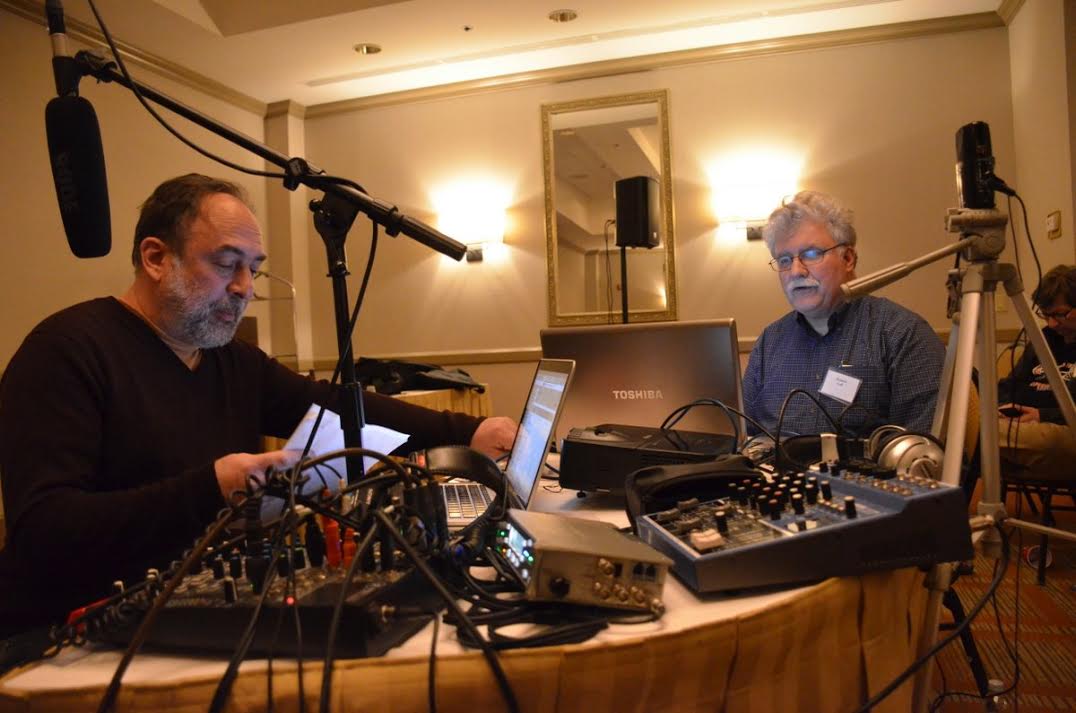
A bunch of radio professionals get together at a home in Southwest Connecticut for great fun and food ever couple of summers. On Saturday September 9th from 7pm to 10pm eastern (2300 Saturday to 0200 UTC Sunday) Bob’s Backyard BBQ Radio Show will take place, hosted by Bob Gilmore and a bevy of Northeast radio professional. They will be playing 60s 70s and 80s oldies/classic rock music while also giving out an email address to take comments/requests.

The programming will originate LIVE from a studio at Bob’s home and will be broadcast over WRMI Shortwave @7780 kHz.

This will be quite a good signal for the east coast of North America and also into Western Europe. This might have some decent coverage into the Midwestern US and Canada too, depending on conditions that night.

Bob’s Backyard BBQ Radio Show: September 9, 2017 via WRMI

Bob's Backyard BBQ Radio Show

(Source: Bob’s Backyard BBQ Radio Show)

A bunch of radio professionals get together at a home in Southwest Connecticut for great fun and food ever couple of summers. On Saturday September 9th from 7pm to 10pm eastern (2300 Saturday to 0200 UTC Sunday) Bob’s Backyard BBQ Radio Show will take place, hosted by Bob Gilmore and a bevy of Northeast radio professional. They will be playing 60s 70s and 80s oldies/classic rock music while also giving out an email address to take comments/requests.

The programming will originate LIVE from a studio at Bob’s home and will be broadcast over WRMI Shortwave @7780 kHz.

This will be quite a good signal for the east coast of North America and also into Western Europe. This might have some decent coverage into the Midwestern US and Canada too, depending on conditions that night.

KBS World Radio expands services and changes frequencies on September 4

(Source: KBS World Radio via Trevor R)

Hello listeners,

KBS World Radio English Service is carrying out a major frequency and time adjustment on shortwave as we expand our programming as of September 4.

First of all, we will start a new two-and-a-half hour broadcast on 9.770Mhz at 0800h UTC toward Southeast Asia. The one-hour broadcast on 9.515Mhz toward Europe will expand to two hours, and will start at 1500h UTC. Our broadcast toward India will be on 9.785Mhz instead of the current 9.880Mhz and expand to three hours, starting at 1400h UTC.
Unfortunately, as we add more hours and programs to several frequencies, we will no longer be broadcasting on 9.690Mhz, 6.095Mhz and 7.275Mhz.

For more information on the frequency adjustment and program schedule, please visit our website at world.kbs.co.kr.

Thank you!

Reminder: 2017 Eclipse Experiment

A map of the United States showing the path of totality for the August 21, 2017 total solar eclipse. (Source: NASA)

The 2017 eclipse is quickly approaching (August 21)–!!

If you would like to participate in a fascinating radio experiment coinciding with the event, check out this undertaking outlined on the website HamSCI. Note that you do not need to be in the path of totality in order to participate.

Here’s the summary:

On 21 August 2017, a total solar eclipse will traverse the continental United States from Oregon to South Carolina in a period of just over 90 minutes.

Previous research shows that the shadow of the eclipse will impact the ionospheric state, but has not adequately characterized or explained the temporal and spatial extent of the resulting ionospheric effects.

HamSCI is inviting the amateur radio community to contribute to a large scale experiment by participating in an Eclipse QSO party and further developing automatic observation networks such as the Reverse Beacon Network.

Data resulting from these activities will be combined with observations from existing ionospheric monitoring networks in an effort to characterize and understand the ionospheric temporal and spatial effects caused by a total solar eclipse.

Click here to read the full detailed experiment at HamSCI online.