Tag Archives: VOA

VOA Radiogram: March 23/24 broadcast

VOARadioGram(Source: VOA Radiogram)

VOA Radiogram for March 23/24 will be similar to the past weekend’s program in that it features the PSK modes. Much of Kim’s script will be the same. In this weekend’s broadcast, however, only one mode at a time will be transmitted. This should improve the signal-to-noise ratio and ability to decode each mode.

Each will be centered on 1500 Hz:

  1. BPSK31 (1:00)
  2. PSK63F (1:00)
  3. BPSK63 (1:00)
  4. PSKR125 (1:00)
  5. PSKR250 (1:00)
  6. PSKR500 (1:00)
  7. PSKR1000 (1:00)
  8. PSKR125 (3:45) Plain text
  9. PSKR250 (2:40) Flmsg* formatted (with html)
  10. MFSK32 (0:55) Image

*Install Flmsg. Then, in Fldigi: Configure > Misc >  NBEMS > under Reception of flmsg files click Open with flmsg and Open in browser, and below that state where your Flmsg file is located.

If decoding performance is still not satisfactory, VOA Radiogram in future weekends will feature more robust modes, such as MFSK, MT63, and Olivia.

See VOA Radiogram: how to decode the modes.

VOA Radiogram transmission schedule
(all days and times UTC)
Sat 1600-1630 17860 kHz
Sun 0230-0300 5745 kHz
Sun 1300-1330 6095 kHz
Sun 1930-2000 15670 kHz
All via the Edward R. Murrow transmitting station in North Carolina.

Please send reception reports, audio samples, screenshots, etc.,  to [email protected]

Global News Dashboard: BBG news networks share a front door

GlobalNewsDashboardThe BBG has made a step toward consolidating their news networks–well, at least superficially.  All of their news agencies now have a consolidated web presence on the new website called the Global News Dashboard.

Positives? It’s searchable and has a nice, clean interface. Excellent layout for a news portal.

Negatives? I dislike the large pop-up windows that appear when you click on a news link–indeed on my MacBook Air running Chrome, I can’t even scroll to the bottom of each window. When you click on the “read more” link you’re simply taken to the content on each respective network’s website. That’s a lot of clicking compared to other news portals.

With that said, I think it’s a step in the right direction.

I tend to agree with Kim Elliott who has long-argued for the consolidation of the news networks under the flag of the BBG. In fact, he recently posted his thoughts on the matter in both the MoutainRunner and, in reaction to the GAO’s recent findings, his own website; both worthy reads.

VOA Radiograms Today (17 March 2013)

VOARadiogram(Source: VOA Radiogram)

The third airplay of VOA Radiogram is coming soon, at 1300 UTC, on 6095 kHz. Another, directed to Europe, will be at 1930 UTC on 15670 kHz.

Thanks to the many listeners throughout Europe, North America, and even in Asia, who have sent reports, audio, screenshots, spectrum displays, etc. After the last transmission today, I will summarize the results in this website.

WRMI, Radio Miami International, 9955 kHz, is transmitting IDs in the Olivia 8-1000 mode until 0400 UTC Monday (midnight EDT). These are centered on 1300 and 2500 Hz. Don’t be discouraged by the low signal level of WRMI, or by the Cuban jamming on the frequency. You might get a good decode of Olivia 8-1000 anyway.

VOA Radiogram “soft launch” this weekend

VOARadioGramKudos to VOA research analyst Dr. Kim Andrew Elliott for his remarkable innovation:  VOA Radiograms (i.e., digital text messages sent over shortwave broadcast radio), and for promoting this concept through the Voice of America. His persistance, with support from forward-thinking shortwave broadcasters like WBCQ, WRMI and The Mighty KBC, who have all broadcasted his digital messages, has paid off.  Classic technology meets current in this new communication mode which makes internet disruption absolutely irrelevant, and which is even impervious, to a great degree, to interference.

This weekend, the VOA Radiogram will become a reality:

(Source: VOA Radiogram)

VOA Radiogram will “soft launch” this weekend. Here is the transmission schedule (all days and times are UTC):

Saturday 1600-1630 17860 kHz

Sunday 0230-0300 5745 kHz (Saturday evening in North America)

Sunday 1300-1330 6095 kHz

Sunday 1930-2000 15670 kHz

All via the IBB Edward R Murrow Transmitting Station in North Carolina.

The digital text modes to be transmitted this weekend on VOA Radiogram are as follows. Each text transmission will be one minute, unless otherwise specified. Asterisk * denotes RSID: if your RxID is on, Fldigi will automatically switch to this mode and audio frequency. The other modes you can decode from your recording.

  1. BPSK31 on 2000 Hz*
  2. QPSK31 on 1000Hz, BPSK31* on 2000 Hz
  3. QPSK31 on 1000Hz*, PSK63F on 1500Hz, BPSK31 on 2000 Hz
  4. QPSK63 on 1000 Hz, PSKR125 on 1500 Hz*, BPSK63 on 2000 Hz
  5. QPSK125 on 1000Hz, PSKR250 on 1500 Hz*, BPSK63 on 2000 Hz
  6. QPSK250 on 800 Hz, PSKR500 on 1500Hz*, BPSK250 on 2200Hz
  7. QPSK500 on 800 Hz, PSKR1000 on 1500 Hz*, BPSK500 on 2200 Hz
  8. PSKR500 on 1000 Hz, PSK63F on 1500 Hz, PSKR125 on 2000 Hz, and PSKR250 on 2500 Hz* (5 min 40 secs).  The latter portions of the PSKR250 and 500 transmissions are formatted for Flmsg. (In Fldigi, Configure > Misc > NBEMS > under Reception of flmsg files, click Open with flmsg and Open in browser, and below that state the location of the flmsg.exe file.)
  9. MFSK32 image on 1500 Hz (54 seconds)

In future weeks, after the “hard launch” of VOA Radiogram, only one mode will be transmitted at one time. This will ensure the highest possible signal-to-noise ratio and the best possible chances for a successful decode.

See also how to decode the modes.

Send reports to radiogram(at)voanews.com

Follow @voaradiogram

Keep up-to-date with all future broadcasts, digital modes and methods for decoding on the VOA Radiogram website, and by following them on Twitter: @voaradiogram.

VOA protests jamming of English service to China

voa logo(Source: VOA)

The Voice of America is protesting new jamming of its English broadcasts in China.

VOA Director David Ensor condemned the new interference and said the U.S. government broadcaster is working with experts to determine the precise origin of the jamming. He said “the free flow of information is a universal right and VOA will continue to provide accurate and balanced information on platforms that can reach audiences in areas subject to censorship.”

The U.S.-funded VOA is not the only victim of jamming. The British Broadcasting Corporation said this week its shortwave English radio broadcasts also are being jammed in China.

The BBC said that while it is not possible to know who is doing the jamming, “the extensive and co-ordinated efforts are indicative of a well-resourced country such as China.”

VOA broadcast engineers say Radio Australia also is being jammed.

At VOA headquarters in Washington, engineers say that while the agency’s Chinese-language broadcasts are routinely jammed in China, its English broadcasts usually are not. They noticed the jamming of the English programs about a month ago and say it appears to use a new technology.

Many countries have used various methods to jam VOA broadcasts for decades, especially during the Cold War when VOA broadcast heavily into the former Soviet Union and other countries under Communist control. Now, its Persian satellite television broadcasts into Iran are frequently jammed, as are VOA Horn of Africa broadcasts to Ethiopia.

Note our previous article on the topic of harmful interference from China.

Daniel shares recent QSLs

Daniel (W3DI) writes:

I have been enjoying some shortwave broadcasts recently and received some nice QSL cards. Wanted to share the cards and some station information.

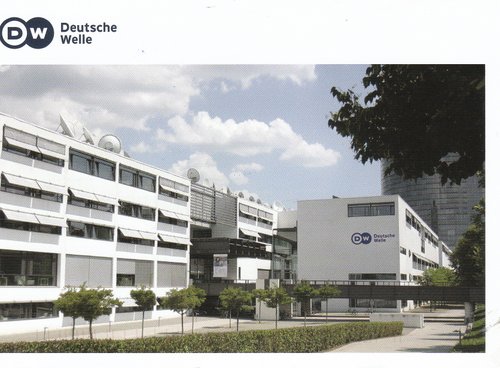
 Deutsche Welle - copied broadcast on 15,275 KHz - Jan 20 , 2013 at 1930 UTC

Deutsche Welle – copied broadcast on 15,275 KHz – Jan 20 , 2013 at 1930 UTC

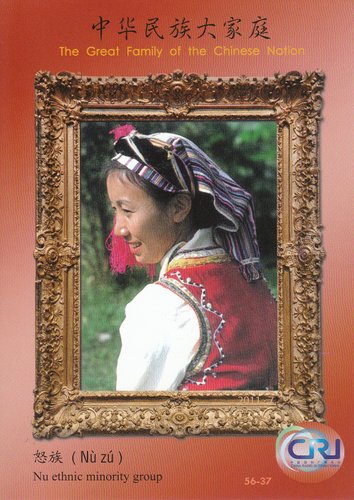
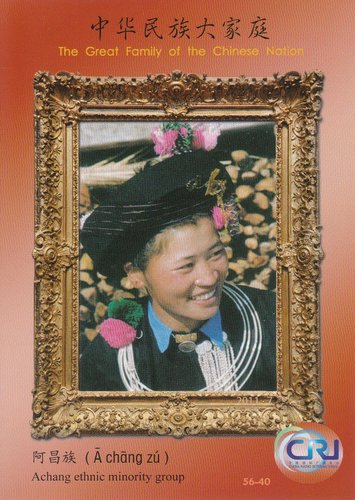
China Radio International - copied broadcast on 9,580 & 6,020 KHz - Dec 29 & 31 , 2012   at 0130 UTC

China Radio International – copied broadcast on 9,580 & 6,020 KHz – Dec 29 & 31 , 2012 at 0130 UTC

IMG_0002

VOA -  Africa service - They sent not only a QSL but a beautiful 2013 calendar.

VOA – Africa service –
They sent not only a QSL but a beautiful 2013 calendar.

Daniel addeded:

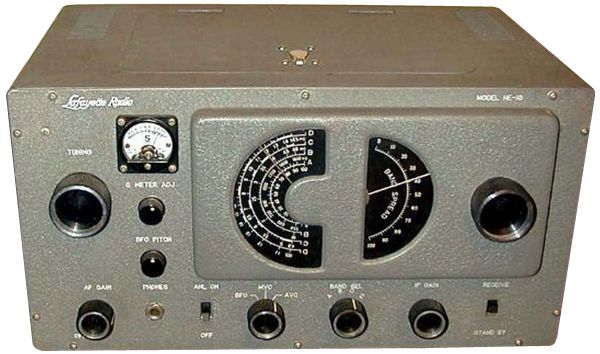
Shortwave listening was my first step to becoming an amateur [radio operator]. First receiver was a Lafayette HE – 10 with a Q mulitplier I built. Now using a WinRadio 313 – things have really changed.

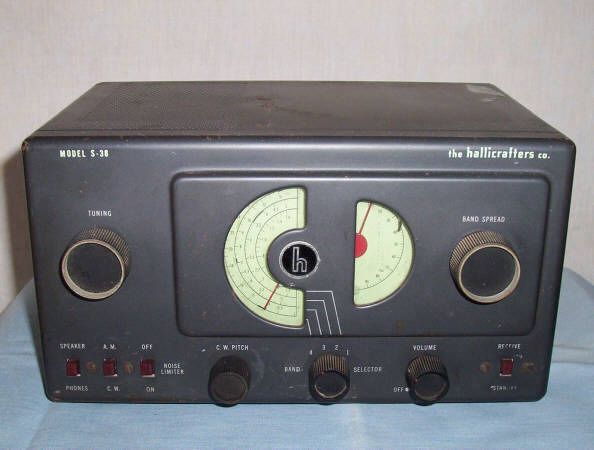
Shortwave listening was also my first step to becoming a ham radio operator. The Lafayette HE-10 is a beautiful little 9 tube radio. I love the split dials on the front–much like the venerable Hallicrafters S-38.

The Lafayette HE - 10 (Photo: RigPix.com)

The Lafayette HE – 10 (Photo: RigPix.com)

Halli-S-38

The Hallicrafters S-38 (Photo: The S-38 Guy)


VOA’s Radiogram adds digital content to AM broadcasts

VOARadiogram

VOA Radiogram is a new Voice of America program experimenting with digital text and images via AM shortwave broadcasting.  One might say this is the crossover point between classic shortwave and current technology.  It’s fun and fascinating stuff, and also has real utility.

If you’ve been an SWLing Post reader for very long, you’ll be familiar with the digital messages, otherwise known as radiograms, included in broadcasts from The Mighty KBC and, earlier, from WBCQ.  We’ve also offered a small primer on decoding.

In the near future, Dr. Kim Elliott’s digital radiograms will be broadcast through VOA via the Edward R. Murrow Transmission Station in Greenville, NC.

The new VOA Radiogram website contains time and frequencies and all of the information you’ll need to decode VOA radiograms.

Incidentally, Kim Elliott and I will be presenting on the topic of VOA Radiograms and digital modes at the 2013 NASWA Winter SWL Fest. If you’re interested, it’s not too late to register!  Meanwhile, stay tuned for more information about radiograms.