Shortwave listening and everything radio including reviews, broadcasting, ham radio, field operation, DXing, maker kits, travel, emergency gear, events, and more
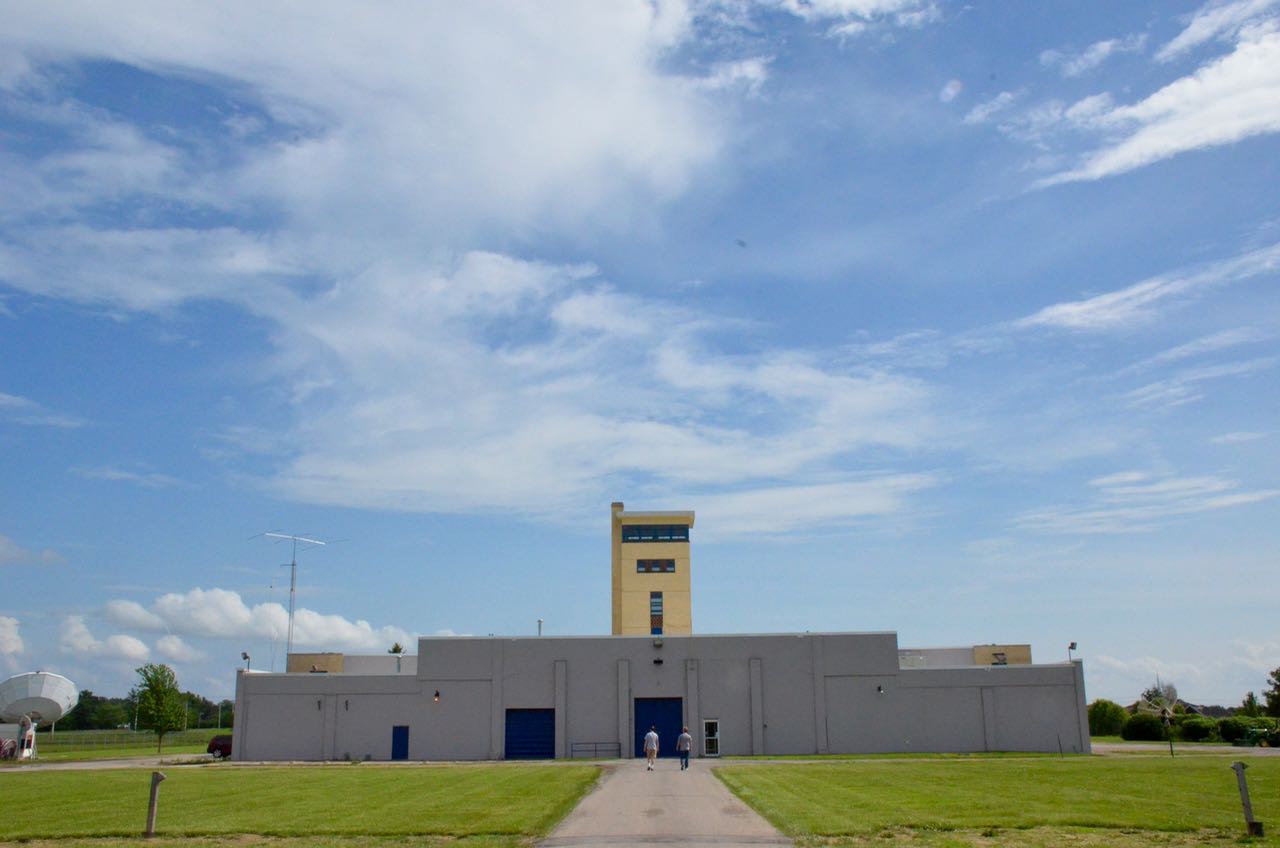
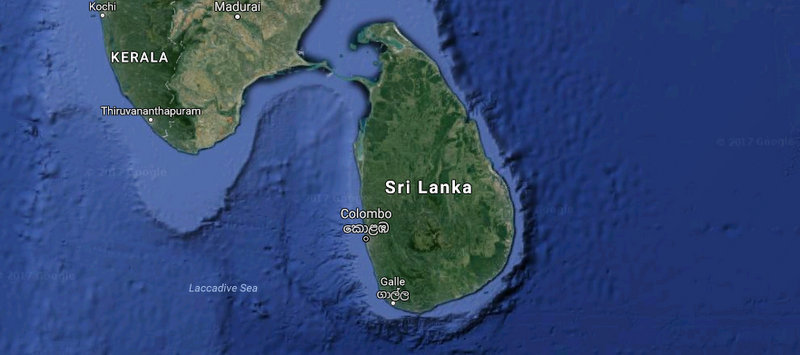
The United States values its strong relationship with Sri Lanka and our bilateral partnership over the past 60 years. The Iranawila shortwave station, managed by an independent U.S. agency, the Broadcasting Board of Governors (BBG), is an example of this partnership. The shortwave station has transmitted Voice of America programs from Washington through shortwave radio signals to audiences around the world, bringing them news, music, and special interest programs about the United States. Without the support of Sri Lankan governments over many years, Voice of America could not have succeeded in its mission of telling America’s story to the world.
Over time, however, the audience for shortwave broadcasts has diminished. People are increasingly turning to other sources of news and information – including, but not limited to FM radio, satellite television, websites, and social media – often delivered via mobile phones. The BBG is committed to reaching audiences on their preferred media. Given changing audience habits and the increasing costs of operating shortwave transmission stations, the BBG decided to close the Iranawila station.
The land where the station is located was leased from, and is being returned to, the Government of Sri Lanka. During the time of its operation, the U.S. government has developed the Iranawila property, building roads, clearing and levelling the land, building drainage canals, fences, and modern office buildings. The U.S. government has also installed service connections to public utilities and 4.2Mw of onsite self-generated power. All of these improvements have significantly increased the property’s value, and the flexibility of the site to serve many roles in the future. The United States government is returning with gratitude its lease of over 400 acres of property in Iranawila back to the Government of Sri Lanka in its entirety, including any and all improvements.
Voice of America provides trusted and objective news and information in 47 languages to a measured weekly audience of more than 236.6 million people around the world. For nearly 75 years, VOA journalists have told American stories and supplied objective news and information about the US, their region and the world. For more information on VOA – www.voanews.com
Many thanks to SWLing Post readers Al Quaglieri and Alan Tu for sharing the following story via app.com about the removal of the remnants of radio station WOO:
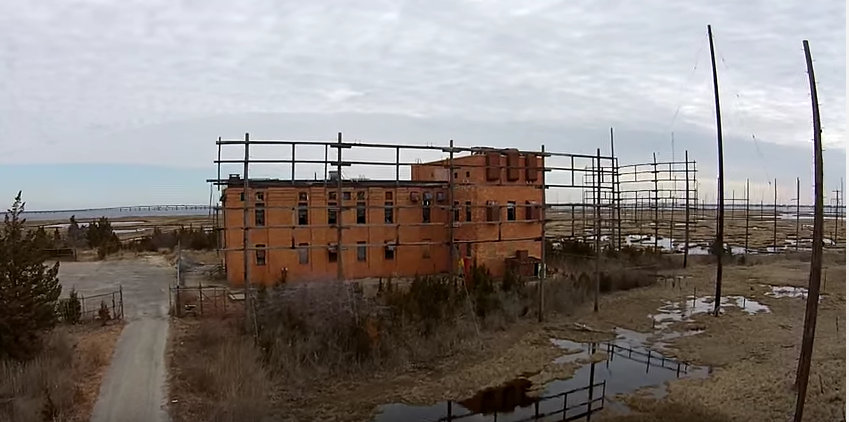
BERKELEY TOWNSHIP — The mysterious poles have stood in the open marshland off Good Luck Point for nearly 80 years, but sometime in January these local landmarks will finally be removed.
“We’re still working with the contractor to determine the exact start time,” said Virginia Rettig, a spokeswoman for the Edwin B. Forsythe National Wildlife Refuge. “This is a little more difficult than the typical project, as we’re trying to be sensitive to the marsh surface.”
The Good Luck Point poles – and a similar pole field in Stafford’s Manahawkin section – were part of inactive shortwave antenna fields used by AT&T for ship-to-shore shortwave communications.
They’ve become a familiar landmark for boaters, fishermen and residents of the area, and can be seen from the bayside in Seaside Heights and Seaside Park.
The antenna field was in operation from the early 1930s until 1999. A shuttered building on the Good Luck Point portion of the antenna field contained equipment related to shortwave communications.
Under the call sign WOO, the shortwave facility at Good Luck Point (known as Ocean Gate) was a renowned transmitting station, which helped broadcast Voice of America around the globe after 1944 and enabled communication with ships at sea throughout the 20th century, according to the U.S. Fish and Wildlife Service.
According to federal officials, about 340 poles will be removed from the Berkeley site, along with several metal antennae.
In Manahawkin, about 113 wooden poles will be removed from the antenna field. Several metal antennas will also be removed.
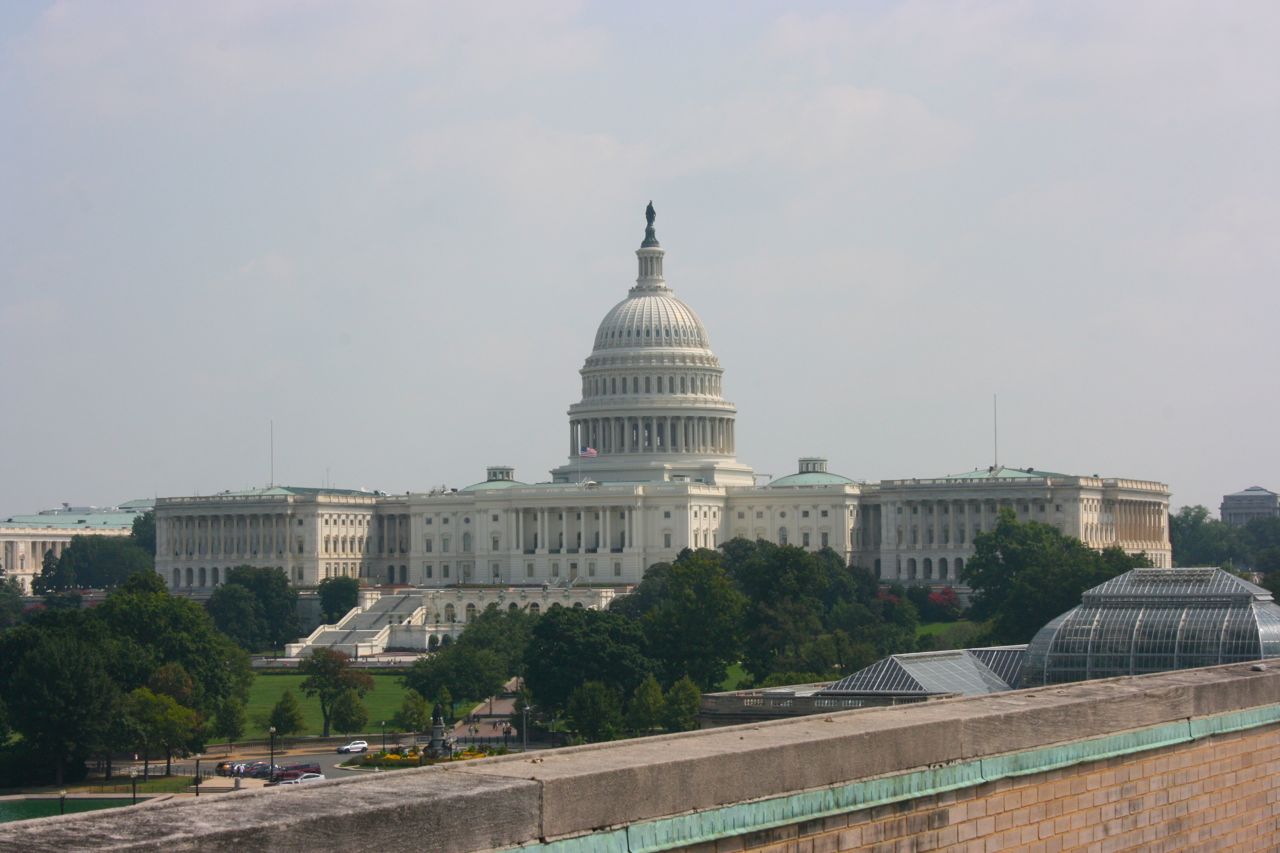
President Barack Obama has signed into law S. 2943, the “National Defense Authorization Act for Fiscal Year 2017,” which includes a provision to reduce the Broadcasting Board of Governors’ (BBG) governing board to an advisory status while making the BBG CEO position subject to a future nomination by the president and vetting and confirmation by the U.S. Senate.
While signing the legislation into law, President Obama expressed reservations about several of the 2017 NDAA provisions dealing with the U.S. Department of Defense. President Obama also had some reservations about the amendment dealing with the BBG, but they are not likely to have any practical effect during the waning days of his presidency.
[…]PRESIDENT OBAMA: “My Administration strongly supports the bill’s structural reform of the Broadcasting Board of Governors (BBG), which streamlines BBG operations and reduces inefficiencies, while retaining the longstanding statutory firewall, protecting against interference with and maintaining the professional independence of the agency’s journalists and broadcasters and thus their credibility as sources of independent news and information. Section 1288 would elevate the current Chief Executive Officer of the Broadcasting Board of Governors to the head of the agency and reduce the current members of the Board, unless on expired terms, from serving as the collective head of the agency to serving as advisors to the Chief Executive Officer. While my Administration supports the empowerment of a Chief Executive Officer with the authority to carry out the BBG’s important functions, the manner of transition prescribed by section 1288 raises constitutional concerns related to my appointments and removal authority. My Administration will devise a plan to treat this provision in a manner that mitigates the constitutional concerns while adhering closely to the Congress’s intent.”[…]
Deep in the massive FY2017 National Defense Authorization Act is a provision to eliminate, in its present form, the U.S. Broadcasting Board of Governors. The NDAA has been passed by the House and the Senate and is expected to be signed by President Obama. The BBG is the topmost authority of the elements of U.S. government-funded international broadcasting: Voice of America, Radio Free Europe/Radio Liberty, Radio Free Asia, Radio and TV Martí, and the Arabic-language Alhurra TV and Radio Sawa. Together they broadcast in 61 languages.
This BBG’s demise eliminates the “firewall” of a nine-person bipartisan board with fixed and staggered terms, and replaces it with one politically-appointed CEO. This change will have consequences.
Traditionally, people around the world huddled around a shortwave radio to get news from abroad. Increasingly, they watch an international news channel via cable or satellite television, or access a foreign website or social media outlet. Whatever the medium used, the need for a credible alternative to domestic state-controlled media is the main reason international broadcasting has had an audience since the 1930s.
Credibility is the essence of successful international broadcasting. The shortwave frequencies, satellite channels, and online media are full of propaganda, but serious news consumers seek out the news organizations that they trust.
International broadcasting in languages such as Burmese or Hausa has little commercial potential. National governments must step in to provide the funding. The foremost challenge is to ensure that the journalism is independent from the governments that hold the purse strings.
To achieve this, there is no substitute for a multipartisan governing board. Its main function is to appoint the senior managers of the broadcasting organization, so that politicians don’t. This is how “public service” broadcasting corporations throughout the world, e.g. BBC, Canadian Broadcasting Corporation, Australian Broadcasting Corporation, maintain their independence.
When a government is directly involved in the production of news, the results are generally deleterious. The outcome can be as extreme as the lies and distortions of German broadcasts before and during World War II. Or the output can be something like the stultifying commentaries that filled much of Radio Moscow’s schedule during the Cold War. And, as can be observed by watching Russia’s RT or China’s CCTV News on cable TV, propaganda can also be manifest by emphasizing some topics, while downplaying or ignoring others.[…]
Many thanks to SWLing Post contributor Dan Robinson--former White House, Congressional and foreign correspondent for the Voice of America–who alerts us to a major development at the Broadcasting Board of Governors (BBG).
Note that the BBG supervises the Voice of America (VOA), Radio Free Europe/Radio Liberty, Radio y Television Marti, Radio Free Asia, and the Middle East Broadcast Networks.
Dan writes:
House Rules Committee approves conference report containing reform of U.S. international media management structure
[T]he BBG met today [November 30, 2016] and were trying to put a positive spin on this, but this development essentially lays the groundwork for the elimination of BBG completely, though a first stage would have remaining governors on the board serve in the first iteration of a new International Broadcasting Advisory Board (IBAB).
Also, and importantly — Congress is going ahead with a proposal to create a Global Engagement Center that would have as its main purpose, countering foreign misinformation and disinformation.
A link to the actual language in the House Committee on Rules conference report to the 2017 National Defense Authorization Act (NDAA) is below:
[Y]ou can read the actual language, beginning on Page 1396 for the Global Engagement Center and then right after, on Page 1404, on the BBG.
[Again], pages 1404 – 1421 in the conference report details making the BBG advisory and therefore putting it out of the direct decision making path and likely reducing its power, influence and impact.
The remaining BBG members would be allowed to serve out terms, constituting the first “International Broadcasting Advisory Board,” modifying the U.S. international broadcasting act with powers focused in hands of CEO, and creating a Global Engagement Center (see Pg 1396 before section on BBG) to counter foreign misinformation and disinformation…there is no specific mention of VOA in the conference report to the 2017 NDAA
‘‘SEC. 306. ESTABLISHMENT OF THE INTERNATIONAL
13 BROADCASTING ADVISORY BOARD.
14 ‘‘(a) IN GENERAL.—Except as provided in subsection
15 (b)(2), the International Broadcasting Advisory Board
16 (referred to in this section as the ‘Advisory Board’) shall
17 consist of five members, including the Secretary of State,
18 appointed by the President and in accordance with sub-
19 section (d), to advise the Chief Executive Officer of the
20 Broadcasting Board of Governors, as appropriate.
Global Engagement Centeer: PURPOSE.—The purpose of the Center shall
2 be to lead, synchronize, and coordinate efforts of the
3 Federal Government to recognize, understand, ex-
4 pose, and counter foreign state and non-state propa-
5 ganda and disinformation efforts aimed at under-
6 mining United States national security interests.
Many thanks to Mauno Ritola who notes the following news via the WRTH Facebook page:
VOA emergency shortwave coverage for Haiti in Creole & English has started as follows via Greenville [North Carolina]:
2200-0200 7305 kHz
0200-1200 7405 kHz
1200-1630 9565 kHz
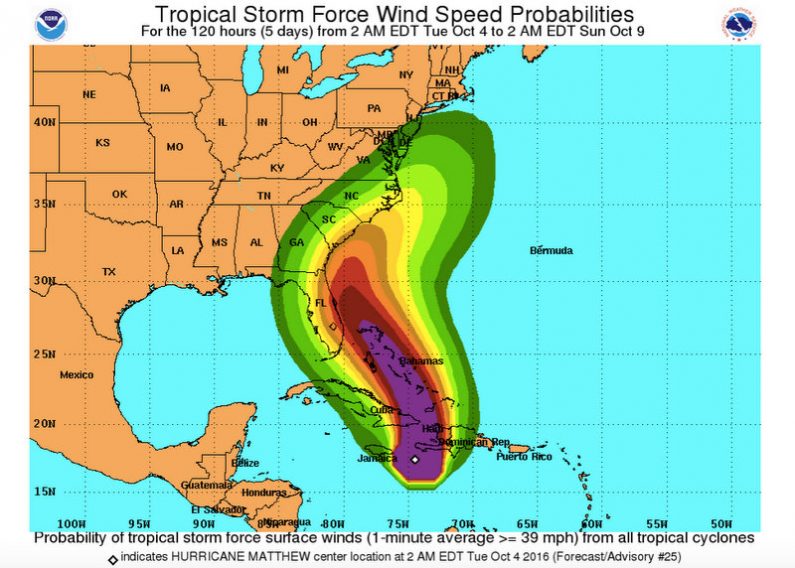
Last night, I looked at the projected path of Hurricane Matthew. Sadly, Haiti and parts of Cuba will receive the brunt of Matthew’s energy in the Caribbean.
Please support this website by adding us to your whitelist in your ad blocker. Ads are what helps us bring you premium content! Thank you!