WNAM Final Broadcast and DX Test Announcement: December 30-31, 2025

The following announcement was shared by Loyd Van Horn of DX Central:
FOR IMMEDIATE RELEASE

1280 – WNAM DX Test Announcement

Dec 27, 2025

The Courtesy Program Committee (CPC) of the National Radio Club (NRC) and the International Radio Club of America (IRCA) announces a special DX Test for distant listeners for radio station WNAM on 1280 kHz in Neenah-Menasha,WI. The test is scheduled for Tuesday, December 30th and Wednesday, December 31st starting at Midnight local Central Standard Time through 5:05 AM Central Standard Time (This equates to 0600 to 1105 UTC on 30 December and 31 December).

This test is scheduled to run for 2 minutes after ABC News at the top-of-the-hour each hour from Midnight to 5am local Central time. ABC News runs from :00-:03 after the hour. The DX Test will run from :03-:05 after the hour, each hour of the window.

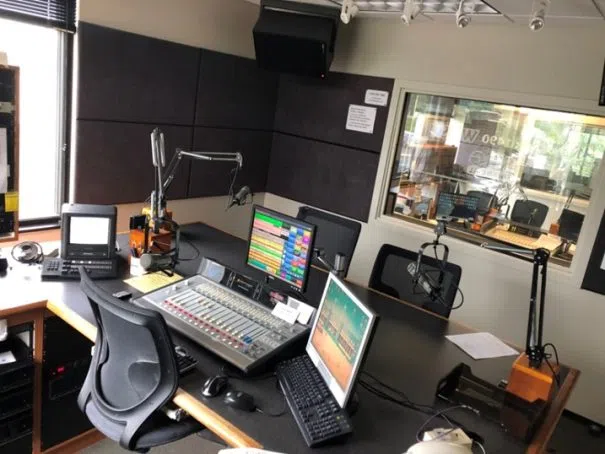
These test transmissions are being broadcast in conjunction with the final days of broadcast of WNAM. WNAM is scheduled to cease broadcast operations at 11:59 PM Central Time on December 31st.
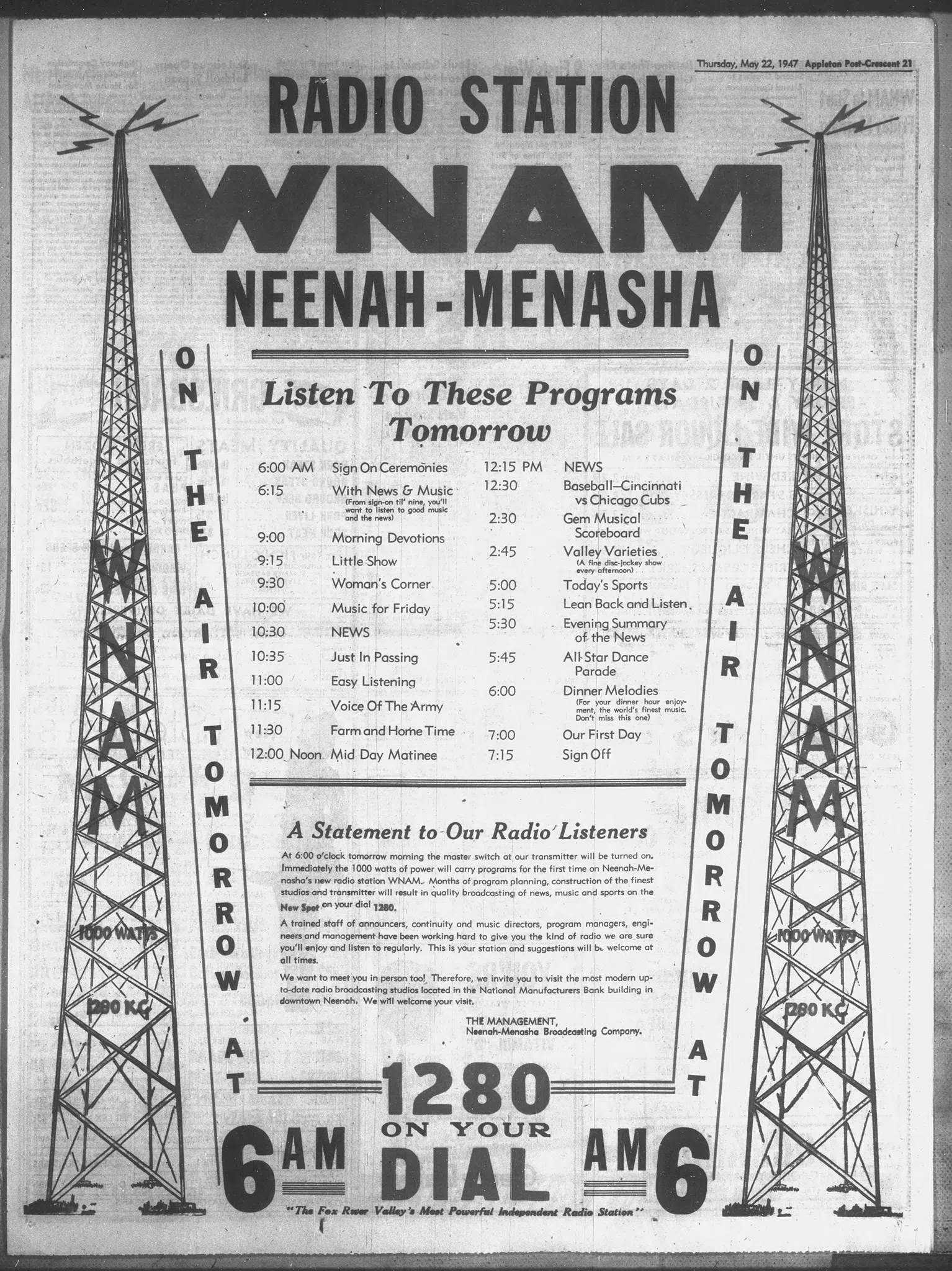
These test transmissions are a way to honor the history of WNAM in its service to the community as well as provide an opportunity for DXers to hear WNAM one last time – or possibly the first time!

The test will consist of an assortment of classic station jingles, sweep tones, voice IDs, morse code and other sounds.

WNAM will be operating at their daytime power/pattern for the duration of the test events.

In addition, listeners/DXers are invited to tune in WNAM’s special 3-hour farewell broadcast on Wednesday, December 31, starting at 9:00 PM Central Standard Time. This will include a “recreation” of the station’s glory years as “Blue 128” complete with airchecks from previous on-air staff.

RECEPTION REPORTS & QSL REQUESTS

All reception reports will be verified through the station directly with a special QSL that was developed for the occasion. Reception reports along with MP3 recordings or .MP4 video recordings of your reception should be emailed to:

[email protected]. Please be sure to use the subject line: “WNAM 1280 DX TEST RECEPTION REPORT.”

The following are recommendations are in effect in order to expedite processing and receive a QSL verifying your report:

    • Reports via email only – this is required. An MP3 file attachment of your reception (best reception) or an MP4 video clip are preferred. While written descriptions will be considered along with the recording, they may not suffice alone for verification.
    • Reports must be submitted within 30 days of the test.
    • The report must include your name, location, and return email address, clearly grouped together at the top of the verification request.
    • Please also include a description of your receiver, antenna, and any interference noted.
    • If you use a remote SDR to receive the test, you must clearly indicate that in your verification request. We will only accept one such report per DX’er. You cannot log the test on multiple remote SDRs and request multiple verifications.

The IRCA/NRC CPC would like to thank the owners and staff of WNAM}, Steve Edwards and CPC member Loyd Van Horn for helping to arrange the test.

Good luck to all DXers!

About the CPC

The Courtesy Program Committee (CPC) is a cross-functional group comprised of members of both the National Radio Club (NRC) and International Radio Club of America (IRCA) for the purpose of coordinating and arranging DX Tests with AM radio stations. These DX tests both allow radio stations to conduct valuable equipment tests on their transmitter and audio chain as well as enable DX hobbyists to receive the testing station from greater distances than would normally be possible. The CPC membership consists of: Chairman Les Rayburn, Paul Walker, George Santulli, Joe Miller and Loyd Van Horn.

For radio stations interested in coordinating a DX test with the CPC, please visit the following Web site for more information:

https://amdxtest.blogspot.com/

For more information on the types of content heard during a DX test, the video “An introduction to DX Tests” is available at DX Central:


https://www.youtube.com/watch?v=NQX_zmEC4fY

Carlos’ Illustrated Radio Listening Report and Recording of the Voice of Korea (December 25, 2025)

Many thanks to SWLing Post contributor and noted political cartoonist, Carlos Latuff, who shares the following illustrated radio listening report of a recent Voice of Korea broadcast.


Carlos notes:

Kim Jong Un guides building of nuclear-powered strategic guided missile submarine, Voice of Korea, 7570 kHz

Click here to view on YouTube.

New Book Release: Volodymyr Gurtovy’s Ukraine War Diaries, Book 3

I’m pleased to share that my friend Volodymyr Gurtovy (US7IGN) has just released his third book chronicling life during the war in Ukraine. This new volume follows his earlier works, War Diaries: A Radio Amateur in Kyiv and War Diaries: Stalemate, both of which I’ve previously highlighted here on the SWLing Post. I haven’t had the opportunity to read this latest book yet–it’s hot off the presses–but given the power and honesty of his earlier writing, I wanted to make readers aware of its release as soon as possible.

Volodymyr is an active and valued member of the SWLing Post community, and his perspective is both deeply personal and historically important. While his books are not exclusively about radio, radio is very much woven into the narrative. Volodymyr is a lifelong shortwave listener, an amateur radio operator, and a skilled repair technician who keeps older radios alive–often under extraordinarily difficult circumstances. Radio, for him, is not just a hobby, but a lifeline, a witness, and a constant companion amid uncertainty.

I’ll include links to all three books below for those who wish to explore Volodymyr’s work from the beginning or support his latest release. His writing offers a rare, grounded view of daily life during wartime–told through the eyes of someone many of us know here not just as an author, but as a fellow radio enthusiast and friend.

Click here to check out Hard Times (Ukraine. War Diaries. Book 3) on Amazon.

Please note: All Amazon links are affiliate links that support both the author and the SWLing Post at no additional cost to you.

Don Pushes Portable Antennas Further: Loop Size, Performance, and Real-World Limits (Part 2)

Many thanks to SWLing Post contributor Don Moore–noted author, traveler, and DXer–who shares the following post:


Two Portable Antennas for Remote DXing (Part Two)

By Don Moore

Don’s traveling DX stories can be found in his book Tales of a Vagabond DXer [SWLing Post affiliate link]. If you’ve already read his book and enjoyed it, do Don a favor and leave a review on Amazon.

In my initial comparison of the PA0RDT mini-whip and the MLA-30+ MegaLoop, the mini-whip performed best on medium wave and the lower shortwave bands, while the loop worked better on the higher bands. But, I wondered, why should the MLA-30+ be restricted to that small steel loop? The wire loops I use with my Wellbrook ALA-100LN typically range from twenty to fifty meters in circumference.

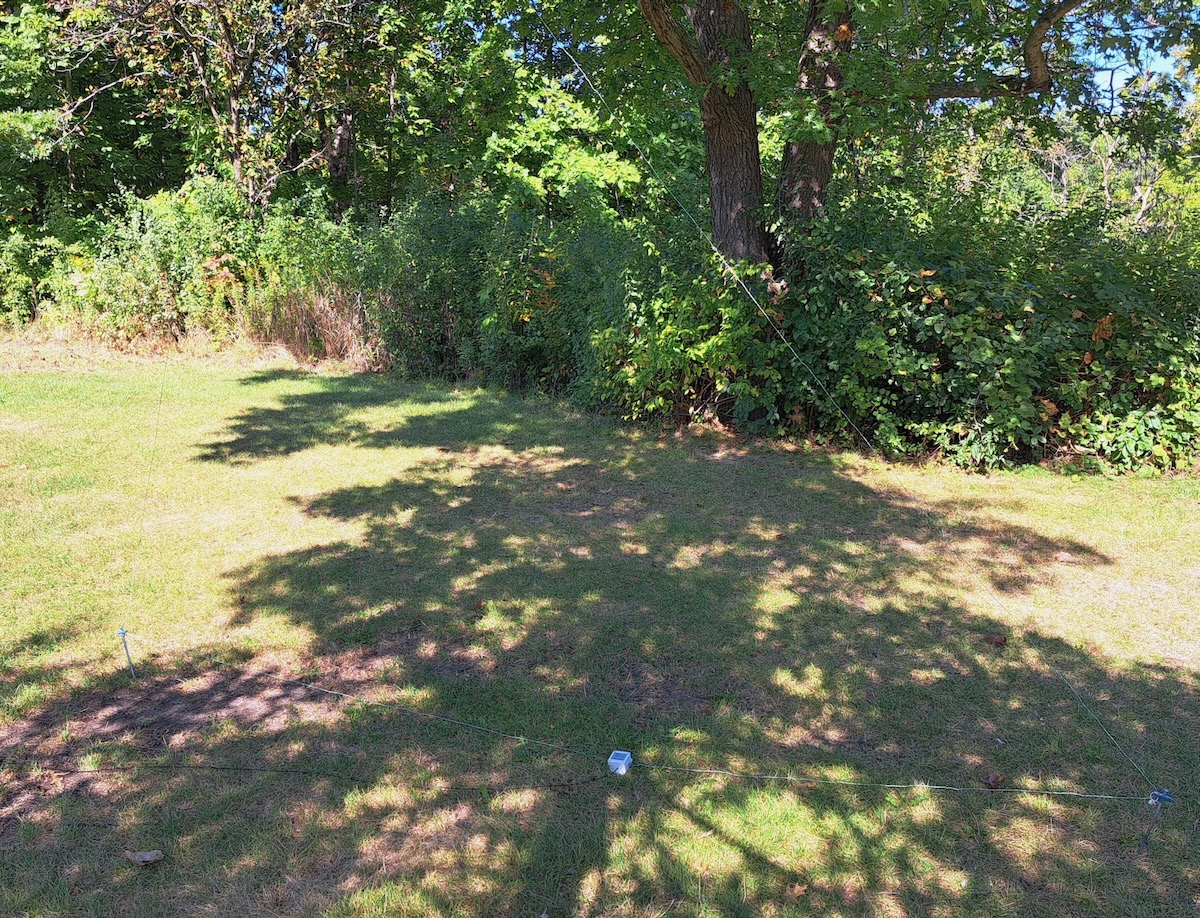
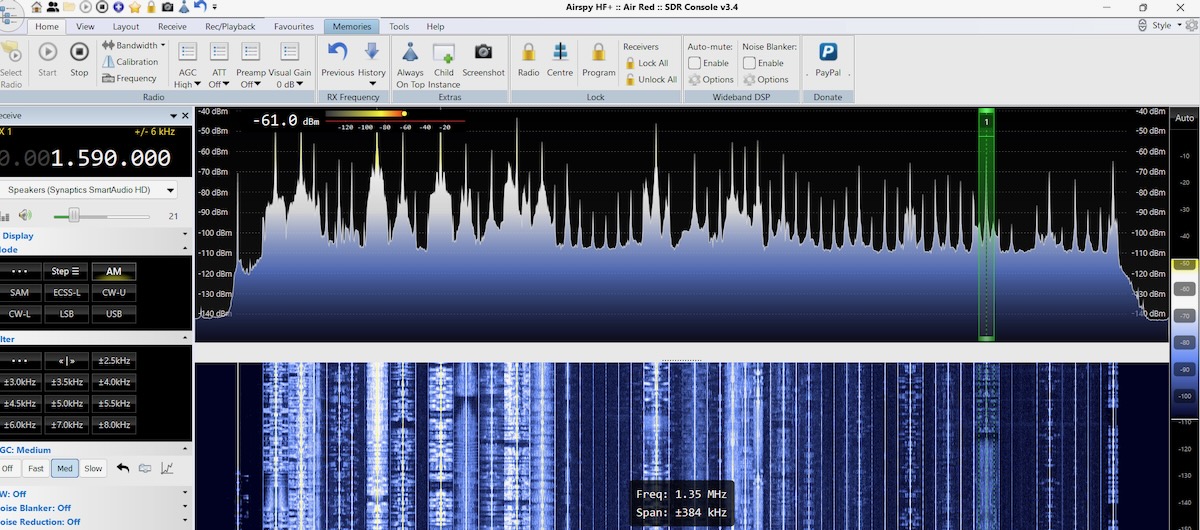
I threw a twenty-five-meter wire over a tree branch and formed it into a delta with the MLA-30+ in the bottom center. Remember, I was testing in the northern Chicago suburbs. My SDRs were completely overloaded. Medium wave was useless and I had strong MW stations all over the shortwave bands. The MLA-30+ doesn’t have the same strong-signal handling capabilities as the Wellbrook. And there are a lot of strong medium wave signals in the Chicago suburbs.

So I took that wire down and replaced it with a loop of twelve meters circumference.

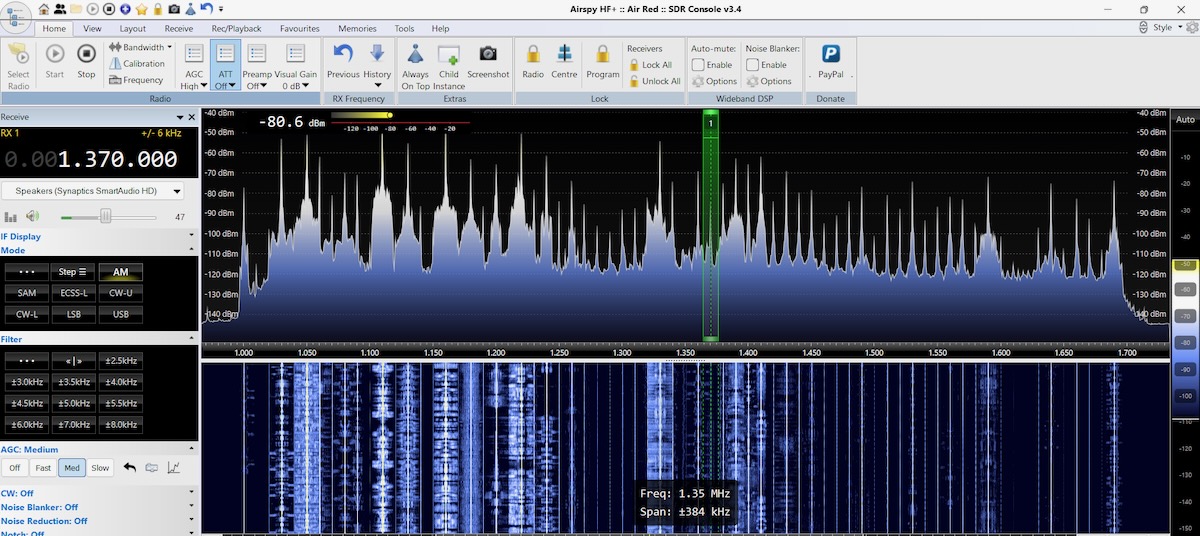
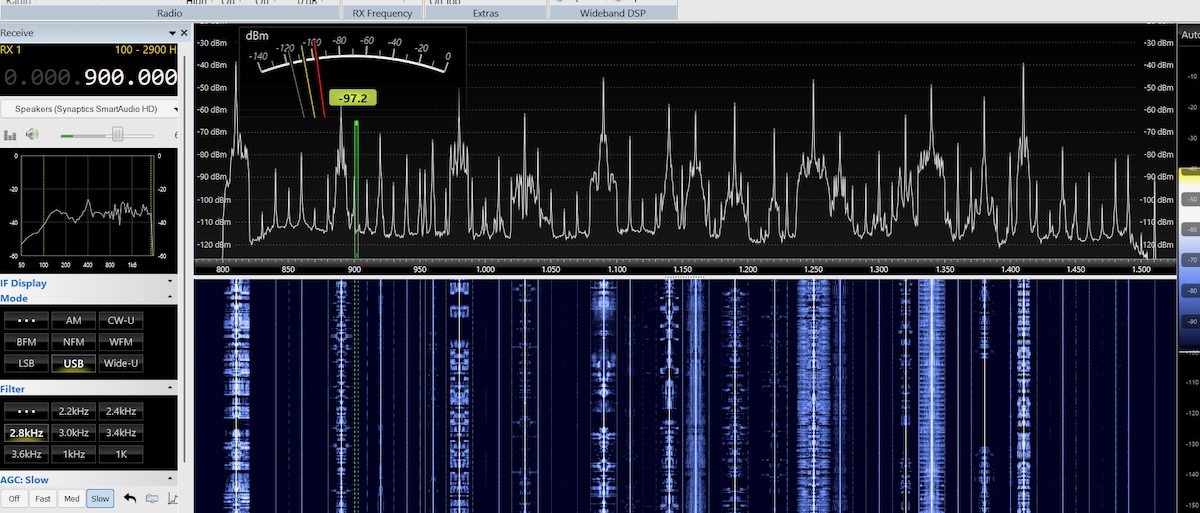
That did the trick. I had lots of signals on medium wave without the overloading. Here’s what the upper end of the MW band now looked like with the MLA-30+.

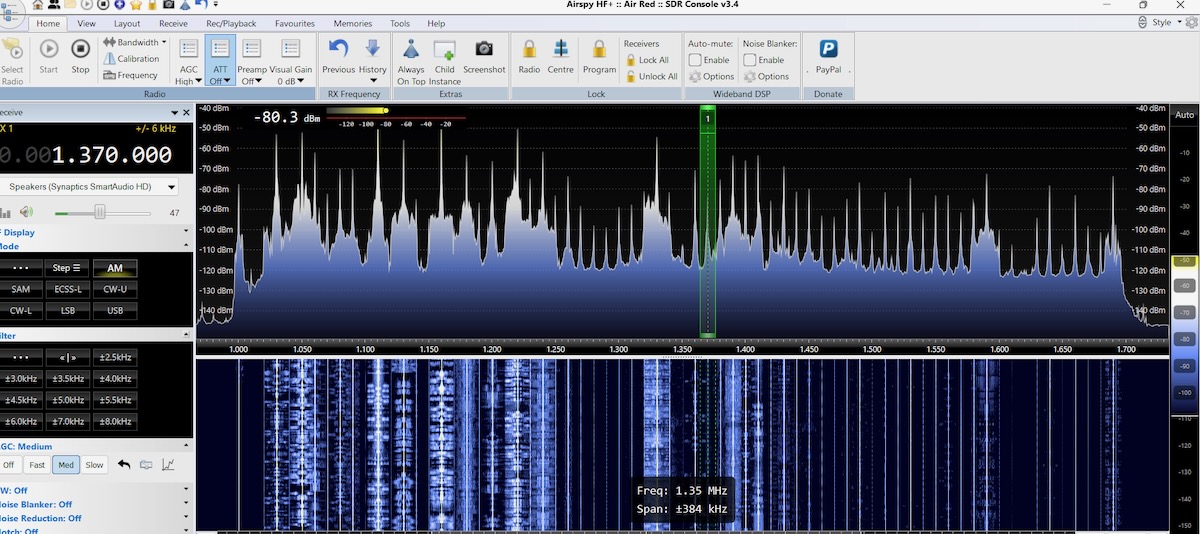
For comparison, here’s the same wire loop using the Wellbrook ALA-100LN. The Wellbrook has a slightly lower noise floor but otherwise the signals are about the same.

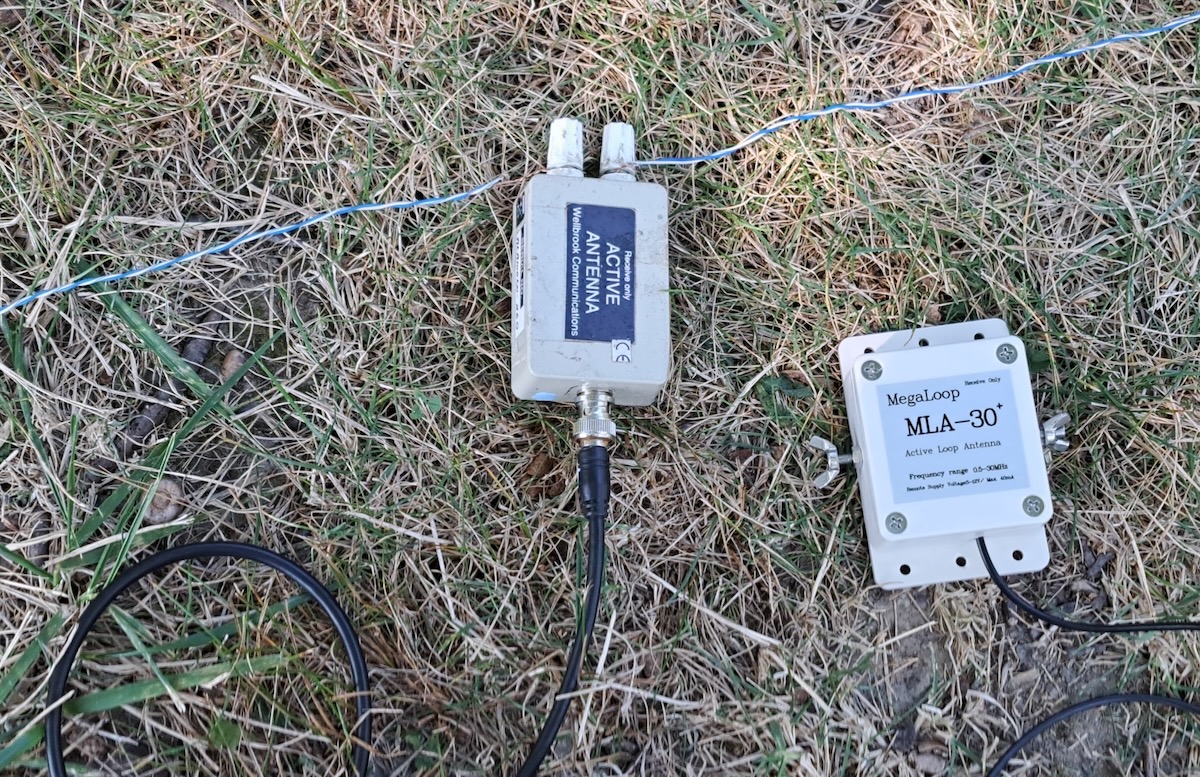
Out of curiosity, I replaced the Wellbrook power unit with the Bias-T from the MLA-30+ but left the Wellbrook antenna head unit in place. With this hybrid setup there’s no visible difference with the full Wellbrook.

I was satisfied with my findings but I still wondered how much wire the MLA-30+ could handle. A few weeks later I ran some more tests in Kansas, where I knew the dial wouldn’t be as crowded. The MLA-30+ easily handled a 25-meter delta loop without overloading.

Two weeks after doing the Kansas tests I was at a DXpedition in rural western Pennsylvania. The MLA-30+ worked fine with a 40-meter circumference loop, other than being a tad noisier than the Wellbrook with the same wire. So how much wire you can use with the MLA-30+ components depends on how strong your local medium wave stations are.

Findings

From the SDR images above it would be easy to conclude that with the right length of wire an MLA-30+ is just as good as a Wellbrook ALA-100LN even though it is significantly cheaper. But that’s not the full picture. Back in the 1990s my Drake R-8 cost about three times what my Sony ICF-2010 did.  All other things being equal, I would say that 95% of the DX heard on the Drake could have been heard equally well on the Sony. I wanted the Drake for the other five percent.

I have no doubt that if I did a very careful head-to-head comparison of the two units under serious DX conditions on the same wire that the Wellbrook would get things the MLA-30+ couldn’t. But I suspect the difference would be around that five percent mark. I’m willing to accept that tradeoff for an effective cheap light-weight travel antenna. And the MLA-30+ is like having two antennas in one. I can use it with the steel loop in limited space situations or with a larger wire loop when I have access to some garden space with a tree. Together, the MLA-30+ and the PA0RDT make the perfect DX travel antennas.

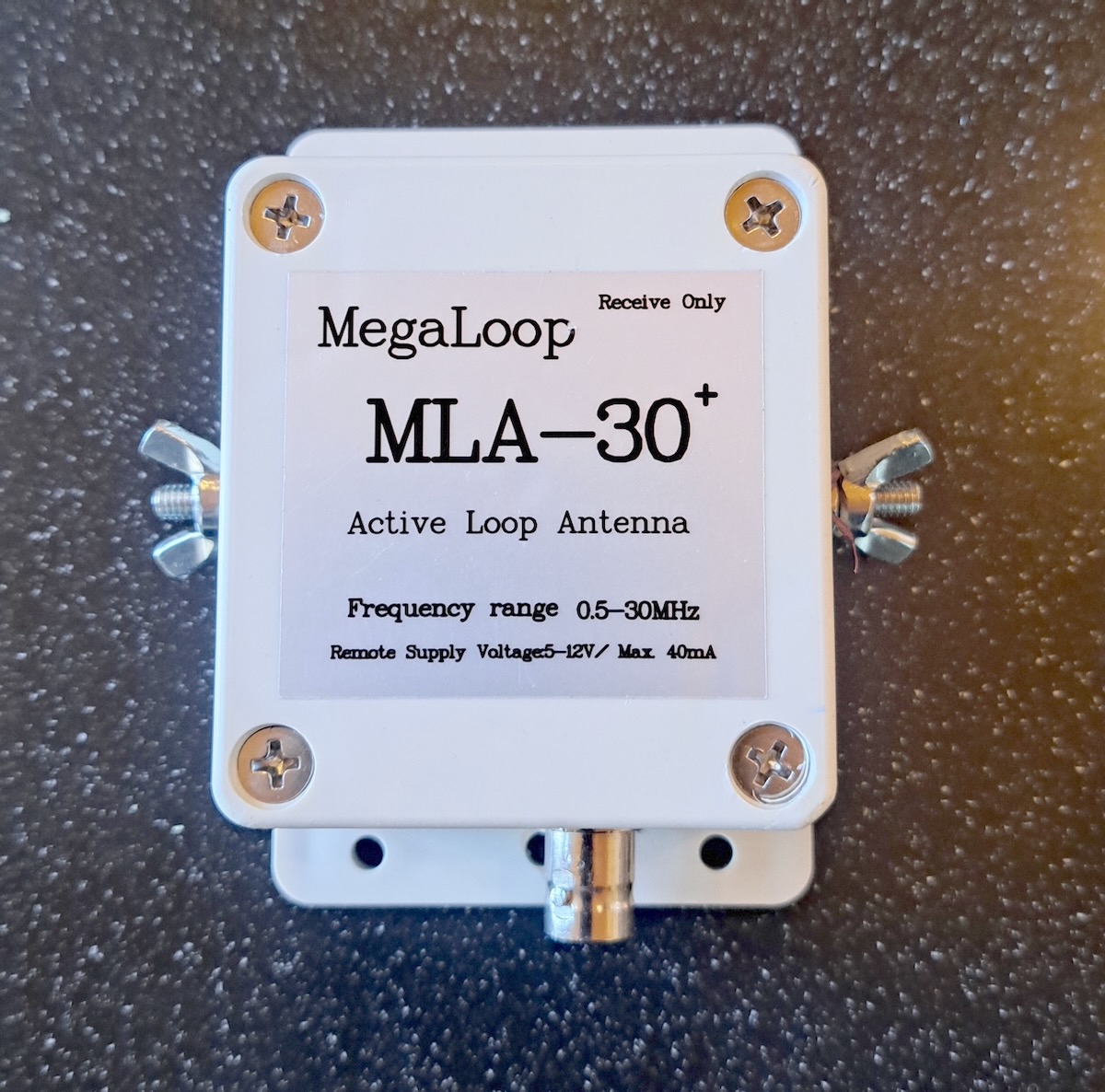
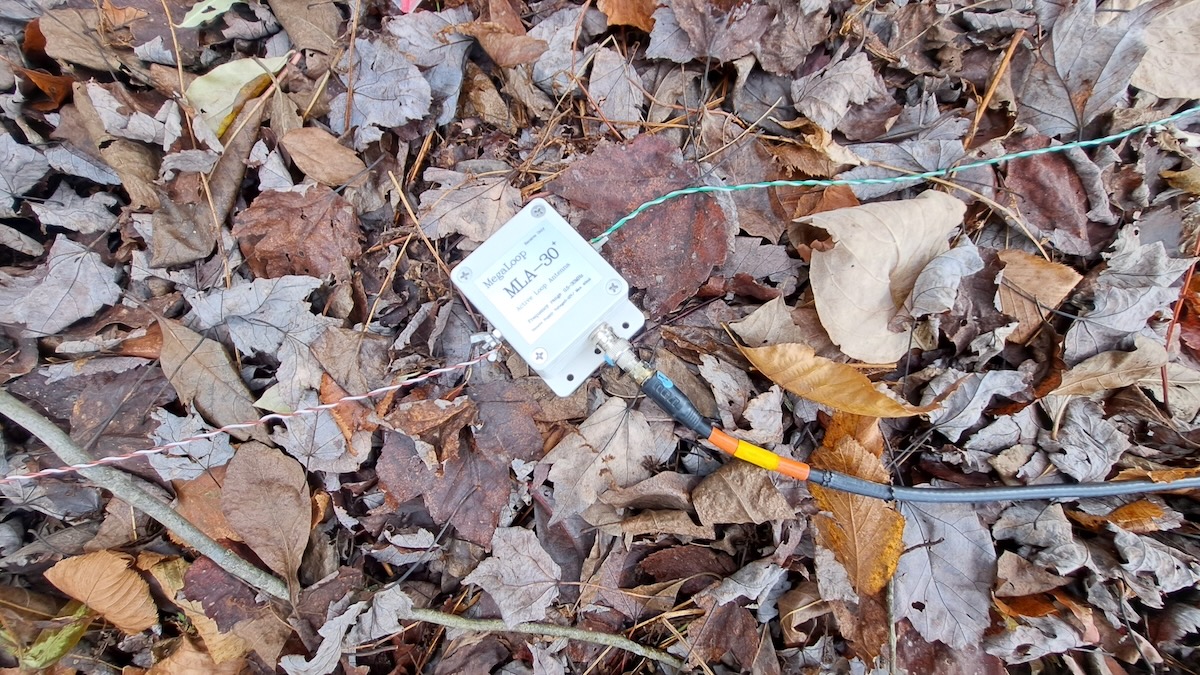
The only thing I didn’t like about the MLA-30+ was that pre-attached coax cable. It’s not the best quality and I’d rather carry my own cable. I’m not very handy with a soldering iron in tight spaces but at our recent DXpedition my friend Bill Nollman replaced the coax with a BNC jack for me.

The MLA-30+ now looks like this when connected to a wire loop.

Finally, I should address powering the MLA-30+ via USB. While it can be connected to a spare USB port on your laptop, I found doing that sometimes introduced a tad more noise. Instead I’ve been using one of those battery packs used for recharging cellphones. Mine is rated at 6700 mAh and it can power the MLA-30+ for over 48 hours before needing a recharge. But be sure to test yours before doing any serious DXing. I’ve read that some power packs have a minimum required power draw and will automatically shut off if the draw is too low.

Another Option?

While I was finishing this article I heard about another option from my friend Guy Atkins.  This antenna is a combination of the YouLoop with a low-priced Chinese made clone of the LZ1AQ amplifier. Some users say it’s better than the MLA-30+. Guy says it works well on shortwave up to 16 meters but he hasn’t tried it on medium wave. Guy says it’s a “low price, good value” antenna. I’m traveling in Southeast Asia for the winter but will definitely have to try this antenna when I get back to the USA. So maybe there will be a follow-up article next summer.

Links

[Note: Amazon links are affiliate and support the SWLing Post at no cost to you.]

Info on ordering a quality PA0RDT from Roelof Bakker. (Other cheaper versions have had issues with quality control.)

https://dl1dbc.net/SAQ/miniwhip.html

There are various versions of the MLA-30+ and the original MLA-30. This is the version that Mark Taylor recommended and that I bought.

https://amzn.to/3MEKjPY

There are numerous YouTube videos on using and modifying both versions of the MLA-30+. This one shows how to replace the coax with a BNC jack.

https://www.youtube.com/watch?v=OAqh2Lawwdc

Here’s the Amazon link for the YouLoop/LZ1AQ antenna that Guy has.

https://amzn.to/4s1RB09

And the same antenna on Ali Express.

https://www.aliexpress.us/item/3256808527623276.html

The RMnoise Project: Using AI to Reduce Noise in Radio Audio

by Andrew (Grayhat)

This tip was originally published on the SWLing Post discussion board

There’s an interesting and promising project that leverages AI to remove noise from radio audio signals—including SSB and CW.

The project is called RMnoise, and it uses artificial intelligence trained to recognize desired signals. Once trained, it can dramatically reduce background noise in received audio, making weak or difficult signals much easier to copy.

You can learn more about the project here:

https://ournetplace.com/rm-noise/

And dive into the technical documentation here:

https://ournetplace.com/rm-noise/documentation/

How It Works

In practical terms, RMnoise sits between your receiver and your ears using your computer’s sound card. Audio from your radio is fed into the computer, where RMnoise processes it in real time. The AI attempts to suppress unwanted noise while preserving the signal of interest, then sends the cleaned-up audio back out through your computer’s audio output.

There are several demonstration videos—with audio—that show how effective RMnoise can be with challenging signals:

https://ournetplace.com/rm-noise/videos/

You Can Try It Yourself

Perhaps the most exciting part: you can try RMnoise right now.

It’s simply a matter of installing a small program, configuring it to work with your computer’s sound card, and routing audio from your receiver into the computer. RMnoise picks up the incoming audio, does its “magic,” and outputs a noticeably cleaner signal.

RMnoise is for anyone interested in experimenting with modern signal processing techniques.

Click here to check out RMnoise.

Video: When Shortwave Radio Connected Soldiers Overseas with Their Families in WWII

Many thanks to SWLing Post contributor Fred Waterer, who writes:

The History Guy” (a terrific YouTube channel) talks about the technical marvel of uniting the four radio networks and soldiers overseas via shortwave at Christmas 1942 and 1943.

Click here to view on YouTube.

Holiday Greetings and Thanks to Our Global Listening Community

As the year draws to a close, I want to take a moment to wish all of you a very Merry Christmas, Happy Holidays, Happy Hanukkah, a meaningful Winter Solstice, and warm wishes to everyone celebrating this season in their own way.

Radio listening has a unique way of bringing us together–quietly, thoughtfully, and often across great distances. Whether you’ve spent the year chasing DX on shortwave, exploring mediumwave at night, tuning utility stations, hunting pirate stations, or simply enjoying the familiar comfort of local broadcasts, I hope radio has offered you moments of curiosity, calm, and connection.

I’m deeply grateful for your continued readership, encouragement, and support of the SWLing Post. This site exists because of a passionate, generous community of listeners who love radio and believe in sharing knowledge and discovery. Thank you for being part of that community and for making this such a welcoming space.

As we look toward the new year, I wish you good health, stronger signals, less noise, and many rewarding hours at the radio.

May 2026 bring peace, kindness, and plenty of fascinating signals to log.

With sincere thanks and best wishes,
Thomas