
Author Archives: Robert Gulley

Brilliant Article on RTL-SDR Dongle Uses

sdr-Mario2Frequent contributor Mario Filippi N2HUN has written a brilliant piece for the latest edition of The Spectrum Monitor entitled RTL-SDR: Your Eye To The Wireless World, February 2016. Here is a brief synopsis:

RTL-SDR Dongle: Your Eye to the Wireless World

By Mario Filippi N2HUN

The RTL-SDR dongle has garnered much popularity over the last several years as an inexpensive and effective broadband receiver for the radio enthusiast. Now Mario shows us how the RTL-SDR can be pressed into serving in other ways: as a rudimentary piece of test equipment to explore those countless wireless devices that power our world and make life convenient. You can use it when restoring vintage radios, doing frequency analysis, antenna analysis and a host of troubleshooting activities you may never have thought of.

I highly recommend buying at least the current issue ($3.00 / PDF Download – what a steal!) or better yet, subscribing for a whole year. Every issue gives far more value than the cost ($2.00/issue at the current subscription rate).

Mario’s article explores things I never would have thought of, and he explains how he uses these inexpensive dongles in place of much more expensive equipment. It is truly amazing what these little wonders can do, and Mario just keeps pushing back the envelope of what is possible.

Thanks Mario for a truly inspiring article – yet again you have given us even more rabbit trails to explore!

Robert Gulley, AK3Q, is the author of this post and a regular contributor to the SWLing Post. Robert also blogs at All Things Radio.
While Not Directly Radio Related . . .

While not directly radio related, this was too amazing not to share (so forgive me in advance! There is an Arduino involved, if that helps?!)

The video above is of a robot which can solve Rubik’s Cube in about 1 second.

I will not embarrass myself in telling how long it takes me to solve it . . . .

It is, however, easy to see how radio hobbyists could find these Arduino boards quite intriguing!

Robert Gulley, AK3Q, is the author of this post and a regular contributor to the SWLing Post. Robert also blogs at All Things Radio.
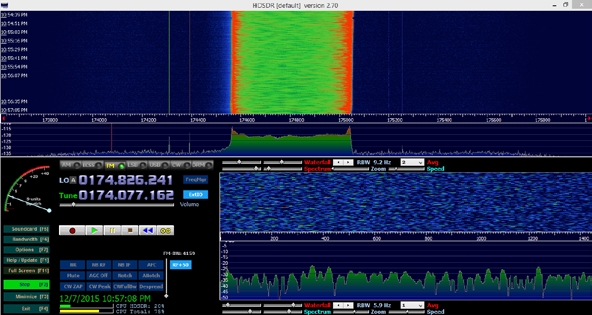
eBay Find: BANG & OLUFSEN BEOMASTER 900-K

beomaster900-closeWhile quite out of my price range, this is a beautiful piece of radio art nevertheless. (I recommend viewing the close-ups on the listing to really see it.) The receiver/amplifier has Broadcast, Long Wave, Short Wave plus FM, and the ability to reproduce beautiful stereo for its time, according to user reports.These were produced during the mid-sixties until 1970. I miss the artwork involved in many older radios as compared to today’s utilitarian radios. We may have better components and features, but we do not have the beauty or style in many cases.

I’ll be watching with interest to see how this auction ends!

Robert Gulley, AK3Q, is the author of this post and a regular contributor to the SWLing Post. Robert also blogs at All Things Radio.
A Review of Multipsk Software for Digital Modes and More

http://ak3q.com/wp-content/uploads/2016/01/MPSK2.jpg

Over the last year or so I have been using a really full-featured digital mode software called Multipsk, and it has become my go-to software for most digital modes. Back in September 2015 I wrote an extensive review of the software for The Spectrum Monitor (TSM) which Owner/Editor Ken Reitz has graciously allowed me to post on my blog at All Things Radio. Thomas has written numerous articles for TSM, and will attest to its emphasis on so many aspects of the radio hobby. If you are not a subscriber already you really do not know what you are missing!

The program boasts over 75 modes, not counting some of the many sub-modes or variations, and new modes are being added all the time. There is a free version and a registered version, with the paid mode costing around $45 (U.S.) The free mode will handle a lot of really great modes, but I confess, it was the additional “professional” modes which really made purchasing the registered version a must for me. Whichever way you go, you will not be disappointed. As I have noted on my blog and in the article itself, I consider the registration fee some of the best money I have ever spent for computer software.

As an added bonus, the free or registered version can be run on as many computers as you have in your home, and multiple instances of the program can be run on the same computer provided they are in separate directories. This is a great feature, and it means there is basically nothing going into the Windows registry file–the program runs right from the directory. My only problem is not having enough antennas to have as many instances of the program running as I would like!

I hope you will take time to read my review and then get the program–I think you will be suitably impressed as I was! (I have it running on XP machines through Win10, so compatibility should not be an issue.)

Robert Gulley, AK3Q, is the author of this post and a regular contributor to the SWLing Post. Robert also blogs at All Things Radio.

QSO Today Interview with Bob Heil

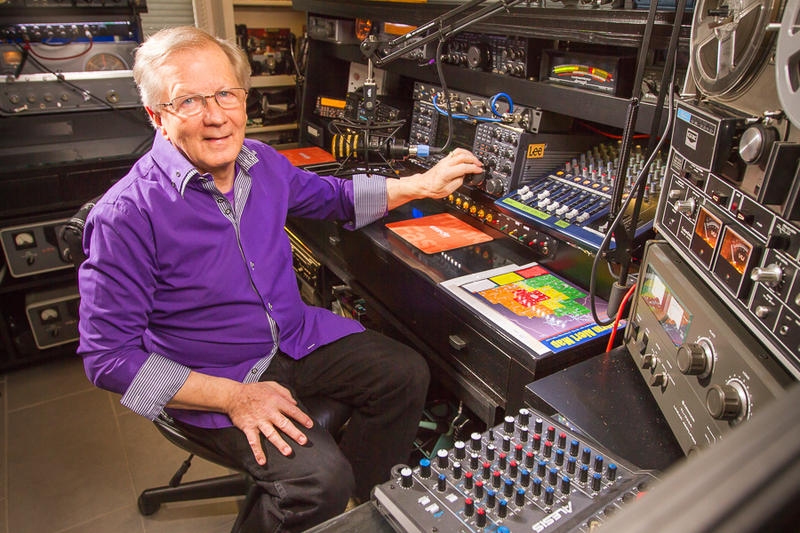
Bob-HeilEric over at QSO Today has posted an interview with Bob Heil, the founder of Heil Sound, whose microphones have transformed both the amateur community and the professional recording industry (Heil Sound is the only technology company featured in the Rock and Roll Hall of Fame!)

The interview is about an hour and half long, and I was fascinated with every minute. In addition to talking about how Amateur Radio laid the foundation for his incredible career(s), Bob also talks about the need for Elmers in the hobby and the need to get hams building again. Along the way there are tips about audio for both transmitting and receiving, as well as a bit of discussion concerning the science of phasing – these alone are worth the price of admission!

Here is the info from the QSO Today site:

Bob Heil, K9EID, is no stranger to ham radio, as a pioneer in audio systems, not only for the rock and roll stars in the 60’s and 70’s, but for ham radio as well. As the founder of Heil Sound, Bob’s injection of audio experience and know how has raised the bar of what is acceptable for good sounding voice communications on amateur radio. Bob shares his ham radio story with Eric, 4Z1UG, on this episode of QSO Today.

Show Notes: http://www.qsotoday.com/podcasts/k9eid

Podcast Link: http://goo.gl/ymGr6a

iTunes Store: http://goo.gl/CvLNmV

Stitcher: http://goo.gl/uhf1XZ

— 73, Robert

Robert Gulley, AK3Q, is the author of this post and a regular contributor to the SWLing Post. Robert also blogs at All Things Radio.
First Amateur Radio in Geosynchronous Orbit Will Aid Disaster Communications

GreenBankTelescopeCould it be we will have a true geosynchronous satellite for Amateurs in 2017?! I hope so, and we will not need an antenna this big to use it!

This was first reported in Wireless Design Magazine

Researchers at the Ted and Karyn Hume Center for National Security and Technology are preparing to send an amateur radio transponder into a geosynchronous orbit in 2017.

“Seven days a week, 24 hours a day, 365 days a year, a new ham band will be available for the Americas,” said Robert McGwier, a research professor in the Bradley Department of Electrical and Computer Engineering and the Hume Center’s director of research. “It will allow rapid deployment to disaster areas and support long-haul communications for first responders.”

This would be the first amateur or “ham” radio payload in a geosynchronous orbit, and would significantly enhance communications capabilities for amateur radio operators, in particular following natural disasters or other emergency situations. The Hume Center team met with Federal Emergency Management Agency Administrator Craig Fugate in September to discuss the project.

The full article may be found following this link.

I have really been enjoying trying to catch the satellites and the International Space Station as I am able, but it really is catch as catch can due to orbiting times and changing horizon points. A geosynchronous orbit satellite means we could plant an antenna pointed directly at the satellite and find it there day or night. I for one am ready!! I might even dedicate an inexpensive dual-band radio to it assuming typical satellite repeater protocol is used.

I will post more details as I find out additional information.  Cheers! Robert

Robert Gulley, AK3Q, is the author of this post and a regular contributor to the SWLing Post. Robert also blogs at All Things Radio.

Fessenden Christmas Eve Commemorative Transmissions

Embedded image permalink

This  was reported in the ARRL Newsletter:

Brian Justin, WA1ZMS, will again put his 600 meter Experimental Station WG2XFQ on the air on for a Christmas Eve commemorative transmission. WG2XFQ will transmit on 486 kHz from Forest, Virginia, to mark the 109th anniversary of Reginald Fessenden’s first audio transmission. Historic accounts say Fessenden played the violin — or a recording — and read a brief Bible verse. It’s been reported that other radio experimenters and shipboard operators who heard Fessenden’s broadcast were astounded.

Justin will conduct a run-up to this year’s event starting at around mid-day Eastern Time on December 23. The “official” Christmas event will begin on December 24 at 0001 UTC (the evening of December 23 in US time zones) and will continue for at least 24 hours. Justin said he plans to repeat the commemorative transmissions on New Year’s Eve and on New Year’s Day.

Fessenden’s transmitter was an ac alternator, modulated by placing carbon microphones in series with the antenna feed line. Justin’s homebuilt station is slightly more modern, based on a 1921 vacuum tube master oscillator power amplifier (MOPA) design. Listener reports are appreciated and may be sent directly to Brian Justin, WA1ZMS, at his QRZ.com address. (Brian Justin, WA1ZMS, built this replica circa-1920 transmitter, capable of CW and Heising modulated AM.      Photo by Brian Justin)

While I have not heard Brian’s transmission before, I have actually heard a transmission on the experimental frequencies between 465 – 515 kHz. I never expected to be able to hear anything due to extremely high local noise, but one night the propagation gods smiled upon me and the evening was exceptionally quiet. I listened on my Elad SDR receiver over and over to the Morse Code signal which was extremely weak, but mostly readable. I confirmed with Multipsk software, verifying I was indeed hearing one of the experimental stations out of Connecticut.

For information regarding the 500 KC experimental project you can follow this link.

Why not give a listen? You just might be surprised like I was to hear something on this band, and you could add a little Christmas Eve radio memory to your collection!!             73, Robert

Robert Gulley, AK3Q, is the author of this post and a regular contributor to the SWLing Post. Robert also blogs at All Things Radio.