 Many thanks to SWLing Post contributor and noted political cartoonist, Carlos Latuff, who shares this special dive into the world of radio both in and targeting the Korean peninsula. His report includes off-air recordings along with his own original artwork.
Koreas’ Radio War
by Carlos Latuff, a special for the SWLing Post
The war that divided Korea in two began in 1950. A truce was signed by both sides in 1953, but a peace agreement never came to fruition. Therefore, North Korea and South Korea remain at war. And this war is not just happening on the ground, but also over the airwaves.
Every day, a battle for hearts and minds takes place on AM, FM and shortwave. Whether the DPRK broadcasts are directed to South Korea, or South Korean broadcasters (including clandestine ones) broadcast to the DPRK.
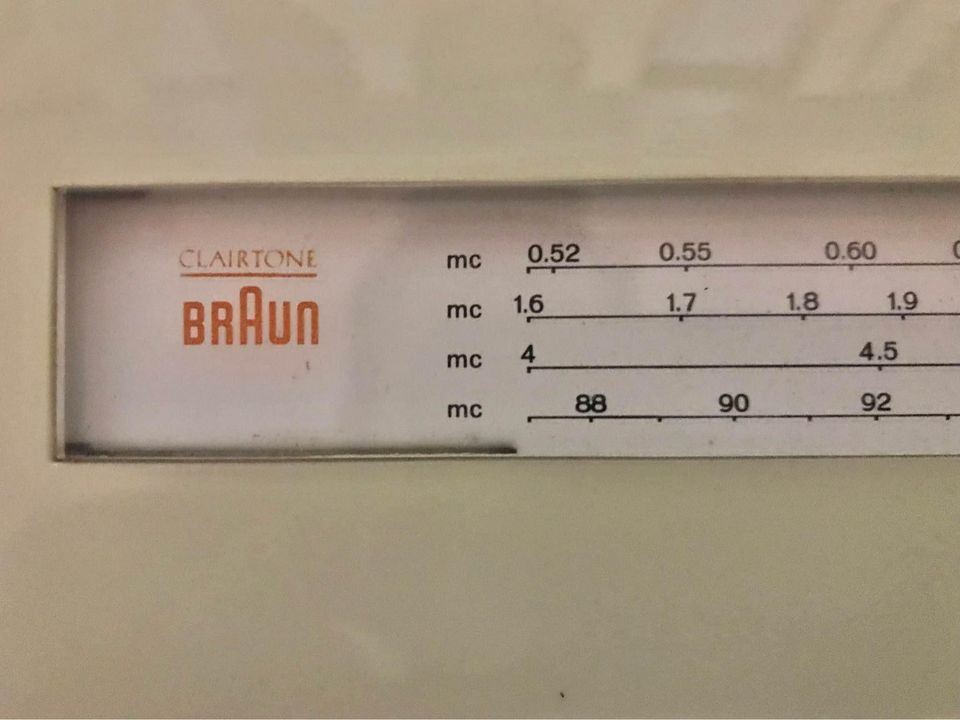
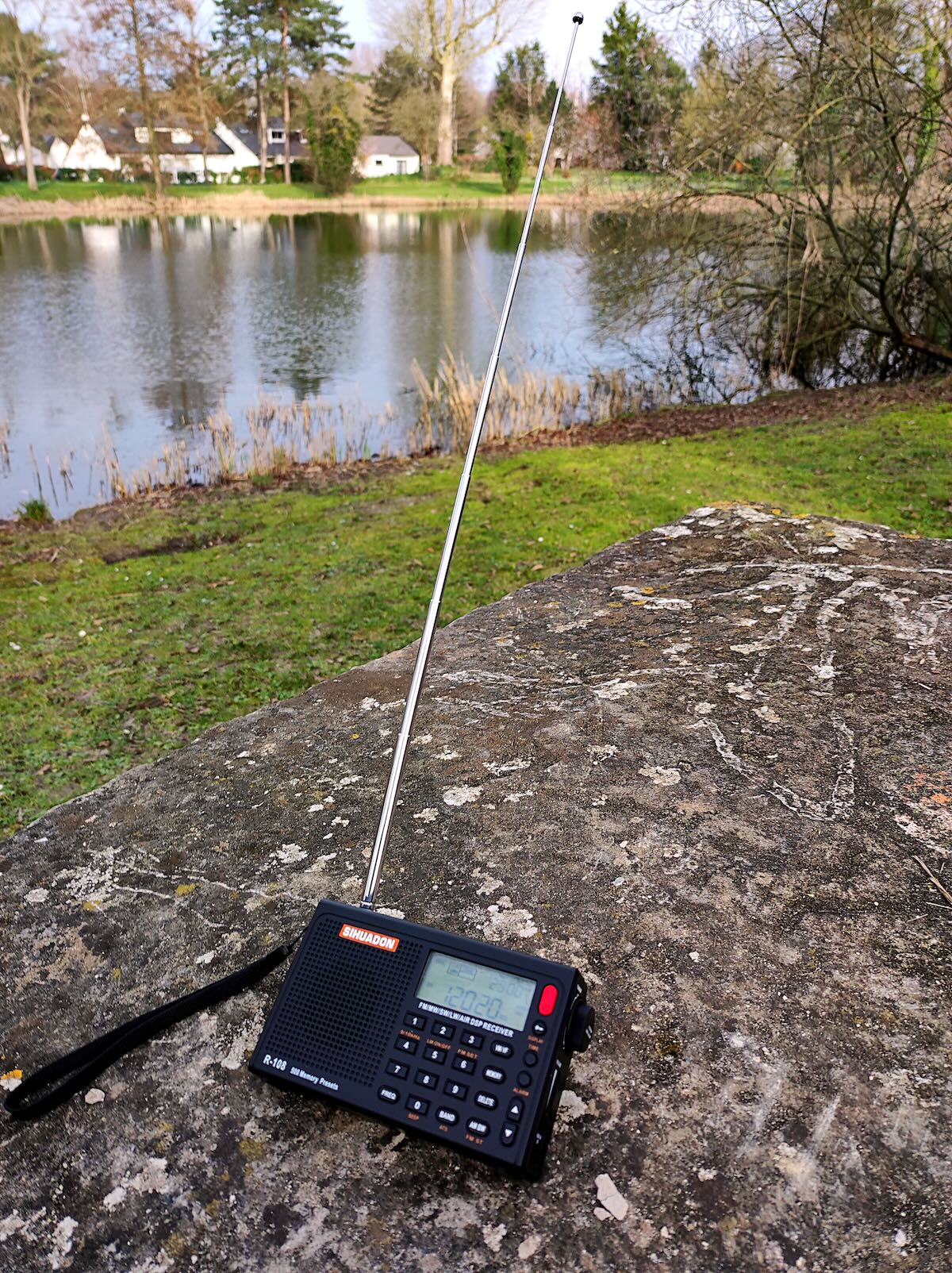
I bring here a small collection of radio listenings made between February 29th and March 17th, all of them happened in Porto Alegre, Brazil, using a XHDATA D-808 receiver, with long wire antenna (outdoor), except for Radio Free Asia, listened with a Toshiba TR 486 receiver, using a telescopic antenna (indoor). Translations from Korean to English were made using transcription and translation apps.
KBS World
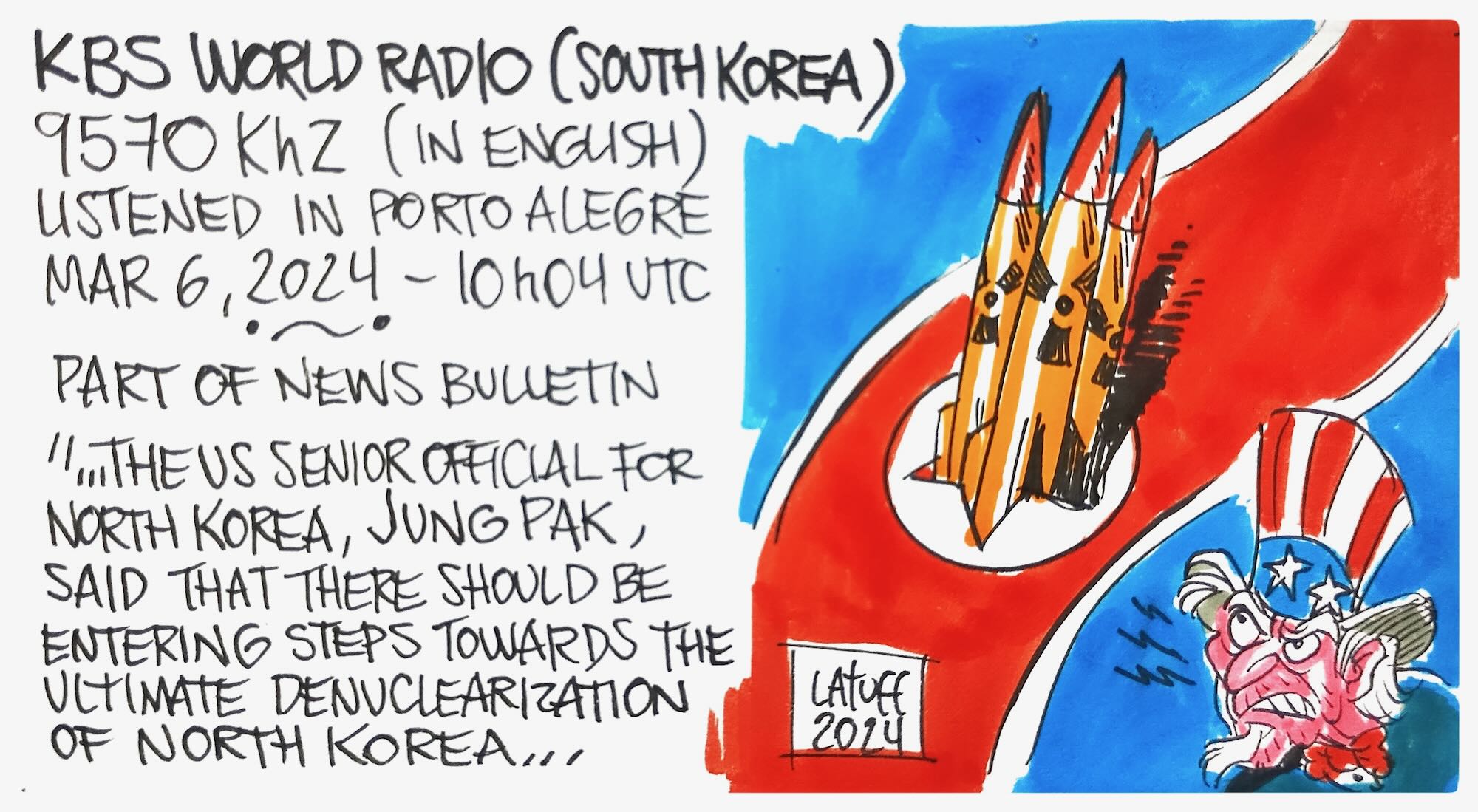
KBS World Radio was created in 1953, the year the truce was signed between the two warring Koreas, under the name “The Voice of Free Korea”, and today, as a public radio station, it broadcasts to several countries in different languages. Its programming includes news, music, variety, and of course, opposition to the DPRK government.
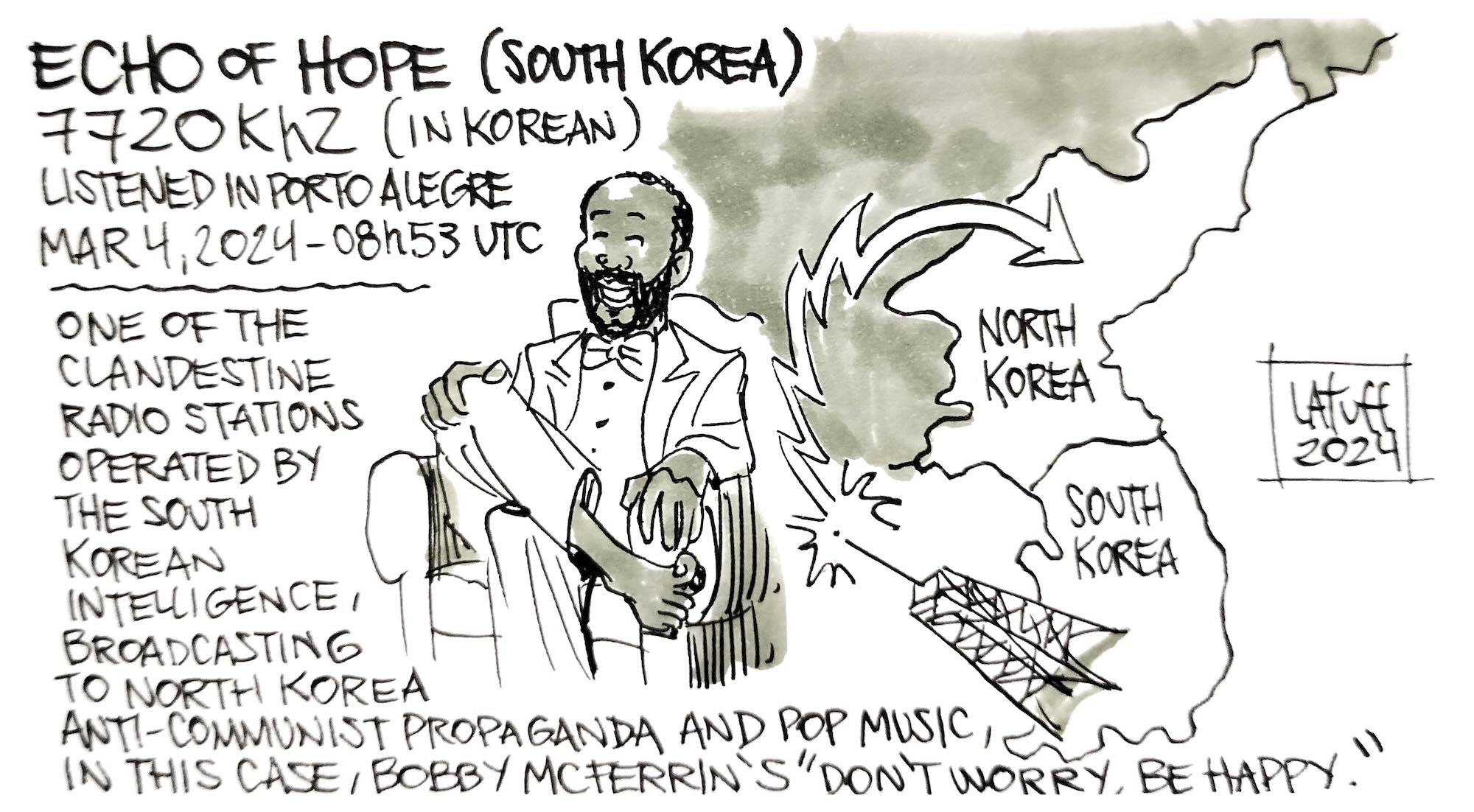
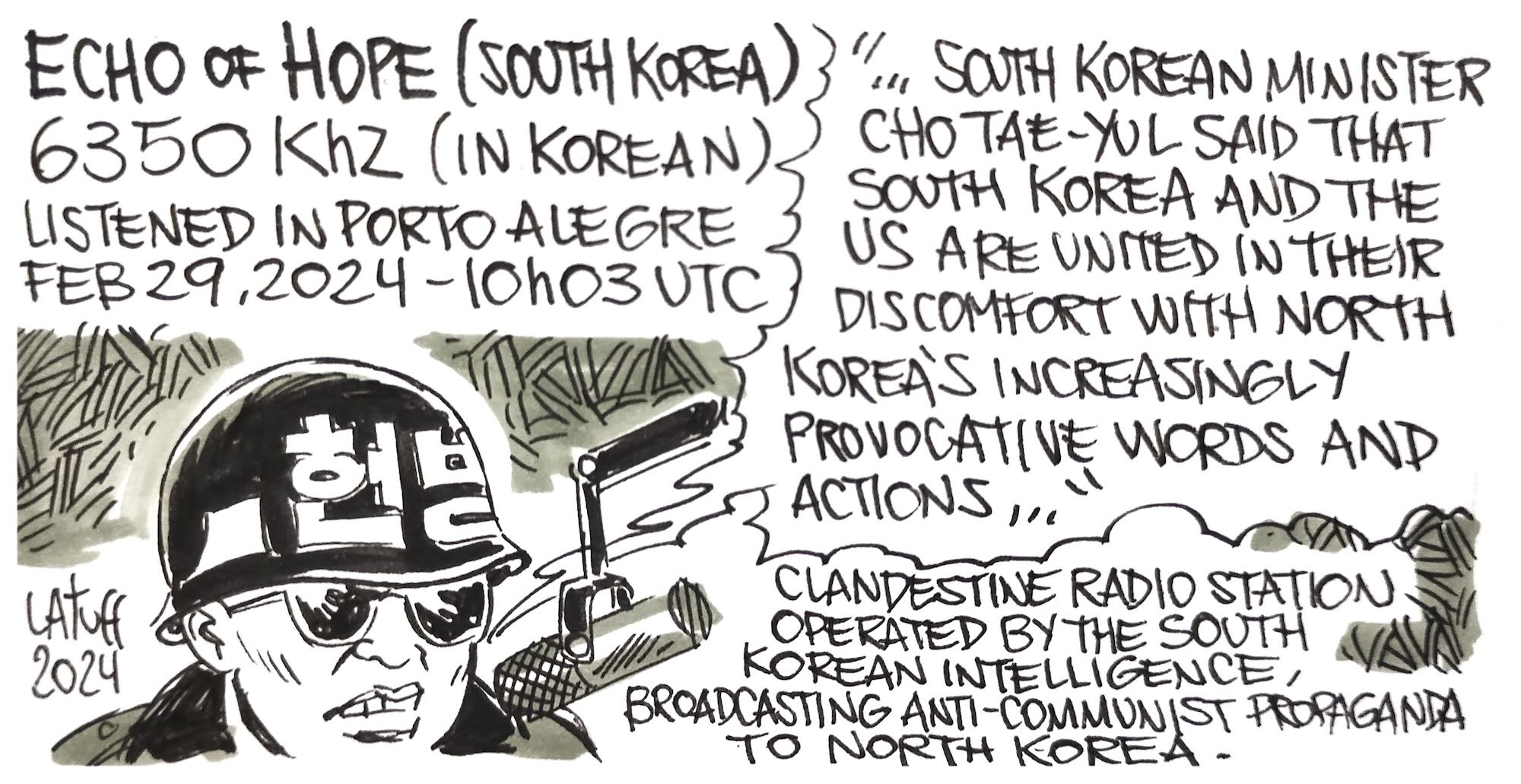
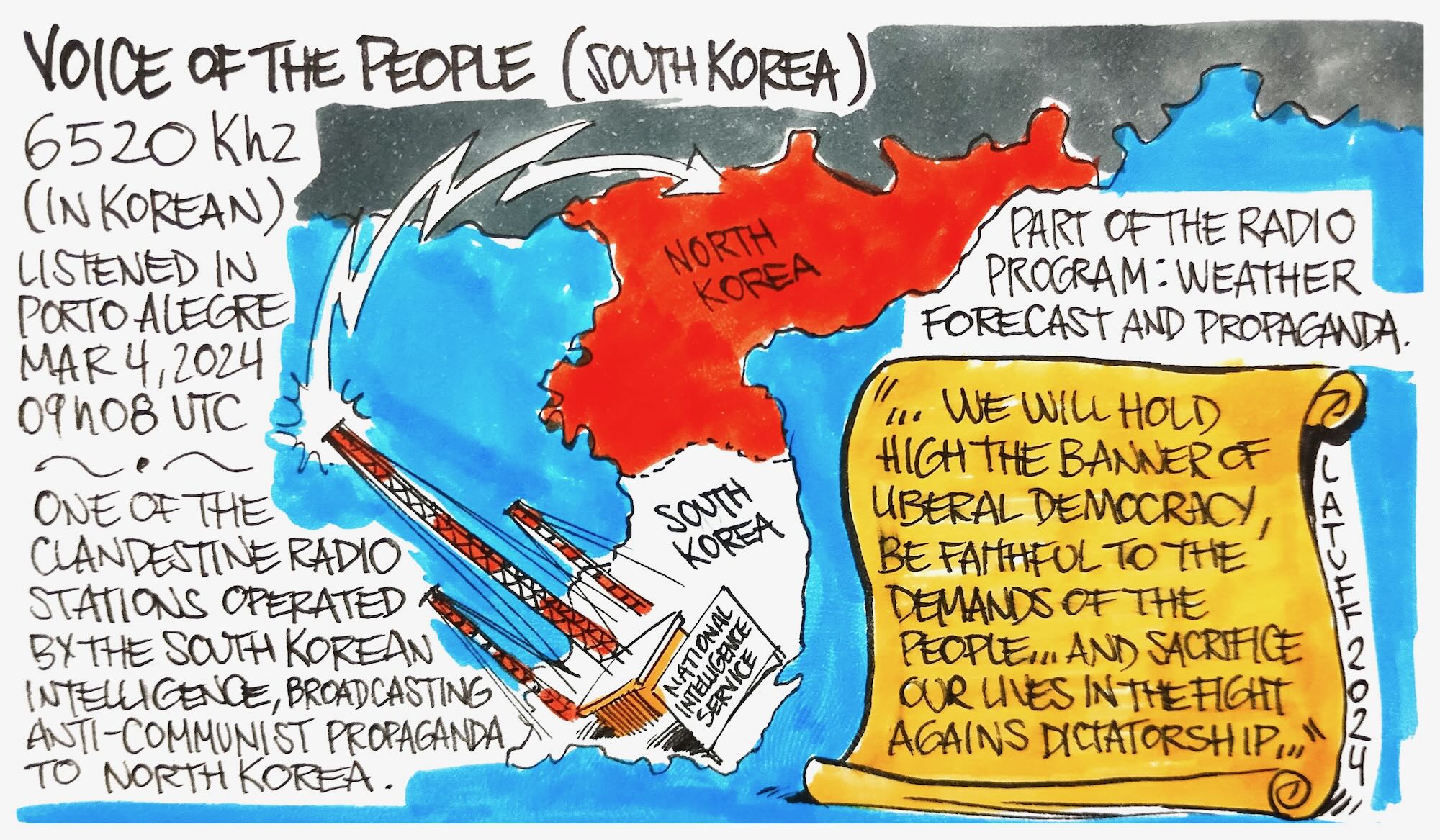
As part of the effort to promote “regime change” in the DPRK, the Seoul government, through its intelligence service, maintains clandestine radio stations (“Echo of Hope” and “Voice of the People”) whose role is basically broadcast 24 hours a day anti-Communist propaganda to North Korea, along South Korean and American pop music.
Echo of Hope
Voice of the People
Radio Free Asia
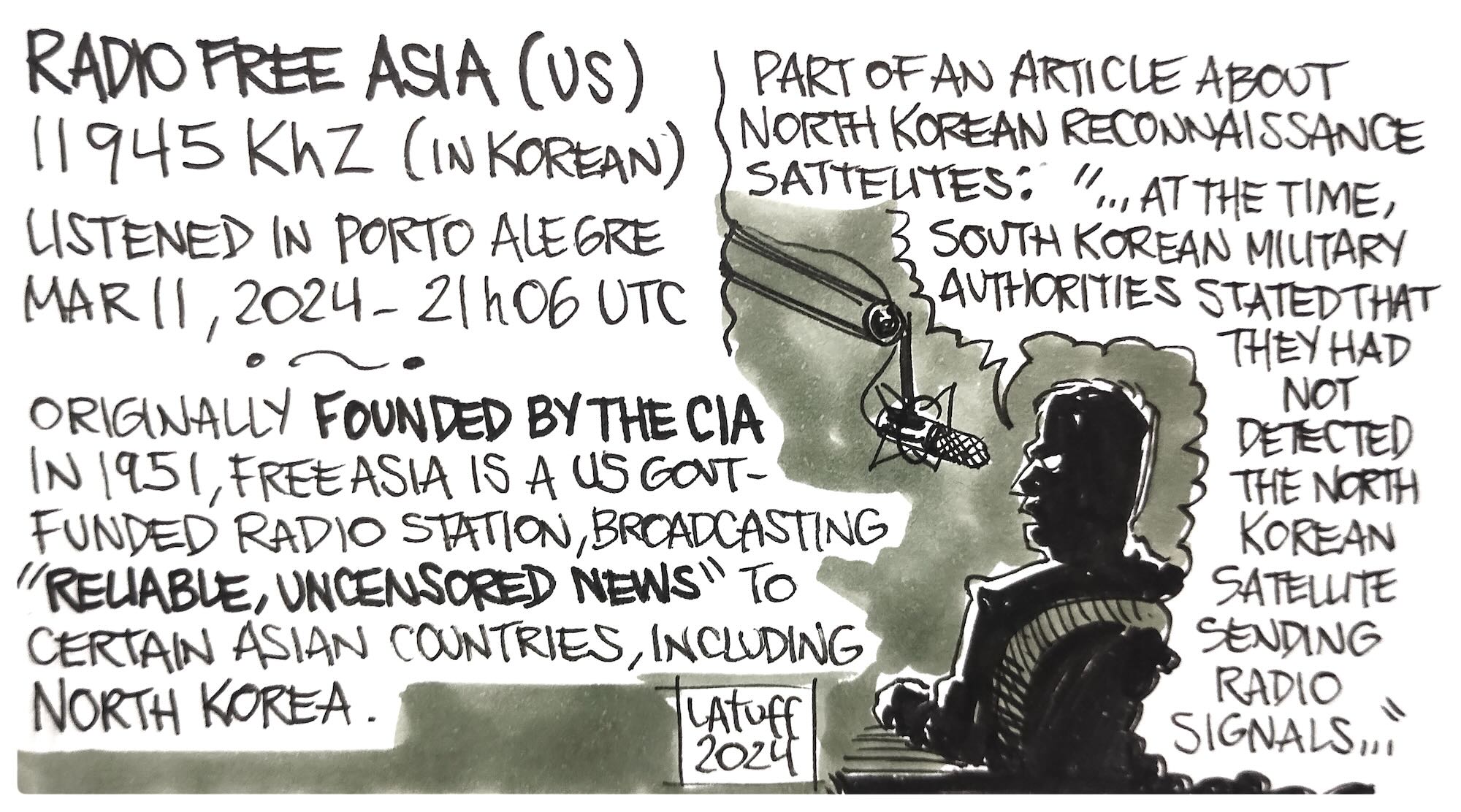
Created by the CIA in 1951, at the height of the Cold War and the conflict in Korea, Radio Free Asia has undergone changes throughout its history, but continues to be operated by the United States government and aims, in its own words, to “provide independent, uncensored and accurate local news” for countries like China, Vietnam and, of course, North Korea. Content directed at the DPRK follows the same principle as South Korean clandestine broadcasters: basically anti-Communist orientation, in order to achieve a “regime change”. The articles broadcasted on the radio are the same as those published on the Radio Free Asia’s website.
KCBS Pyongyang
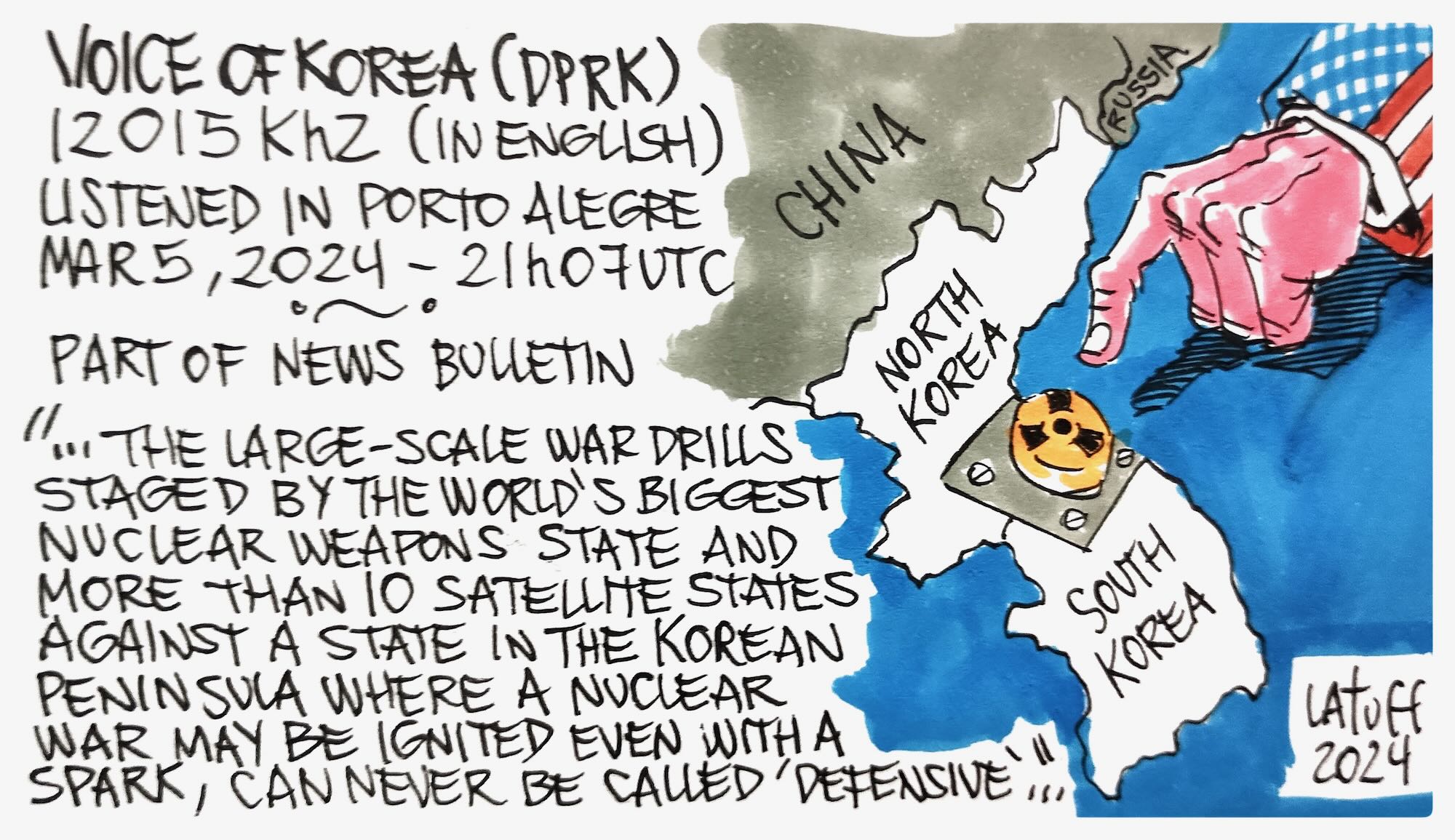
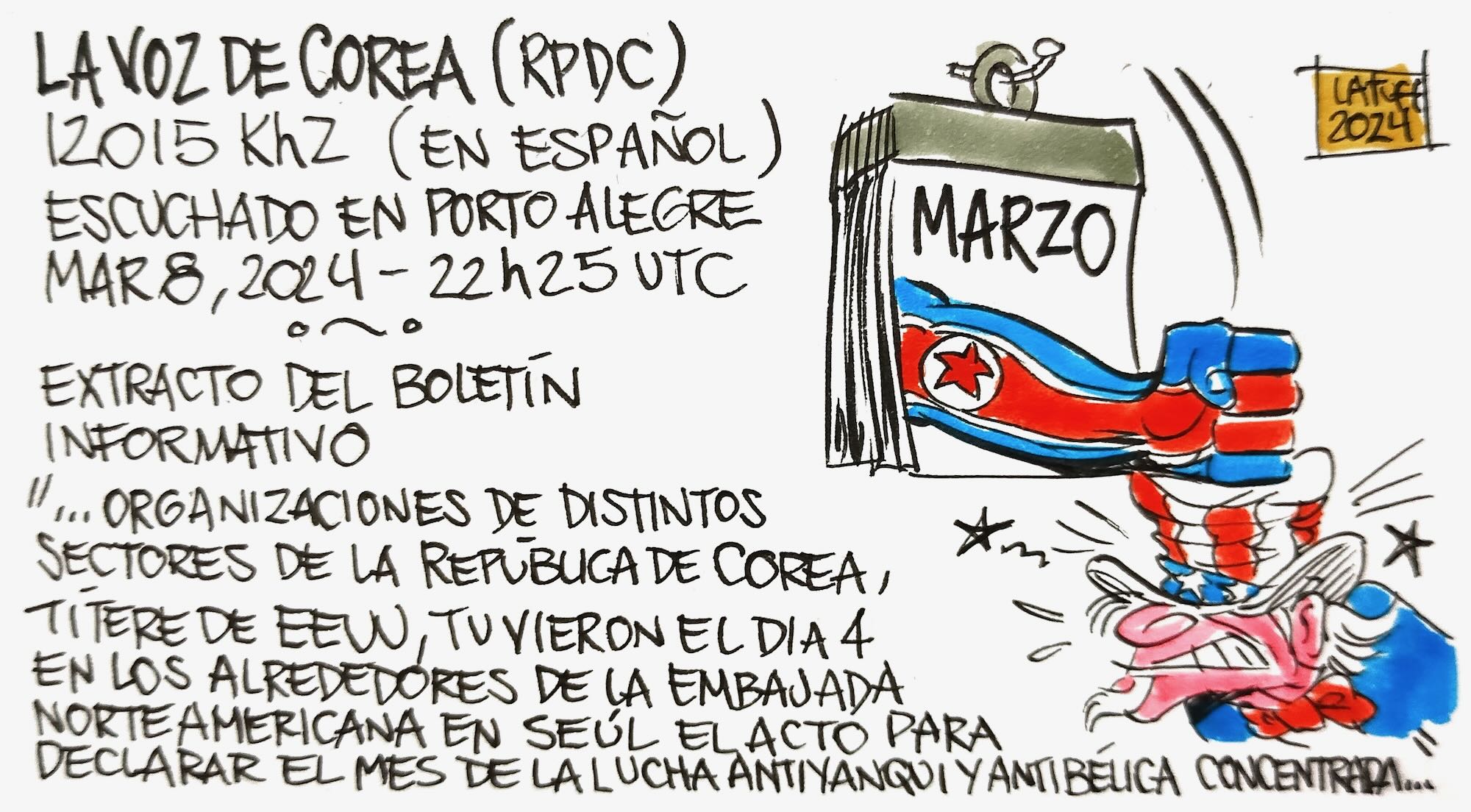
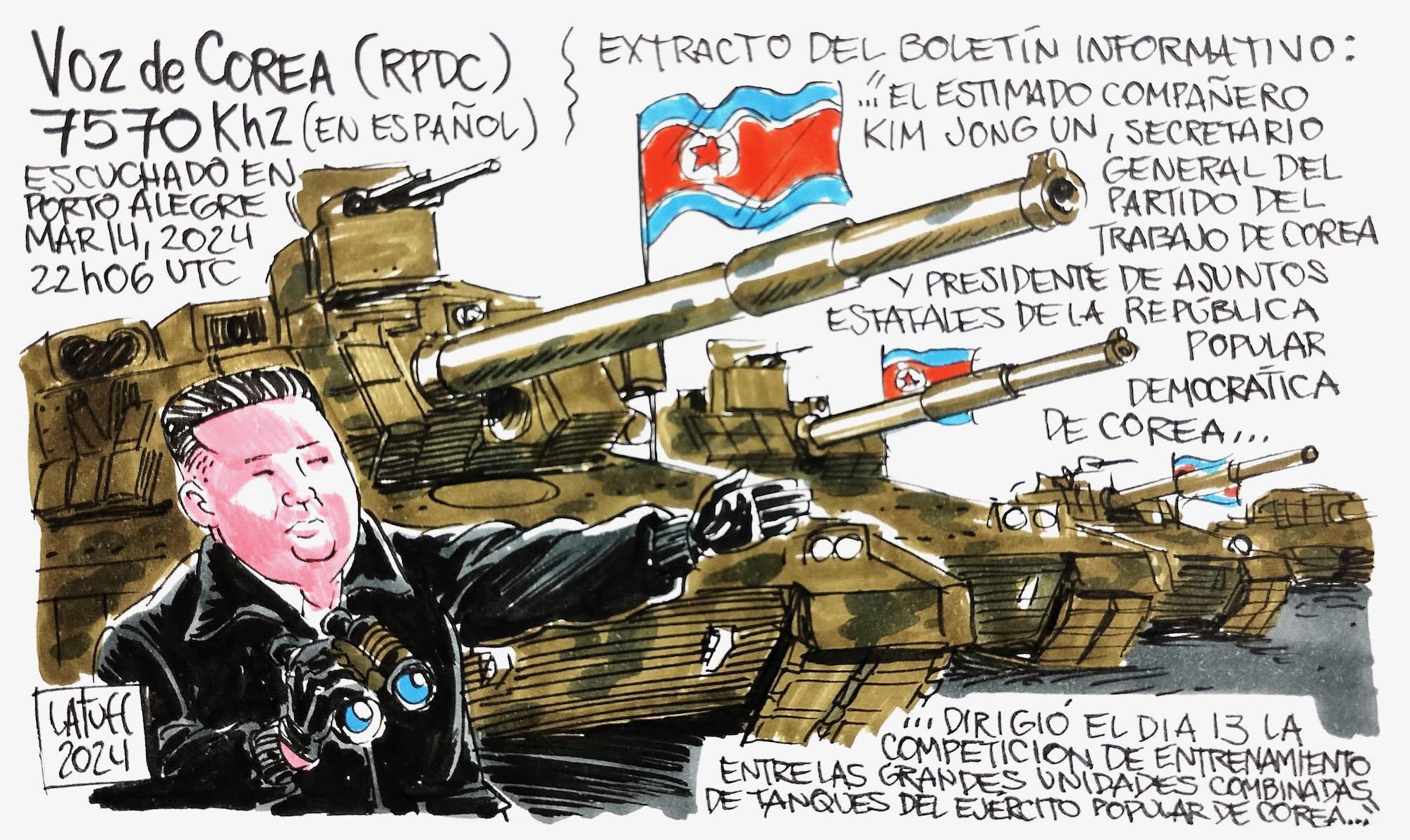
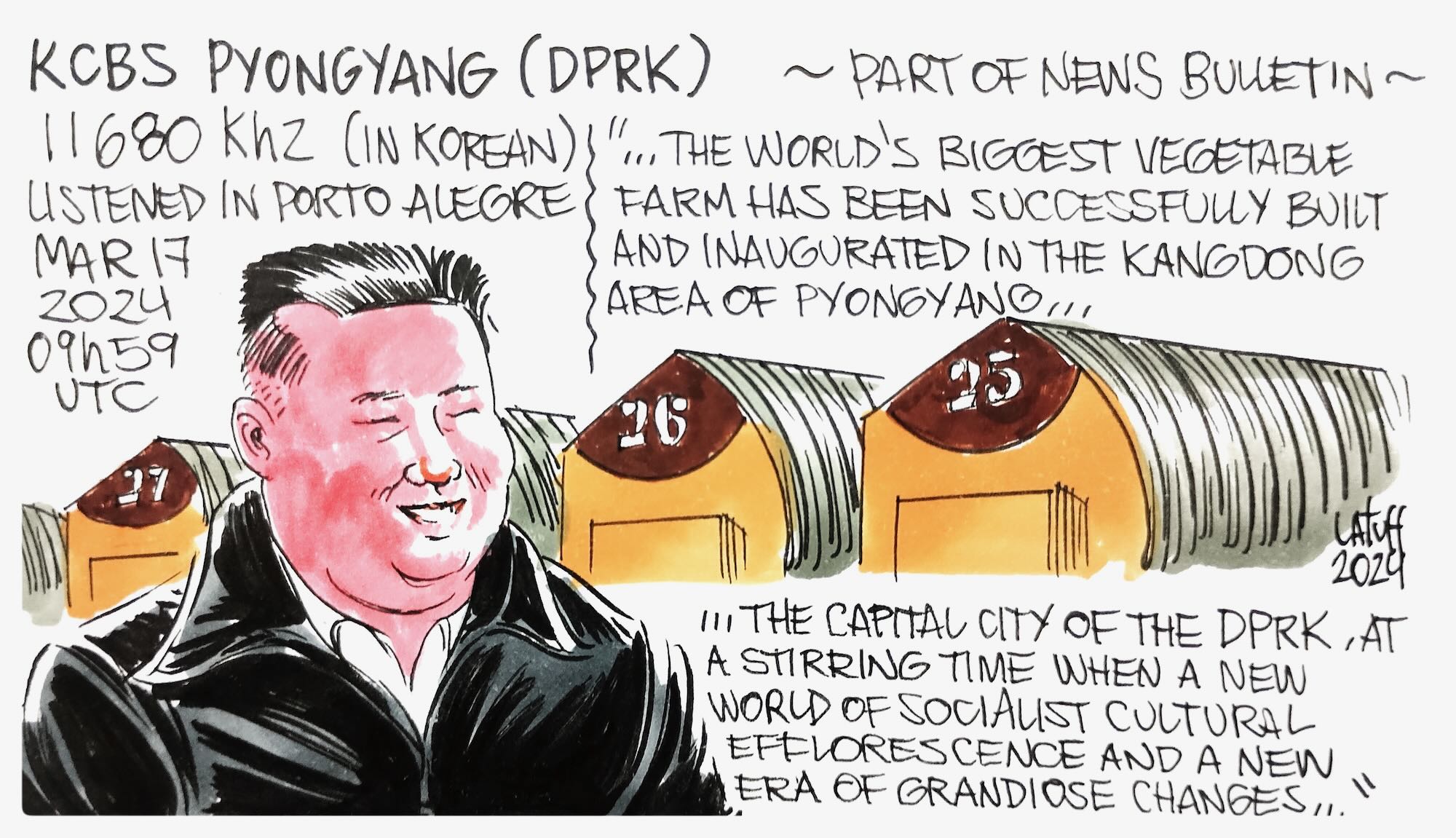 Korean Central Broadcasting Station (KCBS) Pyongyang is the DPRK’s domestic radio station, whose programming reaches North and South Korea, even being heard in Japan. News about the achievements of North Korean leader Kim Jong-un, music and attacks on Seoul government, seen by Pyongyang as a puppet regime.
Voice of Korea
On October 14, 1945, the year Japan was defeated in World War II, KCBS Pyongyang and Voice of Korea were founded (domestic and international radio stations respectively). Voice of Korea broadcasts programming in several languages ??to the world via shortwave. The content is not much different from KCBS Pyongyang: achievements of North Korean leader Kim Jong-un, attacks on Seoul government and the United States, and traditional/patriotic music.