Author Archives: Thomas

Guest Post: Jock explores the Tecsun PL-880’s ATS system

Many thanks to SWLing Post contributor, Jock Elliott, who shares the following guest post:


Oh, no, it’s broken – NOT! And other observations on the PL-880

by Jock Elliott, KB2GOM


Okay, okay, I’ll admit it: I’m an oldster, currently enjoying well over 70 trips around that Big Orange Ball in the sky. Further, I’ve been out of SWLing for a while.

Coming back into the hobby after more than a decade’s absence, has been eye-opening. Back when I wrote for Passport To World Band Radio, my main interest, equipment-wise, was tabletop communications receivers hooked to serious outdoor antennas.

Today, however, tabletop communications receivers are hard to come by (there are few new offerings), and, in my situation, serious outdoor antennas present a series of logistical problems that aren’t going to get solved quickly.

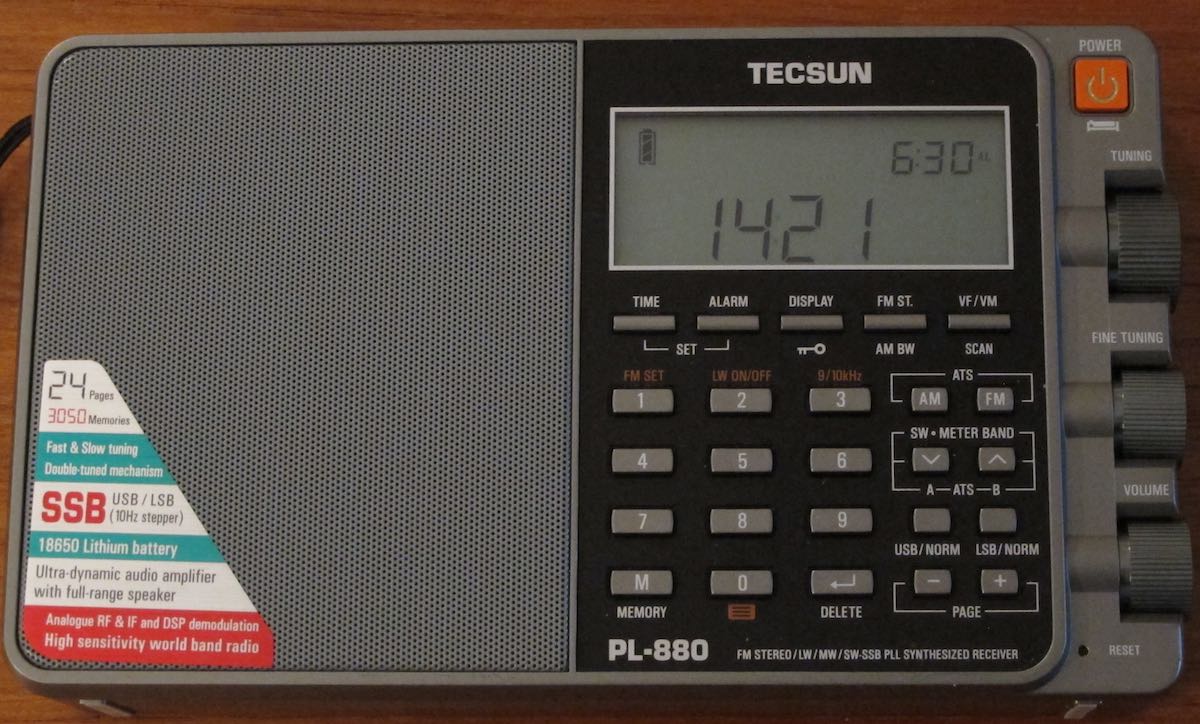
So that has brought me to today’s crop of portable shortwave receivers, and – bottom line – they are pretty darn cool, offering worthy performance on a number of levels. My latest acquisition is the Tecsun PL-880.

Like many of the current SW portables, it offers a system for scanning the SW bands and automatically storing the stations it finds into memory. On the PL-880, it’s called ATS (for Auto Tuning Storage.) Oh, you knew that. Yeah, but did you know that the PL-880 has, essentially, two ATS systems?

The down arrow activates ATS Mode A, and the up arrow activates ATS Mode B.

Check it out: If you press the DOWN arrow button (in the SW-METER BAND rectangle), the ATS Mode A system searches the band you are in (FM, MW/LW or SW, including ALL the SW meter bands), automatically stores stations it finds, and “previously stored radio stations will be replaced automatically by the newly found stations.” Each band has its own set of memories, so that SW stations will be stored in SW memories, FM stations will be stored in FM memories, and so forth.

ATS Mode B, however, behaves differently. You can activate it by pressing the UP arrow (in the SW-METER BAND rectangle). If you are in SW frequencies, ATS Mode B will search and store stations only within the current SW meter band. Further, it will NOT overwrite memories, but will start storing stations it finds, starting with the first available unused memory. Pretty neat.

You can, however, fool yourself. I ran ATS Mode A on SW frequencies one night and found a station that was broadcasting unusual stuff (Kennedy assassination, UFOs, and the like). A couple of nights later, I wanted to see what the night’s topic was on that station, so I punched the button to access memories and found . . . nothing! Oh, no, it’s broken!

Then I realized I was in SSB mode, and, it turns out, the PL-880 has a separate set of memories for SSB. (And the manual says that explicitly.) I switched off the SSB mode, and – tah-dah! – the SW memories reappeared. Sometimes it really does pay handsome dividends to read the manual.

One of the slick things about the PL-880’s memory setup is that, when you are in memory mode for a particular band, you can easily scroll through the memories simply by turning the tuning knob.

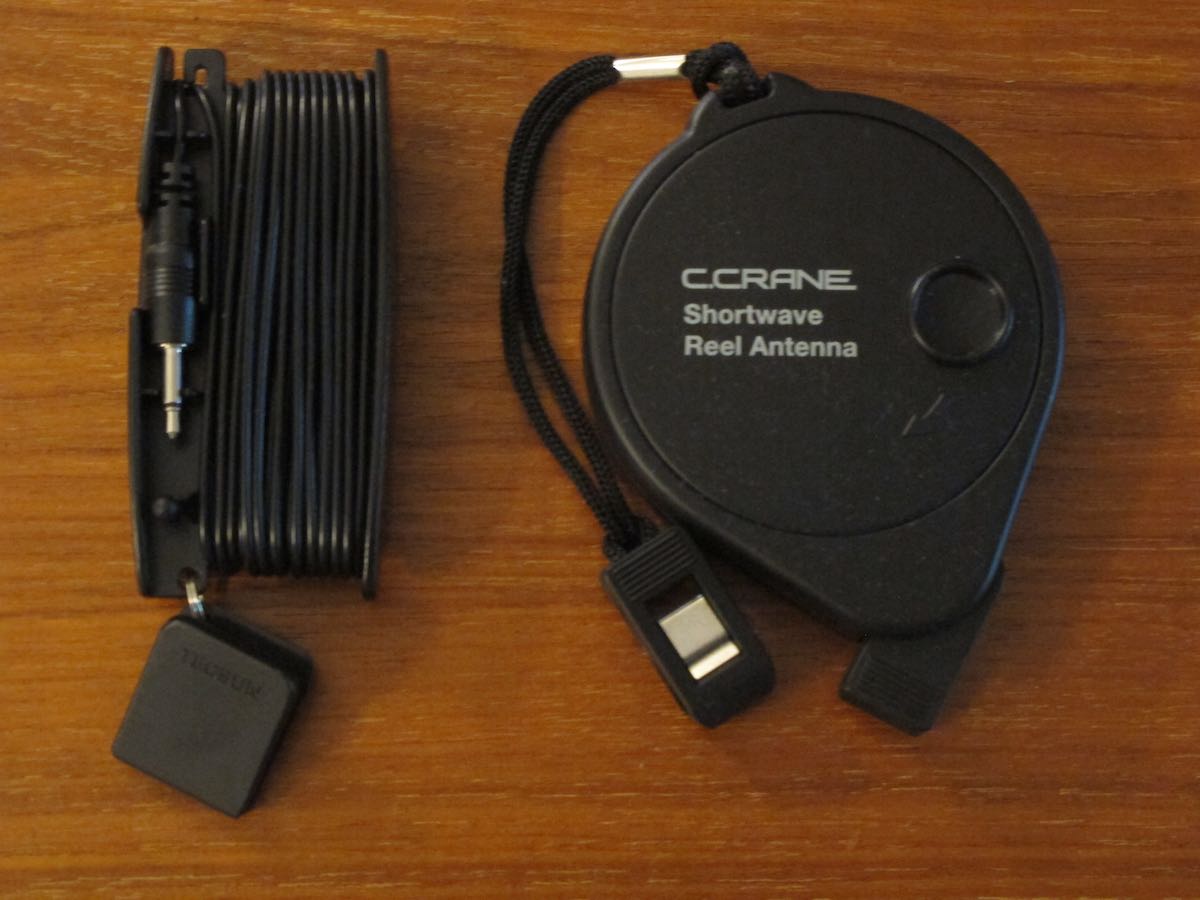
Wire antenna reels come in different styles. PL-880 (left) and CCrane Skywave SSB. But both improve performance for their respective radios.

The PL-880 has a nice long whip antenna (nearly twice as long as the CCrane Skywave SSB’s antenna), and it seems to be quite sensitive operating off the whip. But if you take the time to deploy the external wire antenna that comes with the PL-880, there is a considerable gain in sensitivity. Tuning around the 40-meter ham band, with the external wire antenna plugged into its socket, I could hear two stations in conversation, one louder than the other, but both copyable. When I tried to listen to the same pair of stations with just the PL-880’s whip antenna, the fainter station disappeared entirely, and the louder station was “down in the mud” but copyable. So the external wire antenna is clearly worth using.

So far, I am well pleased with the PL-880.

PS: Here’s a link to a really good article on extending the wire length of the reel-up antenna that came with the PL-880: https://www.hamuniverse.com/shortwavereelantenna.html

Radio Waves: Radio Bulgaria Online, Small Town Station is Backbone of Community, 1949 Radio Contact, and BBC World Service Performance Review

Photo by Flickt user Shirokazan via Wikimedia Commons.

Radio Waves:  Stories Making Waves in the World of Radio

Because I keep my ear to the waves, as well as receive many tips from others who do the same, I find myself privy to radio-related stories that might interest SWLing Post readers.  To that end: Welcome to the SWLing Post’s Radio Waves, a collection of links to interesting stories making waves in the world of radio. Enjoy!


Hear the voice of Bulgaria – in 9 languages from Radio Bulgaria (Radio Bulgaria)

On the website of the Bulgarian National Radio – www.bnr.bg you can now listen to the new podcast of Radio Bulgaria, “Bulgaria Today” in English, German, French, Spanish, Russian, Serbian, Greek, Albanian and Turkish.

BNR has resumed its programmes in foreign languages after a 5-year pause. The change coincides with the 85th anniversary of the first foreign-language broadcasts for foreign audiences celebrated by Radio Bulgaria in 2021. Continue reading

Guest Post: Radio Schedules in a Simple Android Database

Many thanks to SWLing Post contributor, Bill Hemphill, who shares the following guest post:


Radio Schedules in a Simple Android Database

by Bill Hemphill

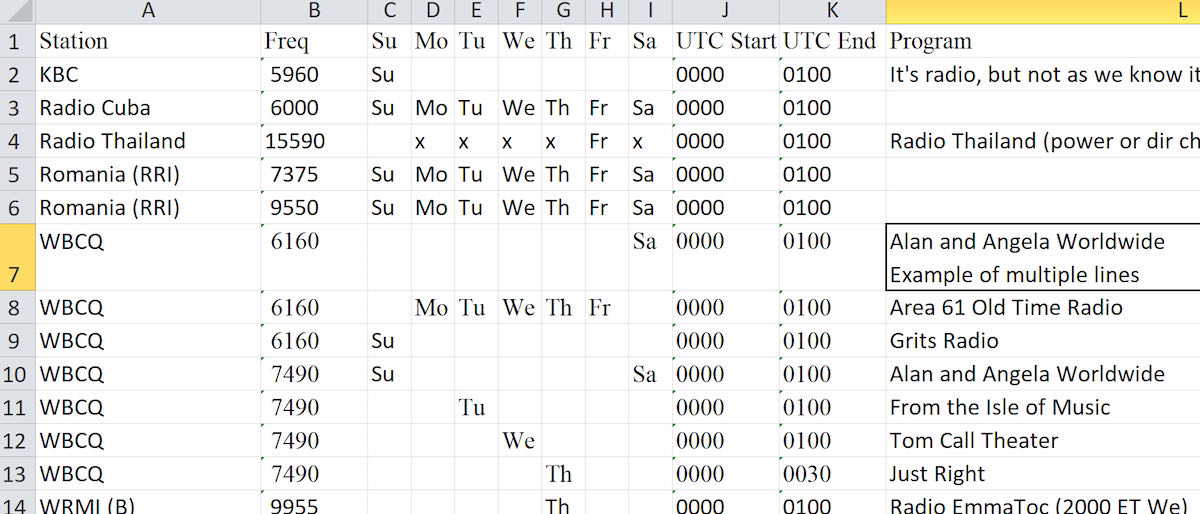
I am a program listener. I really enjoy listening to various radio stations direct and by internet streaming. Over time, I have come up with a couple of spread sheets that lists the program, station, time, date, etc. For example, following is the spreadsheet for the shortwave radio programs/stations that I enjoy:

As the program schedules change, I update the spreadsheet. This has worked quite well for me. I usually sort on the weekday and then print out the spreadsheet as a list by time and frequency for each day.

While this method works, it does mean that I have these multiple page printouts that I have to refer to. This got me thinking that it would be great to have this on my Android phone/tablet. Then I could refer to it no matter where I was located.

At first, I tried to use Google Sheets, but found that using a spreadsheet on the phone or even a tablet to be a pain. I then tried entering it into a calendar program, but also found that very cumbersome. Continue reading

IntervalSignals.net is down. Any insight?

—UPDATE (09 Sep 2021): The site is now back up!—

A number of SWLing Post readers and contributors have contacted me lately regarding disappearance of the excellent IntervalSignals.net website.

When one tries to load the page, the browser will eventually return an “Error Connection Timed Out” message.

I checked snapshots of the website on the Internet Archive and it seems the last time a change was noted was in August 8, 2021. This doesn’t mean that it was the last day the site was online, rather, the last successful attempt of taking a snapshot of the page.

The IntervalSignals.net website is an amazing resource, so I believe all of us would like to see it online again. I’m hopeful this is merely a temporary issue.

If anyone has any insight into this site and why it might be down, please comment. Also if you know the site owner, perhaps reach out and mention that the site is down. I don’t have his contact information.

Many thanks!

Radio Romania International: Listeners’ Day 2021

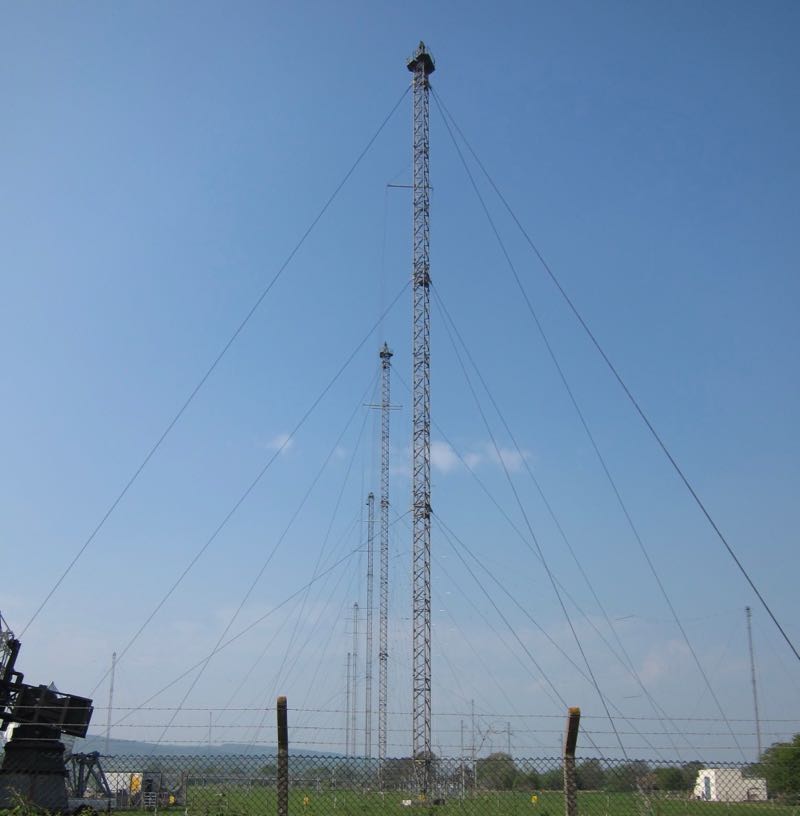
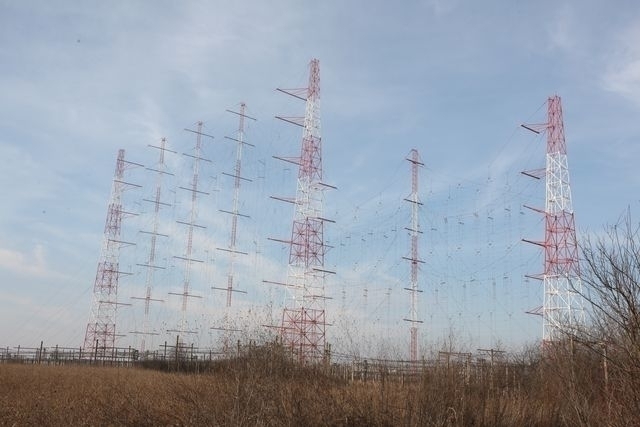
RRI’s Tiganesti-based shortwave transmitter centre (Photo source: Radio Romania International)

Many thanks to SWLing Post contributor, David Iurescia (LW4DAF), who shares the following notice from Radio Romania International:

Listeners’ Day on Radio Romania International

Sunday, the 7th of November 2021, will be Listeners’ Day on Radio Romania International, celebrated a week after the Romanian Radio Day marked on the 1st of November. 2021, just like the previous year, has been affected by the Covid-19 pandemic, which has profoundly changed our lives, keeping us apart from family and friends and influencing our way of spending free time.

Bombarded with all sort of news and information, we realised that it is sometimes difficult to distinguish between true and false stories. During the pandemic, public radio and TV stations have been doing their best to offer quality journalism and reliable information. This effort has been repaid, as most people have returned to public stations as their main source of reliable information.

In this year’s edition of Listeners’ Day on RRI we ask you, again, what has been your most trusted source of information on the pandemic? Have you removed from your list the sources of information proven to be spreading fake news and misinform the public? Which is the role that radio, the public radio in particular, plays in your life at this time of uncertainty?

We are looking forward to receiving your answers, which will be included in our shows on the 7th of November! You can email them to us, at [email protected], post them on Facebook or send them as a comment to this article on RRI’s website at www.rri.ro. If you like, you can also send us pre-recorded answers via WhatsApp, at +40744312650, or you can send us your telephone number so we can call you from the studio and record your opinions. Thank you!

Mario recommends LED strip light headlamps for nighttime SWLing

Many thanks to SWLing Post contributor, Mario Filippi (N2HUN), who writes:

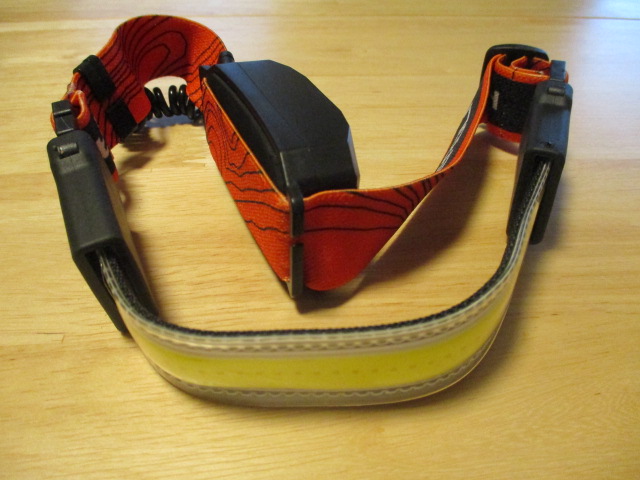
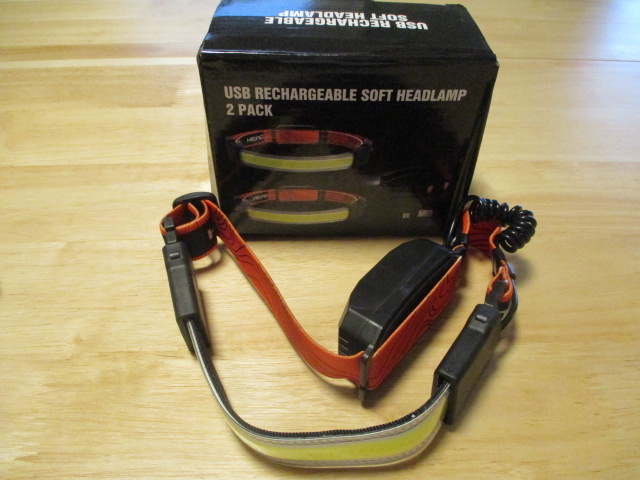
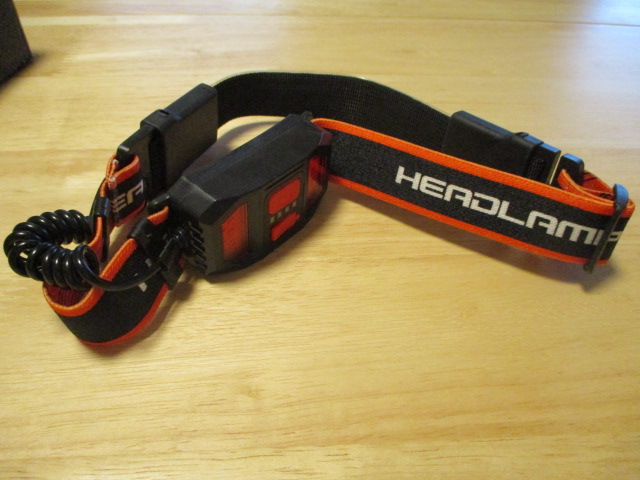
I recently purchased a pair of LED strip light headbands from Amazon for use while doing jobs around the house in areas where the lighting is poor.

These might be helpful also for SWLs and hams, especially for listening at night when in the field. They boast a 220 degree arc of light, high/low/flasher settings, rear red flasher, USB rechargeable, weigh about 5 ounces and are more comfortable than the older bulky headlamps.

There are many different versions of these strip LED lights available so you can shop around for the one that best fits your needs.

Click here to view on Amazon.com (affiliate link).

This is excellent, Mario. Thank you for sharing. I’m a huge fan of headlamps, but I’ve never seen an LED strip headlamp–I see where that wide arc of light would be useful.

Guest Post: Citizens Band FM mode is long overdue

Many thanks to SWLing Post contributor, Peter Laws, who shares the following guest post:


Adding FM as an allowable mode on CB seems long overdue

by Peter Laws

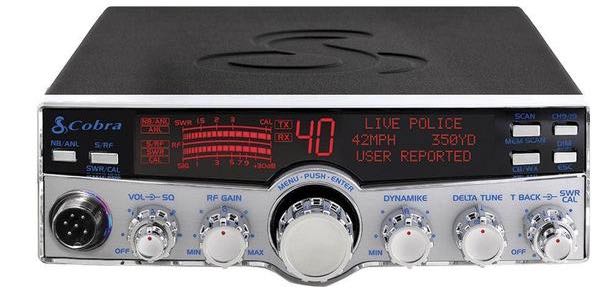
The FCC’s recent action to add FM as an allowable mode on CB seems long overdue.  See the final rule as published in the Federal Register on September 28, 2021: https://www.federalregister.gov/documents/2021/09/28/2021-19399/review-of-the-commissions-personal-radio-services-rules

Looking through old CB and amateur radio magazines from the 1970s it appears that the FCC considered allowing FM around the time that the service expanded to 40 channels.  The FCC being the FCC took their usual “what’s the least we can do to make this issue go away?” path and just added 17 new channels starting at the beginning of 1977.  Other than that expansion, they didn’t really change anything.  There were incumbents on the spectrum re-allocated to CB, too, and licensees were given a 2-year grace period to vacate what was to become channels 24, 25, and 26 and up.

Personally, your humble reporter is happy that the Commission has finally allowed FM on CB.  This should be a big improvement for people who are actually trying to communicate.  The reduction of static alone will be welcome.  There are claims that AM has better range than FM at the same power levels.  I suspect that people who make that claim are confusing AM broadcast (on MF) to FM broadcast (on VHF) but the proof will be in the pudding once we start to see new FM CBs hit the market.

And what about that?  When will we see new radios?  It should happen pretty quickly, almost certainly by the end of the year “Christmas” rush assuming no supply chain delays.  If you are unfamiliar with CB outside of North America, you may be surprised to find that radios that will meet the new FCC rules already exist.  I don’t mean those quasi-legal “Export” radios that many are fond of, but main-stream consumer radios from vendors like Midland, Cobra (the petitioner that got FM approved), Uniden, and President.

If you are an amateur licensee, you may be familiar with CEPT, the Conférence européenne des administrations des postes et des télécommunications.  That’s an association of the various FCC equivalents (and USPS equivalents) in each of the European nations.  In the amateur world, CEPT has a simple reciprocal licensing regime that allows US amateurs to operate in CEPT countries and amateurs from CEPT countries to operate in the US without any extra paperwork.  CEPT also works to harmonize radio and other telecommunication rules regimes between the different nations to make it easier for vendors to build equipment acceptable to all and making the market bigger.

For the most part — there are exceptions — CEPT nations have all adopted the same CB radio band plan and rules.  Here’s the surprise: they are nearly identical to the FCC rules!  Same 40 channels, even with the weirdness between channels 22 and 25 and the skipped channels for radio control, the 4 W power output, etc.  The only big difference is that CEPT allows FM in addition to AM and SSB.

So a CEPT-spec radio will meet the new FCC rules today.  A vendor will simply need to make certain that their product’s firmware and other components really do match US requirements, get it tested by a contract certification facility (those facilities will also need to update their FCC CB test procedures for the addition of FM), and file the paperwork with the Commission.  This is far simpler than actually having to engineer the addition of FM to an existing AM-only product.

One jurisdiction that has their own rules, in addition to allowing CEPT rules, is the United Kingdom.  When CB was legalized in the UK in 1981, the government allowed FM (only) on 40 channels that start at 27.60125 MHz and go up every 10 kHz to 27.99125 MHz.  A decade or two after that, the UK also made operation of CEPT-spec CB radios legal with the result being the UK CBers have 80 legal channels available – 40 CEPT channels with all three modes and an additional 40 with FM only.

Don’t expect to see “multi-norm” radios in the US like those marketed in Europe.  Multi-norm units allow for switching between CEPT, UK, and other national channel/power/mode layouts, often with only a few simple button presses.  Historically, the FCC has been reluctant to allow radios that have user-adjustable operating parameters outside of the Amateur Radio Service so watch for firmware on US versions to be locked down.

Undoubtedly, some will claim that this is all being done so that Cobra (the petitioner in this case) can sell more radios.  What is the problem with this?  The new rules do not change anything with regard to the current rules.  If you have a legal AM or AM/SSB radio now, you will still have a legal AM or AM/SSB radio after October 28, 2021.  And after that, it will be legal to sell an FCC-approved radio that includes FM in addition to AM or AM and SSB.  That’s right – radios may include FM but must have AM.

Generally speaking, I am one that is not in favor of deregulation.  But if you look through old FCC regulations, either in Part 97 (Amateur) or Part 95 (CB, GMRS, et al), there really were a lot of silly regulations.  But only silly by the time they went away; at the time they were created they were, or were at least thought to be, vital.  Time showed that some of those rules really weren’t vital and many have been removed.  One of those rules was the 250-km limit on CB communications.  It’s likely that at the time the rule was promulgated it was intended to reinforce that Class D CB (as it was known then) was intended as a short-range communications system.  The ionosphere made sure that the “DX rule” was nearly impossible to enforce as even regular, law-abiding citizens could and did answer a “breaker” who ended up being 1000 miles away!  In Cobra’s initial 2017 petition to the FCC, they requested abolition of the distance limit and the Commission agreed but in that same Report and Order, they declined to add FM.  Cobra petitioned for reconsideration of that point (FM) and here we are.

While there are still allocations for other services between channel 40 and the start of the 10-m amateur band, and while there are still licensees there, it is hard to imagine that those licensees are actually using that spectrum.  Free-banders, yes, licensed stations, unlikely.  A quick tour of the Commission’s Universal Licensing System shows a number of licensees in the spectrum between channel 40 (27.405 MHz) and the start of the amateur allocation at 28.0 MHz.  Most, however, appear to be dealers, consultants, and manufacturers in the communications business that are required to have blanket licenses for any band that they intend to use.  As a result, there are many licenses that cover 25-50 MHz (and many other bands) inclusive for demonstration purposes.

So where is this story going?  Why not petition the FCC to allow UK-spec radios to be used in the US?  Literally, almost no one is using this spectrum aside from freebanders that may already be there.  The reason that the Congress reserved to itself the ability to regulate the radio spectrum, later delegated to the FCC, was to ensure that the spectrum was used in the most efficient manner possible and to prevent interference.  Since almost no one uses this patch of spectrum at 27 MHz, why not let it become an expanded “national park” for hobbyists?

If you are thinking, “well, if the FCC does that for 27 MHz, why not new bands in other, largely-abandoned spectrum?”  This reporter’s answer is “sure, why not?”  This is, after all, how amateurs got bands at 630 and 2200 meters – the spectrum was largely abandoned.  WL2XUP is an Part 5 experimental station that is transmitting various digital modes between 40.66 and 40.7 MHz.  This roughly aligns with 8-meter amateur allocations that are popping up in other jurisdictions.  Maybe this 8-meter experiment, too, will pave the way to a new allocation like the Part 5 operations did on the new MF and LF bands mentioned above.

It’s a brave new world in CB.

Peter Laws has been licensed as a ham since 1991 (after a false start c.1978), has listened to scanners since 1982, was on CB in the late 1970s, and started DXing on MW and SW in the mid-1970s.  He edits columns in both LWCA’s Lowdown and IRCA’s DX Monitor.  He lives in Norman, Oklahoma, with his wife, several small doggoes, and many radios and antennas.