Author Archives: Thomas

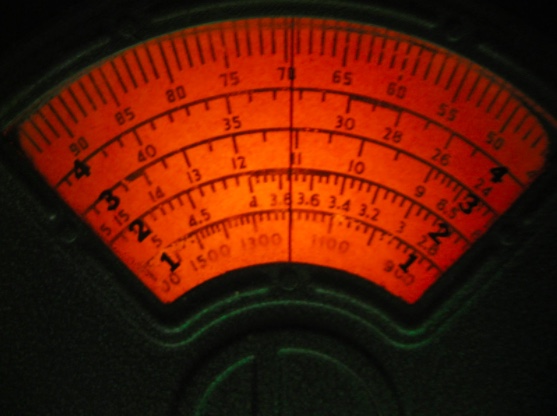
Inbound: A Drake SW8 HF/VHF receiver

I’m often accused of being a radio “enabler.” Truth be told, I wear that badge quite proudly. I’m passionate about communications equipment and I suppose it shows especially here on the Post.

But radio “enabling” is a two-way street. I can’t count the number of times that I’ve made impulse purchases based on feedback and tips from SWLing Post readers. Yesterday was one of those days.

The tip

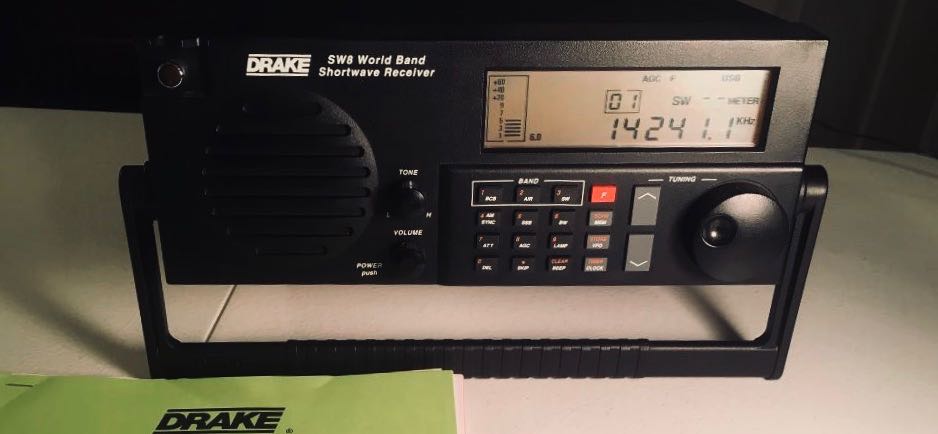
Last week, SWLing Post contributor, Rand (KS4L), sent me a link to an ad for a Drake SW8 on QTH.com’s classifieds site.  Here’s the description and original photo:

Nice Drake SW8 Communications Receiver

Nice physical and working condition Drake SW8 portable communication receiver covering 100 to 30,000 kHz in AM, USB and LSB modes with backlit LCD panels. The VHF aeronautical band is also featured (118 – 137 MHz). For portable or field use, can be powered from 6 D cells and use the internal pivot point 41 inch telescopic whip. Comes with original manual, CD and 120VAC power pack with cable. Has an eHam review rating of 4.7 out of 5. From a non smoking environment.

Asking 250 shipped.
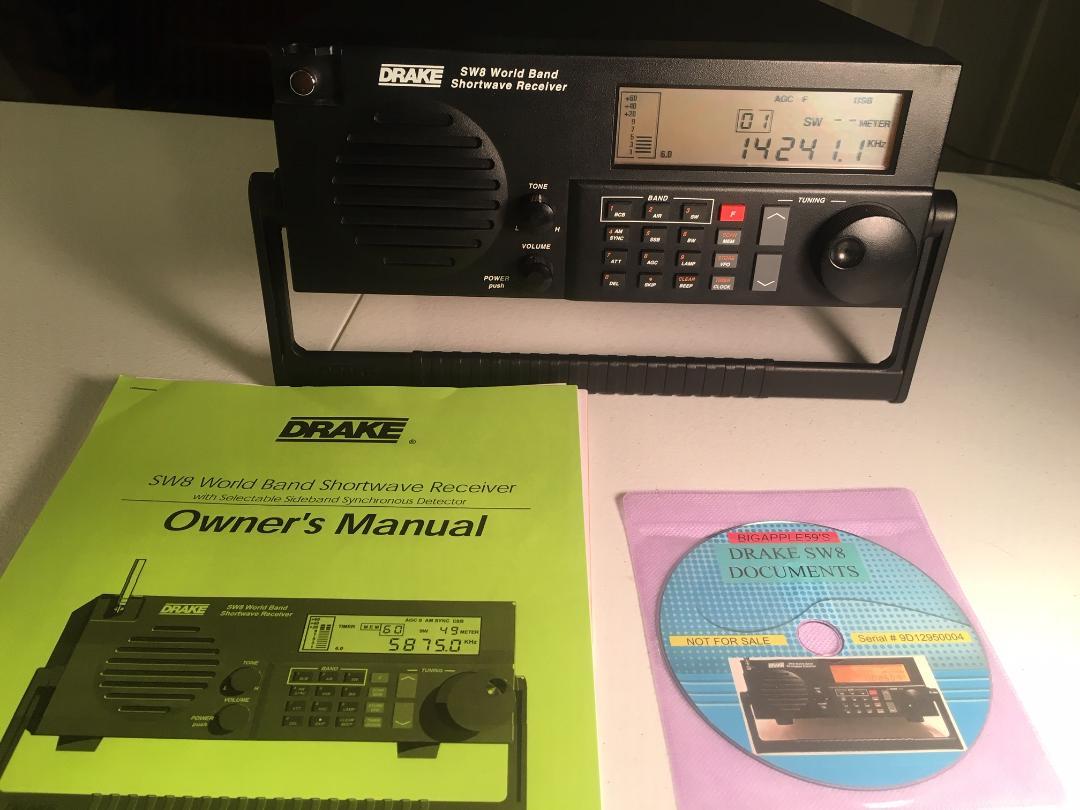
Randy sent this tip mid-week and I tried to ignore it. I knew it might not be a stellar deal, but it certainly wasn’t over-priced either.

The SW8

I don’t think Randy knew this, but I’ve always wanted an SW8. My buddy, David Goren, recommended this receiver ages ago, Each time I’ve stayed at his home he magically made an SW8 available as my bedside radio in the guest room. (That’s some serious radio hospitality!)

Once, many years ago, I actually agreed to purchase an SW8 from a seller in British Columbia, but the deal fell through for some reason. If memory serves, he damaged the radio in the process of packing it. I believe I agreed to pay $450 for it, but that was probably 10 years ago.

I kept Randy’s tip and link in my action items list and decided that, if still available, I’d post it as a radio deal here on the SWLing Post.

Yesterday morning, the SW8 was still showing as available so I started a post. Being the radio enabler I am, I started writing about how much I’ve always wanted to own an SW8…how I love the simple front face plate, the display, the fact it can be powered by batteries, and how I think it’s quite a capable little receiver.

Then I stopped writing, mid-sentence and asked myself… “Will I regret not grabbing this SW8?”

My “radio bux” fund is incredibly low at the moment, mainly due to recent travels and budgeting for no less than three radio conventions next year. Also, this is the time of year when several annual fees/subscriptions are auto-deducted from my account–including hefty hosting fees for the Shortwave Radio Audio Archive.

Still, I had *just* enough money to at least make an offer and knew if I “thinned the radio herd” here at SWLing Post HQ, I could probably replenish the amount in a month or so.

Since this was a classifieds ad, my next step was to go through an extensive checklist to make sure the seller was who they claimed to be and that there were no signs of this being a scam. Everything checked out. (I’ll make a note to publish a post about my process in the near future).

I contacted the seller and we agreed on a price of $220 shipped. I put his check in the mail, and he even shipped the radio same day and provided a verified FedEx tracking number.

I’ll admit it: I’m stoked!

I look forward to putting this Drake SW8 through the paces and especially loading it with batteries and taking it to the field. I know–in terms of performance–it won’t be my best receiver, but I know it’ll provide hours upon hours of radio fun, and that’s what it’s all about!

Post readers: What do you think?  Have I made a mistake, or did I get a good deal? I’d love to hear from those of you who’ve been owners of the venerable Drake SW8!

Please comment!


Do you enjoy the SWLing Post?

Please consider supporting us via Patreon or our Coffee Fund!

Your support makes articles like this one possible. Thank you!

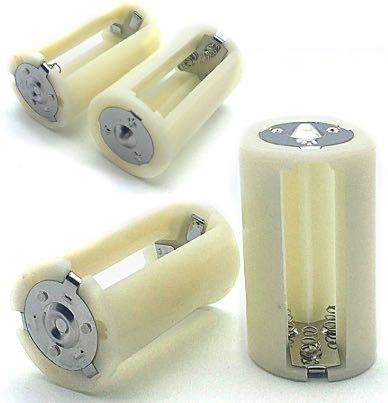
Adid finds affordable AA to D cell adapters

Many thanks to SWLing Post contributor, Adid, who writes:

I just ran across this adapter

https://www.aliexpress.com/item/4000202530136.html

I don’t know if D type is still available everywhere, but not here in Israel.

So this can be very handy if one needs to revive a D type device occasionally.

Thanks for the tip, Adid! This could be a very helpful product for radio enthusiasts who have some of the classic solid state receivers of the 1970s and 80s, like the Panny RF-2200.

It’s not difficult in the States to find D cells but rechargeables are not as commonplace and are quite pricey, often requiring their own dedicated D cell chargers. Since I almost exclusively use rechargeable batteries, I have two of these Eneloop “power packs” (affiliate link) that have AA to D cell adapters inside. Of course, your option is much less expensive and should yield better overall capacity when using standard alkaline cells.

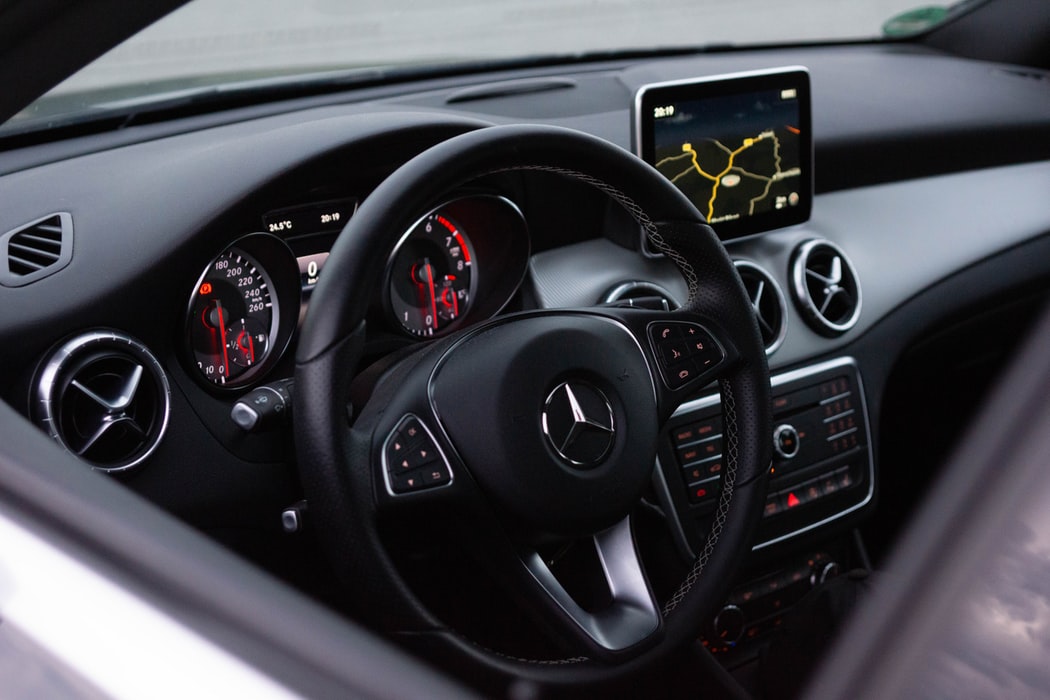
EU vehicle digital radio legislation

Photo by Philipp Katzenberger

Many thanks to SWLing Post contributor, Mangosman, who shares the following:

The European Union as asking its member states to legislate the following, which Germany has just done today.

EU Vehicle Directive

This directive requires all new car radios sold in the European Union to be capable of receiving digital terrestrial radio, in addition to any FM or AM functionality which manufacturers may want to include. The code also grants EU member states the power to introduce rules requiring consumer radios to include digital capability.

Following its adoption by the European Council, the directive was published in the Official Journal of the European Union (OJEU) and came into force on Dec 20 last year. For the automotive industry, the key section of the European Electronic Communications Code is Article 113, XI:

“Any car radio receiver integrated in a new vehicle of category M which is made available on the market for sale or rent in the Union from … [two years after the date of entry into force of this Directive] shall comprise a receiver capable of receiving and reproducing at least radio services provided via digital terrestrial radio broadcasting. Receivers which are in accordance with harmonized standards the references of which have been published in the Official Journal of the European Union or with parts thereof shall be considered to comply with that requirement covered by those standards or parts thereof.”

The policy commences 21st December 2020 and applies to any vehicle with 4 or more wheels. It does not apply to amateur radio equipment. The radio must be able to display the broadcasters’ name.

Note the way the type of receiver is phrased is digital terrestrial radio, it does not specify what type. It obviously applies to DAB+ because there are many DAB+ transmitters in Europe, but could also apply to DRM. With the advent of Software defined receivers, it is easy to have both standards. This would then open they way for high frequency (short wave) DRM in most vehicle radios. Remember that there are now 1.5 million factory installed DRM car radios in India which has been achieved in 18 months.

This decision will open the way for all new radios to include DAB+/DRM in all markets except the USA/Mexico.

Thank you for sharing this!

Secure federal facility interfering with garage door openers?

Many thanks to SWLing Post contributor, Jakon Hays, who shares a link to the following article at Inside NOVA:

A top-secret and secure federal government facility just northwest of Warrenton admitted this week it may be responsible for crippling dozens of garage door openers in two nearby subdivisions, FauquierNow.com’s Don Del Ross writes.

More than 70 Olde Gold Cup and Silver Cup Estates homeowners have reported that openers started to fail about two weeks ago, according to Betty Compton, Olde Gold Cup’s Neighborhood Watch group coordinator.

Warrenton Training Center B, a classified federal facility, issued a statement this week saying its radios may be to blame.[…]

Click here to read the full article.

This is interesting. I’ve heard this is a very common complaint in/around large broadcast facilities. Whether or not it’s always true is up for debate, but I should think it would be easy to test the RF environment in the area and confirm.

BBC Witness History: “Britain’s secret propaganda war”

Check out this brilliant BBC Witness History piece regarding the British propaganda effort during WWII:

How sex, jazz and ‘fake news’ were used to undermine the Nazis in World War Two. In 1941, the UK created a top secret propaganda department, the Political Warfare Executive to wage psychological warfare on the German war machine. It was responsible for spreading rumours, generating fake news, leaflet drops and creating fake clandestine German radio stations to spread misinformation and erode enemy morale. We hear archive recordings of those involved and speak to professor Jo Fox of the Institute of Historical Research about the secret history of British “black propaganda”.

Click here to listen to this program via the BBC Witness History website.

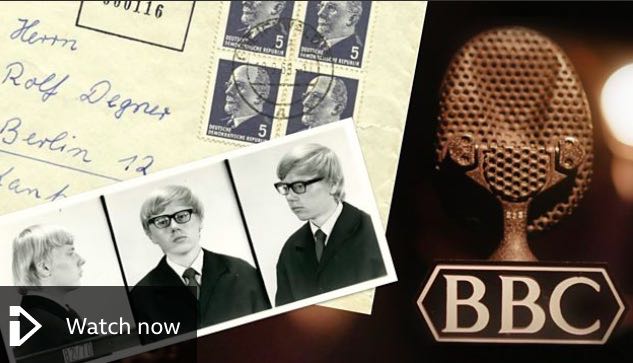
BBC Program: “London Calling: Cold War Letters”

Many thanks to SWLing Post contributor, David (G4EDR), who writes:

Looking forward to this documentary TV programme tonight. Looks like it will be about the BBC WS during the cold war.

https://www.bbc.co.uk/programmes/m000b1h0

Thanks for the tip, David!

Readers, my post is a bit late–David sent this two days ago. Still, the program is on the BBC website for a few more weeks, however it is very much geo-blocked so you’ll need a work-around if viewing from outside the UK.

It’s not a travel radio if it doesn’t have an alarm clock

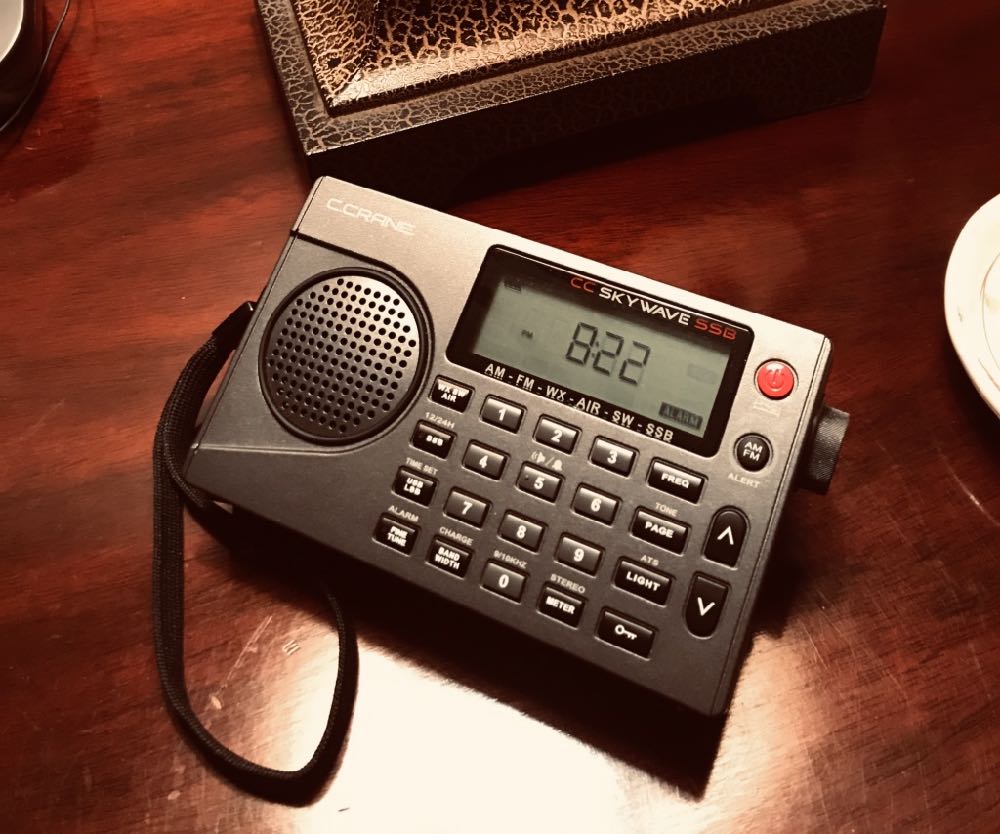
The CC Skywave SSB is set to wake me at 3:30 to catch a 5:30 flight.

I have a pretty accurate body clock. Regardless of when I doze off, I always wake up at the same time.

When I’m at home on my regular schedule, I trust my “internal chronometer” so much, I haven’t set an alarm in years.

When I travel, it’s a completely different story…

It’s a rare occurrence when a flight, train, or even road trip allow me to wake up at my normal time, so I rely on an alarm clock.

In fact, I’ll let you in on a little secret: I’m a nervous Nellie when I’m forced to break my sleep cycle to catch an early flight. My fear of missing a flight may even border on paranoia–I’ll wake up multiple times during the night in a panic unless I feel completely at ease that there’s an alarm system in place to wake me no matter what.

I recently told a friend about this fear and he asked, “Why not just set the alarm on your phone?!”

Simple answer: I don’t trust smart phones and tablets. They’re too complicated with so many nighttime settings, alarm/alert volume levels, short battery life, etc. etc.

Case in point…

Earlier this year, I had to catch an early flight and needed to wake up at 4:00 AM, so I scheduled my iPhone and iPad to alarm at 4:00. (When at home, I try to have my iPhone/iPad wake me first, because the alarm is very gradual and doesn’t disturb my wife.) Of course, I also set my travel radio’s alarm clock for 4:10, as a fail safe.

Knowing I had a total of three(!!!) alarm clocks set, I slept like a baby.

At 4:10 AM, my travel radio alarm started beeping. The iPhone and iPad were completely silent.

Turns out, the iPad decided to do an operating system update during the night. For some reason, after rebooting, it simply forgot about the alarm. (Thanks, iPad!) And the iPhone? I’m still not sure how/why, but the mute switch on the side of the phone was engaged and if it vibrated to wake me, I never heard it rumbling on the night stand.

Thank goodness the travel radio had my back, else I would have missed that flight.

Travel radios: Never leave home without one!

I like to be a self-sufficient traveler even though I only travel with one bag and pack very lightly. I never rely on my destination to have a functioning alarm clock (with battery backup, of course) or effective wake up call service. Regardless of how minimally I pack, I always take a travel radio.

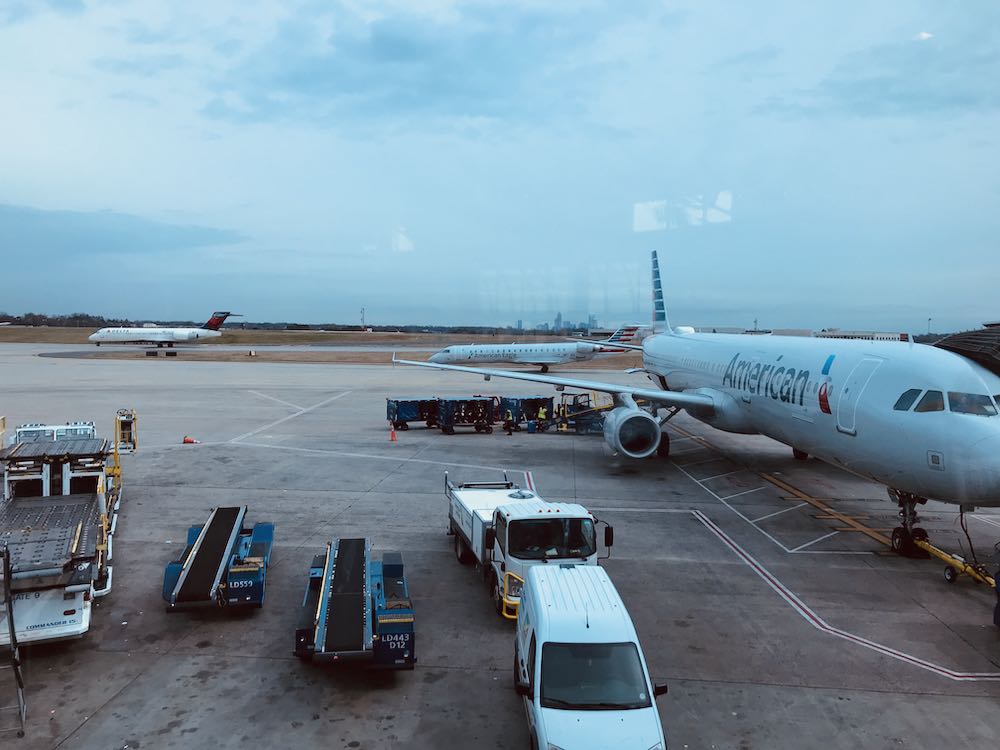
In February, for example, I travelled to Philadelphia for the Winter SWL Fest. Even though my trip was nearly a week long, to keep from paying a carry-on fee with Frontier airlines, I packed everything in a bag that met their strict “personal carry-on” bag size.

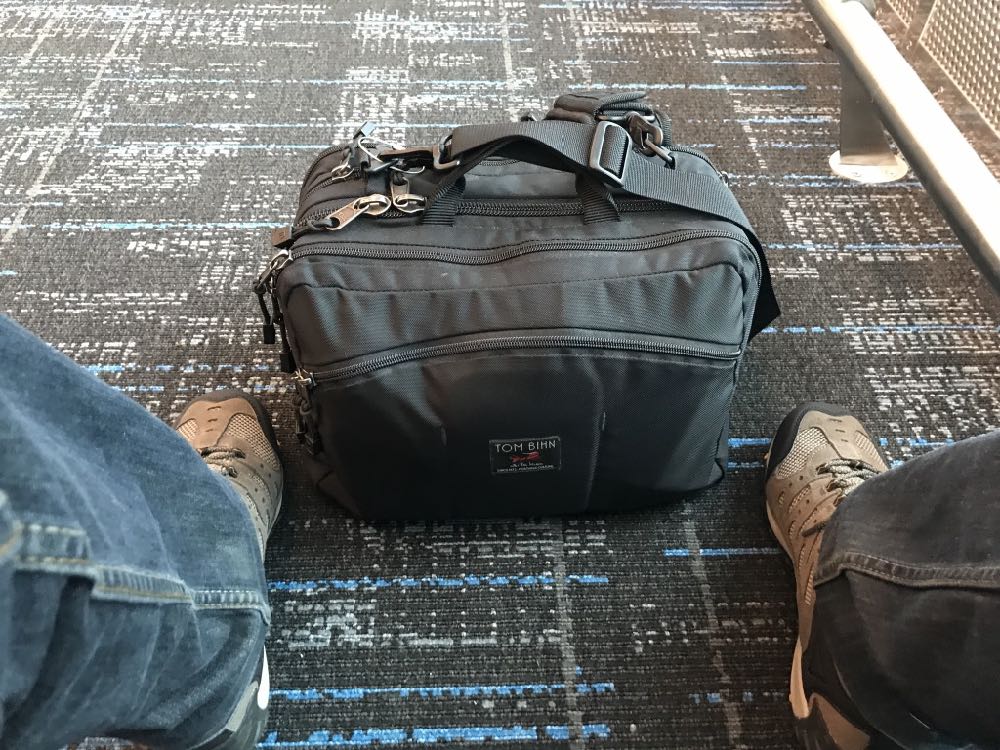
Regular readers know I’m a bit of a pack geek, so my bag of choice was the Tom Bihn Stowaway.  Here’s the bag fully packed out at my feet in the airport:

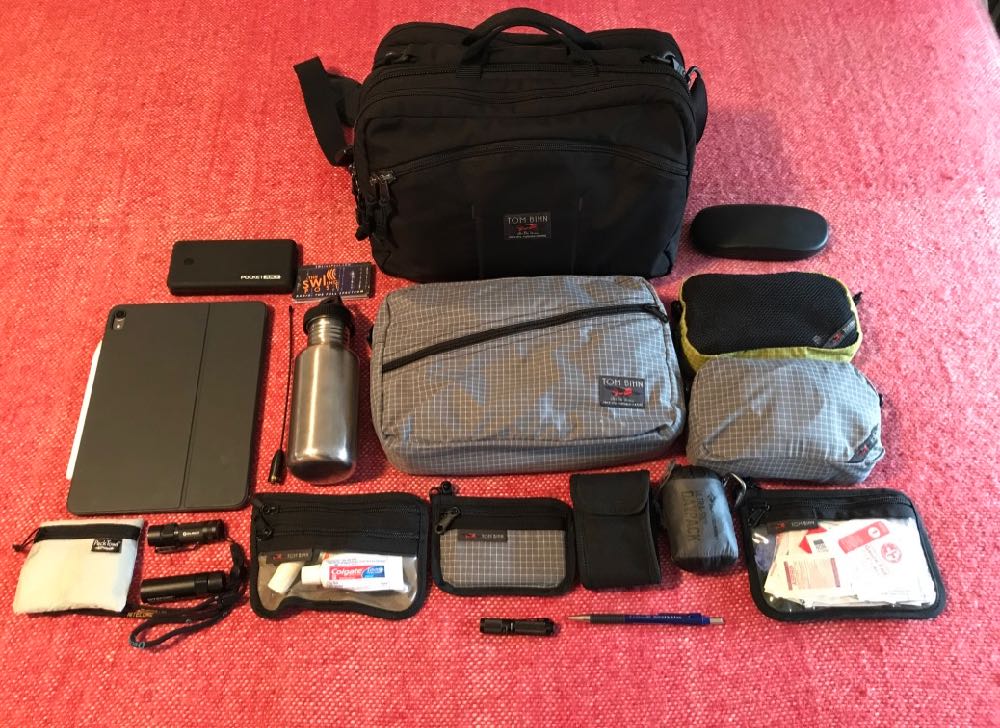
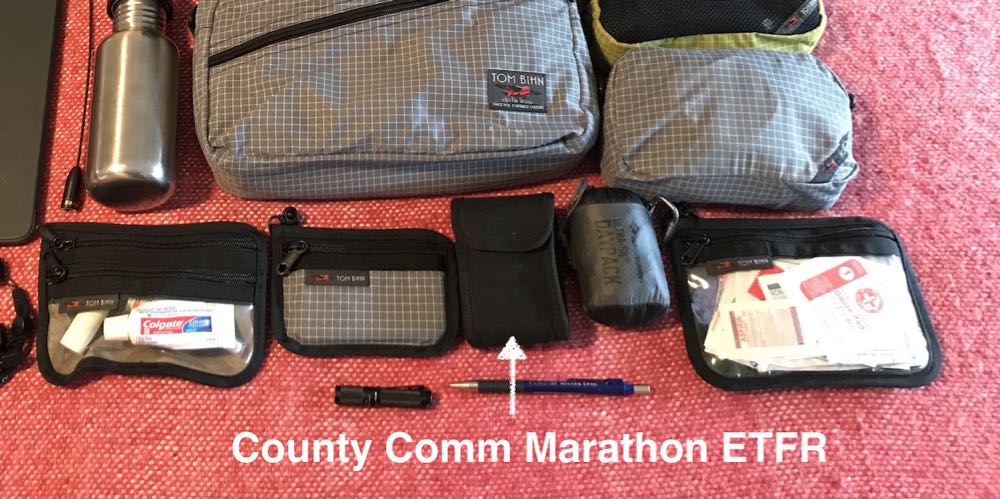
Here’s a photo of everything I packed in the Stowaway for that trip:

This particular trip really pushed the limits on my minimalist travel philosophy. Honestly? It was a fun challenge! I had to hone my pack contents down to only the essentials (don’t make fun of me for believing three flashlights were essential–the previous year, our hotel was without power for several days).

Still, I made room for one of the smallest travel radios in my arsenal: the County Comm Marathon ETFR:

I chose the ETFR because it has a custom case that could attach to my belt or pack strap if interior space became too tight. The ETFR radio hasn’t been in production for a decade, but it’s an effective radio companion and the alarm works without fail.

Choosing a travel radio

Most modern digital portables are based on DSP chips that have clock and alarm functions, so you might already own an effective travel radio.

With that said, I always prioritize radio features that benefit a traveler, of course; here are some that I look for:

  • Small size: Naturally, it’s sensible to look for a travel radio that’s small for its receiver class for ease in packing.
  • Overall sturdy chassis: Any travel radio should have a sturdy body case that can withstand the rigors of travel.
  • Built-in Alarm/Sleep Timer functions: We’ve already exhausted this topic, right?.
  • Powered by AA batteries: While the newer lithium ion battery packs are fairly efficient, I still prefer the AA battery standard, which allows me to obtain batteries as needed in most settings; a fresh set of alkaline (or freshly-charged) batteries will power most portables for hours on end.
  • Standard USB charging cable: If I can charge batteries internally, a USB charging cable can simply plug into my smart phone’s USB power adapter or the USB port on my laptop; no extra “wall wart” equals less weight and less annoyance.
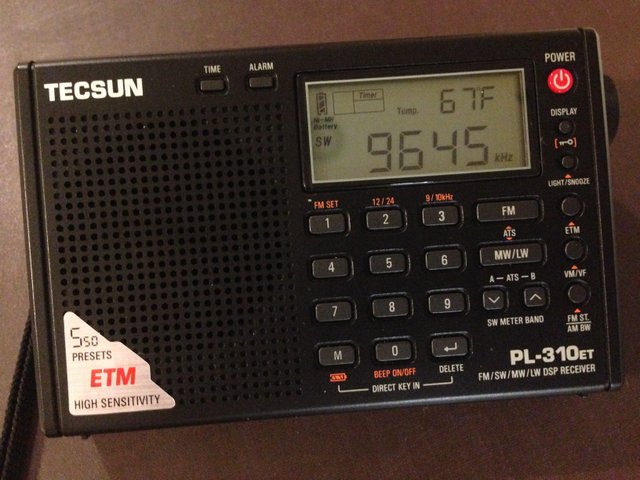
  • ETM: Many new digital portables have an ETM function which allow auto-scanning of a radio band (AM/FM/SW), saving what it finds in temporary memory locations–a great way to get a quick overview of stations.  (As this function typically takes several minutes to complete on shortwave, I usually set it before unpacking or taking a shower. When I return to my radio, it’s ready to browse.)
  • Single-Side Band: While I rarely listen to SSB broadcasts when traveling, I still like to pack an SSB-capable receiver–especially for longer trips.
  • RDS: Though an RDS (Radio Data System) is FM-only, it’s a great feature for identifying station call signs and genre (i.e., public radio, rock, pop, country, jazz, classical, etc.)
  • External antenna jack: I like to carry a reel-type or clip-on wire external antenna if I plan to spend serious time SWLing. Having a built-in external jack means that the connection is easy, no need to bother with wire and an alligator clip to the telescoping whip.
  • Tuning wheel/knob: Since I spend a lot of time band-scanning while travelling, I prefer a tactile wheel or knob for tuning my travel radio.
  • Key lock: Most radios have a key lock to prevent accidentally turning a radio on in transit–but with a travel radio, it’s especially important to have a key lock that can’t be accidentally disengaged.
  • LED flashlight: Very few radios have this, but it’s handy to have when travelling. Note that the County Comm ETFR (above) does!
  • Temperature display: Many DSP-based radios have a built-in thermometer and temperature display; I like this when I travel anytime, but especially when I’m camping.

While I don’t have a portable that meets 100% of the above travel radio wish-list, I do have several that score very highly.

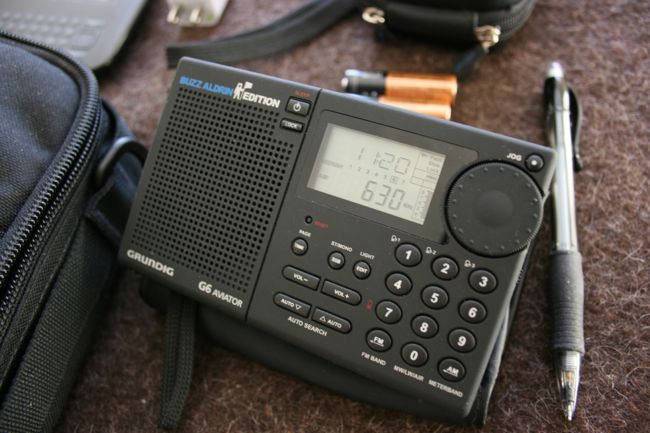
Since this is a favorite topic, I’ve written a number of articles with reviews of travel radios. In my CC Skywave SSB review last year, I list a number of current favorites.

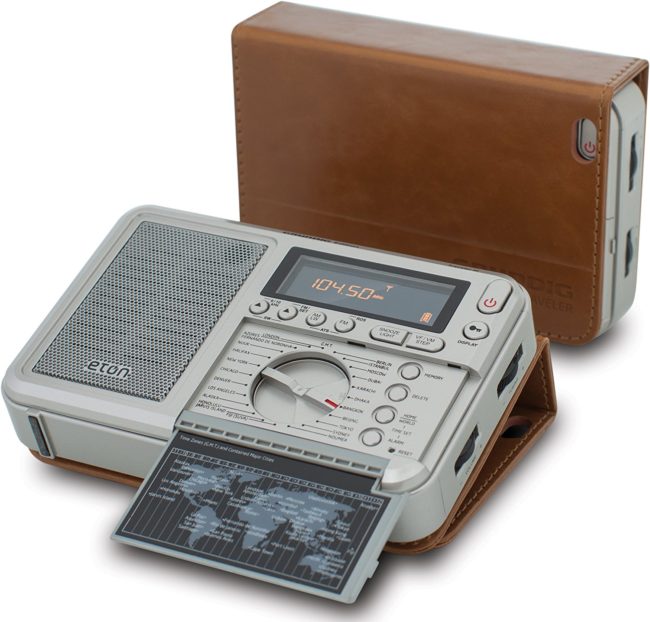
I should also mention that one great deal at time of posting is the Eton Executive Traveler.

It’s a brilliant little radio for $34.99 shipped (note this affiliate link supports the SWLing Post).

One of our readers has been following the price of this little radio for months–it’s being sold at an all-time low at present.

What’s in your travel pack?

What’s your favorite travel radio? What features are important to you? Anyone else paranoid about missing early flights? 

Please comment!


Do you enjoy the SWLing Post?

Please consider supporting us via Patreon or our Coffee Fund!

Your support makes articles like this one possible. Thank you!