Author Archives: Thomas

Steve spots a Capehart International Radio and mag loop antenna in “Young Sheldon”

Many thanks to SWLing Post contributor, Steve Yothment, who writes:

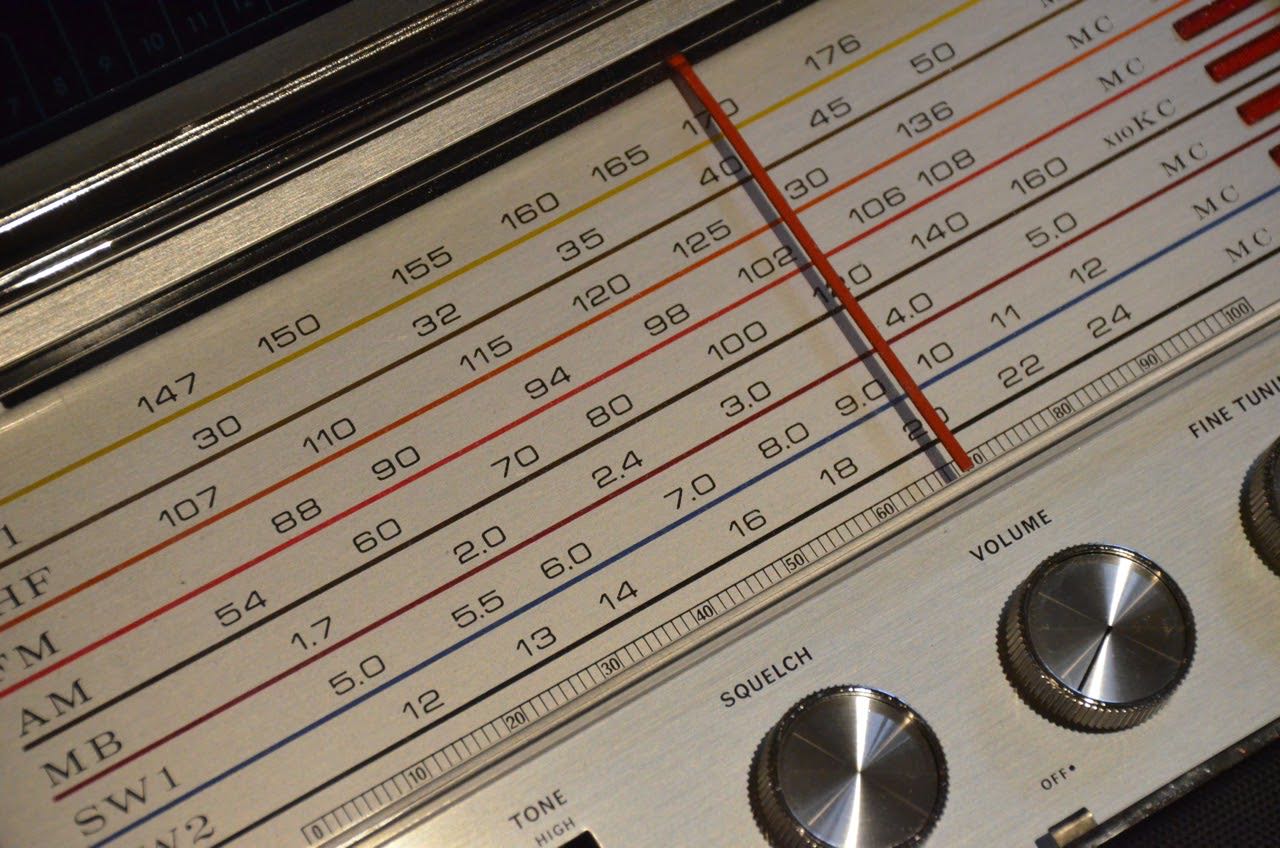
Check out the attached picture. It is from a preview of tonight’s episode of “Young Sheldon.” In it, Sheldon and Dr. Stergis are listening to an antique shortwave radio. I think it is a Capehart International Radio Model 88P66NL.

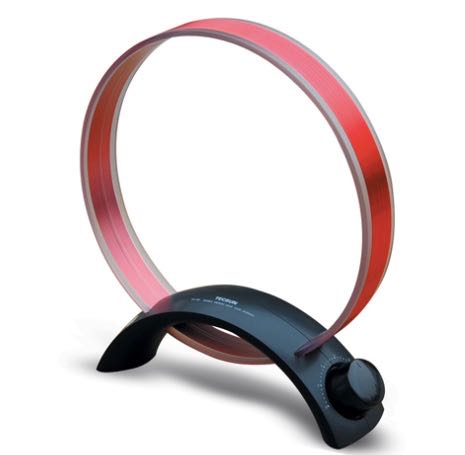
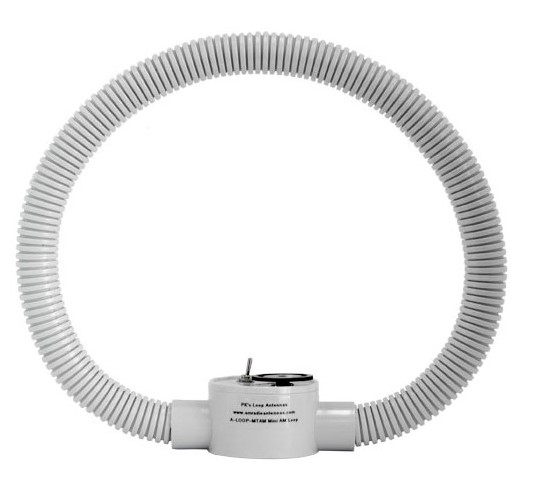
Also in the preview is an active loop receiving antenna. The show is supposed to be about Sheldon when he was young, back in about 1985. I don’t think active loop antennas were very popular at that time! Maybe they got the timeframe wrong on the use of the antenna. What do you think?

What a catch! I love the flip-up cover on the Capehart although I’m sure in daily use it might have been a bit unhandy. 🙂

Regarding active magnetic loop antennas, like you, I don’t remember them being around much in the mid 80s, although I know the technology was available. I imagine they were used in speciality commercial and military applications. Like you, I’m guessing we didn’t have as many noisy switching power supplies which make them such a necessity these days. I remember happily DXing with my Zenith Transoceanic in the middle of my house in the mid 80s.  Those were certainly the days!

Post Readers: Do you know of any active magnetic loop antennas that were used in homes in the mid 1980s and before?  If so, please comment!

I’ll add this post to our ever growing archive of radios in film!

Hara Area damaged by tornado

Note that Hara Arena is the former home of the Dayton Hamvention. Lots of memories in that old building!

(Source: WHIO via Eric McFadden)

[…]Hara Arena suffered extensive damage when tornadoes and severe storms moved through Monday night.

Drone footage shows the roof and side of the structure blown off in several places.

Click here to view drone footage of the damage to Hara Arena.

The Airspy HF+ Discovery: A new high-performance SDR

At the 2019 Hamvention, I stopped by the Airspy.US booth and checked out the specifications of Airspy’s latest SDR: the Airspy HF+ Discovery.

At first glance, the Discovery looks a lot like the Airspy HF+ but even smaller and sporting performance upgrades. Keep in mind, I consider the Airspy HF+ (the Discovery’s predecessor) to be one of the best HF SDR receivers on the market–certainly the best sub $200 HF SDR–so of course the Discovery has piqued my interest.

I wanted to get the scoop directly from the source, so I contacted Youssef Touil with Airspy and asked for more insight. What follows is Youssef’s reply:

This new release of the HF+ aims to improve the overall performance in highly demanding situations while fully automating the gain and filtering control. This frees the operator from the RF front-end details and keeps the focus on the actual signals.

The new filters are implemented using a combination of static LC filter banks and other RC filters implemented in silicon. This considerably improves the overall behavior in a crowded band, while still giving a very low noise floor. Also, the very nature of the Polyphase Harmonic Rejection mixer combined with the integrated IF filtering and the high dynamic range Sigma-Delta ADC act like a roofing filter in a heterodyne system. This architecture is quite original with still very few commercial implementations attempted.

A lot of attention went to improve the far-range IIP2 and IIP3 in practical receive scenarios. Other radios just opt to increase the noise figure of the radio to hide the IMD problem, but this also reduces the sensitivity. We opted not to go this way and fix the problem at its root and preserve the maximum sensitivity benefit. The new intercept points protect the front-end from images originating from various IMD scenarios while still using the maximum gain. The LF and VLF bands also benefited from these improvements.

The PCB layout was also improved to get rid of most of the digital noise. The new PCB has 6 layers filled with ground plans and a metal shield can soldered on top of the RF section. This might look overkill for a HF/VHF radio, but given the MDS we are aiming at, it’s really necessary. The older PCB was 4 layers only.

The radio weighs less than 30 grams and fits inside a 45 x 60 x 10 mm volume (ex. The SMA connector). Given the achieved performance and the form factor, we expect it to interest a lot of our SIGINT partners who are already using the first HF+ design.

As you know, when it comes to high performance, the big players still opt for heterodyne systems in the actual RX path and only use direct sampling for the “eye candy” panoramic view. This was confirmed by Yaesu (FTDX101D) and Elecraft (K4). The reason is evident: Good mixers are still better (and scale better) than state of the art ADCs. I think our Polyphase Harmonic Rejection mixer-based SDR architecture is a step in the right direction, where both goals are achieved without compromises, and in the most economical way. The first version was kind of a revolution for us, but the “Discovery” is the consolidation of a lot of polishing opportunities we discovered since the first release.

Thank you for the details, Youssef–it sounds like a lot of innovation and iterative upgrades have gone into the Discovery receiver design.

Of course, I will plan to grab the HF+ Discovery and review it here on the SWLing Post. In the meantime, check out the excellent RTL-SDR website where Carl has posted a short preliminary review of a pre-production HF+ Discovery.

Click here to check out the HF+ Discovery at Airspy and place a pre-order ($169 US). 

From the Post Archives: Honoring Memorial Day with Dame Vera Lynn

The following Memorial Day post was originally published on May 25th, 2015:


Dame Vera Lynn

Dame Vera Lynn

Today is Memorial Day, and I’m feeling humbly grateful to all of those who paid the ultimate sacrifice for their country. Since I’ve been reading a lot of WWII history lately, I’ve also been playing a lot of WWII-era music here in my sanctuary to all things radio.

Few songs sum up the yearning sentiment of World War II better than Vera Lynn’s 1942 rendition of “The White Cliffs of Dover.” It’s an iconic song, one that helped British soldiers see beyond the war while mourning its painful toll. It was written in 1941 when England was taking heavy casualties, just before American allies joined the effort.

Scott-Marine-Radio-SLR-M

This morning, seeking something with a little authenticity, I played “The White Cliffs of Dover” though my SStran AM transmitter, and listened to it through “Scottie,” my WWII-era Scott Marine radio (above). I made this recording by placing my Zoom H2N recorder directly in front of the Scott’s built-in monitor speaker.

So here you go: a little radio tribute to all of those who fell–on both sides–of that infamous second world war.

And thanks to all who serve and have served in the name of “peace ever after.”

Click here to download the recording as an MP3, or simply listen below:

Lavina Shaw: History of a Canadian railway brass pounder

Many thanks to SWLing Post contributor, Eric McFadden (WD8RIF) who shares the following post by James Wade (WB8SIW) from the QRZ.com forums:

The CBC recently interviewed Lavina Shaw, Past International President of the Morse Telegraph Club. In this biographical documentary, Lavina talks about her experiences working as a railroad and commercial telegrapher as well as her experiences as a woman working in a man’s world. Like many telegraphers of her era, Lavina had a front-row seat to history.

In addition to railroad and commercial operations (telegrams, cablegrams), the telegraph was widely used in a variety of applications such as stock brokerage operations, commodities and board of trade work, press operations, and so forth. Even the telephone company used Morse telegraphy extensively for its internal operations well into the post war era.

Radio amateurs in general, and CW operators in particular, will undoubtedly find this video interesting, not just for the human interest content, but for its insights into the antecedents of radiotelegraphy.

The Morse Telegraph Club is a non-profit historical and educational association dedicated to preserving the history and traditions of telegraphy and the telegraph industry. MTC members and chapters demonstrate telegraphy at historical events, design and construct historically correct museum exhibits and conduct presentations on the history of telegraphy. MTC also publishes an excellent quarterly journal entitled “Dots and Dashes, which includes articles on telegraph history and first-person accounts of telegraph industry employees.

Click here to view on YouTube.

For more information on MTC membership, please contact James Wades (WB8SIW).

Thanks, Eric, for sharing this fascinating piece about Lavina Shaw!

The Audimeter: A 1939 solution for measuring radio audiences

Photo showing off the inside of an Audimeter, a device for measuring what people were listening to on radio (Photo: February 1945 issue of Radio-Craft via Gizmodo)

(Source: Gizmodo)

[…]The February 1945 issue of Radio-Craft magazine included an article titled “Radio Audience Meter” which looked at the machine that was revolutionizing audience measurement. First installed in homes on a trial basis in 1939, the Audimeter was placed next to a family’s existing radio.

The article included photo cutaways that showed how the Audimeter worked. Back in those days, radios had dials. Fitted with a series of gears, the Audimeter was a standalone device connected to a radio. It had an arm that moved whenever the radio dial was turned. So whenever the radio station was changed, the Audimeter’s arm would swivel along a long tape that was slowly rolling inside this gadget. The tape inside was about 100 feet long and three inches wide and reportedly lasted for about a month of recording.

The market researchers would collect the tapes by visiting each house monthly and shipping the tapes to a plant in Chicago. Once there, the tapes were processed by dozens of laborers feeding the tapes into tabulation machines.

“The Audimeter made it more scientific,” Buzzard noted about the measuring device. “They got automatic readings.”

And words like “scientific” and “automatic” were all the rage for gadgets of the 1940s, even if by today’s standards there was quite a bit of legwork involved.[…]

Click here to read the full story.

Radio Deal: Eton Grundig Satellit 750

Many thanks to SWLing Post contributor, Christian, who writes:

Hi Thomas. Thought you and your readers might like to know that the Eton Grundig Satellit 750 has just dropped to the lowest price I’ve seen in over three years on Amazon.com…$262.43 shipped. As always, Amazon prices change without notice so just be aware.

Click here to view (purchasing with this affiliate link supports the SWLing Post).

Thanks for the tip, Christian! I appreciate the fact that you watch these deals so closely for us.