Author Archives: Thomas

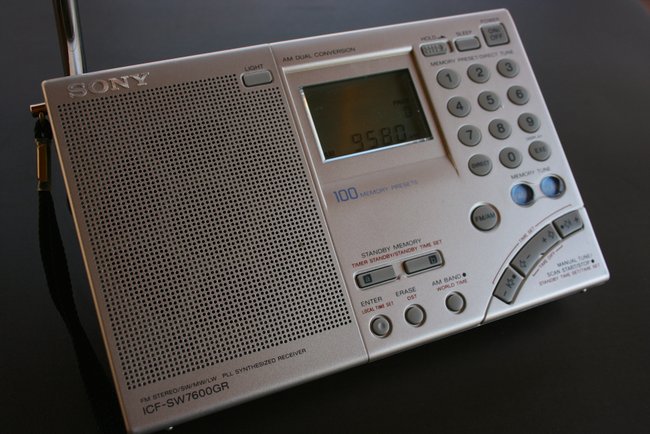
Using the Sony ICF-SW7600GR with external antennas

Many thanks to SWLing Post contributor, Steven Crawford, who writes:

As the 7600GR supplies 6v DC to the external antenna jack to power their active loop antennas there seems to be a great deal of confusion on the web about whether one can or cannot use an external antenna such as a random length of wire attached to the center tip of a barrel connector.

I have been unable to locate the blog entry but I seem to remember you discussing this in one of your posts. In it you mentioned you had built a widget that killed the voltage and allowed you to use the external antenna of your choice. I would appreciate your thoughts on a random wire to center tip antenna and details of the widget you built when you have time.

Thank you for your question, Steven.  I hope a reader can help point to the post you’ve mentioned.  I believe I recall reading this in a guest post–I know I’ve never used a device to kill the 6V phantom load in the antenna out jack.


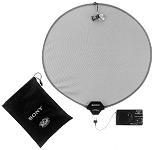
I suppose I’ve (incorrectly?) assumed the Sony would only push voltage out if connected to the Sony AN-LP1 (see right).

I know I’ve used a number of antennas with the ICF-SW7600GR: long wires, the PK Loop, The EF-SWL, the NASA PA 30, and even a rather large multi-band dipole when I recorded the final broadcast of RNW. I’ve never experienced a problem, nor damaged the antenna/receiver as of yet.

Can anyone shed some light on this? Please comment!

1920s Radio Times magazines now available to public

(Source: BBC Media Centre)

BBC makes 1920s Radio Times magazines available to public

The BBC is making the earliest issues of the complete Radio Times magazines publicly available online for the first time. This release is part of the BBC Genome Project – a digitised searchable database of programme listings – from 1923 to the end of 2009.

BBC programme records have been available to the public via the BBC Genome Project since October 2014. Now, users can access digitised editions of the magazines from 1923-1929. Opening up this archive means researchers will be able to make direct links between the listings in the database and the original published listings.

Early colour front covers, specially commissioned illustrations and letters from the BBC’s first radio audience form part of the content in this fascinating record of early broadcasting.

Radio Times began in 1923, a year after the British Broadcasting Company started regular broadcasts, and thus provides a valuable record of the programmes that have been broadcast over nine decades.

More than five million programme records, scanned from Radio Times magazines, form the backbone of the BBC Genome website. Now, members of the public will be able to view the 1920s listings in facsimile, as well as all the extra material contained in articles and features in the magazine that have previously been unavailable on the site.

Hilary Bishop, Archive Development Editor, says: “We are particularly pleased that it is easy for our users to flick between the listings in the database and the related text in the magazine, as well as to scroll through articles not seen previously on BBC Genome. It is part of our commitment to continually improving BBC Genome and helping to open up the BBC’s archives as much as possible.”

Radio Times in the 1920s featured regular articles by the first Director General of the BBC, Lord Reith, and the BBC’s chief engineer, Peter Eckersley, addressing topics that concerned the BBC audience of the time, such as how to choose the best ‘receiving set’ and how to prevent ‘oscillations’ over the airwaves.

Articles, cartoons and programme listings all provide an insight into the history of broadcasting and the BBC’s first listeners, while adding some context, for a modern audience, to the earliest BBC programme records. The first editions of Radio Times show a nation still enthralled by the technological wonder of the new ‘wireless’ sets.

In each edition for the first few years of publication, cartoons explored the comic possibilities of a public who still didn’t quite understand how radio worked. “Would you kindly remove your hat madam?” asks a man at a ‘wireless village concert’. Yet the performer on stage is a radio set.

As the public wrestled with their new radio antennae, legendary cartoonist W. Heath Robinson illustrated two editions with eccentric designs of aerials.

Other historical snippets include a ‘new experiment’, in 1924, to broadcast a programme from California, to London. The exercise was to be repeated in the opposite direction. “If suitable conditions exist in the atmosphere”, concludes the article, “there is no reason why the experiment should not be successful”.

You can access the digitised 1920s magazines at: http://genome.ch.bbc.co.uk

Click here to read this article at the BBC Media Centre.

Click here to browse the Radio Times archive.

Paul remembers the FLR-9 “Elephant Cage” in Misawa Japan

Many thanks to SWLing Post contributor, Paul, who writes:

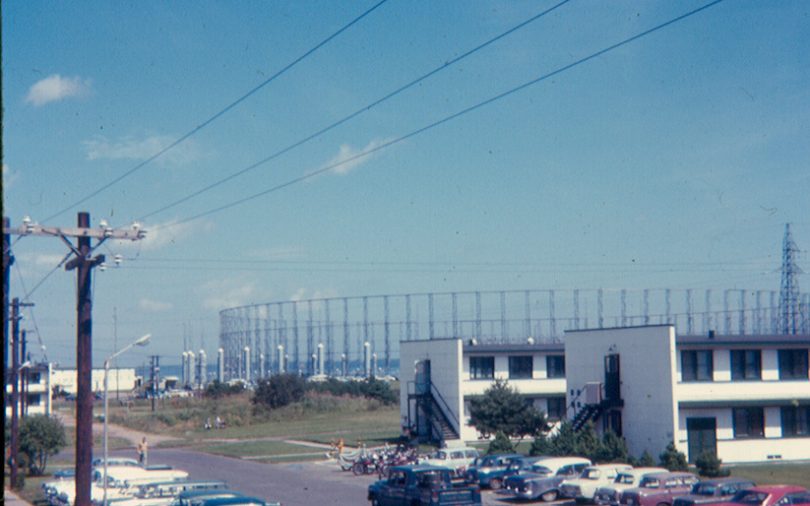
I was a morse intercept operator in the USAF in the late 1960s. I have a nice picture of a FLR-9 at Misawa Japan (now gone I think):

I was at Misawa from 68-70 in the USAF Security Service. I copied high speed code, mostly cut numbers. Got my ham license after discharge. I had 3 R390 receivers at my “position” and numerous different “antennas” on the FLR-9 to listen in different directions. While there I received a commendation for: “Providing information that otherwise would not have been known” I’m not sure I can say any more details.

To me [this photo] shows the immensity of the antenna.
Thanks.
Paul

Yes–this antenna is enormous! It must be a site to see up close. I’ve only seen Wullenweber Antennas from satellite imagery. Thank you so much for sharing your photo!

Click here to read previous posts about “Elephant Cages.”

April 7: Decipher an Enigma encrypted message on 40 meters

(Source: Southgate ARC)

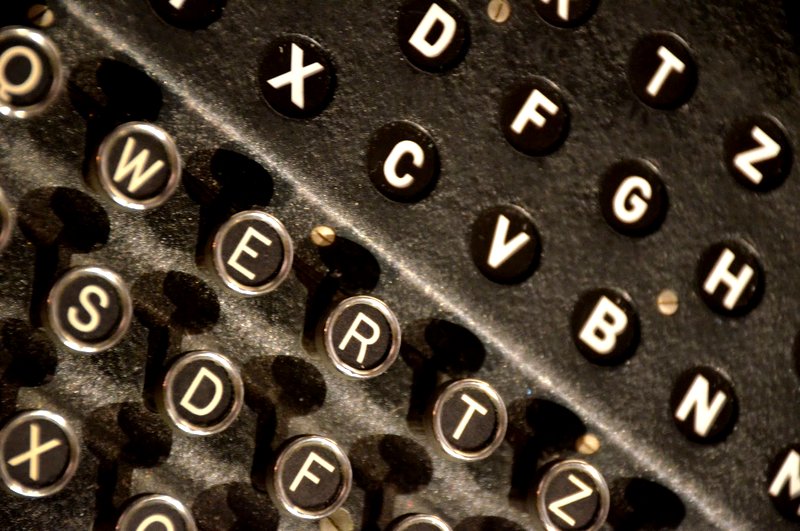
Enigma encrypted message to be sent in 40m

In cooperation with Bletchley Park, the Heinz Nixdorf Museum DLØHNF in Paderborn, Germany is hosting a cipher event on April 7

A Google translation of the DARC post reads:

As with the first event of this kind ten years ago, an encrypted message is sent over radio, to which radio amateurs are invited, to follow them and to play with them. This time, however, the message is not generated with a Lorenz machine, but with an enigma and then transmitted in encrypted telegraphy to 40 m from the club station of the Heinz Nixdorf Mueseum, DLØHNF.

DLØHNF will open radio stations with other stations, which also use historical technology and thus recreate a historical radio network, between the transmissions of various encrypted messages – which are specially approved for this event. DLØDM and DLØAFM are also involved. The activities in Bletchley Park go back to the mathematician Alan Turing, who during the Second World War succeeded in decoding the Enigma coded radio spoofs of the Germans with his Turing machine.

In the Heinz Nixdorf Museum you can watch the happenings from 9 o’clock on the spot. Visitors experience encryption with the Enigma, the Morse as well as a live transmission.

A precise frequency for the transmission of the CW transmission from 9:30 is not known. The museum information is at
http://www.hnf.de/start/date/2017/04/07/cal/event/tx_cal_phpicalendar/
cipher_event_wer_knackt_den_enigma_code.html

Source https://www.darc.de/

AIR launching Phase II of DRM conversion

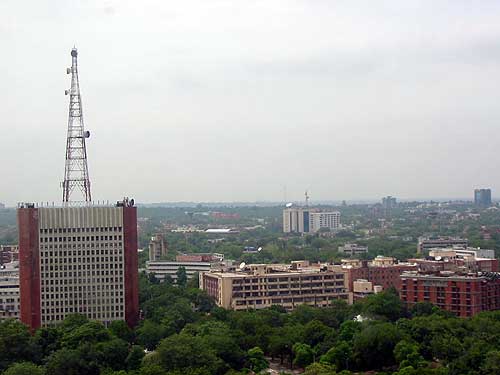
All India Radio (AIR) Headquarters in Dehli, India. Photo courtesy of Wikipedia.

(Source: Radio Mag via Dennis Dura)

AIR Launching DRM Conversion, Phase II

NEW DELHI — All India Radio was recently congratulated by India’s Union Minister for Information and Broadcasting Shri Venkaiah Naidu for having completed phase I of the national DRM digital radio roll-out in India. Thirty-seven DRM transmitters have been installed by AIR throughout the country, and all are now operational, according to DRM news.

Of the 37 new transmitters, 35 are medium wave and 2 are shortwave transmitters. Both SW transmitters are for international service and are broadcasting in pure DRM. […]

AIR is now in the process of launching phase-II of the DRM project by offering full features and services from these DRM transmitters and further improving service quality. When Phase-II is complete, the full-featured DRM services will be available to the audience and a public information campaign will be initiated to inform the Indian citizens of the completely new and future- oriented DRM radio platform and its many benefits. […]

Phase-III, as presented by AIR, will eventually culminate in the complete transition of radio services to the digital DRM platform, further improving the number and quality of radio services and extra features for the listeners, while also saving tremendous amounts of transmission power every year, according to the same article.

Click here to read the full article via Radio Mag Online.

While it sounds like the broadcasting side of DRM is progressing with AIR domestically, I haven’t read anything recently about affordable DRM receivers being developed for the market in India (other than possibly the Titus II and Gospell GR-216 which, I suppose, could be imported).

Based on messages I’ve received from readers/listeners in India, any new DRM receiver must be very affordable ($40 US or so) if wide adoption is to be expected.

I believe this is an opportunity for a manufacturer like Tecsun to step in and make an affordable DRM portable for the market in India–something with a simple display and controls. Otherwise, this might be another “cart before the horse” situation for DRM.  That would be sad.

Titus II at NAB

The least expensive portable DRM receiver on the horizon could be the PantonX Titus II (not yet in production).  PantronX has claimed the Titus II will cost “less than $100.”

And speaking of the Titus II, SWLing Post reader, Ed, notes:

pantronX is reportedly going to announce its Titus II Android SDR boombox at NAB April 22-27, which is another indication this radio is for real.

http://www.thebdr.net/hotlinks/mfgr.html

We’ll post updates about the Titus II as they become available. Follow the tag: PantronX Titus II

Dan Robinson: “Voice of America has never been independent”

SWLing Post contributor, Dan Robinson, is the former White House, Congressional and foreign correspondent for the Voice of America.

I’ve just learned that Dan has authored a piece in the Columbia Journalism Review titled Spare the indignation: Voice of America has never been independent“:

http://www.cjr.org/opinion/broadcasting_board_of_governors_house_trump.php

I encourage you to read his full article and please direct your comments to the original post on the Columbia Journalism Review website.

FCC Approves MF/LF Ham Radio Bands

(Source: CQ Newsroom & FCC)

Hams in the U.S. will soon have two new bands on which to operate, experiment and contribute to the collective knowledge of “the radio art.” In a Report and Order issued on March 30, the FCC approved creation of secondary amateur allocations at 135.7-137.8 kHz (2200 meters) and 472-479 kHz (630 meters), the first amateur bands with wavelengths above 200 meters since the dawn of radio regulation.

The new bands come with lots of strings attached, since they will be shared with “PLC” systems used by electric utilities to control the nation’s power grid. Hams will be limited to fixed station operation, antennas no higher than 60 meters (196 feet) above ground and radiated power limits of 1 watt effective isotropic radiated power (EIRP) on 2200 meters and 5 watts EIRP on 630 meters (1 watt in some parts of Alaska). Plus, operation on these bands will not be allowed within one kilometer of electric transmission lines using PLC and advance notice of all planned operation to the PLC network coordinator will be required.[…]

Continue reading at the CQ Newsroom.

Click here to download the full Report and Order from the FCC (PDF).