Shortwave listening and everything radio including reviews, broadcasting, ham radio, field operation, DXing, maker kits, travel, emergency gear, events, and more
I am listening to Dandal Kura Radio here in NZ. Reception is very good now at 0645 UTC on 7,415 kHz. Would you happen to have an e-mail contact for this broadcaster? I would like to send them a reception report.
Any help appreciated. Many thanks and best wishes.
I checked online and my copy of the 2015 WRTH, but could find no contact info for Dandal Kura Radio. The Dandal Kura Radio website appears to be down at the moment. Ian, they do have a Facebook page, so you could attempt to contact them with a private message (assuming you have a Facebook account).
This morning, I checked a few retailers for “Cyber Monday” deals and took notes along the way. Some of the best finds came from Blinq, a retailer I’ve purchased from a number of times.
Note that Blinq products are often open box, used or refurbished–please check the product description before purchasing. On the plus side, Blinq makes the return process hassle-free if you’re not happy with the purchase.
Important: Today only, use the coupon code SUPERCYBER and Blinq will take an additional 15% off the listed price at checkout.
Tecsun PL-390 DSP Digital AM/FM/LW Shortwave Radio with Dual Speakers: $55.09
Fantastic review and whilst I know the article is an older one people will still read it when looking at a portable SW radio.
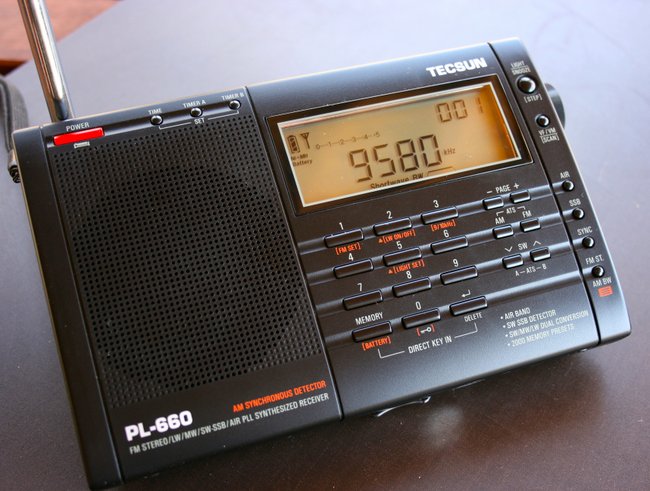
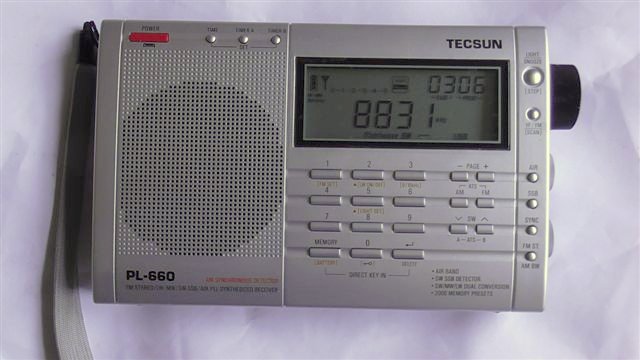
With this in mind I would like to make the following comment about the PL660. You say it is bulletproof and boy is it! Mine has been dropped, kicked and overwise abused and it’s still going strong.
Most remarkably it was knocked into a bucket of water, plugged in and powered up and was there for a good couple of hours fully submerged before I realised.
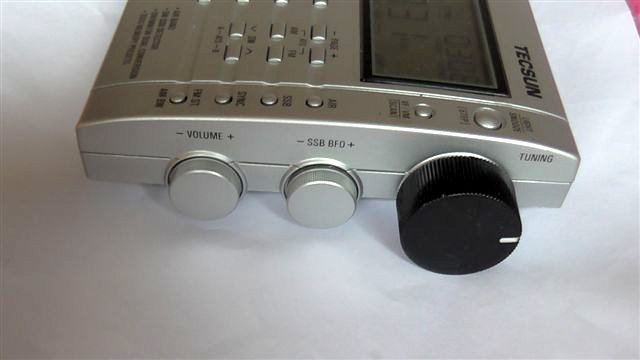
It wasn’t long good for a week or two but after 3 or 4 weeks I have it one last try before binning it and hey presto it came back to life! Ok the volume pot is now a bit scratchy but other than that it’s working just fine.
Want a radio that will take the general abuse of travelling – this is it…
Wow! Thanks for your comment, Danny! Most impressive that your PL-660 went diving that long and lived to tell the tale. Thanks for sharing!
Many thanks to SWLing Post contributor, Jeff McMahon (at the Herculodge), who writes:
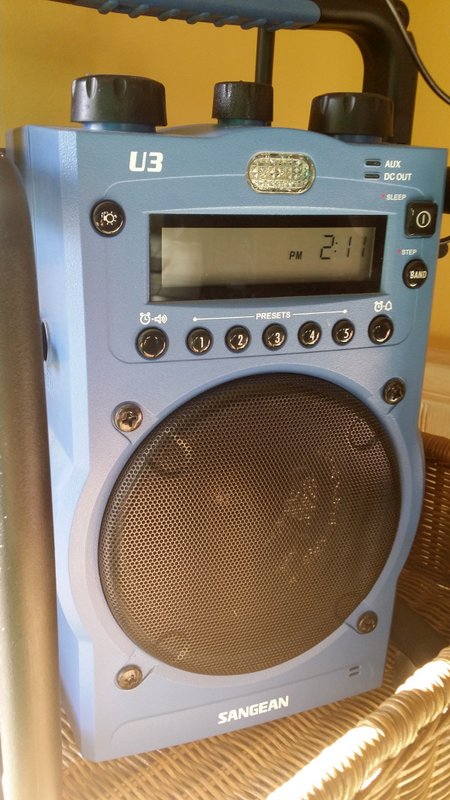
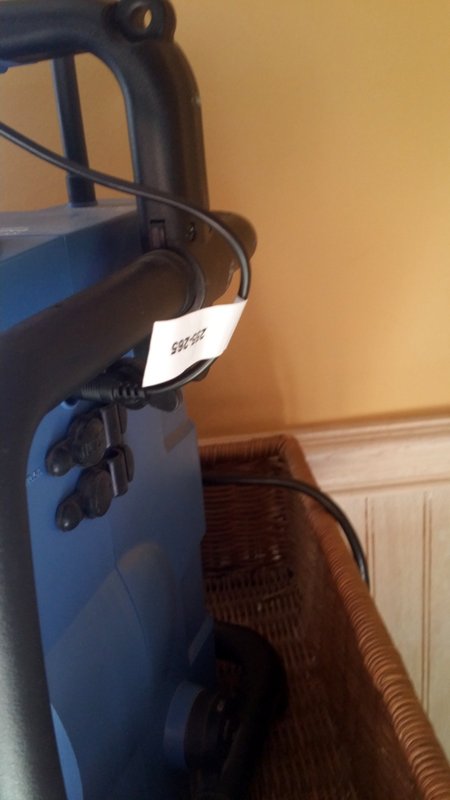
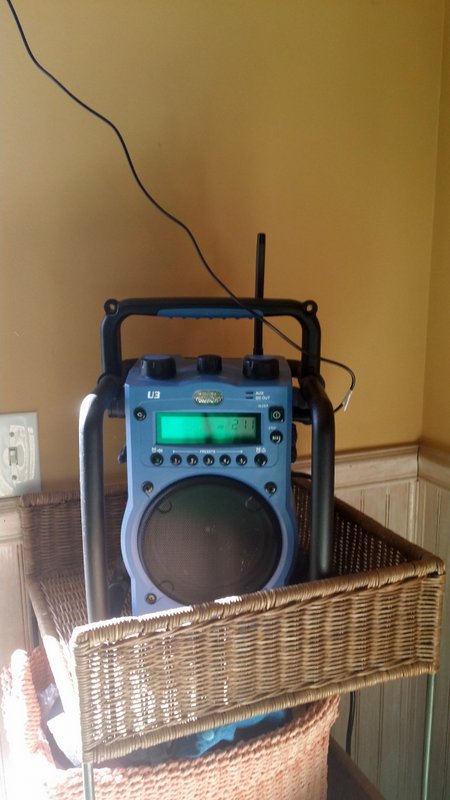
I upgraded my Sangean U3 with a male to female iMBAPrice 6 foot stereo audio extension cable 3.5mm, which I plugged into the U3’s auxiliary port.
The U3’s small stub of an FM antenna really needed some extra oomph. Now my U3 is picking up all my favorite stations, including the problematic KPCC 89.3 in Pasadena.
AM is as great as always. The sound is crystal clear on AM and FM. If this radio weren’t so big, I’d buy two more for the kitchen and my bedroom, but will have to be content to have one for my gym/office radio.
Thanks, Jeff! I might have to consider the Sangean U3–I hope a reader will let me know if one goes on sale.
Like Jeff, having a radio that not only performs admirably, but that can also withstand the attention of my kids, may be a great investment over the long-term! I’m glad such a simple addition to the U3 means that you can now hear your favorite Fm station, Jeff!
Now if Sangean only made a shortwave version of the U3–!
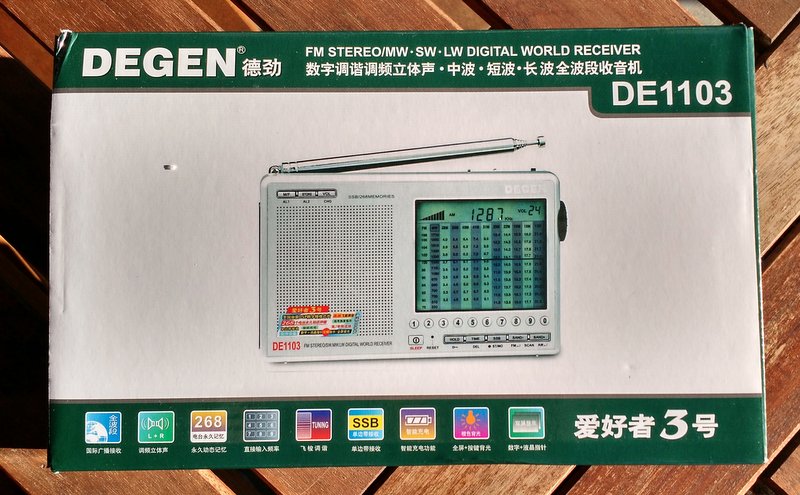
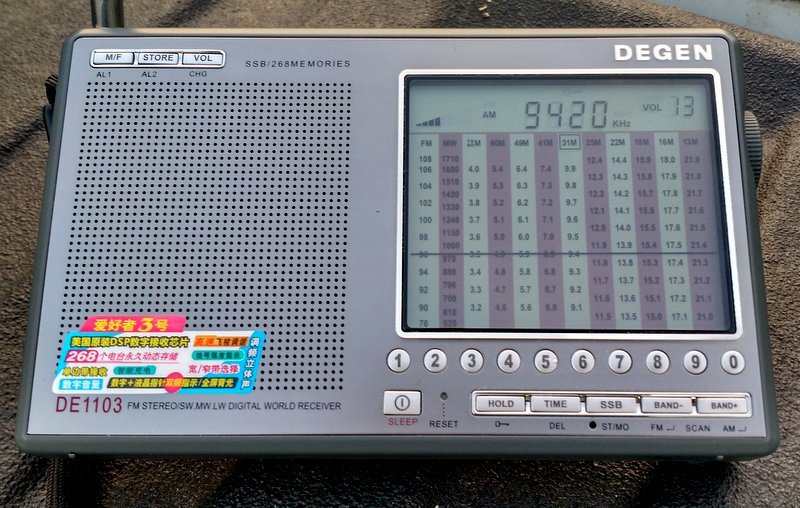
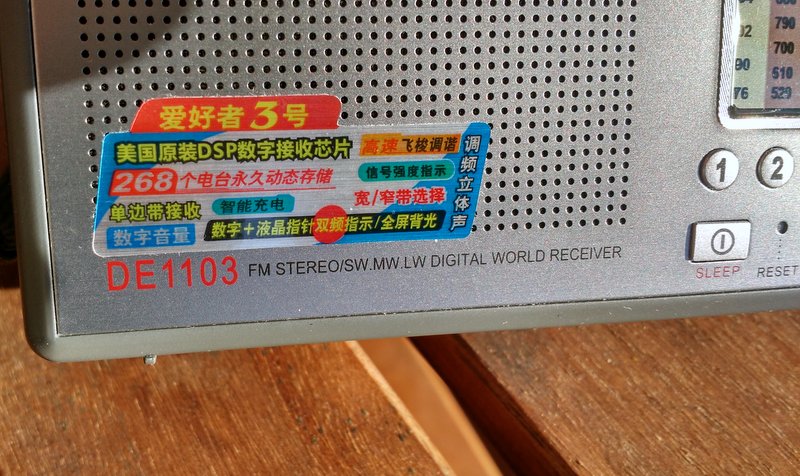
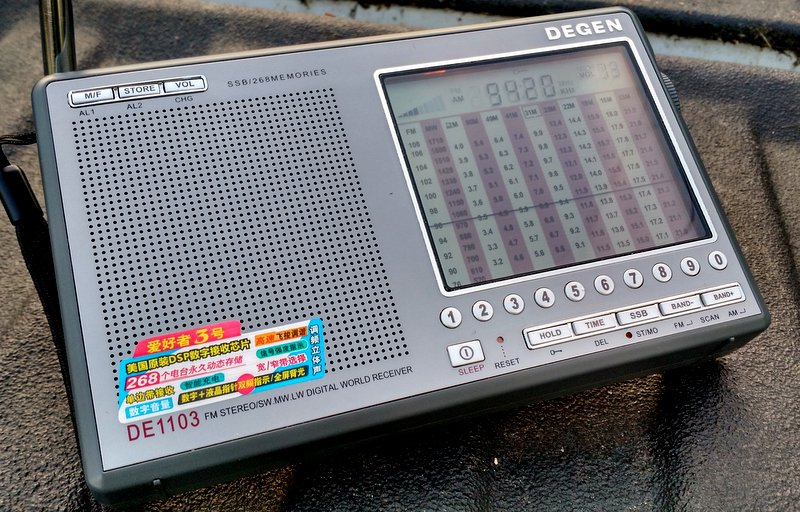
The 2015 model of the Degen DE1103 implements a DSP chip (the Silicon Labs Si4735-D60).
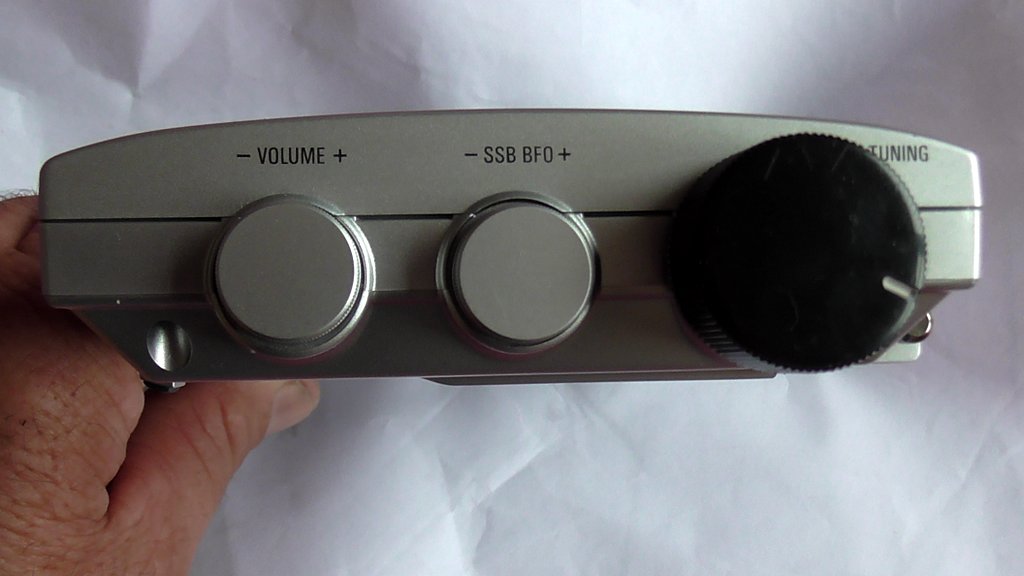
Yet I was on the fence about purchasing the new DE1103. Why? In truth, I never fell in love with the original DE1103. While I appreciated the 1103’s unique analog-style digital display, I never got used to its quirky ergonomics. Degen had quality control issues, too: I had to return two faulty units before getting one that worked as advertised (incidentally, I had a similar problem with the Kaito KA1102).
Ron kindly provided the SWLing Post with his impressions of the DE1103, as follows:
Performance is roughly on a par with the earlier dual conversion version. This one is just as hot, but no hotter.
If you were thinking a GP5 on a bigger ferrite bar, yes…and no.
There is one major gripe…[this unit] will not remember frequencies set with the BFO on, like the earlier dual-conversion version did. Instead you have to turn the BFO on for each memory frequency [for which you] need it.
One thing [I] noticed right off was the almost complete lack of AGC “pumping” on CW and SSB that all earlier versions had (yay!) but this plus comes at the cost of having the BFO “remembered” in memory.
Zero-beating (or centering) the BFO to null on WWV and local AM stations to check alignment was…strange. At null beat the BFO seems to quit for a second. It is fine
either side of zero beat, however.
This is doubtless due to Tecsun’s adapting the Silicon Labs IC to a full range BFO like this. Recall the same IC in the GP5 features Upper and Lower selection on CW/SSB.
This 1103 DSP version also has the GP5’s slight tuning mute, not a problem.
But for ease of operation in CW/SSB mode, the GP5 is [much] better IMO.
Ron also notes that he wasn’t pleased with the DE1103’s longwave performance and didn’t feel the mediumwave and shortwave reception was an improvement on the original DE1103.
He decided that he would sell this DE1103 and gave me first dibs, so I bit the bullet. I was eager to compare the new DE1103 with some of the other DSP-based portables in my collection. Ron dispatched the DE1103 immediately–it arrived a few days ago, but I didn’t have a chance to test it until yesterday.
I took the Degen DE1103 outside, sat it on the tailgate of my truck and put it on the air…
I tuned around the mediumwave band and picked up all of the local benchmark stations. Same with FM. So far, this tuning confirmed Ron’s assessment of the DE1103: it didn’t surpass the original.
But the shortwave bands were a different story.
As I tuned around the HF bands, the DE1103 seemed to receive quite a lot signals. But in most instances, I could hear local AM broadcasters bleeding in, as well. Indeed, imaging was prevalent across the shortwave bands–the receiver was obviously being overwhelmed by a local broadcaster. Unfortunate.
Could strong interference account for this? While there are local AM broadcasters around, they’re not exactly “blow-torch” stations. Indeed, I’ve never had overloading issues with other shortwave portables I’ve used in the same location–not even with my Kaito WRX911!
Imaging was prevalent on the DE1103 when it was tuned to pretty much any audible shortwave broadcaster.
Here’s a video of the Degen DE1103 tuned to the Voice of Greece on 9,420 kHz:
What you’re hearing in the audio is a local broadcaster bleeding in. Note that when I tune off-frequency, no imaging is heard.
Wondering if something had changed locally–and just to be fair–I pulled out my Sony ICF-SW100 and sat it next to the DE1103. The Sony had no issues.
This time, I tuned to WWV on the 19 meter band and compared the two receivers:
As Dan Robinson expresses it, the ICF-SW100 “wipes the floor” with the DE1103. There’s no hint of overloading in the SW100.
My buddy, Ron, is clearly a keen radio reviewer; obviously he didn’t hear overloading on the shortwave bands where he tested the rig, else he would certainly have mentioned it. The location where I tested the DE1103 does have some local broadcasters in the area, but no clear channel or high-power stations; in short, there’s no likely interference within a ten-mile radius to account for this debilitating performance problem.
Too bad…!
Obviously, the new DSP version of the Degen DE1103 is especially prone to imaging on the shortwave bands. In fact, it’s the only receiver I’ve ever tested that has overloading issues at this testing location (where I tested the original Degen DE1103, by the way).
It’s Thanksgiving here in the States–without a doubt, my favorite holiday. What’s not to love about family, feasting, and, of course, friends? To that end:
I’d like to take a moment to offer my thanks to all of you who read, comment, and otherwise contribute to the SWLing Post community. You make this a terrific place for everything radio! Thank you.
And on the topic of radio–while anticipating a wonderful Thanksgiving meal–I’m reminded of this video I recently viewed. Evidently, some form of native wildlife–and suspicion rests upon a number of industrious squirrels and woodpeckers–decided that a radio microwave antenna in Bear Creek would be an excellent place to stash a few acorns and other winter nuts.
So–just for fun–here’s what it looked like when the field engineers cleaned out the microwave antenna cover:
Sometimes it really is a challenge to count all your blessings. At any rate, may your day, no matter where you live in this world, be just as abundant!

 SWLing Post reader, Ian Cattermole, writes: