Category Archives: Art

One more week to get your Shindig T-shirt at a discount

ShindigLogoWhiteRemember our announcement about the Shortwave Shindig T-shirt?

David Goren has extended his 10% discount to SWLing Post readers for one more week!

Simply enter the promotional coupon code “swling” at checkout. Total cost will then be $18 shipped!

Click here to order your shirt today!

Radio Andorra Postage Stamp

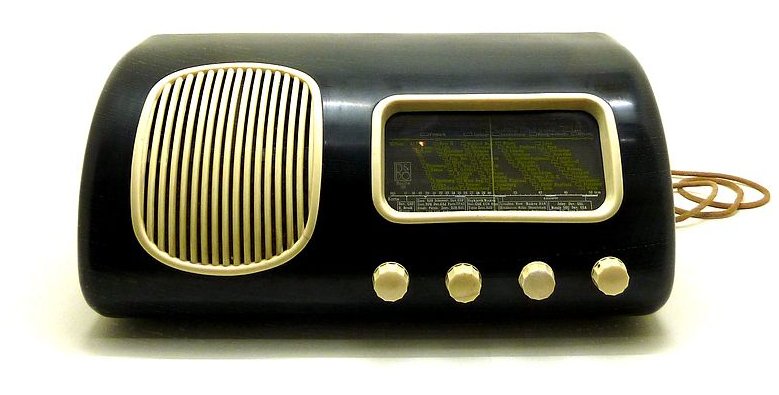
Boc_RADIO_ANDORRA_B2M0.aiMany thanks to SWLing Post reader, Marty, who writes from Madrid:

“Just wanted to let you know about an interesting postage stamp that was issued this month in the Principality of Andorra. Actually, the Spanish Post Office “Correos” issues the stamps for Andorra, and this one in particular observes the 30th anniversary of the cease in transmissions of Radio Andorra! Interesting stuff. Most other countries, the US Postal Service included, use to issue stamps in celebration of the anniversaries of the ongoing broadcasts of their international stations. I think this is the first time I have seen one that marks the closure. Here is the stamp 92 cents of a euro, mainly for international destinations. It was taken from a photograph by Gerard Massot.”

Click here to see this stamp on the Spanish Post Office (Correos) web site.

Shortwave Shindig rebroadcast, April 18 and 19

ShindigLogoWhiteThis just in from David Goren at Shortwaveology:

Shortwave Shindig rebroadcast!

The show originally broadcast on 3/14 will be heard again on WRMI: Friday, April 18, at 6-7 pm ET (2200-2300 UTC) and Saturday, April 19 at 11 pm-12 midnight ET (0300-0400 UTC April 20) — both on 9955 kHz from Okeechobee.

The “Shortwave Shindig” T: you know you want one

ShindigLogoWhite

[Update (04/10/14): Check out promotional pricing for SWLing Post readers below.]

Remember that incredible live Shortwave Shindig broadcast of a few weeks ago? If you missed it, check out one of these recordings.

David Goren, radio producer and Shortwavelogist behind the broadcast, has printed up a series of terrific T-shirts to commemorate the event. Your purchase of a shirt will not only elevate your social standing (I mean, who has a T-shirt with the word “shortwave” on it?), but importantly, it will also help support more such broadcasts and radio productions out of the studios of Shortwaveology in future.

ShortwaveShindigTeeAnd did I mention that the funky retro logo design, above and right, is by the talented Jeff Murray, K1NSS? Gotta love it.

These shirts are 100% cotton and available in black (see right) or white.

I don’t want to over-promise here, but I understand that wearing the Shortwave Shindig shirt can increase your chances of hearing the elusive Bhutan Broadcasting Service and many other signals–perhaps even ones that have recently gone off the air. Moreover, this shirt is 100% QRM free.

What are you waiting for?

Hop over to this page on Shortwaveology.net and order yours today!

And, dear readers, thanks for hanging on to my hard sell: this one’s for a good cause.

UPDATE: Many thanks to David Goren who is offering a 10% discount to SWLing Post readers!  Simply enter the promotional coupon code “swling” at checkout. Total cost will then be $18 shipped! Click here to order your shirt. This promotion will only be available for two weeks, ending April 24, 2014.

Forbes: “How To Make Music (And Money) From Shortwave Radio”

RFNomadModularGridTwo weeks ago, we posted a video of Evaton Technologies RF Nomad: a modular synthesizer that employs shortwave radio to create unique sounds. As someone who has always been fascinating with music and the sonic texture of the shortwaves, of course I find this product fascinating.

Forbes magazine does too. This morning, @UlisK3LU shared an article in Forbes where Russell Hoffman, who runs Evaton Technologies, explains why he believes using shortwave radio in new RF Nomad will be a hit:

“What’s interesting about shortwave radio is that it isn’t necessarily musical by design, but there are interesting sounds to be found when the station tuning is less than perfect,” he said. “You can hear all sorts of sounds on shortwave, from voice, to music, to Morse Code or encoded digital transmissions. In addition to the sounds that are transmitted intentionally, there are sounds that are artifacts of the medium itself like heterodynes, pops, crackles, hiss, static crashes, fading and the like.”

But here’s my favorite bit:

“Shortwave radio has a long and storied history, full of intrigue, espionage, piracy, rebellion, propaganda, and subterfuge,” he added. “It propagates around the world and can be received on inexpensive equipment. It is universal, because it can be heard anywhere; and yet at the same time, in a world of internet, TV, and satellite radio, it is also the underground — a hidden world parallel to that of our daily experiences. It offers an additional perspective.”

I couldn’t have said it better myself. Thank you, Mr. Hoffman.

Click here to read “How To Make Music (And Money) From Shortwave Radio” in Forbes magazine.

Check out Evaton Technologies and RF Nomad announcements by clicking here.

Amanda Dawn Christie shares footage of RCI towers falling

RCI-SpectresOfShortwave

Documentary filmmaker, Amanda Dawn Christie, has been gathering footage to create Spectres of Shortwave: a 90 minute documentary film focusing on the Radio Canada International Sackville transmitting site. Little did Christie know when she started shooting the film several years ago that the site would not only be be shut down but dismantled.

Christie recently shared back-up footage of the towers falling. She describes her videos on Vimeo:

“In the spirit of the founding principles of the CBC and public access to information, i am sharing the back up videos i shot this week of the RCI shortwave towers falling. I retain the copyright to these images, but i do want to share them with anyone who would like to watch them sooner rather than later (given that my film will still be a few month in post production before release). i would also like to thank the CBC for giving me permission to film, and all of the workers on site for being so cooperative and supportive.”

Click here to continue reading and to watch Christie’s footage on Vimeo.

It’s with a heavy heart that I watch these majestic towers fall. After all, I’ve been pretty vocal about how foolish I think Canada is for destroying Sackville. Still, I’m glad someone is documenting it properly. Click here to follow Spectres of Shortwave on Facebook, set to be released later this year (2014). I’ll certainly post updates about the film here.

RF Nomad: Synthesizer meets radio

RFNomadModularGridFor electronic musicians who love the sonic texture of shortwave radio, check out the RF Nomad, under development by Evaton Technologies.

Evaton describes the RF Nomad module:

“RF. Radio Frequency. The stuff that Marconi made famous. Or maybe it made Marconi famous. Either way, it’s not just for listening to hockey games anymore.

The RF Nomad voltage-controlled sideband shortwave receiver Eurorack module is currently in final stages of prototype evaluation.

The RF Nomad adds the squealy, squelchy, noisy, unpredictable vintage sounds of shortwave radio to your modular. But this is no ordinary shortwave; it’s been designed to be extra noisy, extra squealy, extra gritty, and just downright nasty. No built-in output filtering means that a rich spectrum of harmonic content is available on the audio output jack. Audio levels can be driven to distortion. CV control lets you add your own creative spin on sound design.

Hissy interstation audio. Squealy heterodynes. Fading stations. Atmospheric noises. Faint voices in foreign languages from distant broadcast stations. Fire and brimstone. It’s all in there, just like your granddad’s old tabletop shortwave.

But, the RF Nomad adds a twist: The tuning is voltage controlled. Sure, when you were a kid, you discovered you could make spacy noises on Papa’s shortwave by slowly turning the tuning dial. But just how fast could you twist that dial? Faster than an audio-rate LFO? Hardly. Voltage controlled tuning means that the RF Nomad will let you explore sounds you never imagined you could get out of a shortwave receiver.”

Check out this demonstration video:

Many thanks to Mitsuhiko Kagawa for the tip!