Many thanks to SWLing Post contributor, Mario Filippi, for the following guest post:
A Little Taste of Cuba on Free To Air Satellite
by Mario Filippi, N2HUN
(All photos courtesy of author)
Tropical countries have always held a fascination for me, Cuba being at the top of the interest totem pole. Perhaps it’s due to the fact that baby boomers (such as me) remember early 1960’s weekly drills in grammar school, ducking under our desks during the Cuban missile crisis when the cold war was a fact of life. President John Kennedy, Fidel Castro, and Nikita Khrushchev were the primary combatants in those days, and we had to be prepared for a possible attack. Fortunately our country was spared from any stateside skirmishes, but since those days when Cuba became a forbidden place for US travelers, its history and its people have always captivated my imagination.
For those interested in what’s going on in Cuba there’s always shortwave radio; Radio Habana Cuba always pegs the shortwave “S” meter and is received loud and clear. On certain nights when propagation on the BCB (broadcast AM band) is favorable towards the Caribbean, Radio Reloj (Radio Clock) can be heard with its’ “RR” identification in CW every minute on the minute.
But there’s another way to keep current with Cuban events in ways that a shortwave radio cannot provide, and that is through Free To Air satellite, which provides worldwide reception of television and radio stations. A typical FTA satellite installation appears below, consisting of a dish and an LNB pointed towards a satellite of interest. There are about a dozen Ku band satellites available in the Clarke Belt 22,600 miles away in geostationary orbit all beaming programming to different parts of the globe.
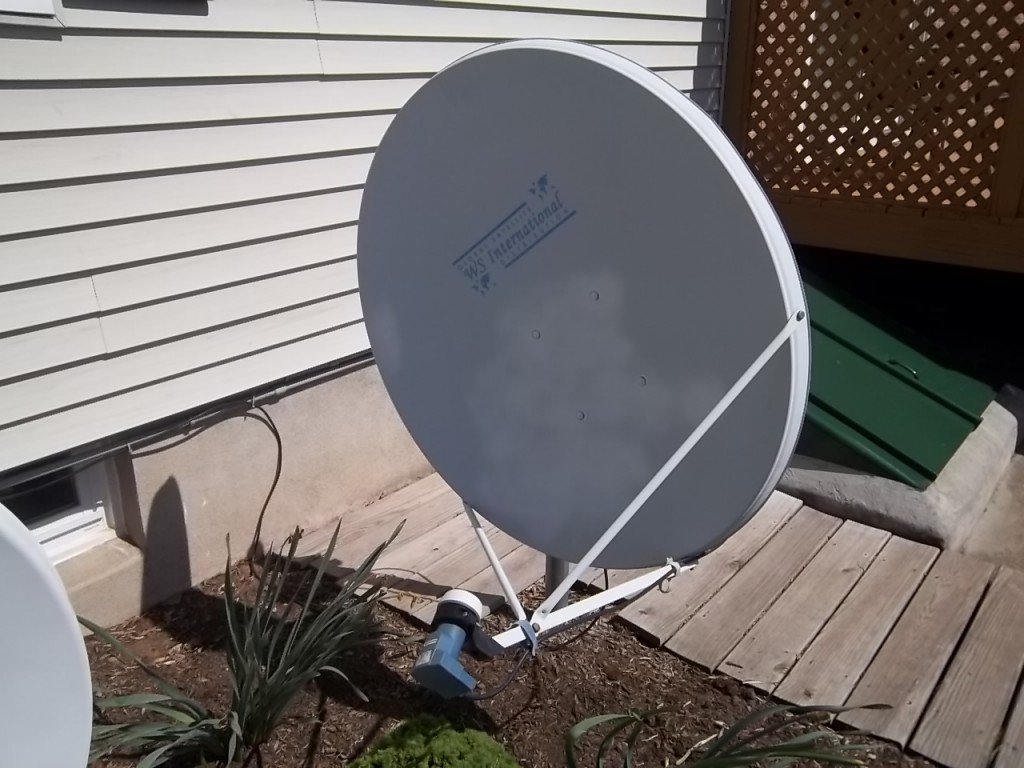
WS International Ku band offset dish with Chapparal Ku LNB
The signal from the satellite dish is fed via RG/6 coax to a satellite receiver which decodes the satellites’ data into TV and radio format that can be viewed or listened to on a standard television, and an example of a modern FTA receiver, the X-Square Premium Mini, sometimes called a STB (Set Top Box) is below. The X-Square Mini is one the smallest of the FTA receivers available and works very well.
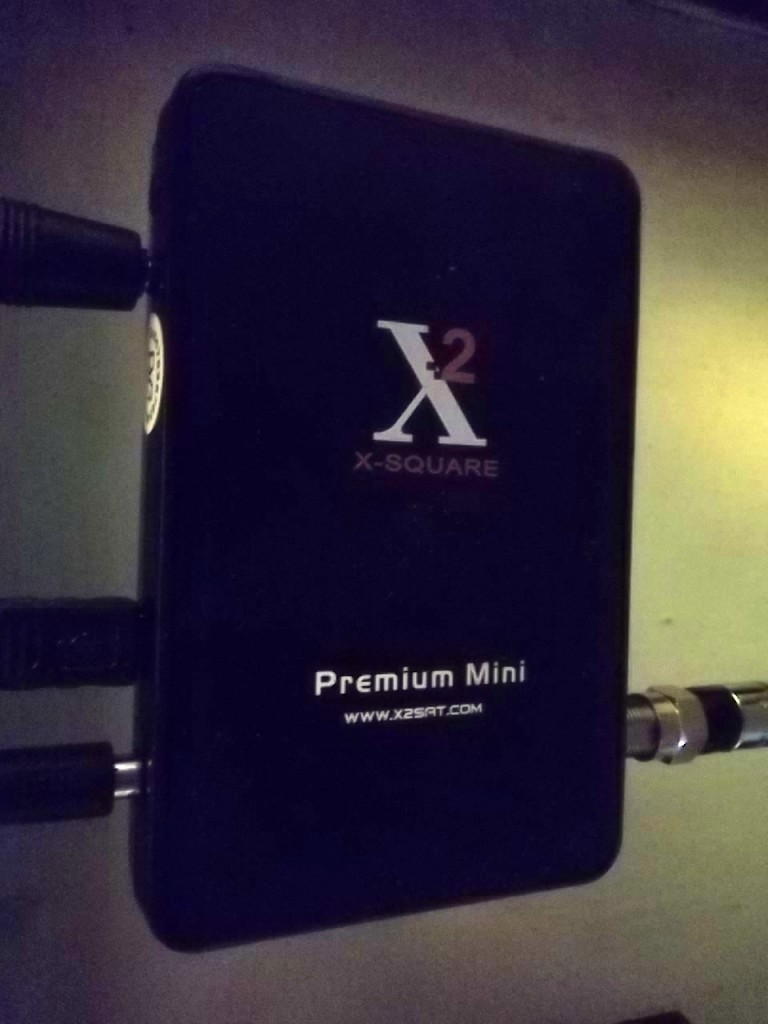
X-Square FTA receiver, about the size of a cigarette pack.
Okay, so we have our receiver, dish, etc., now all we need to know is where to find Cuban programming in the Ku satellite band. As of this writing, Cuban television and radio programs are found on Hispasat at 30W, which has a spot beam to the USA and is easily received on the East coast. For more information on Hispasat just Google it or look it up on www.lyngsat.com. Pointing your dish at Hispasat, or for that matter at any other FTA satellite requires patience and knowledge, and you can check YouTube which has many videos on the subject. Best bet would be to have someone who’s experienced with FTA to assist you.
You’ll find about 55 TV channels on Hispasat covering S. America, Asia, Europe, USA, and the Middle East with several TV channels from Cuba such as Cubavision, Cubavision International, Senal ACN, Contribucion, Educativo, and Educativo 2. And from the USA, Radio Martis’ cousin TV Marti (yes there is a TV Marti!) is beamed.
Screen shots from some of these appear below:
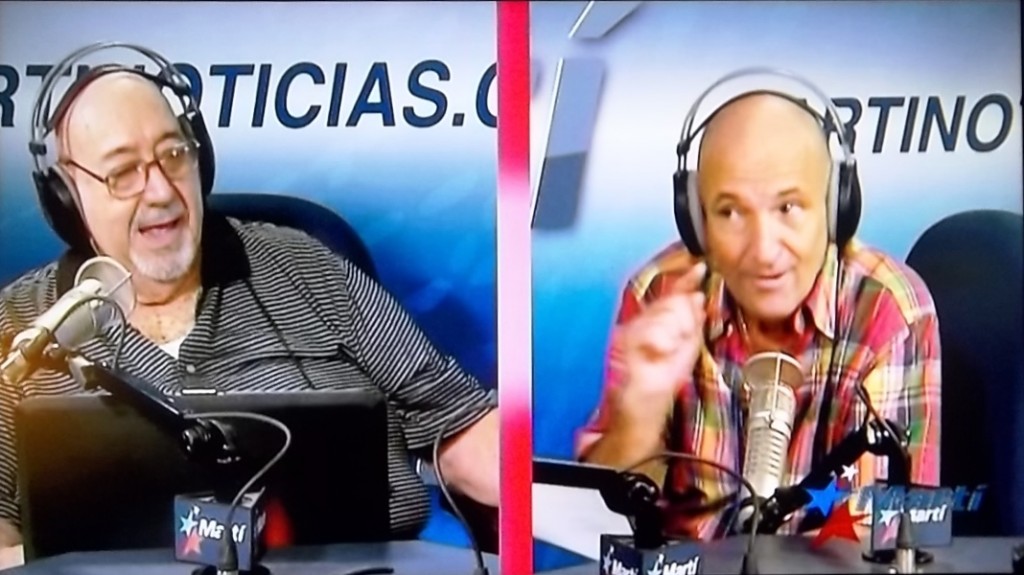
TV Marti talk show with logo on lower right.
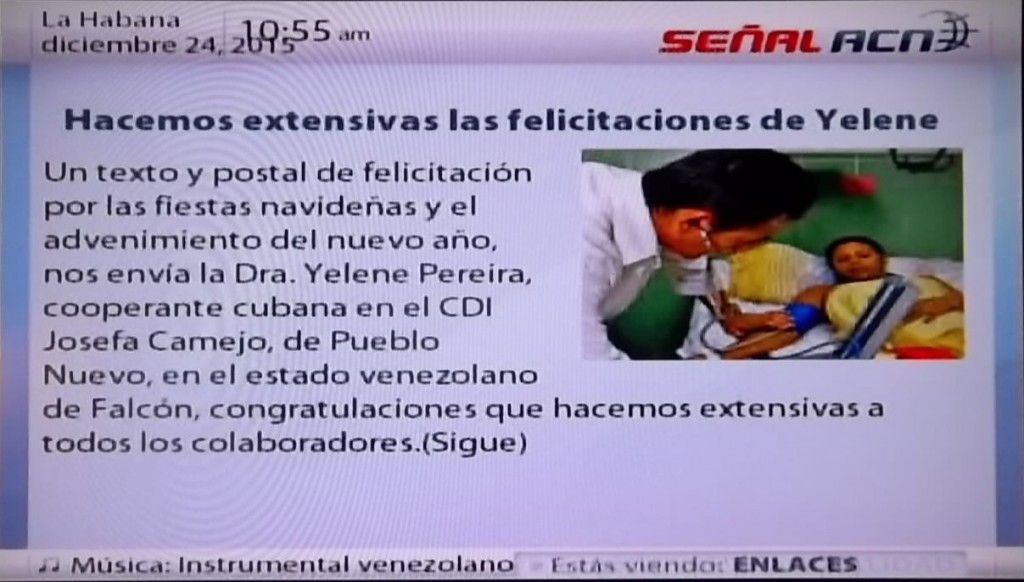
News, sports, music, info channel Senal ACN.
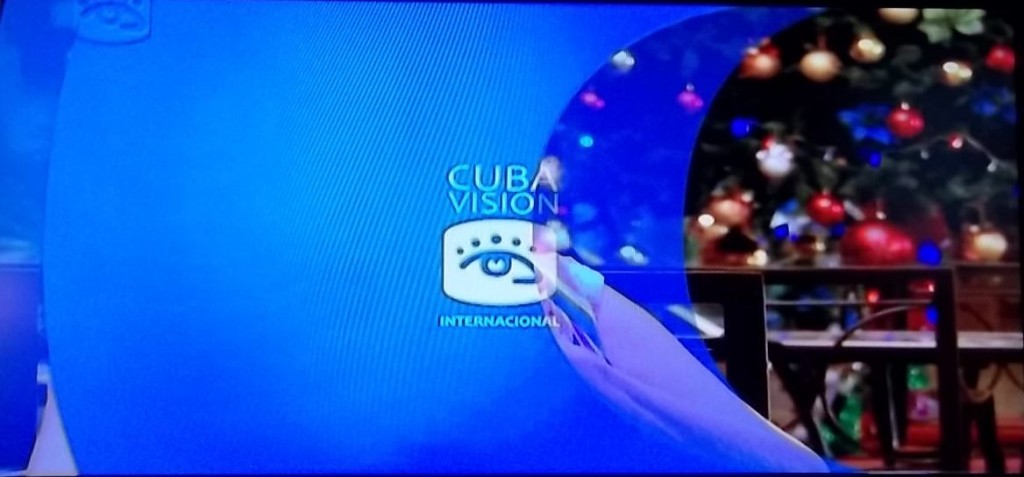
Cubavision International station identification.
Let’s move on to Cuban radio stations to be heard on Hispasat. First off, Hispasat covers about 57 radio stations from the Middle East, S. America, and Europe. Some of them will be familiar to SWLs while others are local AM and FM stations originating from the mother country, a distinct advantage to having FTA satellite. Cuban radio stations available on Hispasat are shown in the satellite scan below. A total of ten stations come in with FM quality reception over FTA satellite, with no fading or hiss. However, in the event of rain, Ku signals suffer terribly from moisture attenuation but that’s about the only reception hurdle you’ll have to endure. One of my favorite stations is CMBF with its beautiful classical music.
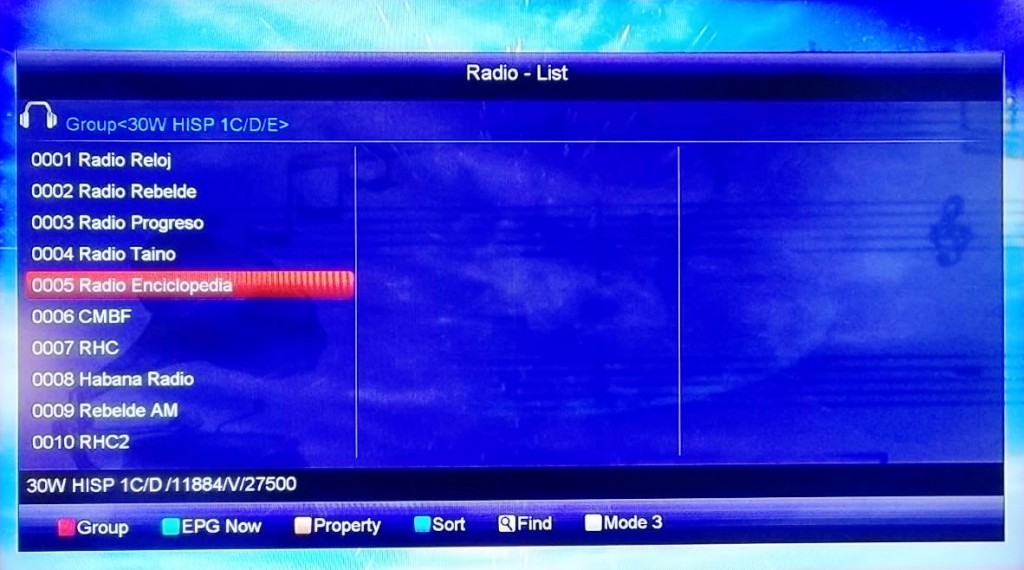
Cuban radio stations scanned in from satellite Hispasat at 30W.
So hopefully this little introduction into Cuban radio and TV using Free To Air satellite will kindle interest in this “ultra-shortwave” mode of looking (and listening) into what’s happening in this culturally rich island that’s been out of reach for most United States citizens for over half a century.
Thank you so much for the excellent post, Mario. As I’ve mentioned before, I’m planning to install an FTA system at my house in the near future. Your guidance is most helpful!

 Many thanks to SWLing Post contributor, David Iurescia (LW4DAF), who writes:
 Many thanks to several of you who recorded the final sign-ons and sign-offs of several European broadcasters
 Some of you may have noticed that the Voice of America has been having problems with their online and internal digital content the past few days.