Category Archives: Broadcasters

2015 BBC Antarctic Midwinter Broadcast frequencies confirmed

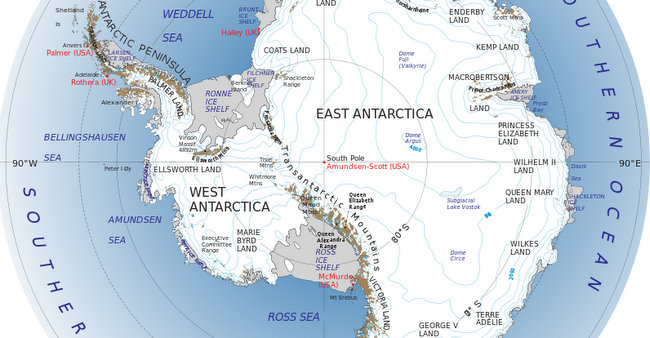
800px-Antarctica.svgMany thanks to SWLing Post contributor, Stephen Cooper, who has confirmed the frequencies that will be used for the 2015 BBC Antarctic Midwinter Broadcast on June 21 at 21:30 UTC.

Again, this year, I’m calling on all SWLing Post readers and shortwave radio listeners to make a short recording (say, 30-60 seconds) of the show and share it here at the Post. Click here for details.

Stephen received confirmation of the following frequencies directly from the BBC World Service:

  • 5,985 kHz,
  • 9,590 kHz,
  • and 5,905 kHz

Evidently, these were the frequencies chosen from the following that were tested:

  • 7,425 kHz, Ascension, 207 degrees
  • 5,985 kHz, Woofferton, 184 degrees
  • 9,590 kHz, Woofferton, 182 degrees
  • 5,905 kHz, Dhabayya, 203 degrees

I think it’s safe to assume that the same antenna paths will be used from the tests. I had hoped an Ascension Island frequency would have made the cut as it’s typically the frequency I hear best here in eastern North America. Of course, the selections were made based on actual test reception in the various parts of Antarctica where the team is located.

Please note these frequencies and take a little time to submit your recording! We look forward to sharing and mapping them across the globe.
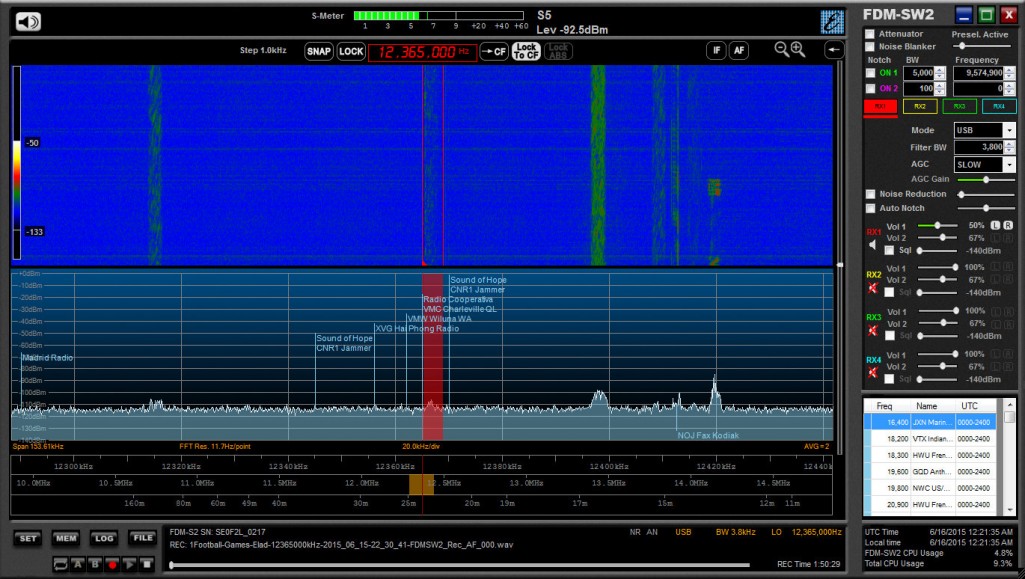
Shortwave Radio Recordings: UNID 12,365 kHz USB

Fullscreen capture 6162015 122135 AM

Yesterday, I posted a note about an unidentified station who was broadcasting the Chile v Mexico football game on 12,365 kHz USB. Several readers sent messages with reception reports, most of which indicated a signal strength of less than S5.

Several of us speculate that this could be a relay from a South American (perhaps Chilean?) shipping service for their fleet in the Pacific; hence the weak signal reports in North America. SWLing Post reader, @K7al_L3afta, suspects that it could even be an audio feed for a radio station.

We may never know, but it’ll be fun to listen for future broadcasts.

I recorded almost four hours of the station last night, starting around 22:00 UTC –during the Ecuador v Bolivia game–on my Elad FDM-S2 software defined receiver (see screen grab above). Below, I’ve embedded a 30 minute clip from the Chile v Mexico game, starting at approximately 23:45 UTC.

The FDM-S2 was hooked up to my large horizontal delta loop wire antenna.  The signal was certainly very much buried in the static at time. I could have improved the clarity of the signal by using the FDM-S2’s built in DSP noise reduction, but opted to keep the USB audio unaltered to better represent reception.

Click here to download this audio clip as an MP3, or simply listen via the embedded player below:

Football games relayed on 12,356 kHz

Fullscreen capture 6162015 122135 AMMany thanks to David Goren, who has apprised me of a (utility?) broadcaster who relaying Spanish language football matches on 12,365 kHz in the upper sideband. According to a message on the DXLD Yahoo group, someone has been relaying games on this frequency with some consistency.

As I type this, I’m listening to Chile v Mexico, though it’s a very faint signal here in eastern North America. The Elad FDM-S2 is doing a good job of pulling the signal out of the static, though. I have no clue where this broadcast originates.

Please comment if you’re able to log this station where you live, or you have further details about the relay.

Researchers uncovering Swiss Radio International’s past

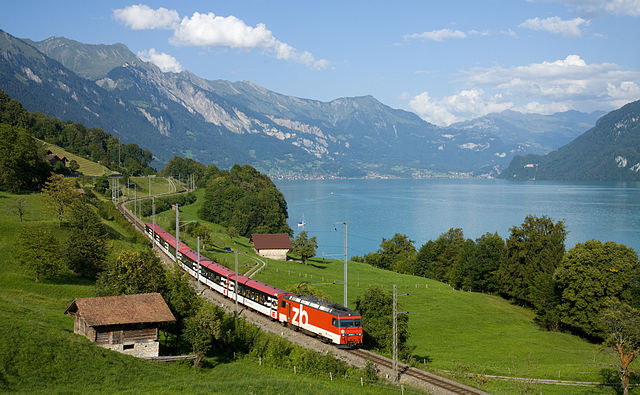
Zentralbahn Interregio train following the Lake Brienz shoreline, near Niederried. (Image source: Kabelleger / David Gubler via Wikimedia Commons)

Zentralbahn Interregio train following the Lake Brienz shoreline, near Niederried. (Image source: Kabelleger / David Gubler via Wikimedia Commons)

SWLing Post reader, David Freeborough, writes:

I thought you might be interested in this podcast on Swiss Radio International:

http://www.swissinfo.ch/eng/multimedia/podcast_the-radio-station-that-gave-switzerland-a-global-voice/41476934

Fascinating! Many thanks, David. You can listen to the podcast on SwissInfo.ch, or simply use the embedded player below:

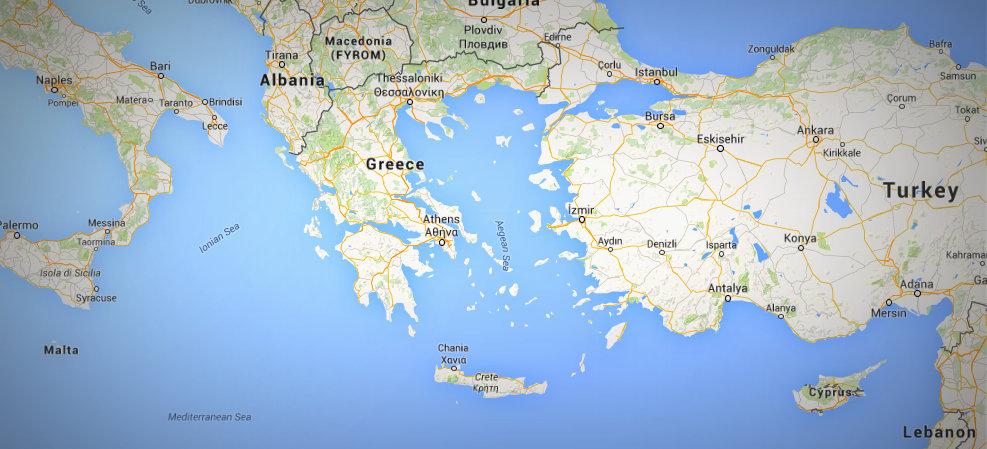
Shortwave listeners hear the Voice of Greece once again

greece

SWLing Post contributor, Moshe, writes with some good news from the Voice of Greece:

I’m listening to VOG at 9420kHz, At 11:27 local time 08:27UTC, 11/06/2015 the station identified itself as “Ezo Athina, I Foni Dis Elladas”: “This Is Athens, The Voice Of Greece”.

Immediately after receiving Moshe’s message, another Post contributor, Merkouris, provided the following details:

It would be of interest to the SWLing Post readers that, as of today June 11, the Greek public broadcaster ERT is back on the air with three TV channels and eight Radio programmes, including the “Voice of Greece”.

TV channels:
ERT1,
ERT2,
ERT3 (Thessaloniki)

Radio programmes:
Proto Programma (1st Programme),
Deftero Programma (2nd Programme),
Trito Programma (3rd Programme),
Kosmos (Musics of the world),
ERA Spor (Sports programme),
RS Makedonia (Thessaloniki),
Foni Tis Elladas (Voice of Greece)

The web site http://www.ert.gr/ is also up with news and streams of all tv and radio channels.

Right now at 10:45 UTC the Voice of Greece is on the air on 9420 kHz.

Many thanks to both Moshe and Merkouris for this information!

A little background…

If you haven’t been following the story, in June 2013, Greek National TV & Radio (ERT) was shut down and so was the Voice of Greece (well…officially, at least).  Only a few hours after VOG went off the air that night, they came back on the air with live protest coverage.

In fact, since that night–exactly two years ago today–Greece has been broadcasting on shortwave intermittently as a relay of ERT Open and/or Elliniki Radiofonia.

I hope that now VOG is officially back on the air, their shortwave broadcasts will be daily once again.  Tonight, I will certainly be tuned to 9,420 kHz!

Update: the BBC News has recently posted this excellent article with photos and videos on their website.

Help record the 2015 BBC Antarctic Midwinter Broadcast on June 21

800px-Antarctica.svg

Every year, the BBC broadcasts a special program to the scientists and support staff in the British Antarctic Survey Team. The BBC plays music requests and sends special messages to the small team of 40+ located at various Antarctic research stations. Each year, the thirty minute show is guaranteed to be quirky, nostalgic, and certainly a DX-worthy catch!

Regular SWLing Post readers know that I’m a huge fan of the Antarctic Midwinter Broadcast (and without fail, it falls on my birthday each year!).

Hit the record button!

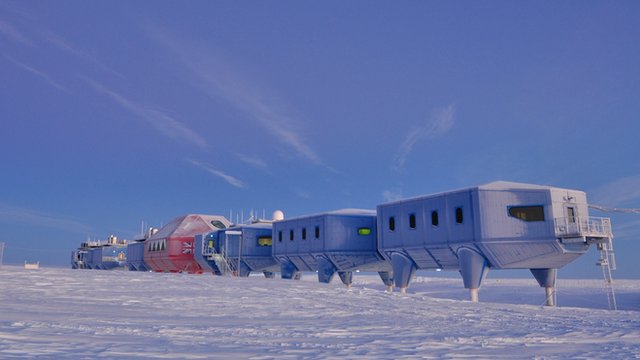
Halley VI: The British Antarctic Survey's new base (Source: BBC)

Halley VI: The British Antarctic Survey’s new base (Photo credit: British Antarctic Survey)

This year, I’m calling on all SWLing Post readers and shortwave radio listeners to make a short recording (say, 30-60 seconds) of the show and share it here at the Post.

The recording can be audio-only, or even a video taken from any recording device or smart phone. It would be helpful to have a description and/or photo of your listening environment and location, if possible.

If you submit your recording to me, I will post it here on the SWLing Post–and insure that the BBC World Service receives the post, too.  The recordings will be arranged by geographic location.

Are you in?

If you’re interested in participating, mark your calendars for June 21st!  I’ll post updates and frequencies about the Antarctic Midwinter Broadcast here on the SWLing Post. Please follow the tag: Antarctic Midwinter Broadcast…and get ready for some cool solstice fun!

[UPDATE: Click here for the latest broadcast frequencies.]

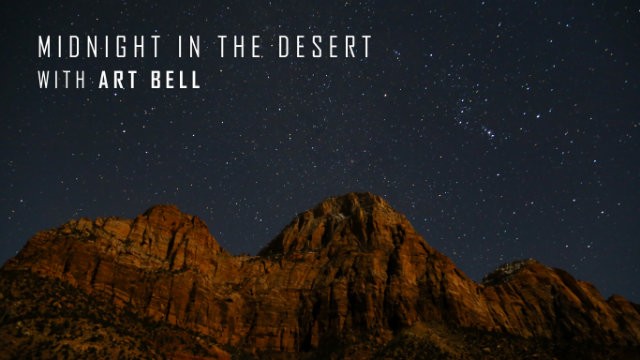
Art Bell’s “Midnight In The Desert” to be broadcast on shortwave via WTWW and WBCQ

MidnightInTHeDesert

Many thanks to SWLing Post reader, Mike, who informs us that Art Bell is returning to the airwaves with a new radio show called Midnight in the Desert. Like Coast to Coast AM, (which Bell retired from several years ago) Midnight in the Desert will also focus on paranormal activity.

Mike also points out that Bell has also announced Midnight in the Desert will be broadcast on WTWW (5,085 kHz).  WTWW will start airing the show July 20, 2015 from 9:00 pm – Midnight Pacific time.

Indeed, after looking at the list of radio stations rebroadcasting Midnight in the Desert, I noted that WBCQ, in Maine, will also carry the show on 7,490 and 9,330 kHz.

For more information and updates, check out Art Bell’s website.