Category Archives: Broadcasters

Radio Dabanga: Sudan to launch 20 radio stations

RadioDabanga(Source: Radio Dabanga via Andy Sennitt)

Coming January, Sudan will launch ten shortwave radio stations in Darfur, and ten in South Kordofan

The new radio stations will present programmes in local dialects, to counter the broadcasts by Radio Dabanga, in an attempt to reduce its impact on the populations of those regions, especially in Darfur, Information Minister Ahmed Bilal Osman told Members of the national Parliament on Tuesday.

As for South Kordofan, the radio stations will aim to reach the Nuba people living in the rebel-controlled areas, the minister noted.

Sudanese MPs have criticised the performance of the official media before. They described it as “weak, and failing in the delivery of information”. On Tuesday, 25 November, the daily broadcasts by Radio Dabanga from the Netherlands were discussed in the parliament. Some MPs stressed the need “to disrupt the activity of Radio Dabanga, or completely stop it”, and demanded from the Information Minister of State to develop a plan to at least reduce its impact.

Radio Dabanga broadcasts in shortwave to the whole of Sudan and neighbouring countries. Satellite broadcasts are confined to the larger cities. (See elsewhere on this site for audio feeds.)

Follow this story on Radio Dabanga’s website.

December 13/15: Special RMRC shortwave broadcasts

SX-99-Dial(Source: Toshi Ohtake, Japan Short Wave Club, via Sean Gilbert)

RMRC Shortwave broadcasts in December 2014 about the EDXC’14 Conference

The Rhein-Main Radio Club ( RMRC ) of Frankfurt, Germany, plans to broadcast a one-hour program in English about the EDXC 2014 Conference held in September in Nice , France. There will be three separate transmissions:

There will be taped interviews with several well-known DXers who attended the meeting. Thank-you very much to Mr. Toshi Ohtake of the Japan ShortWave Club (JSWC) for taping and providing these interviews.

QSL-verification is <only> via the RMRC and either as electronic or as paper QSL. Reception reports to either:
[email protected] or RMRC, Postfach 70 08 49, 60558 Frankfurt / Main, Germany. Return postage is not required.

See also our web-page www.RMRC.de for details (“QSL-Info”).

Via Sitkunai, Lithuania:
Target Area / Frequency / UTC / Day

J/As / 11690 KHz  / 2100 – 2200/  Sat 13 Dec

Via WRMI, Okeechobee, Fl, USA:
Target Area / Frequency / UTC / Day

WNAm. / 7455 KHz / 0000 – 0100 / Mon 15 Dec
ENAm. / 5850 KHz / 0000 – 0100 / Mon 15 Dec
Car/LAm. / 5015 KHz / 0000 – 0100 / Mon 15 Dec
Eu / 15770 KHz / 2100 – 2200 / Mon 15 Dec

Radio Exterior de España will return to shortwave

RadioExteriorDeEspanaA bit hat tip to SWLing Post contributor, London Shortwave who sent a link to this article from the Spanish news site prtelevisión [click here for English translation].

According to prtelevisión and this article from La Opinión A Coruña [English translation], yesterday morning, the Board of Directors of RTVE approved a proposal to broadcast on shortwave four hours a day: from Monday to Friday (between 20:00 and 24:00 hours) and Saturday/Sunday between 16:00 and 24:00.

The following broadcasts will air:”24 Horas”, “Radiogaceta de los deportes“, “Españoles en la Mar” and “Cinco Continentes“.  In addition, REE plans to cover sporting events.

It appears that the fisheries industry is to thank for this decision to bring REE back on shortwave as ships had no viable means to listen to REE while at sea. According to these sources, shortwave broadcasts will re-start in the near future.

Readers: please comment when you hear REE back on the air.

BBC & VOA collaborate to fight Ebola

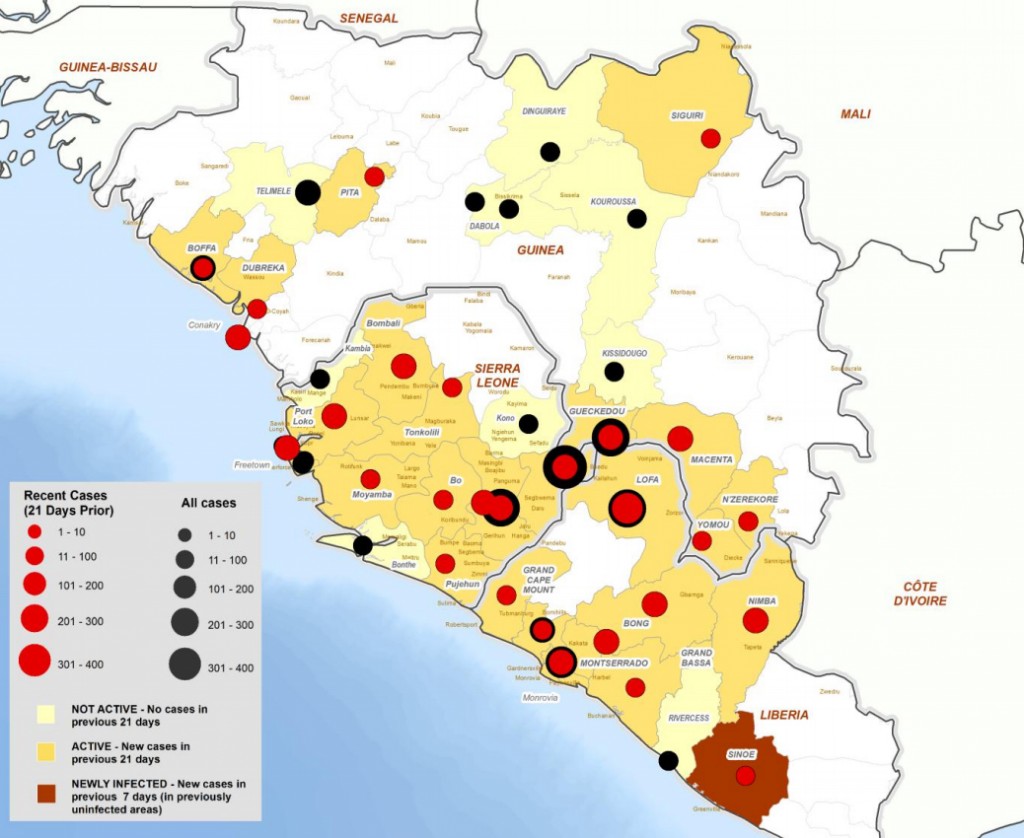
Ebola Cases Map (Source: World Health Organization)

Ebola Cases Map (Source: World Health Organization)

(Source: BBC Media Centre via Andy Sennitt)

The BBC World Service and Voice of America (VOA) have entered into a ground-breaking partnership to pool resources and content about the Ebola outbreak in West Africa, so as many people as possible receive factual information about the disease.

The broadcasters are sharing TV, radio and digital content related to the outbreak in Guinea, Sierra Leone and Liberia. Editors will also share Ebola planning and identify other possible areas for collaboration, such as sharing contacts. The collaboration features content in English, French and Hausa with the scope to translate content into a range of local languages.

World Service Director Peter Horrocks said:

“This is the worst Ebola outbreak the world has seen and so we have taken unprecedented action. Reliable facts and information can literally save lives and as the two leading broadcasters in the region we have joined forces to reach as many people as possible.”

VOA Director David Ensor said: “We at the VOA and the BBC are united against a common enemy—Ebola. Our collaboration is about public service at a time when so many lives are at stake.”

Shortwave Radio Recordings: beHAVior Night

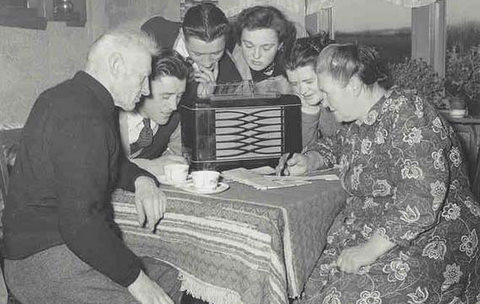
RadioListeningFor your listening pleasure: beHAVior Night, a shortwave radio show which showcases music from the first four decades of the 20th Century.

This show was recorded on Friday, November 28, 2014. While beHAVior Night is broadcast all year long via WBCQ, I’m not able to hear them easily at my home during Daylight Savings Time (DST) as the propagation path is not yet open to the south. During the winter months, however, the signal is quite strong as you will hear.

Click here to download the recording as an MP3, or simply listen via the embedded player below:

You can catch beHAVior Friday afternoon/evening at 17:00 EST/22:00 UTC on 7,490 kHz (WBCQ). Check out beHAVior Night on Facebook by clicking here.

VOA Radiogram, 29-30 November 2014: Dim the lights

VOARadioGram(Source: VOA Radiogram)

Flmsg returns this weekend on The Mighty KBC. See details below.

This week on VOA Radiogram, the “surprise mode of the week” becomes the “bonus mode of the week.” Because many of you have problems with the RSID, I will divulge the bonus mode so that you can make manual adjustment if necessary.

Here is the lineup for VOA Radiogram, program 87, 29-30 November 2014, all in MFSK32 centered on 1500 Hz except where indicated:

1:37 Program preview
2:39 Dimming lights to see the night sky*
11:27 Cambodian rice wins “world’s best” title*
19:53 Color photos of 1963 Soviet Union*
26:29 Closing announcements
27:20 Bonus mode of the week: MT63-2000L

Please send reception reports to [email protected]

VOA Radiogram transmission schedule
(all days and times UTC):
Sat 0930-1000 5910 kHz
Sat 1600-1630 17860 kHz
Sun 0230-0300 5745 kHz
Sun 1930-2000 15670 kHz
All via the Edward R. Murrow transmitting station in North Carolina.

The Mighty KBC will transmit a minute of MFSK64 Saturday at about 1230 UTC on 6095 kHz, and Sunday at about 0130 UTC (Saturday 8:30 pm EST) on 7375 kHz. Both frequencies are via Germany. Reports to Eric at themightykbc (at) gmail.com.

This weekend, the MFSK64 transmissions on The Mighty KBC will be in Flmsg format. If you do not have the Flmsg software, download it from the same source as Fldigi: http://w1hkj.com/download.html.

To make Flmsg work with Fldigi, in Fldigi: Fldigi: Configure > Misc > NBEMS > Under “Reception of flmsg files” check both “Open with flmsg” and “Open in browser.” Under that indicate where your Flmsg program is located, for example C:Program Files (x86)\flmsg-2.0.5\flmsg.exe.

If all goes well, the text from The Mighty KBC will pop up on your web browser.

A digital announcement from STF Radio International

STFradioSTF Radio International just shared the following digital announcement. Yes, you’ll need to decode this message from SoundCloud with an application like FLDigi:

STF also mentioned that a text version of this announcement with follow in the next few days (but surely it’s more fun to decode the digital version!).

You should make the time to decode STF Radio International broadcasts if at all possible.  Their QSL cards are some of the best in the business.