Category Archives: Broadcasters

Shortwave Radio Recordings: Alcaravan Radio

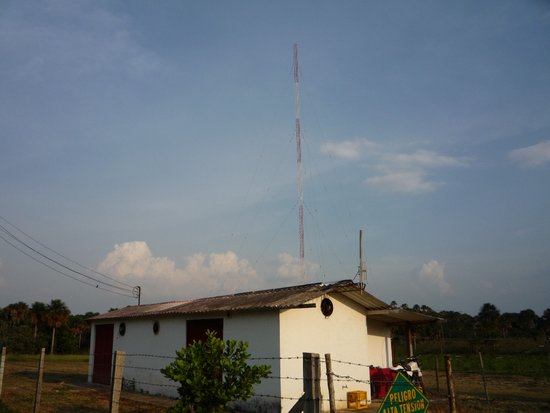
casa trans. antena AM

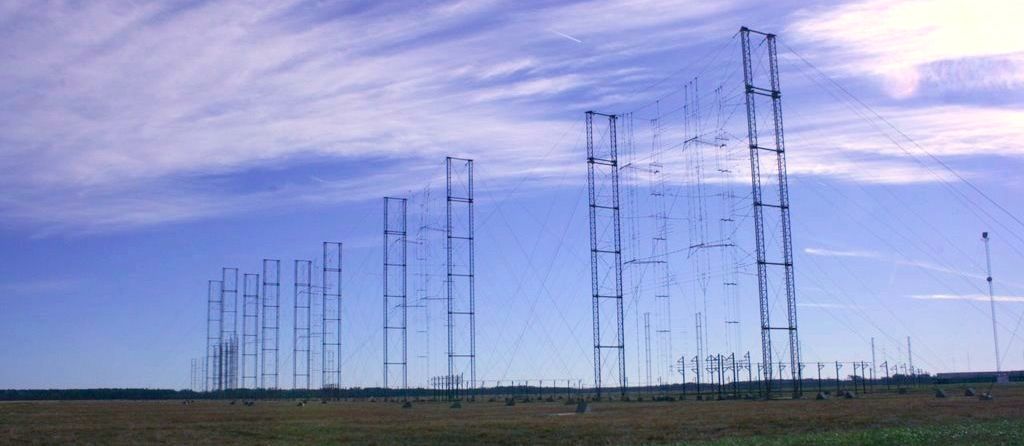
Alcaravan Radio’s antenna site and transmitter house.

Yesterday, August 8, I was able to record Alcaravan Radio out of Puerto Lleras, Columbia. Alcaravan Radio broadcasts domestically on medium wave and also on 5.91 MHZ shortwave, from 23:30-12:00 UTC.

Though typical summer conditions meant for a higher noise levels, Alcaravan’s 1 kW signal still punched through the static and made for pleasant listening. In this recording, I was using the WinRadio Excalibur, but I listened for a couple of hours on the Elad FDM-S2 as well–both did an equally good job while connected to my large sky loop antenna.

To be clear, 1 kW is low output power by international broadcasting standards. Alcaravan Radio was not audible on the Tecsun PL-660 nor the Sony ICF-SW7600GR, though I have heard them on portables in the past during the late fall and winter months. Still, you might be able to snag them on a portable when summer conditions are favorable!

Click here to download the recording as an MP3, or simply listen via the embedded player below:

Click here to view an Alcaravan Radio QSL and transmitter site images.

SW Radio Africa lost donor support

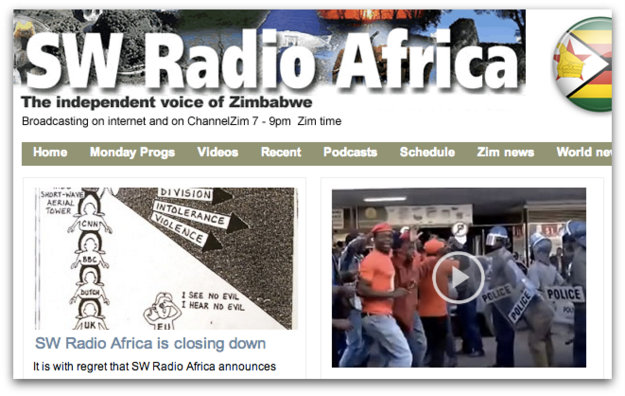
SWRadioAfricaAccording to Radio VOP, SW Radio Africa’s closure is due to a loss of donor support. Many thanks to SWLing Post reader, Richard Cuff, for the tip:

(Source: Radio VOP)

“London-based SW Radio Africa has been forced to cease broadcasting after losing donor support.

SW Radio Africa, a non-profit station which broadcasts daily into Zimbabwe on shortwave, is winding up it operations on August 10.

Gerry Jackson, SW Radio Africa founder and editor, confirmed the impeding closure of the radio station which used to air daily between 6 and 9pm Zimbabwean time.

[…]The radio station was set up by a group of Zimbabwean journalists and started airing on December 19, 2001. The North London-based independent radio station had gathered a growing number of listeners, with its existence infuriating the Zimbabwean government.

[…]Staff at the radio station said they were disappointed that donor withdrawal had led to the downfall of the radio station.”

Read the full news item at Radio VOP.

QSL cards: STF Radio International sets a benchmark

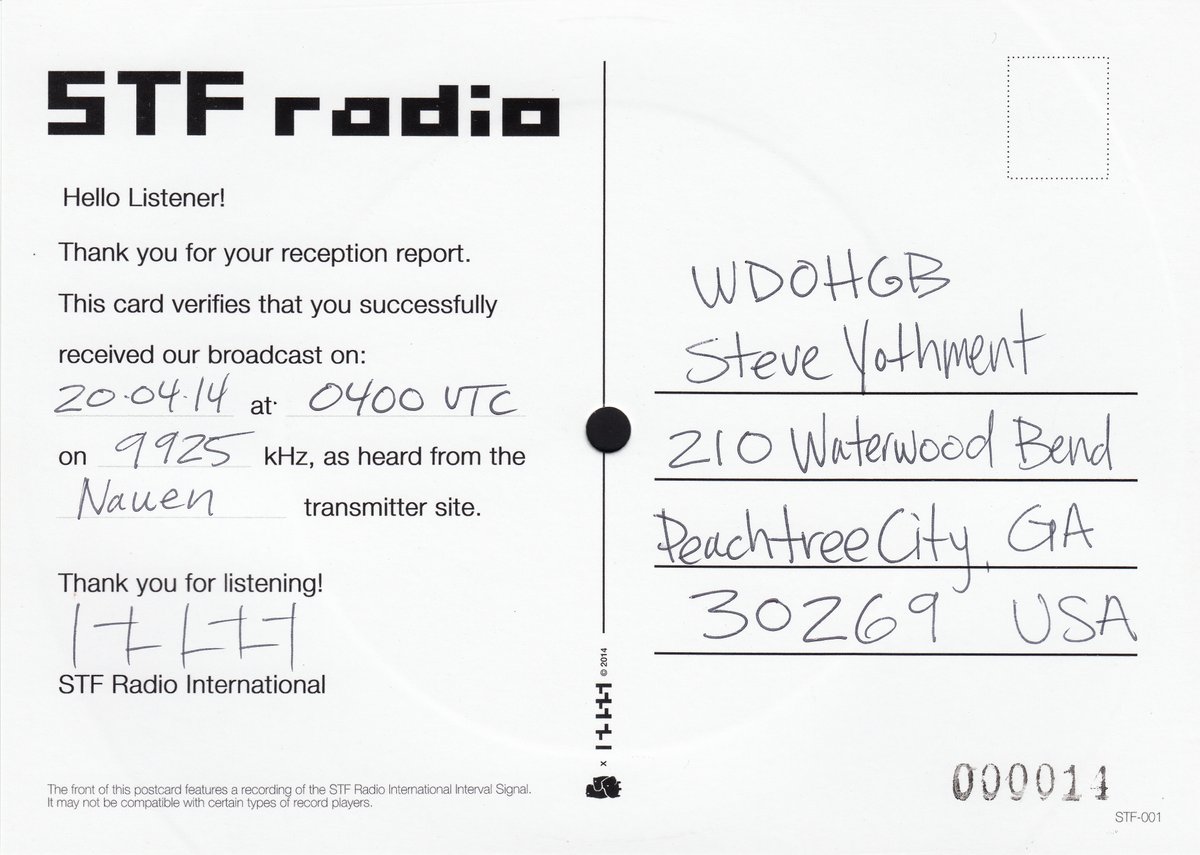
STF-Radio-International-Front-QSL-001

[STF Radio QSL card front (above) back (below). Original scans by Steve Yothment]

STF-Radio-International-Back-QSL-001

SWLing Post reader, Steve Yothment (WD0HGB), writes:

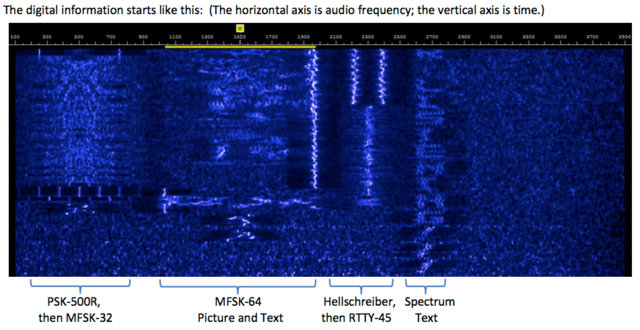
“I received an “audio QSL” card from STF Radio International a few days ago. Have you heard about it? [The QSL] actually has grooves on the card that you can play on a phonograph. I had a friend play the audio on his phonograph and he converted the audio to MP3 format. Then, I decoded the digital info in the file.”

Click here to download or listen below:

DigitalDecode-STFRadio

Steve decoded the digital data from the audio QSL card and documented the contents on a PDF document.  Click here to download.

Steve: this is brilliant!  Thank you not only for sharing the QSL card images, but for the audio and your excellent documentation of the digital decode!

Readers: What’s the most interesting QSL card you’ve ever received?

Victor Goonetilleke: The joy of DXing

SX-99-DialVictor Goonetilleke has kindly shared a passage he recently posted to Facebook. Victor pretty much sums up why I still listen to the shortwaves:

“For almost four score and 5 I enjoyed shortwave radio. Yes I was a DXer, and a dedicated listener. The thousands of hours of broadcasts I listened from the BBC, VOA, RNW, DW, RFI, Swiss Radio, NHK and many more of the international broadcasters influenced me over the years. The knowledge I gathered was transferred to hundreds of homes as I taught my students in class rooms and as a lecturer too in higher Colleges, in many social gatherings, day to day conversations with important people and everyday folks, what I gathered from my radio made them realize that there was a story out there.

And as the years went by one by one those stations started to go away and I became more and more a DXer and finally I have only those signals to bring me joy.

Tonight would you blame me for being a DXer, abandoned by the international broadcasters, if I sit back and enjoy this music through the crackle of shortwave and happy that I have a radio which few seems to understand these days.”

You can listen to the recording Victor made by clicking here: https://app.box.com/s/tcryw2ymt38gz8y6zaw4

I would also encourage you to read Victor’s guest commentary on BBG Watch which was prompted by the BBG pulling the (shortwave) plug on much of Asia.

Finally, in 2003, Jonathan Marks interviewed Victor Goonetilleke; you can watch the full interview below:

Visit with Victor Goonetilleke 2003 from Jonathan Marks on Vimeo.

SW Radio Africa to close down August 10

SWRadioAfricaOnly a few weeks ago we mentioned that the clandestine station, SW Radio Africa, stopped broadcasting via shortwave. It appears now that SWRA will completely close down:

(Source: Shortwave Radio Africa via Richard Cuff)

“It is with regret that SW Radio Africa announces that it is closing down. We recently stopped our shortwave transmissions but have continued to provide broadcasts via our website and other formats, but these too will cease.

We’d like to thank the organisations and individuals who have supported us for the past 13 years and the contributors to our programs who have given so willingly of their time and expertise.

In particular we’d like to thank our listeners, who have shared their lives, hopes and dreams and helped us to tell the story of Zimbabwe’s sad decline to the world.

We hope that one day Zimbabwe finally has a government who understands that its sole responsibility is to ensure a safe, healthy, prosperous life for every man, woman and child in the country.

Our first broadcast was on 19th December 2001.
Our last broadcast will be on 10th August 2014.

It’s been a privilege.

Gerry Jackson
Founder/Editor
4th August 2014”

Shortwave Radio Recordings: Radio Santa Cruz

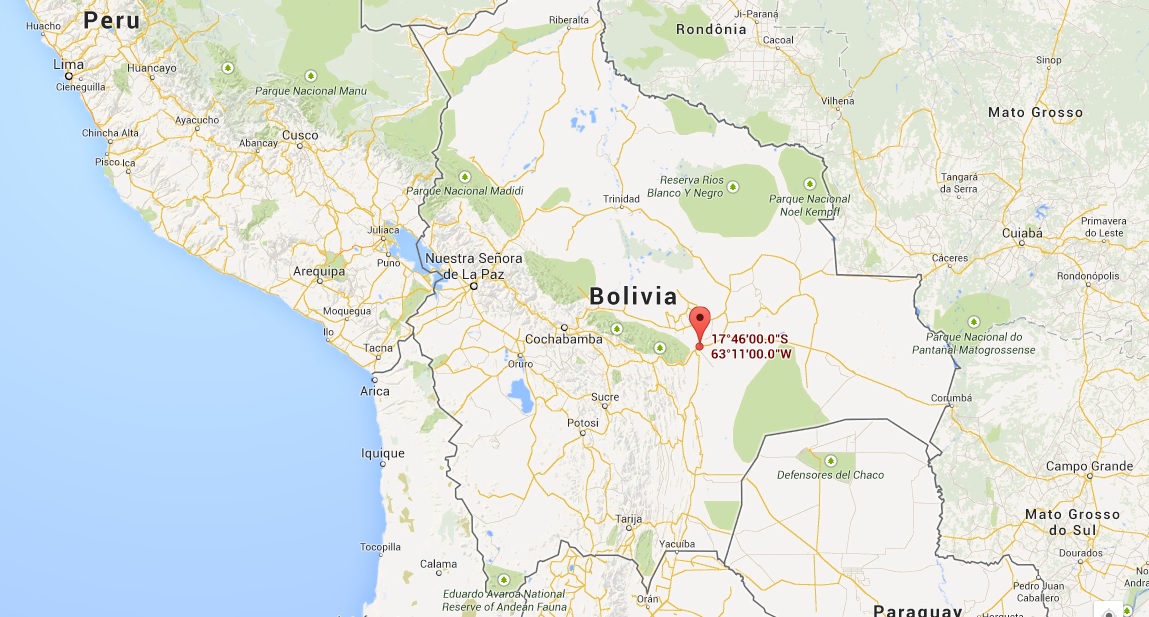
Bolivia

For your listening pleasure: twenty minutes of Radio Santa Cruz.

I recorded Radio Santa Cruz early this morning around 10:00 UTC on 6,135 kHz using my WinRadio Excalibur.

As you’ll hear in the recording, Radio Santa Cruz‘s 10 kW signal from Santa Cruz, Bolivia, was very much audible here in North America–even punching through typical noisy summer band conditions (static crashes, etc.).

Click here to download the recording as an MP3, or simply listen via the embedded player below:

BBG publishes report on the efficacy and future of shortwave radio

VOA-Greenville-Curtain-AntennasMany thanks to SWLing Post reader, Bennett Kobb, who shares this downloadable Report of the Special Committee on the Future of Shortwave Broadcasting. If you recall, this report was produced by a Broadcasting Board of Governors committee and chaired by Matt Armstrong.

Both Bennett and I believe it’s unfortunate that the committee failed to recognize one of VOA’s most innovative shortwave products: the VOA Radiogram.

Below you can read the full press release which accompanied the report:

(Source: BBG)

WASHINGTON (August 1, 2014) — The Broadcasting Board of Governors today released “To Be Where the Audience Is,” a report that found shortwave radio to be essential to listeners in target countries, but of marginal impact in most markets. The report’s recommendations came after a comprehensive review, grounded in audience-based research, of the efficacy of shortwave as a distribution platform for U.S. international media.

“Shortwave radio continues to be an important means for large numbers of people in some countries to receive news and information,” said Matt Armstrong, who chaired the BBG’s Special Committee on the Future of Shortwave Broadcasting, which issued the report. “However, many of our networks’ target audiences have moved to newer platforms including TV, FM and digital media. This report maps a way forward for U.S. international media to remain accessible for all our audiences.”

Research-based evidence of media trends suggests that the increased availability and affordability of television, mobile devices and Internet access has led to the declining use of shortwave around the world. Still, the report finds that substantial audiences embrace shortwave in Nigeria, Burma, North Korea, Afghanistan, Somalia, Zimbabwe, Cuba and other target markets for the BBG.

At the same time, the committee’s recommendations make clear that the BBG will need to continue to reduce or eliminate shortwave broadcasts where there is either minimal audience or that audience is not a U.S. foreign policy priority. It also ratifies reductions that were made in redundant signals in 2013 and further cuts in transmissions that were made in 2014.

Even with these recent reductions, the BBG makes programs in 35 of its 61 broadcast languages available on shortwave where there is a strategic reason to do so.

The report notes there is no evidence that shortwave usage increases during crises. At such times, audiences continue to use their preferred platforms or seek out anti-censorship tools to help them navigate to the news online, including firewall circumvention tools or offline media including thumb drives and DVDs.

The Shortwave Committee report will be discussed at the August 13 public meeting of the Broadcasting Board of Governors. The report can be found here.