Category Archives: Broadcasters

Jonathan Marks remembers the opening of the BBC Seychelles relay site

Jonathan Marks

Jonathan Marks

In response to the announcement of the closure of the BBC Seychelles relay, Jonathan Marks writes:

“You might like to revisit this old Media Network when we spoke about the opening of the Seychelles site.

http://jonathanmarks.libsyn.com/mn-29-09-1988-blackpool-offshore-radio-

Jonathan, I’m glad you shared this recording as it’s also chock-full of radio nostalgia: covering offshore radio ships, numbers stations, BBC Radio 1’s move to FM, AFRTS closure (via US VOA relays), and even an interview with Alan Weiner.

Readers, if you enjoy listening to these archived broadcasts as much as I do, then I encourage you to check out Jonathan’s Media Network Vintage Vault.

Many thanks, Jonathan!

BBC announces closure of Seychelles relay station

BBC Seychelles Relay Station (Photo: Vijay.sc)

BBC Seychelles Relay Station (Photo: Vijay.sc)

(Source: BBC Media Centre via Rob Wagner)

The British Broadcasting Corporation (BBC) announced today that the Indian Ocean Relay Station (IORS) transmitter site at Grand Anse, Mahé, will cease all shortwave transmissions on 29 March 2014.

The site was established in 1988 and has been in continuous service since then, relaying BBC broadcasts to audiences in East Africa primarily in English and Somali.

The closure will not affect the availability of BBC World Service programmes in Seychelles, which are relayed from satellite broadcasts on to local FM frequencies 106.2, 105.6 and 105.2MHz. In areas of East Africa still dependent upon shortwave broadcasts, the signal will be supplied by other relay stations. The announcement follows an earlier decision to stop all shortwave broadcasts from the BBC World Service site in Cyprus for similar commercial, technological and audience reach reasons. These ended in March of this year.

The announcement will unfortunately result in 11 staff being put at risk of redundancy. The staff over the last 25 years have operated and maintained this shortwave broadcast facility with passion, expertise and professionalism. The technical ability and commitment of the team at the IORS has been applauded by the BBC World Service.

The decision to close the site has been taken due to changing commercial and technological circumstances. As countries develop and their media markets open, listening and viewing habits have changed. New technology has changed the way audiences listen to BBC programmes and reduced the importance of shortwave broadcasts in much of the area currently served by the IORS, making the IORS commercially unviable.

The BBC is supporting the development of new delivery platforms such as internet and mobile streaming as well as FM radio and TV broadcasts. Shortwave broadcasts continue to regions and markets where listening remains strong and BBC services can be delivered efficiently to large geographic areas.

WBCQ’s “new” monitor: a Navy model REH

(Source: WBCQ Facebook Page)

(Source: WBCQ Facebook Page)

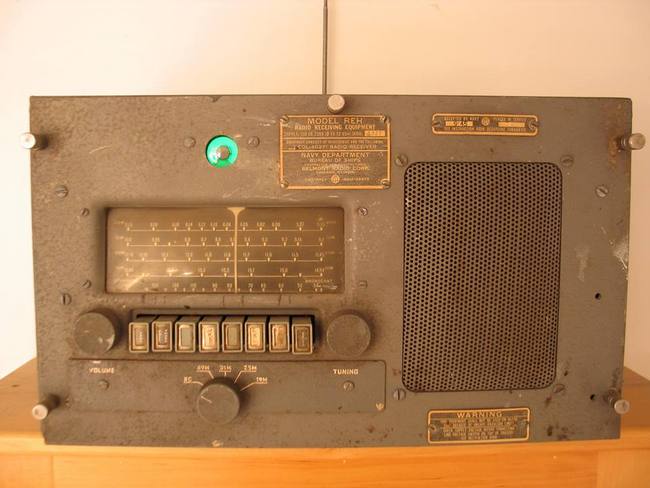
Check out this Navy receiver model REH, that the good folks at WBCQ The Planet have electrically restored. The REH was an “amenities” receiver used by the United States Navy in World War II for troop entertainment. WBCQ, however, has given this one a second life as a station monitor.

No wonder that glowing green magic eye is so bright–it’s tuned to a broadcast that’s being transmitted from WBCQ’s back yard in Monticello, Maine! WBCQ says it “sounds great.” No doubt!

Thanks to WBCQ for sharing this on their Facebook page!

Shortwave Radio Recordings: Radio New Zealand International

799px-Wellington_city_with_Cable_CarFor your listening pleasure: two full hours of Radio New Zealand International, recorded on November 22, 2013 starting around 7:59 UTC on 9,765 kHz.

This recording begins with the The RNZI interval signal: the charming and unmistakable call of the New Zealand Bellbird.

Click here to download the recording as an MP3, or simply listen via the embedded player below:

Radio 700 brings international broadcasters back to shortwave

Radio-700-LogoMany thanks to SWLing Post reader, Knut, who recently informed me that the German language services of Radio Slovakia International, Radio Prague, Radio Ukraine International and the Polish Radio External Service are being relayed on shortwave radio, via Radio 700 in Euskirchen, Germany.

All broadcasts are on 3985 kHz and are transmitted daily (with 1 kW), beginning at 19:30 UTC.

At one thousands watts, on 3,985 kHz, this will be challenging DX outside of Europe. Still, I love the fact that independent broadcasters (like Radio 700, WRMI, WBCQ, etc.) make shortwave broadcasting affordable for many of these international broadcasters.

Knut originally learned about these relays through the German radio blog, DX Aktuell.

Check out Radio 700’s full broadcast schedule by clicking here.

Listener Post: Karen Shenfeld

Karen Shenfeld’s radio story is the latest in our series called Listener Posts, where I will place all of your personal radio histories and memories. If you would like to add your story to the mix, simply send your story by email!

In the meantime, many thanks to Karen for sharing this radio memory from her travels in the Sahara:


Karen Shenfeld

" I was in fact singing "The Hills are Alive With The Sound of Music" at the time.... I am on top of a hill in the Hoggar Mountains outside of Tamanrasset, in the middle of the Sahara."

“I was in fact singing ‘The Hills are Alive With The Sound of Music’ at the time…. I am on top of a hill in the Hoggar Mountains outside of Tamanrasset, in the middle of the Sahara.”

I have been doing some research about short wave radio and I wanted to tell you that I have loved reading many of your blogs/posts, here and elsewhere.  I was especially moved by an article that you wrote for DXer.ca about the shutting down of Radio Canada International.

And I wanted to share this with you: About 28 years ago or so, my husband I hitchhiked across the Sahara desert through Algeria. We stayed in many remote oasis villages, including Reggane. At Reggane, the paved road ends, and from there you must follow tracks in the sand for hundreds of miles in order to reach Timbuktu in Mali (or turn east toward In Salah to follow tracks in the sand south to Niger, which we did).
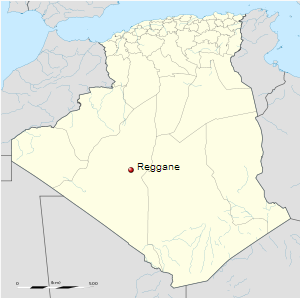
Location of Reggane within Algeria

Location of Reggane within Algeria

In Reggane we stayed for several days with an Algerian family. The husband was from further north in Algeria; his wife was a Tuareg. In this man’s home I remember staying up late at night with him, drinking mint tea under the stars in the courtyard of his adobe home, and listening to Radio Canada International.

Our host was a very intelligent man, who really appreciated staying current with the world’s events, and not relying upon censored Algerian papers — when they were even available in such a remote place.


Karen Shenfeld (Photo credit: Karen Shenfeld via the University of Toronto)

Karen Shenfeld (Photo credit: Karen Shenfeld via the University of Toronto)

Karen is a poet and traveler; she has crossed the Sahara Desert from north to south through Algeria, travelled the length of the Congo River in Africa by riverboat, and voyaged through India, from Kashmir to Kerala. You can read a selection of her poetry via the University of Toronto Library website: http://www.library.utoronto.ca/canpoetry/shenfeld/

Karen is currently writing a poem about shortwave radio for a friend–the process has rekindled her interest in this magic medium.

Happy listening, Karen!

Click here to read our growing collection of Listener Posts, and consider submitting your own!

Radio Slovakia International wishes to resume shortwave service

USA NASB logoMany thanks to SWLing Post reader, Dominik, who points us to the National Association of Shortwave Broadcasters’ latest newsletter, which mentions Radio Slovakia International’s intentions to, once again, broadcast on shortwave from Slovakia.

“The NASB organized the B13 Conference in cooperation with Radio and Television Slovakia (RTVS) and its international service, Radio Slovakia International (RSI). RSI stopped broadcasting on shortwave from Slovakia at the end of 2010, but NASB member WRMI in Miami has continued to relay the station’s English and Spanish broadcasts to the Americas since January of 2011. And RSI would like to resume shortwave broadcasts from Slovakia in the near future if funding can be restored.”

The NASB newsletter summarizes the full B13 HFCC Conference.  The following is an excerpt from the NASB Newsletter newsletter, featuring Maria Mikusova, Chief of Radio Slovakia International:

[…]Tuesday morning, August 27, the HFCC Conference began with some words of welcome from Maria Mikusova, Chief of Radio Slovakia International. “As the General Director of Radio and Television Slovakia pointed out yesterday,” she said, “the fact that this conference is taking place in Bratislava is a great inspiration and impulse for us. It broadens the horizons of us — journalists and professionals from the foreign broadcast of Radio Slovakia International, on behalf of whom I’d like to welcome you to Bratislava as well.”

Mrs. Mikusova noted that RSI has received feedback from listeners in 130 countries. “The core of this feedback,” she said, “comes from broadcasting our programs via short waves. We left shortwave broadcasting only recently, at the beginning of the year 2011, and not fully.” She noted that RSI remains on shortwave via WRMI in the Americas.

Mrs. Mikusova said that RSI is busy developing a new website. “In regards to the variety of languages we broadcast in, you can listen to RSI in six languages, which is the same number as Radio Prague, our Czech colleagues and closest partners, broadcast in. This says a lot about the power of tradition and our efforts and ability to preserve this kind of a broadcast at a time of such a vast choice of communication channels opening on the internet and social networks.”

Mikusova said that RSI still receives good listener feedback from areas such as Russia, and the station still sends QSL cards to listeners. “We consider this to be a very important form of communicating with our listeners, although we know that QSLs are traditionally a shortwave communication.”

“Let me wish all the best to this coordination meeting,” she continued. “Your conference allows us to get to know better your work, and makes us feel that we are still part of the world network of shortwavers. For us, this conference is a firsthand, live encounter with the shortwave network and its significance for broadcasting. But at the same time it unveils what strategies of radio broadcasting and shortwave transmission are out there in the modern world. After all, the outlook and future strategy of Radio and Television of Slovakia is to bring RSI back to shortwave broadcasting. Although this issue has not been resolved yet, it shows just how important the HFCC Conference in Bratislava is, and why we, RSI, are so very interested in it.”

Dominik also pointed to the HFCC schedule where RSI already has a slate of broadcasts listed from the RSI Rimavska Sobota transmitter site:

HFCC-Clip-RSI

Again, thanks to Dominik for sharing this hopeful news!