Category Archives: Broadcasters

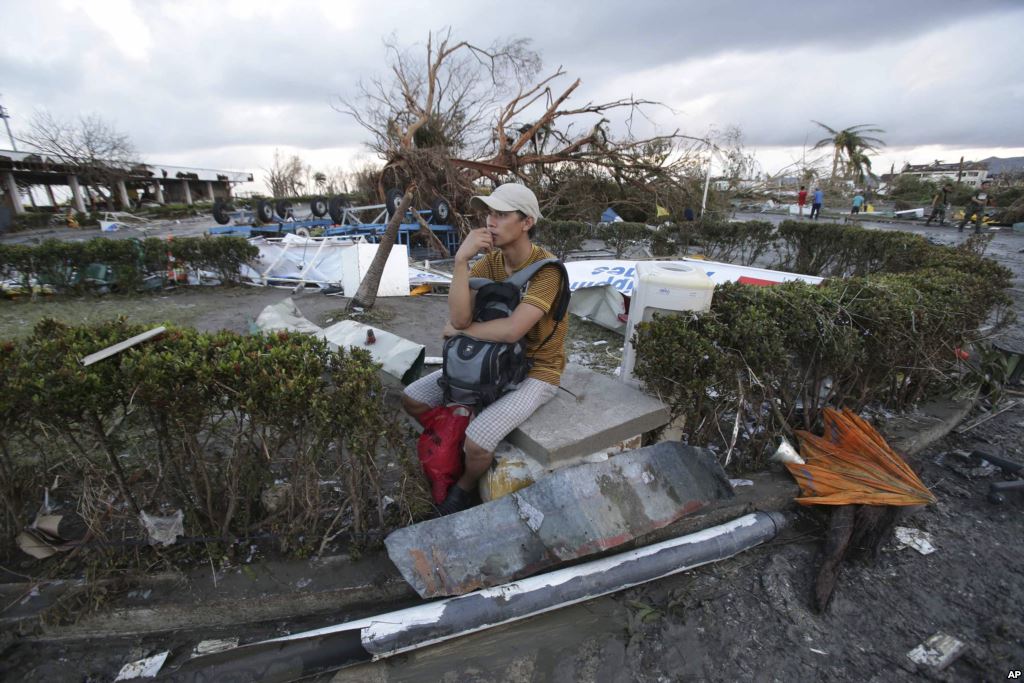
In the wake of disaster, BBC World Service extends shortwave service to Philippines

Typhoon Haiyan  aftermath (Source: VOA News)

Typhoon Haiyan aftermath (Source: VOA News)

Many thanks to SWLing Post reader, Alex, who writes:

The Philippines disaster has prompted the BBC World Service to put on a short wave service to the Philippines.

[The BBC notes:]

“We have extended the hours until next Tuesday to give a longer run in the evening, so on SW the following hours are heard.

09:00 – 11:00 GMT
11825 kHz – 25 Metre Band
12010 kHz – 25 Metre Band
17790 kHz – 16 Metre Band

There is also existing SW which is not necessarily targeting the Philippines but which they should be able to pick up as follows:

11:00 – 15:00 GMT
6195 kHz – 49 Metre Band
9740 kHz – 31 Metre Band

00:00 – 02:00 GMT
6195 kHz – 49 Metre Band
9740 kHz – 31 Metre Band
11955 kHz – 25 Metre Band

[UPDATE: Frequencies and times have been updated as of 15:30 UTC, November 13, 2013]  

In Alex’s message he also noted that the info from the BBC is presently a bit vague. He will keep us updated as he receives more information.

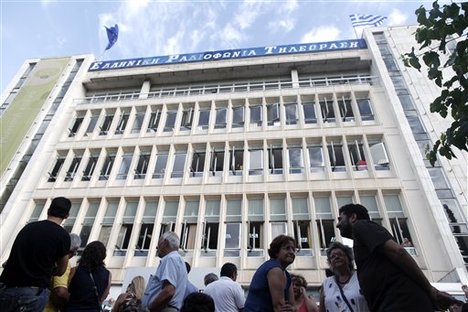
Greek police use tear gas to empty former broadcaster ERT’s offices

(Photo source: AP / Petros Giannakouris)

(Photo source: AP / Petros Giannakouris)

It looks like the staff protest, which has occupied ERT headquarters since June 11, has finally come to an end.

I’m not sure how/if this will have an effect on the Voice of Greece, but I will be listening for them on 9,420 kHz tonight.

(Source: BBC)

Greek riot police have cleared the headquarters of the former state broadcaster ERT, using tear gas to gain entry and arresting several people.

Police formed a cordon round the building in Athens, before going from room to room to evacuate protesters.

Former employees have occupied the building since the government closed ERT and sacked its 2,600 staff in June.

Greece’s conservative-led coalition said the state broadcaster cost too much to run in an economic crisis.

[…]The BBC’s Mark Lowen, in Athens, says the question is whether the ERT debacle again fuels social unrest here – and how much stomach the Greeks still have for a fight.[…]

Continue reading…

WRMI purchases WYFR transmission site and plans move to Okeechobee

Radio Miami International

Radio Miami International

Several of you wrote to share this great news from Jeff White at WRMI; many thanks to Michael, Pete, Bob and Keith for the tip:

(Source: Jeff White)

Legendary shortwave station WYFR in Okeechobee, Florida, which ceased transmissions on June 30, 2013, will resume broadcasting in December as a result of an agreement between Family Stations, Inc, and Radio Miami International, Inc.

According to the agreement, Family Radio will sell the WYFR facility to Radio Miami International. Family Radio programming for the Caribbean and South America will return to shortwave via the Okeechobee site, and Radio Miami’s programming currently aired on WRMI in Miami will switch over to the Okeechobee facility. The station will also carry programs for other international broadcasters, including Pan American Broadcasting’s Radio Africa network. A target date of December 1, 2013 has been set for the resumption of broadcasts. The current WRMI transmission site in Miami will be closed, and the WRMI call letters will be transferred to Okeechobee.

“We are very grateful to Family Radio for entrusting us with this magnificent station,” said Jeff White, WRMI General Manager. “WYFR is an important part of the heritage of shortwave broadcasting, and we are very happy that it will continue to serve shortwave listeners around the world.” The station first went on the air from Okeechobee in 1977, although the origins of the station and its predecessors go back to 1927. WYFR/WRMI is the largest shortwave station in the United States in number of transmitters and antennas. The facility is comprised of 13 transmitters — twelve 100-kilowatt and one 50-kilowatt — and 23 antennas beamed to all of the Americas, Europe and Africa.

White, who is also Secretary-Treasurer of the National Association of Shortwave Broadcasters (NASB), said that “many people made this transition a reality, not the least of whom was our former Secretary-Treasurer and current board member, Dan Elyea, who had been the WYFR Station Manager from the time it was built in the late 1970’s until his recent retirement. Dan presented us to Family Radio Vice President Tom Evans. Tom and the Family Radio Board have given us their confidence, and we will do our best to keep this station going for many years to come.”

(From Jeff White, WRMI, Nov 5 2013)

KVOH re-launches this weekend on 9,975 kHz

KVOHCoverage-Map-VoiceOfHope(Source: KVOH)

The Voice of Hope, KVOH, is re-launching this weekend with a daily schedule on 9975 kHz, from 01:00-04:00 UTC, beginning on Saturday, 2nd November, 2013 (Friday evening in the Americas).

From Monday, 4th November (Sunday evening in the Americas), the schedule will be one hour later, from 02:00-05:00 UTC.

Programs will be in Spanish for the first two hours, and English for the third hour. This initial schedule will be expanded in the months to come, as airtime sales allow.

Click here to download the KVOH broadcasting schedule.

FCC championing change that could “Bolster AM Radio”

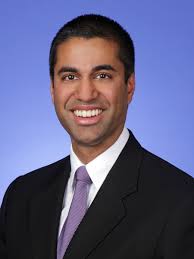
FCC Commissioner Ajit Pai (R)

FCC Commissioner Ajit Pai

It appears that FCC Commissioner, Ajit Pai, is pushing a plan to revitalize declining AM radio station and listener numbers in the US. Read some of the details below or the full article on the New York Times website.

Many thanks to David Goren for the tip!

(Source: NY Times)

The [The Federal Communications Commission] announced late Thursday that it would begin seeking public comment on numerous changes[.]

[…]Because of interference caused by consumer electronics, smartphones and the like, AM radio often seems to deliver mostly static. The AM audience has fallen to 15 percent of all radio listeners, down from 50 percent as recently as 1978. While the FM audience has fallen as well, it draws more than five times the audience of AM.

[Steps include] eliminating a regulation requiring stations to prove that any new equipment decreases interference with other stations — a requirement that is expensive, cumbersome and difficult to meet.

The F.C.C. has also proposed eliminating or loosening rules that govern nighttime transmissions by AM stations. Those regulations currently require many AM stations to reduce their power or cease operating at night to avoid interference with other stations.

[…]The current regulations make it difficult for AM stations to locate towers where they will not interfere with nearby stations at night. They also put conflicting requirements on stations, mandating that they still cover most of their broadcast territory even while operating at reduced power.

The proposed new rules, the commission said, aim at keeping more stations on the air at night.

[T]he F.C.C. said it was ready to make available to current FM stations what are known as FM translators — empty spots on the FM dial where AM stations can broadcast. Those are particularly valuable in urban areas, where tall buildings with steel frames or aluminum siding can block AM signals, degrading reception.

[Read the full article at the NY Times website…]

Radio Romania International celebrates 85 years on the air

RRI-RadioRomaniaInternationalTo celebrate 85 years on the air, RRI is asking their listeners: “How do you see the future of international radio broadcasting?”

Send your response and RRI might read it on the air during their November 3rd, 2013 broadcast.  Read full details below.

(Source: Radio Romania International)

On November 1, 2013 we celebrate 85 years of Romanian radio broadcasting. An anniversary that we take pride in, that we think about more or less nostalgically, and which brings questions about the future.

It is an occasion for Radio Romania International to challenge you, on this year’s Listener’s Day, to answer the question “How do you see the future of international radio broadcasting?”

Ever since its first days, radio broadcasting has been subject to countless tests, on the one hand prompted by the changes in the media landscape, such as the growth of television, the development of private radio stations, the emergence of the Internet and of social networks, and on the other hand triggered by the diversifying means of reception and transmission. In response, the radio outputs and contents have also changed. Radio broadcasting and reception modernized.

Political factors, regime changes and wars also influenced the mission and programmes of radio stations, while economic factors, such as the periods of economic growth or slumps, have affected the number of stations and their broadcasts. International stations have been subject to all these influences, just like all other radio stations.

This is why, dear listeners, we invite you to tell us how you think international radio stations will develop in the coming years, and what your expectations are in this respect. What will the global supply of programmes for foreign audiences look like, and how large will it be? What means of transmission will be used by most international broadcasters? What will be the role of radio stations for foreign listeners, in a world where access to information is ever easier?

We are looking forward to your answers to the question “What will be the future of international radio broadcasting?” and will award the most interesting 20 contributions.

As usual, it is based on your answers that we will produce the “Listener’s Day” programme on RRI, aired on the first Sunday in November, that is November 3rd this year. You can send your answers in audio format, or in writing, via email, regular mail or fax, on Facebook or using the form on our website. Our contact details are: Radio Romania International, 60-64 General Berthelot Street, sector 1, Bucharest, PO Box 111, code 010165, fax no. 00.40.21.319.05.62, email [email protected].

Whether fearsome or forgettable, The War of the Worlds left us with a gift

orson_wellesWithout a doubt, one of the most famous broadcasts in radio history––indeed, in American history––was Orson Welles’ radio production of the H. G. Wells’ classic sci-fi novel, The War of the Worlds.  A Halloween radio drama from the The Mercury Theatre on the Air series from the Columbia Broadcasting System (CBS)The War of the Worlds aired on October 30, 1938–exactly 75 years ago, today. And it’s still creating a stir…

Memorable legend?

The Welles’ production of The War of the Worlds invariably receives a side note or breakout in US history texts because of the unprecedented panic it incited in unsuspecting radio listeners during the tense period just prior to World War II, when radio was truly king of mass media and information.  Listeners reportedly took to the streets upon hearing the Mercury Theatre’s seemingly credible “accounts” of monsters from Mars invading New Jersey.

dailynews-WOTW-PanicBecause many listeners tuned in the production without hearing the Welles’ introduction to the drama, they heard what sounded like a live news report of Martians attacking our planet.  While it seems dubious today, what made Welles’ production so convincing was his innovative use of mock news breaks, and what listeners described as a “deafening” silence after a supposed “eyewitness report.” It sounded, in short, terribly authentic, and therefore convincing.

Few believe Welles was intentionally trying to trick his audience; rather, sources suggest he was attempting to treat his listening audience by infusing what would have otherwise been a fairly staid radio drama with imagination, creating a captivating thriller.

The result? By most accounts, Welles’ succeeded. Without doubt, The War of the Worlds propelled this young theatrical director into the public spotlight, onto the big screen, and made his name known the world over.

Last night I had the pleasure of viewing a brilliant documentary about The War of the Worlds on PBS’s American Experience. It told, in detail, of the events leading up to the production, the very convincing reasons why it had the impact it did, and offered entertaining listener accounts from letters sent to CBS. If you missed it,  you can watch it, too, by clicking here.

NPR’s RadioLab also devoted their most recent show to Welles’ production of The War of the Worlds. You can listen to their broadcast on their website, or via the embedded player below:

…Or forgettable myth?

War-of-the-worlds-tripodThen this morning, I read a rather provocative article by  and  in Slate; their mutinous view of the impact of Welles’ The War of the Worlds broadcast flies in the face of the American Experience and RadioLab documentaries and, indeed, every history textbook which devotes space to Welles. These authors claim:

“The supposed [War of the Worlds] panic was so tiny as to be practically immeasurable on the night of the broadcast. Despite repeated assertions to the contrary in the PBS and NPR programs, almost nobody was fooled by Welles’ broadcast.”

The authors go on to explain that the myth of Welles’ mass hysteria was fabricated:

“How did the story of panicked listeners begin? Blame America’s newspapers. Radio had siphoned off advertising revenue from print during the Depression, badly damaging the newspaper industry. So the papers seized the opportunity presented by Welles’ program to discredit radio as a source of news. The newspaper industry sensationalized the panic to prove to advertisers, and regulators, that radio management was irresponsible and not to be trusted.”

I encourage you to read the full Slate article, however, as it goes into much greater detail supporting the author’s assertions, which I find both logical and compelling.

But that’s not all.  This afternoon, while writing this post, NPR published a new article about The War of the Worlds, highlighting the Slate piece and the American Experience and RadioLab productions, but drawing no conclusions of their own. Click here to read the full NPR post.

Strangely, nothing I’ve read so far about The War of the Worlds mentions what I feel to be most obvious.

So, what came of it?

welles-war-of-the-worldsI believe Welles’ controversial radio production did something for radio listeners regardless of the level of panic it may––or may not––have engendered. Welles’ Halloween production left them (and us) with a gift. How so?

Prior to the dense radio propaganda surrounding World War II, The War of the Worlds undoubtedly made radio listeners, from that point forward, seriously question what they were hearing over the air. It forced them to listen with a skeptical ear, to realize that no matter how “real” a report might sound, not to assume its authenticity just because it was broadcast on the radio––or, for that matter, printed on the page of a newspaper. This was to become an invaluable tool in the coming days of American involvement in the war, especially for GIs desperate for news from the home front while propaganda seized the media.  Whether during Welles’ thrilling production or in the news frenzy that followed,  radio’s power had been publicly highlighted, and that power was sure to have an enormous impact on the coming world war.

In conclusion, perhaps we need another such event in this age of television and Internet. All too many people no longer question what they see, read, or hear from either source; these readers/viewers accept reporting of any stripe with blind faith, swallowing news bites and opinion pieces like digital candy. Then they tweet…and re-tweet.

Indeed, this is a common complaint I hear from many shortwave radio listeners.  I suspect this is because we, in contrast, tend to be motivated by hearing the many differing voices on the air and allowing our grey matter––our brains––to discern fact from fiction.

We owe Welles a debt of gratitude.

But don’t take my word for it…

RadioListeniningRegardless:  whether Welles created widespread or merely local panic, or whether you even buy my theory that this production taught us to question what we hear, it’s difficult to deny that the Orson Welles’ production of The War of The Worlds was a brilliant, ground-breaking radio drama.  And, I would add, great seasonal entertainment. Fortunately for us, almost 75 years later (nearly to the minute!), we can listen to archived recordings of the original CBS production.

If you would like to hear the original, simply click here to download the broadcast as an MP3, or listen via the embedded player below.

Happy Halloween!  Enjoy (and keep your hat on, folks):