 Yesterday, a message from Radio Bulgaria floated around the shortwave community that indicated the broadcaster may stop all shortwave broadcasts soon. Upon hearing this, my heart sunk.
Radio Bulgaria is no BBC World Service or Voice of America, nor is it the go-to station for the latest in international news. However, what this unique little station does, and does remarkably well, is provide their listeners with news that is relevant to their part of the world. Like shortwave broadcasters of old, Radio Bulgaria draws listeners in, interacts with them, tells them about life in their ever-changing country. Radio Bulgaria was once a mouthpiece for its government; after the Berlin wall fell, it became a true community-based station with both domestic and international listeners. In short, Radio Bulgaria is a traditional shortwave station with accompanying warmth and charm.
Alas, my heart sunk a bit further this morning upon reading another, more substantiating, message; this time, from Ivo Ivanov, Radio Bulgaria’s frequency manager (via Mike on Cumbre DX):
BULGARIA / Dear listeners and friends of the short waves and Radio Bulgaria, / With a huge regret to inform you very bad news. After more than 75 years in the world broadcasting from January 31, 2012 at 2200 UT, Radio Bulgaria cease broadcasting on short and medium waves. The solution is that Radio Bulgaria is not necessary now its short waves and medium waves listeners. The reason –– no money for broadcast on short and medium waves. And who listens to short waves today? Already has internet. Maintaining the short waves was “Mission Impossible”! Hope dies last. As a frequency manager in the last 19 years my main task was to provide best quality signal of Radio Bulgaria in worldwide coverage. There will be no short waves, there will be no frequency manager. For all people who work in Radio Bulgaria that bad news is shock and horror Beginning of the end. But expect your moral support. Please send e-mail to:
Albanian section: <albanian @ bnr.bg>
Bulgarian section: <bulgarian @ bnr.bg>
English section: <english @ bnr.bg>
French section: <french @ bnr.bg>
German section: <german @ bnr.bg>
Greek section: <greek @ bnr.bg>
Russian section: <russian @ bnr.bg>
Serbian section: <serbian @ bnr.bg>
Spanish section: <spanish @ bnr.bg>
Turkish section: <turkish @ bnr.bg>and from January 14, 2012:
Thank you and goodbye,
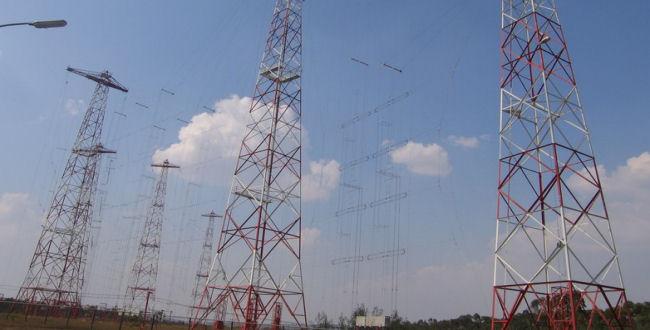
Ivo IvanovP.S. SW txs Kostinbrod & Padarsko will be destroyed in the next few months.
Heartbreaking. It sounds as though the decision was swift, with little regard for those good station operators and others who work at Radio Bulgaria, nor for those who listen to its broadcasts.
Is this a sign of the times?
Weak Economy + Strong Internet = Shortwave Closures
This is, sadly, a prime example of what is happening to many international broadcasters. It’s that combination of shortwave radio listenership being on the decline (in parts of the world connected to the internet; my apologies to our kind readers who are the exception) while our weak global economy forces belt-tightening in governments and other organizations which support international broadcasters. Shortwave programs, which can be costly, often find themselves “justifiably” lopped off. After all, it’s much more difficult to gather listener numbers than to track internet users and outlets over the internet. But most heartbreaking, those who actually listen to and rely upon shortwave are the least able to protest these closures. These listeners tend to be people who have no internet, and often live in remote, impoverished parts of the world.
Imagine you live in central Africa, for example, and tune into your radio every day for your world news. Then one day, you attempt to tune in a favorite station program, but find only static…Have you made an error? You tune again, but the station is nowhere to be found. Then the next week, another favorite is absent…and another…
Here, in North America, I have very little ground to stand upon when complaining about shortwave closures. I have excellent internet access and some local radio, internet and TV outlets to turn to for news, music and more. When I stand up for shortwave broadcasters and protest closures, it’s for those I just mentioned, those without a voice.
Here in the US, I can’t help but draw an unlikely analogy. I grew up in a small blue-collar town that manufactured furniture–lots of it. My father worked for a furniture factory his entire life. Indeed, almost everyone I knew had someone in their immediate family who built furniture. Something strange happened in the 1990s, though; suddenly, it became cheap, very, very cheap, to manufacture furniture abroad. As our local manufacturers started competing with others whose prices were supported by cheap foreign labor, locals felt the pull to move much of their manufacturing abroad too.
We put all of our eggs in the least expensive, most convenient basket. Today, in our little hometown, there are massive factories that have been sitting dormant for nearly a decade. They have no equipment inside, they have no skilled labor to build things. But that’s not the worst of it: now, we couldn’t manufacture something if we needed to. We’ve exported our entire infrastructure. Family and friends are without jobs, and this is the reason. The same could be said of many, many other industries throughout the world.
Let me be clear: I’m no opponent of international trade–just like I’m certainly no opponent of the internet–but if we invest everything in the internet, we may very well lose our ability and means––our infrastructure––to broadcast over shortwave, should we need to do so in the future. Already, there are many examples in which we need to do so.
I urge you to contact Radio Bulgaria via email (above) and sign the online petition at Save Radio Bulgaria. Whether or not we can stop this closure, I am uncertain, but we can make our voices heard.
 (Source: