Category Archives: Ham Radio

“When everything else fails, amateur radio will still be there—and thriving”

IMG_6686

(Source: ARS Technica)

by Rupert Goodwins

It’s a good time to be technical. Maker communities are thriving around the world, tools and materials to create and adapt are cheaper and more powerful now than ever, and open source hardware, software, and information mean that if you can think it, you can learn how to do it and then make it happen.

For one group of technological explorers, this is more than just a golden age of opportunity: it’s providing the means to save one of the oldest traditions in electronic invention and self-education, one that helped shape the modern world: amateur radio. That matters.

Radio amateurs get a sweet deal, with effectively free access to many gigahertz of the same radio spectrum that companies pay billions for. They’ve earned it. Throughout the history of electronics, they’ve been at the borders of the possible, trying out ideas that commerce or government deem impossible or pointless—and making them work. One example of hundreds: Allied military comms in World War II needed a way to reliably control the radios used by front-line forces, replacing tuning knobs with channel switches. Hams had the answer ready and waiting: quartz crystal oscillators. (That’s part of computing history too—you’re probably using about ten of them right now.).

[…]Then, there’s backup. Take the European HAMNET, for example. That’s a four-thousand-node high speed data network covering a large part of continental Europe and providing full IP connectivity at megabit speeds. It connects to the Internet—ham radio owns 16 million IPV4 addresses, believe it or not—but is independent of it, doing its own robust and flexible routing. If the Internet was to go away, HAMNET would still be running. The same’s true of nearly all ham radio infrastructure: when everything else fails—power, comms, roads—ham radio is still there, and these days it can be a full-fat digital medium.[…]

Continue reading at ARS Technica…

Steve notes the ITU-R Recommendations on Radio Noise

SX-99-Dial

Commenting on our post about the FCC Noise Floor Inquiry, SWLing Post contributor, Steve Yothment writes:

One of the definitive documents on Radio Noise is the ITU-R Recommendation on Radio Noise, version P.373-12. This (latest) version is dated 07/2015, so it’s only a year old. You can download it [as a PDF] here. It has a lot of info on natural and man-made radio noise.

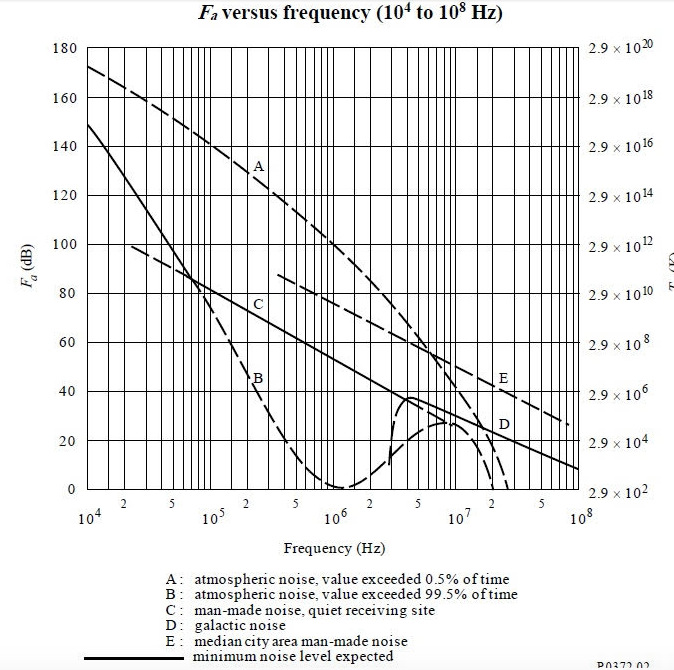
My favorite graph from the document is shown below:

Graph

It shows the level of radio noise vs. frequency for good and poor conditions. It can be rather surprising how noise, even under the best conditions, can be quite excessive on shortwave frequencies. For example, the best case noise level for 10 MHz is about 30dB above the Johnson Noise level. (That’s the noise level from just a resistor at room temperature.) That’s why the noise level in your shortwave receiver’s speaker gets so much higher when you attach the antenna!

That is fascinating, Steve! It’s no wonder we struggle with noise issues–even in the best of times, it appears.

FCC Noise Floor Inquiry

FCC-Public-Notice

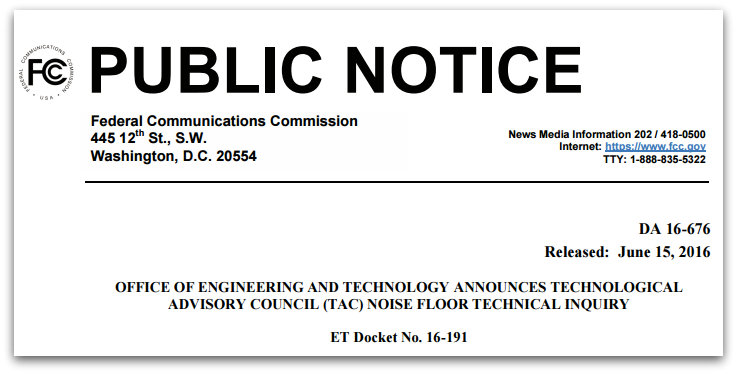
Many thanks to SWLing Post reader, Bill, who shares this public notice from the FCC:

Comment Deadline: August 11, 2016

The FCC’s Technological Advisory Council (TAC), an advisory group to the FCC operating under the Federal Advisory Committee Act, is investigating changes and trends to the radio spectrum noise floor to determine if there is an increasing noise problem, and if so, the scope and quantitative evidence of such problem(s), and how a noise study should be performed. In this public notice, the Office of Engineering and Technology (OET) announces the TAC’s public inquiry, seeking comments and answers to questions below for the TAC about radio spectrum noise.

Click here to download a PDF of the full notice.

It’s at least encouraging that the FCC is investigating radio noise/interference–a serious issue for radio enthusiasts. Note that the comment deadline is August 11, 2016.

Thanks again for the tip, Bill!

URE: Radioaficionados available as free download

RUE-Spain-HamRadio

(Source: Southgate ARC)

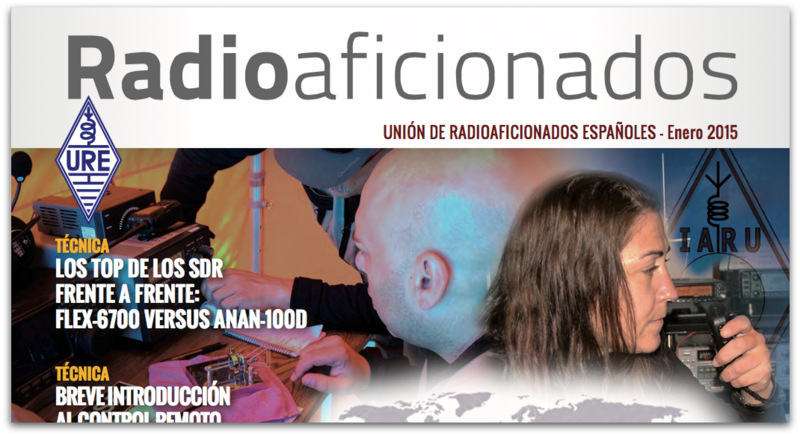
Spain’s national amateur radio society the URE has made annual compilations of its magazine Radioaficionados available for free download

PDFs of the magazine are available from 2001 to the end of 2015.

To download each year click on the Descargar buttons at
http://www.ure.es/component/docman/cat_view/110-revistas/156-.html?orderby=dmdate_published

URE website in Google English
http://tinyurl.com/SpainURE

eBay find: LNR Precision LD-11 transceiver

LD-11 eBay

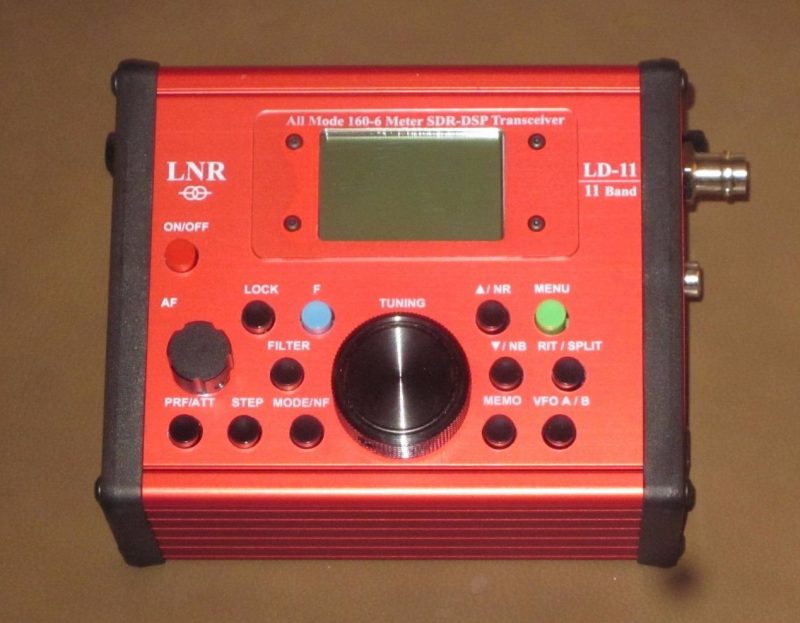
Many thanks to SWLing Post contributor, Mario, who notes this first appearance of the LNR Precision LD-11 transceiver on eBay.

I must say, I’ve been using the LD-11 for the past couple of months and have been pleased–it’s a fun little radio with the added bonus of broadcast band reception (see my previous post). I’ve used it in no less than four NPOTA activations.

Mario and I do not know this eBay seller, but it appears the seller is in decent standing with eBay.  In the past 12 months, the seller has had one negative review that appears to have been in error (the comment in questions was very positive, but marked as negative by a new eBay user).  Do your research if you consider bidding.

Click here to view this LD-11 on eBay.

ARRL reaches agreement with national association of homeowners associations

ARRL

Many thanks to SWLing Post contributor, Marty, who writes:

Hi Thomas,

I just came across this interesting new item about ARRL reaching agreement with Homeowners national association on antenna restrictions:

http://www.arrl.org/news/arrl-community-associations-institute-find-common-ground-on-parity-act-language

Regards,

Marty

[Excerpt from ARRL new item]

[The] ARRL did not have the final language for the substitute amendment until late last week, and the amended bill has not been introduced in the House as of yet. ARRL planned no announcement about the text of the amended House bill until it was introduced. However, because the text became available from the House Office of Legislative Counsel, and as CAI released the text to its members, it was decided to release the amended text now.

“The bottom line,” Imlay said, “is that if the bill is enacted, it would allow every amateur living in a deed-restricted community — for the first time in the history of Amateur Radio in the U.S. — the ability to install an effective outdoor antenna.”

“That would benefit thousands of current and future hams living in deed-restricted communities,” Lisenco added.

Thank you for the tip, Marty! Though I have never lived in a deed-restricted community, I imagine this will be welcome news to those amateur radio operators and radio enthusiasts who do.

1953 film anticipates the transistor’s impact on technology

TheTransistor-Film

Many thanks to an SWLing Post reader who shared this brilliant 1953 documentary film about the anticipated impact the transistor could have on technology.

Here’s the film description from the AT&T YouTube channel:

Made between the 1947 invention of the transistor at Bell Labs and the 1956 awarding of the Nobel Prize for Physics to its creators, this documentary is less about the discovery itself than its anticipated impact on technology and society. The intent of the film was clearly to give the public of that era their first understanding of what a transistor was and why it mattered so much.

Made for a general audience, the film provides a clear and concise presentation on technological developments that began with the vacuum tube, showing different types of transistors and explaining the significance in their ultimate replacement of tubes.

Included are visions of “things to come,” concepts and creations of how the small transistor might free up an encumbered world: the wrist radio, similar to Dick Tracy’s, but with a cool lapel sound speaker worn like a boutonniere; a portable TV set, which must have seemed astonishing at the time given the huge, heavy cabinetry required to accommodate the plethora of tubes inside 1950s TVs; and the “calculating machine,” or computer, whose size, we’re told, will one day be so reduced because of transistors that it will only require “a good-sized room” rather than a space the size of the Empire State Building. The concept of how small computers could be still remained decades away.

While The Transistor’s vision of the future seems somewhat quaint in retrospect, it captures a moment in time before the transistor became ubiquitous; a time when Bell Labs wanted the world to know that something important had occurred, something that was about to bring tremendous change to everyone’s daily lives.

Click here to view the film on YouTube, or simply watch via the embedded player below: