Regular SWLing Post readers know that I’m a sucker for vintage radios––especially those of the WWII era. Indeed, I’m pretty much a fan of anything from the 1930s and 40s. I love the technology of that era and have an affinity for the culture and history, especially film and music.
Last year, I acquired a beautiful Scott Marine Radio Model SLR-M––a receiver that quickly became the centerpiece of my modest vintage radio collection.
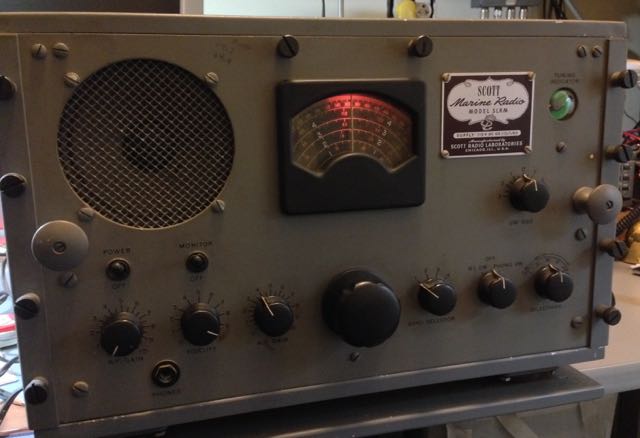
Scottie (yep, I call her Scottie) produces beautiful, rich audio from her internal speaker. It’s truly an amazing piece of over-engineered technology that still sounds this good after 70 years.

Edythe Wright
Only a week or so after plugging Scottie into an antenna, my wife and I picked up a $1 CD at a church yard sale. The CD featured big band music from the late 30s/early 40s. Though we already had much of the music on the CD, we bought it anyway to keep in our car. One beautiful fall day, I was driving down a rural road and had the CD playing when a Tommy Dorsey recording of “The Music Goes Round And Round” with Edythe Wright on vocals, began playing. It had been ages since I heard this song…I then wondered how many GIs might have heard this song during WWII via GI Jive or the Armed Forces Radio Network. Perhaps they heard it on the Navy version of my Scott Marine radio, the Navy REH?
It was then I decided to finally pull the trigger and order a proper low-power AM transmitter for our home––something with which I could broadcast period music via my vintage gear.
There are a number of AM transmitters on the market, but the one that always stands out from the crowd is the SSTRAN AMT3000. My buddy, The Professor, has one and uses it to consume much of his digital audio content including podcasts and Internet radio stations. He sang the AMT3000’s praises, and I trust the Prof; he’s something of a medium wave guru.
Thing is, the AMT3000 only ships as a kit. In the past, this had stopped me from ordering the transmitter as I figured it was more than my beginner kit-building skills could manage. But after building David Cripe’s Ozark Patrol regenerative receiver, and loving the experience, I felt confident enough to make the order.
And, boy, am I glad I did!
The SSTRAN AMT3000 kit
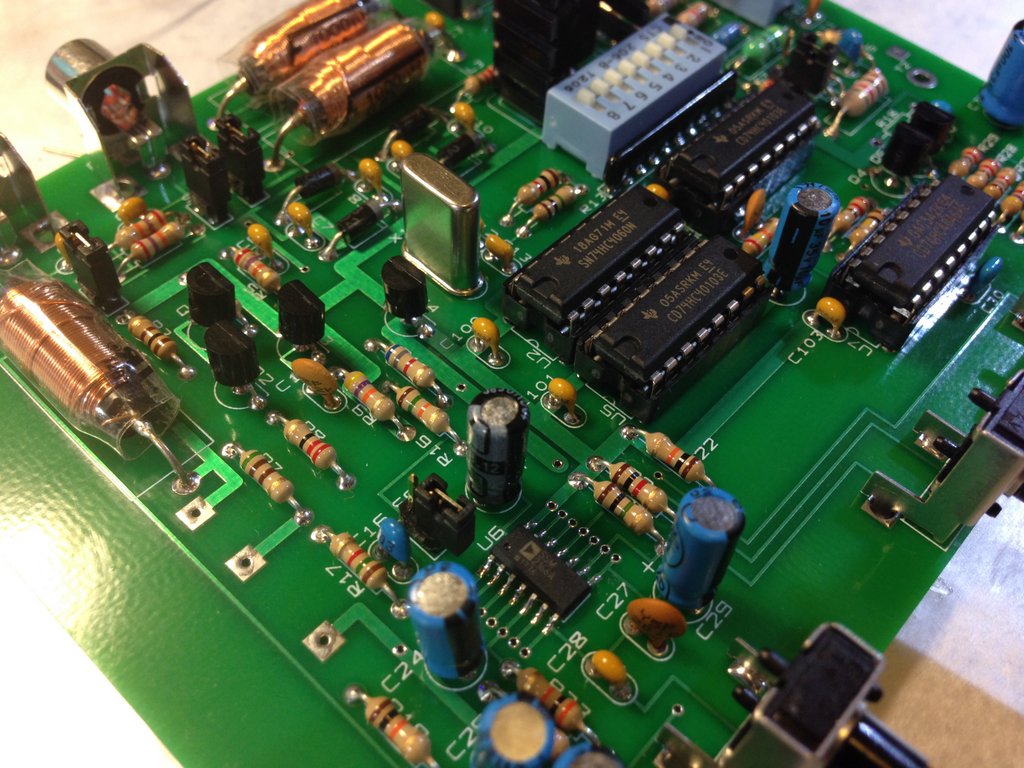
The kit arrived within a few days of ordering it. Upon unboxing it, I felt like I had gotten my money’s worth, as it was packaged carefully in a quality box: components were clearly labelled in their own poly bags, the board was clearly marked with component numbers and the assembly/instruction manual was in a plastic binder, all clear and straightforward.
SSTRAN suggests taking your time building the kit, as there are a lot of components to solder, and you risk making mistakes that aren’t necessarily easy to remedy if you rush through the process. I tried to follow this advice––well, I intended to follow this advice. Thing is, I find it very difficult to put down a kit once I’m in the zone, so I zipped along a bit more quickly than I intended.
But it helped that SSTRAN took out a lot of the head-scratching and guesswork; the process couldn’t have been more smooth. I carefully checked and double-checked each component and marked it off the assembly list. First, you install all of the resistors, then capacitors, and on to other components. Other than having to hunt for some of the component locations on the board, it really was quite simple.
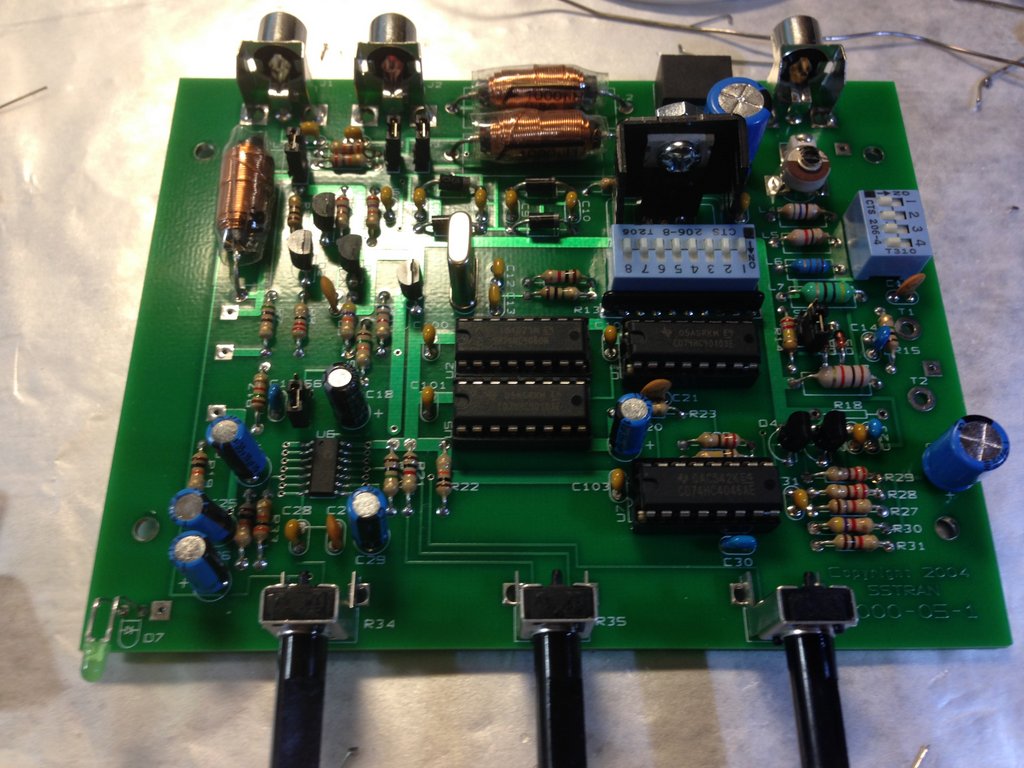
I started building the kit on a Friday afternoon and actually finished it the following Saturday morning. Much to my delight, after performing the tuning procedure, the transmitter worked on the first go. Whew!
Powerful (low power) broadcasting
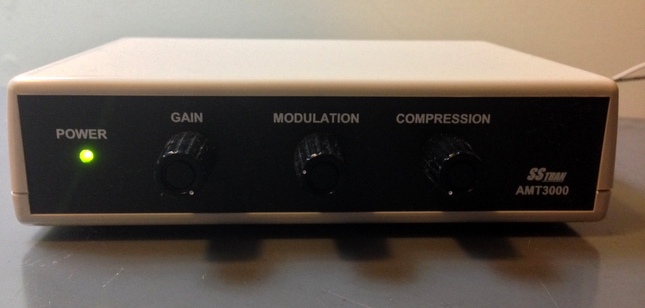
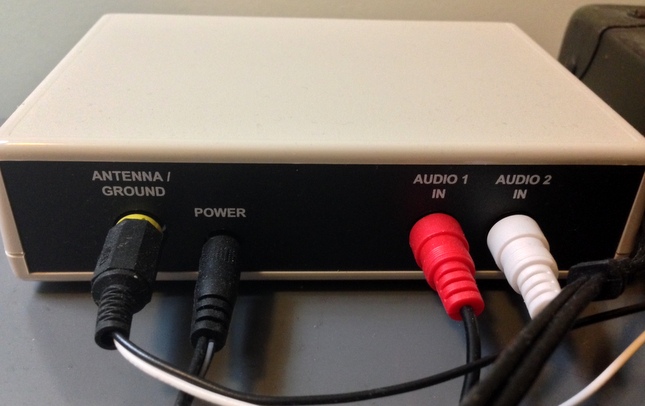
The AMT3000 can be configured to work with the supplied simple wire antenna, which will essentially broadcast AM to radios throughout your home, or it can be configured for a Part 15 compliant outdoor base-loaded vertical antenna which will extend your range up to 3/4 of a mile, should your shack be down the road or in an outbuilding.
For the moment, I have my transmitter set up for in-house broadcasting only. If I ever want to build the base-loaded vertical, I only need to make a simple modification to the board to do so.
The supplied manual does a great job of explaining the best ways to maximize your signal, reduce any electrical hum and tweak your audio fidelity.
I’ve been using the AMT3000 nearly every day since I finished building it in mid-November. It seems to have a 100% duty cycle, does not overheat, and has no drift.
It produces high fidelity audio with a flat frequency response––and of course, with modulation and compression controls, you can tailor the audio to your particular taste.
Result? It sounds amazing piping WWII-era tunes through my Scott Marine SLR-M, Hallicrafters SX-24, and SX-99 and my Hammarlund SP-600.
As a bonus, I can hook my shortwave receivers up to the AMT3000 and listen to received audio via other radios throughout my house. Many times, I’ve listened to live broadcasts of ERT Open on 9,420 kHz via my kitchen AM radio…Very cool!
I also hook the AMT3000 up to my shack PC and stream my favorite internet radio station: the UK 1940s Radio Station via TuneIn radio. Absolutely brilliant!
I set my transmitter to 1410 kHz, and have left it there. You’ll need to do a medium wave (AM) survey to find the clearest spot on your AM dial. I’m sure results will vary, depending on the level of medium wave broadcast activity in your area.
Here’s what my Scott Marine SLR-M sounds like playing “March of the Toys” by Tommy Dorsey and his Orchestra via the SSTRAN AMT3000 (note that this was recorded with just an iPhone, so audio fidelity is somewhat lacking):
Conclusion
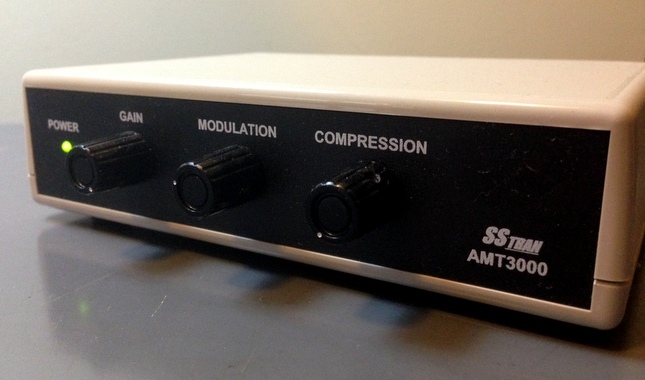
If you’re looking for a high-quality, low-power legal AM transmitter, I highly recommend the SSTRAN AMT3000. Even if you’re a novice kit builder, with time and patience, you can successfully construct the AMT3000, too. If I did it, you certainly can!
If you’d prefer buying a pre-assembled AMT3000, they do occasionally turn up on eBay. Click here to search.
As for me, I’m happy to have achieved my modest goal of being able to broadcast 1930s and 1940s music to vintage radios of the same era.
SSTRAN sells the AMT3000 directly on their website. Click here to view.
SSTRAN AMT3000 Models and Prices (via SSTRAN)
AMT3000
10 kHz channel spacing for use inside North and South America. Includes enclosure and 120 Volt AC Adapter. The single surface-mount IC is pre-soldered on the board.
Price: $92.95
AMT3000-9K
9 kHz channel spacing for use outside North and South America. Includes enclosure and 120 Volt AC Adapter. The single surface-mount IC is pre-soldered on the board. *
Price: $92.95
AMT3000-9KNT
Same as AMT3000-9KSM, except the US-standard 120 Volt AC Adapter is not included. **
Price: $88.95