Category Archives: Mediumwave

Creating a global network of inexpensive remote SDRs

U_Twente_SDR

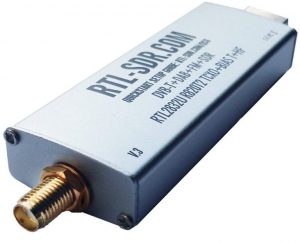
Many thanks to SWLing Post contributor, Mark Fahey, who replies to Ivan’s preliminary review of the V3 RTL-SDR dongle:

With Shortwave SDRs (the receiver dongle) now costing less than $20, the time has come for us to set up a global group of receivers that we can all log into at will!

RTL-SDR-RTL2832U-e1471375714199Have a look at SDR.hu – here you can put your SDR dongle on line and share it with anyone and they have full control of the receiver just as if it was in their own shack.

Imagine receivers scatted around the world – South America, Tropical Asia, Africa! The cost is now virtually nothing, all that is needed is the dongle, antenna (doesn’t have to be anything special – even a long wire or whip) and a small low cost CPU (Raspberry Pi for example).

Anyone else interested in this dream? Lets get together, get some receivers setup and then talk about our experience in a kick-ass presentation at the 2017 SWL WinterFest in PA!

Also… I am very soon to receive my KiwiSDR matched to a BeagleBone CPU. It will be online at SDR.hu and four remote listeners will be able to tune the full shortwave bands independently, its like my own Twente setup! Heaps of others are getting receivers online in the next few months with KiwiSDRs, this is going to be totally amazing!

I agree, Mark! While there is already quite a network of remote SDRs and receivers in the world, the barrier of entry keeps getting lower and lower. It’s hard to imagine that $25 can buy an SDR that natively covers the shortwave and mediumwave bands!

There’s only one other requirement for an online SDR that Mark didn’t mention: a decent Internet connection. Sadly, this is the only thing keeping me from hosting a remote SDR here at my home. I considered purchasing a KiwiSDR like Mark, but my upload speed (0.2-0.3 mbps) is so terrible and so unreliable that I could only host one listener at a time at best. You can bet that as soon as my ISP upgrades our service, I’ll launch a web SDR as well.

Of course, I’m willing to bet that most SWLing Post readers have more than enough bandwidth to host a $25 remote receiver! Let’s make Mark’s vision a reality!

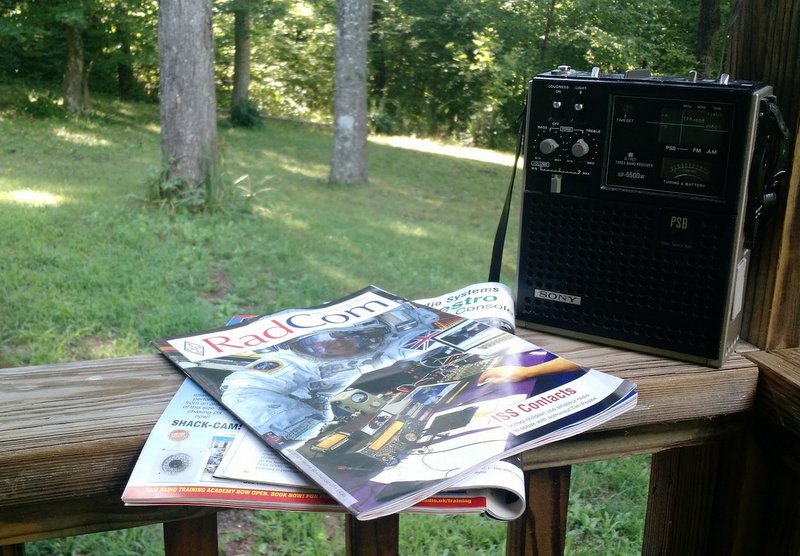
The Sony ICF-5500W: My morning companion

Sony-ICF-550W-RadCom

I spent this morning doing a lot of work around our property. When it was time for a break, I turned on my trust Sony ICF-5500W and tuned to WTZQ: one of my favorite regional AM braodcasters. Though WTZQ is over 30 miles from my home, any good AM radio, like the ICF-5500W, can receive their 1,000 watt signal with ease.

As luck would have it, when I turned on my 5500W, WTZQ started playing Love Me Do by The Beatles. It sounded absolutely amazing via the 5500W’s internal speaker: full-on, rich AM audio fidelity! Absolutely brilliant!

I cranked up the volume so our local black bears could enjoy.

I relaxed a good half hour, and caught up on reading the latest two issues of RadCom with my ICF-5500W playing WTZQ in the background.

Sometimes it’s the simple stuff that starts one’s morning off the right way.

That and plenty of good coffee.

Hello all,

A few nights ago during great propagation in the Medium Wave band I had the opertunity to DX Radio Capital from Lima, Peru all the way to Northern Ireland. I was planning to sleep early but favourable conditions on MW prompted me to have a late night to chase DX. I have had this confirmed to me by a few very well known MW DX’ers.

Swlingperumw

The equipment I had used to get this catch were as follows ;

• Lack of sleep & plenty of caffeine

• SDR Play RSP with ferrite chokes

• Wellbrook ALA1530LN Active Loop Antenna with coax running out of the electric field of my house and ferrite chokes attaches at parts


Jordan Heyburn (MI6JVC) is the author of this post and a regular contributor to the SWLing Post. Jordan is an avid shortwave listener, ham radio operator and shortwave presenter/owner of Radio Northern Ireland. Jordan is based in Northern Ireland.

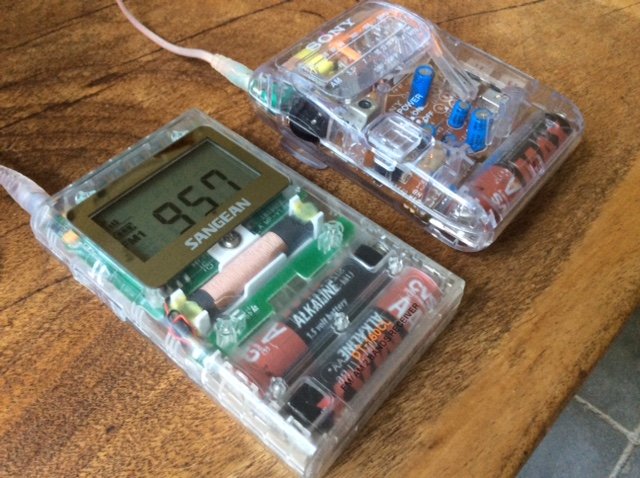
Update: Sangean DT-160CL v Sony SRF-39FP

Sangean_DT-160CL_21

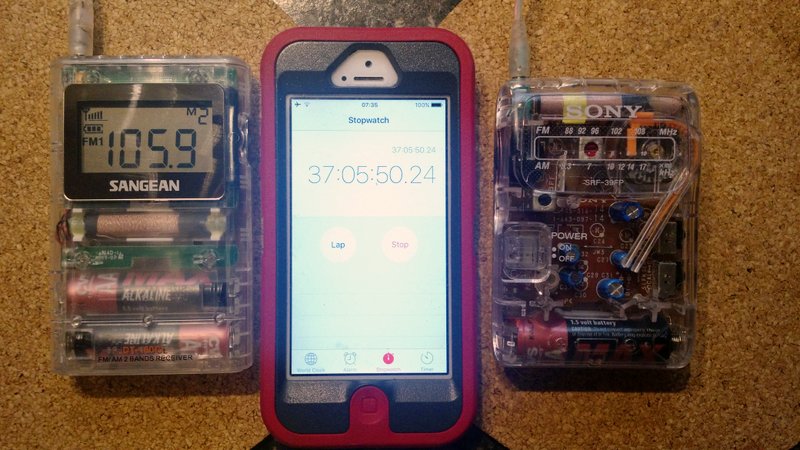
It’s been thirty seven hours since I started the Sangean DT-160CL versus Sony SRF-39FP endurance test and both radio are still going strong.

Sangean-DT-160CL_and_Sony-SRF-39FP

So far, the DT-160CL’s battery indicator still shows full voltage. The SRF-39FP has no battery indicator, but through experience I know it’s nowhere close to quitting.

I’ve spent some time tuning both radios and comparing them on mediumwave/AM and FM.

The DT-160CL does an amazing job on the FM band and has a definite edge on the SRF-39FP.

On AM, however, the SRF-39FP seems to wipe the floor with the DT-160CL.

In truth, though, it’s tough to evaluate performance and audio while the endurance test is ongoing, so I should reserve judgement. During the battery endurance test, I’m using the supplied earbuds from both radios. The Sangean’s earbuds a fairly large and uncomfortable in the ear–they make the audio sound hollow and too focused on mid-range tones. In truth it’s pretty much the same thing for the 39FP’s buds.

I can’t wait to use some of my proper in-ear buds on the DT-160CL and evaluate its audio characteristics on AM and FM.

Follow this review thread by bookmarking the following tag: Sangean DT-160CL v Sony SRF-39FP

Medium Wave DX: CBC Radio 1 Gander, 1400 kHz, remarkably clear signal in Oxford UK

CBC Radio 1, Gander, heard in Oxford UK

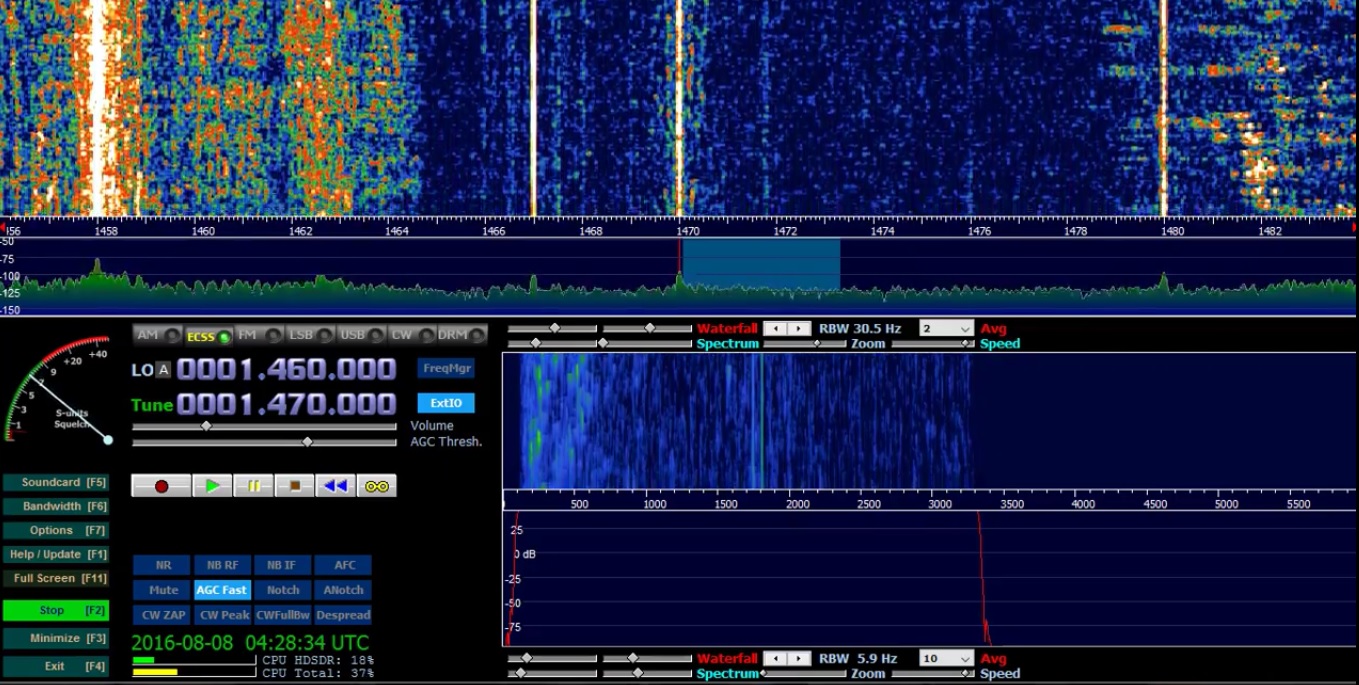
A really great signal from CBC Radio 1 Gander – the best I’ve ever heard on this or any other medium wave frequency, complete with a clear station ID and very much out of season so-to-speak. I can’t remember recording any Medium Wave transatlantic signal with an audio bandwidth filter of 7 kHz, which says everything about the relative strength of this signal; 2.5 to perhaps 4 kHz would be more typical. As the subscribers to my youtube channel Oxford Shortwave log will know, I dabble in Medium Wave DXing, however, it requires a lot of patience because conditions of good propagation can occur quite infrequently. This is where the band recording features incorporated into the Elad FDM-SW2 software (and similar software for other SDR receivers) come into their own, allowing you to record the entire medium wave band, for example, for later analysis. As for the Wellbrook ALA1530 active loop antenna, I can’t praise it highly enough, both in terms of combating QRM and overall performance as a function of compactness.

Recorded in Oxford UK using an Elad FDM DUO and Wellbrook ALA1530 active loop antenna (indoors) on 29/06/16 at 03:00 hrs UTC.

Clint Gouveia is the author of this post and a regular contributor to the SWLing Post. Clint actively publishes videos of his shortwave radio excursions on his YouTube channel: Oxford Shortwave Log. Clint is based in Oxfordshire, England.


Selecting a budget antenna for urban radio listening

Urban-City-Cityscape

Yesterday, an SWLing Post reader contacted me with questions regarding budget antenna choices for an urban apartment. He’s about to purchase an SDR, but knows that a decent antenna capable of coping with urban radio interference is a critical component.

I suggested that, since I’m no expert with urban interference, he pose his question to the SWLing Post community. Here’s his reply and request:

I know I’m a little behind some of my other radio friends, but I’m finally moving up to a software defined radio. Specifically the affordability of the SDRplay RSP and all good reviews for it have encouraged me to make the leap.

The SDRplay RSP software defined radio

The SDRplay RSP software defined radio

I suppose it should go without saying that once I purchase an SDRplay I would like to use it, which might not be so easy. I live in a big city full of RF pollution, and most of my listening will be in a room where there’s a fair amount of electronic gadgetry.

So, without spending a lot of money, I’m curious if any of your readers might have suggestions about what I might purchase as a “starter kit” for a new SDR user in such a scenario. I also plan to take the SDRplay with me when I have forays out of the city, but I envision that some sort of long wire might be sufficient for listening out in the countryside.

I live on the second floor in an urban apartment, and have two windows in the room where I’ll be listening. There is zero chance that I can hang or attach anything on the outside of the house here. So, my most pressing question is about antenna ideas. I’ll need something inexpensive, as I mentioned, and something “off the shelf.” I don’t have the skills or tools to really “build” anything, unfortunately. So is there some less than pricy antenna or antennas I should look at? Or is there some hope of doing something with a long wire indoors?

Tecsun AN-100 portable loop antenna

Tecsun AN-100 portable loop antenna

And will my little Tecsun AN-100 AM loop antenna going to help me at all? I mostly plan to listen to MW and the HF bands, but I will inevitably check out signals far up the bands as well. So advise about listening to these bands is also of interest to me.

Other than that, I understand it’s important to attach the SDR to the laptop with a USB cable with ferrite chokes. And it probably wouldn’t hurt to buy some extra ferrite chokes to attach to other cables I might be using. I also plan to buy a NooElec mini-balun for use with a long wire antenna, and I already purchased a PowerMate USB knob because I still prefer to do my “tuning” that way.

So other than those basics my questions would be regarding connecting cables and adapters, and the best lengths of cable to use. Should I have some cable between the balun and SDR? I believe I’ve read that it’s better to have a longer USB cable and a shorter coax to the antenna, correct? And when it comes to using a wire antenna, are there preferences as far as what type or gauge of wire to use?

I am also interested in any general suggestions or tips from SDR users on getting started. In general, I’m pretty good with navigating through software, it’s usually the hardware issues that stump me. I’m looking to spend between $100 to $150 tops on everything besides the SDR, and I’d like to hear about peripherals, cables, adapters and connectors which when added all together won’t bust my bank.

I’m sure there’s plenty of people who read this wonderful blog who have plenty of useful knowledge regarding SDR listening on a budget. And I hope a few could share a little of their experience and collected wisdom on this topic here, for me and for others considering turning their computers into receivers…

Indeed. I appreciate this reader’s question, since many listeners live in environments with heavy radio interference. While we’ve published a number of posts touting the virtues of magnetic loop antennas, I don’t think we’ve ever looked for solutions at or below $150 US. While this may be a challenge, I’m also certain there are a number of readers who’ve found solutions to this problem.

So, Post readers, what might you do–or have you done–in similar circs?  Please feel free to comment, and let’s explore inventive and affordable solutions for this reader!

The AAA-1C: An affordable loop antenna amplifier kit

Active-Antenna-the-kit-product-7

I recently stumbled upon the Active Antenna Amplifier (model AAA-1C) by LZ1AQ. At 87.00 EUR, it’s a pretty affordable and flexible solution for those who would like to design or use a loop antenna.

According to the website, it packs a lot of features:

  • 4 remotely switched modes (Loop A, Loop B, crossed parallel loops A&B and dipole)
  • Each mode can be switched immediately
  • Good sensitivity and a flat frequency response
  • High dynamic range
  • Protected input from strong signals
  • High immunity to local noise with balanced amplifiers and balanced feed line
  • Balun transformer coupling for common mode noise reduction
  • Extensive documentation manuals with detailed description how to build your own small antennas

The amplifier is described as a kit because you must mount the board, wire up the antenna and set up remote switching yourself. It appears the SMT board comes pre-populated, though so I’m not sure if any actually soldering is required (perhaps someone can verify).

AAA-1B kit components

AAA-1C kit components

Click here to download the mounting instructions (PDF).

I’m tempted to purchase one this winter for use on mediumwave.

Click here for more info about the AAA-1C at LZ1AQ’s website.

Have any SWLing Post readers built and used this amplifier? Please comment!