Category Archives: New Products

Short Videos: the XHDATA D-808 Portable SSB Receiver on MW and SW

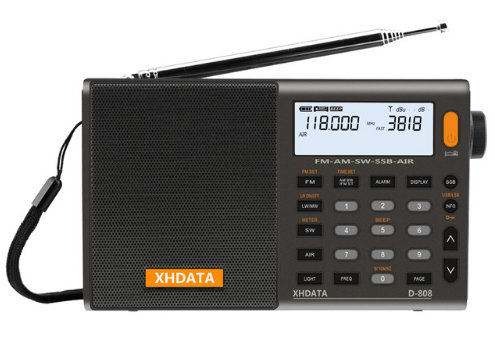
I recently received a new XHDATA D-808 SSB portable receiver, after AliExpress had a $69 USD introductory sale. I’m intrigued by this new model, as it uses the SiLabs Si4735 DSP chip, the same “brains” that powers the Eton Satellit (and Executive version), and C. Crane Skywave SSB. I believe the same Si4735 is found in Tecsun’s PL-880 and the CountyComm GP-5/SSB. A key feature found in all of these radios is USB/LSB modes and 10-Hz tuning step in SSB.
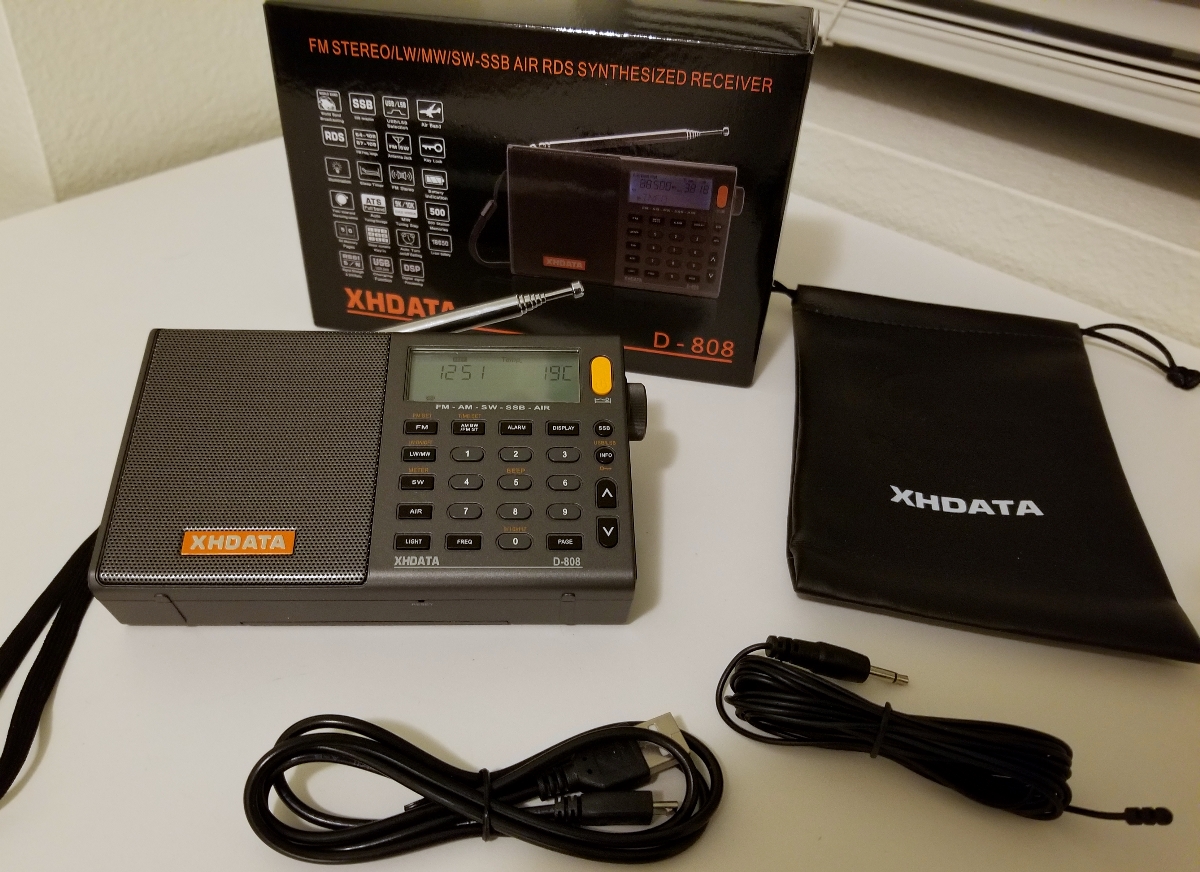
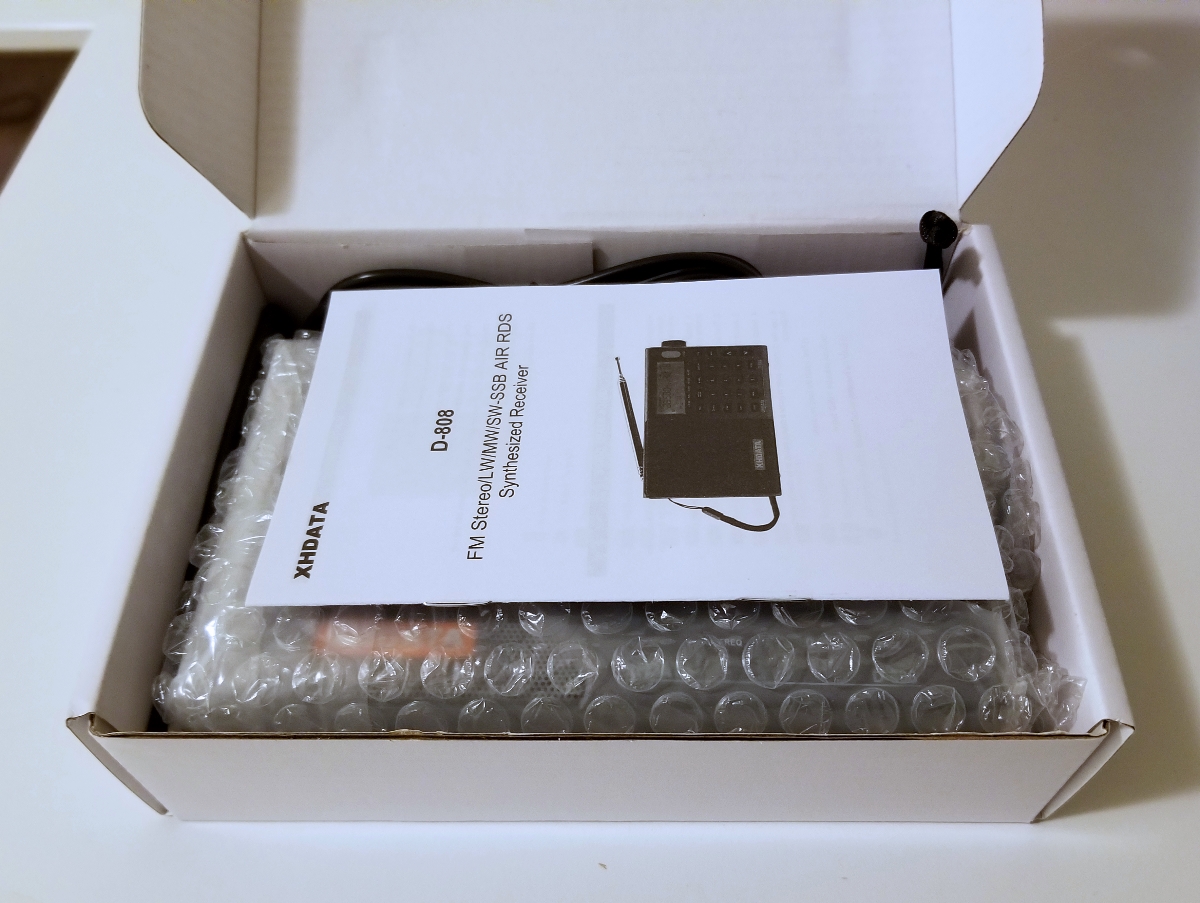
It would be a mistake to assume that all portable DSP receivers with the same SiLabs chip will perform equally; quite the opposite! They all have reception differences that owners will notice. I certainly noticed differences in sensitivity, AGC action, audio quality, and (to some extent) variations in adjacent channel (splatter) rejection between receivers using the same bandwidth. I made these observations when I owned the PL-880 and GP-5/SSB radios. Differences in the circuitry surrounding the SiLabs chip, as well the sizes of MW ferrite loopstick antennas and SW/FM whip antennas contribute to each receiver’s personality.

Below are four videos showing the D-808’s reception of three weaker daytime medium wave stations from indoors at my suburban Seattle-Tacoma (WA) home, plus one video of a shortwave reception in the 41 meter band. The XHDATA D-808 is compared to C. Crane’s newest Skywave radio, the SSB model, and the Eton Executive Satellit. Although brief, these tests show how the new XHDATA portable is a welcome competitor to the field of modern, compact SSB-capable radios:

What about single sideband? These four videos show reception in AM mode only, but rest assured the D-808 is very capable on the SSB modes of LSB and USB! A separate fine tuning rotary wheel on the right side of the radio’s case offers adjustment in 10 Hertz increments. The effect feels very similar to tuning CountyComm’s GP-5/SSB “walkie-talkie” style receiver. The plus or minus (+/-) offset is displayed in multiples of 10 Hz steps as “-1”, “-2”, “-3”, and so on.

I hope to post some future videos showing SSB usage of the D-808.

Soft mute. The dreaded soft mute is present in AM and SSB mode to some degree, but I do not feel it is excessive. Like most radio hobbyists I’m not a fan of soft muting and prefer uninterrupted tuning with no sign of “chuffing” or lowering of noise or audio.  The amount of soft mute on this radio seems the same as the Eton Executive Satellit in my opinion.

What else to like? My take–

Audio. I find the D-808’s audio quality to be slightly more mellow or warmer…I like that, especially on FM! Audio on the MW and SW bands still has a crispness that aids in DXing on those bands, however.

18650 Li-Ion battery. Not all may agree, but I like this style of battery. The D-808’s internal circuit shuts off when the battery is fully charged, or after 10 hours of charging. The radio comes with a 18650 battery and a USB cable; the owner supplies a common 5V USB charger.

RDS on FM. This is a feature lacking on the Skywave SSB, but it is present and performs as expected with the D-808. The XHDATA radio lacks the Skywave SSB’s NOAA weather presets, however.

AM filter bandwidths. Interestingly, this receiver supplies two additional narrow AM mode bandwidths lacking in the Executive Satellit: 1.8 kHz and 1.0 kHz. It’s good to have options, although such narrow filters in AM mode sound a little muffled (offset tuning helps). The Skywave SSB does offer 1.0 kHz in AM mode, but has a 2.0 bandwidth in place of 1.8 kHz.

Backlighting. If desired, the D-808’s easy-on-the-eyes white backlight for the display can remain illuminated continually. Bravo, XHDATA! Now, if we could persuade more manufacturers to add backlighting to the keys themselves (a la the Degen DE1103/Kaito KA1103/Eton E5), we’d have more choices use in low light conditions like camping or bedside use.

Handy size. Probably a third larger than the diminutive Skywave SSB, the D-808 is still a very handy size that will fit most coat pockets, and is a smaller receiver than the Eton Executive Satellit. As you can tell from my videos, reception doesn’t suffer due to the smaller size.

Design. OK, this one’s very personal! As a graphic designer I have a real soft spot for any receiver that looks as good as it sounds, no matter what the technology or vintage. The D-808’s look really appeals to me and adds to my enjoyment while operating it. There are no unnecessary protrusions, ridges, or visual do-dads on this XHDATA model. In fact, I seem some design clues from the stylish Tecsun PL-880 in the D-808. The radio also has a quality feel to the plastic case and buttons, giving it a more “upper class” impression during use.

Antenna jack. The D-808 has the standard 3.5mm antenna port on the left side of the receiver. This is an addition I appreciate, and wish that C. Crane had included one on their Skywave SSB model. I tried this external antenna jack with an amplified PK Loops’ shortwave antenna and the combination performs excellently.

Minor annoyances

So far, the list is short! As a sacrifice to style, the manufacturer has kept all front panel buttons almost flush with the case. The effect looks great, but they are almost too low and close to the front panel. Those with larger fingers may find operation awkward or frustrating. Also, entering a shortwave frequency with less than five digits (i.e., below 10,000 kHz) requires a trailing push of the Frequency (FREQ) button.

I encourage other new owners of XHDATA’s D-808 to leave their comments below. Where does this portable rate among other radios you may own?


Guy Atkins is a Sr. Graphic Designer for T-Mobile and lives near Seattle, Washington.  He’s a regular contributor to the SWLing Post.
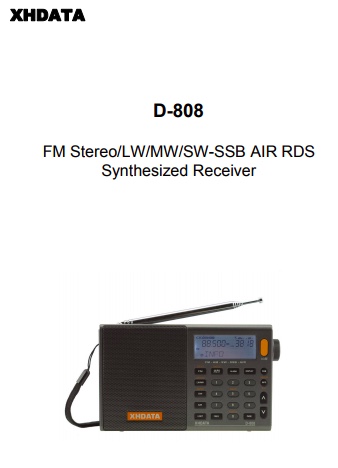
XHDATA D-808 operation manual

Click image to download manual.

Many thanks to SWLing Post contributor, Dave Anderson, who writes:

Attached is the manual for the new XHDATA D-808.  Your readers who have ordered the D-808 may be interested in downloading this:

https://www.digitalnomad.nz/downloads/XHDATA-D-808.pdf

Many thanks, Dave! I’ve ordered the D-808, so I appreciate getting a sneak peek at the manual.

I did note one thing that sets the D-808 apart from the AR-1780: the D-808 is powered by one 18650 lithium battery.

My D-808 was shipped a few days ago, but I don’t expect it to arrive for at least a couple of weeks. Anyone else order the D-808?

a.bsolument: Converting radios from vintage valve into boutique Bluetooth

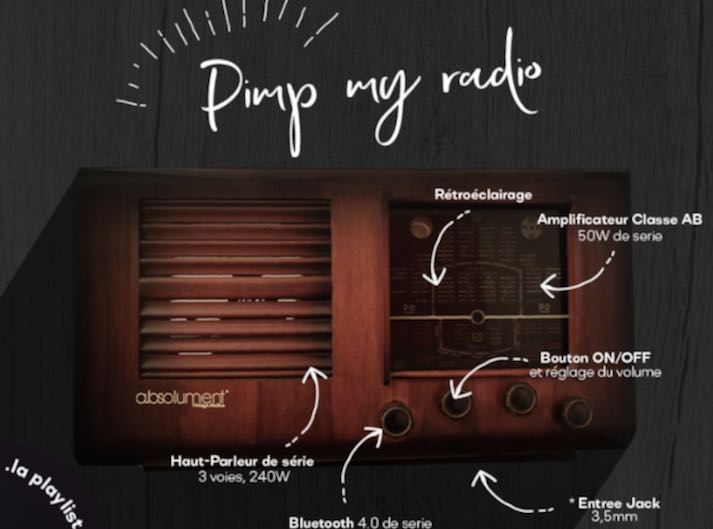
Many thanks to SWLing Post contributor, Kim Elliott, who shares this link to a French company called a.bsolument who specializes in converting vintage valve radios into hi-fidelity Bluetooth-connected audio devices.

According to a.solument’s introduction video, they take vintage radios in disrepair, gut the insides and replace the components with modern hardware which includes Bluetooth 4.0 and aux-in capabilities:

https://vimeo.com/87657532

While I LOVE vintage radios, I have conflicting feelings about this process.

I take pride in keeping my vintage gear in proper working order (through the help of a mentor). Something that simply cannot be replicated with digital hardware is the sound and warm fidelity of AM audio emanating from a valve classic. At home, I have the option of feeding all of my vintage gear Bluetooth and wireless connectivity via an AM transmitter. This allows me to play any digital content while preserving the original audio fidelity (and warming my radio room with those glowing tubes!).

With that said, I’m very much aware that it’s becoming increasingly difficult for the average consumer to find a technician who can repair tube gear affordably. Indeed, some feel it’s impossible thus toss their family radio in the trash.

If a.bsolument is giving vintage beauties–that would otherwise be in a landfill–a new lease on life, then I’m all for it!

What do you think?  Please comment!

The uBITX Transceiver: Pricing and more details

Many thanks to SWLing Post contributor, Pete Eaton (WB9FLW), who shares pricing and additional information about the uBITX general coverage QRP transceiver:

Here are the details, if purchased before Christmas $109 delivered!

http://www.hfsignals.com/

From uBITX creator, Ashhar Farhan:

1. The ubitx is now available for sale, for $109 dollars (includes the shipping), but only until Christmas. *After Christmas, the price will increase to $129 dollars. for this initial batch, a few ham volunteers and I pitched in to sort the crystals, test the coils, tune-up and box these initial kits, we won’t be able to do that any more. we will have to hire more people (which is not a bad thing) and get them to do it.

2. The ubitx is on sale at hfsignals.com, not hfsigs.com. it is easier to remember. we will soon point hfsigs.com to the new website as well. The new site is in wordpress, that means that we can have volunteers writing and updating it rather than waiting for me to hand code the content in html and vi editor.

3. We need help with proof reading the web content.* If you find any typos, please mail me on [email protected] address (not the bitx20 list),

These apart, the early buyers must be aware that they are beta users of sorts, the firmware will sure get updated. i hope there won’t be any revisions of the PCB.

Pete adds:

Just as an aside the original price of the Heathkit HW-8 was $139.95 (in 1970 dollars) and it became a QRP Classic. The uBITX may become  one as well and like the HW-8 there will be (and already are) all sorts of mods/additions one will be able to do. The uBITX is 10 dollars cheaper (after 12/25) works 80-10 M, does SSB in addition to CW, and is a Superhet to boot!

Farhan your hit this one out of the Ballpark!

Very cool, Pete!  I am very tempted to purchase the uBITX transceiver before Christmas and have it delivered via DHL service.  The only thing holding me back is simply the amount of projects I have on my table at the moment! $109 is an incredibly low price for a full-fledged QRP transceiver!

I’m absolutely amazed that it is also has a general coverage receiver.  Perhaps the uBITX could serve the SWL as well as the ham radio operator?  I suppose we shall soon find out!

Click here to read our other posts regarding the uBITX transceiver.

Click here to order the uBITX transceiver kit.

Please comment if you plan to or have purchased the uBITX. We’d love your feedback!

Update: XHDATA D-808 shortwave radio goes live

Overnight I received the following email:

This is Sylvia from global radio store in Aliexpress platform, I want to inform you that XHDATA D-808 radio will start to selling at American time 2017/12/09 13:00. The sale price is $69.98[…]

I’m sure we’d all like to hear from anyone who takes the plunge on this unit.

Troy Riedel, is the author of this post and a regular contributor to the SWLing Post. Check out Troy’s YouTube Channel here.
Pete reports new developments with the uBITX transceiver

Many thanks to SWLing Post contributor, Pete Eaton (WB9FLW), who writes:

Last March, Ashhar Farhan (VU2ESE) the designer of the very popular BITX20 and BITX40 series of mono-band HF Transceivers announced a new low cost rig called the uBITX (micro BITX) a full blown 80-10m 10 Watt SSB/CW Transceiver. Now comes word that after many months of very hard development work by Ashhar this much anticipated Rig will soon be available.

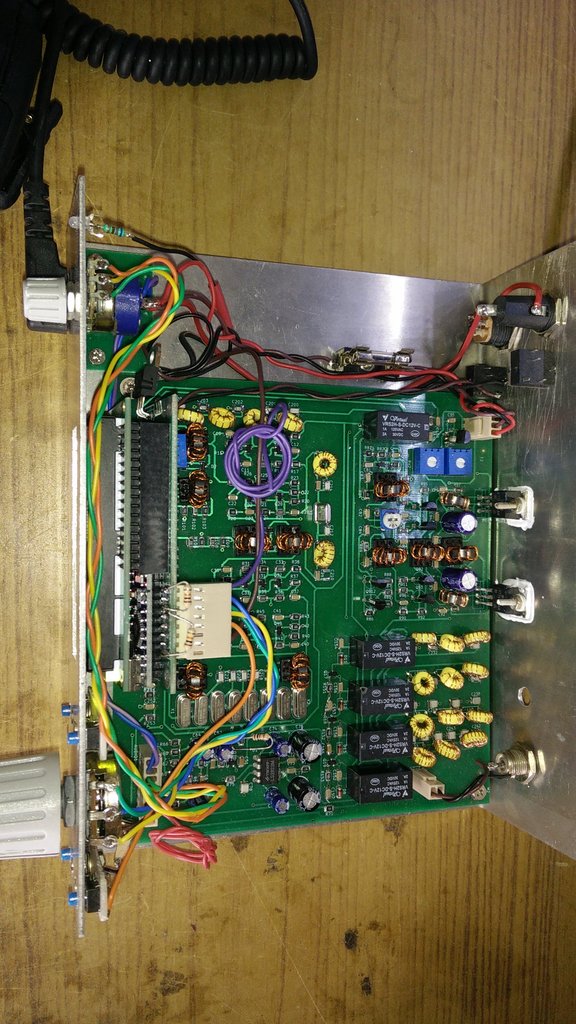
For those not familiar with the project this is *not* a kit, rather like its sibling (the BITX40) it consists of two assembled and tested Circuit Boards. The RF board measures 5.5 x 6 inches and a second small plug in daughter card that takes care of the digital portion of the design including the 2X16 LCD, Arduino Nano, and Si5351 which are used in the VFO.

Add a cabinet, knobs, and connectors and you have a full blown HF Rig! An added plus is that except for the Gerber PCB files everything else (including the firmware) is Open Sourced!

The original description can be found here:

http://www.phonestack.com/farhan/ubitx/ubitx.html

Farhan has just released the Firmware, Schematics, and Wiring Diagram for the production version on GitHub

Arduino Sketch:

https://github.com/afarhan/ubitx

RF Board Schematic:

https://github.com/afarhan/ubitx/blob/e481ea2a2457fc4e7be7a6a4bc9a0fba12bf2cde/ubitxv3.pdf

Digital (Raduino) Board Schematic:

http://www.phonestack.com/farhan/ubitx/raduino.pdf

Wiring Diagram:

https://github.com/afarhan/ubitx/blob/e481ea2a2457fc4e7be7a6a4bc9a0fba12bf2cde/ubitx_wiring.png

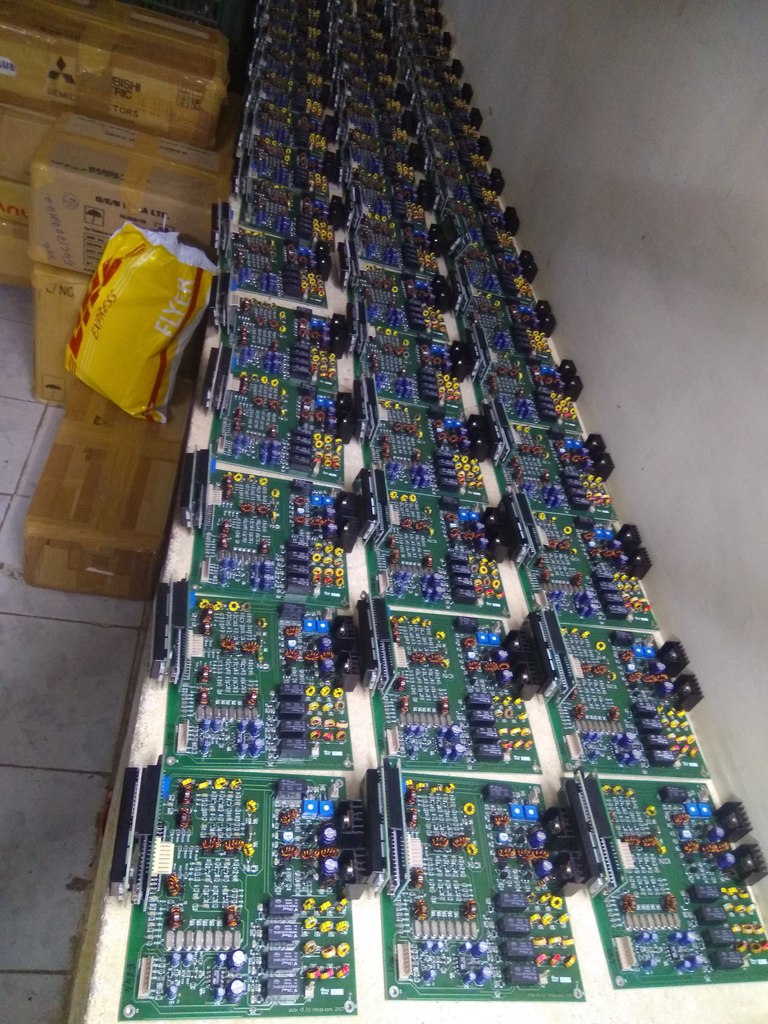
Farhan has a social conscience as well giving several local ladies much needed employment for final assembly and checkout of the Rigs.

There are still a few final tweaks being done to the design so pricing is still to be determined. But if it’s offered at a similar price point as his earlier Transceivers it should sell like hotcakes!

For the latest info check out the BITX User Group at:

https://groups.io/g/BITX20

Wow!  Amazing project!  Thanks for the tip and updates, Pete!

The C. Crane CC Skywave SSB: first production run review

[IMPORTANT UPDATE (October 21, 2018): Please note that C. Crane have addressed issues that I found in the first production run of the CC Skywave SSB. Click here to read the update and click here to read my full review of the CC Skywave SSB.]

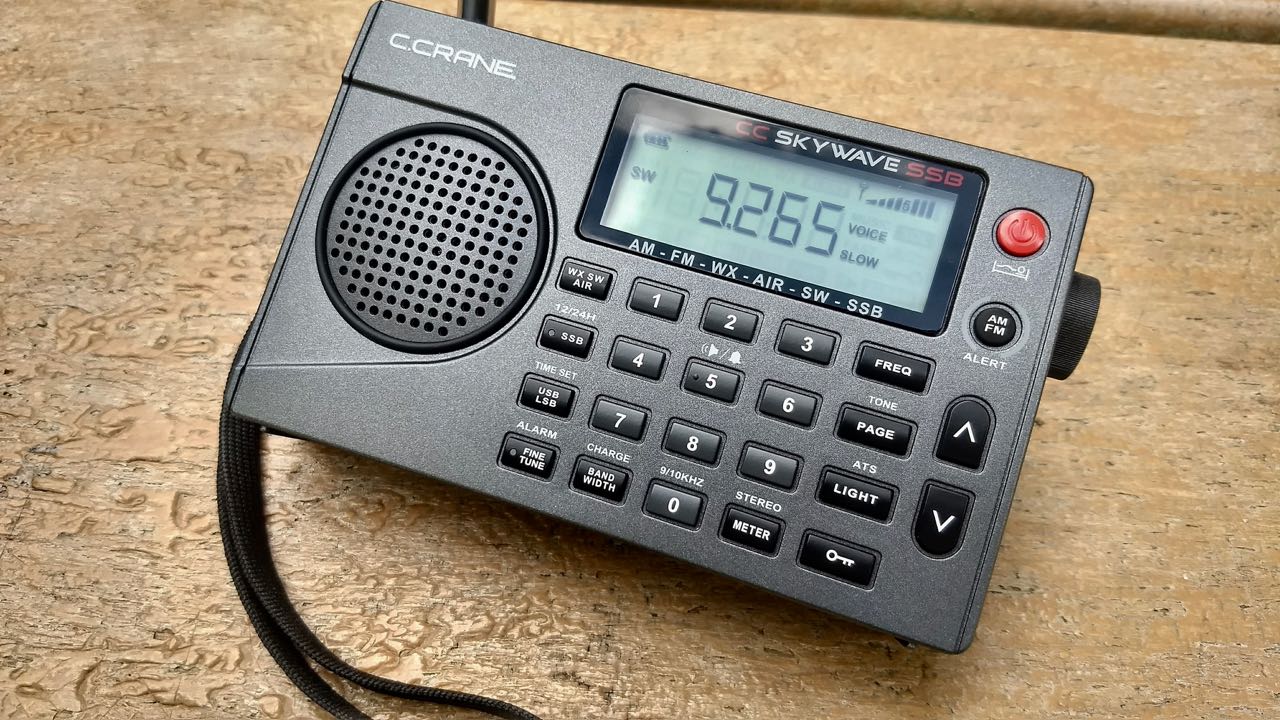
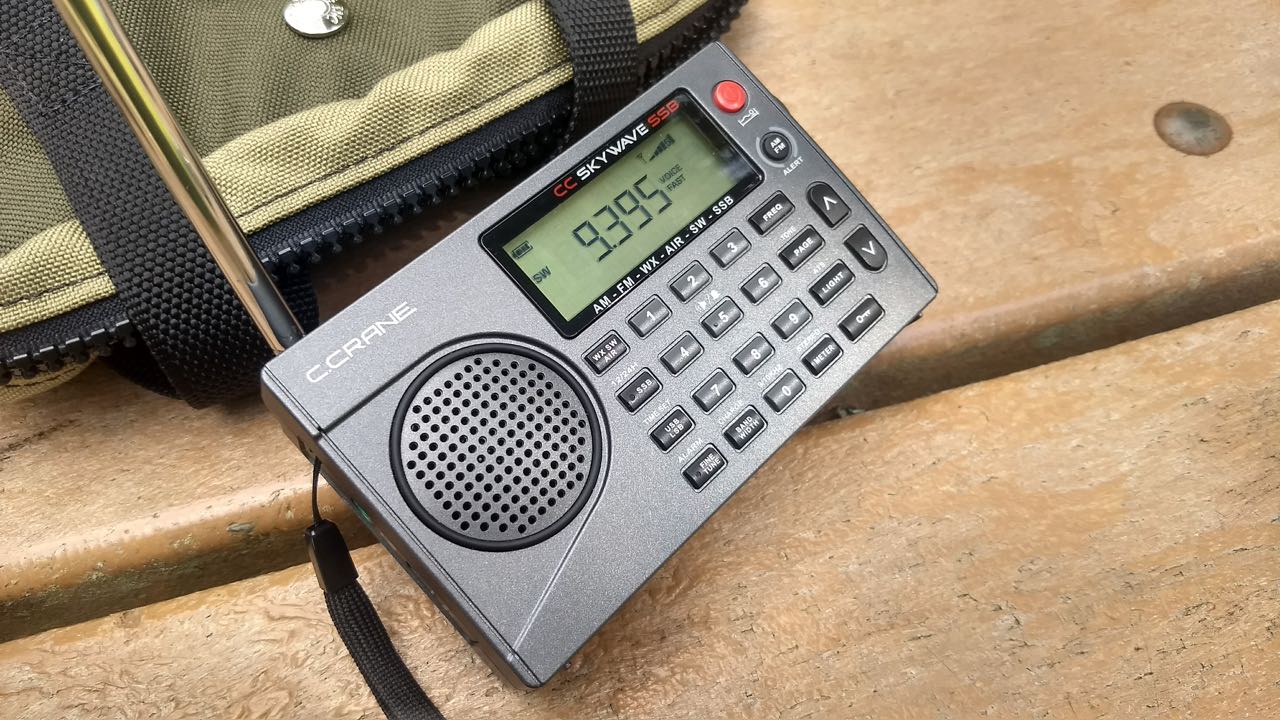
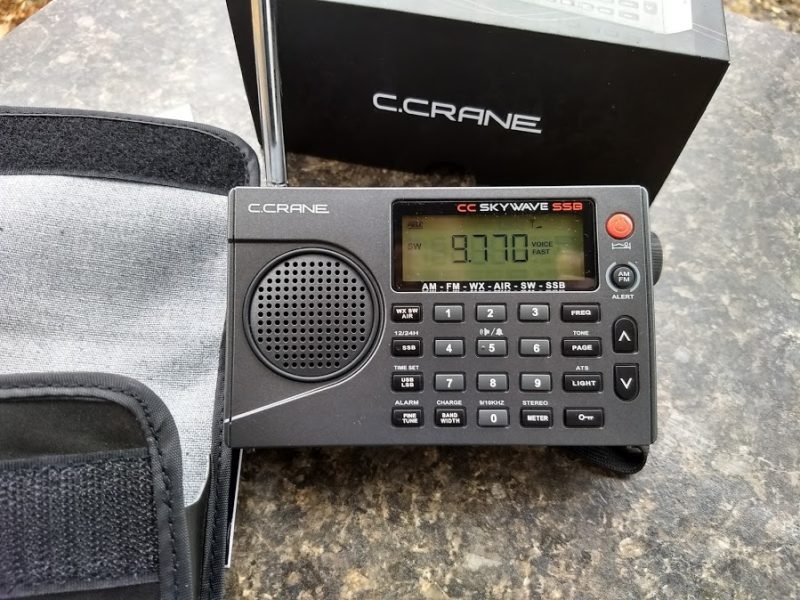
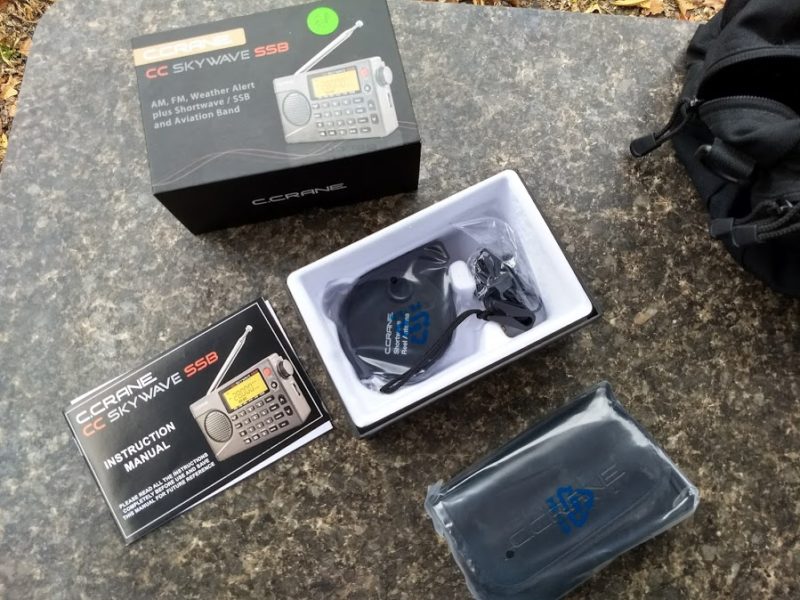
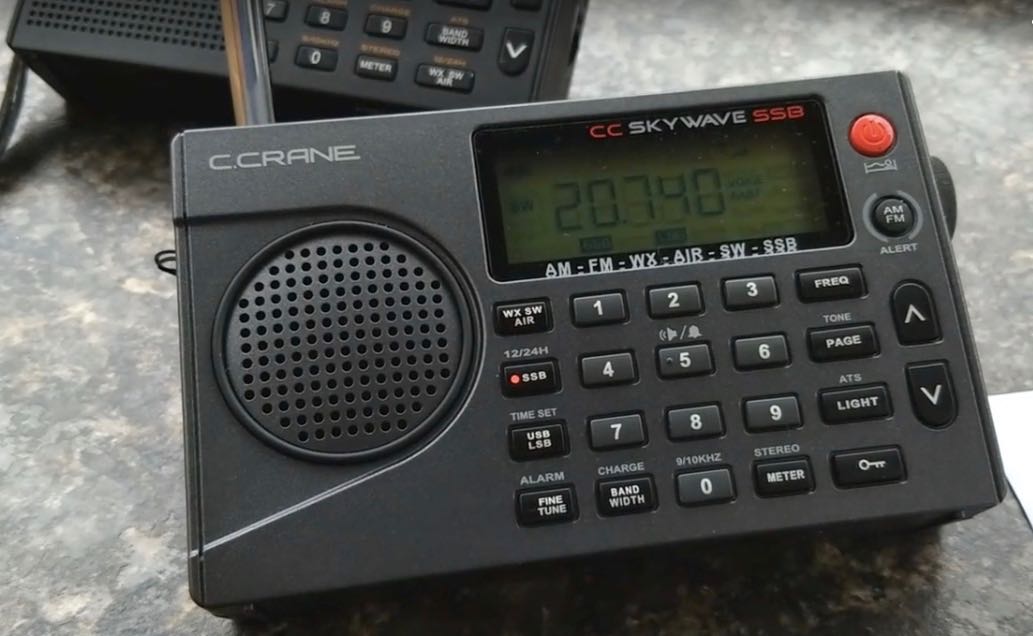
Just last month, the little radio that I found most exciting this year hit the market: the C. Crane CC Skywave SSB.

Why the appeal for me?  Frankly, since I do most of my portable radio listening while traveling, and since I typically travel out of one bag, having a compact radio with performance and features is an absolute must in my world.  Up to this point, the original CC Skywave is the radio I often choose when traveling, as it packs so many useful features: AM, FM, Shortwave, AIR band, Weather Radio, and like any good travel radio, clock, alarm, and sleep functions, lacking only SSB mode.  So it goes without saying that I was excited to see its newest edition.

The CC Skywave SSB

What follows is an account of my experience evaluating CC Skywave SSB production units, and a brief summary of their performance.

My hope is that this summary review will help readers with purchase decisions. Note that this is merely preliminary to an extensive, unabridged review that will appear in a future issue of The Spectrum Monitor magazine, then in the SWLing Post the following month.

Pre-production Skywave SSB

As many readers know, I was sent a pre-production model of the Skywave SSB for evaluation this summer.

As I mentioned in my sneak peek and reiterated to a number of inquisitive readers: I never base a product review or comment upon pre-production radios. I don’t comment about the performance of the pre-production model for an obvious reason: pre-production radios are quite simply not the versions that ship to customers upon the product release.

Now that the production model has been in the wild for a few weeks, I feel more at liberty to talk about my experience with the pre-production Skywave SSB.

In short: I have been very pleased, indeed, with the pre-production model’s performance. In terms of features, it is a nice incremental upgrade from the original Skywave. In terms of performance, it’s also tweaked in the right direction. As an early adopter of the original Skywave, I’ve been truly enthusiastic about this evaluation pre-production model.

All the notes I took while evaluating the pre-production Skywave SSB were made for C. Crane so they could hopefully implement any changes or address concerns prior to starting the first production run. But the truth is, I found the pre-production model in my possession to be quite solid, so my suggestions were minor.

Putting my pre-production model aside, I ordered an actual production unit on C. Crane’s website just like everyone else.

C. Crane kindly dispatched my unit as soon as they received the first production batch from the factory so I could get to work on the full review.

Quirks with the first production units

I was eager to get started on the review of the Skywave SSB, so as soon as I received it, I did what I always do: compared it with other radios.

I make my comparisons, by the way,  at least fifty yards from my house to separate the radios from any inadvertent sources of local noise.

Production Radio #1

My first comparison was with the Digitech AR-1780 and the original CC Skywave. I quickly noted that the Skywave SSB was very slightly less sensitive than the other radios. I had tested the pre-production unit enough to know that the Skywave SSB’s performance should at least be on par with the original Skywave.

Upon careful listening, I discovered the production unit had a very faint, internally-generated whine on some of the shortwave bands; when tuned to marginal signals, this whine manifested itself as variable background noise. Between signals it was audible as a faint background whine, hardly noticeable. With that said, the whine was most notable while tuning––since the Skywave SSB mutes between frequency changes, the whine was most conspicuous during audio recovery.

The pre-production unit had no trace of an internally-generated whine. Audio was very clean in comparison.

Here’s a sample of the first production radio being tuned down from 10,000 kHz in 5 kHz tuning steps:

Here’s a sample from the pre-production unit:

Hear the whine in the first sample? Yes, so do I.

I contacted C. Crane promptly, and to their credit, they immediately dispatched another unit from inventory, via UPS Next Day,  along with a return label to send my faulty unit back to their engineering team.

Production Radio #2

The second unit arrived while I was on Thanksgiving vacation, but was sent to me directly at my hotel.  The day I received the replacement Skywave SSB, I put it on the air. The first listening session with it, alone, revealed that this unit did not have the internally-generated whine, however, this unit had issues with sensitivity. All of my comparison receivers were outperforming this Skywave SSB on the shortwave broadcast bands. When I compared it with the pre-production Skywave SSB unit and the first production unit, the second production unit was about four to five S-units less sensitive. Odd.

I sent both production radios back to C. Crane with detailed notes and sample recordings. Their engineering team confirmed my findings and started looking into the variations in QC and double-checking their inventory to make sure none shipped with these problems.

Production Radio #3

A few days later, I was sent a third production unit. After putting it on the air, I immediately noticed the same faint noise characteristics of my first full production unit, which is to say, the notorious whine.

Once again, I contacted C. Crane.  This time, I requested that no less than three radios be sent to me, and they kindly expedite the request.

Production Radios #4, #5, and #6

Yesterday, I tested all three radios. What follows is a quick assessment of those radios:

Performance

In a nutshell, the three production units I tested yesterday performed better than my second and third production radios on all bands. Strictly in terms of sensitivity, these were on par with the pre-production unit.  Very good.

But with that said, even the last three production units I received had internally-generated noises that I couldn’t help but notice. Disappointing.

At this point, I must assume these noises are prevalent throughout the first production run since all but one of the six CC Skywave SSB production units I tested have it. Meanwhile, the only one that didn’t have the noise had serious sensitivity issues.

Noises

Yesterday, I spent two full hours searching for birdies (internally generated noises) and other anomalies on the three CC Skywave SSB production units I received Monday. Each radio’s noise location varied slightly (within 20-40 kHz). The following locations are roughly the average of frequencies:

Birdies

Birdies are a fairly common occurrence among sensitive receivers, and the CC Skywave SSB has about an average number. The birdies I noted are outside the space where I do my broadcast listening:

  • 2,305 kHz
  • 9,220 kHz
  • 11,520 kHz

Background audio whine/tone

All of the production units (save Radio #2) have a very slight audio whine present––either via the internal speaker or headphones––on certain portions of the spectrum.

In my first full production unit, I believe this whine may have slightly affected the unit’s overall sensitivity. On the last three production units, it didn’t seem to have as much of an impact on overall sensitivity.

The whine is still there, however, and occasionally when tuned to a weak signal within one of these zones, other faint sweeping noises could be detected in the background.

Sometimes it’s even more noticeable when the broadcaster is weak and is located within one of the whine zones. Here’s an example of 10 MHz WWV time station comparing the original Skywave with the Skywave SSB. Note that yesterday we had terrible propagation due to a geo storm, so WWV was very weak indeed.

Listen for the sweeping tones:

Here are the frequency ranges where I noted the background whine:

  • 7,830 – 8335 kHz
  • 8,610 – 8,690 kHz (note: very faint)
  • 9,770 – 10,415 kHz
  • 11,585 – 11810 kHz

Another oddity is a noise I found prevalent on CHU Canada’s 7,850 kHz frequency. I’m guessing it may be due to the combination of a DSP birdie on top of a relatively strong broadcaster.

Here’s a video comparing the original Skywave with one of the production models:

I noted no birdies or noises on the mediumwave band. The FM, AIR band, and Weather frequencies perform beautifully.

Summary:  The bad news––and the good

At the moment, it appears the first production run of the CC Skywave SSB has some challenging QC issues. Therefore, unfortunately, I can only recommend it at present if you’re willing to check your unit very carefully for any of the internally-generated noises I noted above.

If, however, you’ve already purchased a Skywave SSB and have noticed the noises, then please contact C. Crane. I’ve been a C. Crane customer for many years and I’m confident they will take care of your issue.

This being said, the truth is, I sympathize with C. Crane. It must be challenging to get things right and truly consistent on the first production run of a radio––especially on a tiny compact radio like the Skywave SSB.  It must be especially hard to keep noises out of the audio chain when so much is crammed into such a tiny package.

I fully suspect these issues will be sorted out in the second production run which, of course, I will test and review.

But the good news, and it’s sincerely good news, is this:  if C. Crane can produce a CC Skywave SSB as good as the pre-production unit, they’ll truly have a winner.  So let’s keep our fingers crossed that C. Crane can do it again…and again.