Shortwave listening and everything radio including reviews, broadcasting, ham radio, field operation, DXing, maker kits, travel, emergency gear, events, and more
Looking north toward Cape Lookout, Oregon, near the site of my SDR receiver recordings. Photo courtesy of Wikimedia Commons. In my original article 10 days ago, I set up a SWLing Post reader poll to let you give your opinion on which shortwave recordings within four pairs of audio files provided the most intelligible result. The recordings were intentionally noisy, low-level signals to help us discover–through critical listening to the files–if there is a clear favorite between the AirSpy HF+ or the Elad FDM-S2 receivers. Of course, there were only four pairs of recordings…not a very large sample size.
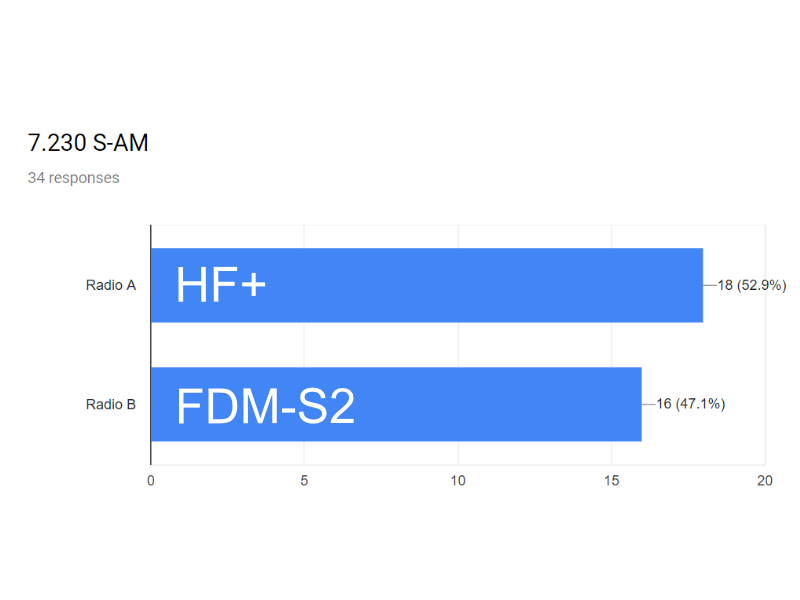
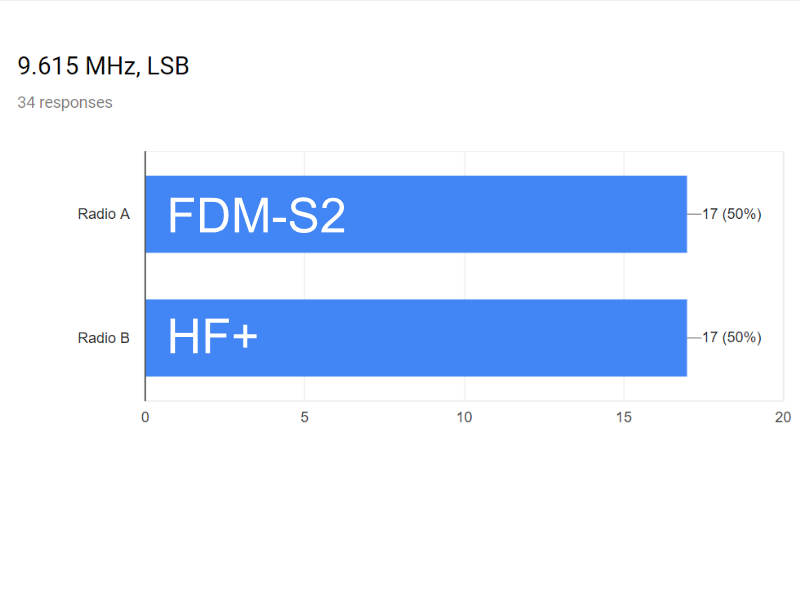
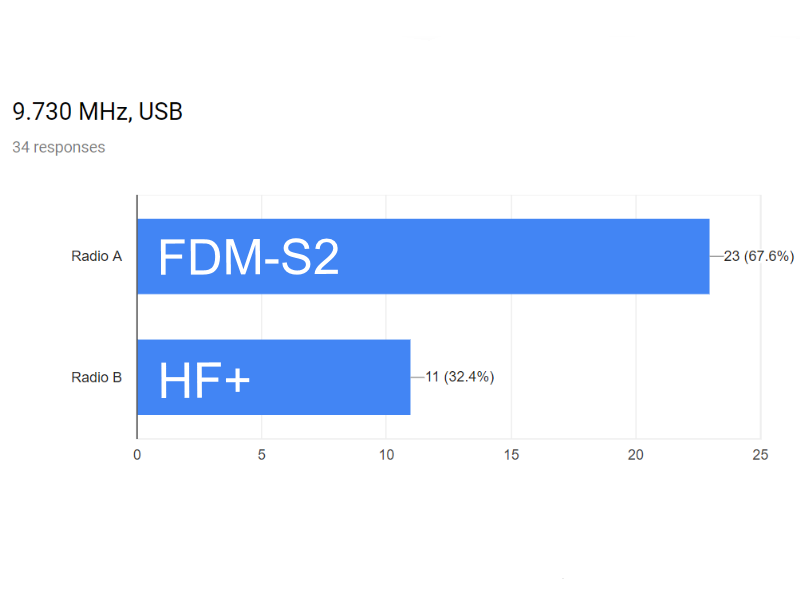
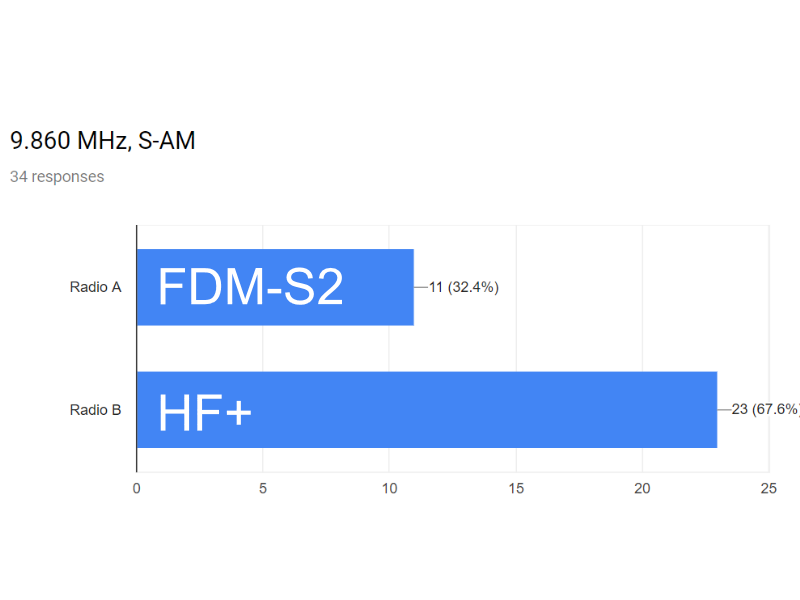
However, 34 readers of the original article took the time to listen and respond, so let’s get to the numbers, shown in these graphs:
Interestingly, the responses above seem to point to:
Two recording pairs tied in the results (50% / 50%) or were very close (HF+ 52.9% / FDM-S2 47.1%)
The FDM-S2 led one recording pair by a large margin (67.6% / 32.4%)
The HF+ led another recording pair by an equally large margin (67.6% / 32.4%)
Taken as a whole, no obvious winner emerged, although one might conclude the HF+ has a slight edge due to its lead in the “very close” recording pair of 7.230 MHz.
One thing is clear–the AirSpy HF+ is a surprisingly good performer for its price of $199 USD! For many enthusiasts this will be all the SDR they need.
As a final note, I’ll mention that the AirSpy HF+ used for the tests was totally stock. I have not yet performed the “R3 Bypass” mod nor the firmware update to my HF+ units. The simple R3 Bypass, discussed at length on the AirSpy Groups.io forum, significantly boosts sensitivity of the HF+ from longwave up to about 15 MHz, without any noted overload issues. For more on this modification from a MW DXer’s perspective, read Bjarne Mjelde’s insightful article at his Arctic DX Blog.
Thank you to all the readers who took the time to listen to the SDR recordings in this comparision and register your opinions.
Guy Atkins is a Sr. Graphic Designer for T-Mobile and lives near Seattle, Washington. He’s a regular contributor to the SWLing Post.
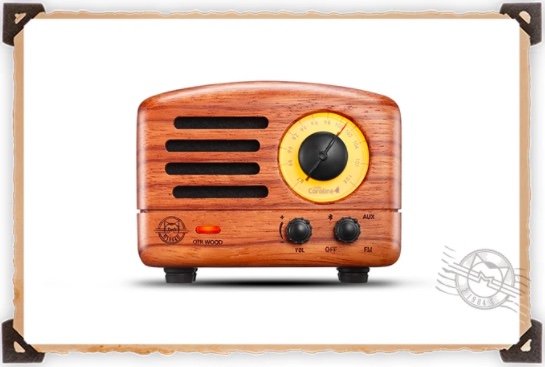
I thought you and your readers might be interested in this […] a cool little radio I learned about from the YouTube channel of a drone flyer I follow.
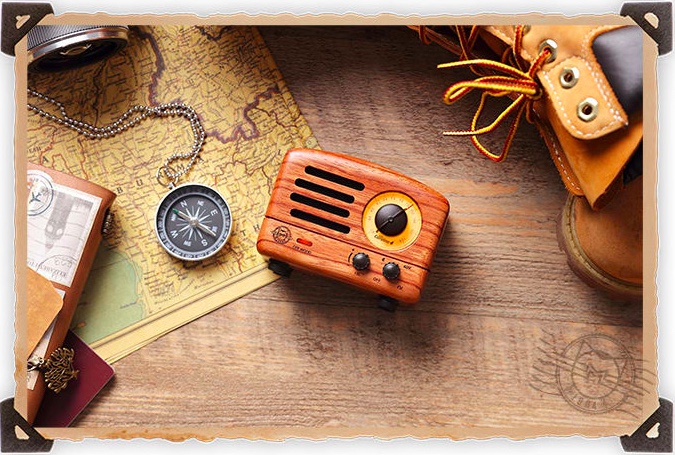
I like the craftsmanship:
I’ve actually been following the Muzen OTR for several months via Indiegogo thanks to my buddy and radio-enabler, David Korchin (K2WNW).
If the name Muzen sounds familiar, it’s likely because we featured the company last year in this post. After publishing the post, I was so interested in Muzen products, I reached out to a retailer who used to be a US distributor. Sadly, he no longer carried Muzen products, though he was a big fan.
The Muzen OTR is $69 US shipped. For an FM radio, Bluetooth, AUX-in speaker that’s handcrafted, with serious audio fidelity, in such a small size, I think it’s quite a good deal. On top of that 10% of the funding will go to Radio Caroline.
Even though I’m going through a serious down-sizing at the moment, John’s note prompted me to back this campaign, so I bit the bullet this morning and ordered a Muzen OTR. [In a sarcastic tone: “Thank’s a lot, John!”] Ha ha!
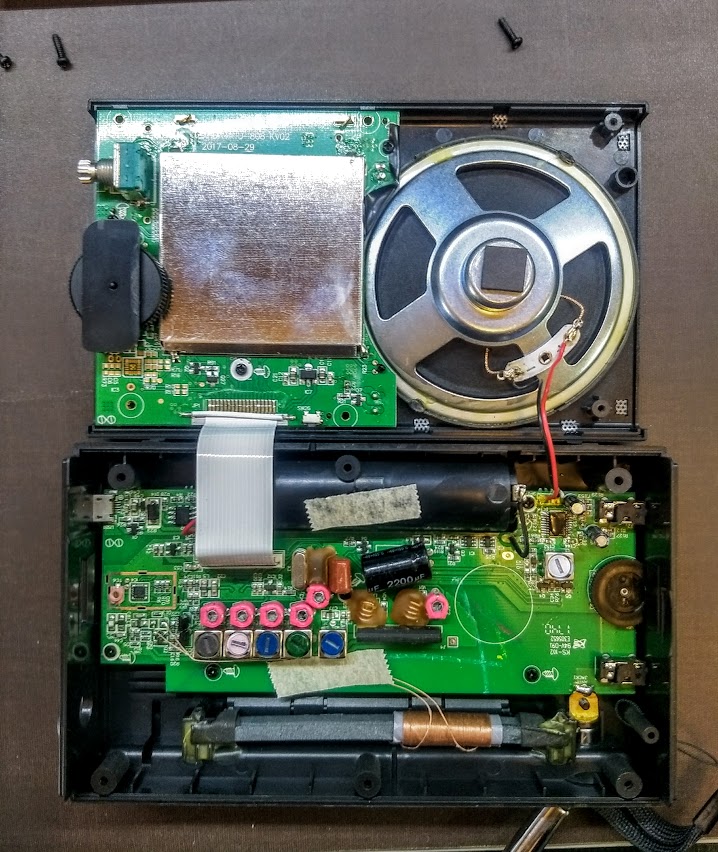
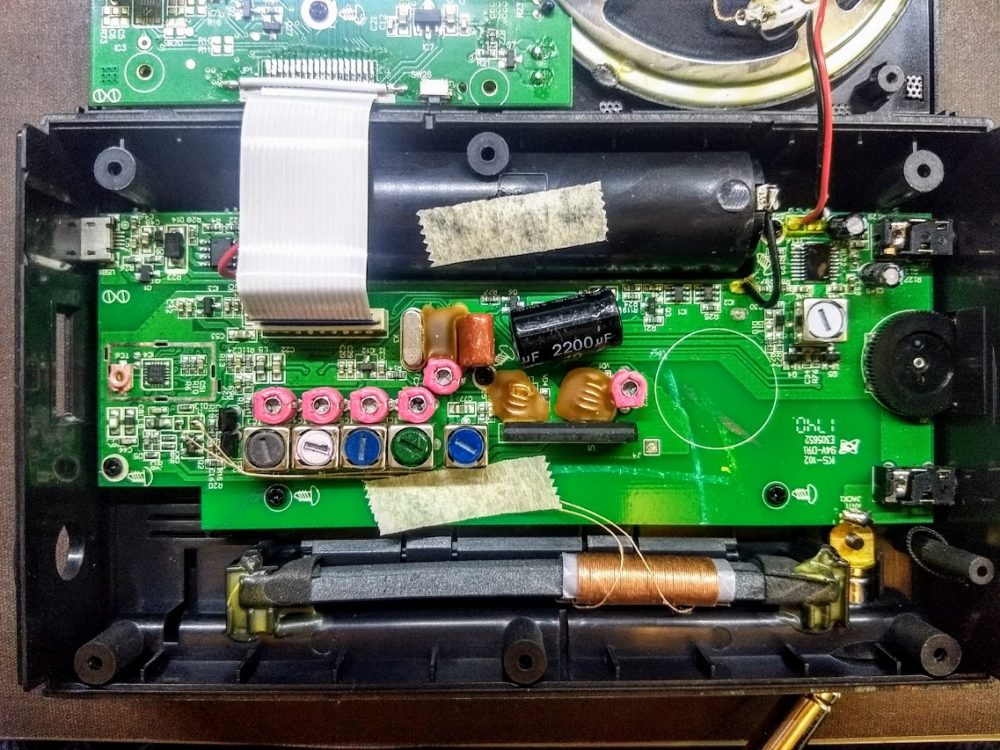
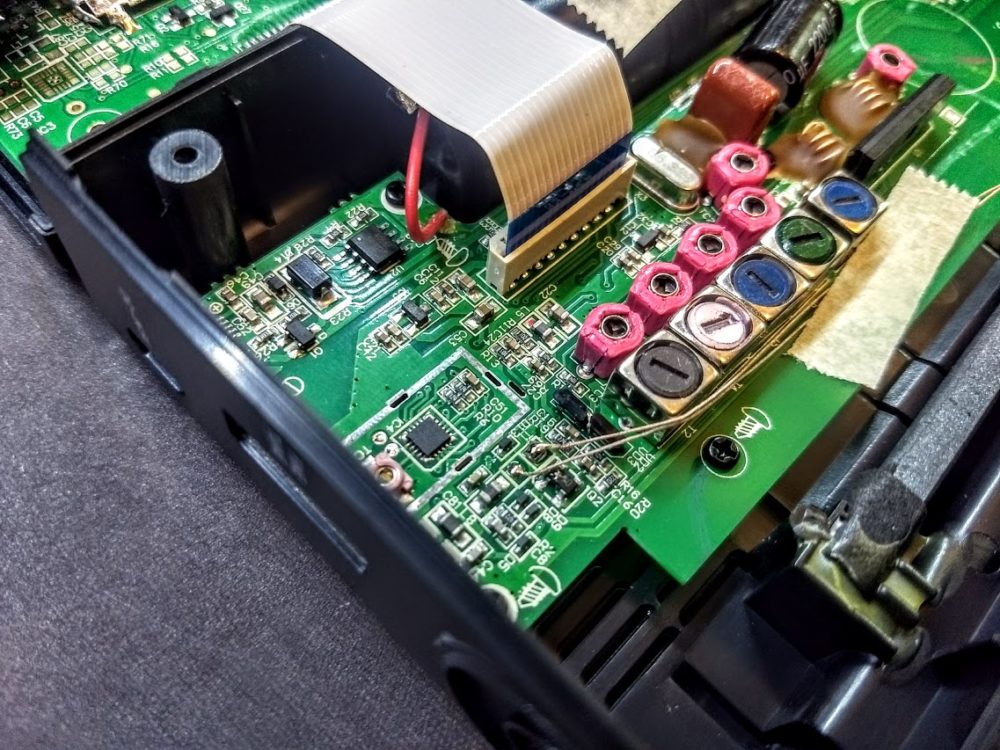
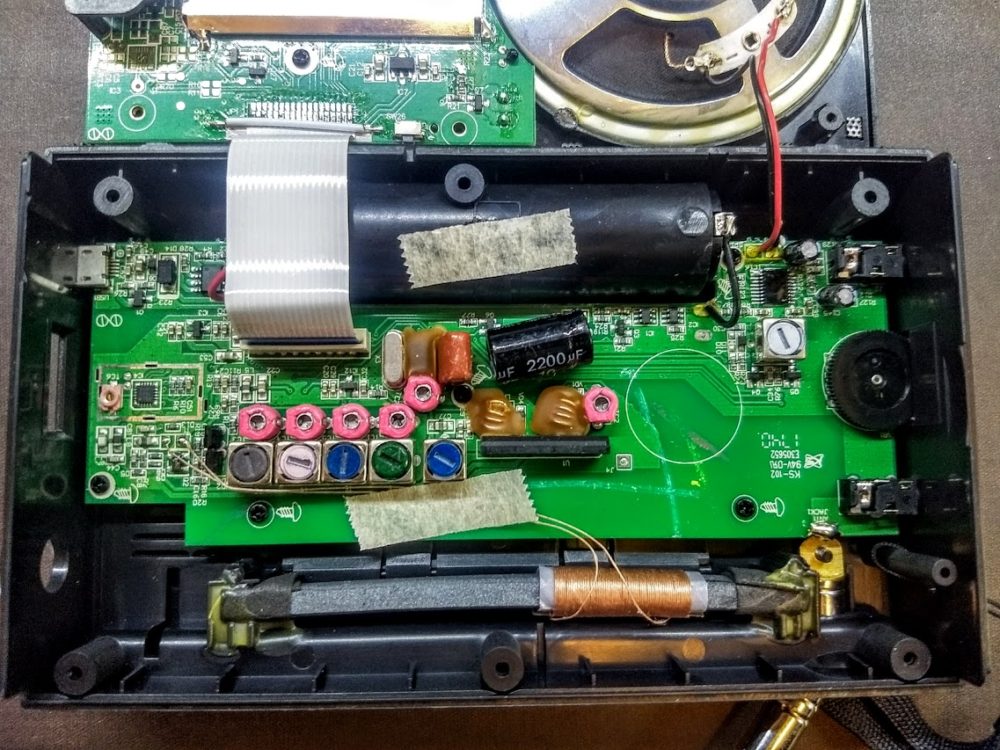
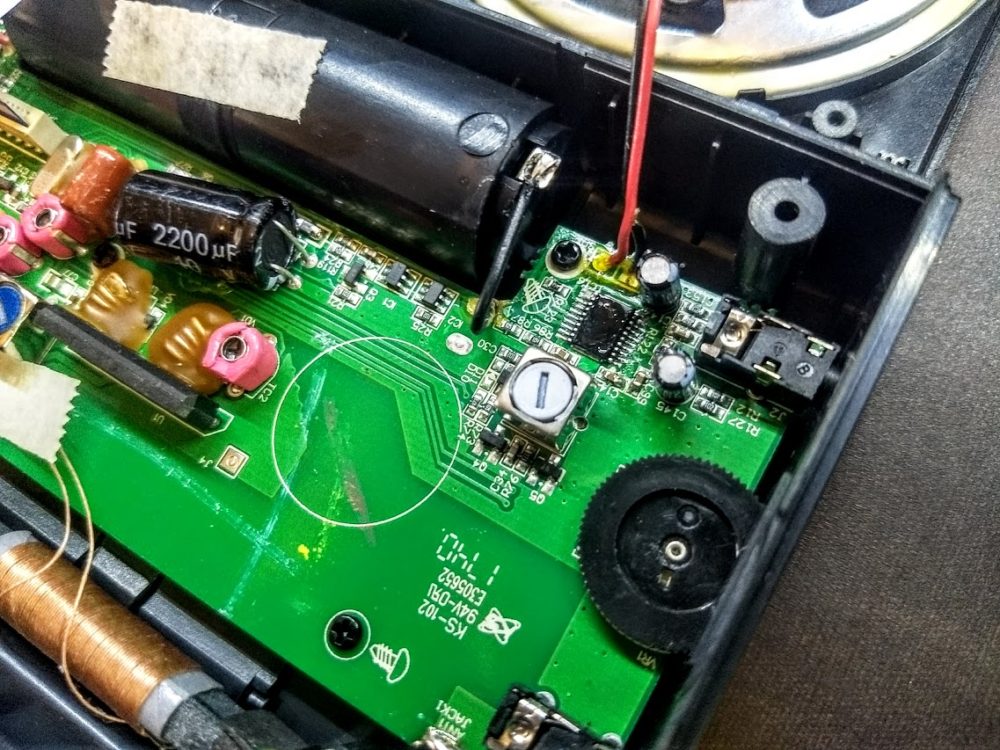
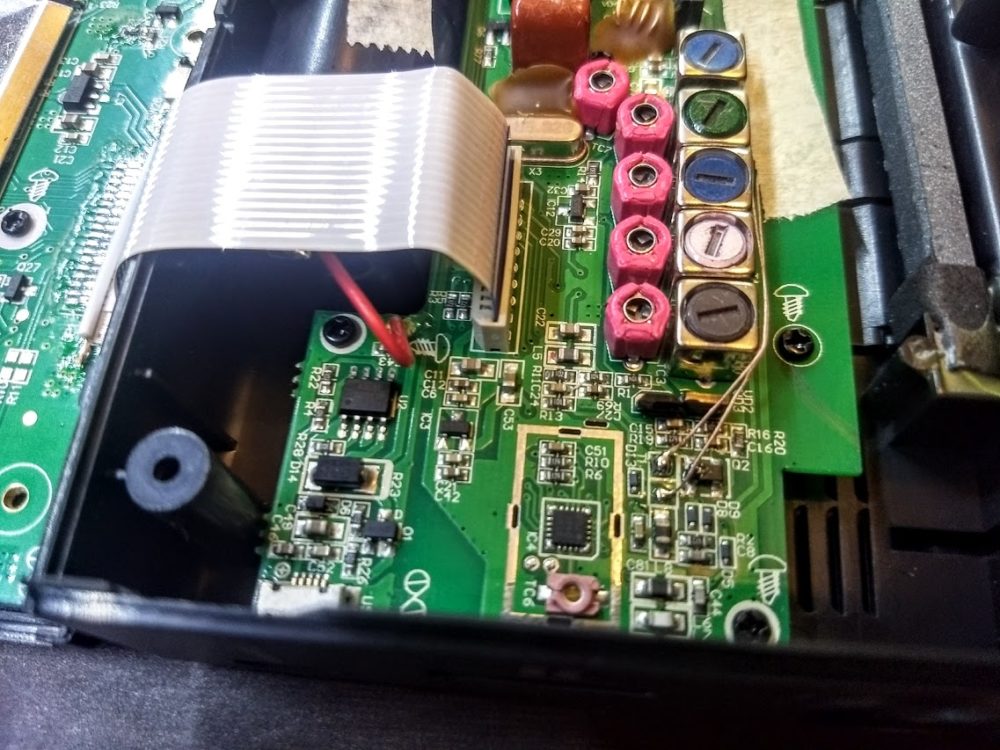
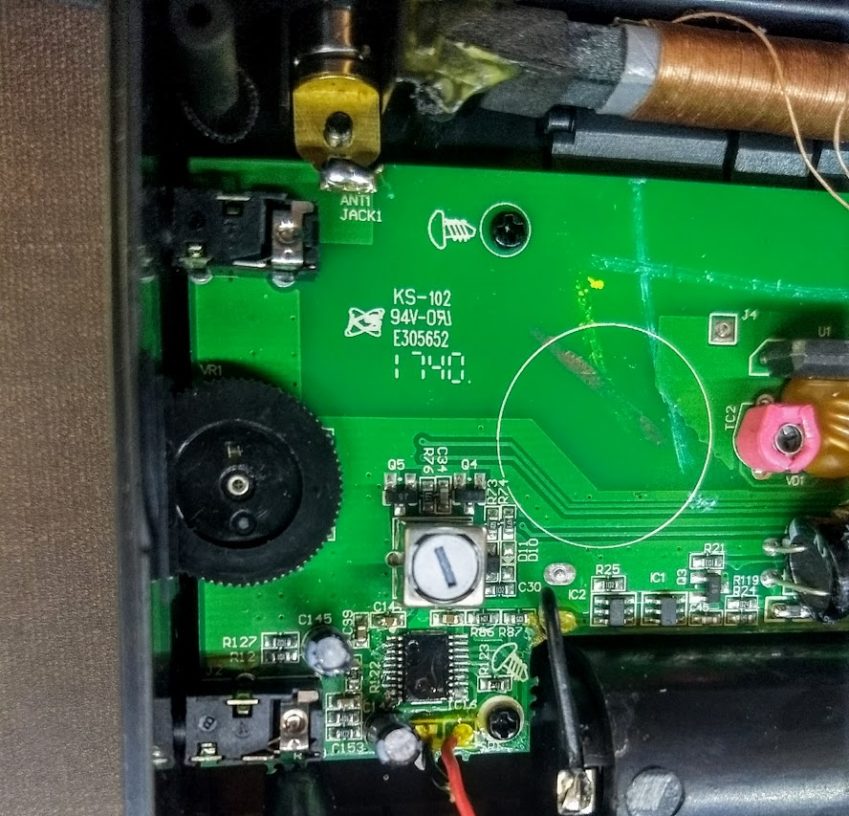
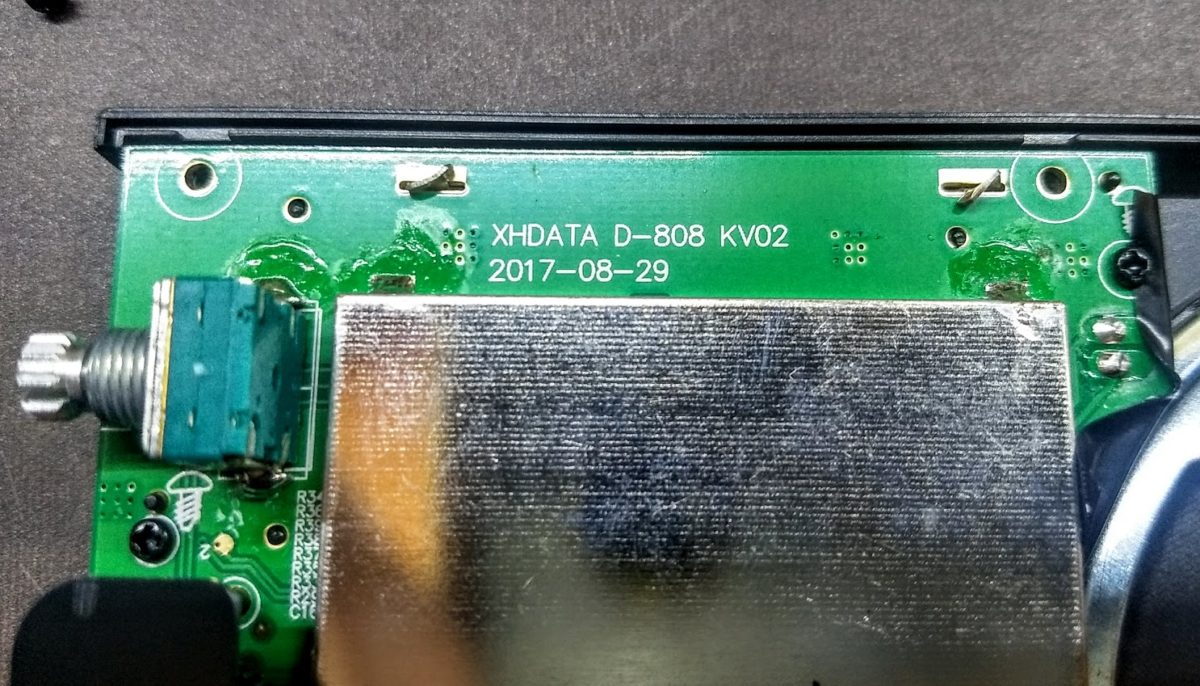
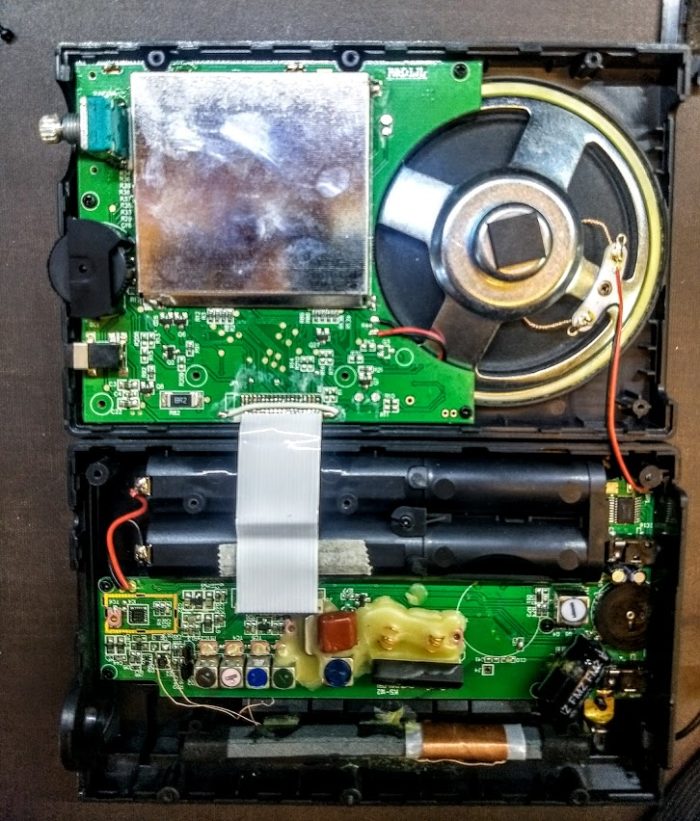
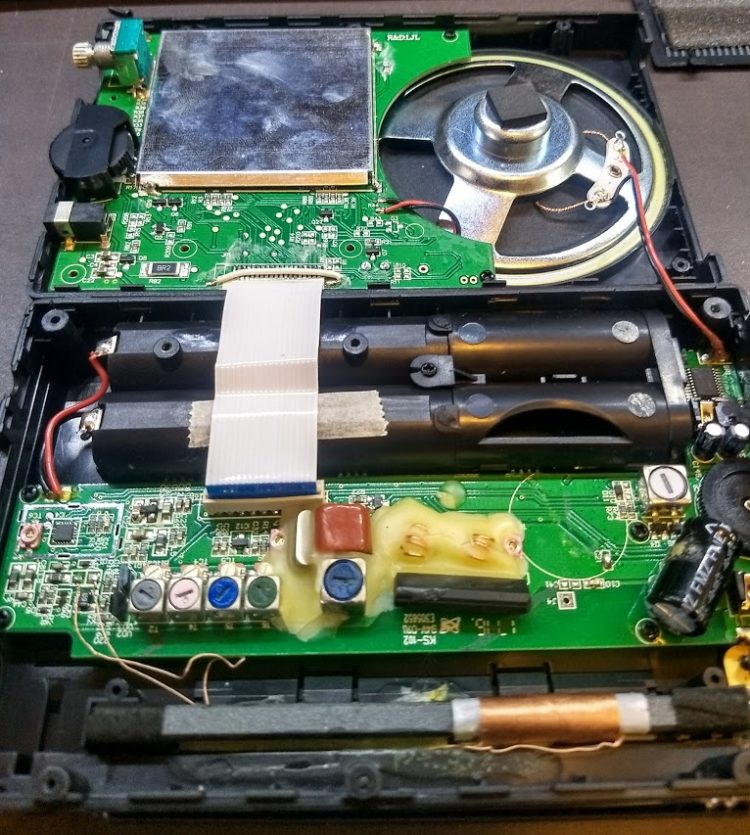
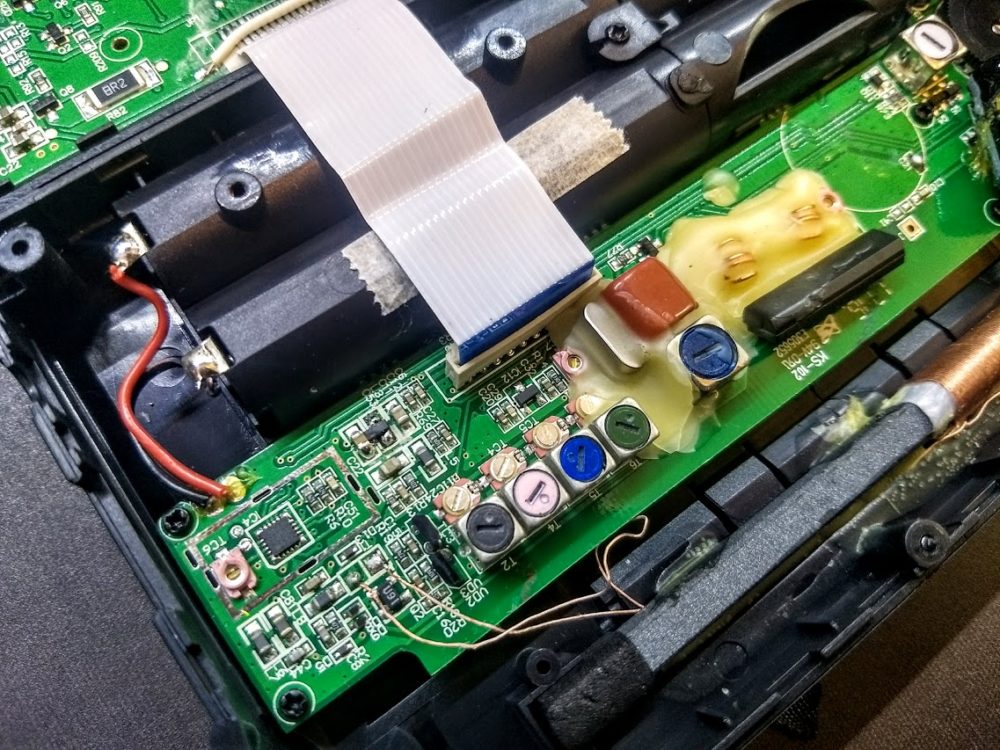
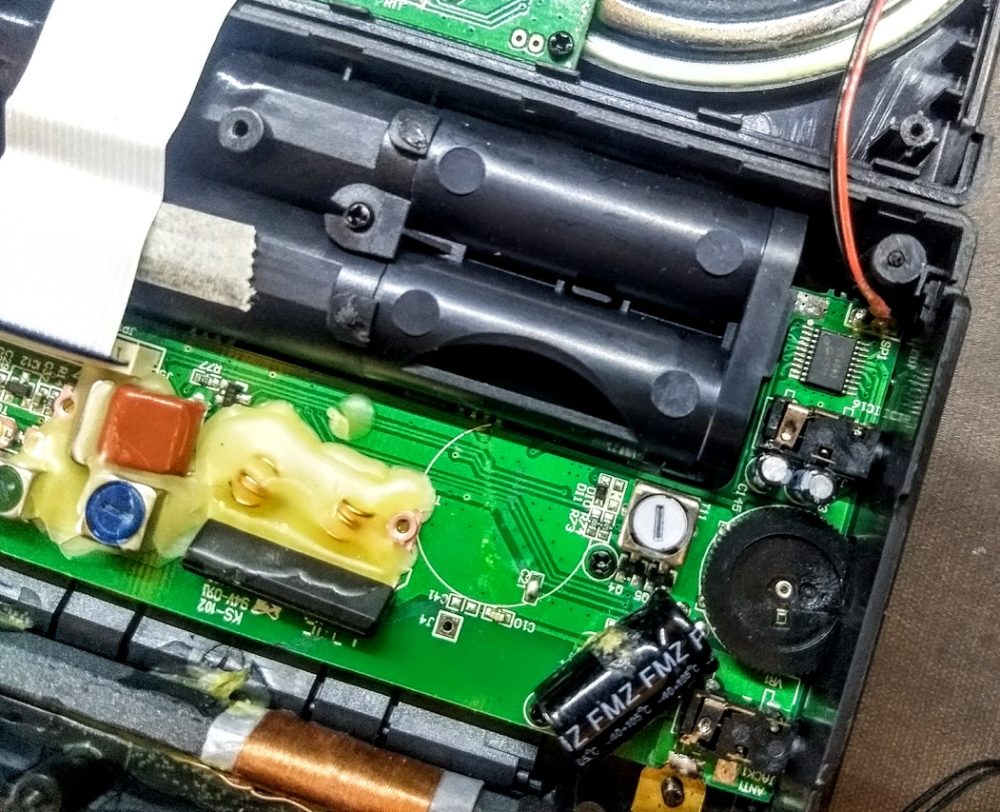
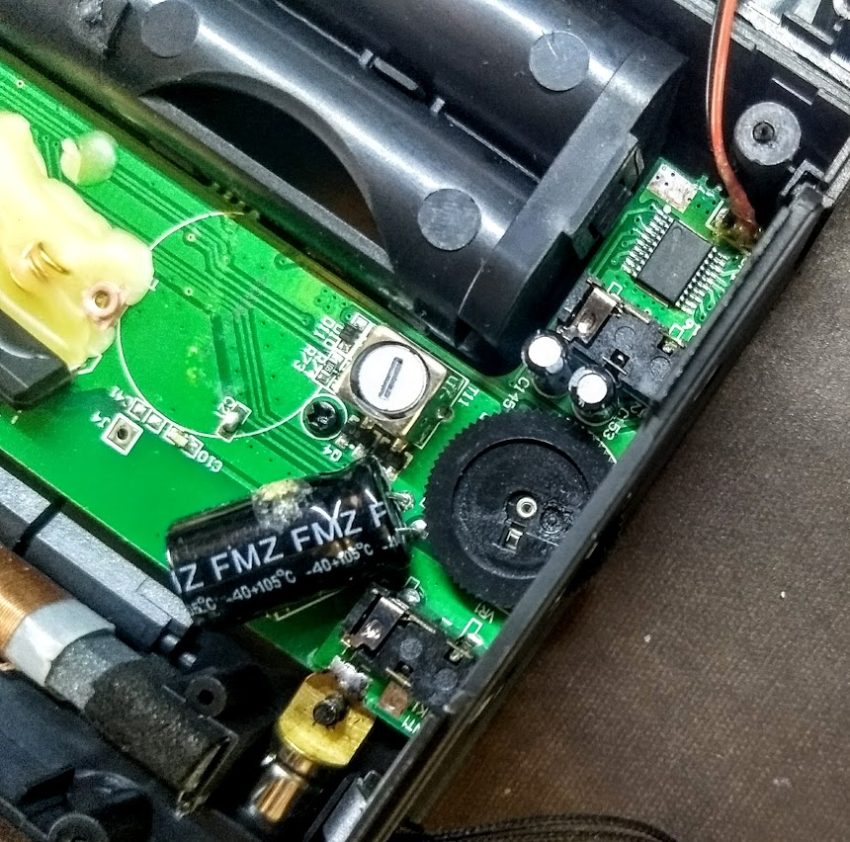
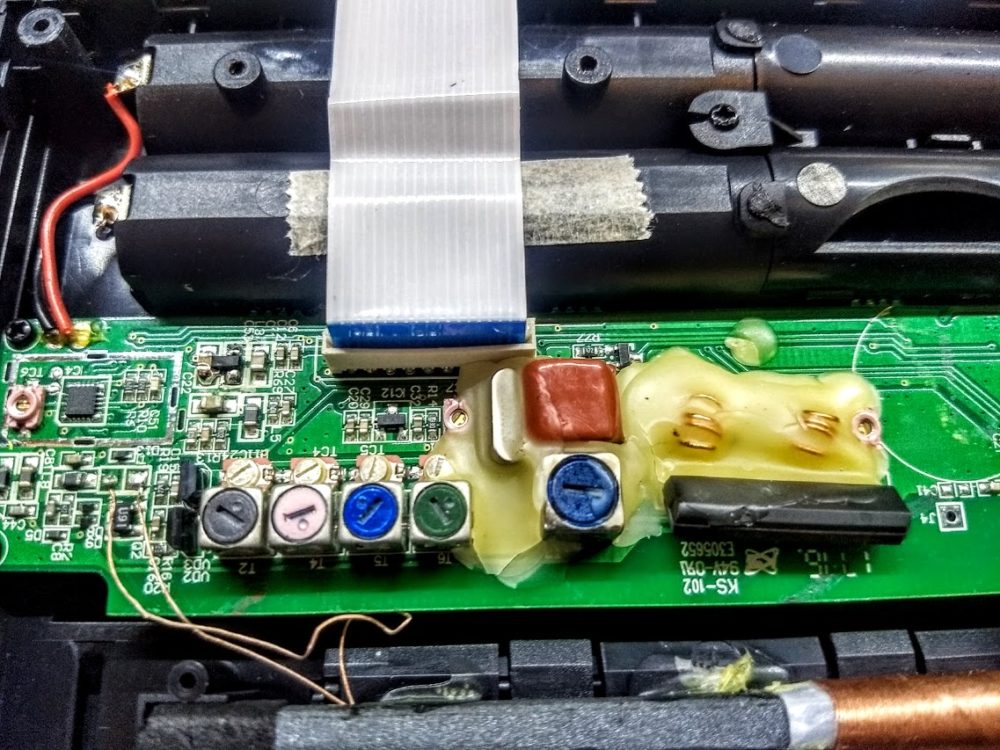
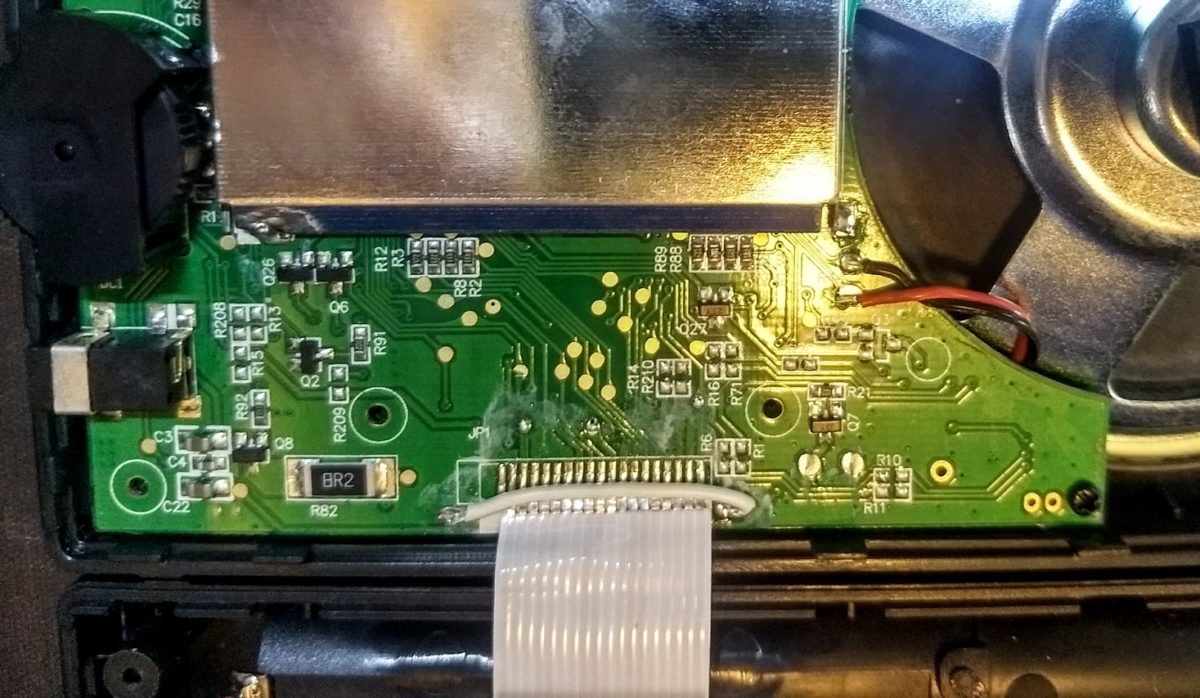
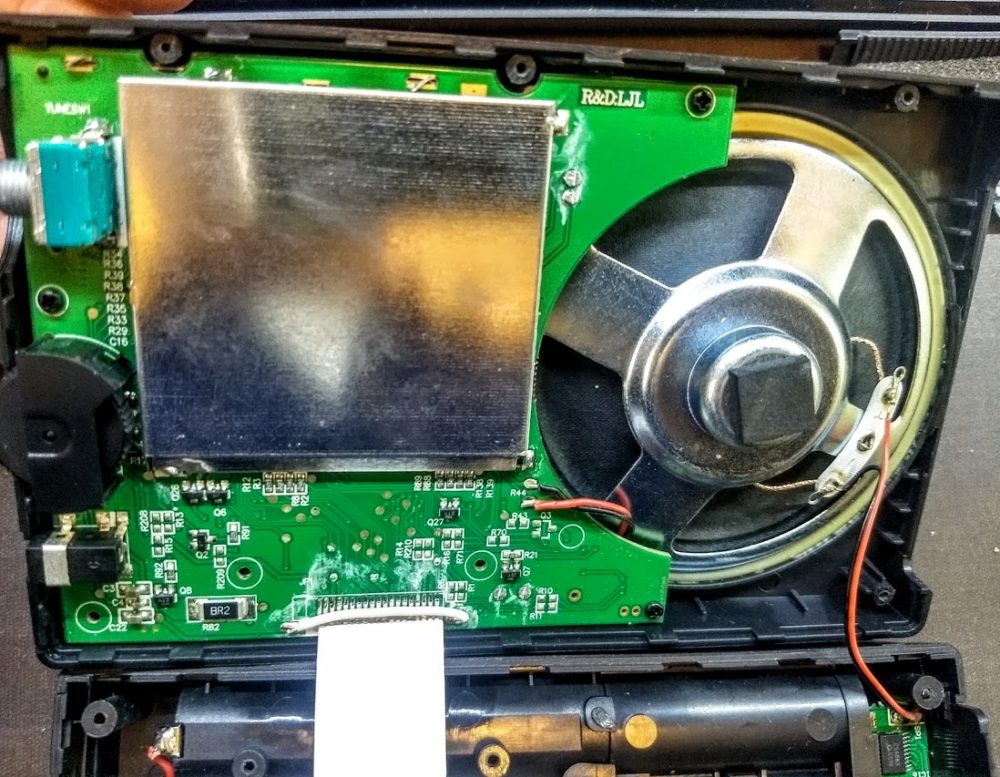
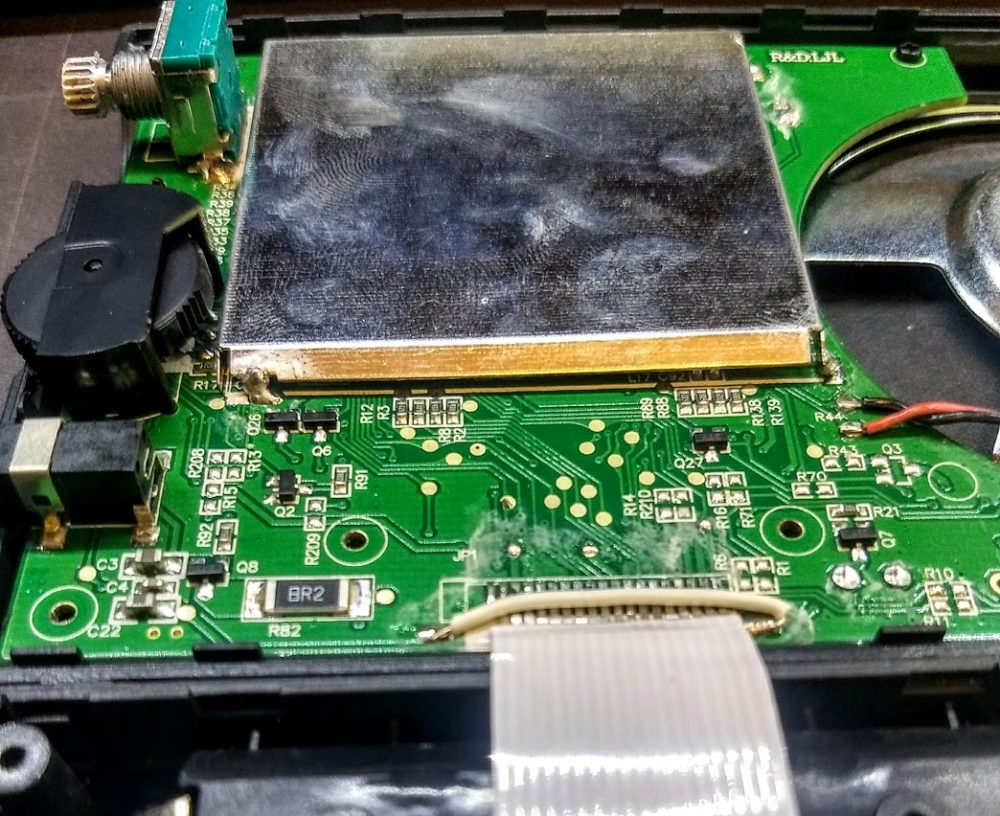
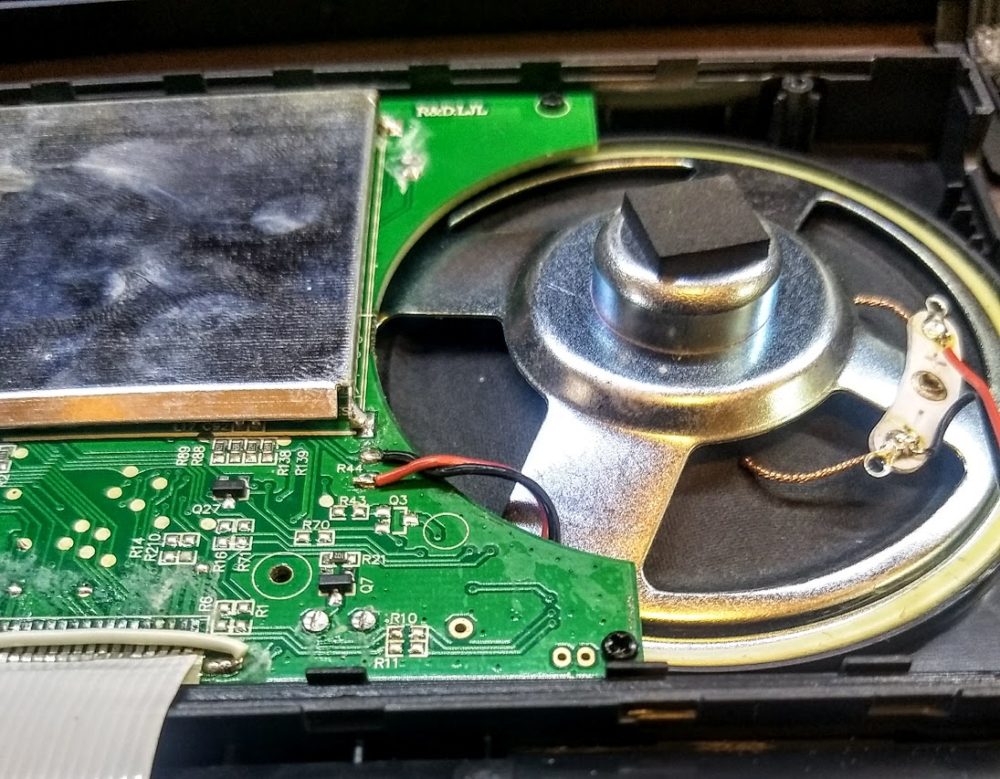
Several readers have requested “under the hood” photos of each radio, to compare internal designs. This morning, I had a few minutes to crack open each radio and take a few shots. Note that I didn’t pull off the circuit boards from the chassis or try to take a look behind shielding. I have yet to do proper performance comparison tests with these radios and didn’t want to accidentally compromise one (especially since the XHDATA D-808 is getting complicated to purchase here in the US).
Inside the XHDATA D-808
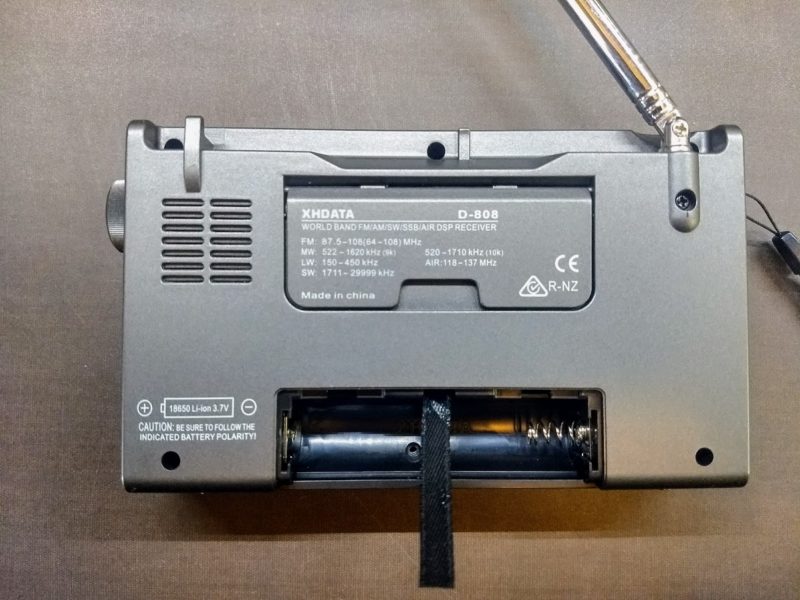
Opening the D-808 requires pulling off the encoder knob and removing a total of six small screws. Note that one of the screws is located in the battery compartment. Click photos to enlarge:
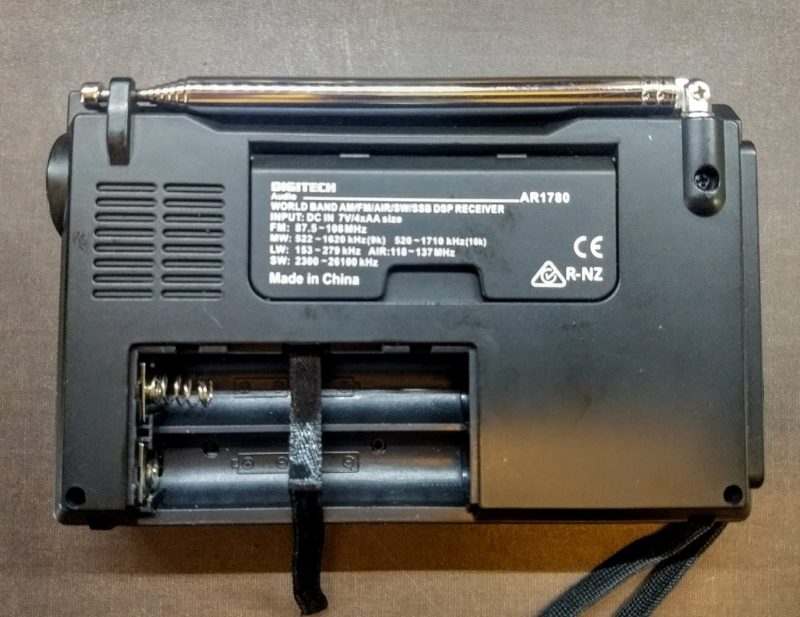
Inside the Digitech AR-1780
Opening the AR-1780 requires pulling off the encoder knob (not an easy task on my unit) and removing a total of seven small screws. Note that two of the screws are located in the battery compartment. Click photos to enlarge:
Many thanks to SWLing Post contributor, Georges (F6DFZ), who writes:
After the first information from your wonderful website, I immediately ordered the XHDATA D-808 receiver from Aliexpress for €62 including shipment to France.
I got it very quickly, shipped from Amazon UK!
I did a few tests on SSB. MDS is outstanding, the minimum signal from my HP generator at -127 dBm (0,1uV), is strong even on 28 MHz. Selectivity is also good, and the opposite sideband rejection is audibly also good. However I was unable to measure it because the S meter give the same indication over a few kHz around the signal of the generator. I suspect the opposite sideband rejection to be done by the DSP chip at AF, but I cannot confirm this.
Reception is very good on FM, and the AF from the loudspeaker is reasonable. On headphones, it’s very good. RDS works as it should and sets the clock of the receiver.
I did only a few minutes test on LW and MW, and it seemed OK, even if I don’t have a lot of experience on these bands.
SW AM listening was very good; good audio, great selectivity. I suspect that the bandwidths given are AF bandwidths as even the most selective were not too much muffled. If it was IF selectivity, the AF bandwidths would have been half the values and much muffled.
SSB and CW reception are also very good even if the DSP chip has a long attack time and hence gives distortion during the beginning of each message.
About SSB: I think that this receiver is better than the [Tecsun] PL-880 and comparable to the PL-660.
Reception is good on the short but sturdy telescopic antenna.
If you connect the receiver to a large external antenna, you will encounter many IMD signals. As there is no built-in attenuator, you will need an external one.
The manual is correct, but very short about the memories.
ATS logs its findings into the first pages, so if you want to keep some memories, log them a few pages away.
The available pages are different with bands, FM has its pages, SW its pages etc…
Unfortunately, memories don’t keep the mode on SW–only the frequency and selectivity. After calling a memory, you will have to choose between AM, USB and LSB.
I was totally unable to light the “Preset” label on the display ?!?
Display and backlighting are very nice.
Somewhat odd, but the squelch seems to work sometimes on other bands than Air band !
Ergonomics are reasonable, quality of construction is good for the price.
Overall, for the price, this receiver is quite outstanding.
Best regards from France .
Georges F6DFZ
Thank you, Georges! Excellent thoughts on the D-808. Your note about squelch control working outside the AIR band reflects what the Digitech AR-1780 does as well–hinting that firmware is very similar.
I fully suspect the D-808 is on the path to being one of the best radio values under $100 US.
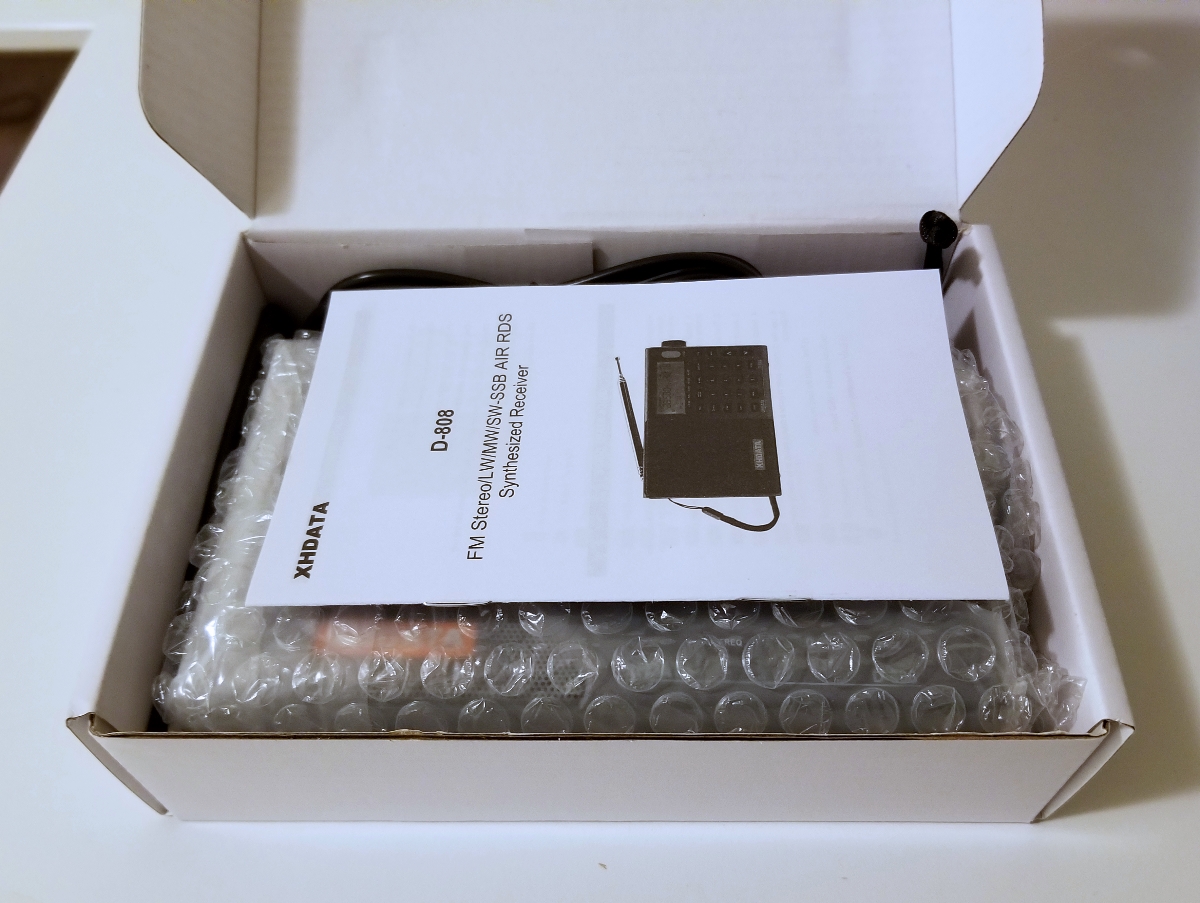
Tuesday evening, I received my long-awaited XHDATA D-808 from AliExpress via the postal service. Yesterday morning, I unboxed it and started charging the included 18650 Li-Ion cell. I haven’t properly put it on the air yet but if you’re interested in some initial reports, check out these previous posts.
Dimensions
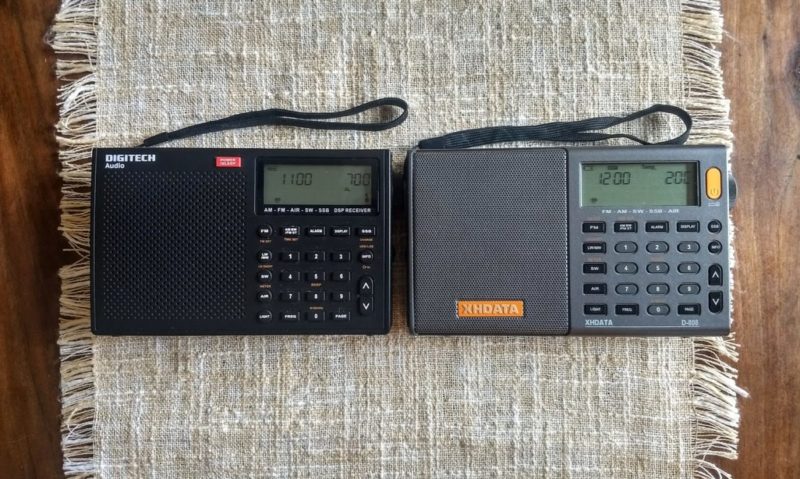
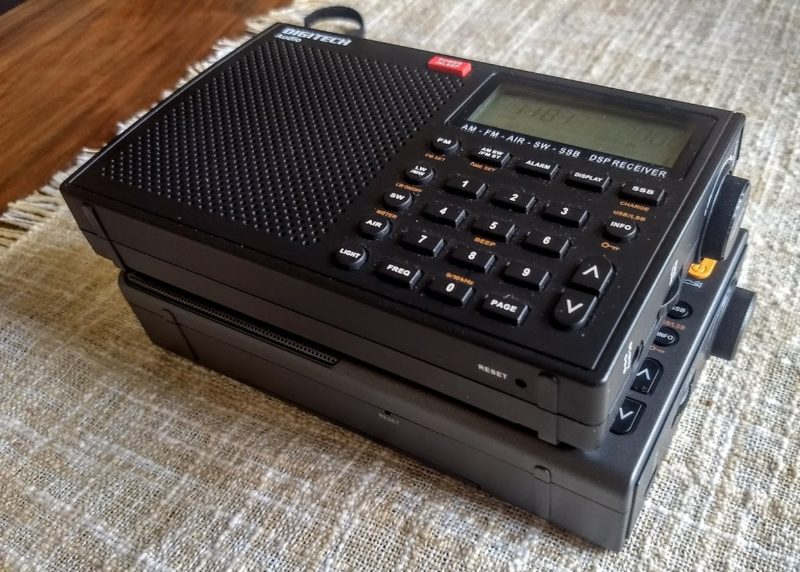
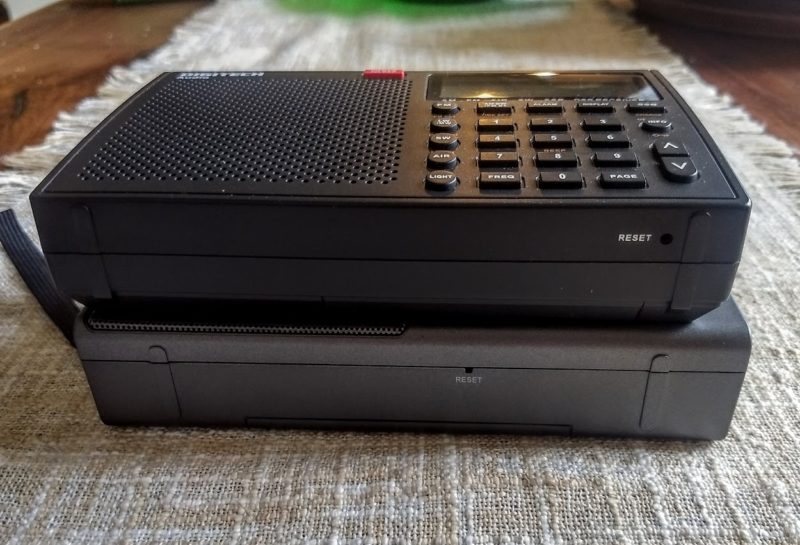
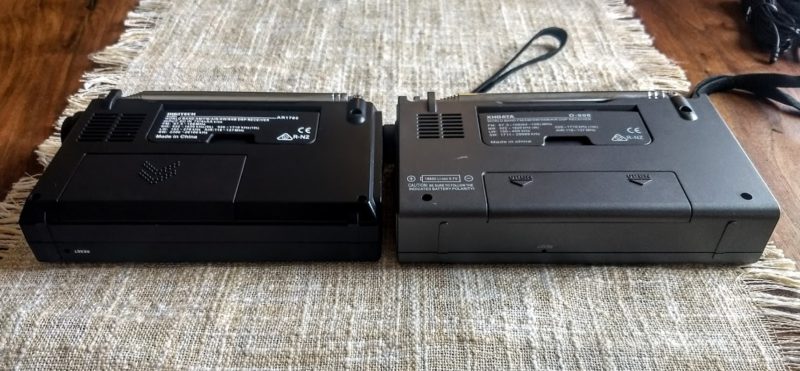
I was curious if the Digitech D-808 was identical in size to the Digitech AR-1780–I could tell even from D-808’s initial information that these two radios share a common ancestry.
To my surprise, they are not identical in dimensions! With that said, the differences are very marginal.
The D-808 is 7 mm wider and 2 mm deeper than the AR-1780.
To confirm measurements, I checked out the manufacturer specifications of both radios. Oddly, the specs also indicate that the AR-1780 should be 3 mm taller than the D-808 but I don’t detect this difference. I measure them to be equal in height.
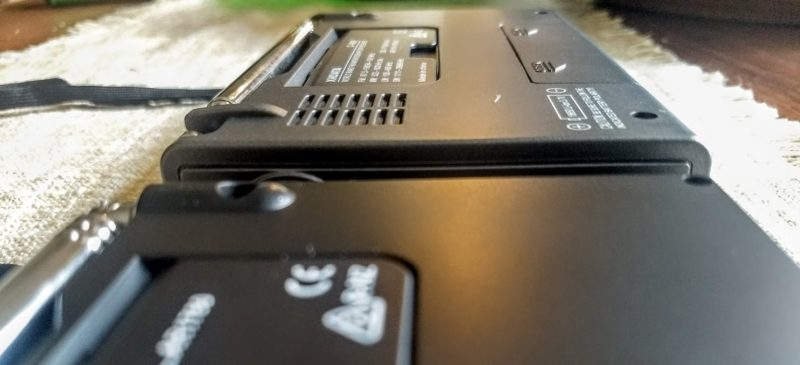
The telescoping antennas are identical in height and number of segments.
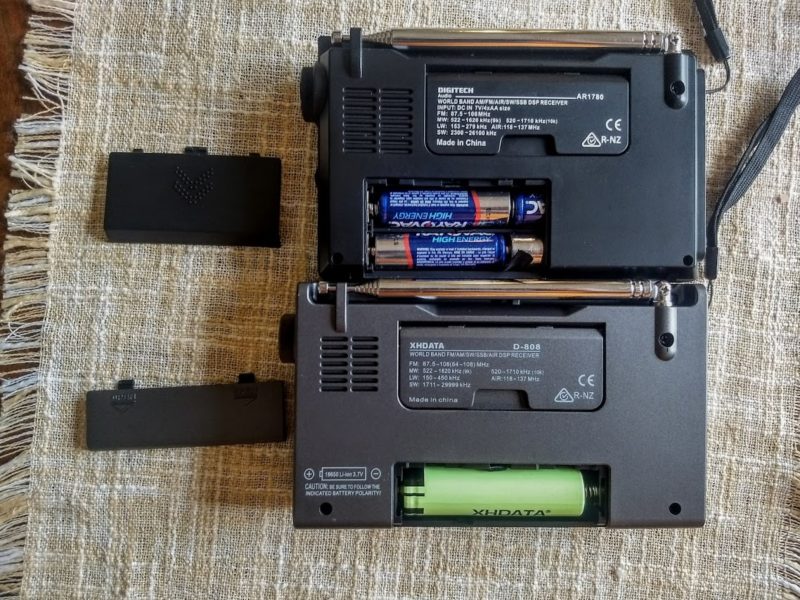
Of course, as you can tell from the photos, the D-808 body is light grey in color while the AR-1780 is black.
Batteries
The Digitech AR-1780 uses four 1.5V AA cells while the XHDATA D-808 uses one less common 3.7V 18650 Li-Ion rechargeable cell (included).
External Power
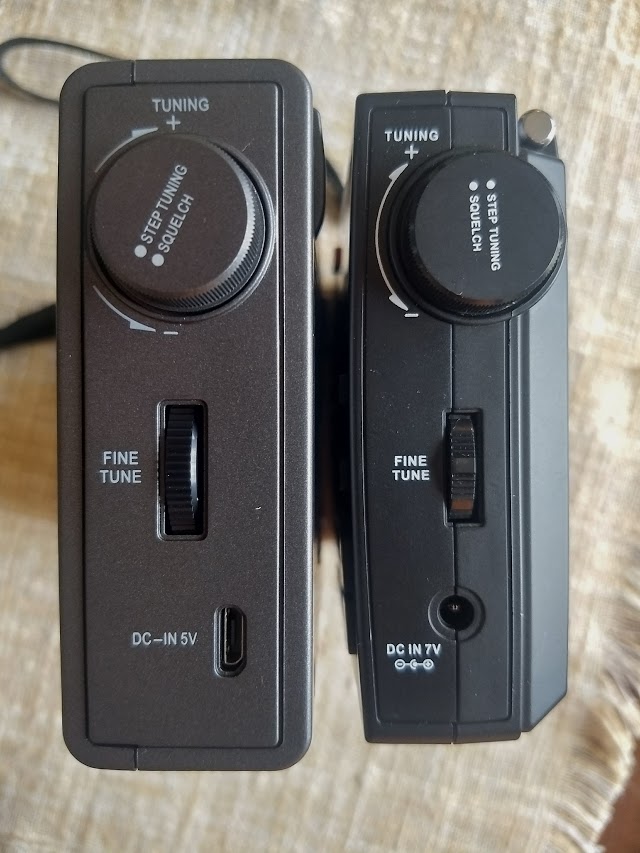
The XHDATA D-808 (left) and Digitech AR-1780 (right).
The XHDATA D-808 has a standard 5V Micro USB port for internal changing. The AR-1780, on the other hand, uses a much less common 7V DC plug.
Right panels are identical.
Having a 5V micro USB port is a huge plus for the D-808, in my opinion! While travelling, I always have at least one micro USB charger.
Backlighting
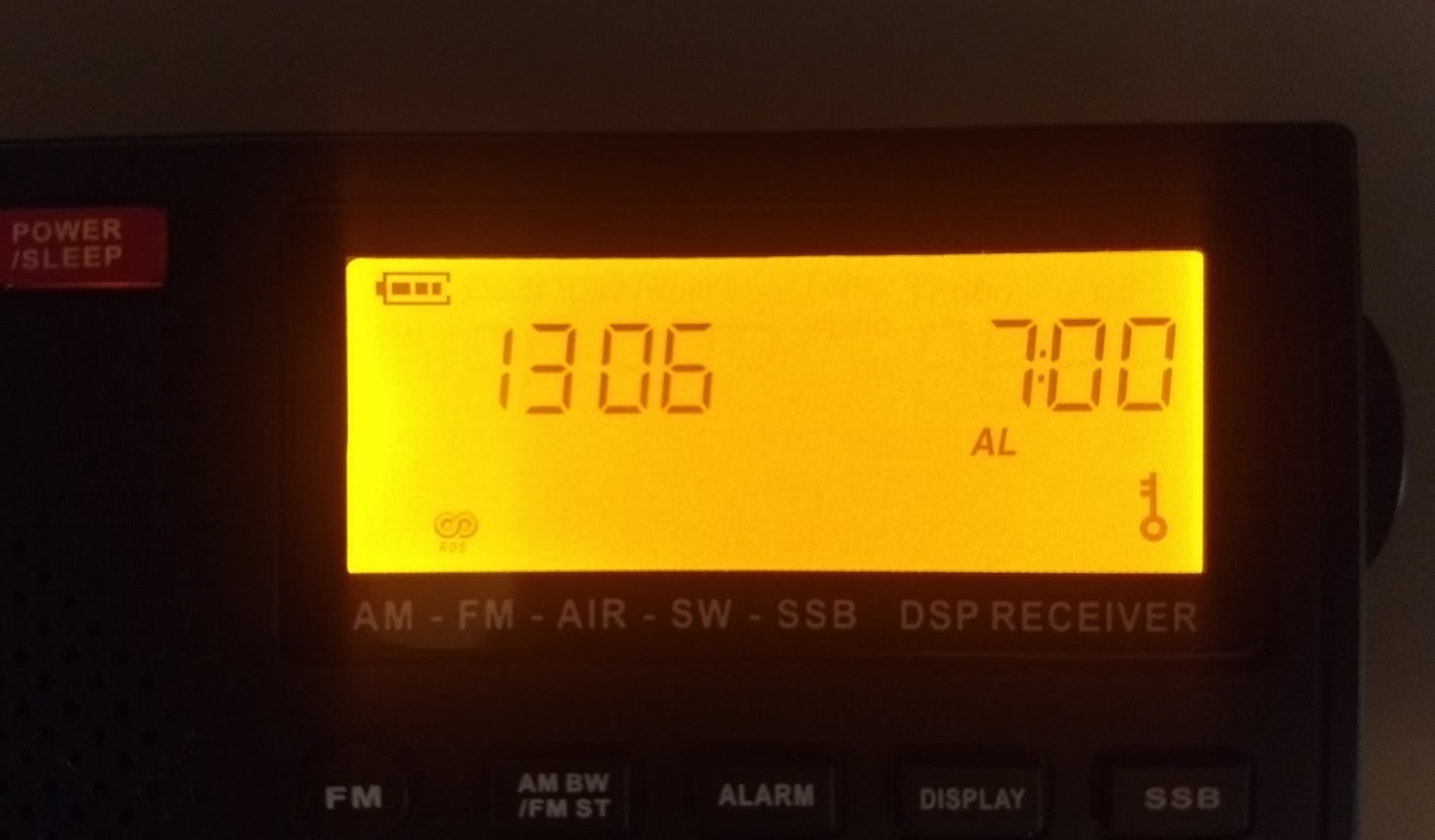
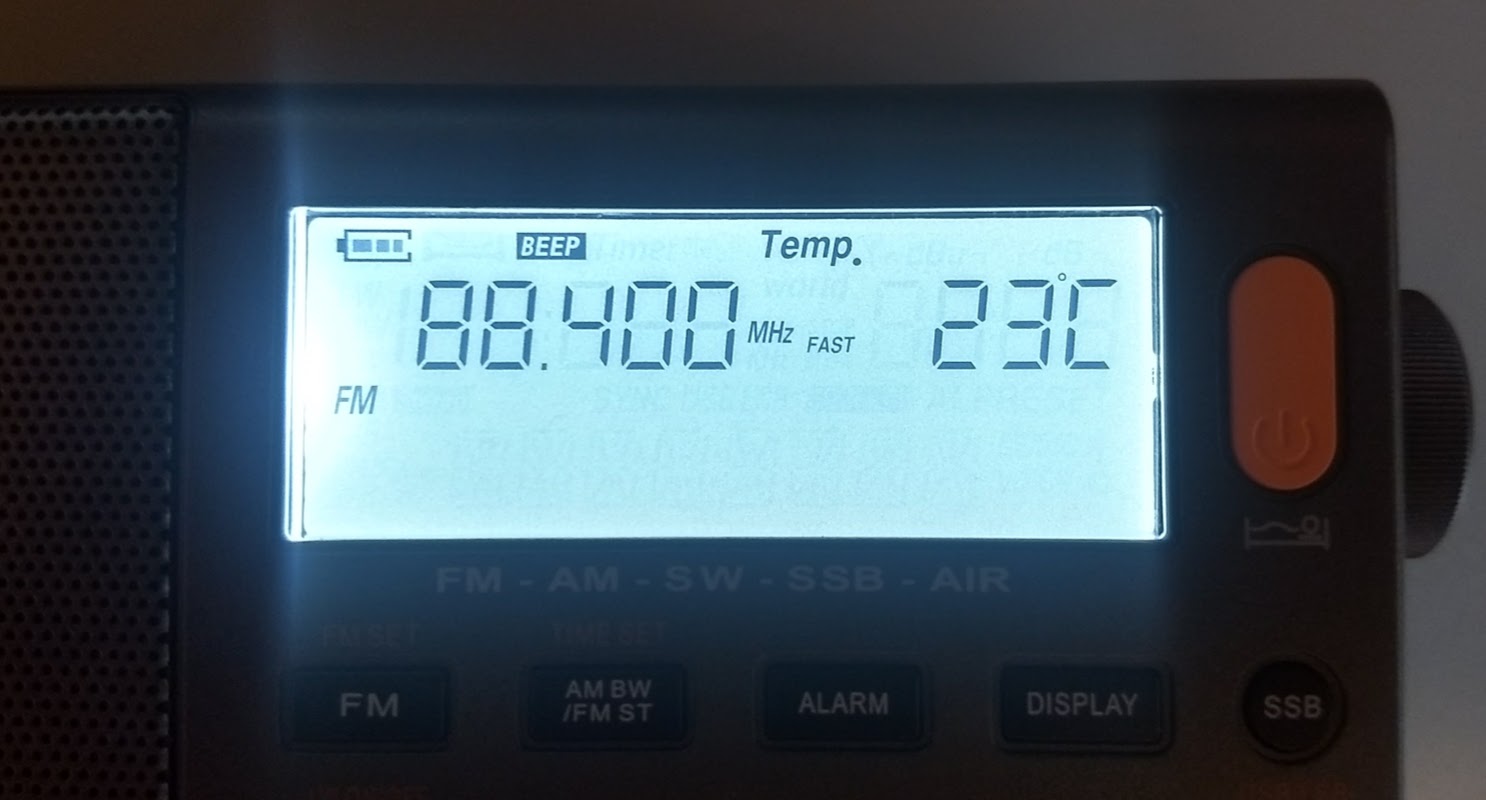
The LCD display appears to be identical in size and display information, however the D-808 has blue backlighting while the AR-1780 has orange backlighting.
The Digitech AR-1780
The XHDATA D-808
Keypad
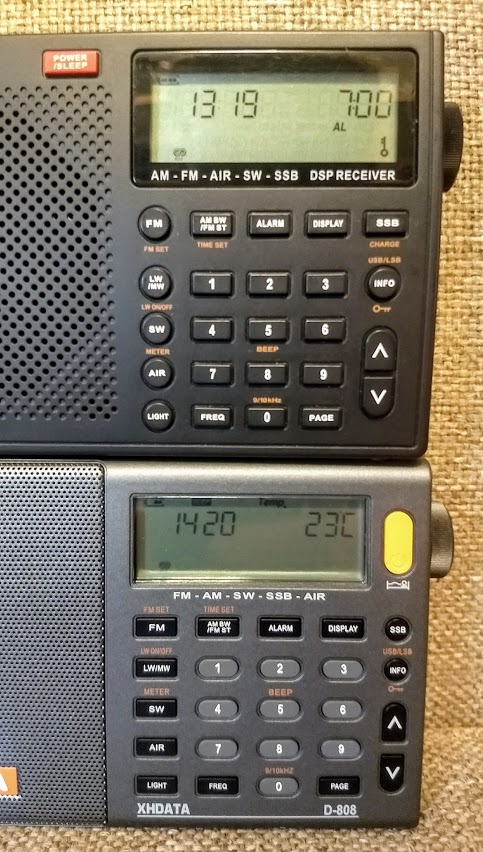
AR-1780 (top) D-808 (bottom)
Other than variations in button shapes and color, the only difference between the two radios is the location of the power button.
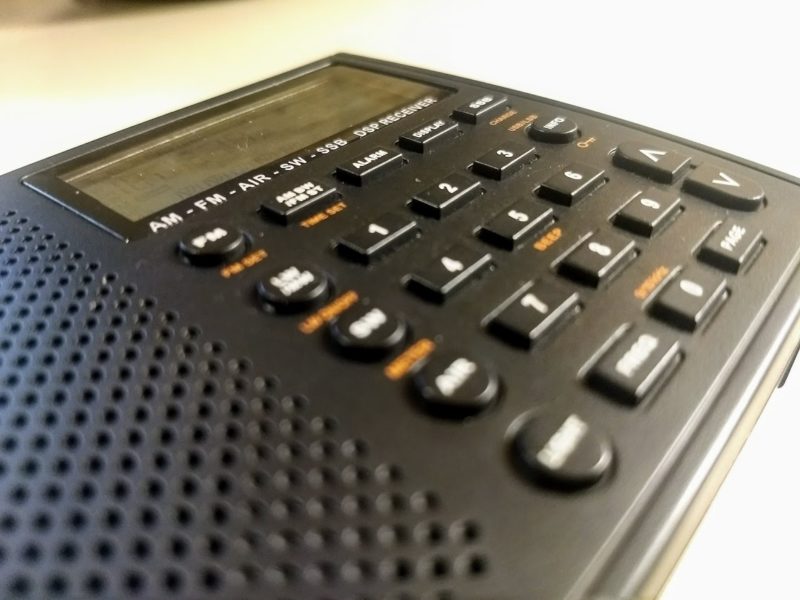
The Digitech AR-1780 keypad
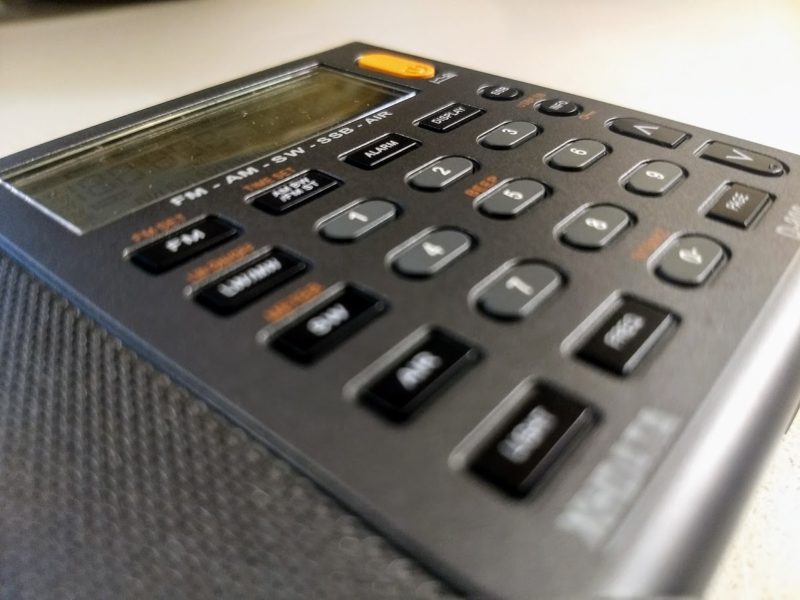
The XHDATA D-808 keypad
As Guy Atkins mentioned in a previous post, the D-808 keypad buttons are almost flush with the radio body. The buttons on the AR-1780, on the other hand, are more prominent and tactile.
Accessories
The Digitech AR-1780 shipped with no accessories–the only two items in the box were the radio and the owner’s manual.
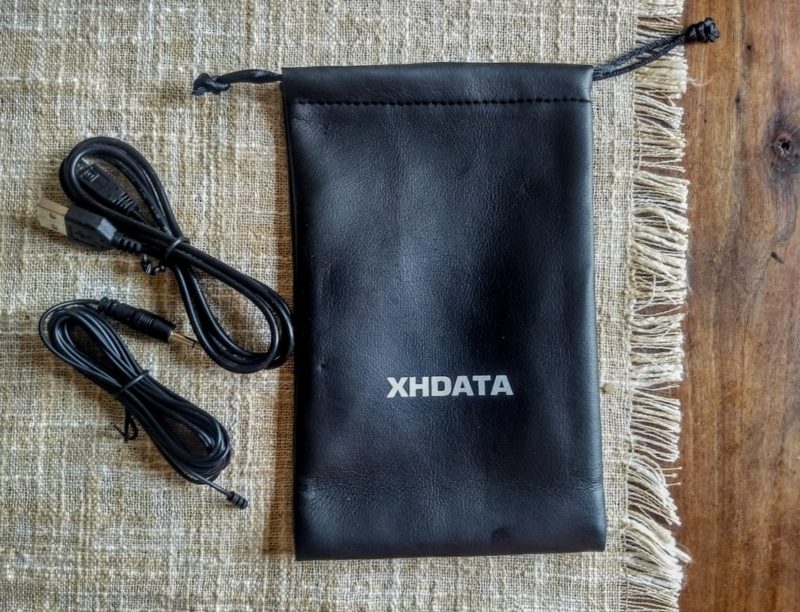
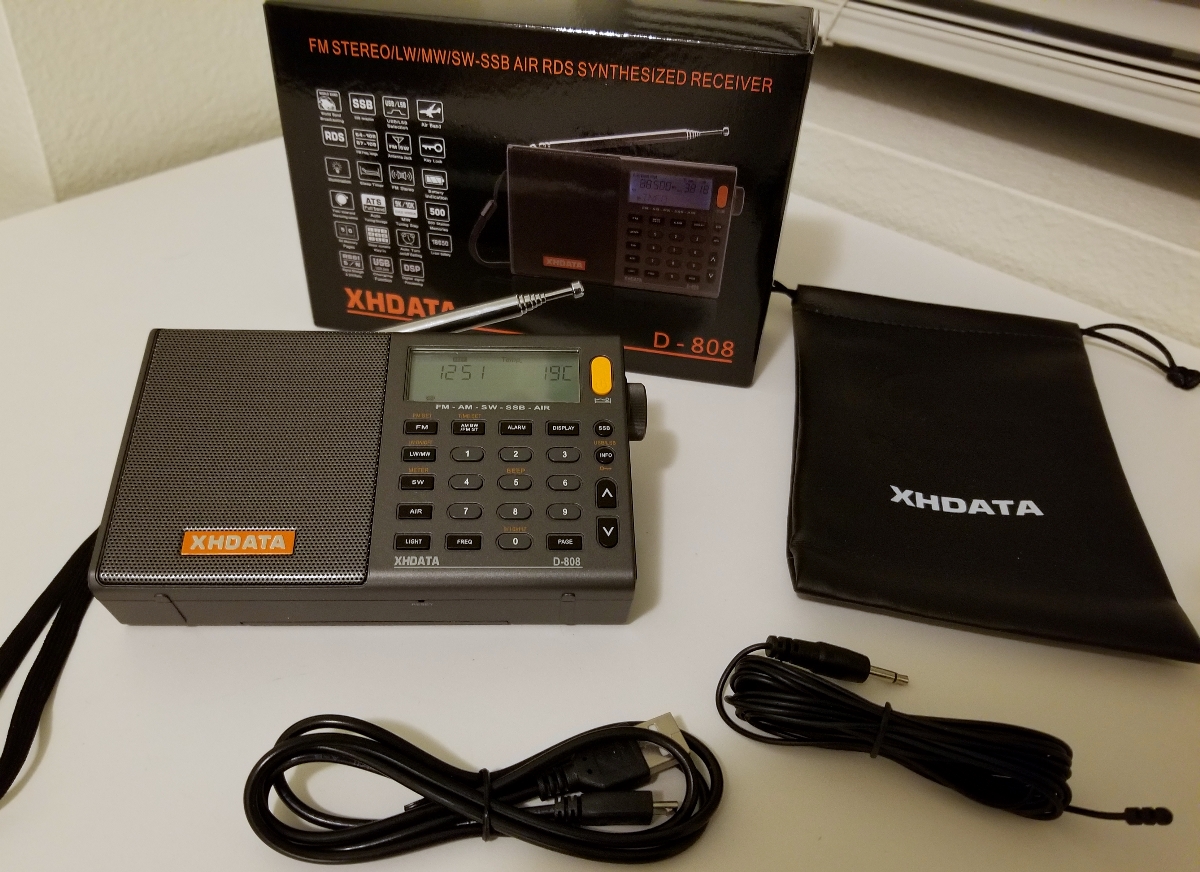
I was surprised when I opened the D-808 box to find a padded carry/travel bag, USB charging cable and even a compact external wire antenna.
Summary
There are actually few differences between the XHDATA D-808 and the Digitech AR-1780 in terms of physical appearance and function.
All in all, though, I prefer the D-808 package which ships with a carry bag, power cord and external wire antenna. In addition, the D-808 uses a standard and convenient Micro USB port for charging!
In terms of size/weight, the differences are negligible and wouldn’t sway my purchase decision.
Over the course of the next week, I hope to spend some time comparing their performance on the air. Though they appear to be from the same family, will one sibling outperform the other? We shall see!
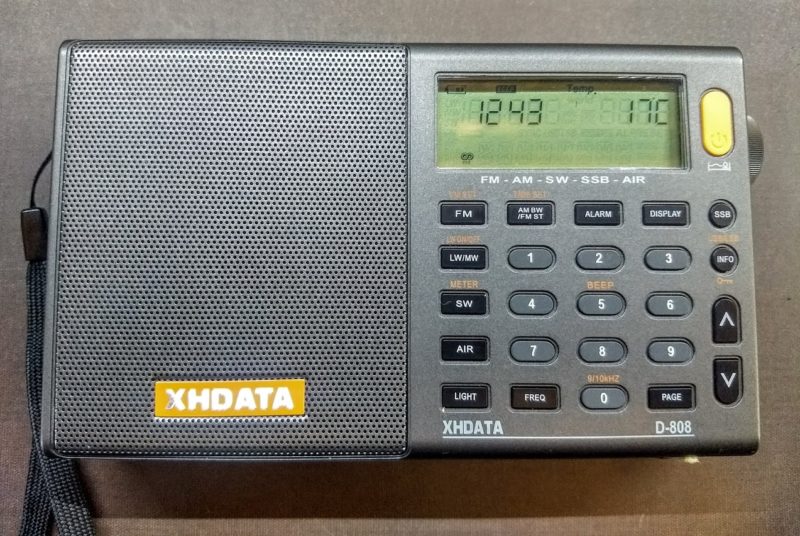
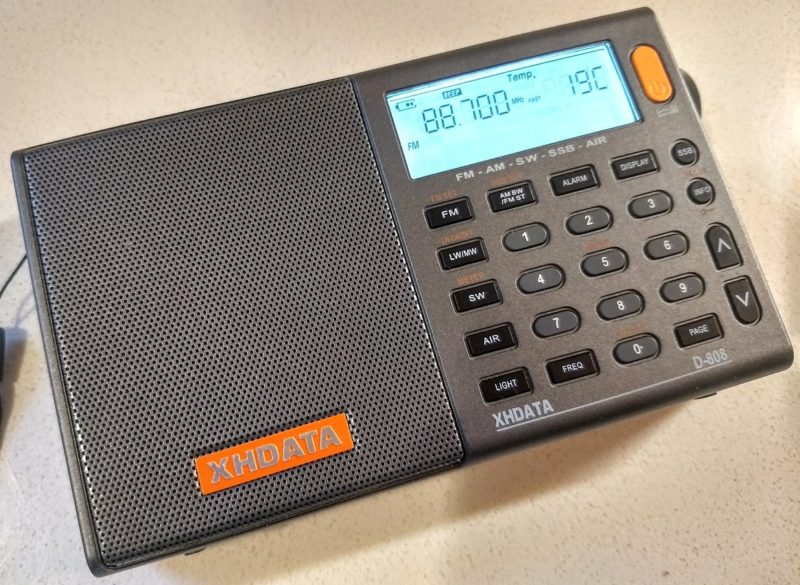
I recently received a new XHDATA D-808 SSB portable receiver, after AliExpress had a $69 USD introductory sale. I’m intrigued by this new model, as it uses the SiLabs Si4735 DSP chip, the same “brains” that powers the Eton Satellit (and Executive version), and C. Crane Skywave SSB. I believe the same Si4735 is found in Tecsun’s PL-880 and the CountyComm GP-5/SSB. A key feature found in all of these radios is USB/LSB modes and 10-Hz tuning step in SSB.
It would be a mistake to assume that all portable DSP receivers with the same SiLabs chip will perform equally; quite the opposite! They all have reception differences that owners will notice. I certainly noticed differences in sensitivity, AGC action, audio quality, and (to some extent) variations in adjacent channel (splatter) rejection between receivers using the same bandwidth. I made these observations when I owned the PL-880 and GP-5/SSB radios. Differences in the circuitry surrounding the SiLabs chip, as well the sizes of MW ferrite loopstick antennas and SW/FM whip antennas contribute to each receiver’s personality.
Below are four videos showing the D-808’s reception of three weaker daytime medium wave stations from indoors at my suburban Seattle-Tacoma (WA) home, plus one video of a shortwave reception in the 41 meter band. The XHDATA D-808 is compared to C. Crane’s newest Skywave radio, the SSB model, and the Eton Executive Satellit. Although brief, these tests show how the new XHDATA portable is a welcome competitor to the field of modern, compact SSB-capable radios:
What about single sideband? These four videos show reception in AM mode only, but rest assured the D-808 is very capable on the SSB modes of LSB and USB! A separate fine tuning rotary wheel on the right side of the radio’s case offers adjustment in 10 Hertz increments. The effect feels very similar to tuning CountyComm’s GP-5/SSB “walkie-talkie” style receiver. The plus or minus (+/-) offset is displayed in multiples of 10 Hz steps as “-1”, “-2”, “-3”, and so on.
I hope to post some future videos showing SSB usage of the D-808.
Soft mute. The dreaded soft mute is present in AM and SSB mode to some degree, but I do not feel it is excessive. Like most radio hobbyists I’m not a fan of soft muting and prefer uninterrupted tuning with no sign of “chuffing” or lowering of noise or audio. The amount of soft mute on this radio seems the same as the Eton Executive Satellit in my opinion.
What else to like?My take–
Audio. I find the D-808’s audio quality to be slightly more mellow or warmer…I like that, especially on FM! Audio on the MW and SW bands still has a crispness that aids in DXing on those bands, however.
18650 Li-Ion battery. Not all may agree, but I like this style of battery. The D-808’s internal circuit shuts off when the battery is fully charged, or after 10 hours of charging. The radio comes with a 18650 battery and a USB cable; the owner supplies a common 5V USB charger.
RDS on FM. This is a feature lacking on the Skywave SSB, but it is present and performs as expected with the D-808. The XHDATA radio lacks the Skywave SSB’s NOAA weather presets, however.
AM filter bandwidths. Interestingly, this receiver supplies two additional narrow AM mode bandwidths lacking in the Executive Satellit: 1.8 kHz and 1.0 kHz. It’s good to have options, although such narrow filters in AM mode sound a little muffled (offset tuning helps). The Skywave SSB does offer 1.0 kHz in AM mode, but has a 2.0 bandwidth in place of 1.8 kHz.
Backlighting. If desired, the D-808’s easy-on-the-eyes white backlight for the display can remain illuminated continually. Bravo, XHDATA! Now, if we could persuade more manufacturers to add backlighting to the keys themselves (a la the Degen DE1103/Kaito KA1103/Eton E5), we’d have more choices use in low light conditions like camping or bedside use.
Handy size. Probably a third larger than the diminutive Skywave SSB, the D-808 is still a very handy size that will fit most coat pockets, and is a smaller receiver than the Eton Executive Satellit. As you can tell from my videos, reception doesn’t suffer due to the smaller size.
Design. OK, this one’s very personal! As a graphic designer I have a real soft spot for any receiver that looks as good as it sounds, no matter what the technology or vintage. The D-808’s look really appeals to me and adds to my enjoyment while operating it. There are no unnecessary protrusions, ridges, or visual do-dads on this XHDATA model. In fact, I seem some design clues from the stylish Tecsun PL-880 in the D-808. The radio also has a quality feel to the plastic case and buttons, giving it a more “upper class” impression during use.
Antenna jack. The D-808 has the standard 3.5mm antenna port on the left side of the receiver. This is an addition I appreciate, and wish that C. Crane had included one on their Skywave SSB model. I tried this external antenna jack with an amplified PK Loops’ shortwave antenna and the combination performs excellently.
Minor annoyances
So far, the list is short! As a sacrifice to style, the manufacturer has kept all front panel buttons almost flush with the case. The effect looks great, but they are almost too low and close to the front panel. Those with larger fingers may find operation awkward or frustrating. Also, entering a shortwave frequency with less than five digits (i.e., below 10,000 kHz) requires a trailing push of the Frequency (FREQ) button.
I encourage other new owners of XHDATA’s D-808 to leave their comments below. Where does this portable rate among other radios you may own?
Guy Atkins is a Sr. Graphic Designer for T-Mobile and lives near Seattle, Washington. He’s a regular contributor to the SWLing Post.

 In my original article 10 days ago, I set up a SWLing Post reader poll to let you give your opinion on which shortwave recordings within four pairs of audio files provided the most intelligible result. The recordings were intentionally noisy, low-level signals to help us discover–through critical listening to the files–if there is a clear favorite between the AirSpy HF+ or the Elad FDM-S2 receivers. Of course, there were only four pairs of recordings…not a very large sample size.