Category Archives: Nostalgia

Court of Dreams: How shortwave radio lead to a lifelong obsession with tennis

Many thanks to SWLing Post contributor, Dan Robinson, who shares the following video from CBS Sunday Morning and notes:

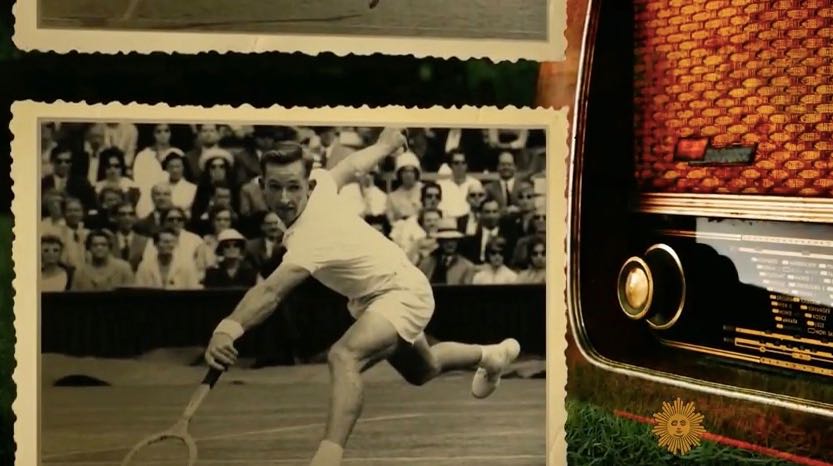
For those who may have missed this recent CBS Sunday Morning piece, which tells the story of a guy who, inspired by BBC broadcasts of Wimbledon, built his own top-level court in Iowa. It’s not often that shortwave gets such national exposure:

(Via CBS Sunday Morning on YouTube)

“If you build it, they will come.” In the case of one tennis-obsessed fan who built a replica of Wimbledon’s center court on his Iowa farm, people have come from around the world to his All-Iowa Lawn Tennis Club, to play on his court of dreams. Steve Hartman reports.

Click here to view on YouTube.

This absolutely made my day, Dan!  Thank you for sharing.

Photo tour of Dan Robinson’s receiver collection

Earlier this year–the day before the 2017 Winter SWL Fest, in fact–Dan Robinson and I joined forces at the National Cryptologic Museum in Fort Meade, Maryland, and following a brilliant Thai lunch, visited Dan’s place, where I surveyed his stunning receiver collection, several of which represent the Holy Grail of the receiver world.

I thought you’d like a sneak peek at Dan’s stunning receiver line up, too––and just to sweeten the viewing, Dan has kindly written an introduction for each.

This is a real treat for us at the SWLing Post. Thank you so much, Dan, for sharing!

And now, here’s Dan:


A tour of my radio collection

by Dan Robinson

As most readers of SWLing Post probably know by now, I have had a lifelong love affair with radios (as many of us have had). My collection of receivers has changed through the years, with some exceptions being radios that have stayed with me for decades and which Tom was able to photograph during his visit to my home in Potomac, MD.

Since I began my DXing/SWL career in the late 1960’s I ramped up my collection from the simplest of radios to what I have now, a combination of remaining boat anchors together with some of the rarest and most sophisticated receivers on the planet. Some years ago, I made a brief foray into SDRs, but for me the thrill has always been in tuning actual radios and not spending additional hours sitting at a computer.

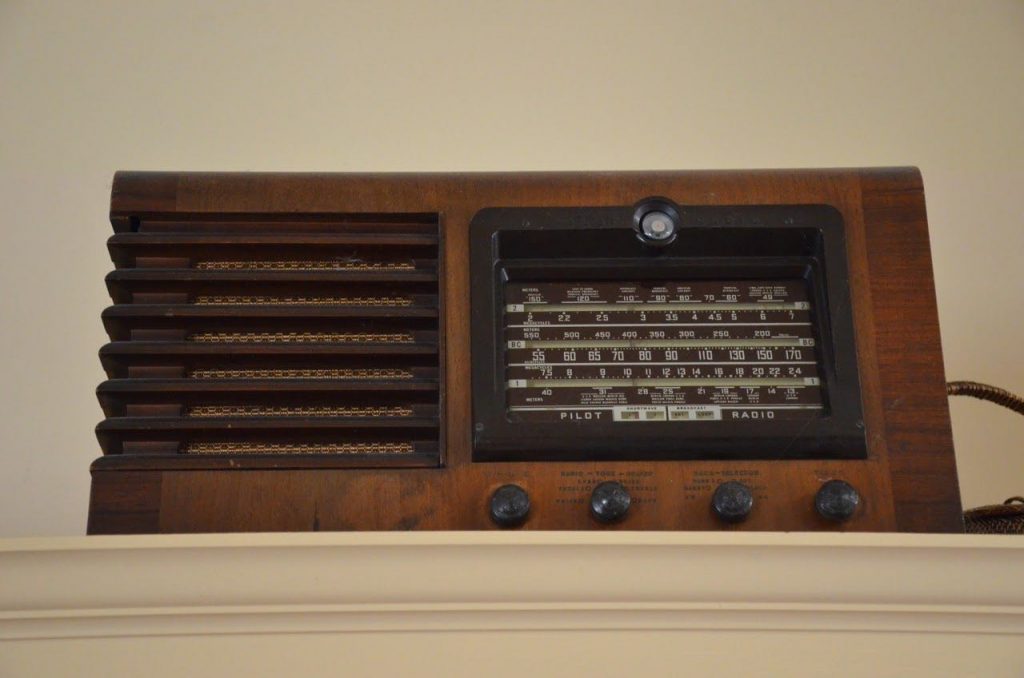
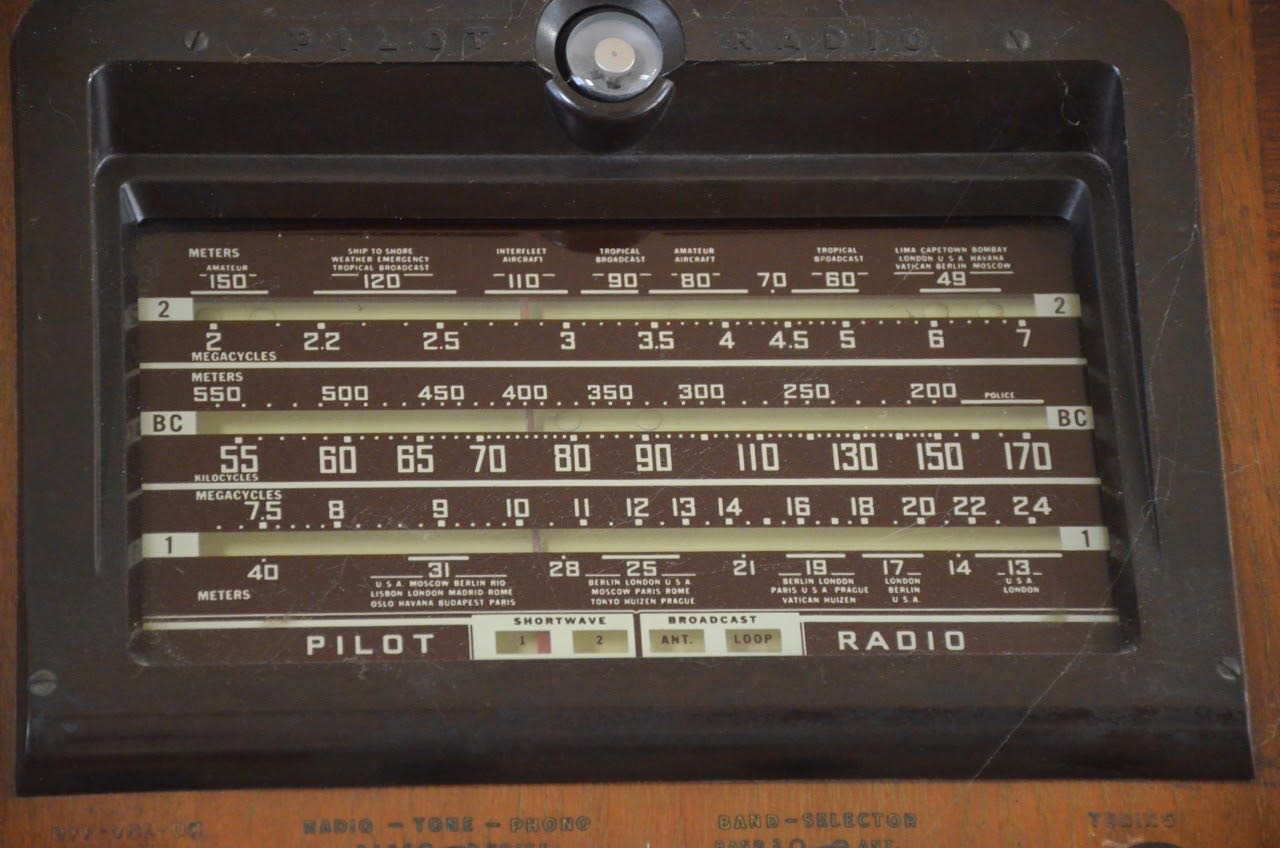
Pilot T-133
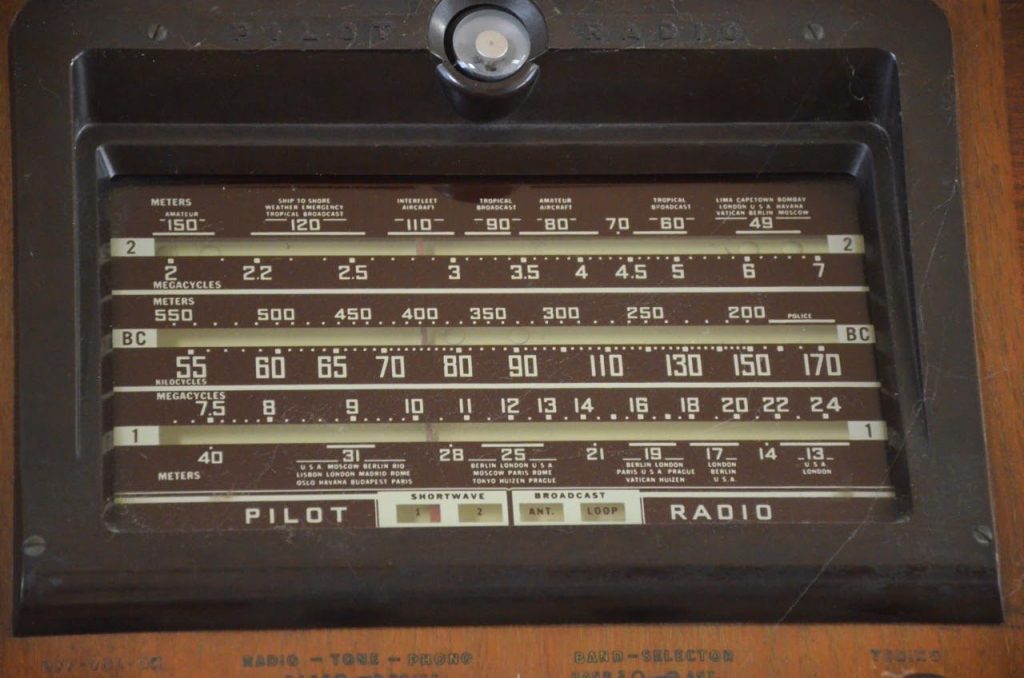
Though I actually do remember my very first shortwave receiver — a very basic Toshiba portable — a Pilot T-133, from the year 1942 served as my main receiver for quite a few years from the late 1960’s to early 1970. I remember the day my father found this beauty in the basement of my grandmother’s house in the Bronx. He brought it home, strung up one of those Radio Shack copper SWL antennas in the attic and I was off to the races, and addicted. Often pulling 24 hour listening sessions on weekends, I would sit with my ear to the speaker of the T-133, and had a Wollensak reel-to-reel to record my earliest DX catches. My favorite, as it was for so many of us, was Radio Tahiti and Radio New Zealand which boomed out of the large speaker on the Pilot T-133. As you can see, i made a point of keeping the Pilot, with its tuning eye and slide rule dial, with me all these years and it now occupies a place of honor on a shelf in my den.

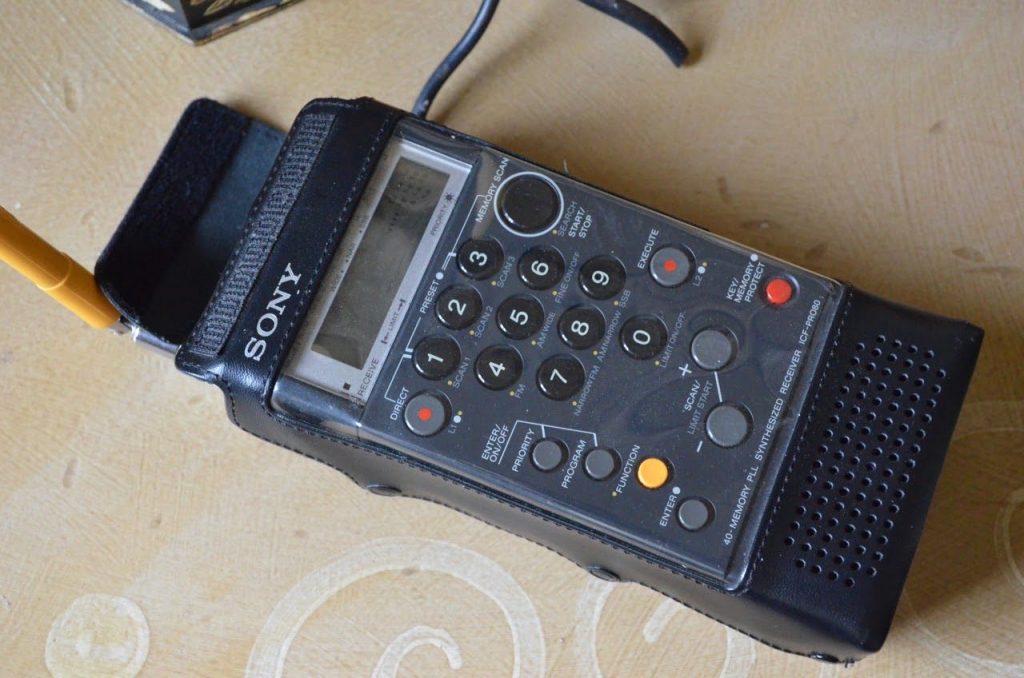
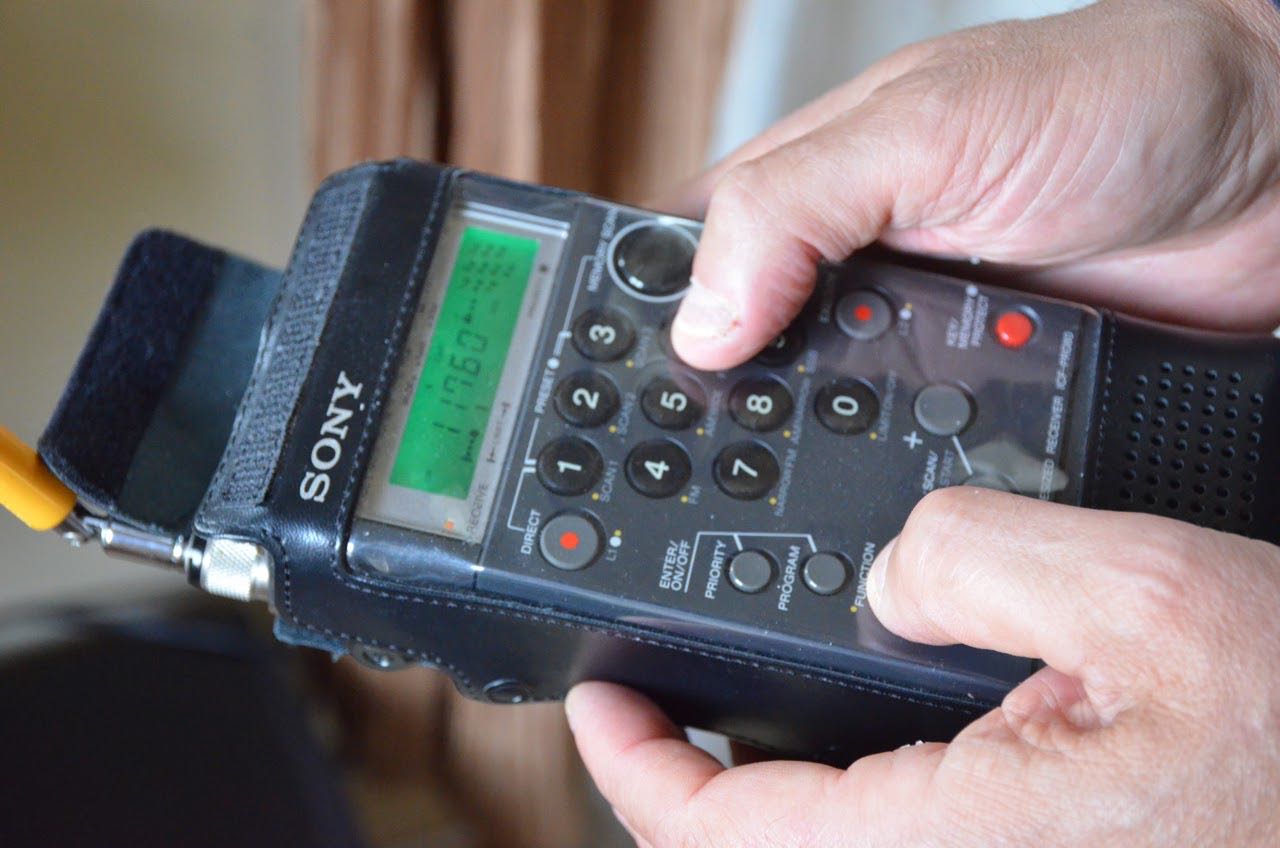
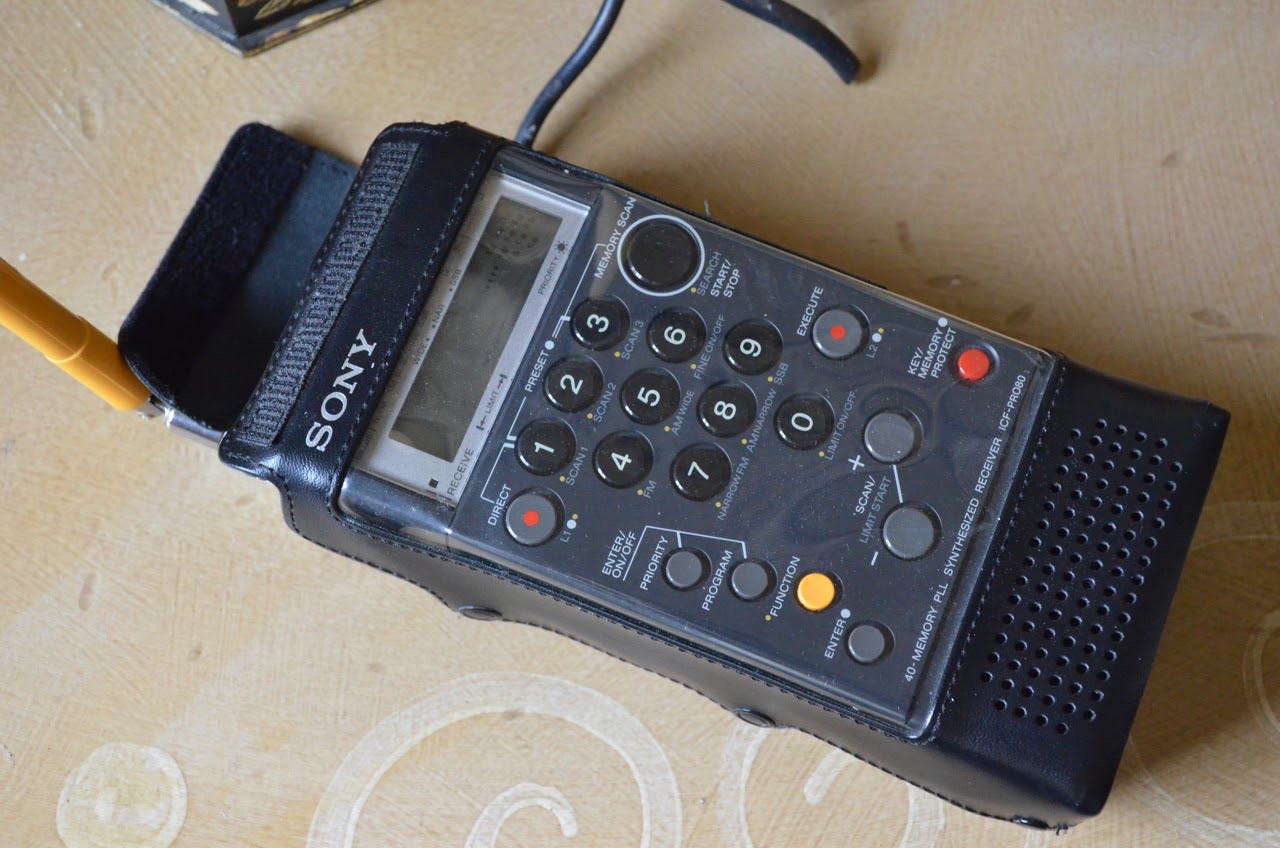
SONY ICF-PRO80
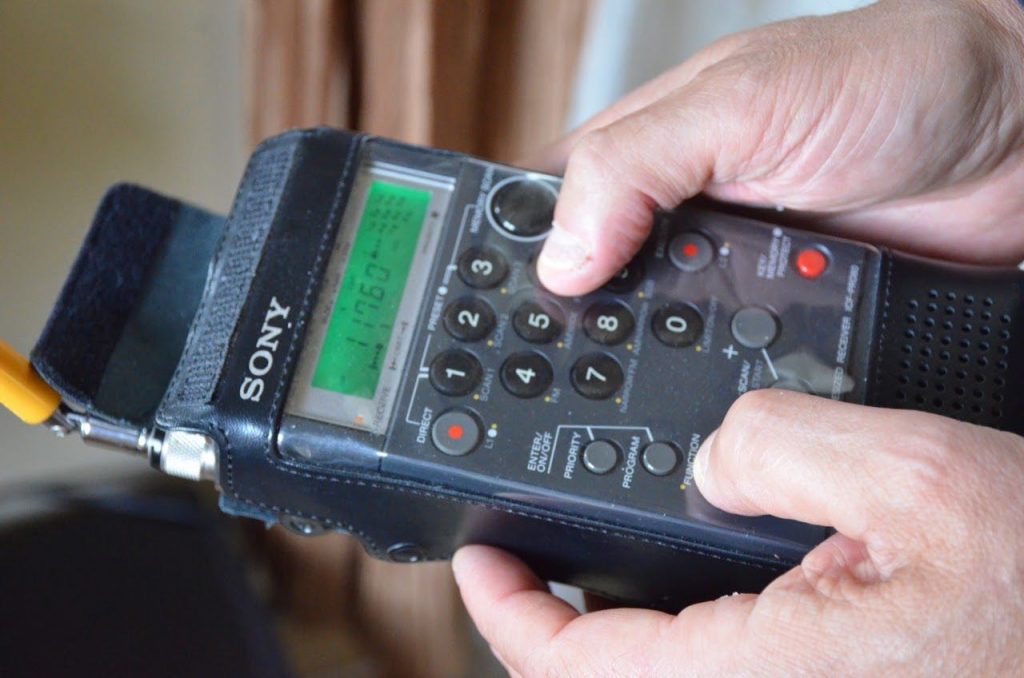
As Tom found out, my house has a number of radios scattered around, and one of them is the ICF-PRO80 by SONY. I took an interest in these wonders of technology late in my DX career. The PRO-80, like so many other SONY portables, is a technology showpiece, with its HF, AM, FM and VHF coverage. It has narrow and wide AM modes, SSB with a tine tuning control, and is quite complex to operate. Beware that PRO-80’s, like the AIR-7 and AIR-8 which have limited shortwave spectrum coverage, suffer from small component failure after so many years and though there are a couple of individuals who fix these radios, you’re taking a chance and you need to ask thorough questions of any seller.

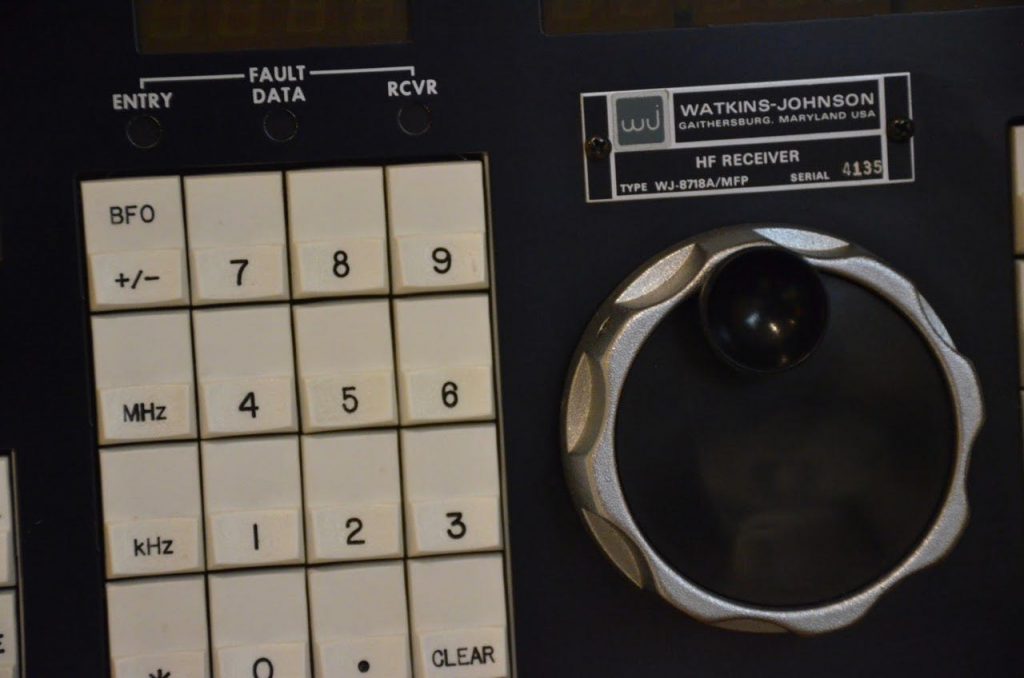
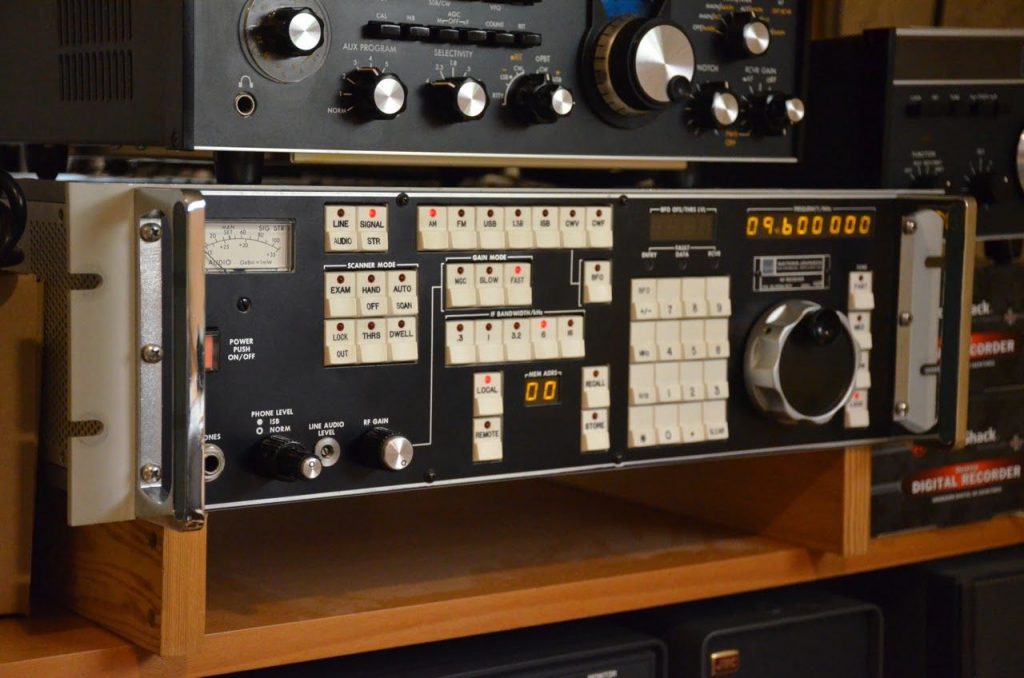
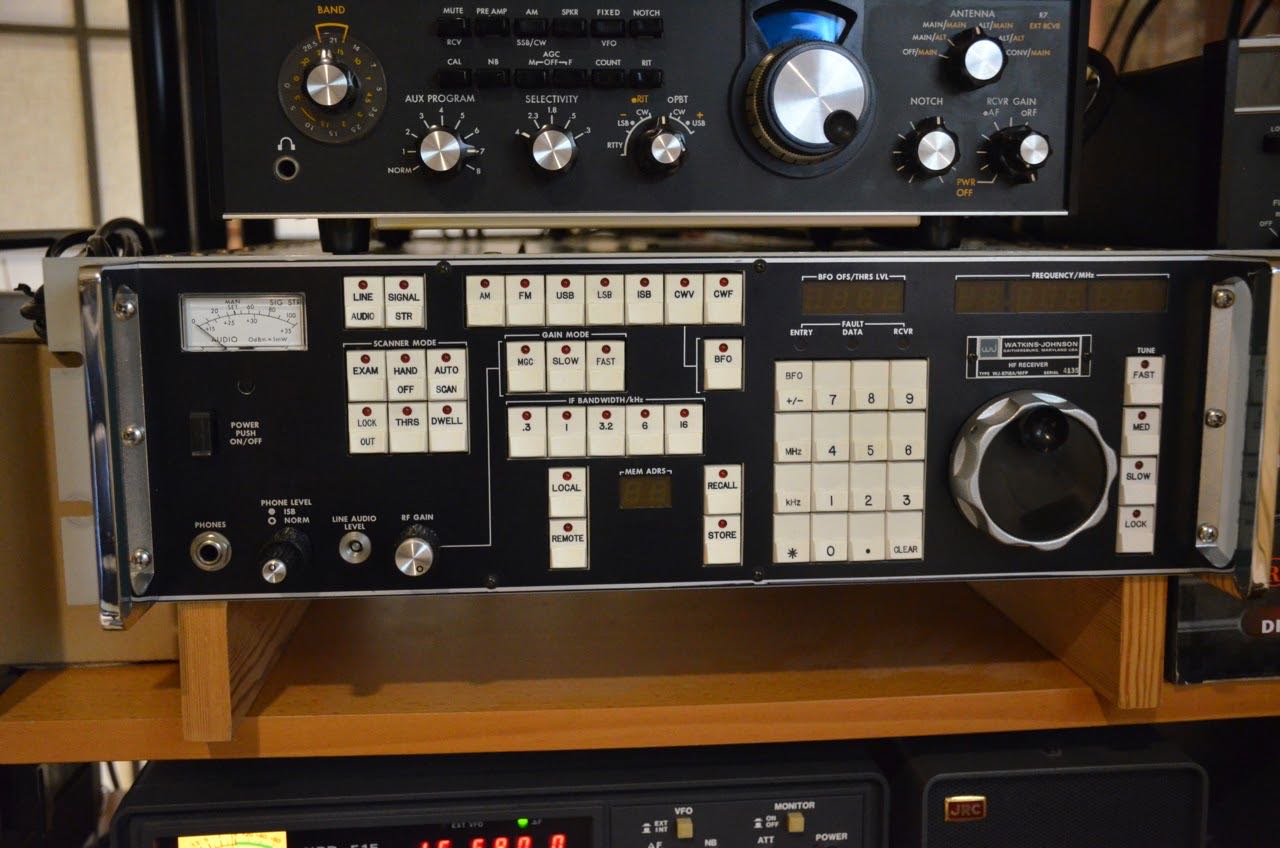
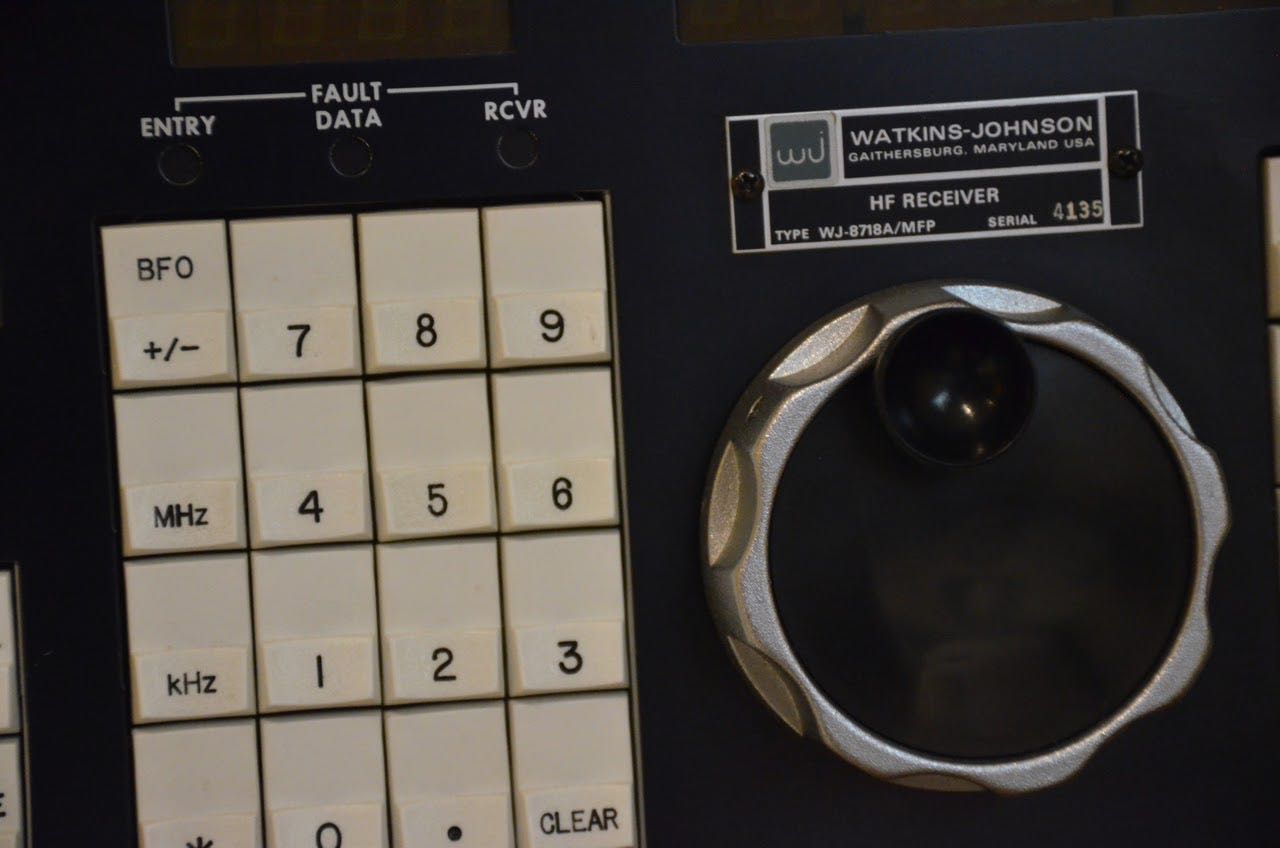
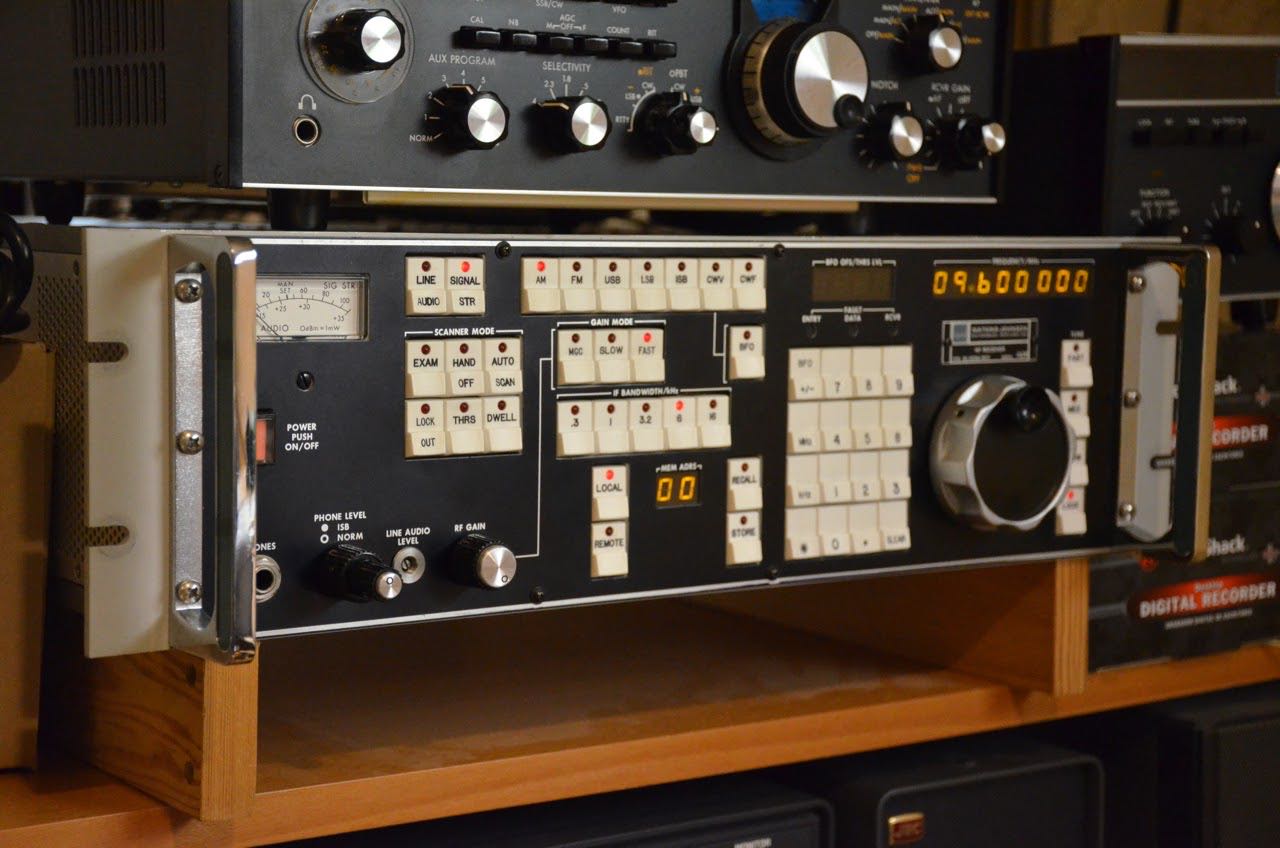
Watkins Johnson 8718A/MFP
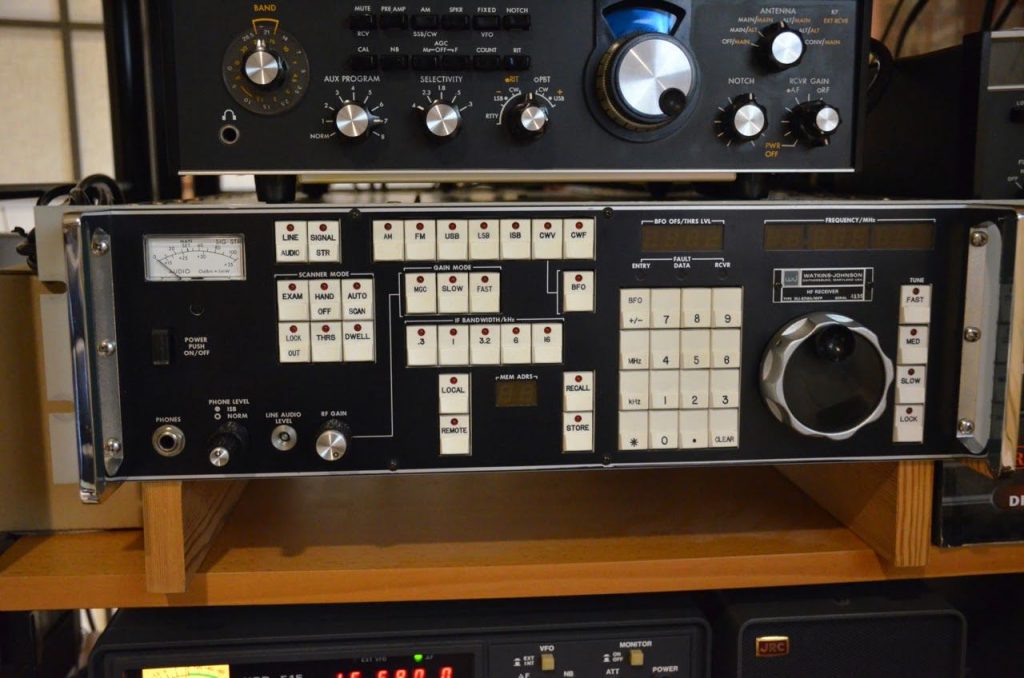
In the late 1990’s into 2000, I acquired a receiver I had always wanted, the Watkins Johnson 8718A. Actually, my first two of these radios I obtained while working overseas as a news correspondent for VOA in Thailand. They were being cleared out in a government auction, and I drove a few hours outside of Bangkok to get them at the VOA relay station. These are beautiful receivers, but they were surpassed by the 8718A/MFP which I obtained in an auction when back in the U.S. At one point, I had two of these babies, but now have kept one, which has the preselector option installed, and the rare 1hz readout with ISB capability. I rank these receivers in the top 10 of all I have ever used. They are super quiet, and you can really tell the difference between one of these pre-DSP radios and the later WJ HF-1000 and 8711/A.

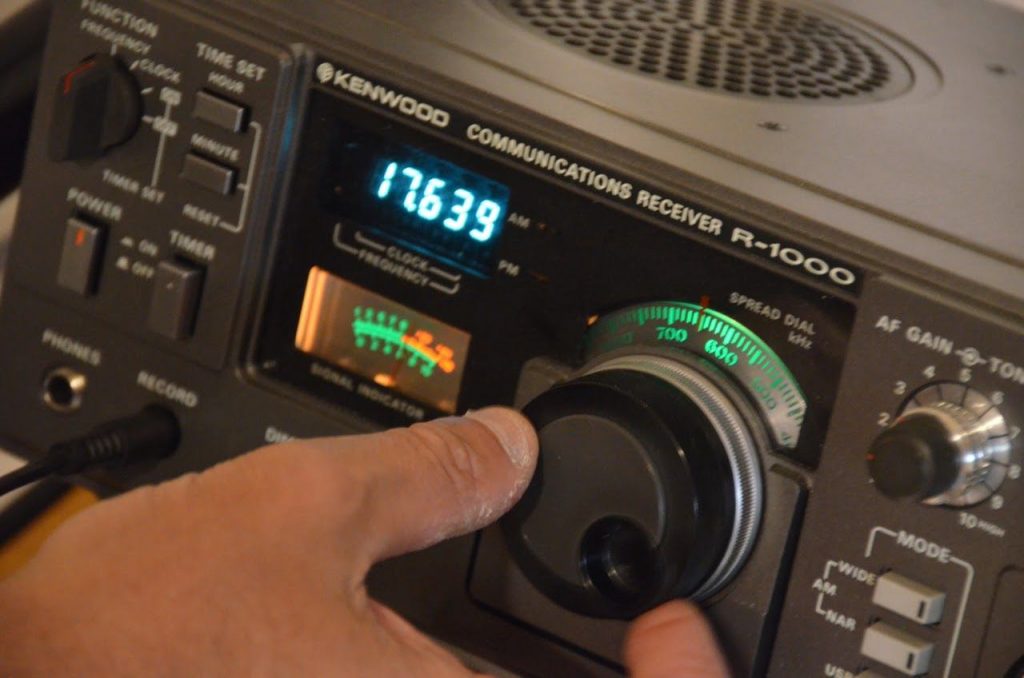
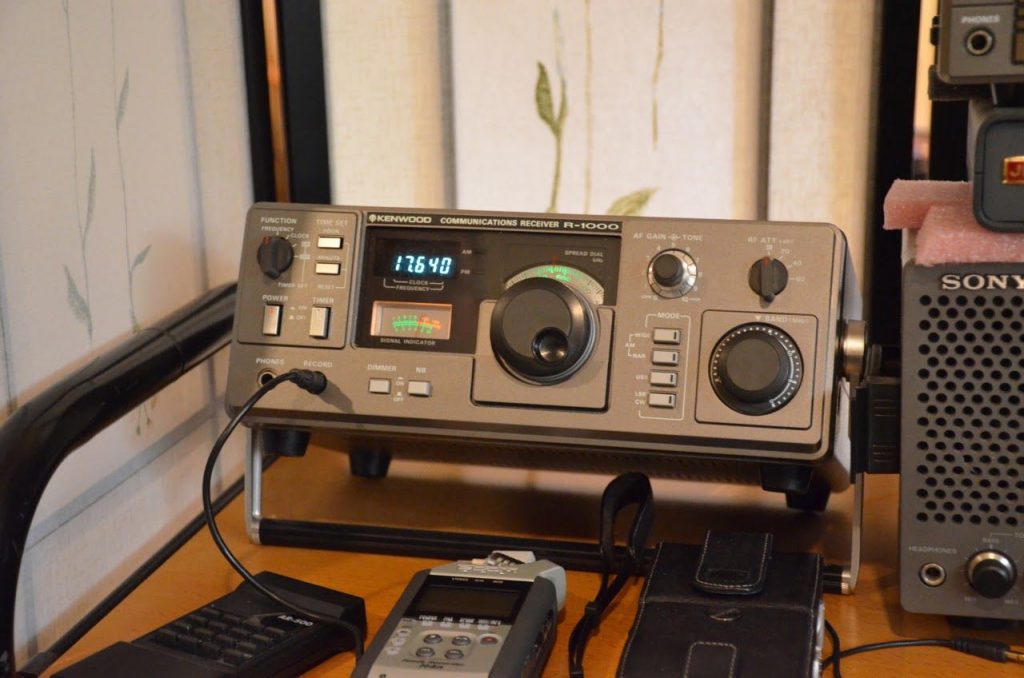
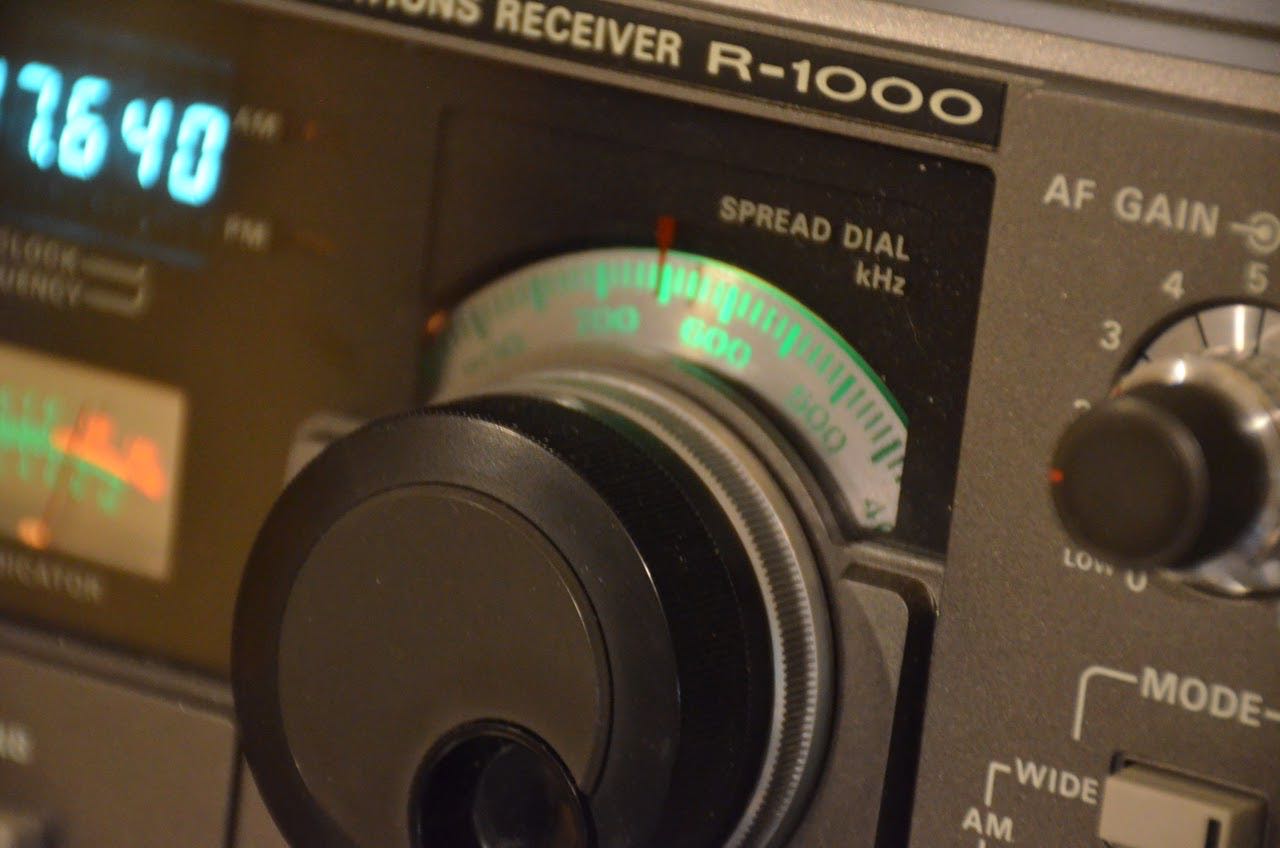
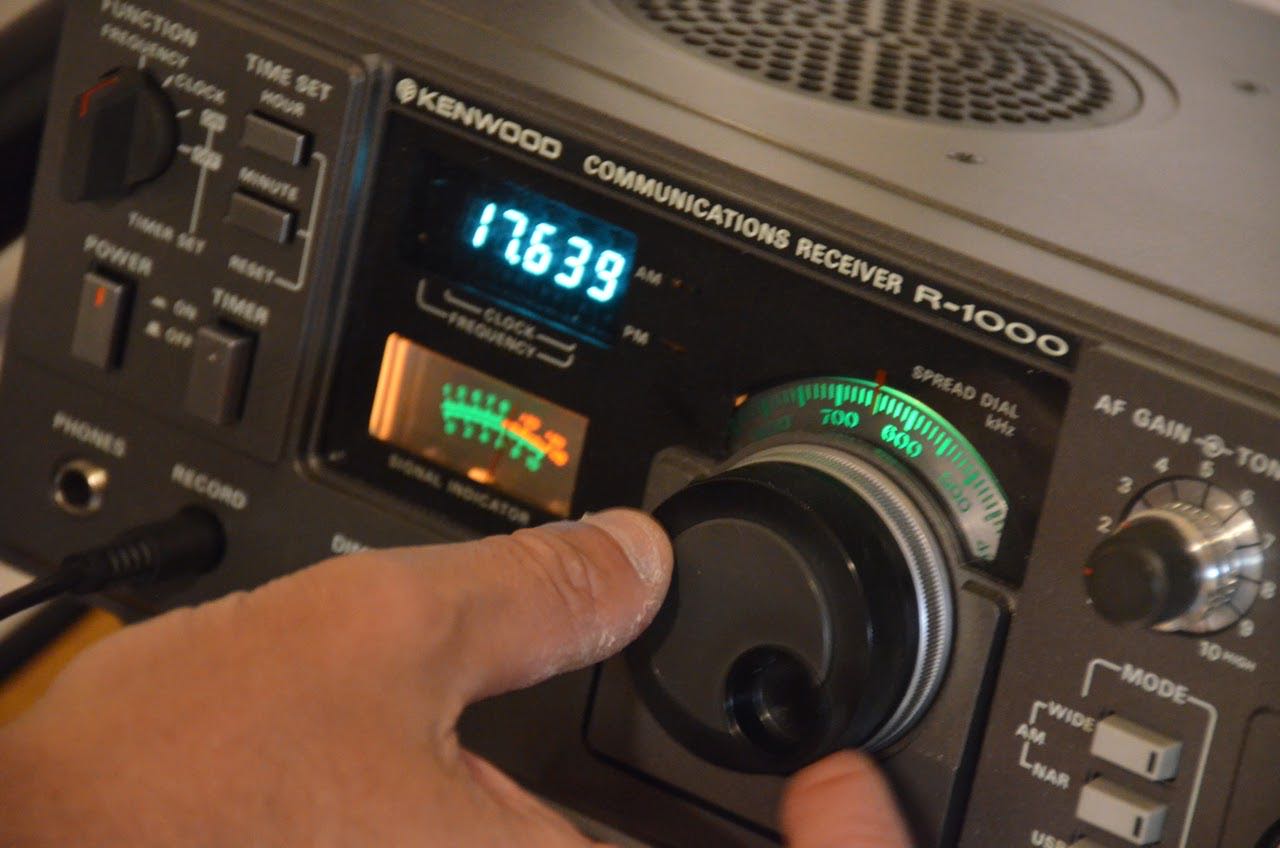
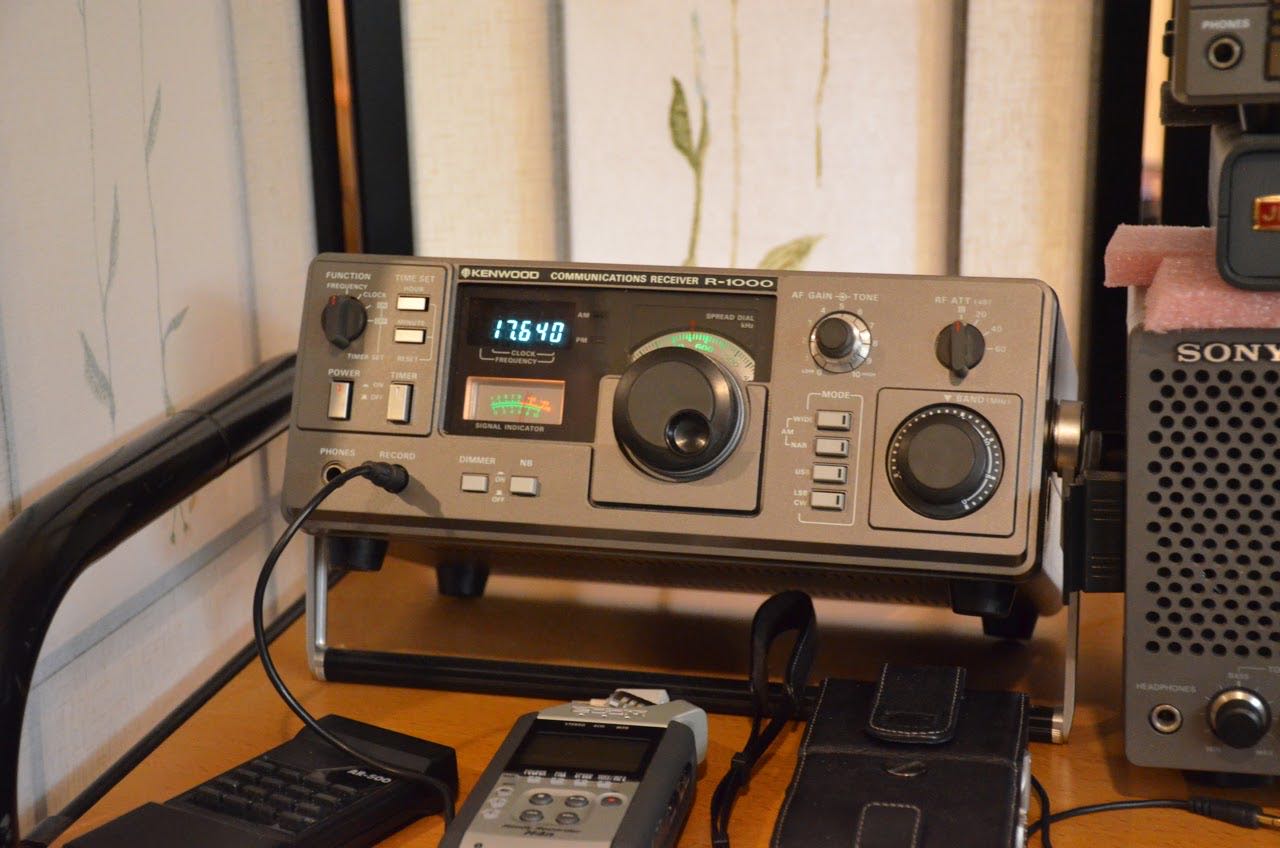
Kenwood R-1000
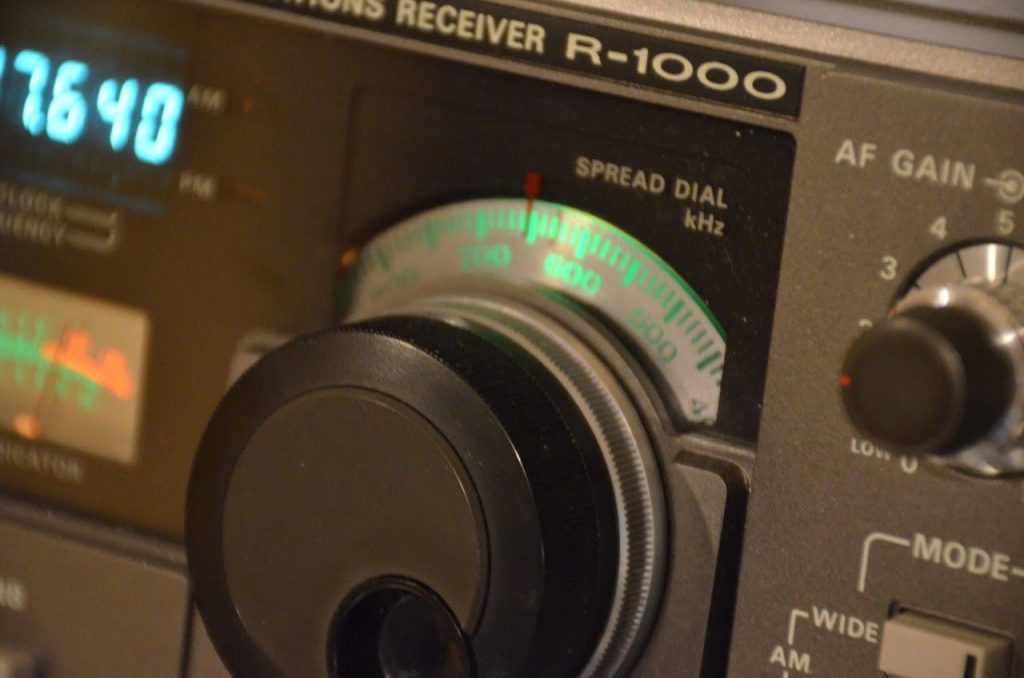
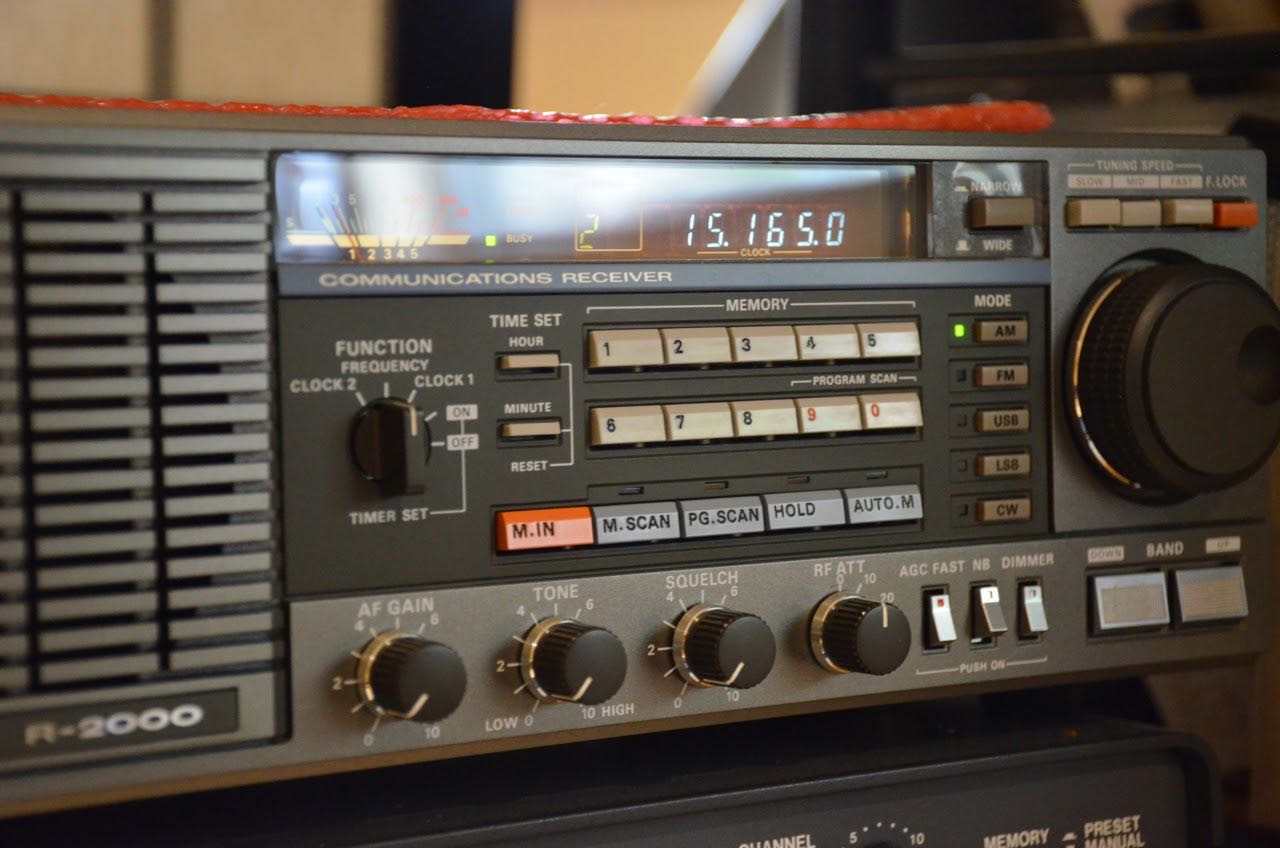
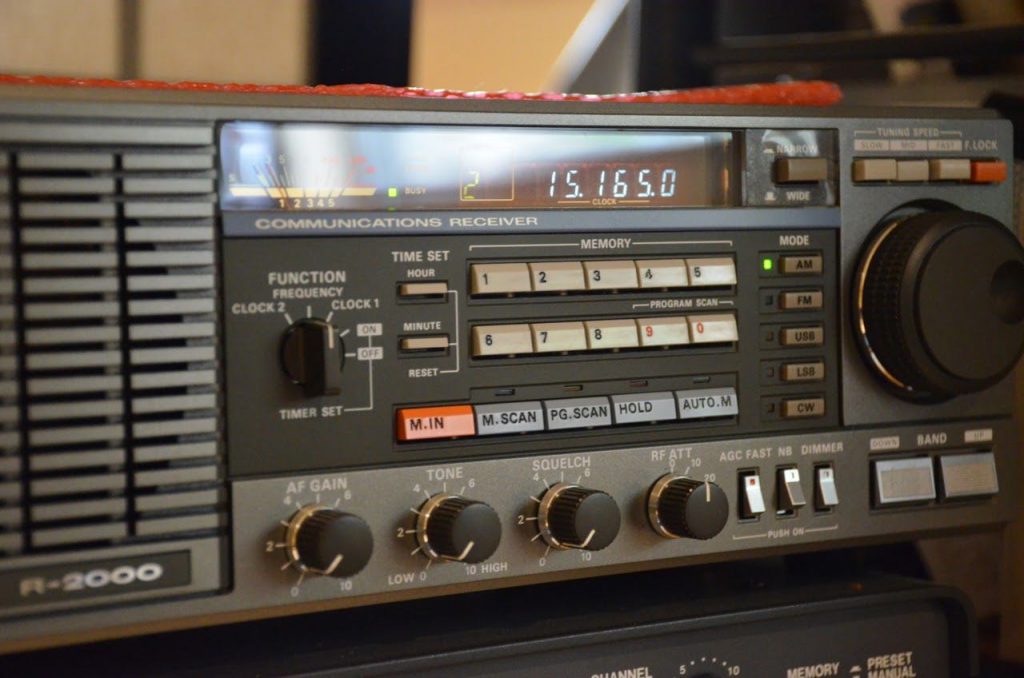
Two radios I have always ignored were the Kenwood R-2000 and R-1000. I have both of them now and enjoy their superb audio and straightforward operation. The R-1000 especially is a joy to use — and truth be told, I don’t hear a lot on my multi-kilobuck receivers that can’t also be heard on one of these Kenwoods. For those of you interested, the two solid state recorders in the photo (above) are the Zoom H4n and the SONY PCM-D50.
JRC NRD-630
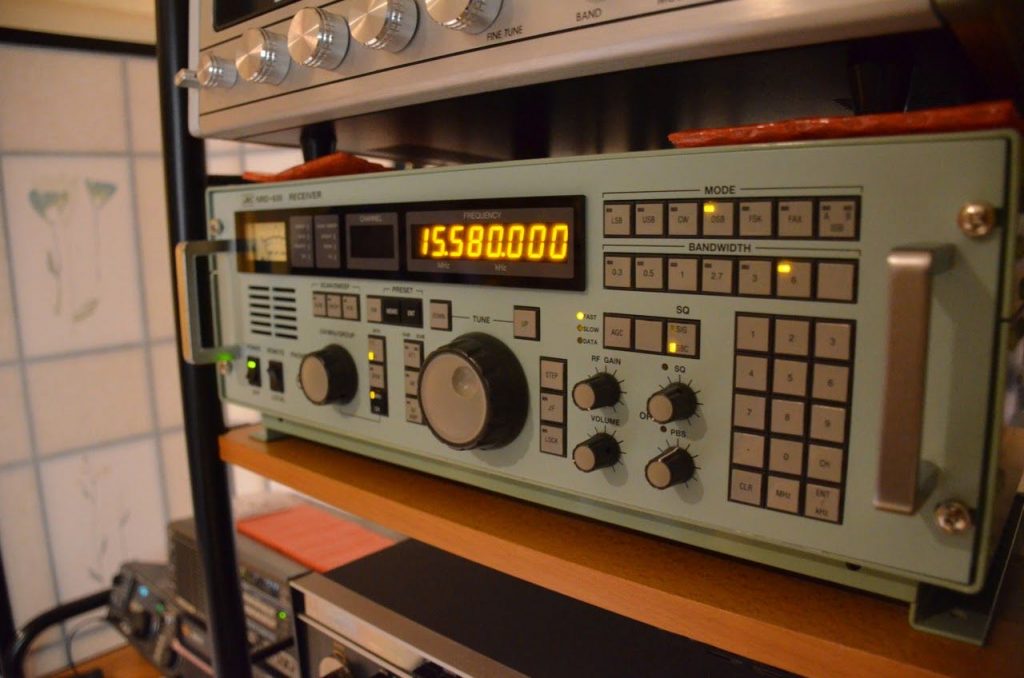
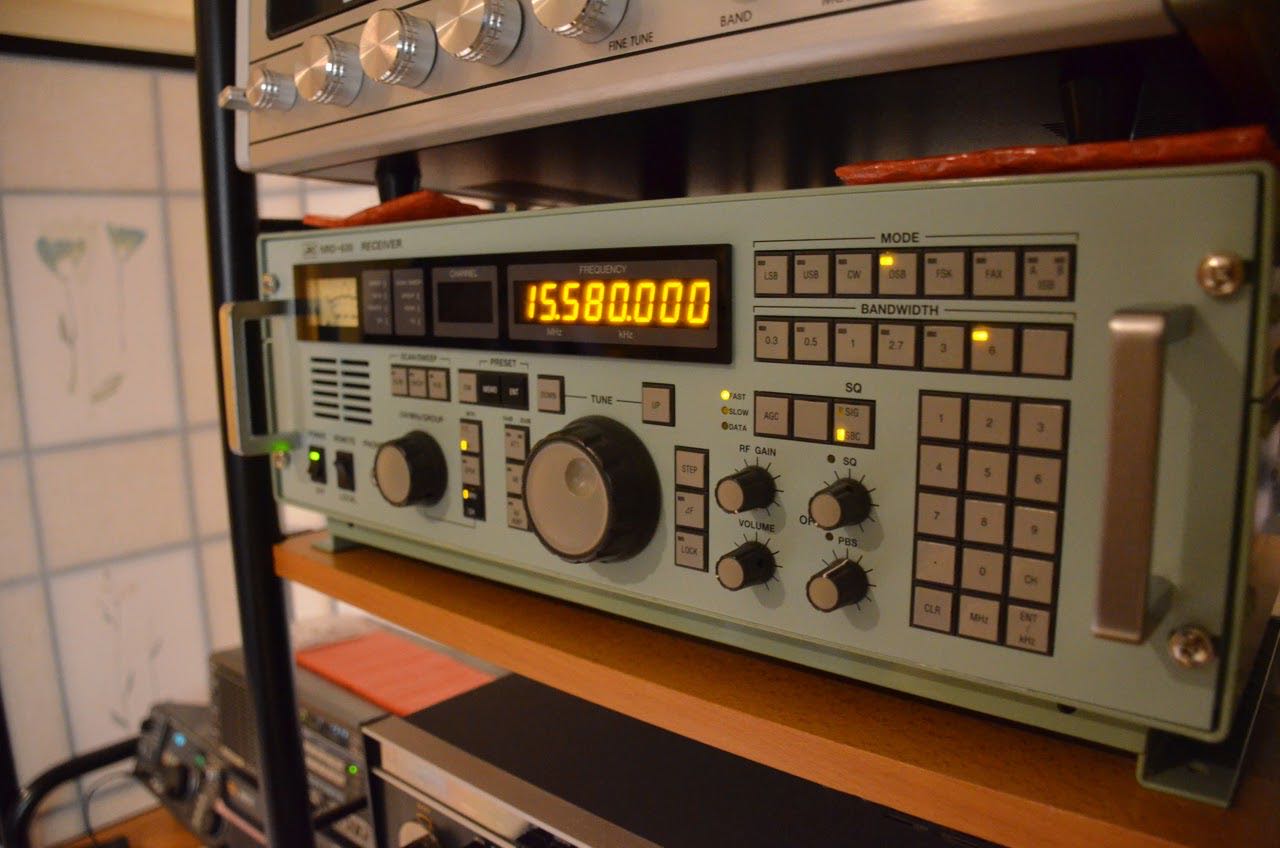
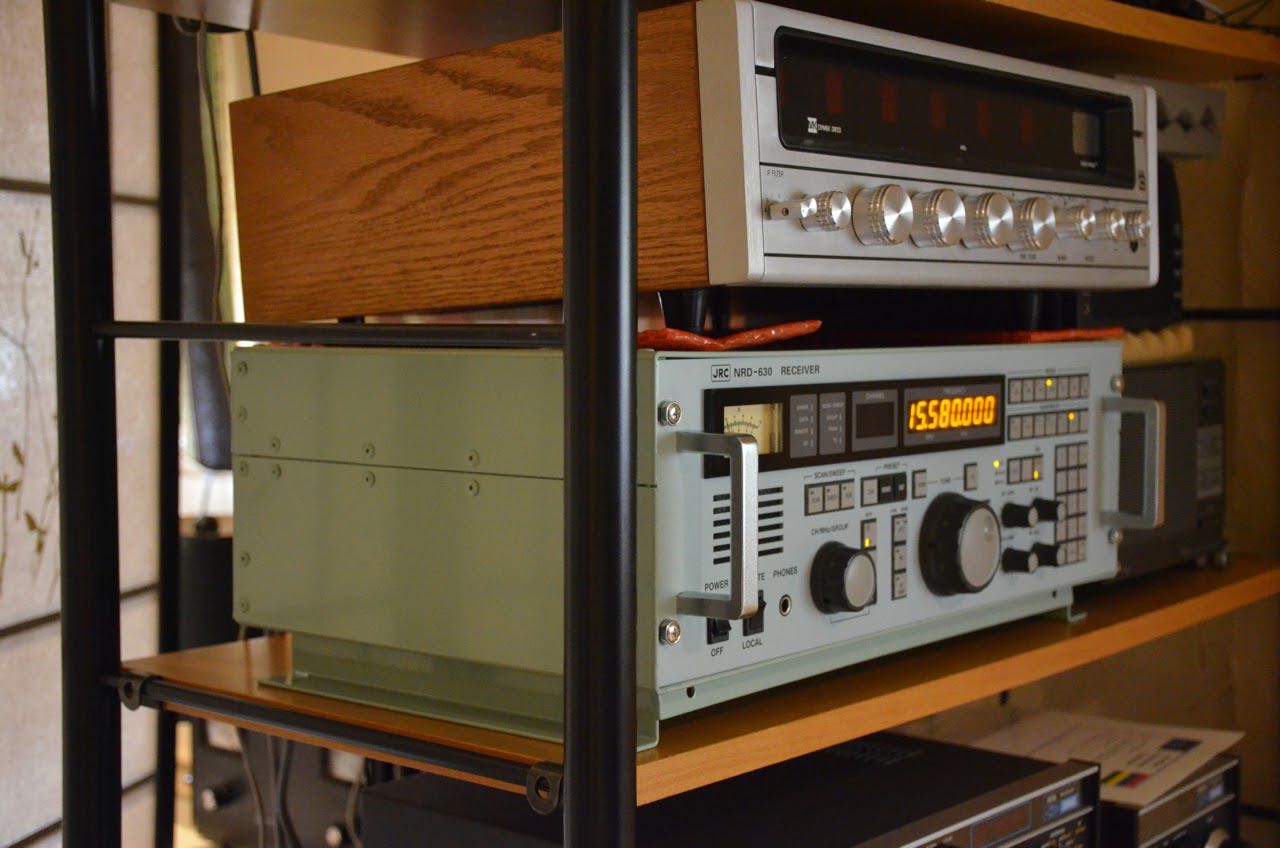
Those who attended the last SWL Fest in Pennsylvania had the rare opportunity to use one of the rarest receivers on the planet. We’re talking about the JRC NRD-630. This was the last marine/commercial HF receiver manufactured by Japan Radio Company. No one knows how many were actually made, but one thing is certain — they are almost never seen on the used market. This one has a bit of history — it was manufactured in 2012 and re-certified by JRC in 2017. Again, a long story, but when I got it it still had the thin plastic protective strip across the large beautiful LED readout window. It was basically new. I still intend to do a comparison of the NRD-630 with the NRD-301A, one of which I also have. The difference between the 301A/302 series and the 630 is that the previous series were pre-DSP, while the 630 was DSP, though with regular filtering. The 630 adds a keypad, and ISB and some other features.

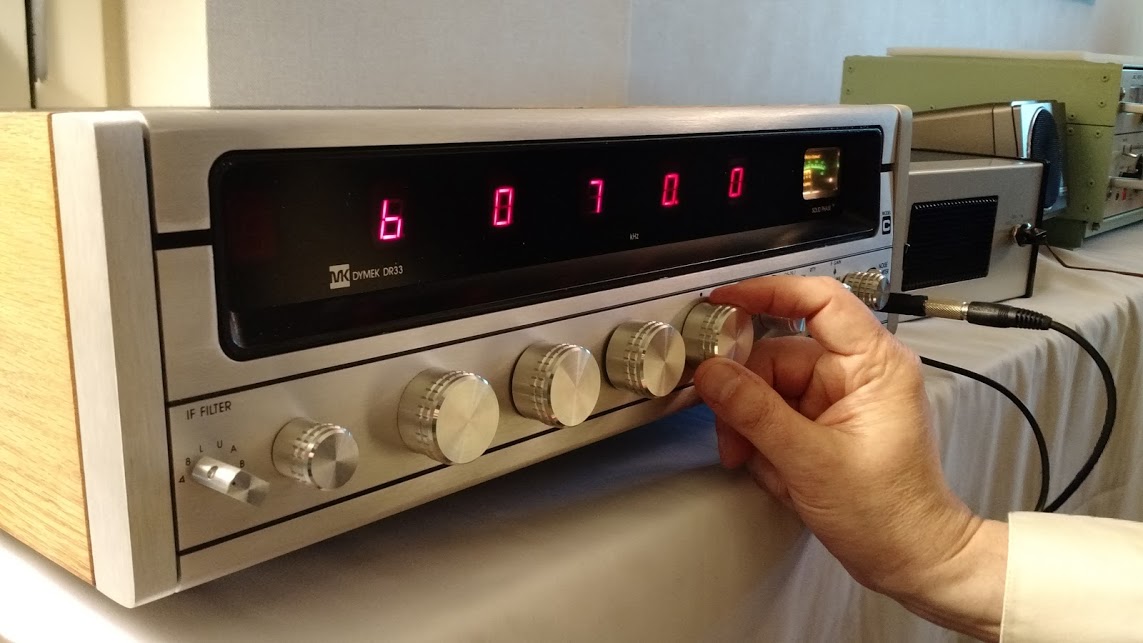
McKay Dymek DR-33C6
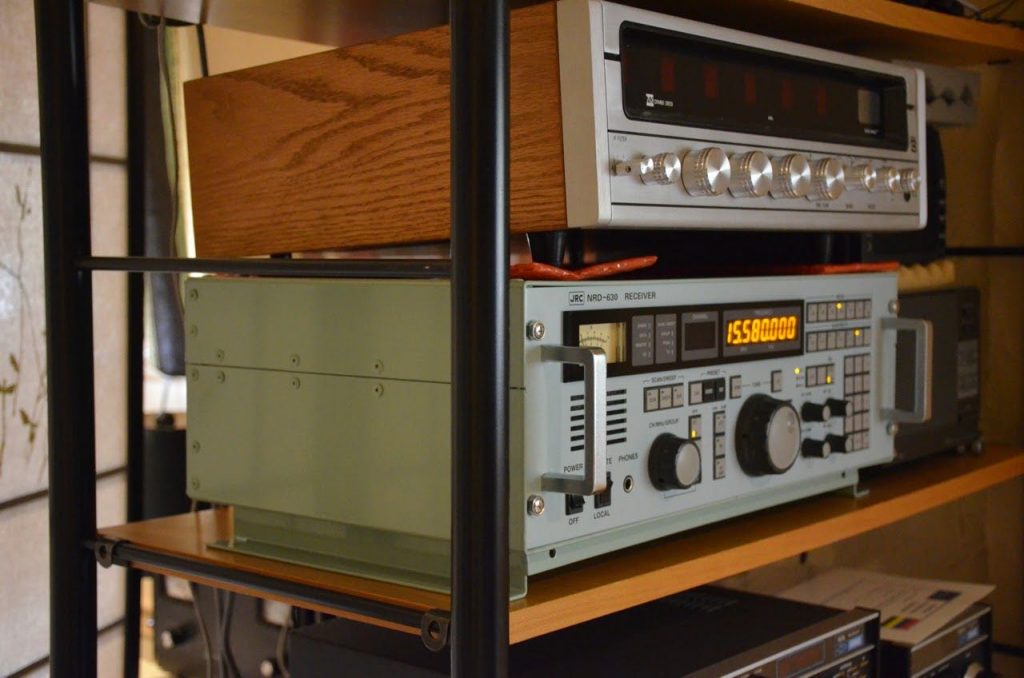
McKay Dymek DR-33C6 (Top) above JRC NRD-630

Much has been written about the series of radios manufactured by McKay Dymek, so go to eHamnet and other online sources for the background of the company. I had always been curious about these receivers, and had my first opportunity to use one about 15 years ago. Unfortunately, that receiver had a tough life and my antenna situation was not great. A few years ago, a seller in Texas put a DR33C6 on Ebay — it was clear that it had been basically used once and stored in a closet. When it arrived here, I was floored — it was in perfect cosmetic and operating condition, with its beautiful wood panels and shiny front metal panel.
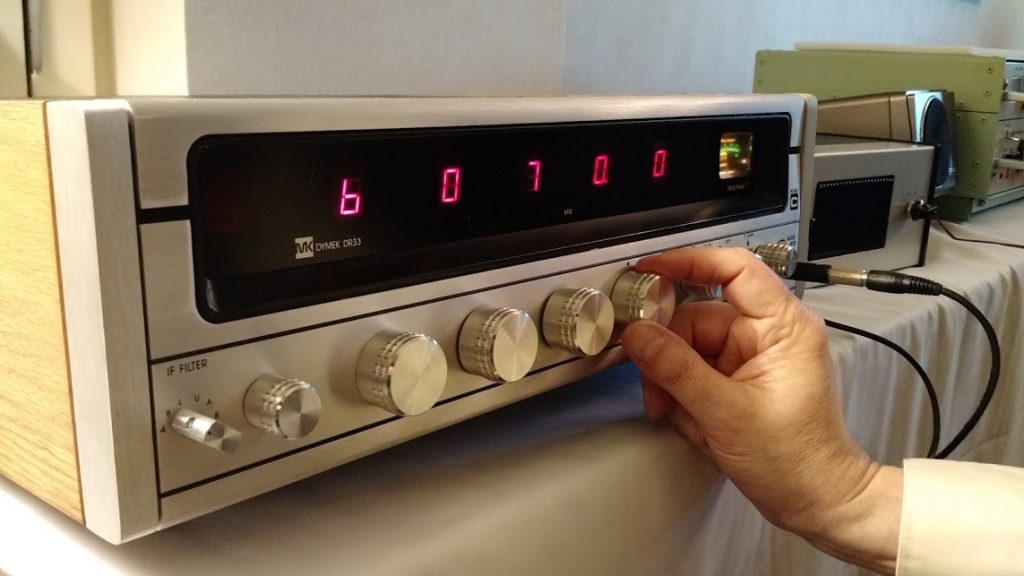
Dan’s McKay Dymek DR-33C6 at the 2016 Winter SWL Fest Hospitality/Listening Room

McKay Dymeks are for those who already know what frequencies they’re tuning. It’s quite a bit of fun, but more importantly, these receivers are under-appreciated: they are among the most sensitive radios ever made. And they look marvelous as part of a home audio system.

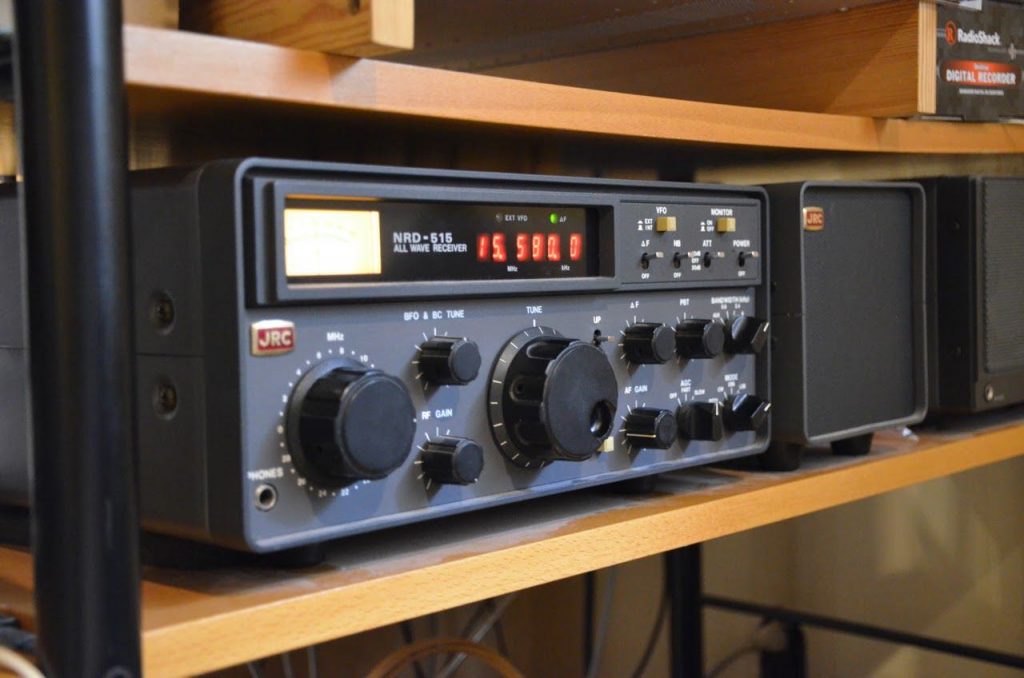
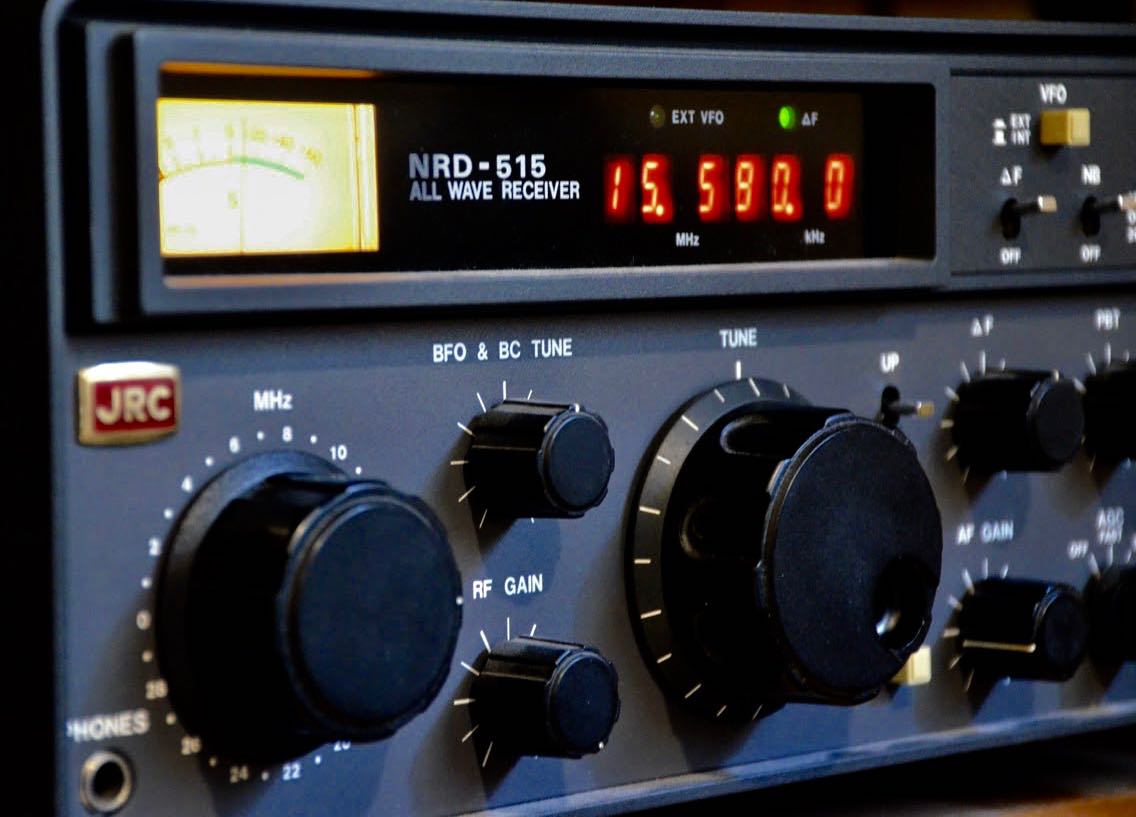
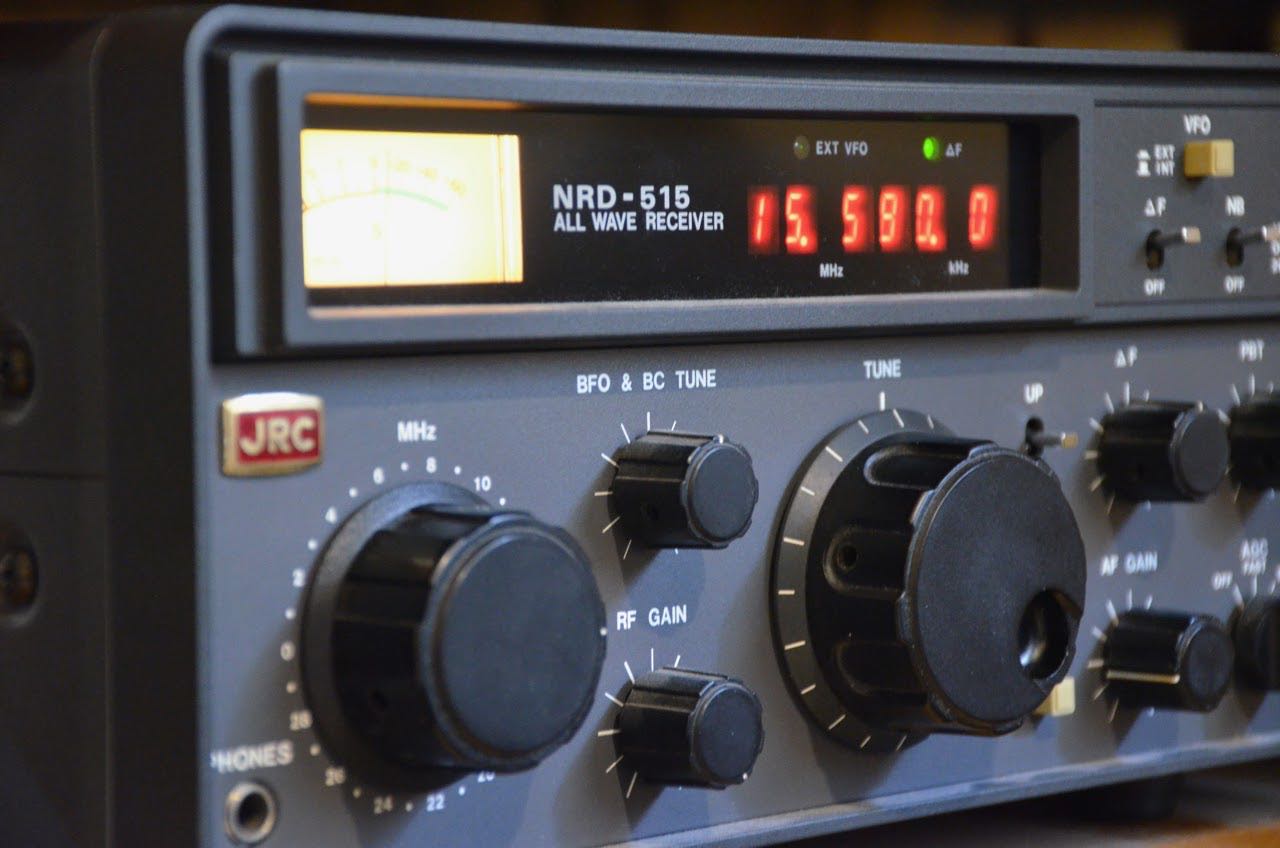
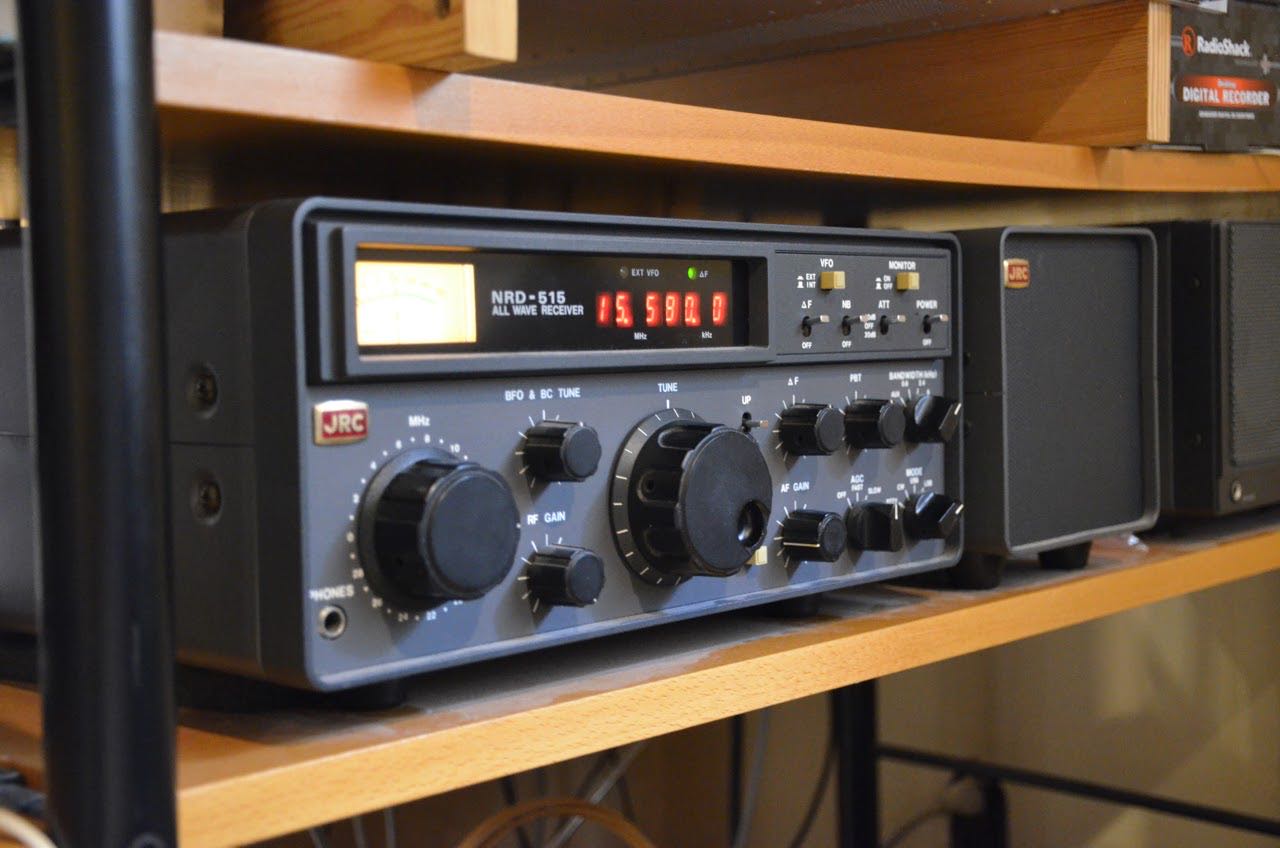
JRC NRD-515
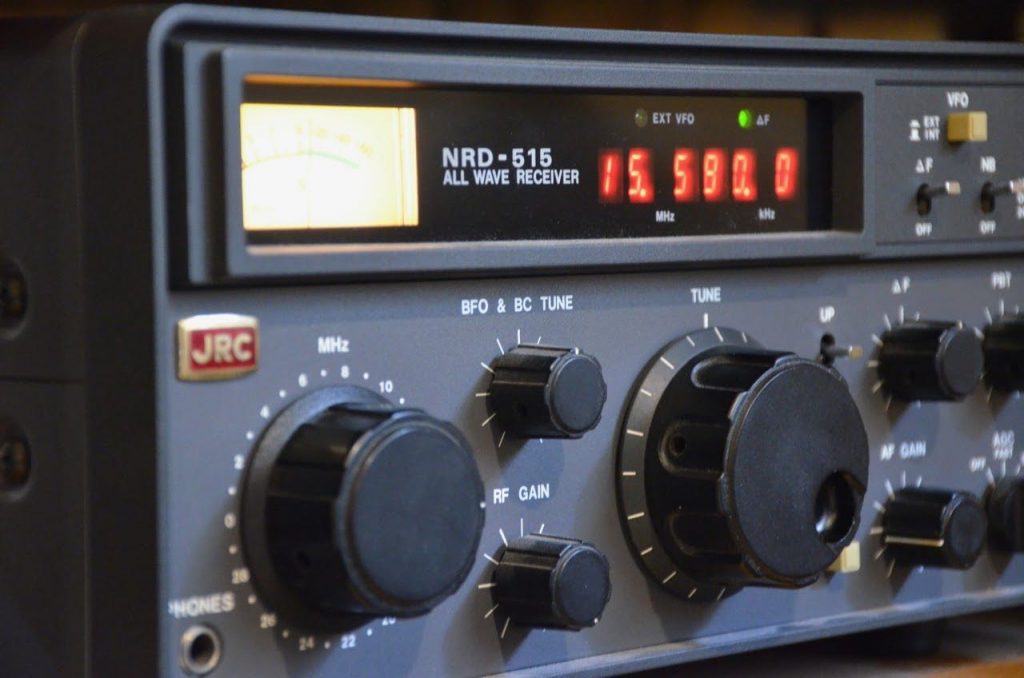
What can one say about the 515 that hasn’t been said? Built like a battleship, this was the top of the line JRC consumer receiver (they also made a transmitter) separate from their pro marine/commercial radios. Like most of my receivers, this 515 is in near 10.0 cosmetic condition, along with the matching speaker. At the time the 515 came out it was among the only receivers that offered boatanchor-level flexibilities in a solid state rig (my favorite comparison was to the Hammarlund HQ-180/A). Though prices for 515s have experienced a sharp drop, they still bring fairly high prices on the used market and are cherished by those who know how good they are.

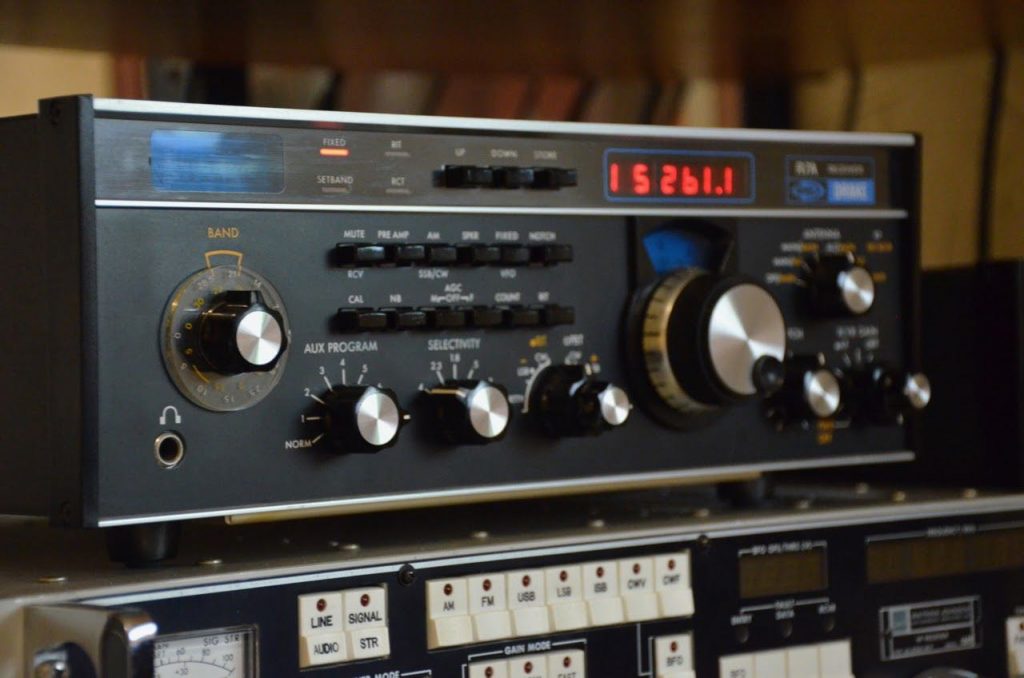
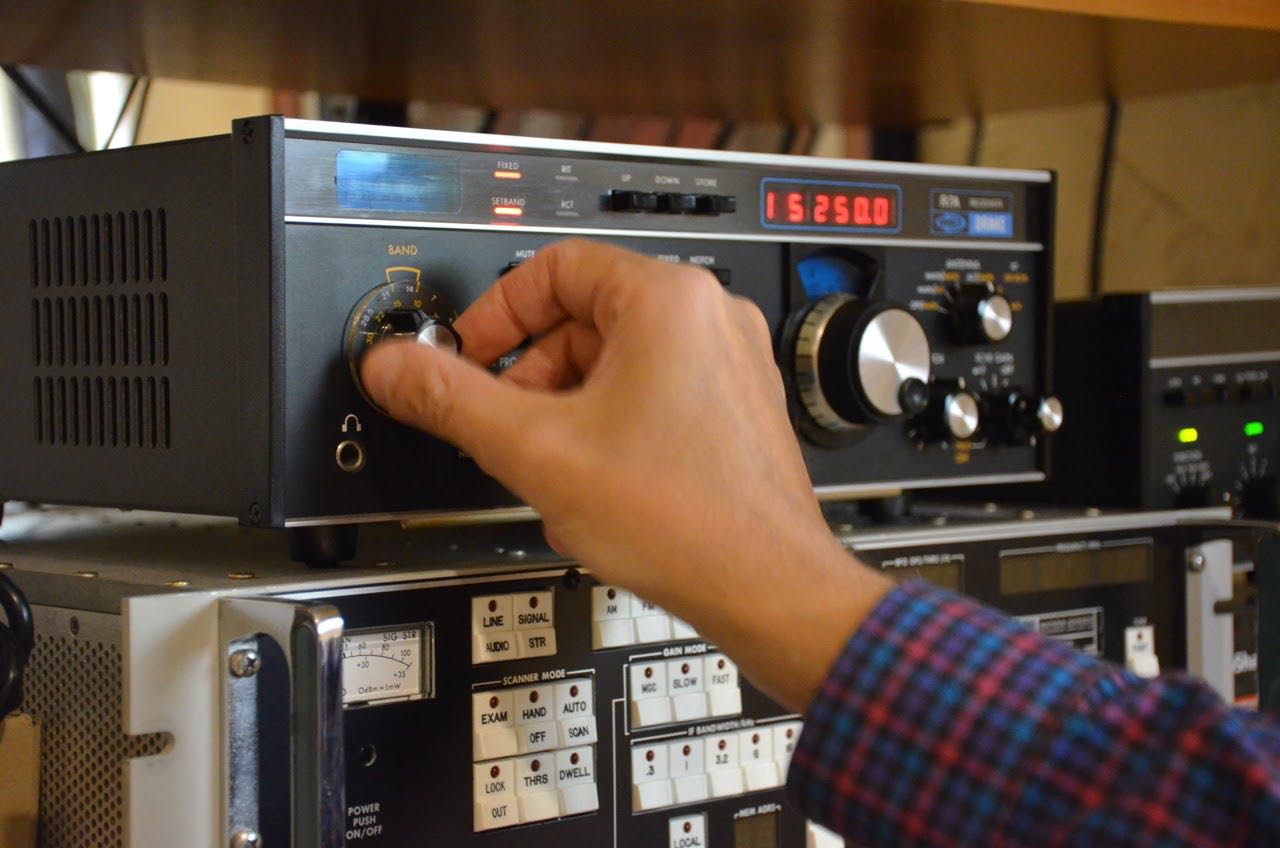
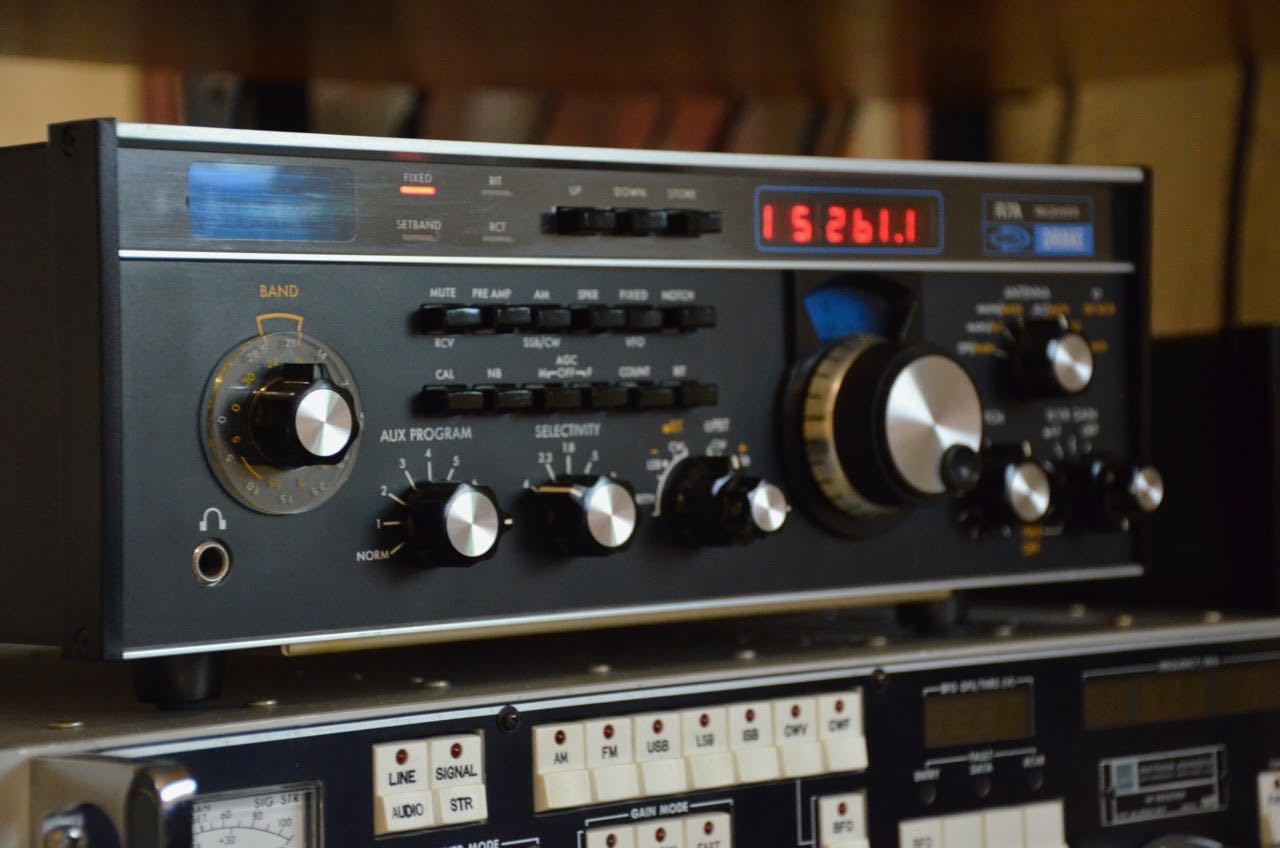
Drake R7A
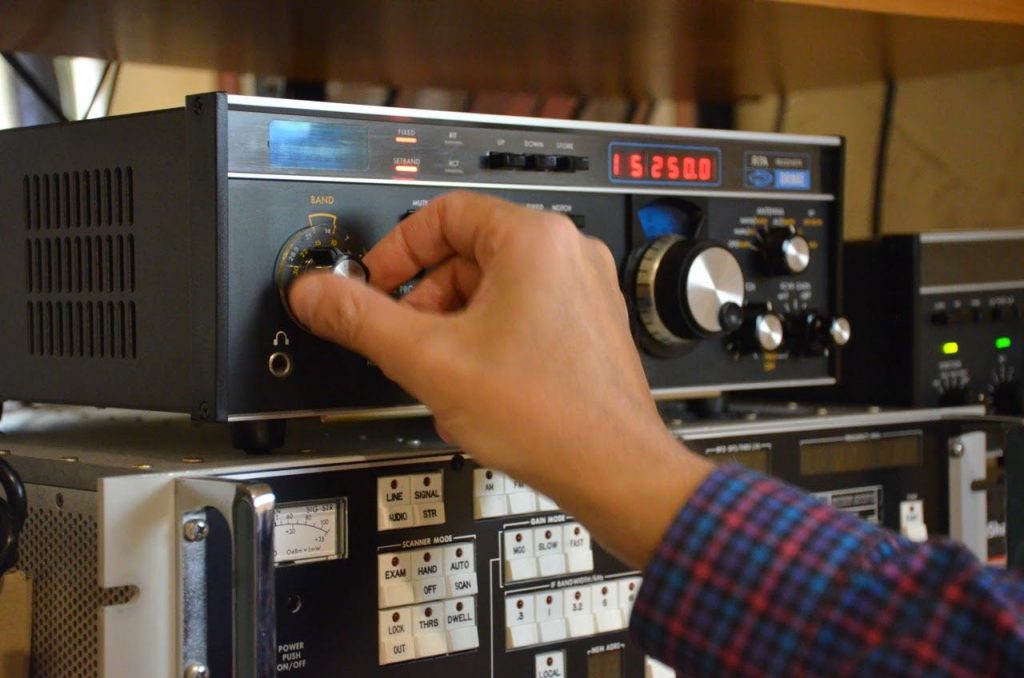
One of the highest-rated receivers of all time, the same kind of superlatives apply for the R7A as to the NRD-515. The R7/A was a technological masterpiece by R.L. Drake. With its multiple filter selectivity, notch filter, and superb Drake passband tuning, the R7/A is able to pull anything out of the mud. I recently sold one of my remaining R7As, leaving this one, with a high serial number in the 3700 range. I use it with a RV-75 external VFO which helps with tuning and stability. The R7/A is on my list of the top five best receivers ever made.

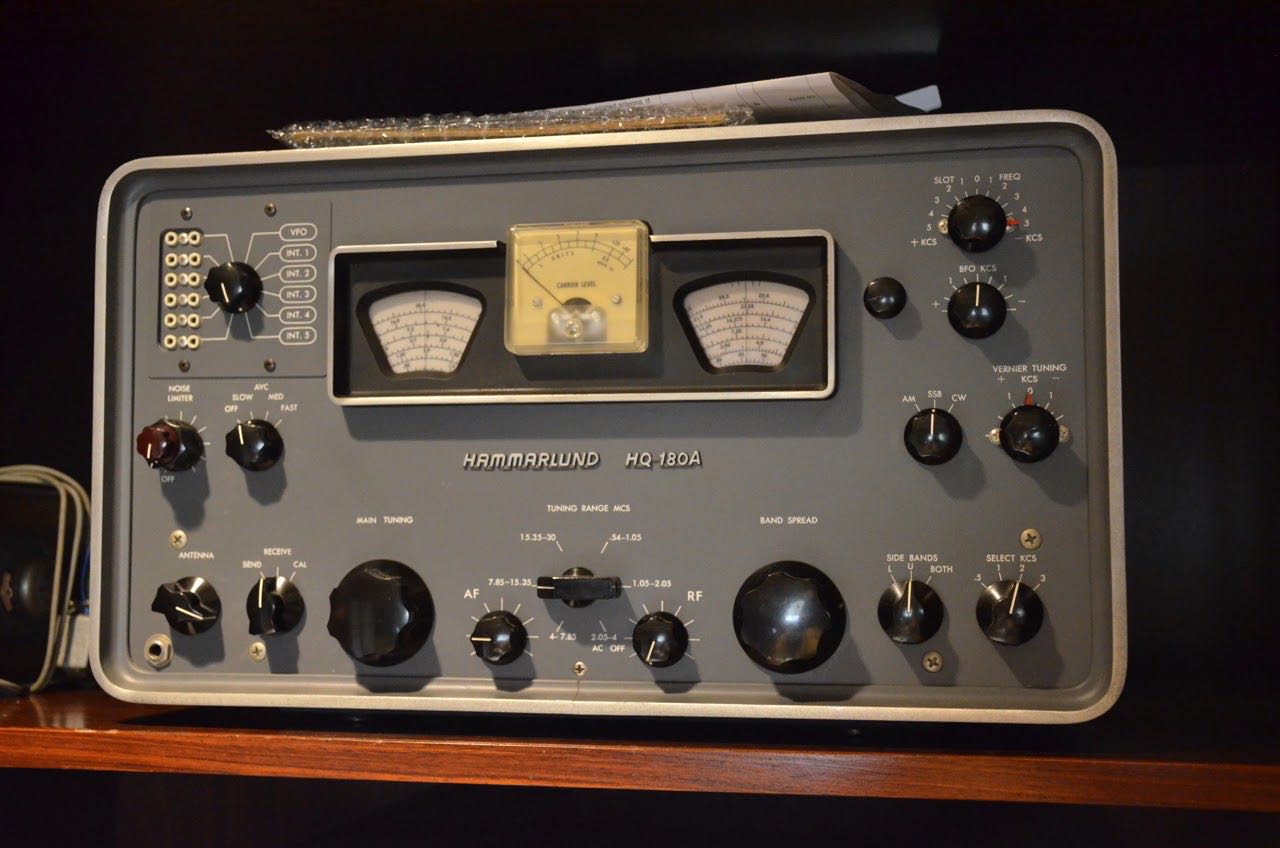
Hammarlund HQ-180A/X
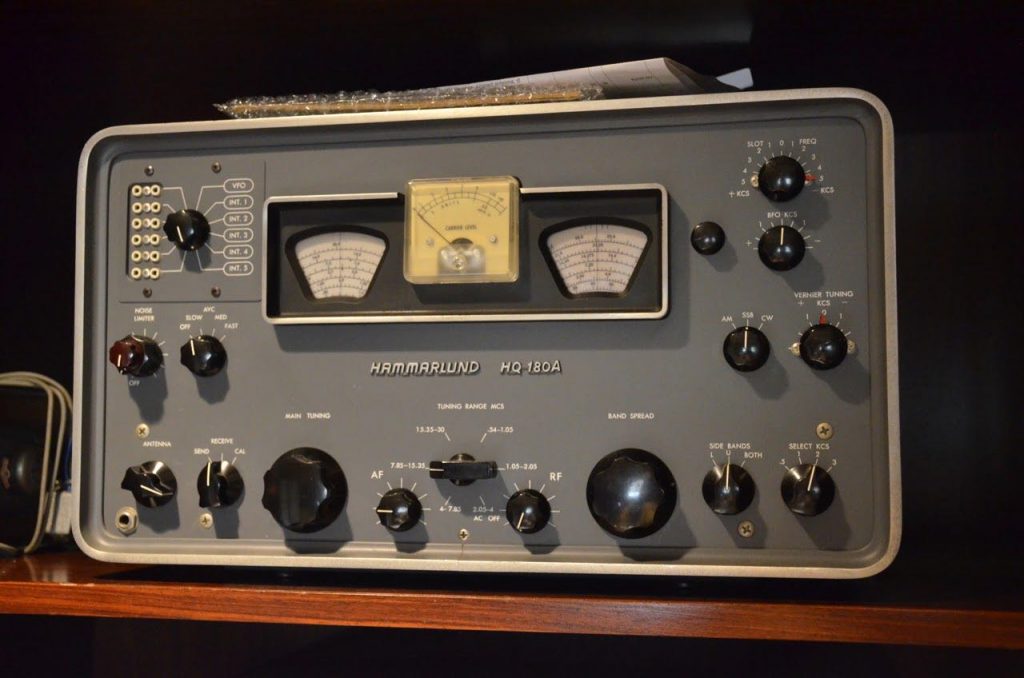
It was about 1980 or so when looking through the for sale section of the Washington Post I noticed a small ad. It said “Hammarlund Receiver with box”. When I arrived at the seller’s house in Virginia, I could hardly believe what I saw — it was this HQ-180AX, with its original box. The radio was basically new, and even today looks that way. This was the X version of the famed HQ-180/A, a fixed crystal unit in place of the clock that is usually seen on 180s. HQ-180s became my receiver of choice when I graduated from that old Pilot T-133 from the very early years of my DXing career. HQ-180s took me from the 100 country level through the 200 country heard level. There are many out there who swear by R-390s and Hallicrafters, but for me the favorite boatanchor of all time will forever be the HQ-180. Just to the right of this 180AX (but not pictured) is my other 180A, which is modified with LED readout through the front panel.

Eddystone 830/7
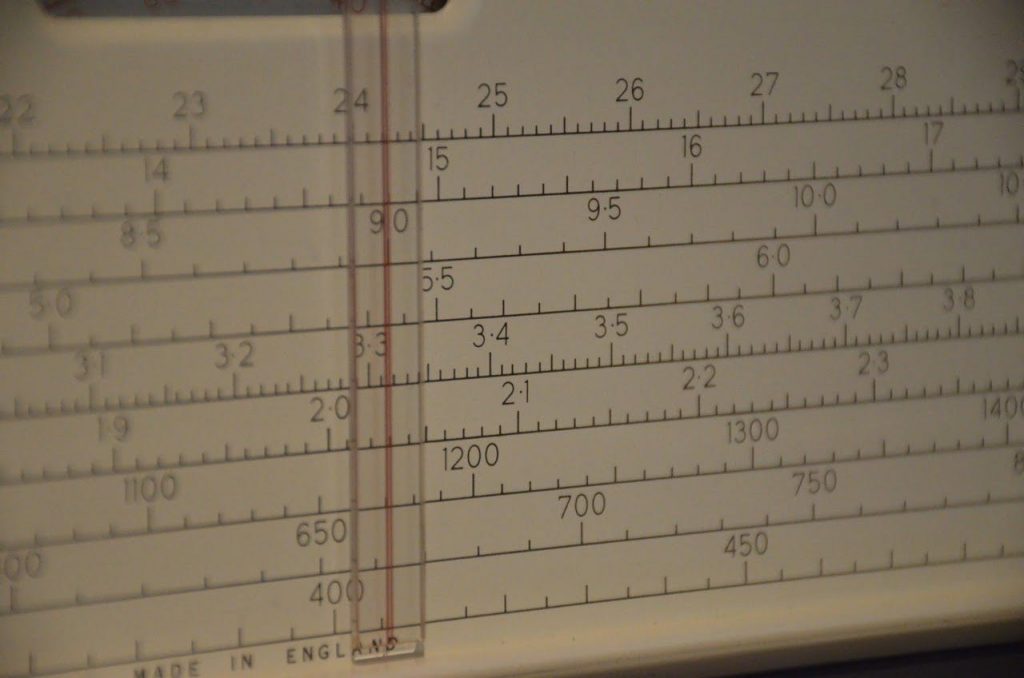
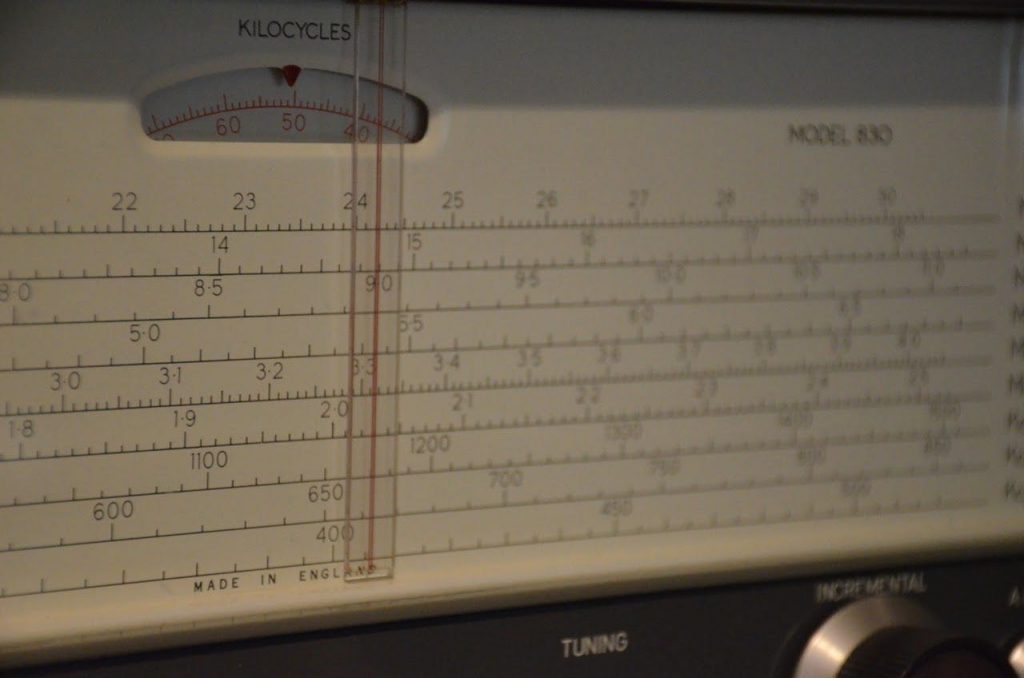
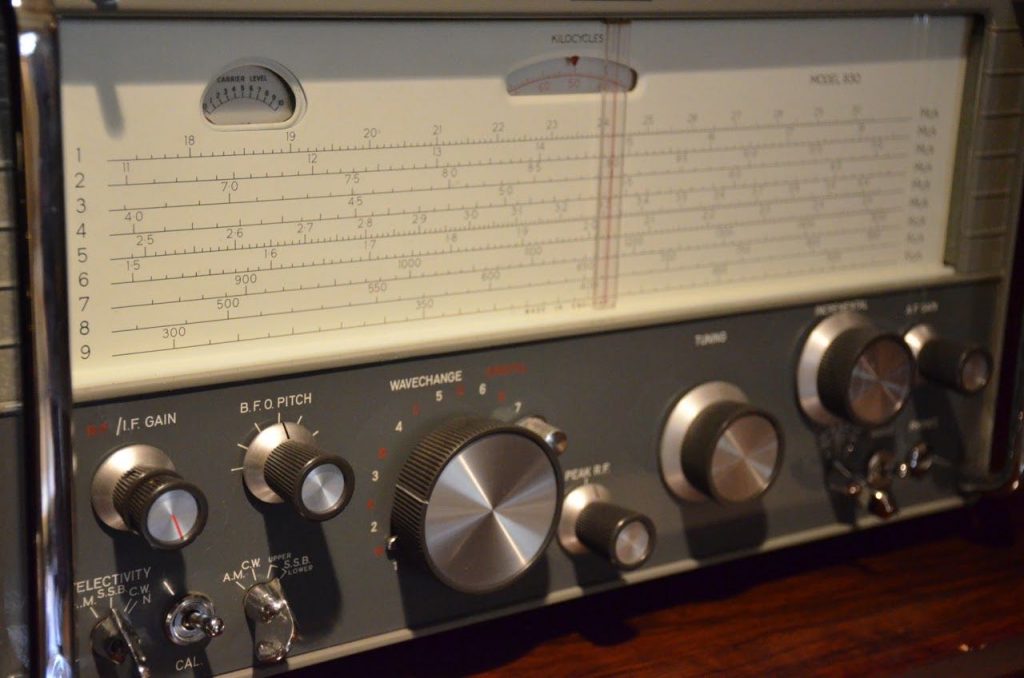
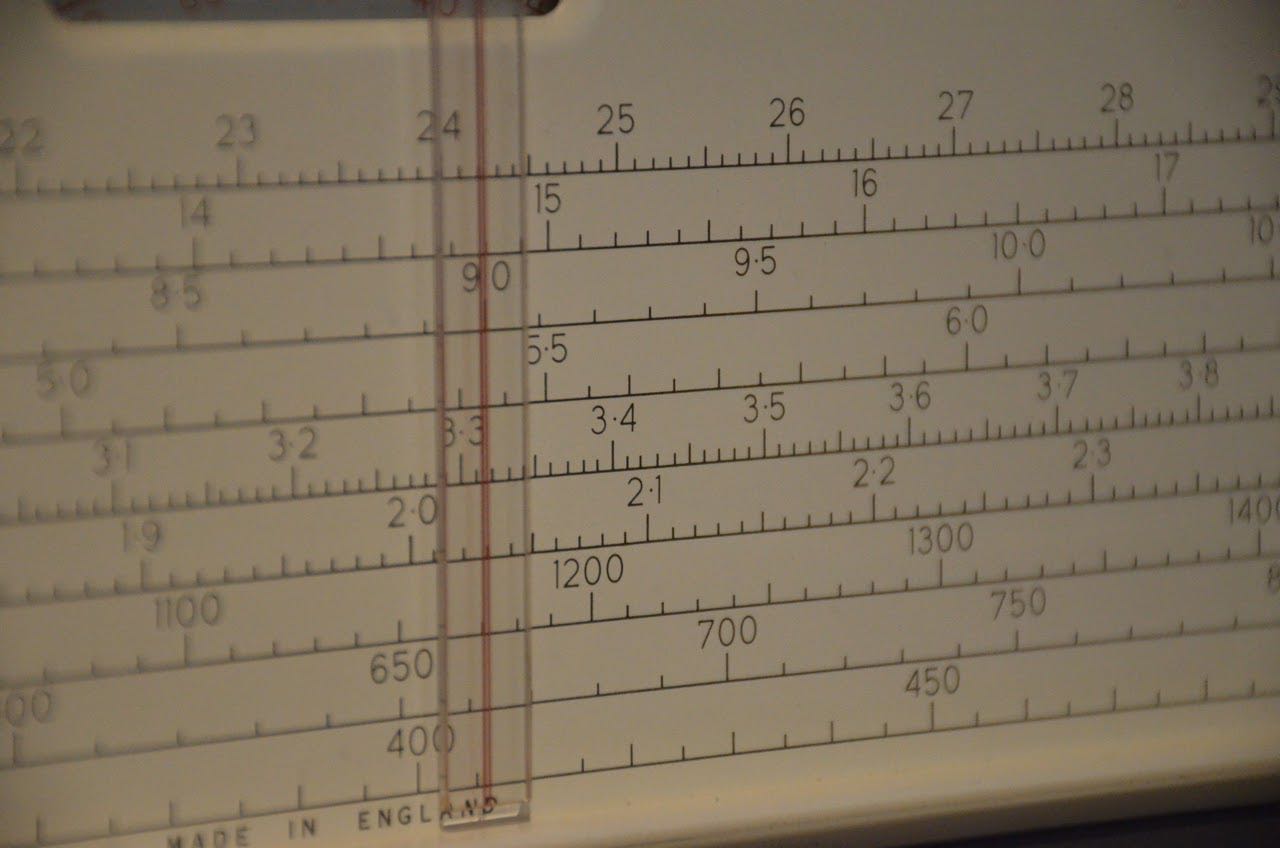
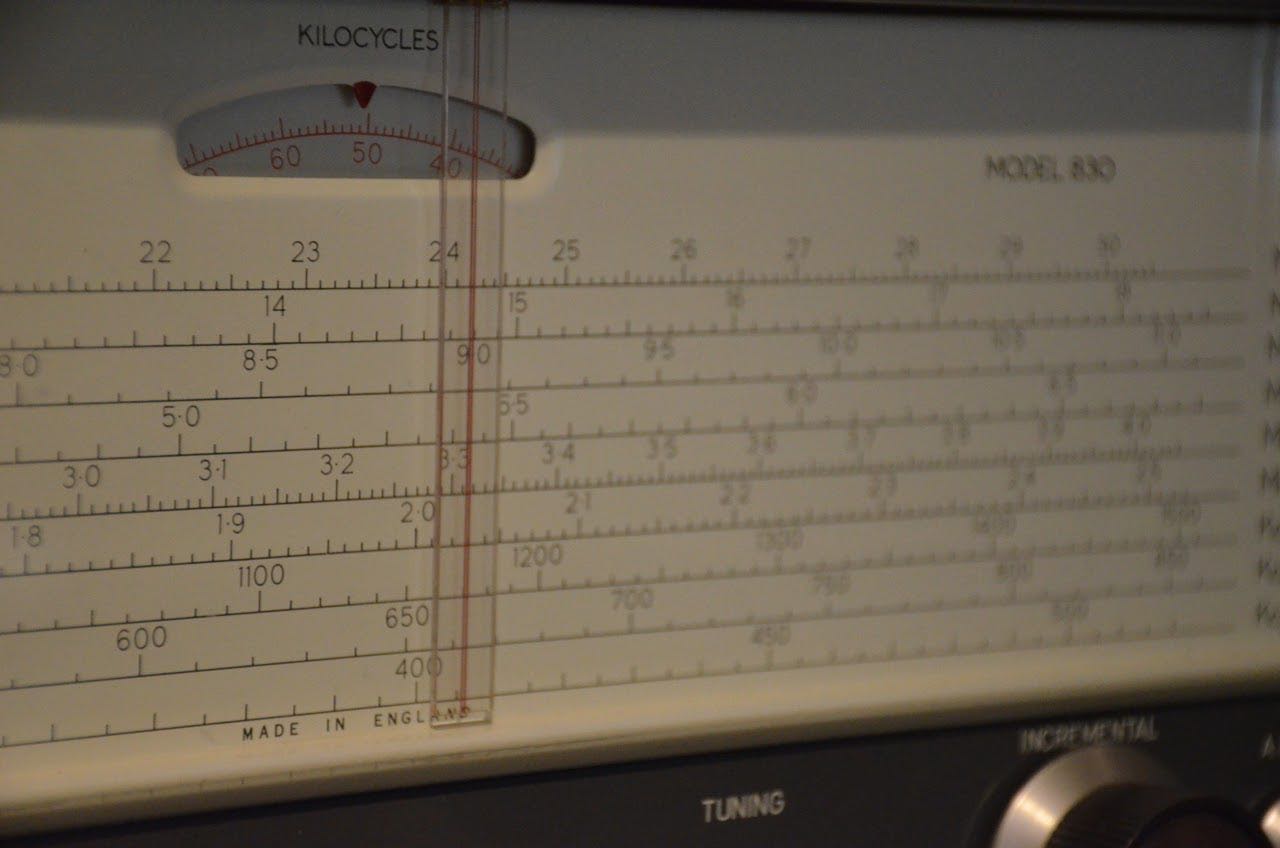
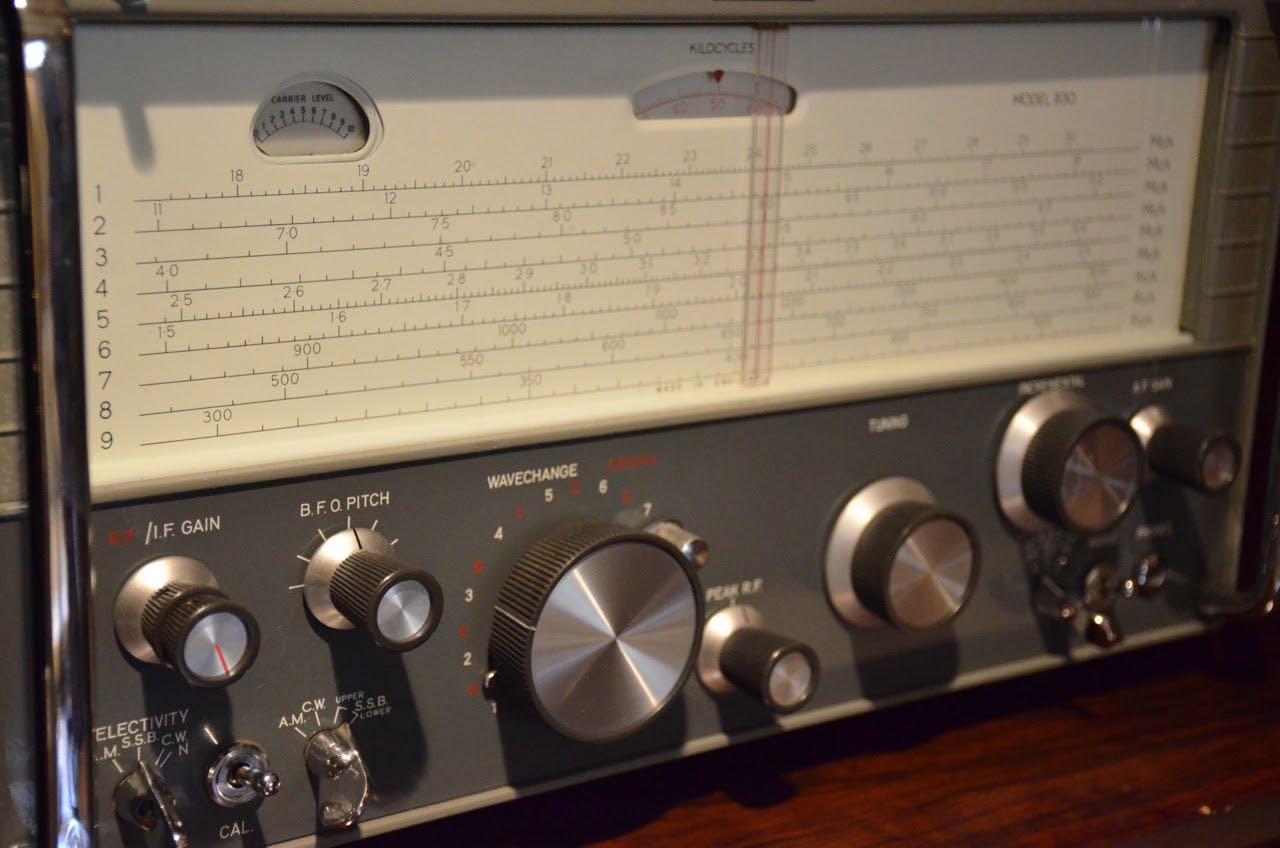
One of the books I used to read in the earliest days of my DX career was one produced by a well-known Scandinavian DX’er and in it, was a photo of an Eddystone 830/7. Decades later, I had an opportunity to purchase this museum-quality 830/7 from a seller in the UK. What a beauty, with an amazing front slide rule dial and silky smooth tuning and bandspread. The radio is deceptive — it looks smaller than a Hammarlund, but actually weighs more than a HQ-180.

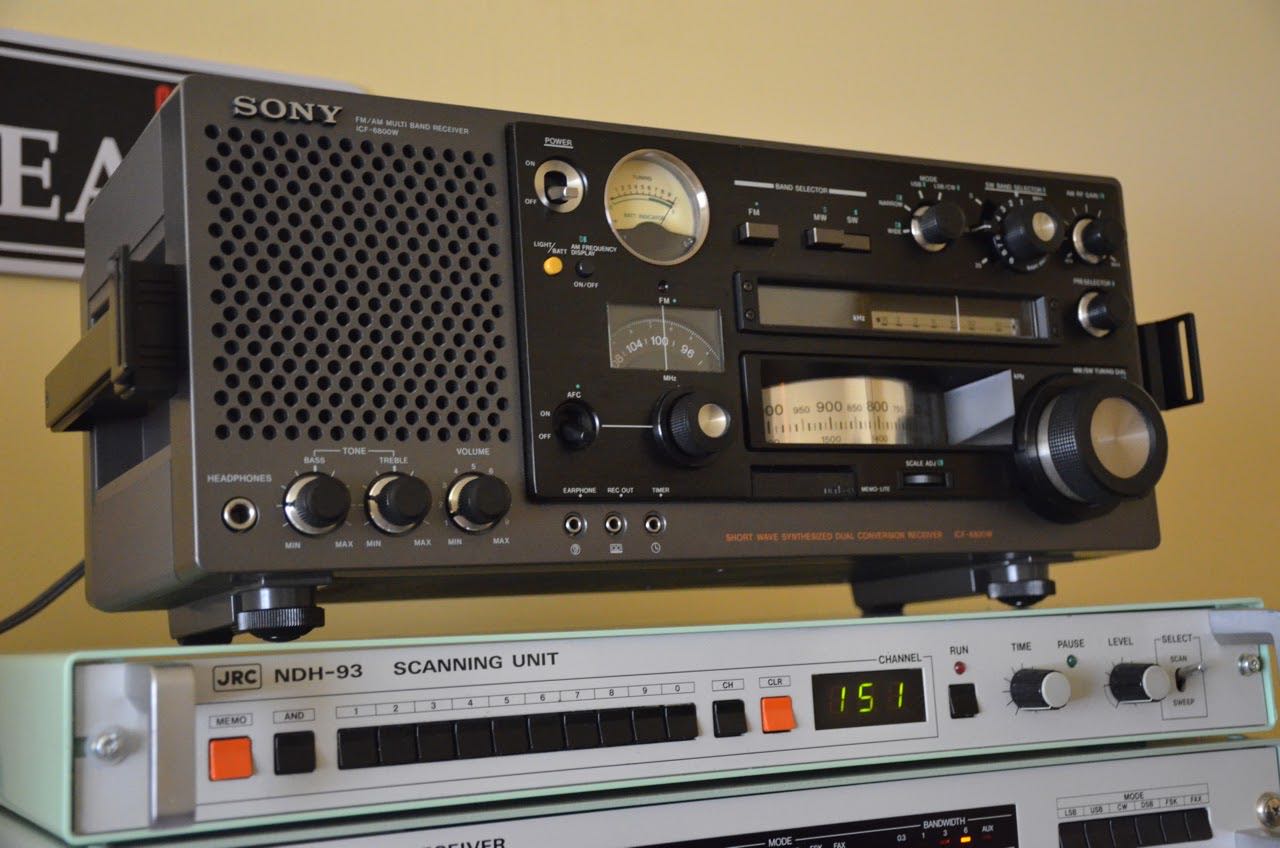
SONY ICF-6800W
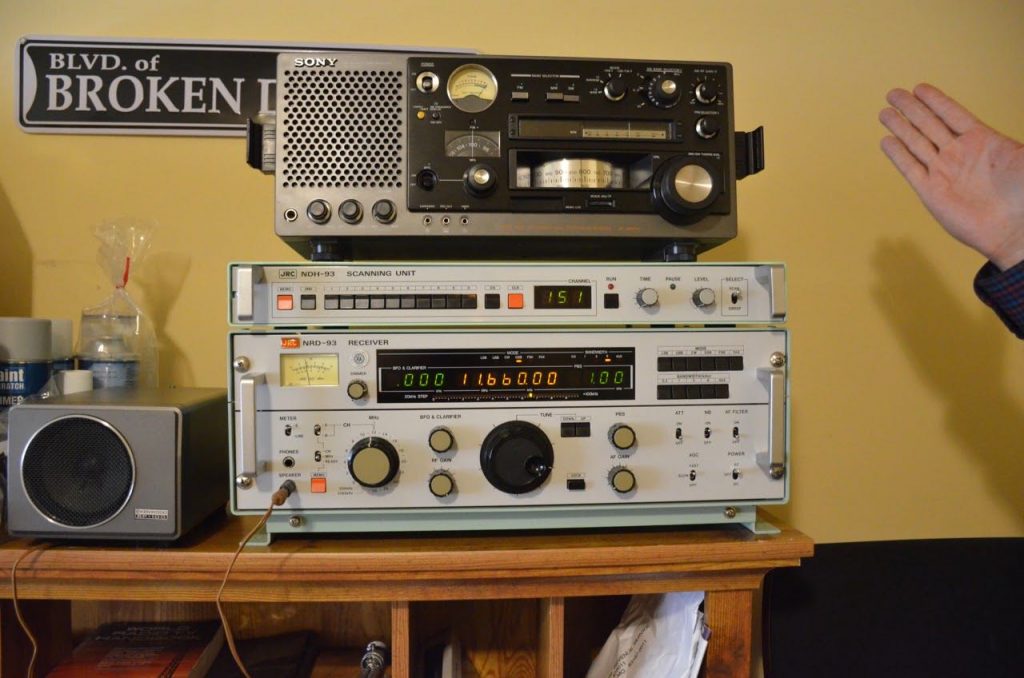
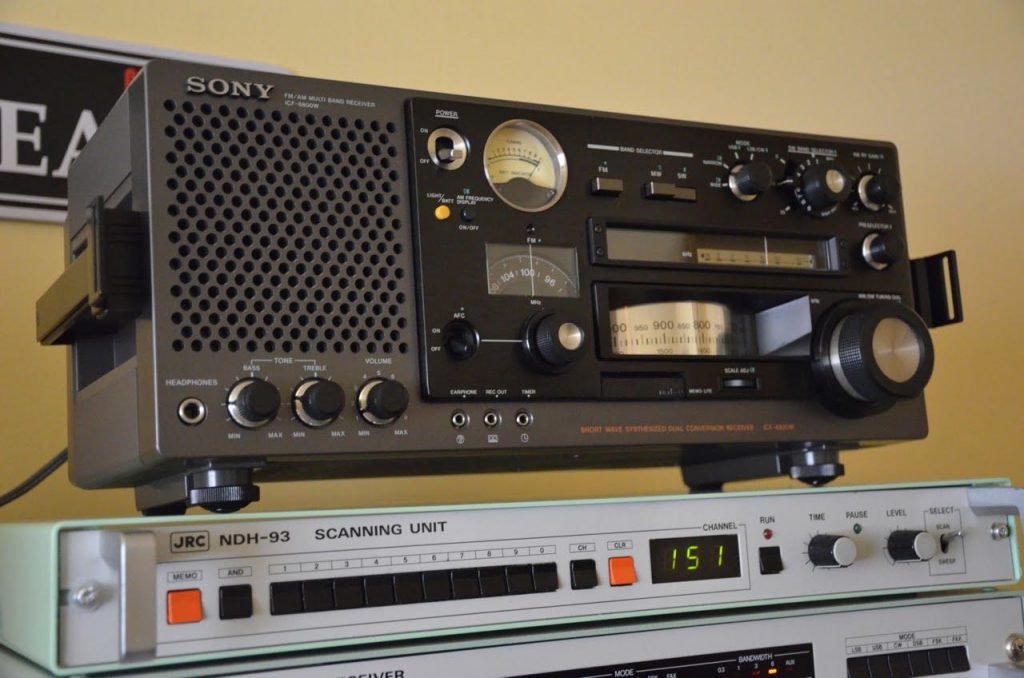
Another radio that I ignored for much of my listening career was the famous 6800W by SONY. When I finally got my hands on one of these, I understood why it has such a good reputation. Simply, this is one of the most sensitive receivers ever made. It has its quirks, and if it needs repair, you had better be able to do it yourself, because there is perhaps ONE place in this country that will even touch them. But the rewards of using the 6800W are many.

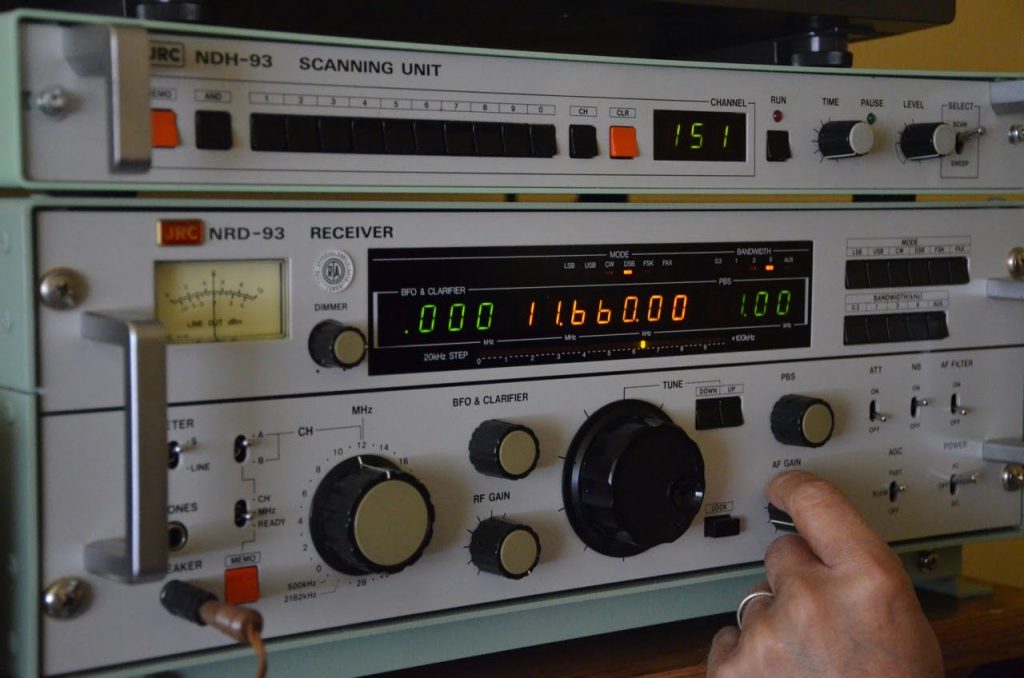
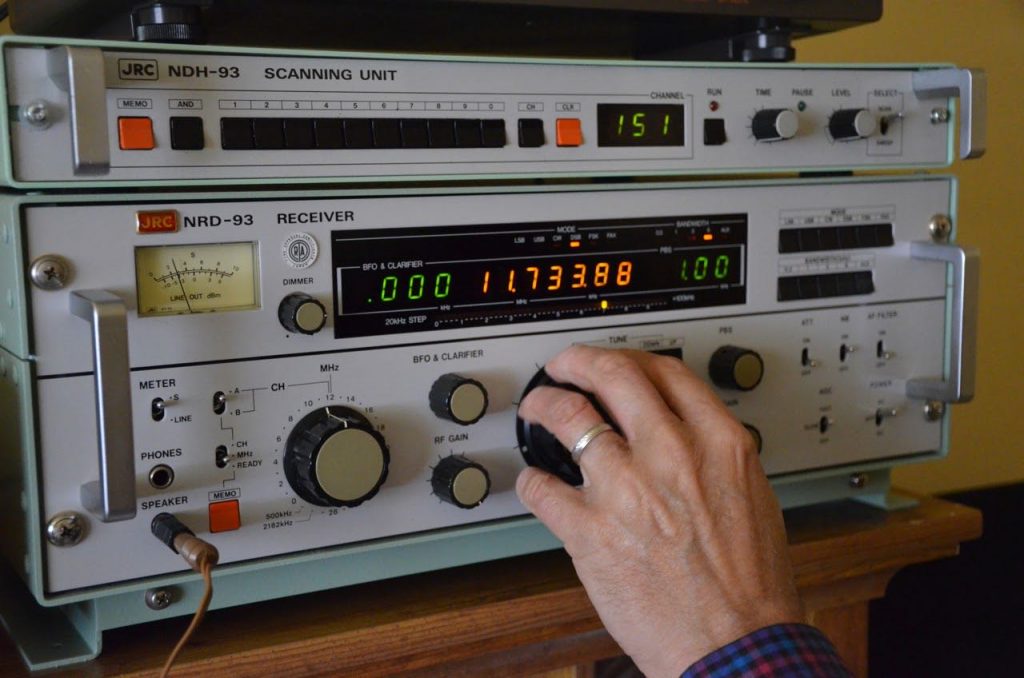
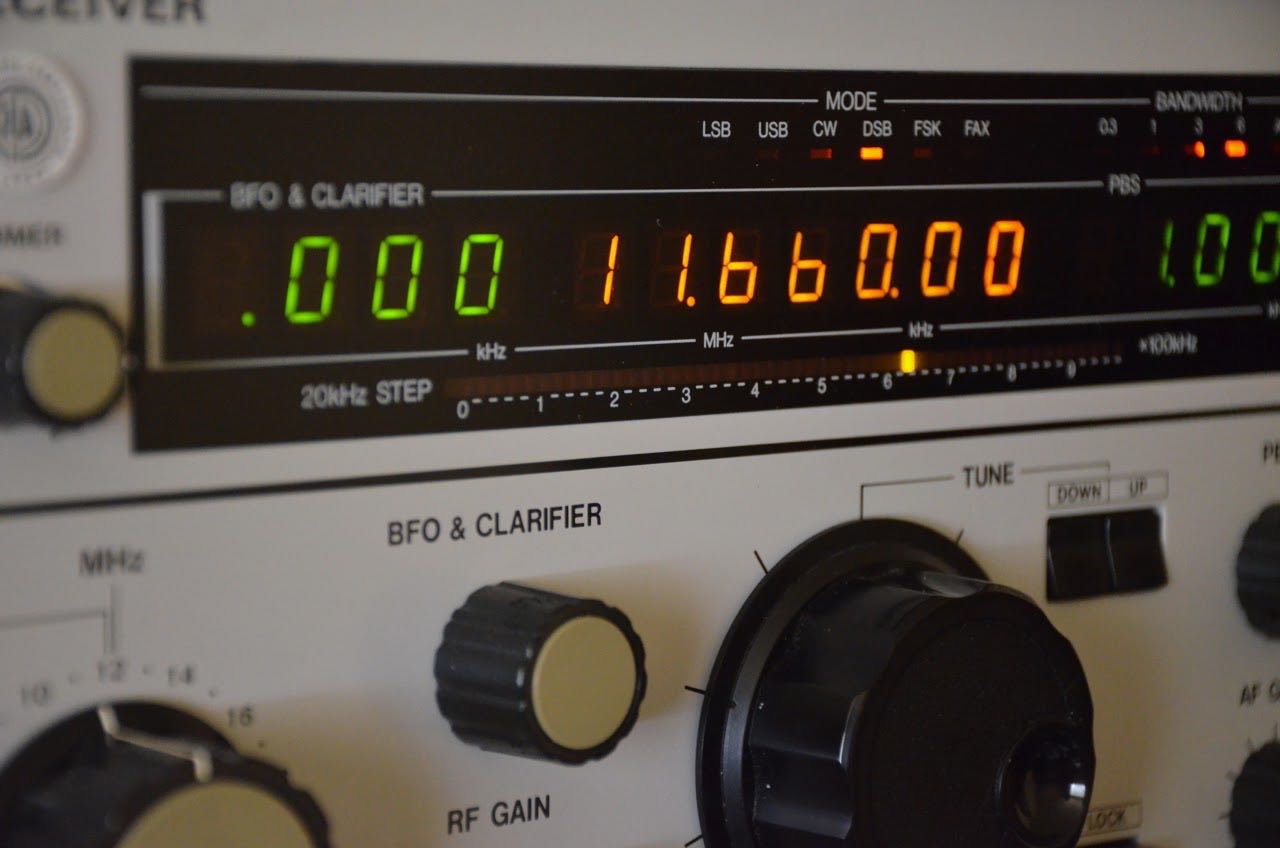
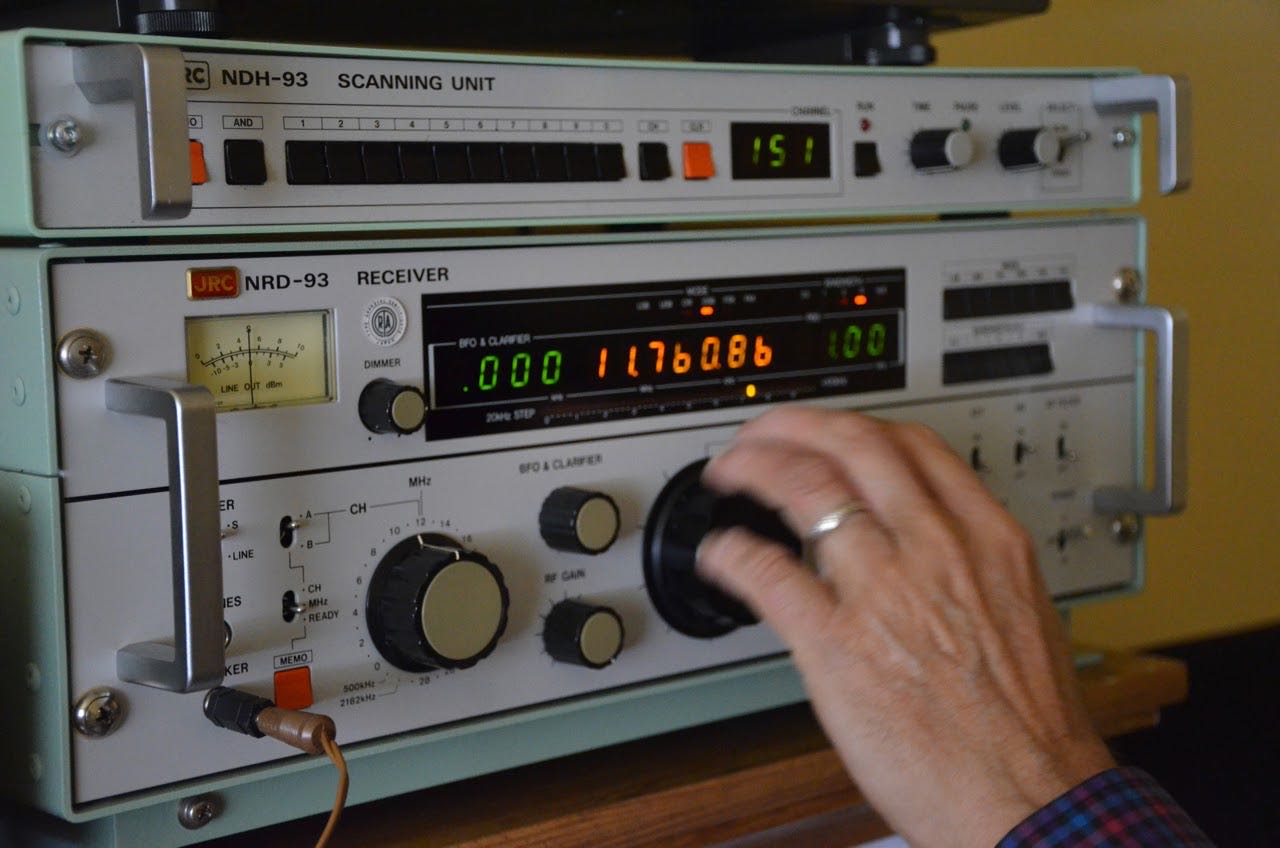
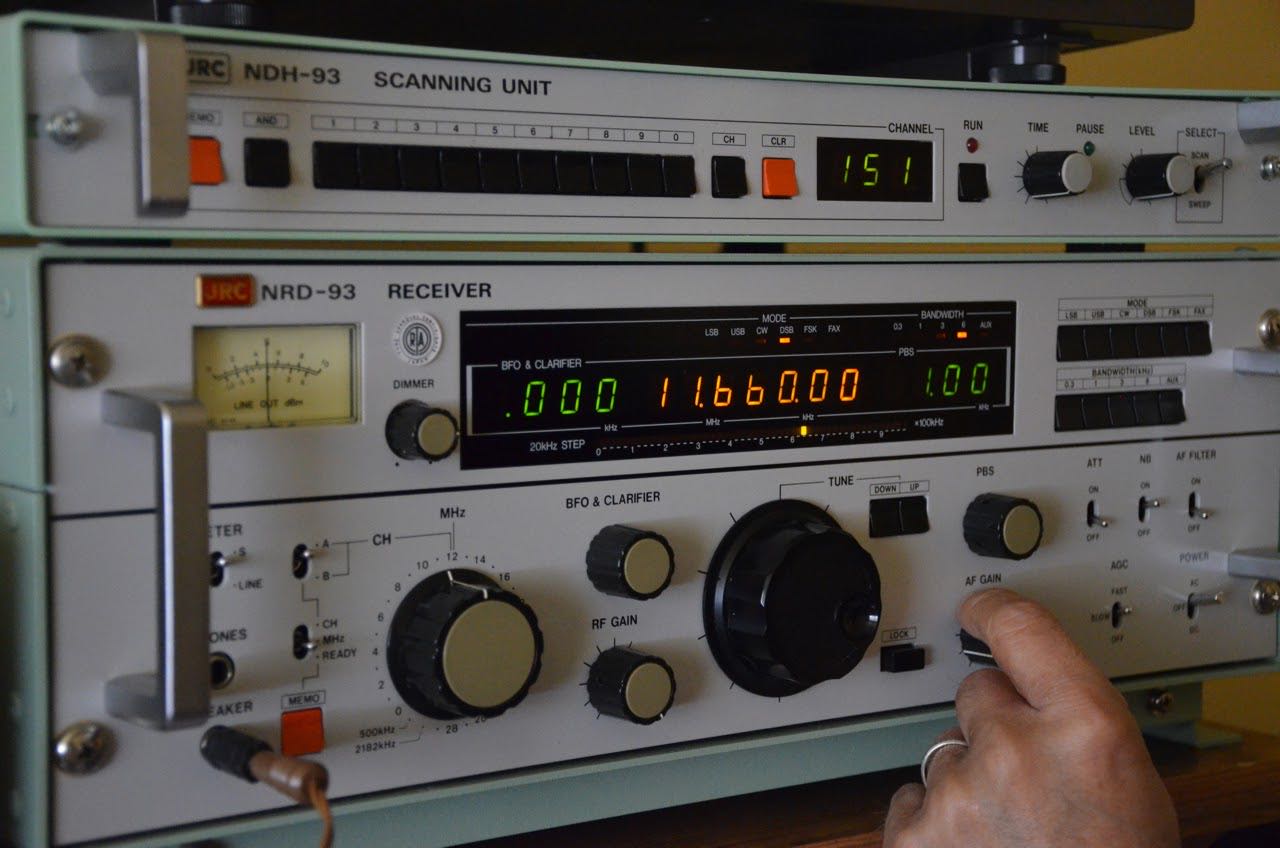
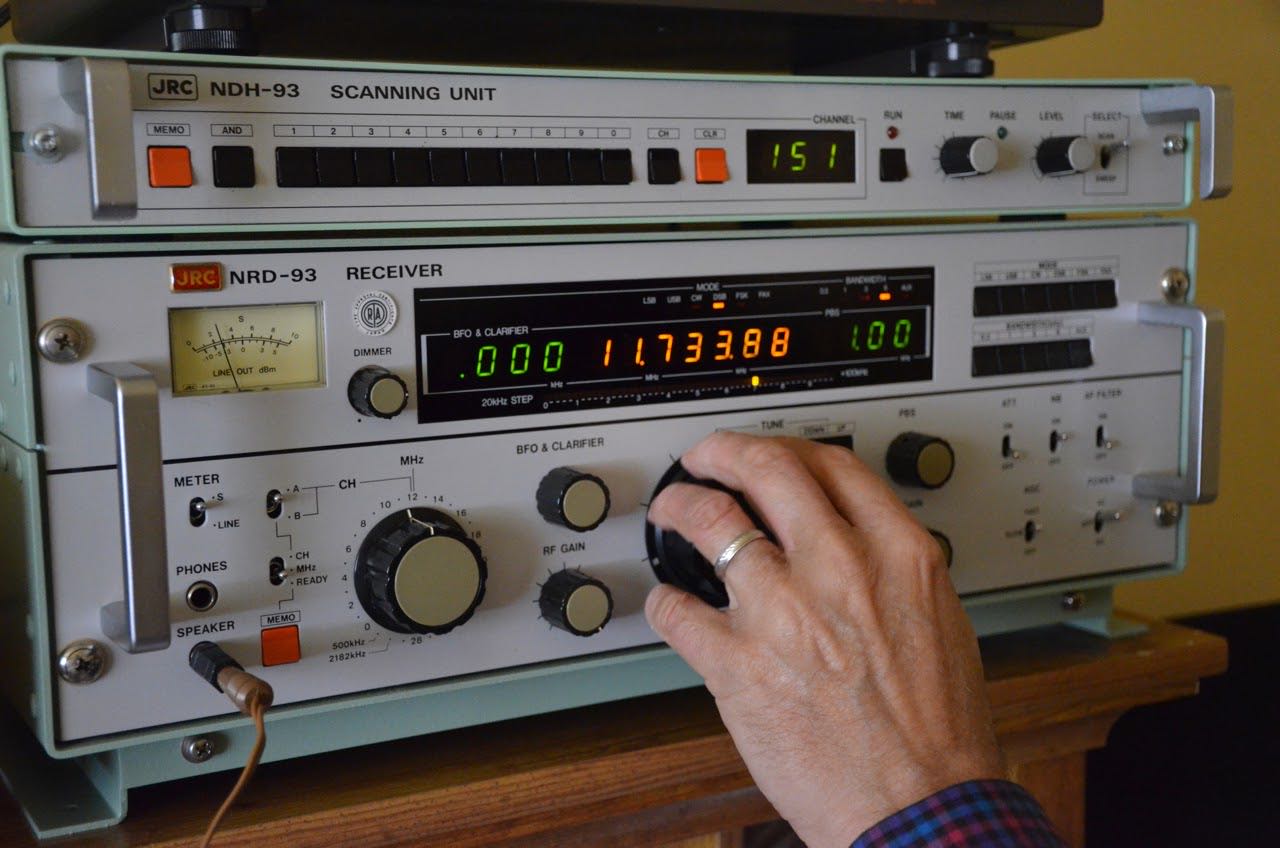
JRC NRD-93
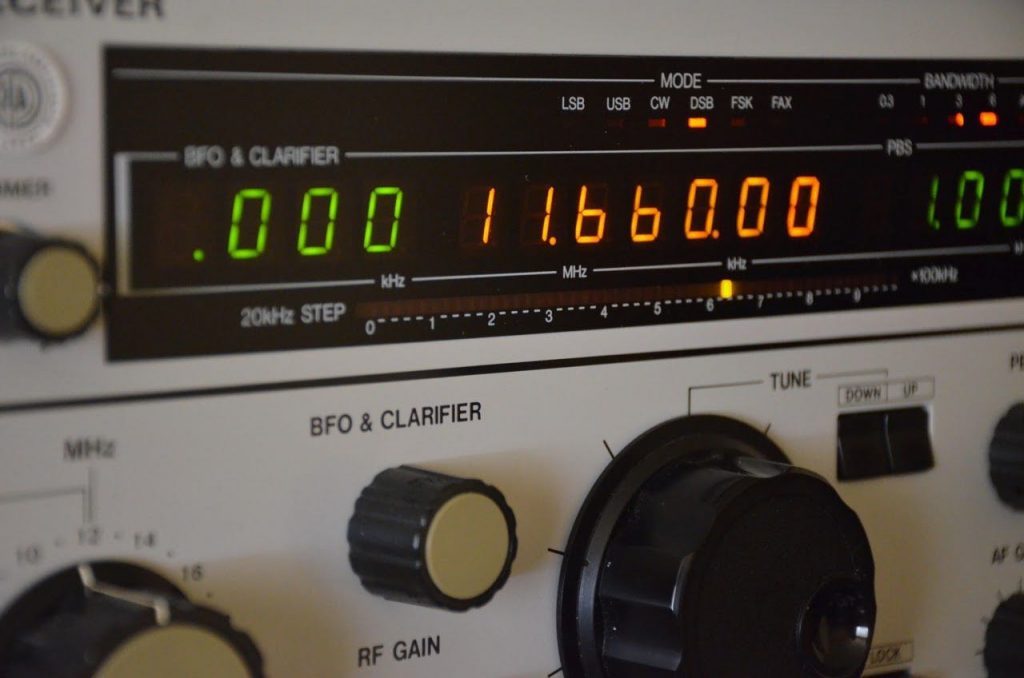
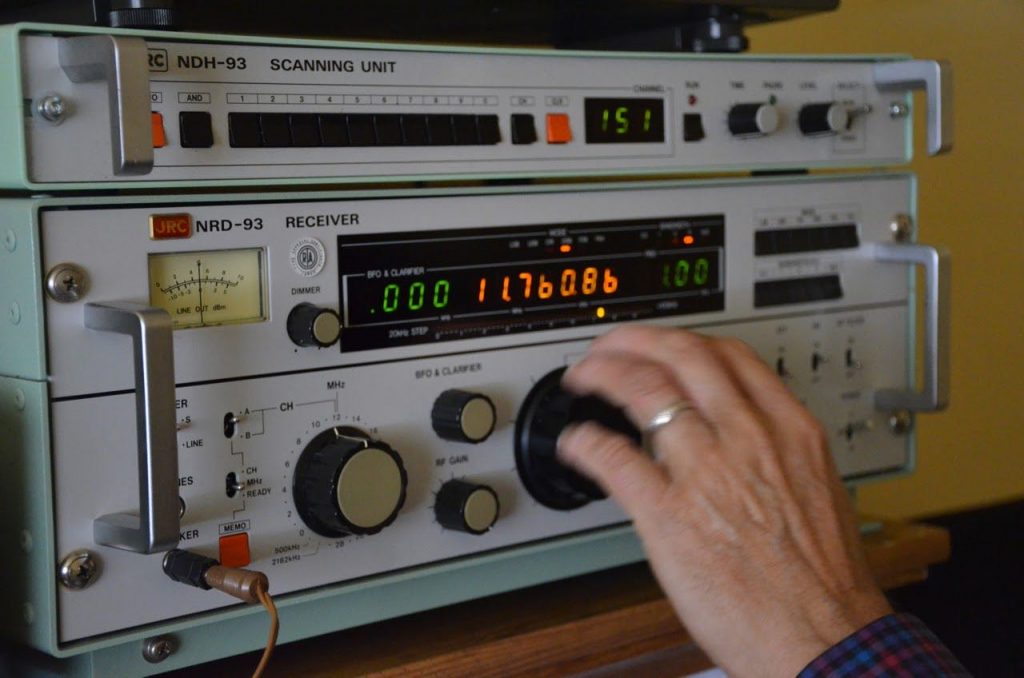
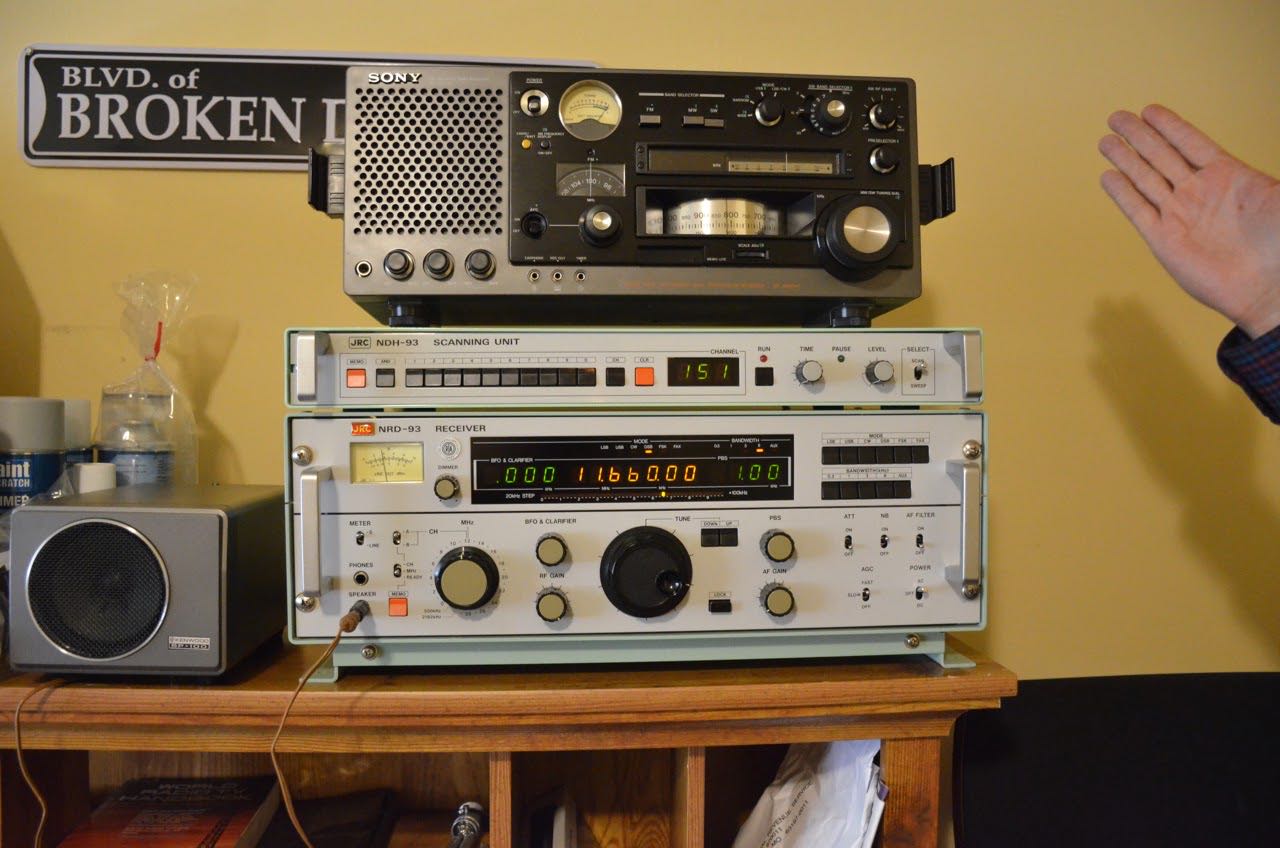
Though I have two of JRC’s top marine receivers, the 301A and 630, a few years ago I feel in love with the looks and performance of the previous series JRC marine receiver, the NRD-93. What can you say about this baby . . . with its PBS and BFO fine tuning controls, beautiful large front LED panel, multiple onboard memories supplemented by the separate NDH-93 memory unit. Operating these JRC marine receivers is an experience everyone should have at least once. NRD-93s, along with NRD-92s, have become fairly plentiful on the used market. If you are looking for one, ask a lot of questions about condition and prior service. Those that saw heavy use on marine vessels often suffer from salt air corrosion and other issues. The beautiful original JRC toggles often need to replaced as they lose contact over the years.

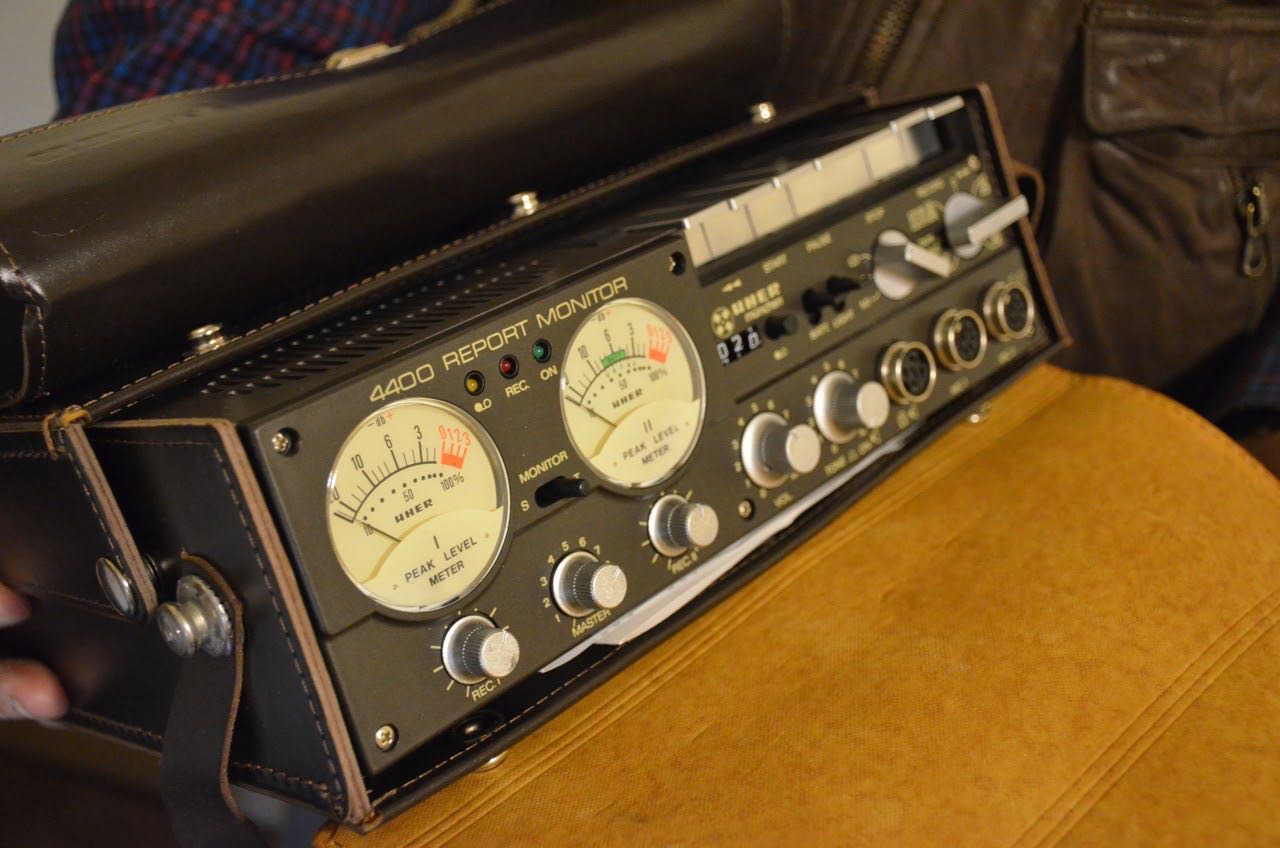
UHER 4400 Report Monitor
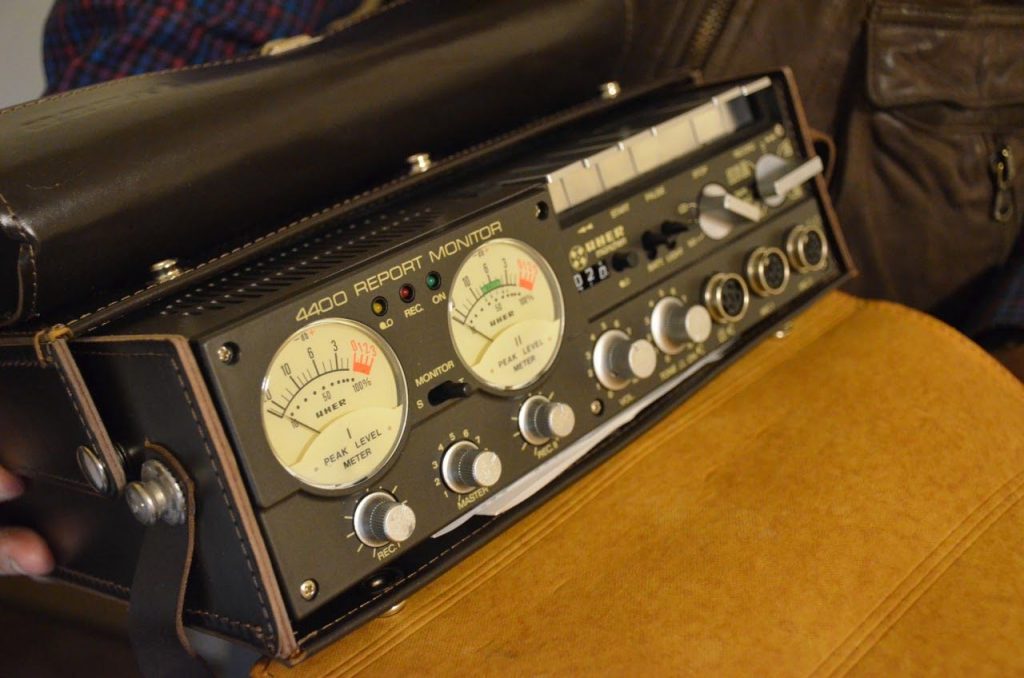
When I was a correspondent in Africa in the 1980’s, there were — believe it or not — still BBC correspondents and other radio journalists who still used the Uher portable reel-to-reel recorders as their main portable production tool. I got this particular 4400 in new condition, and later added a new from old stock leather case, made for it.

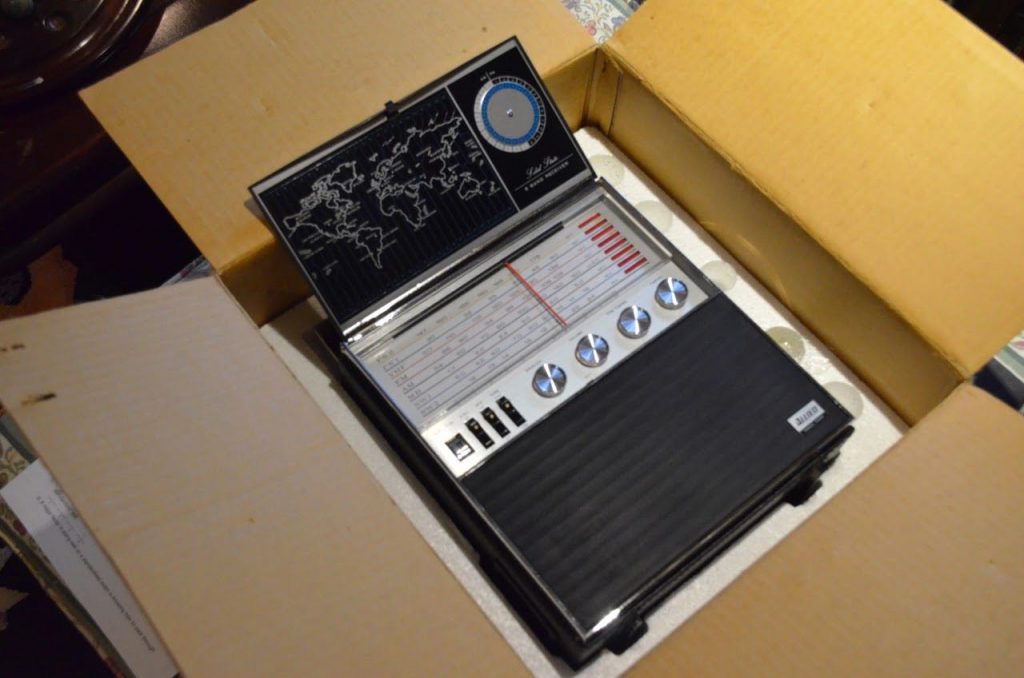
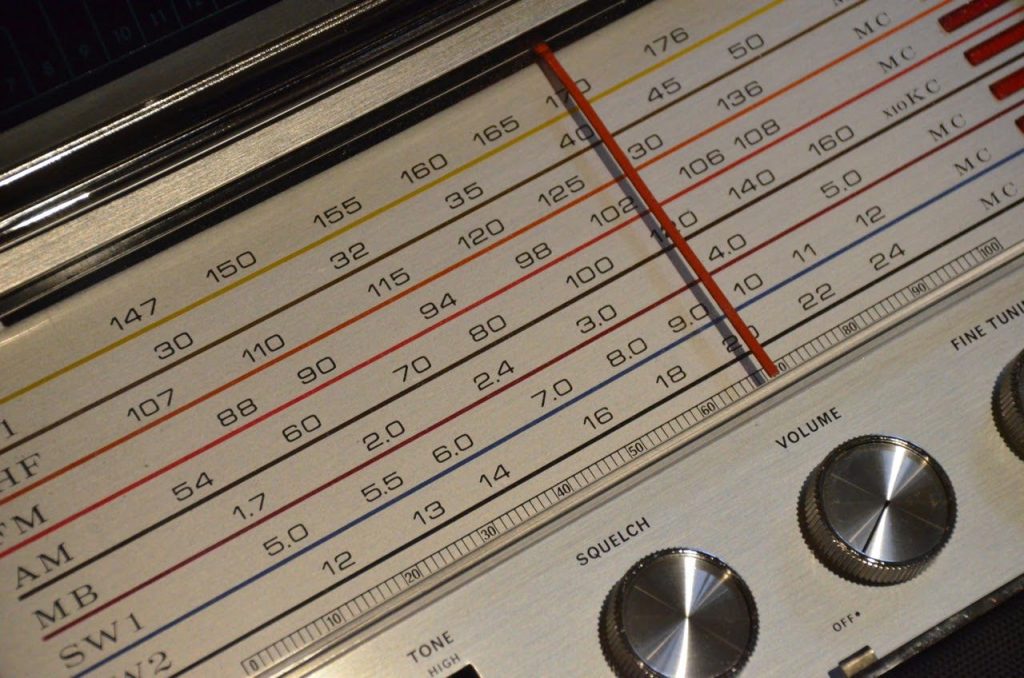
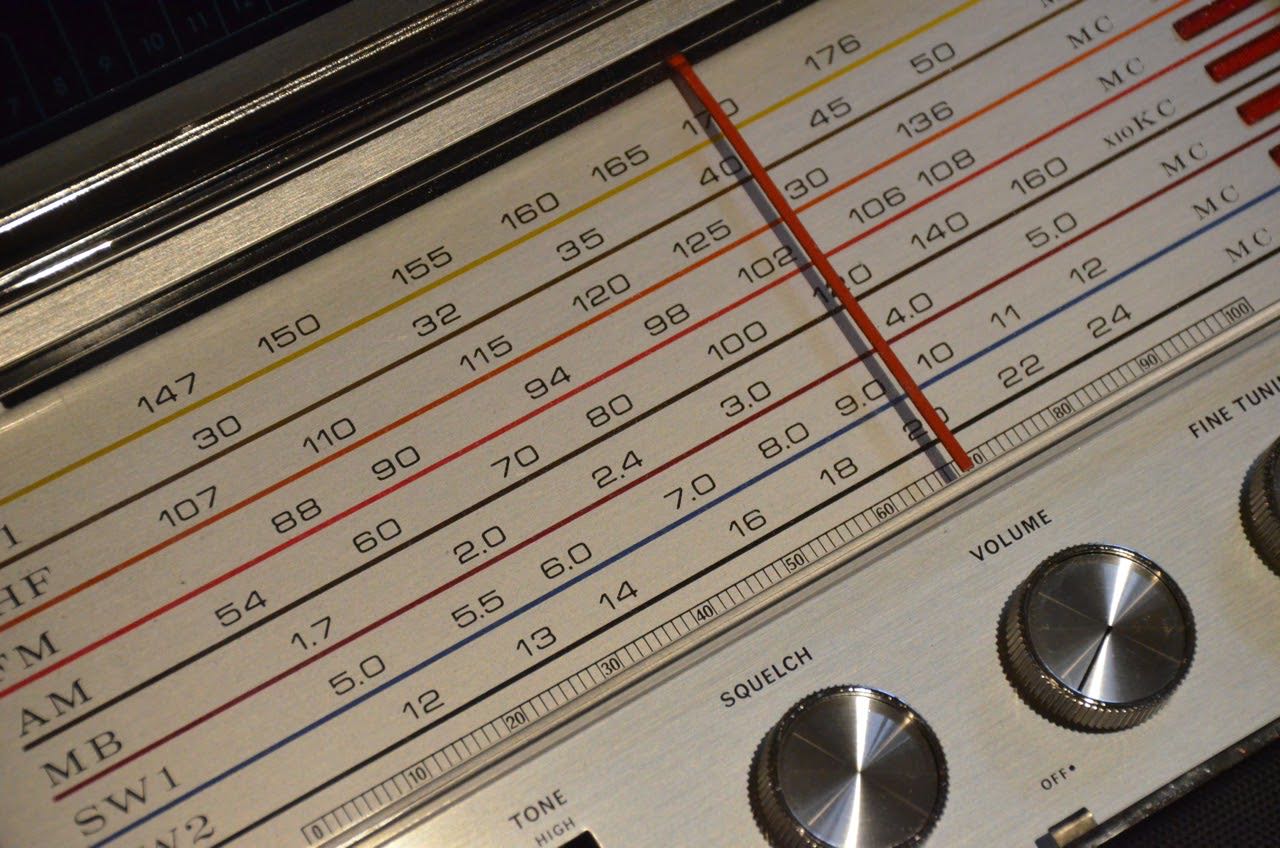
Allied 2682
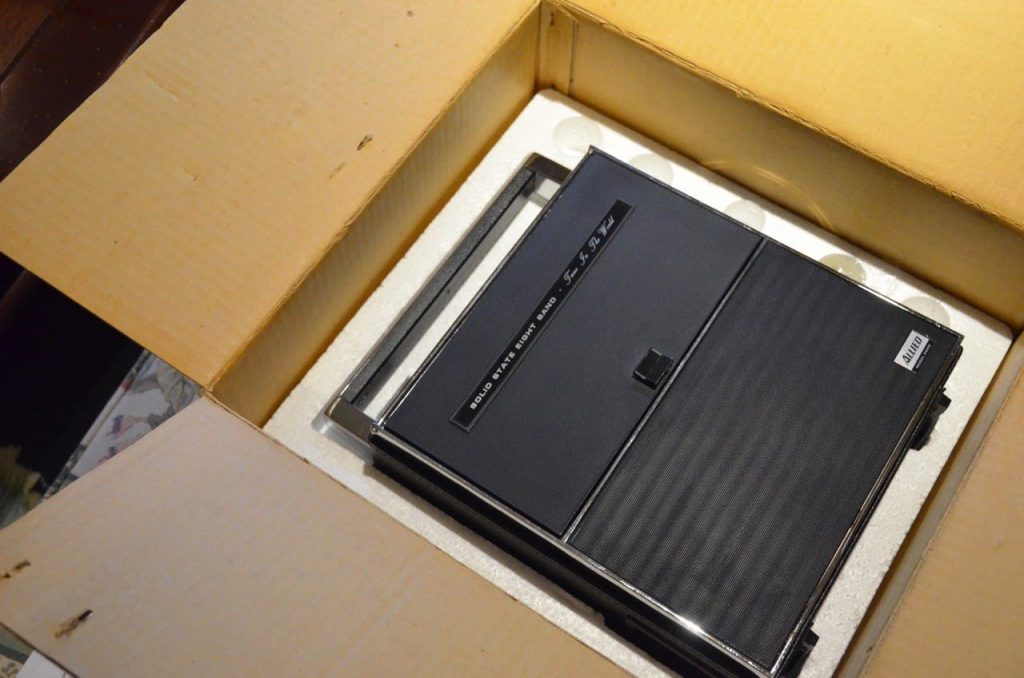
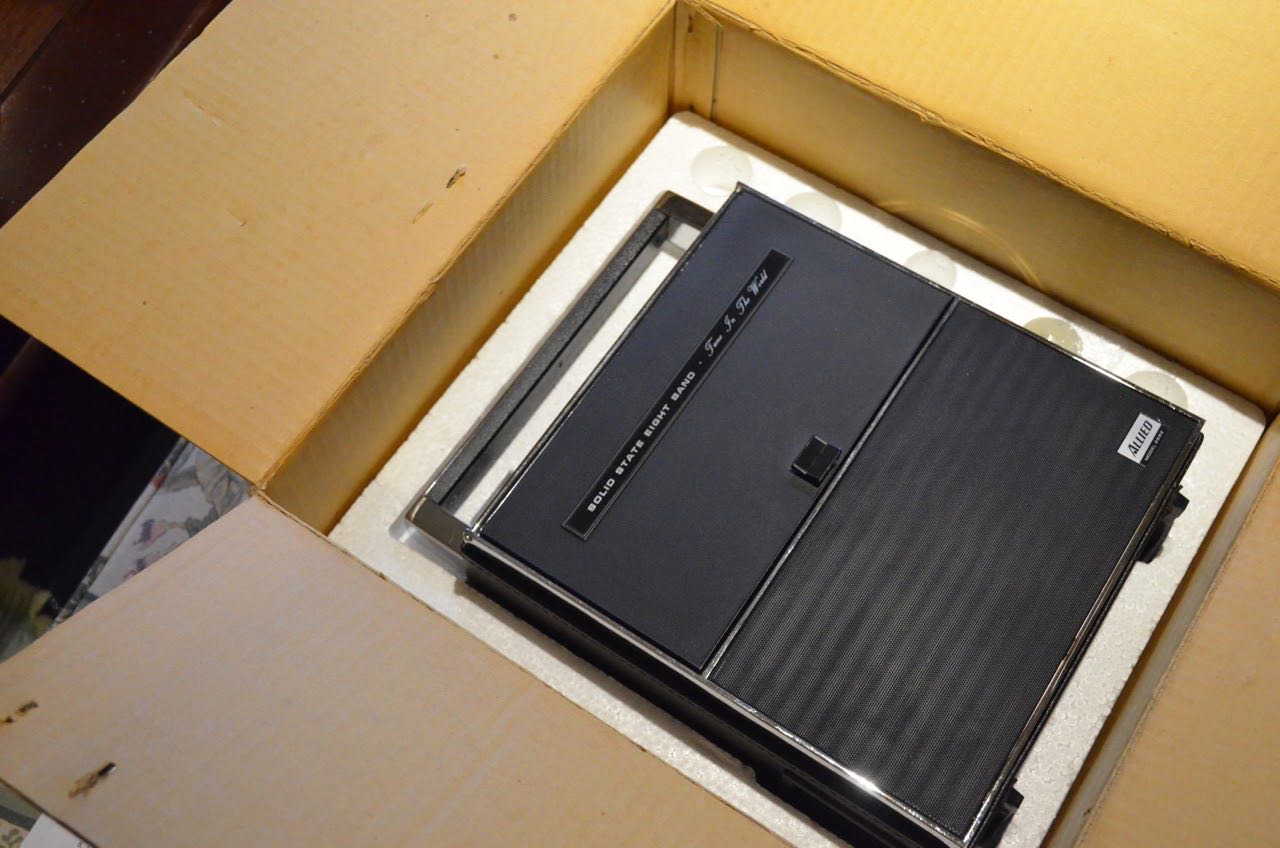
The Allied Model 2682 was the second or third radio I ever used. I didn’t realize at the time how simple and under-equipped it was. It had only a basic slide rule tuning system and a fine tuning control. The radio was recognizable for its twin rabbit ear antennas. This 2682 I found on Ebay, new in box, and I recently sold it. These receivers, like other Allied and Radio Shack models we all remember from the 70’s, are beautiful examples of some of the Made in Japan designs from that period.

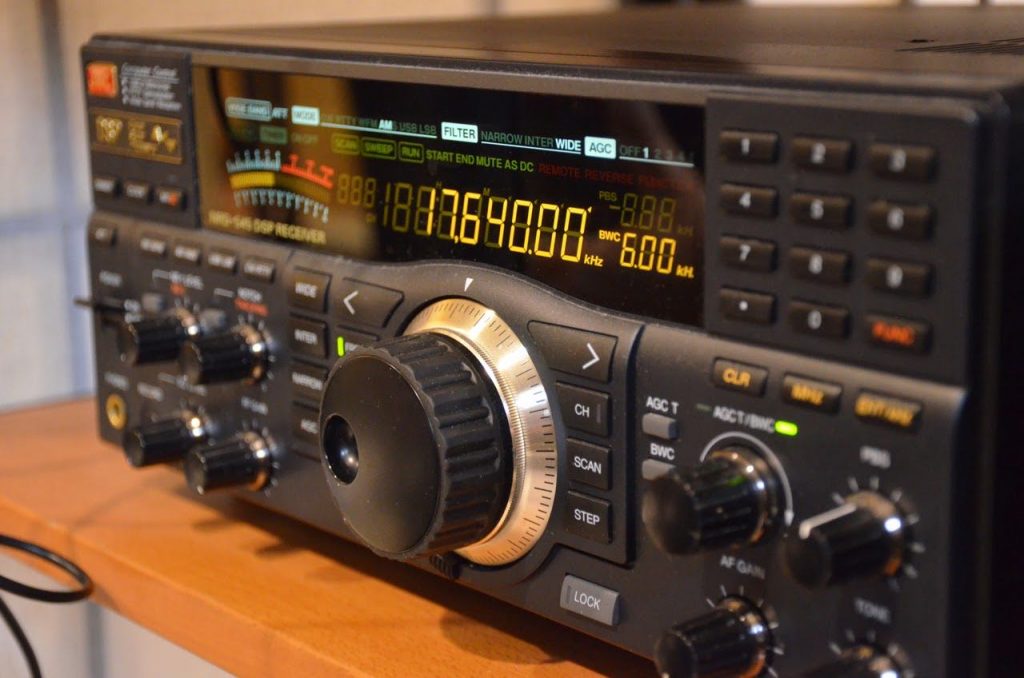
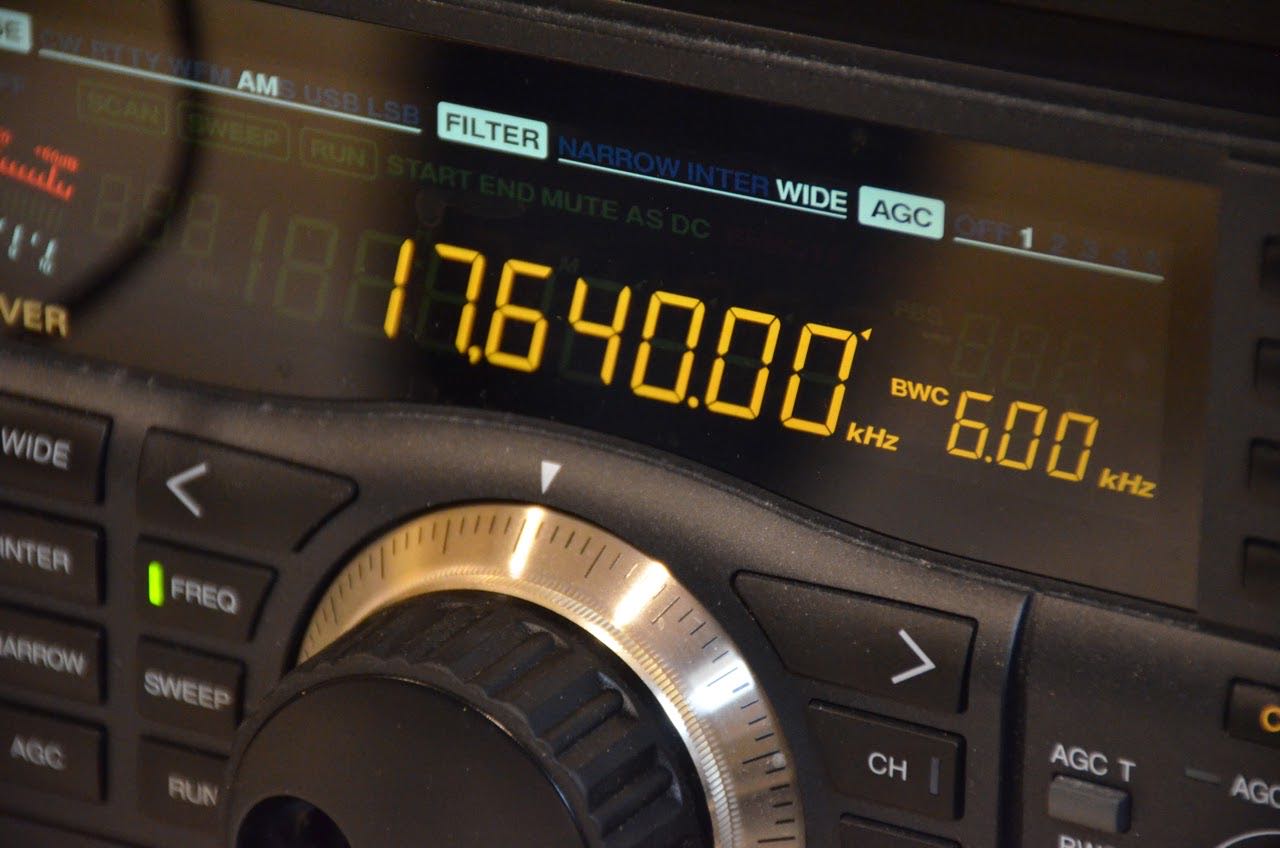
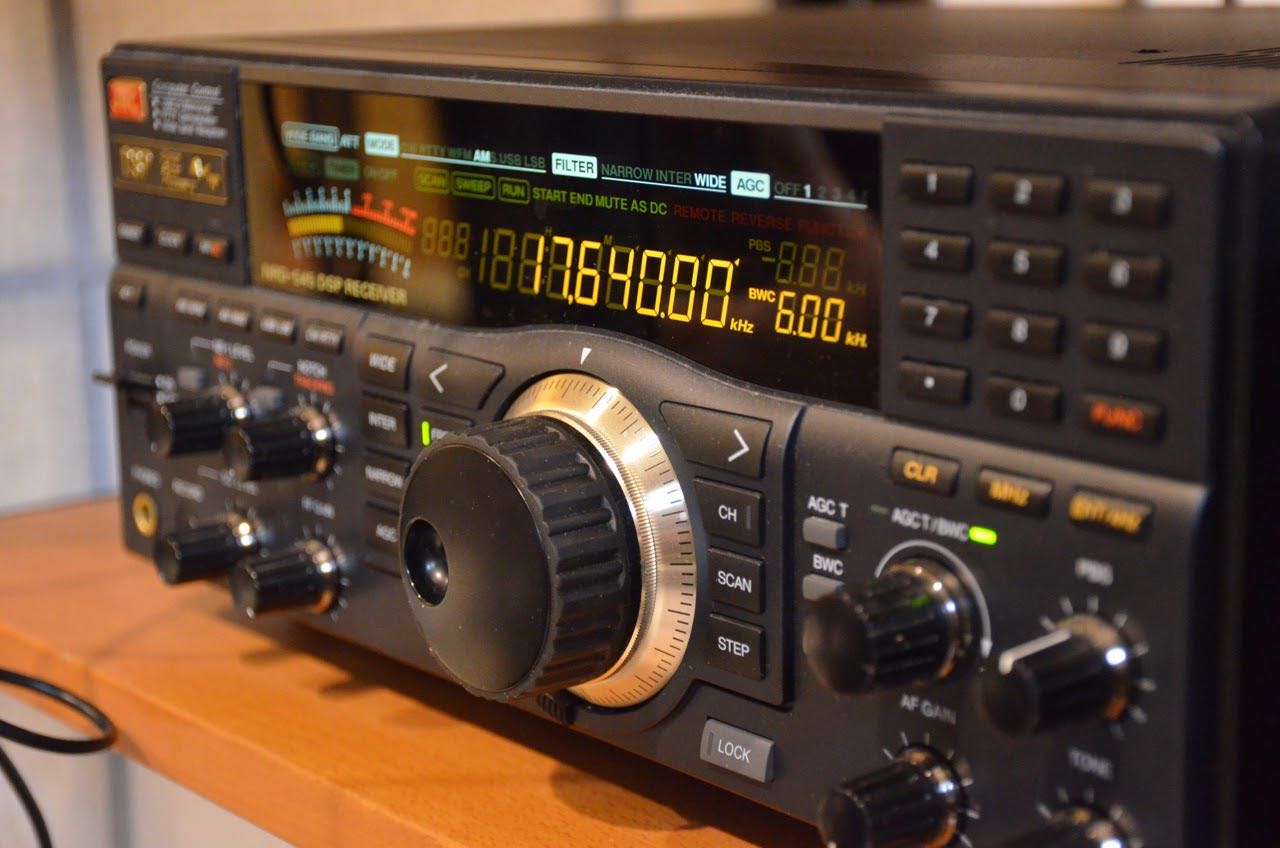
JRC NRD-545
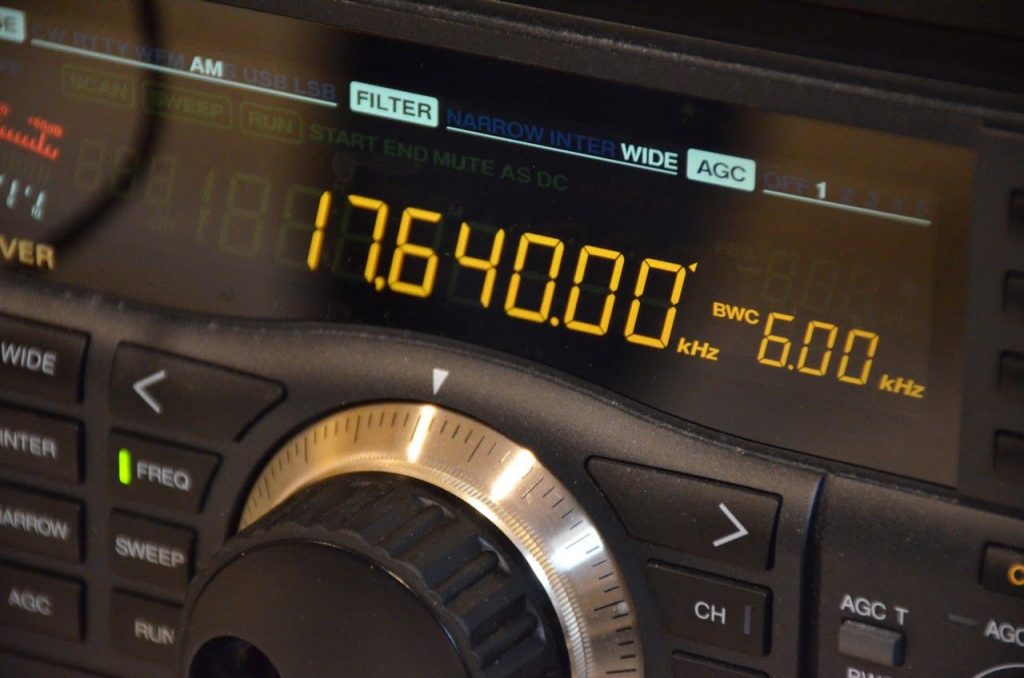
This receiver was purchased new and owned by the late great DX’er Don Jensen, so it has that bit of history attached to it. I began my love affair with JRC receivers when I used a NRD-525 in the 1980’s. As everyone knows, the “545” was the last prosumer set made by JRC. It’s one hell of a performer, with DSP filtering, that big beautiful display, and superb sensitivity. The radio still sparks debate, with some faulting it for high DSP noise. This 545 is loaded, with the CHE-199 module and high stability crystal. I also have a brand new top cabinet for the radio, obtained from JRC some years ago, and replacement key caps for the keypad digits. I recently remarked that a 545 held up quite well, in a comparison that is viewable on You Tube, with the brand new ICOM IC-R8600.


Thanks again, Dan, for taking the time to share a little about each of these amazing receivers and how many came to be in your collection.

In truth, readers, I’m sure there were many more radios I overlooked and (I’m certain!) Dan has acquired others since my visit.

The one thing I learned about my buddy Dan is that when he takes a radio into his collection, he’s a proper custodian of these beauties. He keeps each radio in excellent working order, proper cosmetic shape and, most importantly, puts them on the air!

Circa 1924 Parisian radio stockings

Many thanks to SWLing Post contributor, Jarno de Haan (PA3DMI), who shares the following in reference to our recent post about radio hats of yore:

Radio hats are fun but I found radio stockings!
In 1924 French ladies in Paris used their stockings and umbrella to receive the radio transmissions from the Eiffel-tower.

The movie is part of a movietheatres newsreel in Holland so the text is in Dutch but the pictures says it all 🙂

A bit NSFW but hey 1924:

Click here to view on YouTube.

Thanks, Jarno!  I had never seen this video before!

I love the fact that her umbrella serves as an antenna. With this in mind, I hope our buddy, London Shortwave, can sort out a way to make a vertical HF loop for a little umbrella DXing in his local London parks!

Radio Hats of Yore

Many thanks to SWLing Post contributor, Ed, who writes:

Hey Thomas, if you haven’t already covered this in the SWLing Post, this might be worth mentioning:

http://www.atlasobscura.com/articles/radio-hat-1931-1949-man-from-mars

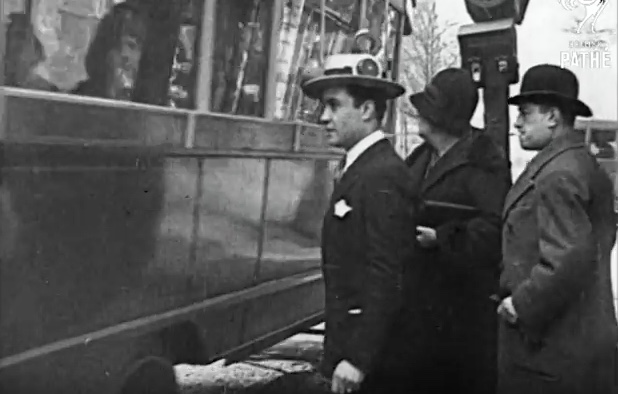
TURNS OUT, LISTENING TO PODCASTS on your morning commute is nothing new. In 1931, the British cinemagazine Pathetone Weekly—which documented odd fashion trends during its run from 1930 to 1941—premiered a new invention: the Radio Hat.

In it, a man waiting for the bus decides to listen to the radio—via his straw hat, from which two large antennas poke out.

As a Pathetone Weekly title card read: “They say there’s nothing new under the sun—this little French idea to while away the bus waits, must surely be!”

According to an August 1930 issue of Modern Mechanix, a Berlin engineer invented the hat, which allowed its wearer to “listen to the Sunday sermon while motoring or playing golf, get the stock market returns at the ball game, or get the benefit of the daily dozen while on the way to work by merely tuning in.”

[Continue reading…]

The video link in the article to a 1930’s British cinemagazine Pathetone Weekly­-which documented odd fashion trends during its run from 1930 to 1941­-shows a fascinating demonstration of the Radio Hat, which was way ahead of its time!

Click here to view on YouTube.

Very cool! Thank you for sharing, Ed. I love how the radio hat is so conspicuous–hey, I’d wear it!

Cold War Broadcasting: Two articles feature RFE & Radio Liberty

Many thanks to SWLing Post contributor, Andrea Borgnino, who shares the following article from the website Journalism Is Not A Crime:

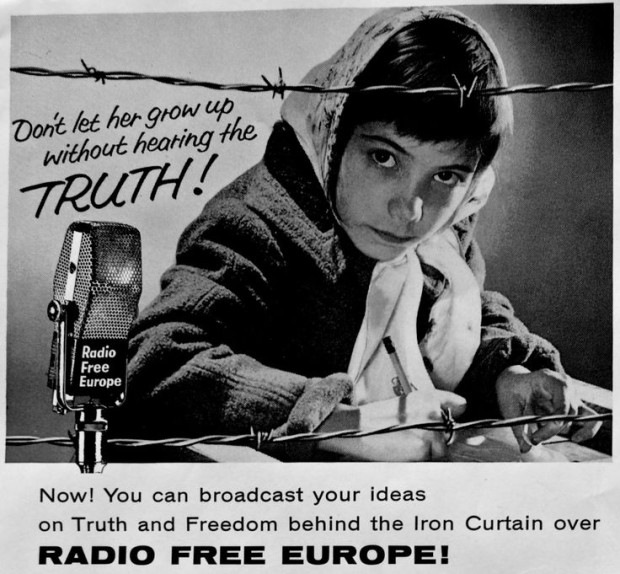
From Propaganda to Journalism: How Radio Free Europe Pierced the Iron Curtain

The end of the Second World War signaled the beginning of an information war in Europe. As the military alliance between the Soviet Union and its main western allies — the United States and Britain — came to an end, the USSR backed small communist parties that asserted ever-tighter control over much of Eastern Europe.

Speaking in Fulton, Missouri in March 1946, former British Prime Minister Winston Churchill warned of an “Iron Curtain” of totalitarian control sealing off half the continent. His speech heralded the beginning of an ideological “cold war” that would last for more than 40 years, a struggle in which citizens of the eastern camp were only meant to hear one side of the argument.

“We talk about the Iron Curtain as a physical barrier, but it was also an information curtain,” says A. Ross Johnson, a former director of Radio Free Europe and author of a history of RFE and its companion station, Radio Liberty, which broadcast into the Soviet Union. “All the communist regimes saw control of information as a key to their rule.”

Continue reading…

An SWLing Post contributor also recently shared the following PDF article by A. Ross Johnson for the Wilson Center. Here’s the summary:

To Monitor and be Monitored– Radio Free Europe and Radio Liberty during the Cold War

Monitoring of Soviet bloc radios was an important input to Radio Free and Radio Liberty broadcasts during the Cold War. RFE and RL also monitored the official print media and interviewed refugees and travelers. Soviet bloc officials in turn monitored RFE, RL, and other Western broadcasts (while jamming their transmissions) to inform themselves and to counter what they viewed as “ideological subversion.” On both sides, monitoring informed media policy.

RFE and RL monitored their radio audiences through listener letters and extensive travel
surveys, while the Communist authorities monitored those audiences through secret police
informants and secret internal polling. Both approaches were second-best efforts at survey
research but in retrospect provided reasonably accurate indicators of the audience for RFE, RL, and other Western broadcasters.

Click here to download the full Wilson Center article as a PDF.

If you’re interested in Cold War broadcasting, I would also encourage you to check out Richard Cummings’ blog, Cold War Radio Vignettes.

How to safely archive QSLs, postcards, photos, and printed memorabilia

Recently, an SWLing Post reader asked this simple question:

“If you were me, would you laminate a super-rare QSL card?”

The short answer–?  Please don’t!

Never laminate a QSL card, photo, page or postcard

You should never apply heat-seal or adhesive (cold) seal lamination to a QSL card or any other paper memorabilia if your ultimate goal is to protect and archive it.

Why?  Doesn’t lamination, for example, make your card impervious to moisture (and spilled coffee)?  Sort of.  So that makes it safe for the long term, doesn’t it? Well…not exactly.

These forms of lamination, over time, basically destroy printed media. In the short term, laminating your cards can look great, and will keep some of the coffee off (though it may still seep in the sides); in the long term, however, the (petroleum-based) plastic can “off gas,” causing a detrimental chemical reaction with the media it attempts to protect.  Plastic can also be acidic.  Coupled with the lamination heat (or the adhesive, in the case of cold-seal lamination) these processes can actually speed up the aging process “causing progressive deterioration and eventual embrittlement,” according to one archiving source.

I feel fairly passionate about this because, during my undergraduate studies, I worked for my university archives department where I was taught (by an excellent and knowledgeable archivist) to handle, document, index, and preserve sensitive documents, books, photos, cards, slides and other forms of media (known in the trade as “ephemera”).  Many times, we’d receive important documents or photos from donors who had laminated them, believing they were archiving these items for future generations. Alas, we saw the results of the lamination damage first-hand:  decades-old items that had been heat-laminated were separating and clouding up, often tearing apart the item inside. Our head archivist likened laminating to a self-destruct mechanism.

Take away? Lamination is a very bad idea for the long-term protection of any print media.

How to archive a QSL card––or any document, for that matter

Archival sleeves come in all forms. This one holds four cards and fits in a three ring binder.

Fortunately, there are effective (and fairly affordable) ways to properly archive and organize your QSL card collection, as well as other sentimental and/or valuable ephemera.

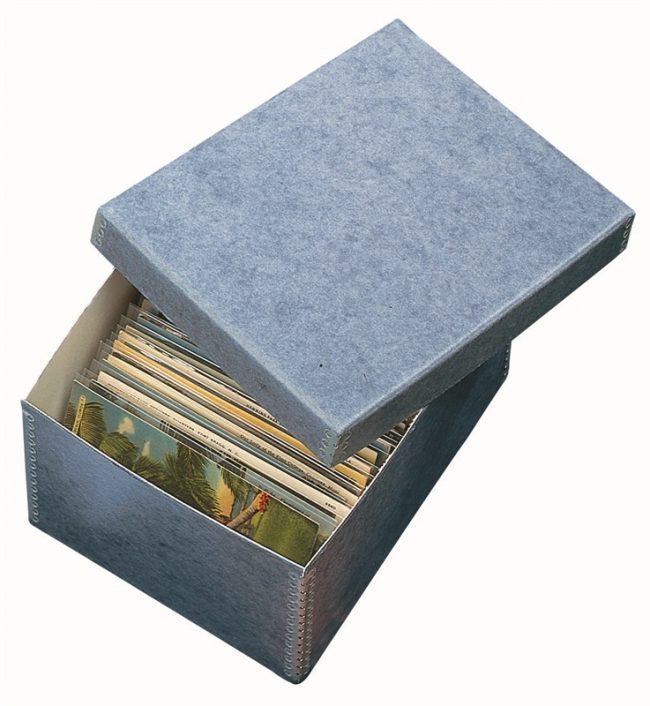
Look for archival transparent sleeves supplied to libraries. These are generally made of polyethylene, mylar/polyester, or another transparent archival material that passes the Photographic Activity Test (PAT).

In short: If you find an archival sleeve, from a reputable seller that passes the P.A.T. test, you’ll know it’s safe.

Archival products are acid-free, lignan-free, and chemical softener-free, thus should not interact or bind with the media you’re preserving as non-acid-free items are prone to do. With anything I wish to archive, I go with archival quality all the way.

For example, I make sure not only the clear sleeves or pages are archival, but that the binder or box containing the items are acid-free and of archival quality, as well. Any labels I use are archival, as well . That may seem like overkill to many, but it’s just what an archivist would do!

Storage of the media is also important; you don’t want to put your cards in archival sleeves and then leave them in a damp shed or shack where moisture can become trapped between your card and the encapsulating archival sleeve; mold could still develop.  So a dry, somewhat temperature-controlled environment is key.  Generally speaking, keeping ephemera indoors where you live may be a better option.

Sources of Archival Materials

A simple acid-free box can store hundreds of QSL cards in archival sleeves sleeves.

Archival products are more expensive than standard office products, but they’re worth it. Make sure you’re purchasing the best quality you can afford. Two of my favorite suppliers are Gaylord Archival and Light Impressions, though there are many other reputable ones out there.

Amazon and eBay offer sources of archival quality products, as well, and pricing can be more competitive than either of the retailers I’ve listed above.

As for myself,  I only buy archival products from retailers that specialize in them. Both Light Impressions and Gaylord Archival have helpful staff you can call on the phone. They’ll help you find the best material for the preservation of your collection of QSL cards or whatever else you may want to protect.

I’d rather support Light Impressions with my purchase knowing that their standards are strict and their reputation rides on their products meeting strict archival standards. If you’re going to pay for something to protect your memorabilia, I say, go for quality!

And in the meantime…give the heat lamination a miss.

Good luck with your long-term archiving!  And don’t forget to share those rare QSL cards with us here.

Lowell Thomas: “The Forgotten Man Who Transformed Journalism”

Many thanks to SWLing Post contributor, Bill Patalon, who shares the following story from The Smithsonian:

The Forgotten Man Who Transformed Journalism in America

Lowell Thomas was the first host of a TV broadcast news program, and adopted a number of other new technologies to make his mark in the 20th century

By the time Lowell Thomas turned 25, he’d already worked as a journalist, earned multiple degrees, and found a place on the faculty at Princeton University. But seizing a rare opportunity during World War I changed him from youthful overachiever to media heavyweight. During that conflict he met T.E. Lawrence, soon-to-be famous as “Lawrence of Arabia”—and Thomas played a large part in giving Lawrence that fame. The encounter launched Thomas into the media stratosphere with a groundbreaking multimedia presentation that captivated millions.

But while Lawrence’s work ended abruptly with his untimely death, Thomas went on to live a long, remarkable life. He traveled Europe, the Middle East, India, Afghanistan, New Guinea and Tibet, even meeting the Dalai Lama. He made fans out of Queen Elizabeth and Winston Churchill and led a prolific career in the news, making reports by print, radio, and TV—and reshaping them all into more formal, serious mediums.

Yet for a man with such a hyperbolic life, his legacy has been largely forgotten. Mitchell Stephens, a professor of journalism at New York University, set out to remedy that lapse in public memory with his new biography, The Voice of America: Lowell Thomas and the Invention of 20th-Century Journalism. Smithsonian.com talked with Stephens about his book, and why Thomas still matters today. […]

Click here to continue reading the full article at The Smithsonian online.

Many thanks for sharing this, Bill! What a fascinating fellow.