Category Archives: Nostalgia

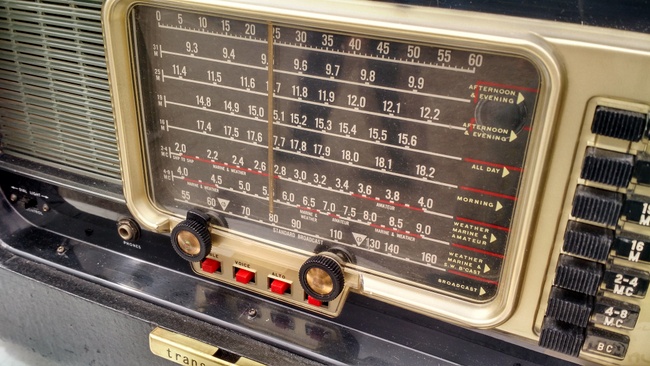
Tuning the Scott Marine SLR-M at sea

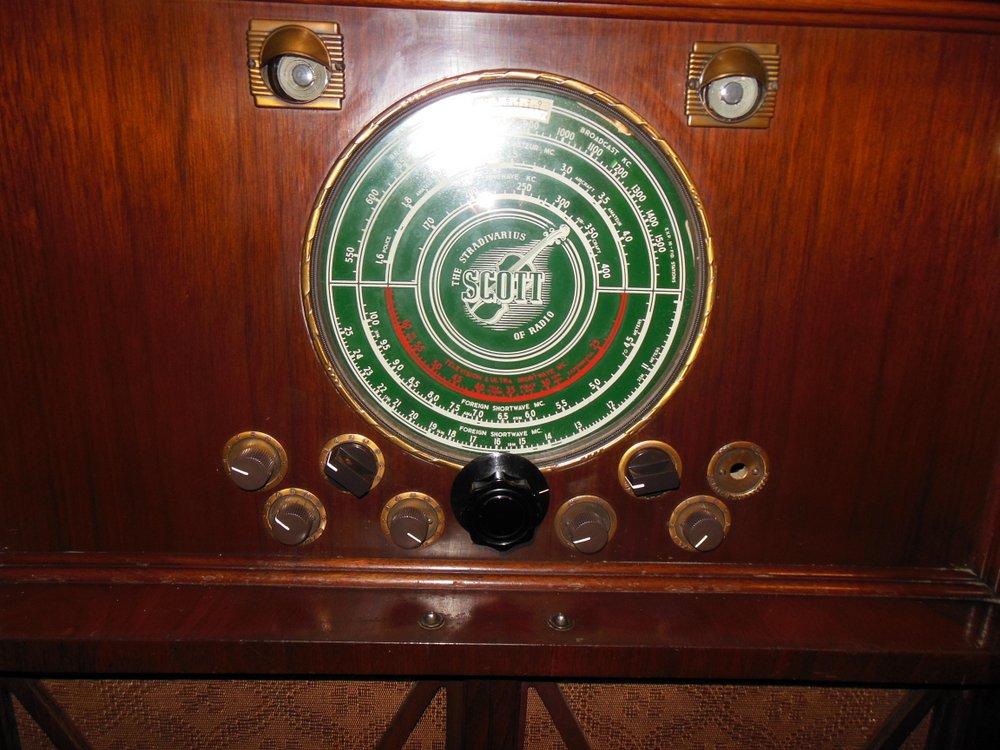
Scott-Marine-SLR-M-Dial

Many thanks to SWLing Post reader, Vendel Boeree (K2DSI), who writes:

Hi Tom, I just wanted to compliment you on your fine website. As a kid I would listen to Radio Netherlands which made me quite the hit with mom because she was homesick for our native Holland for quite some time. I was heart broken to find out that Radio Netherlands went dark not that long ago.

Scott-Marine-SLR-MBack in 1967 my family moved to Australia and went there by freighter. Things didn’t work out as planned and we returned on an old American freighter, the “African Moon”.

I became friendly with the radio operator on that ship and he let me shortwave listen when he was off watch. The receiver was a “Scott” and appeared to be the same as yours. They also had a “Scott” receiver in the lounge that had a slide rule dial that was used for entertainment purposes. I was hooked. I wanted to be a radio operator.

Needless to say I didn’t follow through on that dream and I suppose that’s just as well seeing as how ROs are a thing of the past.

Take care and keep up the good work.

Vendel Boeree/ K2DSI

Thanks so much for sharing those memories, Vendel! I bet reception was nothing short of amazing while you were at sea. I’m guessing the slide rule model Scott you listened to in the lounge was the model SLR-F (click here for a photo).
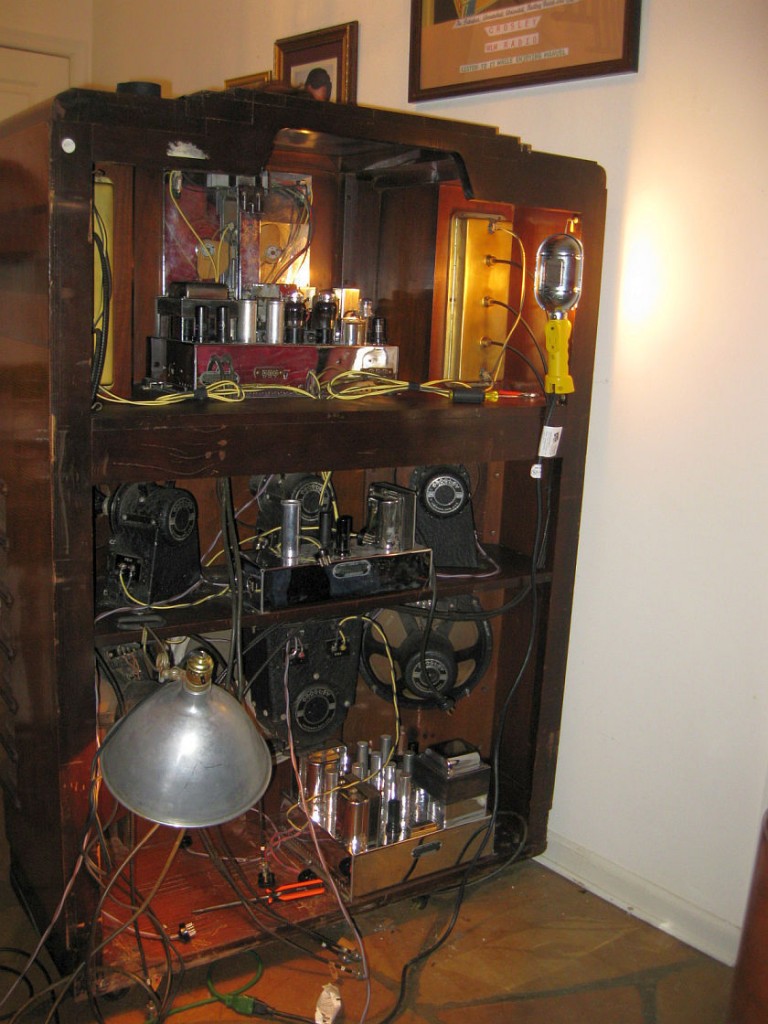
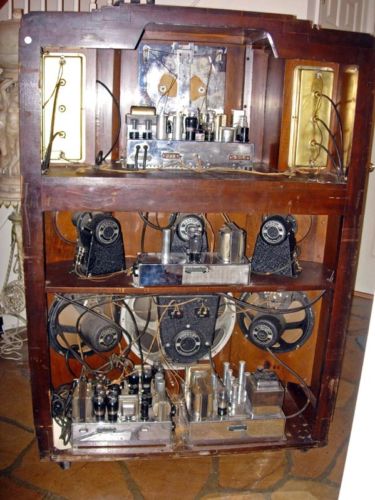
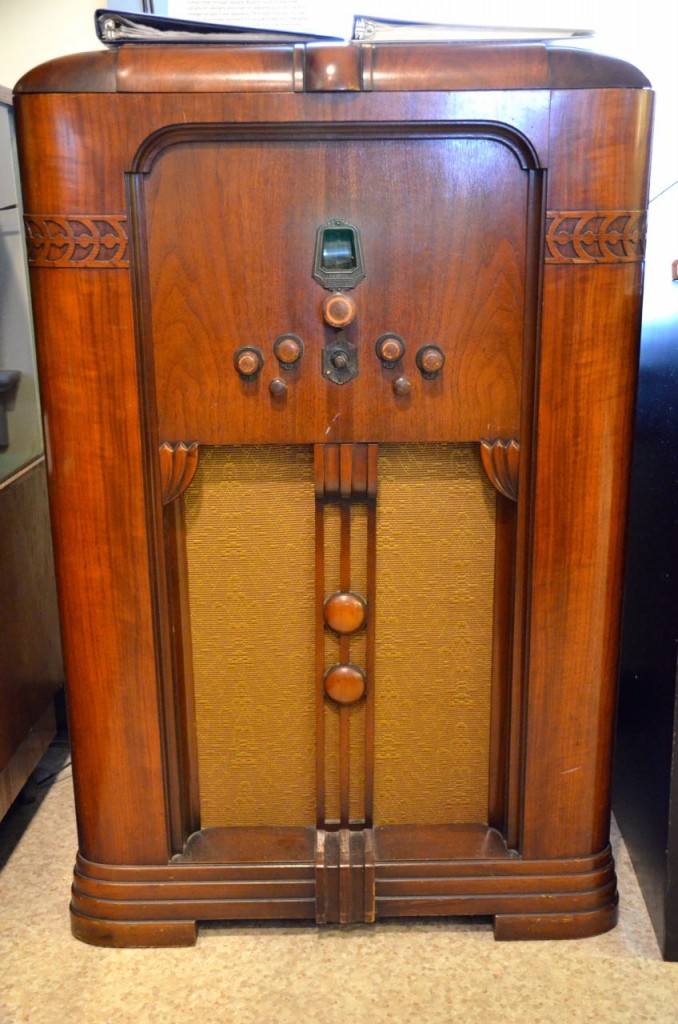
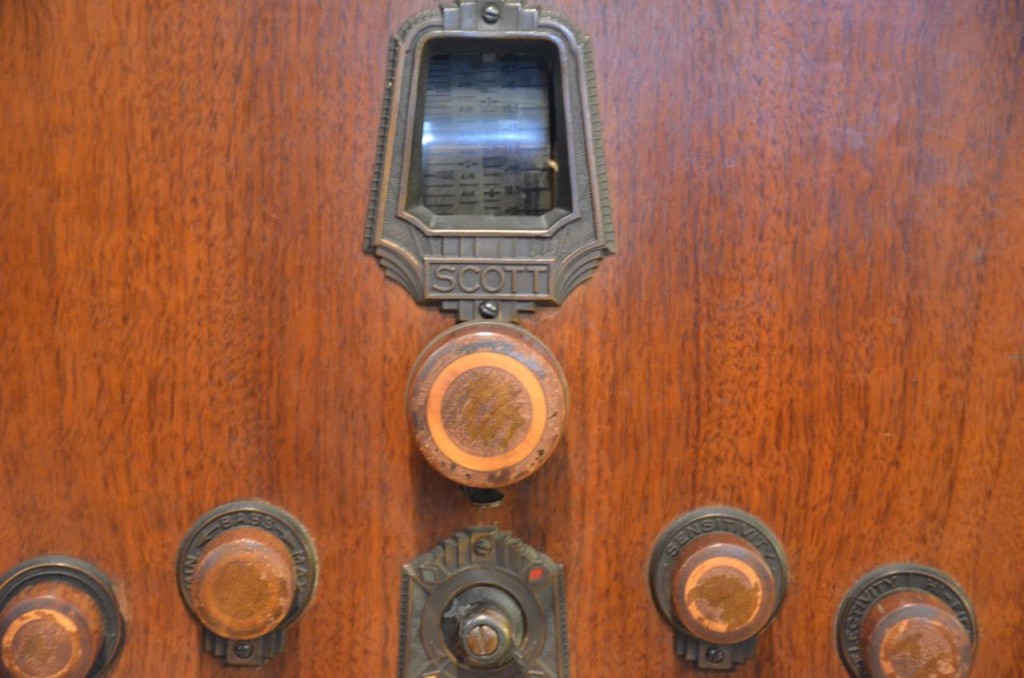
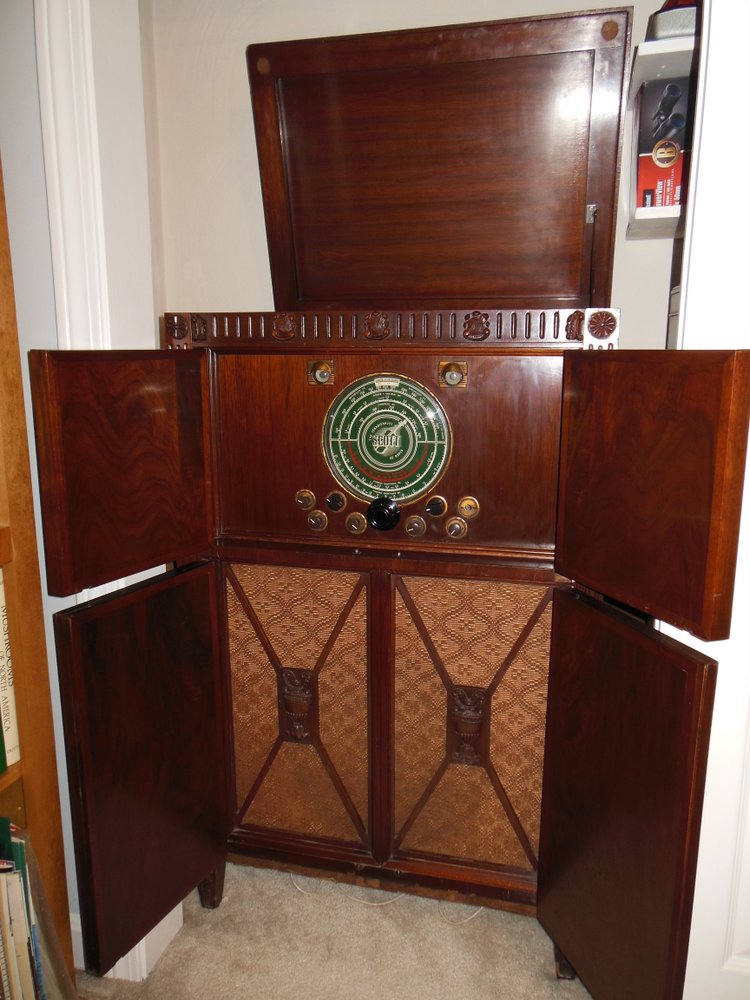
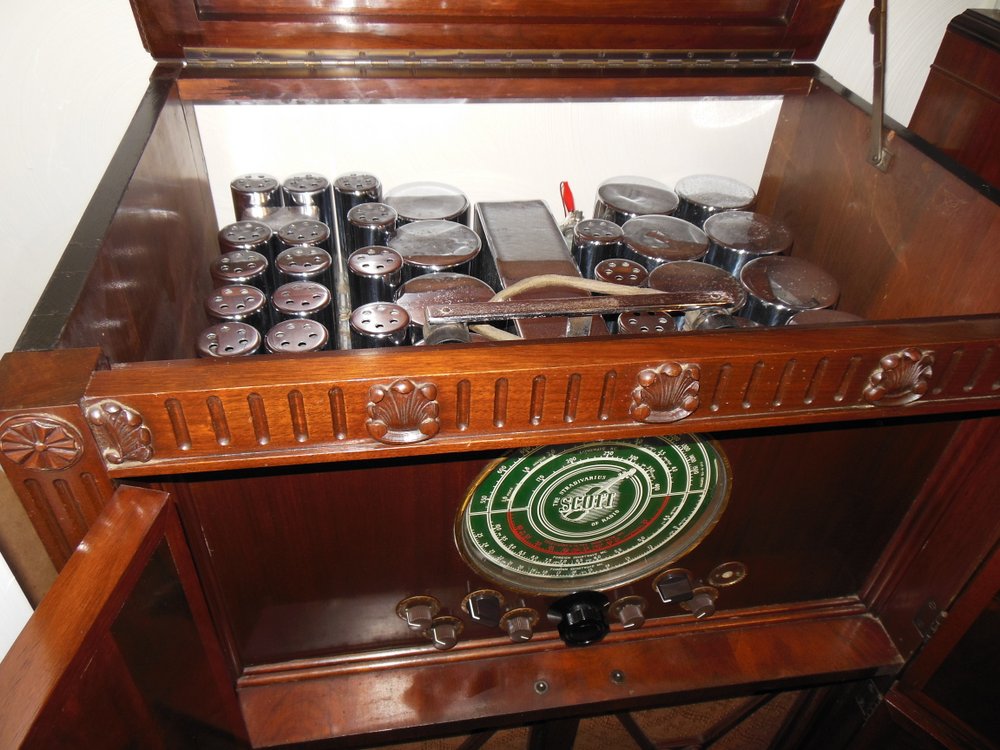
Just the other day, my wife looked around my radio shack and asked what radio I would grab if the house were on fire. My answer was the Scott Marine SLR-M. It represents everything I love in WWII era receivers: built like a tank, great sensitivity, beautiful back-lit dial, built-in speaker, phono in, a magic eye and–since it was intended as a troop morale radio–beautiful room-filling audio.

Yep. Scottie’s a keeper!

Radio Preservation Task Force conference in the press

Shepperd-RPTF-LOC-2

Last week, the Radio Preservation Task Force held a conference which focused on saving America’s radio heritage. I had hoped to attend in DC, but sadly had a conflict in my schedule that weekend.

I’m happy to see that the conference got several mentions in the press.

Many thanks to SWLing Post contributor, Bill Patalon, for sharing a link to this article in RadioWorld:

Preservation Conference Highlighted Unique Radio Perspectives

The launch of the first “Save America’s Radio Heritage” conference saw a greater turnout than expected, with a total of roughly 300 attendees over two days in the nation’s capital last week.

The event, held at the Library of Congress and the University of Maryland, focused on the state of radio preservation, but the conference was more than just about the process of preserving historical recordings and other radio documents, but sharing some of America’s unique uses of the medium.

The Radio Preservation Task Force calls itself the first national radio history project of the Library of Congress. It grew out of the Library’s ambitious National Recording Preservation Plan, published in 2012. The task force says radio is “perpetually declared to be a dying medium” but nevertheless attracts dedicated listeners and commercial and public support. The organizers have said radio’s history is a chronicle of culture and a potential trove for historical researchers. The national plan in 2012 specifically called for a symposium to discuss the challenges of preserving American radio broadcasts; last week it was put into action.[…]

Continue reading on RadioWorld’s website…

The conference also caught the attention of APM’s Marketplace:

Task force aims to preserve radio history

A group of librarians, academics, and audio enthusiasts is gathering in Washington Friday for a first-of-its kind conference. The topic: “Saving America’s Radio Heritage.” The meeting is part of a massive effort to preserve recordings going back to the early 20th century.

The effort is not focused on the classic network quiz shows and radio plays of the 1930s through 50s, said Chris Sterling, who chairs the Radio Preservation Task Force at the Library of Congress.

“We’ve pretty much got that stuff,” he said. “What we’re talking about instead is trying to get the local radio voice in America: commercial, educational, college radio, all of that.”

One example is a 1956 interview with Rosa Parks from the Pacifica Radio Archives, recorded after Parks’ arrest for refusing to give up her seat to a white man on an Alabama bus.

Also at PopUp Archive:

http://blog.popuparchive.com/?p=836

And on the CBS Radio Network:

Those of us who work in radio are proud it has such a long and interesting history…

[…]But there’s a problem: Radio, by its very nature, is ephemeral. That makes its history a little hard to document.

A conference going on in Washington, DC is helping to make the airwaves a bit more solid.[…]

Continue reading and listen to the full audio report on the CBS Radio Network.

I hope the RPTF hosts another conference next year as I would like input on archiving AM/MW spectrum recordings–something I suspect few in the field even know exists!

Any SWLing Post readers attend the conference?

Video: This Is Radio Free Europe (1964)

RFE-Image

If you’re in the mood for a little Cold War era nostalgia, check out this video produced by Radio Free Europe in 1964. One of the things I found most fascinating was seeing the number of rack-mounted Hammarlund SP-600s (and other benchmark receivers) at the RFE monitoring station near Munich.

Hallicrafters booth at the 1970 Consumer Electronics Show

Click to enlarge.

Click to enlarge.

Many thanks to SWLing Post reader, Bob, who writes:

A great photo for your blog, for no particular reason…

[The image above is a] part of a long blog post by Lenovo about CES history, but I did not see any attribution to Hallicrafters.

Here is the post:

http://blog.lenovo.com/en/blog/ces-history-technology-consumer-electronics-show/

Very, very cool! What I wouldn’t give to travel back to the CES shows of the 1970s and 80s.

According to the Levono blog, the 1970 CES was when the VCR made its debut. Amazing.

Thanks again, Bob.

I’m curious if any SWLing Post readers have attended the CES in past decades.  I really wanted to attend CES in the 1990s, but since I was a university student half of that decade, I never had the funds (or justification) to do so!

Listening to the Voice of Greece on the Signal Corps BC-348-Q

SignalCorps-BC-348-Q

Yesterday evening, I warmed up my Signal Corps BC-348-Q and tuned to 9,420 kHz to see if the Voice of Greece happened to be on the air.

Fortunately, I was rewarded with a strong signal from Avlis.

The ‘348 did a fine job playing all that lovely Greek music, too. Though the WWII era ‘348 was never intended to be an HF broadcast band receiver, when paired with a good speaker, it sounds pretty darn amazing!

Here’s a short video (apologies for the dark image):

1944 WWII Hallicrafters Shortwave Radio Promo

WWII-HallicraftersInteresting 15 min. video demonstrating the Army Signal Corps using an Hallicrafters SCR-299.

While certainly a promotional piece for Hallicrafters, this has great footage and captures a bit of the excitement of radio expanding into new frontiers. There is a discussion of how the radio was modified for military conditions as well as some innovations which were implemented to make such a system mobile.

As an aside, it never ceases to amaze me how clear and crisp black and white film technology of the time seems somehow better than the color images which replaced it. But that may just be me — a black-and-white guy living in a colorized world!

There is a second part to this video, as well as other WWII-era videos available on YouTube with a bit of searching, and of course don’t forget to check out the SWLing’s Shortwave Radio Archive page for more interesting shortwave audio old and new!

Robert Gulley, AK3Q, is the author of this post and a regular contributor to the SWLing Post. Robert also blogs at All Things Radio.

From the Shortwave Archives: BBC World Service report on the Space Shuttle Challenger disaster

STS-51-L crew: (front row) Michael J. Smith, Dick Scobee, Ronald McNair; (back row) Ellison Onizuka, Christa McAuliffe, Gregory Jarvis, Judith Resnik.

STS-51-L crew: (front row) Michael J. Smith, Dick Scobee, Ronald McNair; (back row) Ellison Onizuka, Christa McAuliffe, Gregory Jarvis, Judith Resnik.

Many thanks to SRAA contributor, Tom Laskowski, who submits the following notes with his timely off-air recording of the BBC World Service from January 28, 1986:

Thirty years ago today the US Space program came crashing down with the explosion of the Space Shuttle Challenger.

I was a student at Purdue University at the time, living in a dormitory.

I decided to make some recordings knowing this would be a historic event.

This is a recording I made of the BBC on the evening of Jan 28 (0200 UTC on January 29). The frequency was most likely 5975 kHz or 9590 kHz. The dorm environment didn’t make a great place for SWL reception and the recording is noisy but still of decent quality.

Recorded using a Sony ICF-2001 with a wire attached to a window screen for an antenna.

Click here to download the recording as an MP3, or simply listen via the embedded player below:

Thank you so much for sharing this recording, Tom. What a brilliant way to remember and honor the Challenger crew.

To listen to a wide array of off-air shortwave radio recordings, explore the Shortwave Radio Audio Archive.