Category Archives: Nostalgia

Night of Nights XVI: July 12, 2015

Photo: US Coast Guard

Photo: US Coast Guard

SWLing Post contributor, Brian D. Smith, writes:

“Thought I’d forward you this information on the annual “Night of Nights” event on July 12 (U.S. local time)/July 13 UTC, which provides an opportunity for shortwave QSLs – assuming the listener understands Morse code!

I’m sure you’re familiar with this one-night-a-year happening, in which maritime radio stations rise from the dead and transmit Morse code messages again for a few hours.

As a guy who honed his CW sending skills by listening to these stations’ constantly repeating messages, I have a sense of nostalgia and gratitude toward these stations, which helped me obtain my first Novice license, WN9ICB, at the age of 15 … less than 2 months after I taped the WWV recording that I submitted.”

Many thanks for the notice and sharing your nostalgia! Brian also forwarded an announcement from the Maritime Radio Historical Society of America. The MRHS describe the event:

It’s that time of year again. Time to honor all those ops who came before us by preserving their skills, traditions and culture through on the air operations.

Why 12 July? Long time True Believers know the story. But it may be worth repeating for new arrivals and to remind everyone of the traditions we hope to keep alive.

On 12 July 1999 some very tough looking grizzled old radio pioneers had tears in their eyes as the last commercial Morse code radiogram was sent. It was the end of an era. And as the last beeps faded away into the static they witnessed the end of the career to which they had devoted their lives.

These men – and some women – had stood watch over the airwaves on shore and at sea. Theirs was mostly the business of maritime commerce. But when their ship was in peril they were called upon to send the most electrifying three letters in radio, S O S, knowing that all their fellow radio operators would press their earphones close to get every scrap of information and bring aid to their stricken ship.

Once, our coasts were dotted with great Morse code radio stations, all communicating with ships at sea. They’re all gone now… all except one, the one they called the Wireless Giant of the Pacific, located at Point Reyes.

On that sad day in 1999 another event took place. The Maritime Radio Historical Society (MRHS) was formed. We made it our life’s work to honor the men and women of wireless by restoring that wireless giant. One year and one minute later the giant’s voice once again spanned the oceas as we picked up the thread and kept the faith with our colleagues of the air.

Every year since, in an event that became known as the Night of Nights, Morse code station KPH has returned to the air, joined by KFS and the station of the MRHS, KSM.

This year our friends and colleagues at USCG station NMC have labored mightily to bring that storied call sign back to life on Morse code for the evening along with NMQ in Cambria, CA..

And station NMW in Astoria, OR will be on the air as well.

Stations WLO and KLB will join us again as hey have in years past.

This is a global and local event. Hundreds of listeners around the world will be waiting with their earphones on, waiting for the signals of the great station to once again arc over the dome of the Earth to their receivers.

You can be with us in person!

My buddy, Mike (K8RAT) also notes that this “Night of Nights” event may witness the last ever Morse communications from the US Coast Guard stations. Indeed, this is mentioned in the MHRS newsletter:

This may very well be the last time ever that USCG stations can be heard on the air using A1A (Morse) emission. As new equipment is installed the hardware and wiring for Morse has been progressively removed. And the personnel who knowledgeable in the art retire or are reassigned. So be sure to listen for these stations.

I’ll not only listen to this Night of Nights, but hope to record some of the stations as well.

The frequencies for this event are numerous! I have listed the USCG (NMC) frequencies below, but please check the MHRS newsletter for MRHS and other maritime station frequencies.

Again, Brian, thanks for the heads-up!

Happy listening, everyone!


NMC (Transmit Bolinas, Receive Pt. Reyes)

Frequency            Transmitter                         Antenna

472.0                    Nautel ND2500TT/6           173′ monopole tower
500.0                    Nautel ND2500TT/6           173′ monopole tower
6383.0                  Rockwell-Collins RT-2200  Omni-directional
8574.0                  Rockwell-Collins RT-2200  Omni-directional
17220.5                Rockwell-Collins RT-2200  Omni-directional
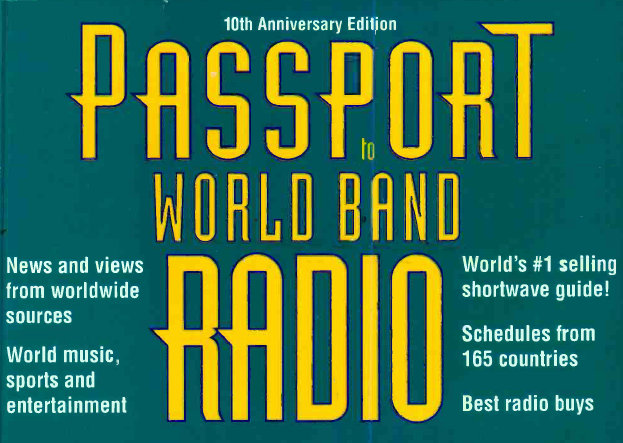
Passport to World Band Radio now available for download

PassportToWorldband RadioMany thanks to my buddy, Skip Arey (N2EI), who informed me that the American Radio History website has added 18 issues of the late Passport To World Band Radio to their free downloads archive. These issues span 1986-2009 and are free to download. What a treasure trove!

Click here to view Passport To World Band Radio on the American Radio History website.

“Switzerland’s international voice in a changing world”

(Photo: SwissInfo.ch)

(Photo: SwissInfo.ch)

Many thanks to my buddy, Rob Wagner, for passing along yet another great article with archived sound clips from Swiss Radio International.

Click here to read Switzerland’s international voice in a changing world.


Guy shares his nostalgia radio wallpaper for download

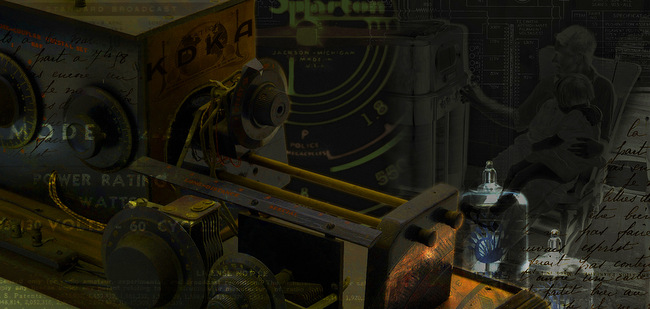
Hertzian Vision_2560x1440SWLing Post contributor, Guy Atkins, writes:

I’m writing to let you know of a “nostalgia radio” Windows wallpaper graphic I’ve made available to radio hobbyists. This design is called Hertzian Vision, and I created it three years ago for a few SDR enthusiasts/software authors in Finland. I’d like to offer it to your readers too.

My design was inspired by the SPARK Museum of Electrical Invention in Bellingham, Washington, which opened initially as a showcase for antique radios.

Here is a link to a folder with two sizes of the wallpaper:

https://app.box.com/s/33qzg7ouo3sztzzbnd36ylytt1cp7u3y\

The two high resolution wallpaper files are 1920 x 1200 and 2560 x 1440 pixels.

This is a fantastic graphic you’ve created, Guy–many thanks for sharing it with us!

KMREOn a side note, Guy also informed me that the SPARK Museum of Electrical Invention also operates a low power FM station, (KMRE) that features old time and classic radio shows. You can listen to KMRE online via TuneIn Radio or several other sources.

All morning, I’ve been listening to KMRE via my SStran AM transmitter though my BC-348-Q. Great fun!

[Update: if you have difficulty downloading the wallpaper via the link above, you can download them directly from the SWLing Post server by clicking here and here.]

99% Invisible: “Voices on the Wire”

Radio-Dial-Blurred-Dark

Many of you know that I’m a huge fan of 99% Invisible–a podcast and radio show about “design, architecture & the 99% invisible activity that shapes our world.”

This past week, 99% Invisible’s episode, Voices on the Wire, featured Tony Schwartz, a recording pioneer, and Frank Conrad, a broadcasting pioneer. While not specifically about shortwave radio, you’ll hear how the ether weaved its way through both of their histories.

I should mention that Roman Mars, creator of 99% Invisible, is quite a fan of shortwave radio. Indeed, in the past, he’s featured our friend, David Goren, of Shortwaveology.net.

You can listen to Voices on the Wire and read the show notes on 99% Invisible’s website. Click here to download the episode as an MP3 file, or simply listen via the embedded SoundCloud player below:

Note that the Tony Swartz segment was originally produced by  The Kitchen Sisters, Nikki Silva and Davia Nelson, from their series Lost and Found Sound; the segment on Frank Conrad was originally produced by Radio Diaries.

And, hey…if you happen to be chatting with Roman Mars anytime soon, ask him to do more shows on shortwave radio: a technology I consider to be the ultimate invisible medium!

Hamvention find: the Arvin 68R58 AM transistor radio

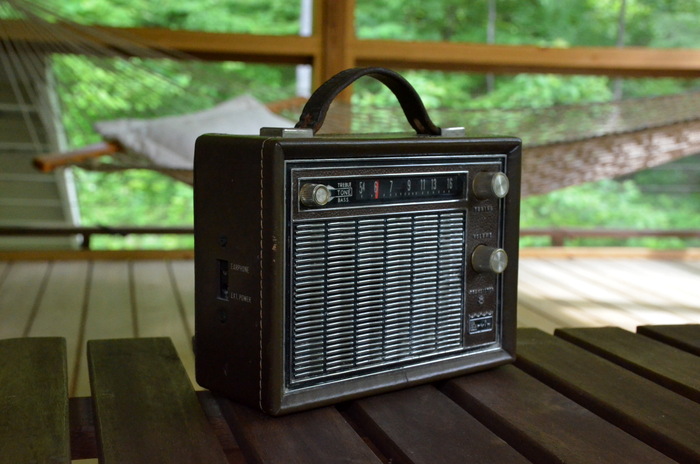
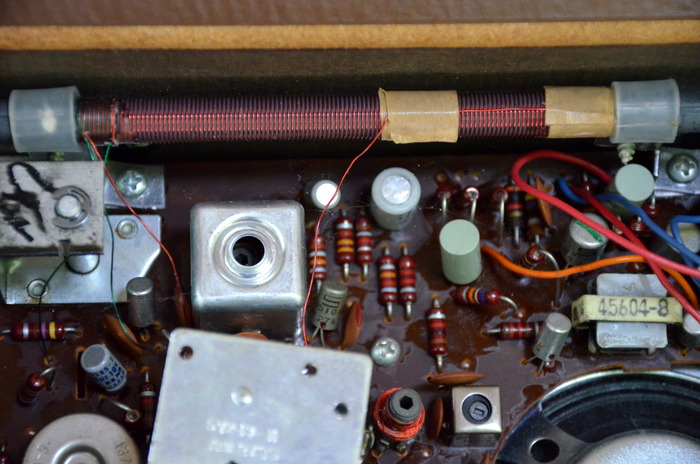
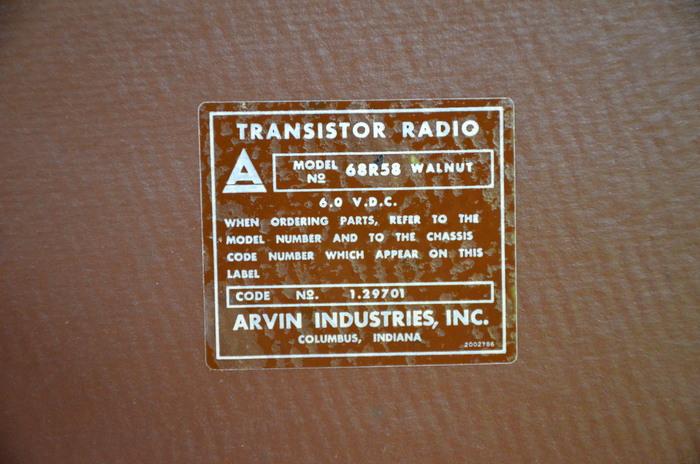
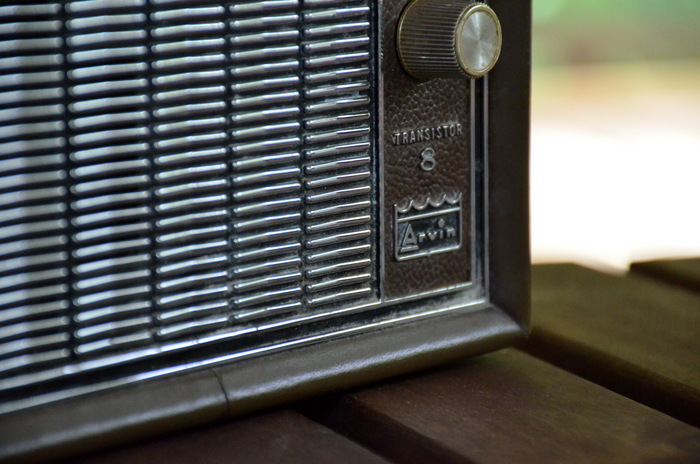
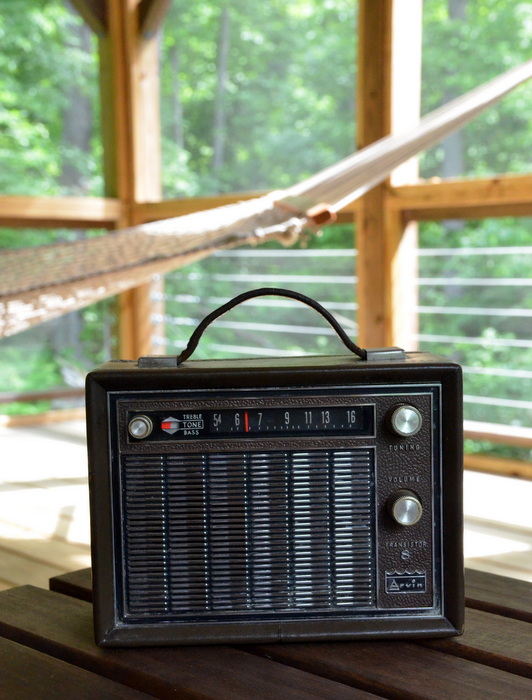
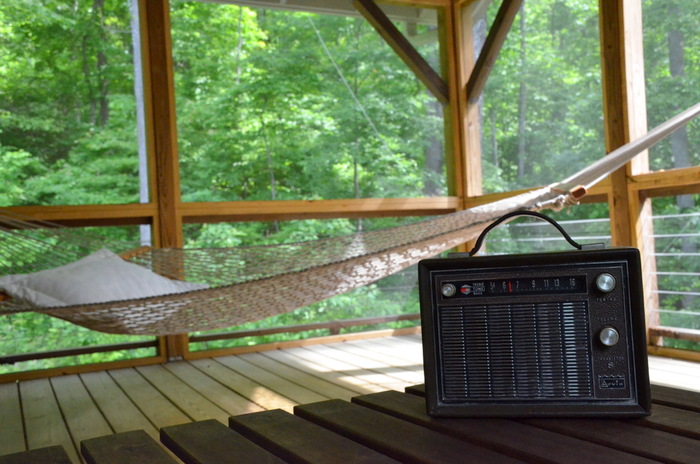
ARVIN-68r58-DSC_1390Though I believe I spent more money at the Dayton Hamvention this year than I have in all previous years, I only purchased one radio: the Arvin 68R58 eight-transistor.

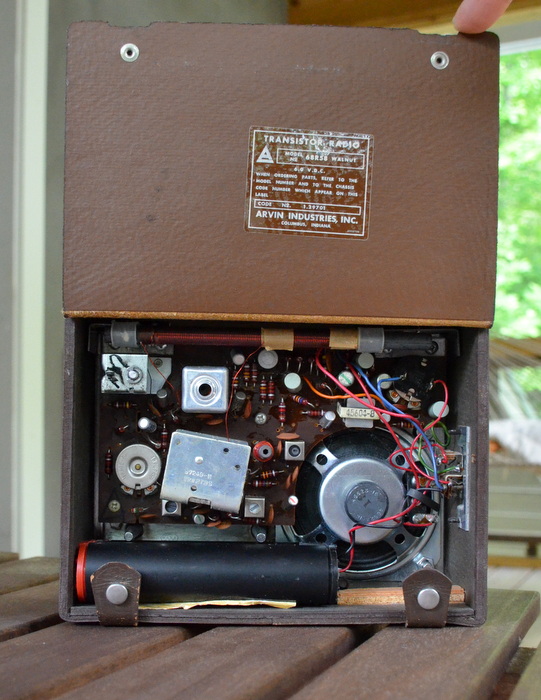
I spent a whopping $5 on the little Arvin in the Hamvention fleamarket. To be fair, the seller sold it for this modest price because he was not sure if the radio worked.  But when I unsnapped the back leather cover, peered inside, and found the works remarkably clean, I suspected it might…

ARVIN-68r58-DSC_1373No original power supply was included, of course, and I was a bit concerned when I saw the somewhat out-of-character plastic battery holder. In the filtered fleamarket light, it appeared to me as if it required proprietary batteries–the holder appeared too small for C cells, and too large for AAs. There was no indication of the type of batteries it used, but since the spec read “6 volts,” I knew I could build a small AA battery holder, if need be.

So, at $5 (I bargained him down from $10, based on the doubt of operation) it was a very low risk purchase, and a potentially a fun project.

ARVIN-68r58-DSC_1385

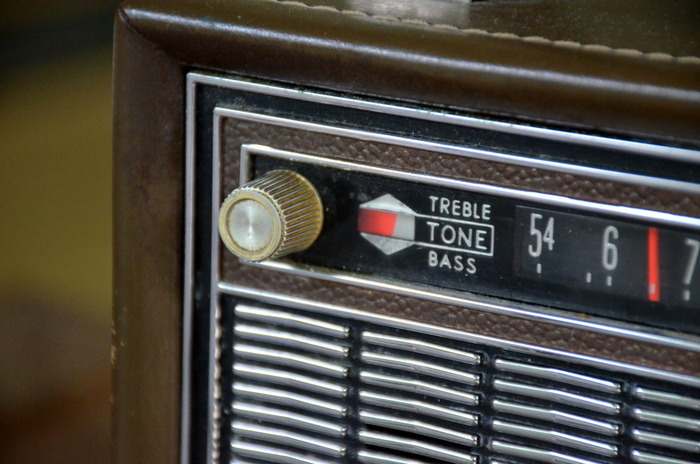
Back at home, I popped open the battery holder and looked inside…And I discovered the Arvin did, indeed, take four C cells. Simple enough! After inserting fresh batteries, I turned on the radio via the tone pot, and instantly heard beautiful, rich audio.

What I thought would be a project radio ended up being fully functional, and was, moreover, in tip-top shape.

ARVIN-68r58-DSC_1369

So far, I’ve been very impressed with the Arvin’s AM sensitivity and audio fidelity. No doubt the generous ferrite rod antenna is doing the trick on medium wave.

ARVIN-68r58-DSC_1377

Last night, as I tuned through the AM broadcast band, I was able to null out unwanted stations and noise amazingly well. There is something to be said of transistor radios from this era–let’s just say, they’re classics.

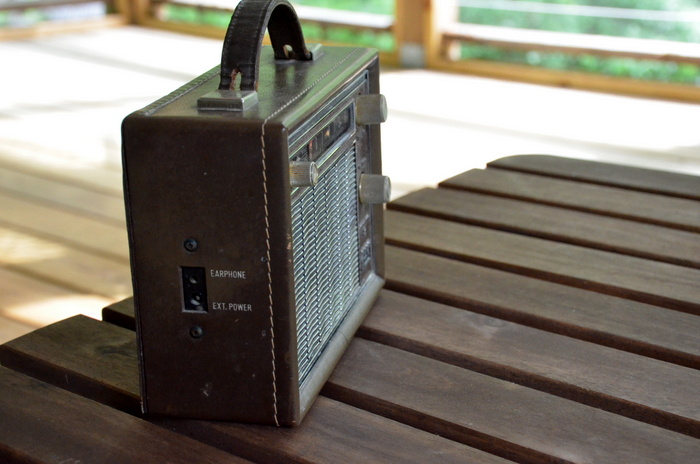
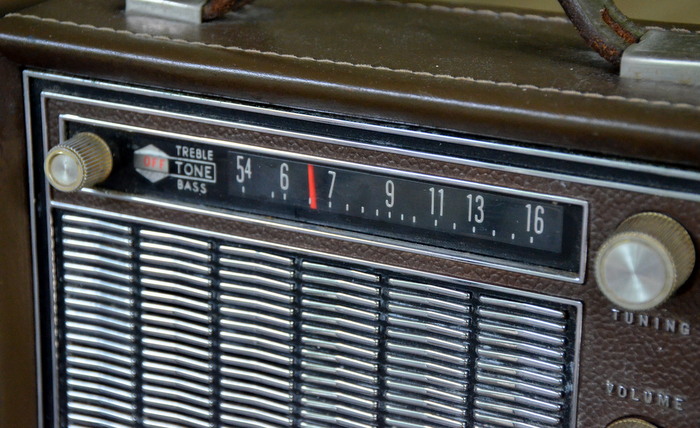
ARVIN-68r58-DSC_1376The Arvin has a simple set of controls: tone, tuning, and volume. There are no filter selections, of course, but I can tell that it’s quite wide; perhaps 8 or 9 kHz.

ARVIN-68r58All in all, I’m very pleased with my little purchase, and the Arvin has become my new (vintage) bedside radio. Last night, I tuned in one of my favorite AM stations on 740 kHz, CFZM in Toronto, Canada.  CFZM (a.k.a. “Zoomer Radio”) is not only a benchmark, but a right of passage for any worthy AM radio in my household. The Arvin passed the Zoomer test with colors flying.

And, yes, it even soothed me to sleep.

ARVIN-68r58-DSC_1387

Now I only need to properly clean and restore the Arvin’s leather chassis and perhaps build a 6V-regulated linear power supply.

ARVIN-68r58-DSC_1378

Next time you pass by a 1960s/70s vintage transistor, grab it! I’m certainly happy I did.

Now, I think I’ll turn on the Arvin, sip some dark beans, and put up my feet in the Pawley’s Island hammock…Cheers! Summer’s on the way.

ARVIN-68r58-DSC_1381Want one of your own? A quick search reveals that the Arvin 68R58 can be found on eBay for quite reasonable prices. Click here to search eBay for an Arvin.

Listening to an AM broadcast station on the BC-348Q

SignalCorps-BC-348Q

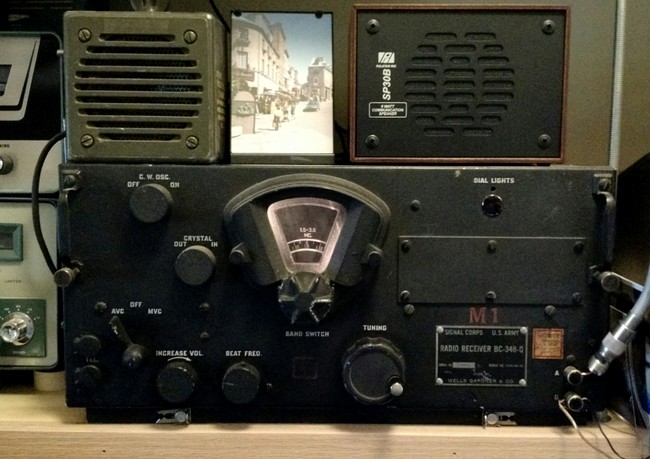
I listen to my BC-348Q most days; in fact, it’s my preferred way of receiving my morning dose of Radio Australia on 9,580 kHz. And although you won’t find any medium-wave DXers endorsing this beefy antique rig, the BC-348, with its warm tone, has turned out to be a great shortwave receiver for casual listening.

When the armed forces commissioned the Signal Corps BC348 during WWII, the last thing they wanted was to have on-duty personnel listening to AM broadcast bands during, say, bombing sorties––so they purposefully omitted the medium-wave band. The band selections in the BC-348 are as follows:

  • BC-348-Q-Dial200-500 KC.
  • 1.5-3.5 MC.
  • 3.5-6.0 MC.
  • 6.0-9.5 MC.
  • 9.5-13.5 MC.
  • 13.5-18.0 MC.

But here in the comfort of my radio digs three-quarters of a century after WWII, I recently discovered that this classic “hot war” receiver does, indeed, pick up one of my local AM broadcast stations: WTZQ, and on 1,600 kHz. WTZQ has become one of my favorite stations; it’s one of the few in this region that’s still actually independently owned.  The station’s playlist spans the decades, including, as they say, “everything from Glenn Miller to Steve Miller.” And, since they’re on “1.6 MC” they make the cut on the ‘348’s second-band selection.  How cool is that?

WTZQWTZQ’s station is a good thirty miles from here as the crow flies, so reception usually includes a little static on the wire antenna I’ve connected to the BC-348. Still, you might enjoy this short audio clip of WTZQ via the BC-348Q:

You can stream WTZQ, by the way, via their website. Enjoy!