Category Archives: Nostalgia

Name that dial!

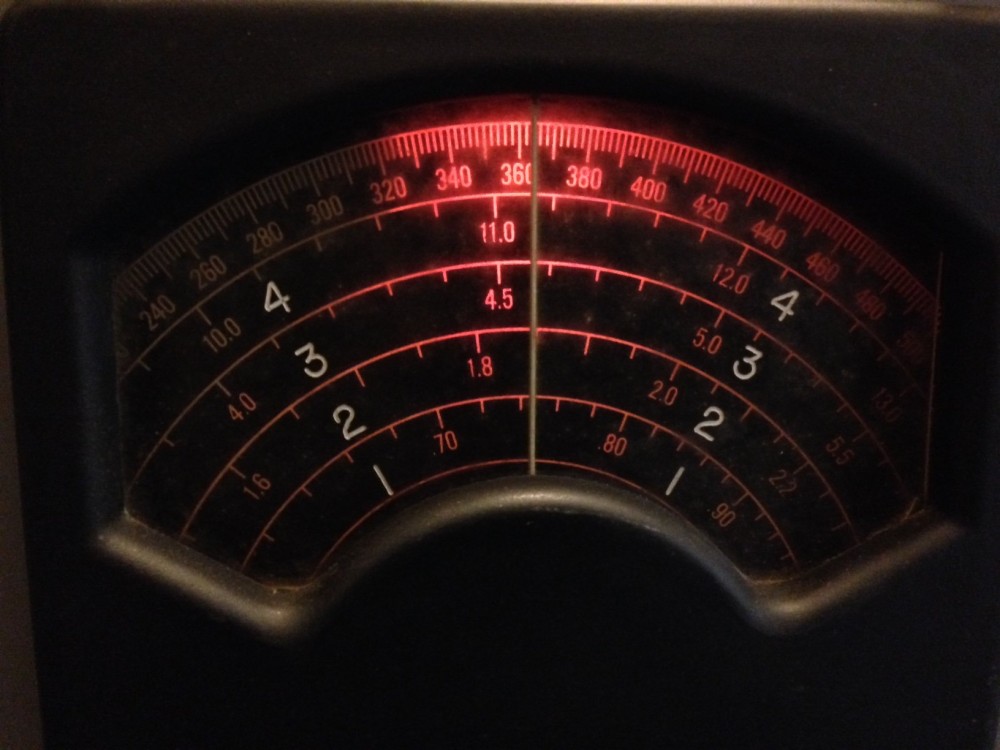
Mystery-Radio-DialYesterday, I acquired another antique radio (yes, a “boat anchor”) for my modest collection of vintage receivers. I took a quick close-up photo of its backlit dial (above).

For fun, I’m curious if any SWLing Post readers can name the radio sporting this dial? If you want to give it a go, please comment below.

John Lennon and the Sony ICF-2001

icf2001l

Many thanks to SWLing Post reader, Robert Yowell, who writes:

“I happen to be a huge Beatles fan, and especially a fan of John Lennon’s solo music as well. The last album he recorded was “Double Fantasy” which was made in New York City during the summer of 1980.

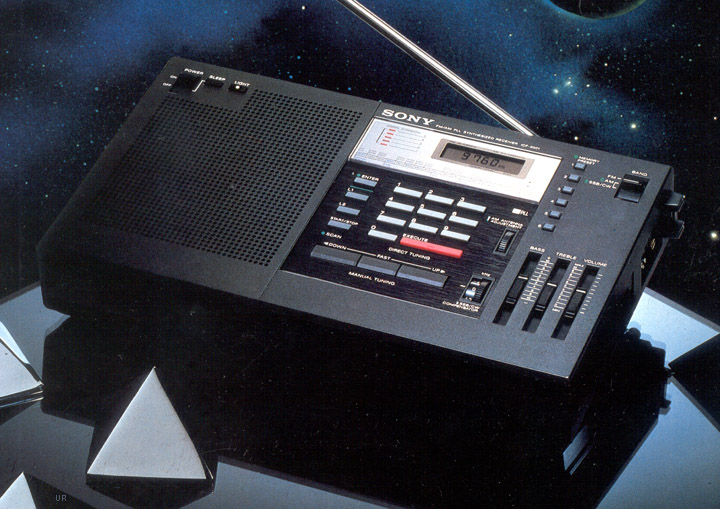
As you probably know, Sony introduced that same year the revolutionary ICF-2001 PLL synthesized receiver. John was known to have been a great fan of home electronics, especially those produced by Sony and other Japanese manufacturers. He also was a great fan of radio – as his appearances on the local WNEW-FM rock music station in NYC in the 70’s attest to.”
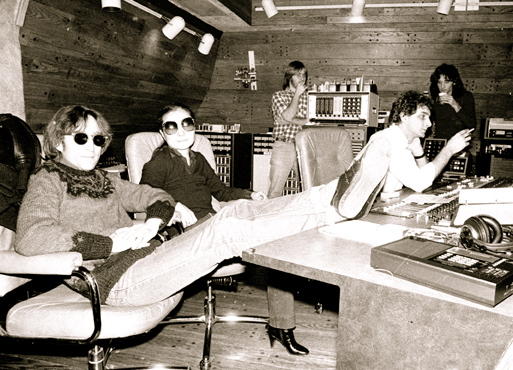
Photo credit: Bob Gruen, a photographer who photographed John many times during the latter part of his life in New York City.

Photo credit: Bob Gruen who photographed John Lennon many times during the latter part of his life in New York City.

“The attached photo was taken at the NYC studio called “The Record Plant” during the making of the album “Double Fantasy” in 1980.While I cannot be 100% sure that the ICF-2001 sitting on the table belonged to John – I think it is extremely likely. He still stayed in regular contact with his native England, and at this pre-Internet time, the only easy way for him to listen to the BBC was through this radio.

Another possibility is John enjoyed experimenting with new sounds in his music. During the Beatles, he even plugged in a radio into the sound mixing board when the song “I Am the Walrus” was recorded. You can hear at the end of the song a heterodyne whistle of tuning in a station as it settles on the BBC during a reading of Shakespeare’s King Lear. Perhaps John was intending to do something similar in the studio the day this photo was taken?”

I imagine that was a good possibility, Robert. Again, many thanks for this bit of Lennon history.

For those of you who have never heard “I am the Walrus,” you can listen below courtesy of YouTube:

RNZ Sounds Historical: 90 years since first NZ/UK radio contact

london-geographical-institute_the-peoples-atlas_1920_dominion-of-new-zealand_3012_3992_600

Many thanks to SWLing Post reader, Frank Holden, for sharing this episode of Sounds Historical via Radio New Zealand. In commemoration of the first radio link between New Zealand and the UK, host Jim Sullivan features a 1964 recording of New Zealand radio pioneers, Frank and Brenda Bell:

(Source: Radio New Zealand)

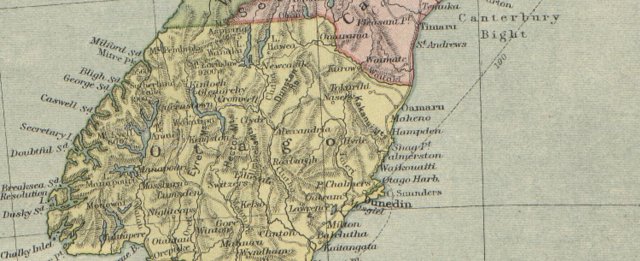
The first radio link between New Zealand and England took place 90 years ago yesterday and last night it was re-enacted. In 1964 at the time of the 40th anniversary Frank and Brenda Bell recalled the 1924 event which Frank Bell orchestrated from their home in Shag Valley, East Otago. His sister Brenda recalls the historic occasion from her home. The recording was made at Shag Valley to mark the 40th anniversary between Frank and Cecil Goyder of London. Allan Frame and Clive Liddell also recall the event. Then Martin Balch reports from the vents at Shag Valley Station on 18 October 2014. He talks to Mike ZL4OL from Dunedin, Dave Mulder, ZL4DK and Mike Mather ZL2CC from Gisborne. Frank Bells’ great-grandchildren Henry and Lucy re-create the 1924 event by talking to children at Mill Hill School, London.

Below, I have embedded audio players for Part 1 and Part 2 of Sounds Historical. While I would encourage you to listen to the whole show, you’ll find the anniversary recording in Part 2 beginning around 36:00. Enjoy:

Part 1

Part 2

If you’d like to read more about this historic event, check out this article on nzhistory.net.nz. The Otago Daily Times also features a photo of the transmitter the Bells used.

I’m a little surprised to discover no articles about Frank or Brenda Bell on Wikipedia (of course, their uncle, Sir Francis Henry Dillon Bell is featured).

Shortwave Radio Recordings: The Talking Machine Show

EdisonRecordSleeveLivingArtistFor your listening pleasure: 30 minutes of  The Talking Machine Show via WWCR. This broadcast was recorded October 18, 2014 at 2300 UTC, on the shortwave frequency of 9350 kHz.

A big hat tip to SWLing Post reader, Thomas Ally, who first informed me about The Talking Machine Show via WWCR. As many of you may know, I’m a sucker for early recordings and radio nostalgia!

This recording was made with the Elad FDM-S2 SDR and horizontal delta loop antenna. Click here to download the recording as an MP3, or simply listen via the embedded player below:

The BBC Genome Project

RadioTimes

Many thanks to Mike Barraclough who shares this news:

“BBC has today launched a website publishing every BBC programme ever broadcast by the Corporation from digitised editions of the Radio Times 1923-2009. Getting occasional internal errors at the moment presumably due to heavy use following publicity. Well designed and easy to search. http://genome.ch.bbc.co.uk/

The archive is quite deep–if you’re the nostalgic type, expect to spend a few hours browsing.

beHAVior Night celebrates 8 years on WBCQ

Gramophone

beHAVior Night’s host “Sir Scratchy” writes:

“This coming Friday marks the 8th anniversary of beHAVior Night on WBCQ! We will celebrate with an encore presentation of episode number one! Yes the first progamme to air on WBCQ. A blast from the past this Friday at 5:00pm Eastern on WBCQ The Planet. On the NEW WAVE at 7490 kHz or on the internet at WBCQ.com…”

I hope the propagation path to my home will open this Friday, as I would love to hear and record the show live (click here to listen to past recordings). WBCQ is an easy catch for me after daylight savings time ends in November.

Wartime radio: The secret listeners

RadioSecretService

After publishing the post about Geoff Hanley and the Radio Security Service last week, I discovered this brilliant 1979 documentary from the BBC which highlights civilian involvement in radio-based intelligence during WWI and WWII.

Here’s a description from the East Anglian Film Archive:

“It was the tireless work of amateur radio enthusiasts during World War I, that initially convinced the Admiralty to establish a radio intercept station at Hunstanton. Playing an integral role during the war, technological advances meant that radio operators could pinpoint signals, thus uncovering the movement of German boats, leading to the decisive Battle of Jutland in 1916.

Wireless espionage was to play an even more important role during World War II, with the Secret Intelligence Service setting up the Radio Security Service, which was staffed by Voluntary Interceptors, a band of amateur radio enthusiasts scattered across Britain. The information they collected was interpreted by some of the brightest minds in the country, who also had a large hand in deceiving German forces by feeding false intelligence.”

Click here to watch the 30 minute film.