Category Archives: Nostalgia

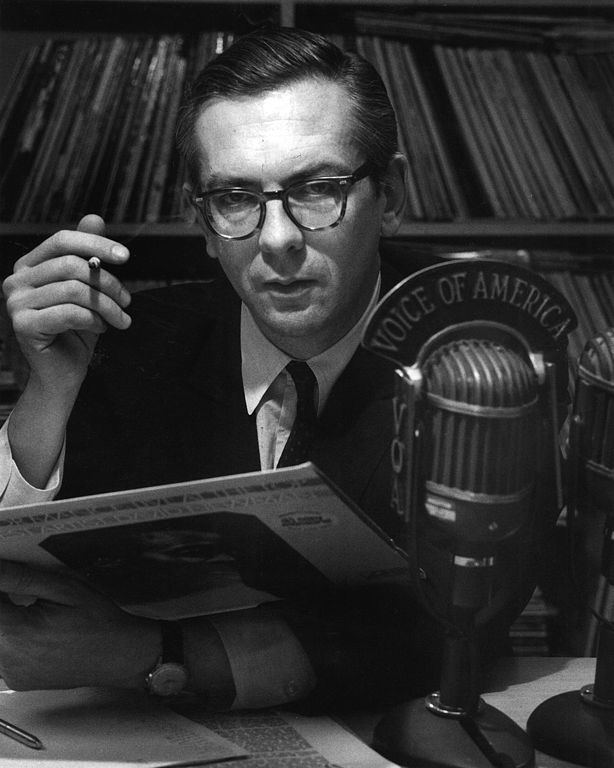
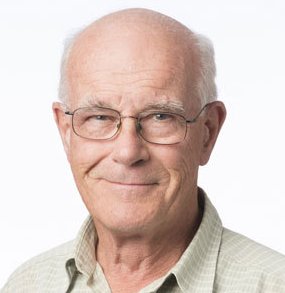
Can you help Bill find a Kenny Mayer aircheck?

(Photo source: http://www.qsl.net/wb1gfh/mayer.html)

(Photo source: http://www.qsl.net/wb1gfh/mayer.html)

SWLing Post reader, Bill Albert, writes:

“I am trying to find an “air check” of Kenny Mayer, a well-known Boston late-night radio show host (now deceased) during the 1960’s and 1970’s. His show aired from 12-2AM Mondays, so it was one of the few interesting things one could listen to at that hour. He would play bits from classic old comedy albums (e.g., Bill Cosby and Bob Newhart in their stand-up days), and he’d ad-lib the sponsors’ advertisement spots himself. He was really a character, and his voice had a very unique cadence and intonation. I did manage to find one clip from a 1966 show featuring a routine entitled “The Great Society Affair”—a parody of the wedding of President Johnson’s daughter. God, how long ago that was!! Different world. There was also a bit by Godfrey Cambridge, and a number of Kenny’s home-made commercials. However, I’ve since lost that clip, and in any case I played and replayed it to exhaustion. If anyone has another “air check” of Kenny’s show, I would love to get a copy.”

If anyone has a lead for Bill, please comment!

If you’d like to read more about Ken Mayer, Bill suggests this article.

[Update: When I posted this request a few hours ago, I mistakenly posted the photo and information for Kenny Meyer instead of Kenny Mayer. Both of these gentlemen were prominent figures in the Boston broadcasting scene around the same time period (hence my confusion!).]

Listener Post: Allen Willie

Analog Radio DialAllen Willie’s radio story is the latest in a new series called Listener Posts, where I will place all of your personal radio histories.

If you would like to add your story to the mix, simply send your story by email!

In the meantime, many thanks to Allen for sharing his personal radio history:


Allen Willie, VOPC1AA

I first discovered radio DXing during the summer of 1968 at the age of 13 while living on the family farm at Lacombe, Alberta. It was the evening of June 17th to be exact.

What would become a life long passion was about to unfold. While sitting at the kitchen table I began to tune the Crosley model table top AM – FM radio sitting nearby with curiosity ultimately hearing signals that seemed weaker and not local in nature.

crosley radio logo

The first signal that I came upon had the following message:
It’s 8:00 PM Mountain Standard Time, This is 5-60 KMON Great Falls, Montana” followed by network news. From that moment forward I was hooked on long distance radio reception . My radio DXing passion would have it’s spark lit that very night.

During the rest of that evening and over the coming months, I would continue to log many AM stations from the western United States and Canada including stations that are now no longer in existence, have changed callsigns, or have transferred to FM.

kkhilogoA few of the stations that I logged the first few nights included 1550 – KKHI San Francisco, 1330 – KUPL Portland , Oregon, 1360 – KMO Tacoma, Washington & 1600 – KLAK Lakewood, Colorado.

Over those initial years while still living and working on the farm I would develop an interest in other modes of radio DXing including Shortwave and TV as well.
I first had the opportunity to tune the Shortwave bands on a Zenith Trans-Oceanic tube model receiver during Sunday visits with my aunt and uncle. In later years that radio would eventually become mine.

After leaving the farm in 1974 and beginning a working career with Canada Post, I was able to eventually advance in their management ranks to Zone Postmaster and have the opportunity to reside and DX in several different communities within the province of Alberta. During that period of time my main receiver in use was a Realistic DX – 300.
Within Alberta, my favorite location for radio reception from amongst the many places I had lived and worked was Beaverlodge, Alberta situated about 300 miles northwest of Edmonton. It was great for long distance reception there with hardly any local stations close by to cause interference.

(Source: Universal Radio)

During the eighties I discovered the wonderful world of QSL cards and sent reception reports to many AM , FM , Shortwave and TV DX stations as well.
Later as the nineties came along, I also became a reception monitoring reporter for several of the Shortwave stations by sending reception reports on an ongoing basis to them. My favorite was Radio Beijing, now known as China Radio International. In appreciation the staff of the station sent many souvenirs , QSL cards and reading materials in return over those years for my efforts.

Additionally I had always had the wish to work in radio someday. That opportunity presented itself in 1992 after retirement from the postal service. I had the good fortune to get on board with an AM and FM station locally in Red Deer, Alberta which gave me a real sense of what working in radio was like.

FRG100During the mid nineties I would acquire another receiver for DXing , the Yaesu FRG-100.
Carrying on with the radio interest I also set up a few different internet radio stations online through Live 365. Today , one of those stations still remains in operation serving up 24 hour classic country music.

After being diagnosed with Multiple Sclerosis in 1999, I found it much harder as time went on to deal with the harsher climate in Alberta, the minus forty degree and plus thirty degree extremes in temperature were having an adverse effect on my day to day mobility and general well being.

Through consultations with my medical specialist, the thought was that a change to a more temperate climate might be of help for my ongoing symptoms. During that time period I had also been engaged in online conversations with a very nice couple who lived in Newfoundland.

Broom Point Fishing Premises, Gros Morne National Park (Source: Newfoundland Tourism, Flickr)

We eventually became good friends and have been for several years now.
They too had also suggested that Newfoundland’s milder climate could be of benefit to my health . Eventually a move to Newfoundland was in the works by September of 2002.
At that point my whole world was about to change for the better, medically speaking as well as radio DXing wise.

A double bonus came my way making that move to Newfoundland . After about a year and a half I could notice a significant difference in how I felt still dealing with the MS and what can I say about the radio DXing? Absolutely fantastic!

In all the years residing in Alberta I had heard many USA and Canada stations on the AM dial, however only a handful of countries. Since moving to Newfoundland I have now logged over 100 countries on the AM Broadcast band.

Over the years I was also involved in Ham Radio Band DXing as I competed in many of the SWL sections of Amateur radio contests as well as trying to log each country on each of the various amateur radio bands.

Kenwood-R-5000AdvertDuring the mid 2000’s I would attain another receiver for DXing, namely the Kenwood R-5000.

In 2008 the radio world would discover a new interest presented to DXers as Ultralight Radio DXing had it’s early beginnings thanks to veteran DXers, John Bryant, Gary DeBock , Robert Ross and others.

I had submitted some logs of what I was hearing to various sites after aquiring an Ultralight radio and the the Ultralight Radio Committee had noticed my logs posted online and asked me if I would like to share what I had heard with their group members as well. The rest is history as I have also been an avid Ultralight Radio Medium Wave DXer for the past 6 years.

There was also a stretch of time when I had tried to eventually hear and log a radio signal from each and every independent nation of the world just for fun using a combined mixture of numerous modes of radio i.e ham, AM, Shortwave etc. I accomplished that feat twice in fact, by 2006 and again just prior to 2013 .

While living in the tiny community of Bristol’s Hope, Newfoundland from 2011 onward, I was able to have my longest radio antenna in service ever, a 1200 foot longwire in place. The location was great for Trans- Atlantic reception as it was in a bit of a remote area with little or no man made interference and noise. Living directly above and practically over the water at a higher point helped for better reception as well.

Another move was in the works recently this year as we had to vacate our rental premises in Bristol’s Hope due to an eventual house sale

With potential residences taken up quickly due to recent economic prosperity in Newfoundland during the past year or so, it was much harder to find another place to live.

Luck shining upon us, we finally found a residence in Carbonear, but had to wait a month to move in. Meanwhile some folks in Northen Bay, Newfoundland offered their house to us temporarily for that month during the wait.

With the temporary move to Northen Bay , that circumstance opened up the possibility for a Medium Wave Dxpedition there for the month. It was my first attempt at a DXpedition and I enjoyed the experience very much.

Another new chapter of my radio DXing has now begun living in Carbonear.
That is my forty seven years in a nutshell involved in the wonderful hobby of radio and DXing.

Allen Willie VOPC1AA
Carbonear, Newfoundland, Canada


Many thanks, Allen, for sharing your story.  I’m so happy to hear that Newfoundland and DXing have both been good “medicine” for you!

If you would like to learn more about the hobby of Ultralight DXing, join the Yahoo Ultralight DX Group.

Readers: Please click here to read our growing collection of Listener Posts, and please consider submitting your own story!

Longwave Radio Recordings: WG2XFG

Brian Justin with his homebrew transmitter (Source: http://w4dex.com/500khz/wd2xsh31.htm)

Brian Justin with his homebrew transmitter (Source: http://w4dex.com/500khz/wd2xsh31.htm)

A few weeks ago, I posteded an article about Brian Justin’s holiday longwave broadcasts commemorating Reginald Fessenden’s Christmas Eve 1906 AM voice transmission.

I don’t spend a lot of time in the longwave portion of the radio spectrum, so this special event station gave me an excuse to venture a little lower on the radio dial.  Fortunately, LW propagation was in my favor, and Justin’s signal made it the 215 miles to my home. While it’s not armchair listening, it’s most impressive, especially considering the transmitter used is “home-brewed” with modest output power.

This recording of WG2XFG was made when the signal seemed to be at its strongest on December 26th, 2013 starting around 12:40 UTC (Christmas evening, EST). Click here to download the recording as an MP3, or simply listen via the embedded player below:

Listening Rewind: Radio Australia rings in the millennium

Source: Wikimedia CommonsYesterday–New Year’s Eve, 2014–I spent some time listening to a few broadcasters as the new year passed through their time zones. While I missed hearing Radio New Zealand International (the first to welcome the New Year on the air), I did manage to catch Radio Australia, and the New Year was celebrated with no fanfare; one program merely ran into the next, and there was a brief mention of 2014’s arrival in the headline news.

Oh, but it wasn’t that way when we moved into the year 2000…

Rewind 14 years

Back in December of 1999, before setting off to visit family for the New Year, I had a sudden notion: I decided it would be fun–and a bit novel–to record radio broadcasters as each moved into the new millennium. As we were packing the car to travel, I changed my mind about using my Grundig Yacht Boy 400 to accomplish this fairly ambitious, round-the-world listening/recording endeavor; instead, I grabbed my ham radio transceiver, an Icom IC-735, and packed it, along with a hefty 12-volt power supply. While my IC-735 lacked AM filters (at the time) it had much better sensitivity than the YB400, especially when hooked up to a decent antenna. I also had the foresight to take along a few odds and ends, including a mechanical antenna tuner and a spool of long wire.

The Icom IC-735

The Icom IC-735

To record the broadcast, I used my trusty Aiwa AM F70 MiniDisk recorder–remember those? Upon arrival at our extended family’s home, they kindly permitted me to erect a long wire antenna in a sloping configuration in their yard. It did a fine job netting the airwaves. The MiniDisk recorder recorded brilliantly, allowing me to monitor levels and even edit afterward.

As a result, I spent New Year’s Eve 2000 recording station after station as the earth turned.  It was great fun, and meanwhile had very little impact on our family celebrations as I simply left the recorder running for long periods of time.

My trusty Aiwa

My trusty Aiwa AM F70 MiniDisk recorder.

While I have yet to dissect the many hours of recordings, if memory serves, I think I managed to record Radio New Zealand International, Voice of Russia, Radio France International, NHK, Voice of America, and Radio Canada International as each rang in 2000. The IC-735 performed quite well, save a lack of bandwidth filters, as I only really had two–very wide, and very narrow.

So, for your New Year’s Day listening pleasure:  I hope you’ll enjoy, as much as I did,  listening to Radio Australia ring in the new millennium yet again. In the news items, you’ll hear that Russian President Boris Yeltson has handed the reigns over to Vladimir Putin, and remarks about the (lack of) problems resulting from the infamous Y2K threat.

Click here to download the recording as an MP3, or simply listen below:

WG2XFQ: Brian Justin’s holiday longwave broadcasts

Reginald Fessenden: "The Father of Radio Broadcasting" (Source: Wikipedia)

Reginald Fessenden: “The Father of Radio Broadcasting” (Source: Wikipedia)

SWLing Post reader, Tom, recently shared a link to an article on the ARRL news page which describes this annual longwave broadcast:

“As he has over the past several years, Brian Justin, WA1ZMS/4 — an active participant in the ARRL’s WD2XSH 600 meter experimental project — will transmit voice and music on 486 kHz as WG2XFQ on Christmas Eve and Christmas Day and again on New Year’s Eve and New Year’s Day. Transmissions will begin at 0001 UTC and end at 2359 UTC.

Justin, who may be better known for his microwave exploits on ham radio, will use an AM audio loop modulating his vintage-style, homebrew transmitter to honor Reginald Fessenden’s Christmas Even 1906 AM voice transmission.”

Since I’m a sucker for radio history, I contacted Brian Justin and he kindly answered a few questions:

Brian Justin with his homebrew transmitter (Source: http://w4dex.com/500khz/wd2xsh31.htm)

Brian Justin with his homebrew transmitter (Source: w4dex.com)

SWLing: How did you first become interested in longwave (LW)?
Justin: Always had an interest in history of radio since becoming a ham at age 11. Early wireless had emphasis on LW and so it was a good trail to follow in my years as a ham.

SWLing: Is the process of getting a license to broadcast complicated?
Justin: Yes and No. What I hold is not a broadcast license as a TV or FM or AM station would have. I hold an FCC Part 5 license which is for The Experimental Radio Service. The LW and MF spectrum is formally US Govt spectrum that is managed by the NTIA (the US Govt Agency version of the FCC). So before the FCC can issue any license that is in non-FCC regulated bands the NTIA must first approve any license Grant. A good number of people who are involved in radio today don’t always understand the difference between FCC and NTIA spectrum. But licenses can be granted if you have the willingness to wait and know how the application process works. It’s not all that difficult once you know the context of what one is asking for.

SWLing: What is the best time to listen for WG2XFQ and how can listeners improve their chances of hearing you?
Justin: The transmissions are only a few times each year to mark historical dates in radio history. I try to make at least two each year, one for Fessenden and one for the Berlin Radio Treaty. I also ran one on the 100th Aniv of the sinking of the Titanic since wireless played a big role in the tragic event.

A loop antenna is a good antenna to try as one can at least null any loud noise source. But simple E-field probe antennas have worked for many in years past.

Anyone who copies WG2XFQ is encouraged to submit a logging of it at 500kc.com.

Thank you and good DX to all this Holiday Season. I hope I can deliver a tiny DX gift to all if the band is in good condition this year.


Many thanks, Brian!

I will be listening for WG2XFQ on 486 kHz on December 24th and 25th, then again on December 31st and January 1st. With any luck, and if conditions are favorable, perhaps I’ll hear a little longwave DX commemorating Reginald Fessenden’s Christmas Even 1906 AM voice transmission.

Readers, be sure to check out Brian Justin’s web page and the ARRL 600 meter experimental group’s website. Please log your WG2XFQ listener reports at: 500KC.com

If you would like to learn more about Reginald Fessenden, check out Fessenden.ca.

Pirate Radio Recordings: Radio Free Whatever, Pearl Harbor Tribute

960px-USS_SHAW_exploding_Pearl_Harbor_Nara_80-G-16871_2

For your listening pleasure: one hour, seven minutes of the pirate radio station, Radio Free Whatever.

I recorded this broadcast on December 15 2013, starting around 2:40 UTC, on 6,925 kHz AM. This broadcast was a tribute to WWII and Pearl Harbor and contains news clips and music from the same time period. I believe my recording begins about five or so minutes into their broadcast.

Simply click here to download an MP3 of the recording, or listen via the embedded player below:

Listener Post: Harold Woering

Harold Woering ’s radio story is the latest in our series called Listener Posts, where I will place all of your personal radio histories. If you would like to add your story to the mix, simply send your story by email!

In the meantime, many thanks to Harold for sharing his personal radio history:


Harold Woering (N1FTP), WDX1IGG, HFU-Dutch Master, and WPC1HJW

KnightReceiverMy shortwave experience started in 1967 at the age of 13. My father brought home these old AM/FM/SW tube radios probably dating back to the 30’s and 40’s and asked if I wanted them. That’s all it took and my first QSL is dated May 20, 1967 from Radio Cairo, Egypt. I found out from my cousin that if you wrote the station a letter telling them what you heard, that they would send back a verification in the form of a card, pennant, or letter. Today my count for unique verifications is well over 500 with numerous “goodies” that I have received over the years.

My first purchased shortwave receiver was a Knight Kit Star Roamer in 1969. From there it was the Heathkit GR-64 in 1972 and the Realistic DX-160 in 1985. From 1985 to 1990 I was the awards chairman for SPEEDX (The Society to Preserve the Engrossing Enjoyment of DX’ing).

Kenwood R-1000 (Source: Universal Radio)

Kenwood R-1000 (Source: Universal Radio)

I was beside myself when I bought my first digital readout radio, the Kenwood R-1000 in 1987. No more guessing as to what frequency I was listening to. That was also the year I ended up as station of the month in Popular Communications magazine. Currently I use an Icom R71a and a Sangean ATS 818ACS and a 450 foot horizontal loop antenna. I have a lot of great memories and still enjoy the hobby immensely. Many of the Big stations are gone but that has had room for many of the smaller ones. I continue to listen almost daily and still enjoy the hobby.


Many thanks, Harold, for sharing your story!

Click here to read our growing collection of Listener Posts, and consider submitting your own!