Category Archives: Nostalgia

Radio documentary on history of the Australian Broadcasting Corporation

ABC reporter, and later RN documentary maker, Tim Bowden on patrol with a US Marine squad near Da Nang in Vietnam. (1966) [Photo: ABC ]

ABC reporter, and later RN documentary maker, Tim Bowden on patrol with a US Marine squad near Da Nang in Vietnam. (1966) [Photo: ABC]

(Source: John Figliozzi via InternetRadio Digest)

ABC Radio National will broadcast a weeklong series highlighting the history, development, key moments and future of the Australian Broadcasting Corporation on the occasion of its 80th Anniversary, from December 24-28.  Details from:

http://www.abc.net.au/radionational/programs/specialbroadcasts/abc-80th-anniversary/4373618

There is a 16 hour difference between New York and Melbourne during our standard time winters; 19 hours between Los Angeles and Melbourne.  “Live” broadcast, therefore, will be at 2 am, Dec. 23-27; repeated at 9 am, Dec. 24-28.  No word yet on whether or for how long a podcast of this series will be made available.

John Figliozzi

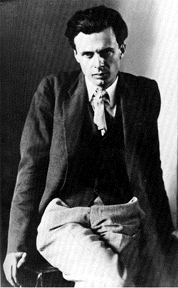
Aldous Huxley, radio in The Age of Noise

Aldous Huxley (1894-1963)

Aldous Huxley (1894-1963)

According to English satirist & humanist, Aldous Huxley, we live in the “Age of Noise.” When he wrote this, in 1945, he implicated radio:

“The twentieth century is, among other things, the Age of Noise. Physical noise, mental noise and noise of desire — we hold history’s record for all of them. And no wonder; for all the resources of our almost miraculous technology have been thrown into the current assault against silence. That most popular and influential of all recent inventions, the radio, is nothing but a conduit through which pre-fabricated din can flow into our homes. And this din goes far deeper, of course, than the ear-drums. It penetrates the mind, filling it with a babel of distractions – news items, mutually irrelevant bits of information, blasts of corybantic or sentimental music, continually repeated doses of drama that bring no catharsis, but merely create a craving for daily or even hourly emotional enemas. And where, as in most countries, the broadcasting stations support themselves by selling time to advertisers, the noise is carried from the ears, through the realms of phantasy, knowledge and feeling to the ego’s central core of wish and desire.”

In many ways, this is still true–but not necessarily of radio. I daresay if Mr. Huxley were still around, radio would be the least of his concerns.  Radio has gradually become the least invasive of the media that surrounds us, for the “noise” is now primarily visual:  unless we make an effort to “quiet” them, images bombard us from all sides….Ironically, radio now requires turning down the volume on these and everything else, in order to experience the same world of noise that Huxley once found so overwhelming.

(He obviously never listened to pirate radio.)

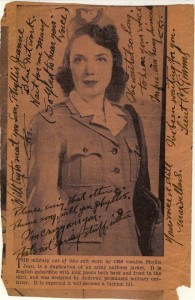
NPR: WWII ‘Canteen Girl’ Kept Troops Company From Afar

(Photo source: NPR)

(Photo source: NPR)

Long before the Internet and satellite phone, Phyllis Jeanne Creore Westerman brought soldiers home at Christmas via shortwave radio:

(Source: National Public Radio)

American service members have long spent holidays in dangerous places, far from family. These days, home is a video chat or Skype call away. But during World War II, packages, letters and radio programs bridged the lonely gaps. For 15 minutes every week, “Canteen Girl” Phyllis Jeanne Creore spoke and sang to the troops and their loved ones on NBC radio.

Her Christmas shows were morale boosters. America must “use more sentiment and less tinsel, and that’s the way it should be,” she told her listeners during one wartime Christmas broadcast. Now 96, Phyllis Jeanne Creore Westerman sits in her apartment on New York’s Fifth Avenue, remembering those seasonal broadcasts she recorded 70 years ago.

[…]She did a bit of radio work, found singing jobs with various bands at hotels like the Biltmore, and volunteered at the Stage Door Canteen. That’s where she got the idea for a regular radio show — to reach more troops — across the U.S., and in Europe by short wave.

Read the full article and listen to Susan Stamberg’s interview on NPR.org.

Get your radio nostalgia fix from The UK 1940s Radio Station

Several months ago, I wrote a post confessing that I recently embraced internet radio, and since then have been using a very affordable Cricket Android Phone as an inexpensive, portable wi-fi radio. You see, though I prefer listening to shortwave radio, and though there are notable exceptions, it’s not always the best source to pipe music through the hi-fi system in our house.

At one point, I actually subscribed to XM satellite radio. I eventually dropped it, and found there were only two things I really missed from XM: Tom Petty’s Buried Treasure, and the 40s on 4 station, which played music from the 1920’s, 30’s and 40’s.

Introducing The UK 1940s Radio Station

Fortunately, there is an excellent radio station–indeed, better than XM/Sirius’ 40s on 4–that fills my need for nostalgic radio,  The UK 1940s Radio Station.

The UK 1940s Radio Station runs 24 hour a day and plays an amazing mix of 1940s era music. Unlike 40’s on 40,  The UK 1940s Radio Station has authentic recordings of news clips and even original advertisements they play throughout their music mix.  The 40s on 4, at least when I last listened, still had a pseudo-1940s-sounding announcer (Ed Baxter) and often reproduced news broadcasts; I prefer the real period recordings, personally. Also, The UK 1940s Radio Station has interviews and commentary from experts on the era.

The UK 1940s Radio Station are supported by their listeners, so if you like their programming, consider supporting them with a donation via PayPal.

“Tuning In” Radio 4 documentary on the history of early radio in Britain

Tuning In, a history of early radio in Britain, will be broadcast November 3rd on BBC Radio 4. If you don’t live in the UK, you can listen live on the Radio 4 website where they will also post an archive of the show. (Note that some archived shows are only available for a limited time.)

(Source: Radio 4)

The press fulminated, the enthusiasts were frustrated, and the radio manufacturers fumed. Despite the fact that Marconi had invented radio before Queen Victoria had celebrated her Diamond Jubilee in 1897, radio in Britain took another 25 years to begin an official service to listeners. But when, on November 14th 1922 the British Broadcasting Company’s station at Marconi House radiated to an awaiting nation “This is 2LO calling” for the first time under the company’s name, it marked the start of the first and most distinguished public-service radio station in the world.

As part of the celebrations to mark nine decades of the BBC, historian Dominic Sandbrook explores the long and involved pre-BBC history of radio in Britain, how Britain’s broadcaster got going and developed into an institution dedicated to entertainment, education and information, discovers why Australian diva Dame Nellie Melba was involved, and how the improbably-named Captain Plugge made his first British commercial broadcast from the roof of Selfridges department store in London. From Marconi to Savoy Hill via an old army hut in Essex, the story of the early radio in Britain.

Radio Station SAQ special transmission on United Nations Day, October 24

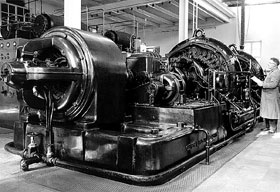
Alexanderson alternator in the SAQ Grimeton VLF transmitter.

(Source: SAQ via Alokesh Gupta)

Transmission on United Nations Day

We have the pleasure to announce that SAQ will be on air on United
Nations Day, Wednesday 24th October. We start the transmitter about
10:10 UTC, and a message will be sent at 10:30 UTC.

The frequency is 17.2 kHz CW.

Reports from the transmission will not be confirmed by QSL card.

The transmission is a part of the celebration of the United Nations Day
in Grimeton, see
http://undayorg.files.wordpress.com/2012/09/unday-english1.pdf

The start procedure will be streamed over Internet, appropriate link
will soon be published here.

The Ten-Tec Hamfest–and my new (vintage) LS-166/U military loudspeaker

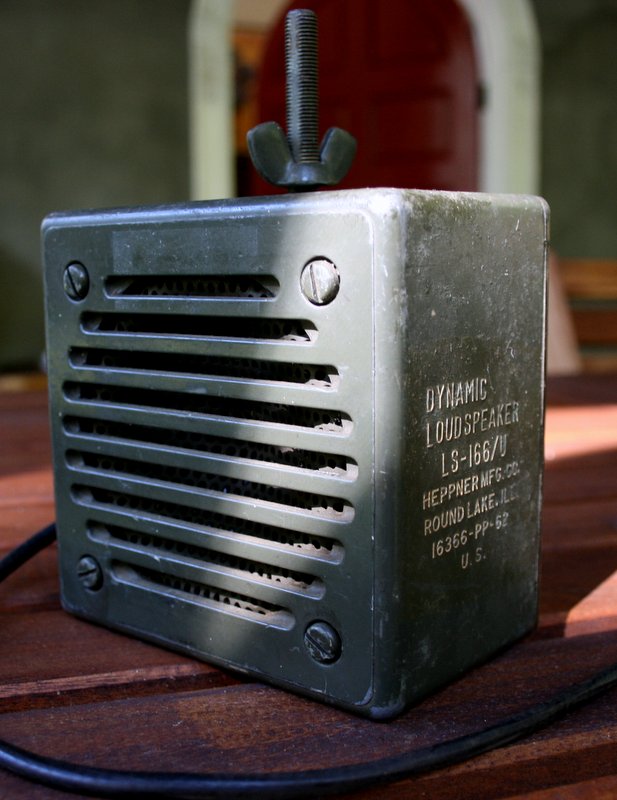
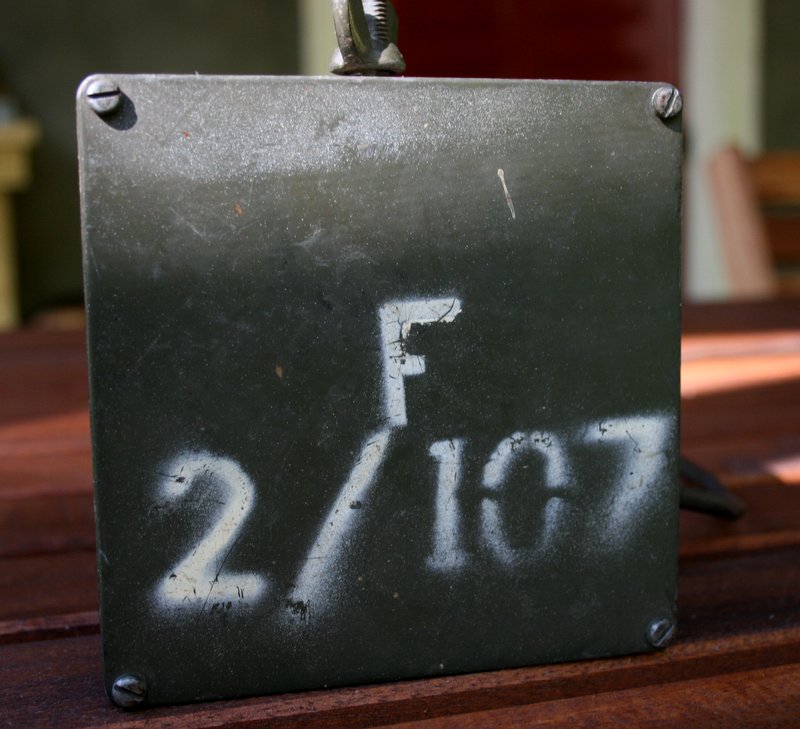
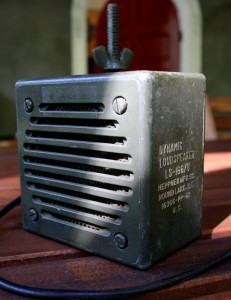
My only purchase at the Ten-Tec hamfest flea market this year, the LS-166/U military loudspeaker

This past weekend was the Ten-Tec Hamfest, which is held each year at the Ten-Tec factory in Sevierville, Tennessee, USA. I’m particularly fortunate in that I live within a few hour’s drive of the factory, so I make it a point to attend the Hamfest each year.

Hamfests, for those of you not familiar with them, are basically flea markets or swap-meets for amateur radio operators and radio enthusiasts of all stripes.  It’s a place to reunite with hobbyist friends and to trade, sell, or purchase new or used radio equipment. The Ten-Tec Hamfest is free, draws a sizable crowd, and what’s more, attendees get the opportunity to try out Ten-Tec radio equipment and tour the factory where their products are made. The Hamfest also coincides with the annual SEDCO DXer/Contester Conference, which is held in the same town, and begins just as the Hamfest winds down.

This year, I had not intended to buy anything. Still, I’m pleased to admit I bought only one item…
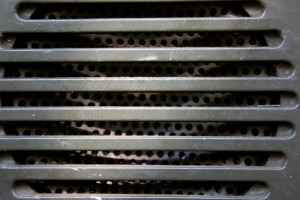
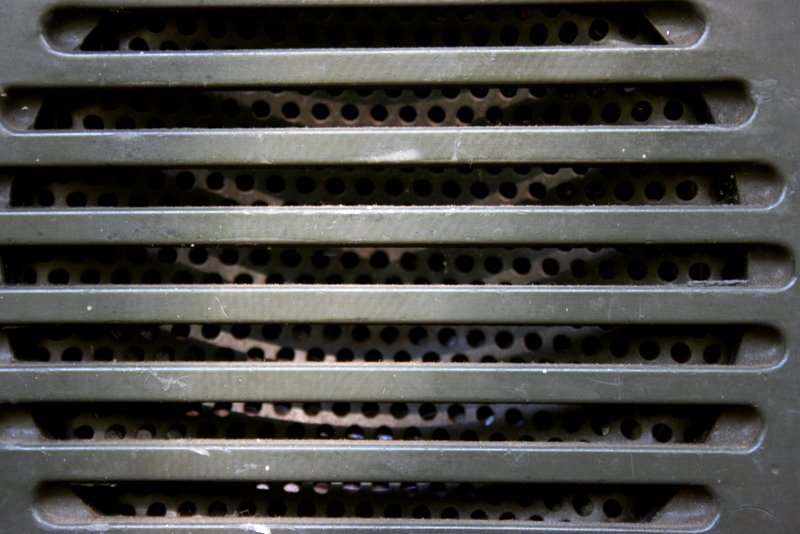
The LS-166/U loudspeaker is built like no other–it’s even gun blast resistant! Its rigid cone is well protected by thick metal screen and mesh.

My purchase:  an LS-166/U loudspeaker. This small speaker has been used extensively in military operations around the world. It’s built like a tank, was perhaps mounted in some, but used primarily used in Jeeps, trucks, and on portable radio packs. The case is made of metal and extremely durable. The two watt speaker has a permanent magnet.  It is also fungus, gunblast, and immersion resistant:  if you drop this speaker, you don’t need to worry about damaging it–rather, you may need to worry about the floor (or your foot).
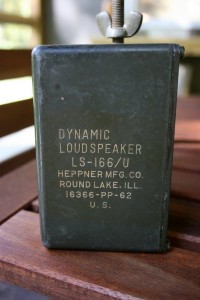
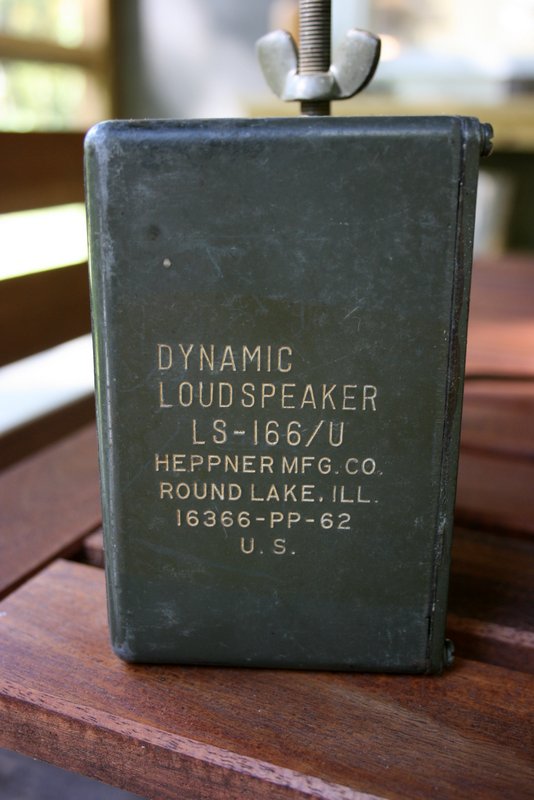
Side view of the LS-166/U: though heavy, its dimensions are only 4.75 x 4.75 x 3″.

The really cool thing about this speaker is that it contains an audio transformer that–via a switch on the side–will allow you to chose between a 600 ohm primary and 8 ohm secondary impedance. The speaker sounds crystal clear, even though mine has obviously received extensive usage. That’s the great thing about military gear–it was designed for functionality, often over-engineered, and certainly built to last!

The LS-166/U is not for listening to music–it was designed primarily for radios that require a high impedance load, and for voice audio clarity. If you’re receiving orders over the radio from your commander, the LS-166/U will punch through the noise from your vehicle and surroundings. It sounds “tinny” if used to listen to shortwave broadcasters, but is actually quite effective when used to listen to amateur radio transmissions and morse code. The 300 Hz to 7 kHz frequency response is ideal for this type of application.
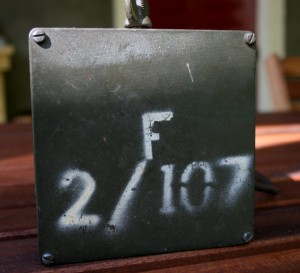
The schematic is printed on the inside of this back plate, which is easily removed with a plain head screw driver

The first rig I hooked up the LS-166/U to was my Hammarlund SP-600, which has a 600 ohm output. Though I know I can hook up a larger, more responsive speaker for better fidelity, there is something rewarding about hearing a speaker that has seen so much service being used once again, and still playing as if new.

As you can see from the photo below, mine lacks the knob on the side of the case.  I’ll be looking for one of these at the next Hamfest–or may just order one from Fair Radio.
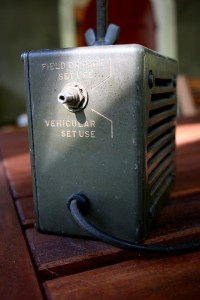
If you happen to locate the LS-166/U loudspeaker at your local Hamfest, grab one! There are a lot of them floating around and they’re usually quite affordable–typically between $10-20 US (more if mint). I was lucky to pick mine up for $4. Not only is it an affordable piece of military radio history, but I think it would make an excellent external speaker for amateur radio use during outdoor events like Field Day. Indeed, I think this speaker will weather any radio challenge!

So, what else did I see at the Ten-Tec Hamfest this year? Quite a few classic receivers. Though I didn’t take many photos, I did snap a few gems…

Photos
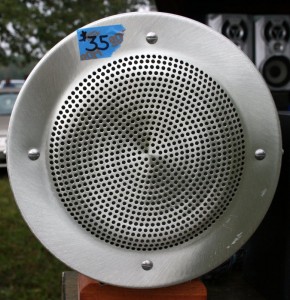
This aluminum radio speaker reminds me of the external speakers found on radios in the early 1900s. The seller had made a custom wooden base for this one (click to enlarge)
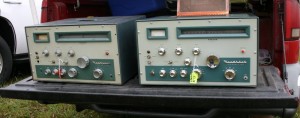
Heathkits, in near-mint condition (click to enlarge)
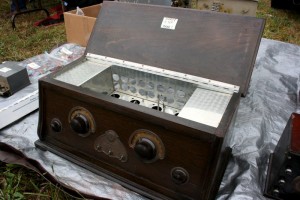
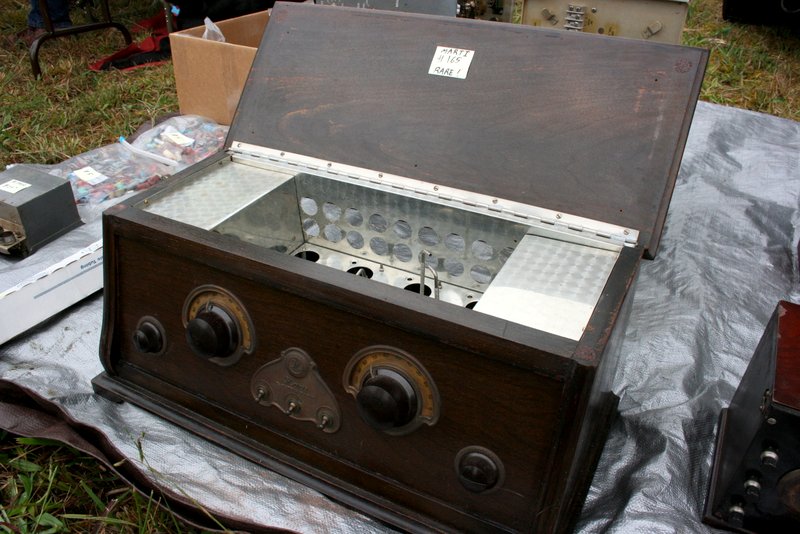
An antique Marti receiver, the first of its kind I’ve ever seen (click to enlarge)
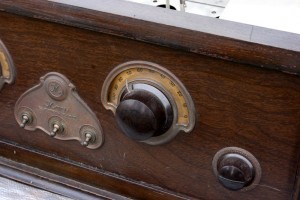
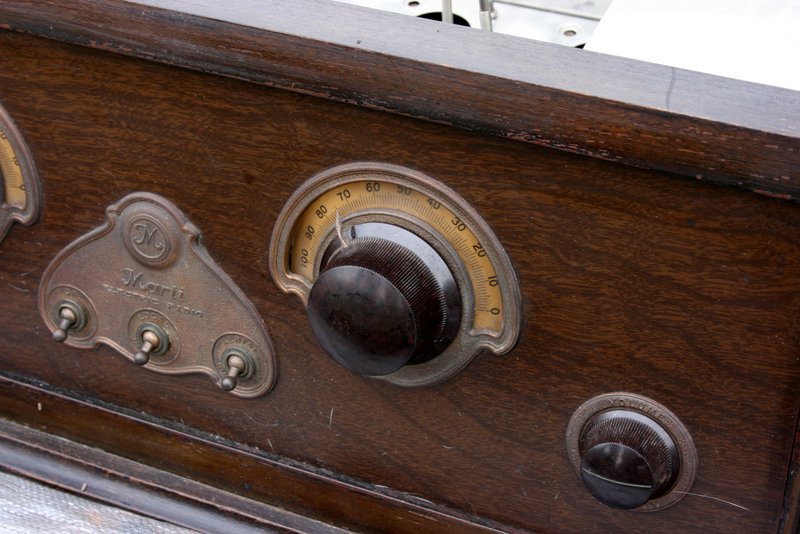
A close-up of the Marti’s beautiful dials (click to enlarge)
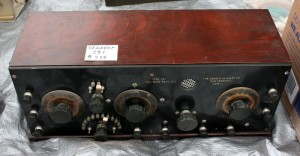
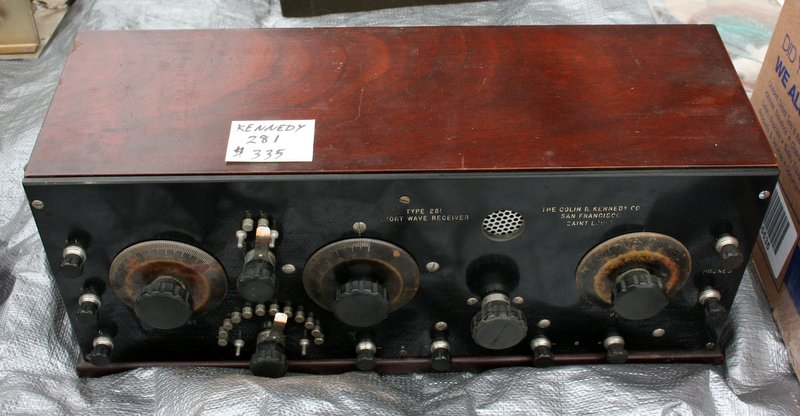
The Kennedy 281 (click to enlarge)
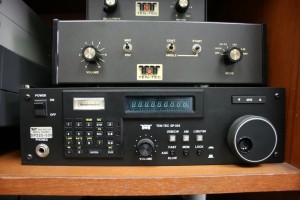
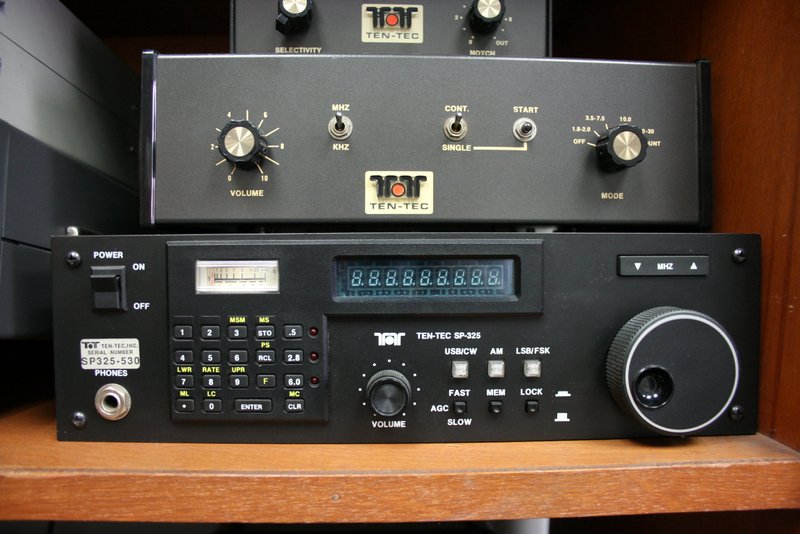
If you visit the Ten-Tec factory, tour their radio museum, housing nearly every radio Ten-Tec has produced. One example is the  SP-325 (on bottom) a shortwave receiver which once served the US government as a training radio. They’re fairly rare, but can be found occasionally on eBay. (click to enlarge)