Category Archives: Nostalgia

Get your radio nostalgia fix from The UK 1940s Radio Station

Several months ago, I wrote a post confessing that I recently embraced internet radio, and since then have been using a very affordable Cricket Android Phone as an inexpensive, portable wi-fi radio. You see, though I prefer listening to shortwave radio, and though there are notable exceptions, it’s not always the best source to pipe music through the hi-fi system in our house.

At one point, I actually subscribed to XM satellite radio. I eventually dropped it, and found there were only two things I really missed from XM: Tom Petty’s Buried Treasure, and the 40s on 4 station, which played music from the 1920’s, 30’s and 40’s.

Introducing The UK 1940s Radio Station

Fortunately, there is an excellent radio station–indeed, better than XM/Sirius’ 40s on 4–that fills my need for nostalgic radio,  The UK 1940s Radio Station.

The UK 1940s Radio Station runs 24 hour a day and plays an amazing mix of 1940s era music. Unlike 40’s on 40,  The UK 1940s Radio Station has authentic recordings of news clips and even original advertisements they play throughout their music mix.  The 40s on 4, at least when I last listened, still had a pseudo-1940s-sounding announcer (Ed Baxter) and often reproduced news broadcasts; I prefer the real period recordings, personally. Also, The UK 1940s Radio Station has interviews and commentary from experts on the era.

The UK 1940s Radio Station are supported by their listeners, so if you like their programming, consider supporting them with a donation via PayPal.

“Tuning In” Radio 4 documentary on the history of early radio in Britain

Tuning In, a history of early radio in Britain, will be broadcast November 3rd on BBC Radio 4. If you don’t live in the UK, you can listen live on the Radio 4 website where they will also post an archive of the show. (Note that some archived shows are only available for a limited time.)

(Source: Radio 4)

The press fulminated, the enthusiasts were frustrated, and the radio manufacturers fumed. Despite the fact that Marconi had invented radio before Queen Victoria had celebrated her Diamond Jubilee in 1897, radio in Britain took another 25 years to begin an official service to listeners. But when, on November 14th 1922 the British Broadcasting Company’s station at Marconi House radiated to an awaiting nation “This is 2LO calling” for the first time under the company’s name, it marked the start of the first and most distinguished public-service radio station in the world.

As part of the celebrations to mark nine decades of the BBC, historian Dominic Sandbrook explores the long and involved pre-BBC history of radio in Britain, how Britain’s broadcaster got going and developed into an institution dedicated to entertainment, education and information, discovers why Australian diva Dame Nellie Melba was involved, and how the improbably-named Captain Plugge made his first British commercial broadcast from the roof of Selfridges department store in London. From Marconi to Savoy Hill via an old army hut in Essex, the story of the early radio in Britain.

Radio Station SAQ special transmission on United Nations Day, October 24

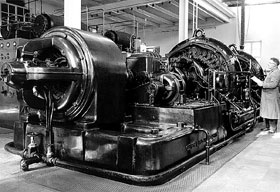
Alexanderson alternator in the SAQ Grimeton VLF transmitter.

(Source: SAQ via Alokesh Gupta)

Transmission on United Nations Day

We have the pleasure to announce that SAQ will be on air on United
Nations Day, Wednesday 24th October. We start the transmitter about
10:10 UTC, and a message will be sent at 10:30 UTC.

The frequency is 17.2 kHz CW.

Reports from the transmission will not be confirmed by QSL card.

The transmission is a part of the celebration of the United Nations Day
in Grimeton, see
http://undayorg.files.wordpress.com/2012/09/unday-english1.pdf

The start procedure will be streamed over Internet, appropriate link
will soon be published here.

The Ten-Tec Hamfest–and my new (vintage) LS-166/U military loudspeaker

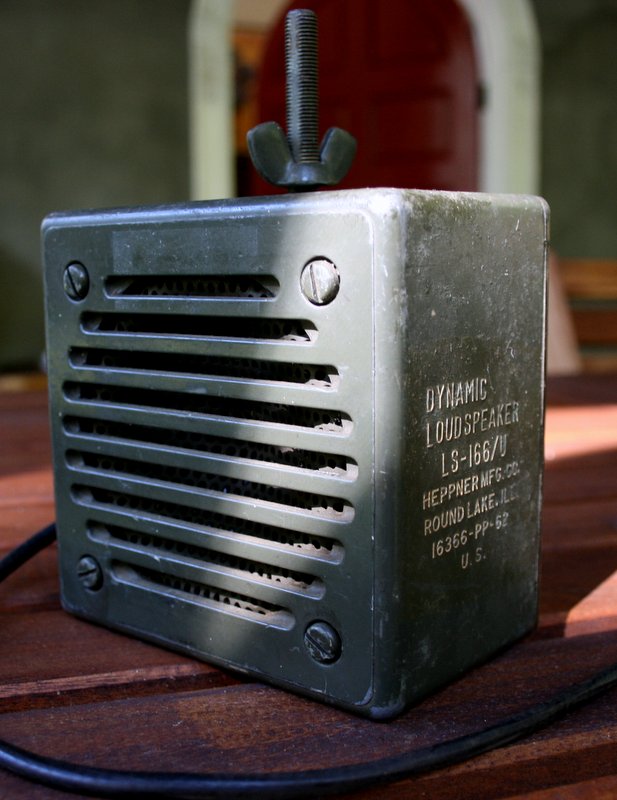
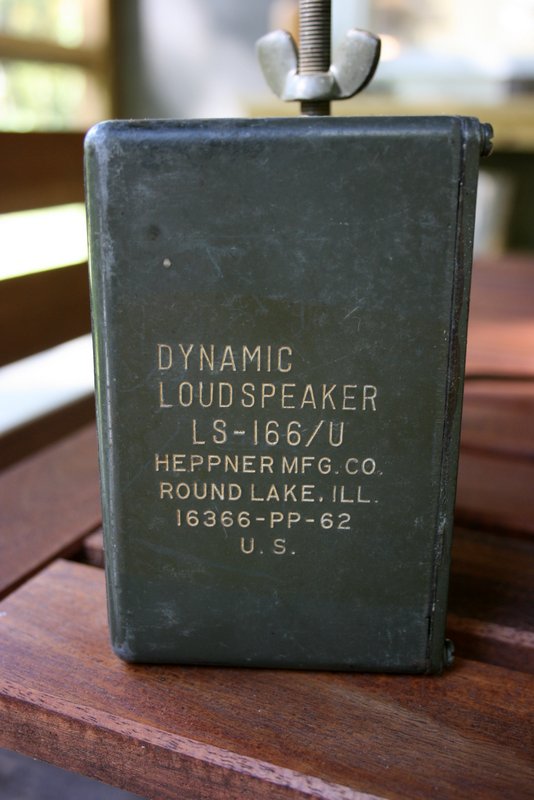
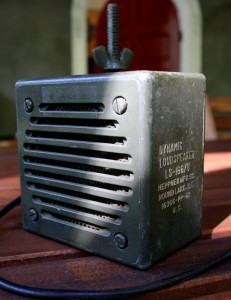
My only purchase at the Ten-Tec hamfest flea market this year, the LS-166/U military loudspeaker

This past weekend was the Ten-Tec Hamfest, which is held each year at the Ten-Tec factory in Sevierville, Tennessee, USA. I’m particularly fortunate in that I live within a few hour’s drive of the factory, so I make it a point to attend the Hamfest each year.

Hamfests, for those of you not familiar with them, are basically flea markets or swap-meets for amateur radio operators and radio enthusiasts of all stripes.  It’s a place to reunite with hobbyist friends and to trade, sell, or purchase new or used radio equipment. The Ten-Tec Hamfest is free, draws a sizable crowd, and what’s more, attendees get the opportunity to try out Ten-Tec radio equipment and tour the factory where their products are made. The Hamfest also coincides with the annual SEDCO DXer/Contester Conference, which is held in the same town, and begins just as the Hamfest winds down.

This year, I had not intended to buy anything. Still, I’m pleased to admit I bought only one item…
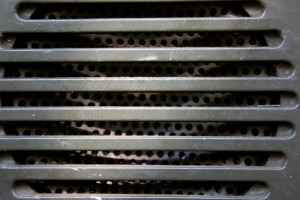
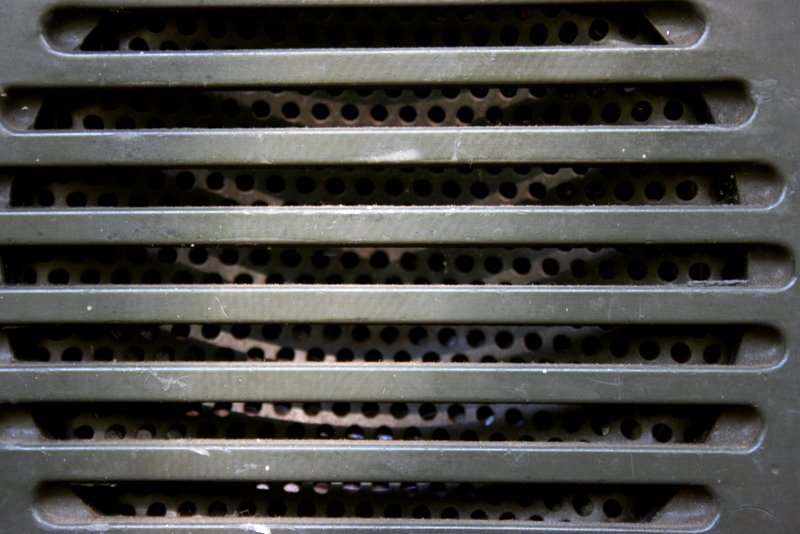
The LS-166/U loudspeaker is built like no other–it’s even gun blast resistant! Its rigid cone is well protected by thick metal screen and mesh.

My purchase:  an LS-166/U loudspeaker. This small speaker has been used extensively in military operations around the world. It’s built like a tank, was perhaps mounted in some, but used primarily used in Jeeps, trucks, and on portable radio packs. The case is made of metal and extremely durable. The two watt speaker has a permanent magnet.  It is also fungus, gunblast, and immersion resistant:  if you drop this speaker, you don’t need to worry about damaging it–rather, you may need to worry about the floor (or your foot).
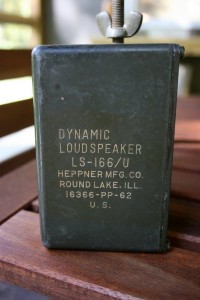
Side view of the LS-166/U: though heavy, its dimensions are only 4.75 x 4.75 x 3″.

The really cool thing about this speaker is that it contains an audio transformer that–via a switch on the side–will allow you to chose between a 600 ohm primary and 8 ohm secondary impedance. The speaker sounds crystal clear, even though mine has obviously received extensive usage. That’s the great thing about military gear–it was designed for functionality, often over-engineered, and certainly built to last!

The LS-166/U is not for listening to music–it was designed primarily for radios that require a high impedance load, and for voice audio clarity. If you’re receiving orders over the radio from your commander, the LS-166/U will punch through the noise from your vehicle and surroundings. It sounds “tinny” if used to listen to shortwave broadcasters, but is actually quite effective when used to listen to amateur radio transmissions and morse code. The 300 Hz to 7 kHz frequency response is ideal for this type of application.
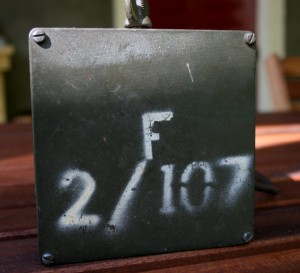
The schematic is printed on the inside of this back plate, which is easily removed with a plain head screw driver

The first rig I hooked up the LS-166/U to was my Hammarlund SP-600, which has a 600 ohm output. Though I know I can hook up a larger, more responsive speaker for better fidelity, there is something rewarding about hearing a speaker that has seen so much service being used once again, and still playing as if new.

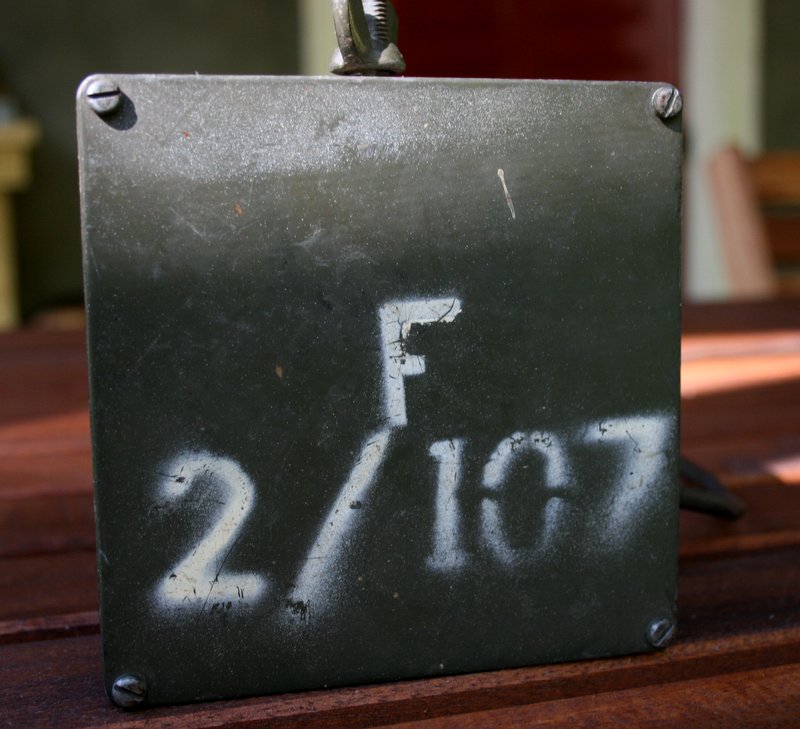
As you can see from the photo below, mine lacks the knob on the side of the case.  I’ll be looking for one of these at the next Hamfest–or may just order one from Fair Radio.
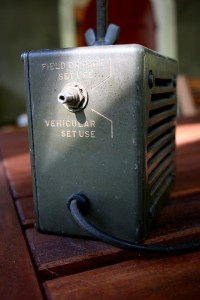
If you happen to locate the LS-166/U loudspeaker at your local Hamfest, grab one! There are a lot of them floating around and they’re usually quite affordable–typically between $10-20 US (more if mint). I was lucky to pick mine up for $4. Not only is it an affordable piece of military radio history, but I think it would make an excellent external speaker for amateur radio use during outdoor events like Field Day. Indeed, I think this speaker will weather any radio challenge!

So, what else did I see at the Ten-Tec Hamfest this year? Quite a few classic receivers. Though I didn’t take many photos, I did snap a few gems…

Photos
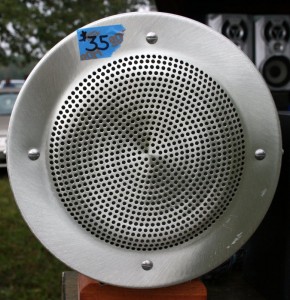
This aluminum radio speaker reminds me of the external speakers found on radios in the early 1900s. The seller had made a custom wooden base for this one (click to enlarge)
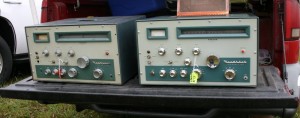
Heathkits, in near-mint condition (click to enlarge)
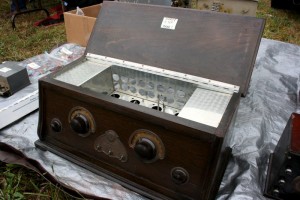
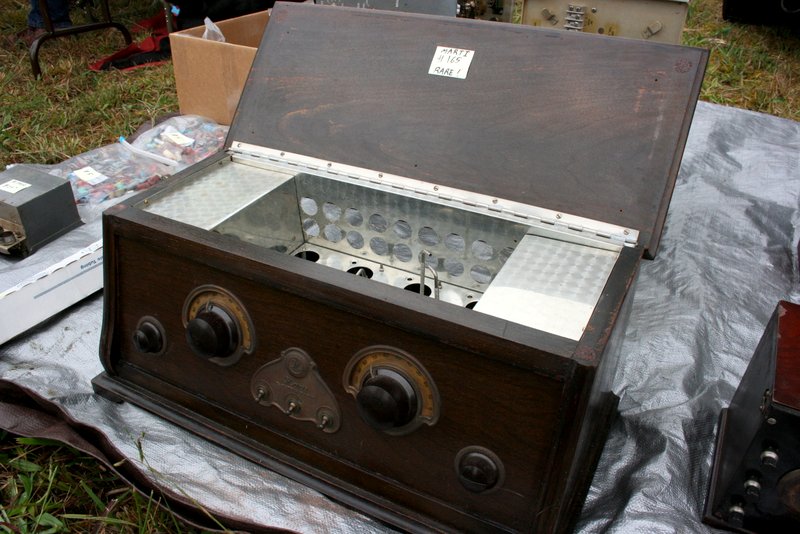
An antique Marti receiver, the first of its kind I’ve ever seen (click to enlarge)
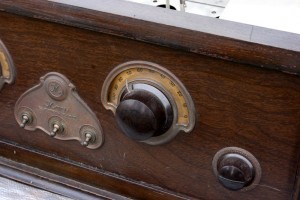
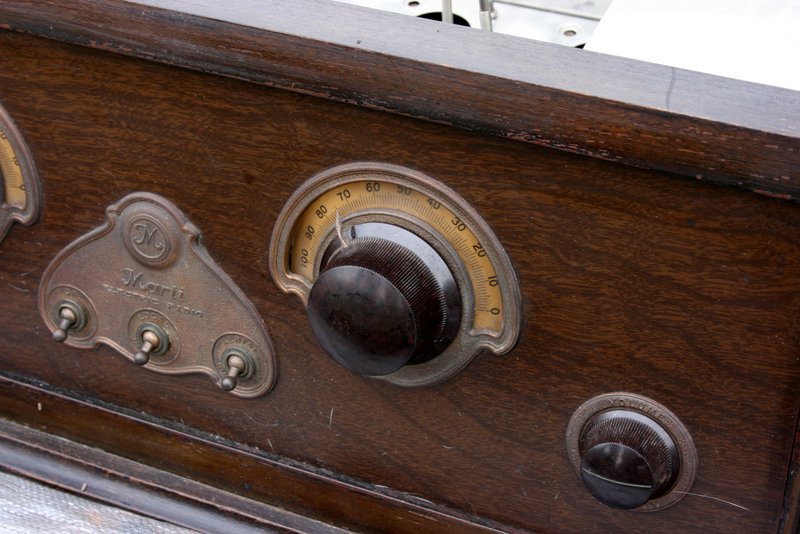
A close-up of the Marti’s beautiful dials (click to enlarge)
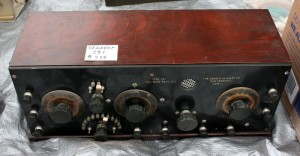
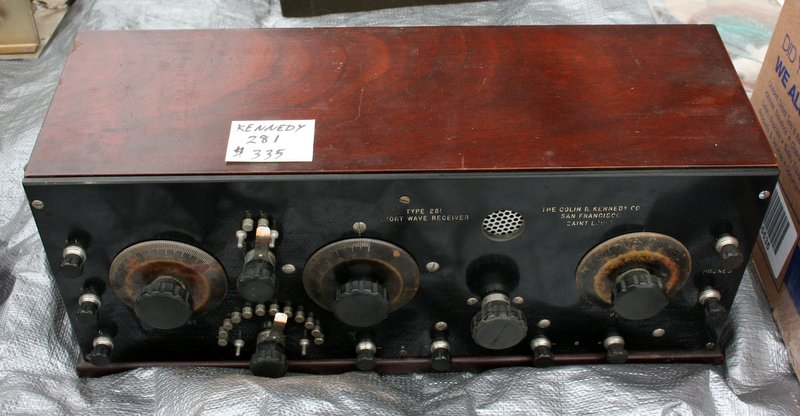
The Kennedy 281 (click to enlarge)
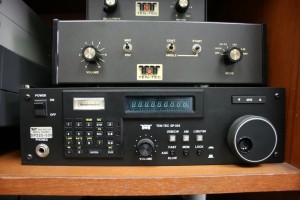
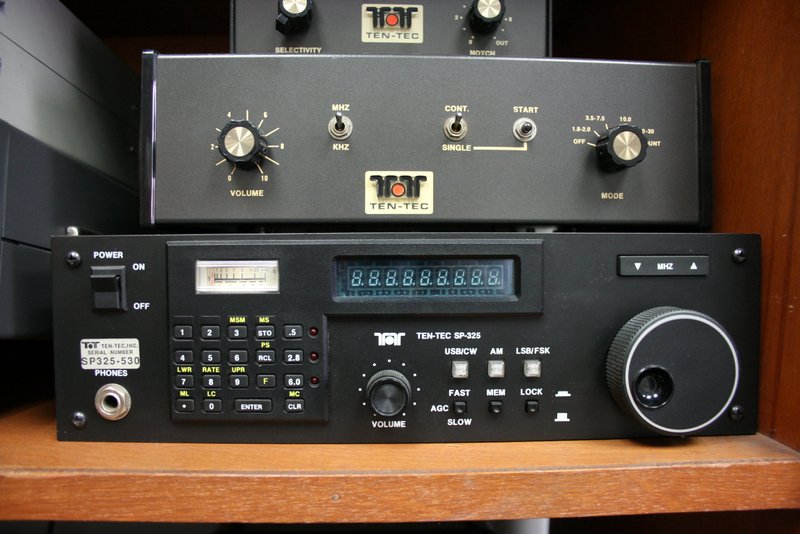
If you visit the Ten-Tec factory, tour their radio museum, housing nearly every radio Ten-Tec has produced. One example is the  SP-325 (on bottom) a shortwave receiver which once served the US government as a training radio. They’re fairly rare, but can be found occasionally on eBay. (click to enlarge)

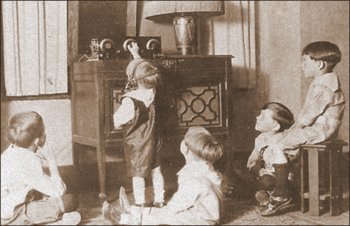
Swiss Short Wave Service archives now online

(Photo: SwissInfo.ch)

(Source: swissinfo.ch)

During the Second World War, Switzerland’s fledgling short wave radio service was essential to its attempts to communicate its policies and actions to an external audience made up of both foreign governments and the Swiss abroad.

The archives of the Short Wave Service (SWS), founded in 1935, have been digitalised and are now available online (See link). SWS was the forerunner to Swiss Radio International (SRI) which later became swissinfo.ch.

The manuscripts of news bulletins from this dark time in Europe reveal Swiss thinking on events both out of its control and right on its doorstep as the country desperately held on to its beloved neutrality.

In Switzerland’s national languages (German, French, Italian) as well as English, Spanish and Portuguese, SWS broadcast news and analysis of military events on both sides.

It also reported on living conditions of Australian, New Zealand, South African and American POWs interned in mountain retreats, and issued sharp rebukes of external criticism of Swiss government policy.

“Switzerland finds herself today in one of the most peculiar situations of her long history. From a certain viewpoint, she is surrounded by one power only. From another viewpoint, she is surrounded, among others, by three defeated powers: Austria, France and Italy. Under these circumstances Switzerland has remained true to her traditional role of guardian of the Alpine passes,” began an English broadcast from Hermann Böschenstein in the wake of the fall of Mussolini in 1943.

The same broadcast went on to discuss dashed hopes that Italy’s fall would see a reopening of transport routes to the sea, praised the Swiss influence of the International Red Cross as “incontestable”, and noted that “all-out” training of Swiss army troops had resulted in “quite a few casualties lately” with the use of flame-throwers being responsible in some cases.

Treasure trove

Lausanne University’s François Vallotton, a specialist in contemporary audio-visual and media history in Switzerland, was unable to resist the lure of such a treasure trove of documents.

Vallotton, whose work focuses in particular on the Swiss Broadcasting Corporation (SBC) – the parent company of swissinfo.ch – convened a seminar to undertake initial research on the SWS archive documents.

The archives, which have been formatted into a database searchable by keyword, are particularly interesting for historians because the historiography of international radio services has not yet been developed, particularly in Switzerland.

Vallotton says analysis of the archives is unlikely to reinvent what is already known about Switzerland during the Second World War, but: “What is interesting is that it is a source that allows us to see the image that Switzerland wanted to present to the outside world.”

“That is something that is really new because before we examined local media which was aimed at the Swiss public.”

Broadcasts by SWS at that time were also notable for the fact that they were the first news bulletins produced by a dedicated radio editorial team; previously news bulletins had been written and read by journalists from the Swiss News Agency, a press organisation.

“The service treated events in a different manner than to the local media,” says Raphaëlle Ruppen Coutaz, who is doing his doctorate on the subject. “For historians, it’s precious because it is the only Swiss media outlet to address those abroad during the war.” [Continue reading…]

I have really enjoyed looking through the archives. Of particular interest are the corrections that were made before reading the news.  They’re all there.

The actual archive database can be found here.

Read the full article at swissinfo.ch.

National Radio Day 2012

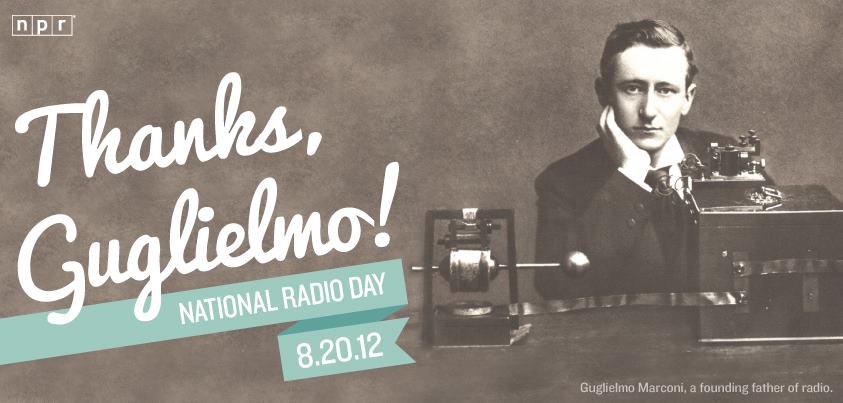
Click to enlarge. (Source: NPR)

Today in the US, it’s National Radio Day–a day to acknowledge the significance of radio technology and the way it has shaped our past, shapes our present, and continues to shape our future.

National Public Radio and its member stations typically celebrate with some fanfare. I especially love their vintage-inspired graphic this year, featuring Guglielmo Marconi.

In fairness, we should also acknowledge Nikola Tesla, whose 17 patents may have helped Marconi win his Nobel Prize as the father of radio.

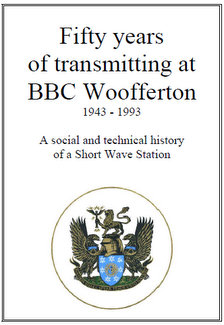
Shortwave Radio History: 50 years of transmitting at BBC Woofferton

Click here to download your copy.

Thanks to the efforts of a dedicated radio historian and author, Jeff Cant, you can download and read an excellent history of the first fifty years of the BBC’s Woofferton transmission station. Cant began his history as an internal document to the station; he later finished it in his retirement. I wish every shortwave transmitter station had such a well-documented history providing a perspective on the station’s broadcasting. We owe Mr. Cant a profound debt of gratitude.

To download the PDF, simply click here.

A special thanks to Jonathan Marks for finding and sharing this great bit of radio history.

Should the link to the PDF above ever become inactive, I’ve placed an archive copy available for download on the SWLing Post server.