Category Archives: Nostalgia

Radio Philately: A collection of radio inspired stamps

(Photo: Radio Philately)

The owner of Radio Filatelia (Radio Philately) sent a link to his impressive online gallery of radio and broadcast related stamps.

It is a comprehensive collection which he intends to add to over time.

You can see the main listing of countries on this page: http://radiofilateliadx.weebly.com/

Jeffrey revives an old friend, his Hallicrafters SX-110

SWLing Post reader, Jeffrey Fritz, sent me the following message and has kindly allowed me to share it with other readers. I’mthoroughly inspired!
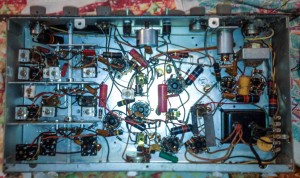
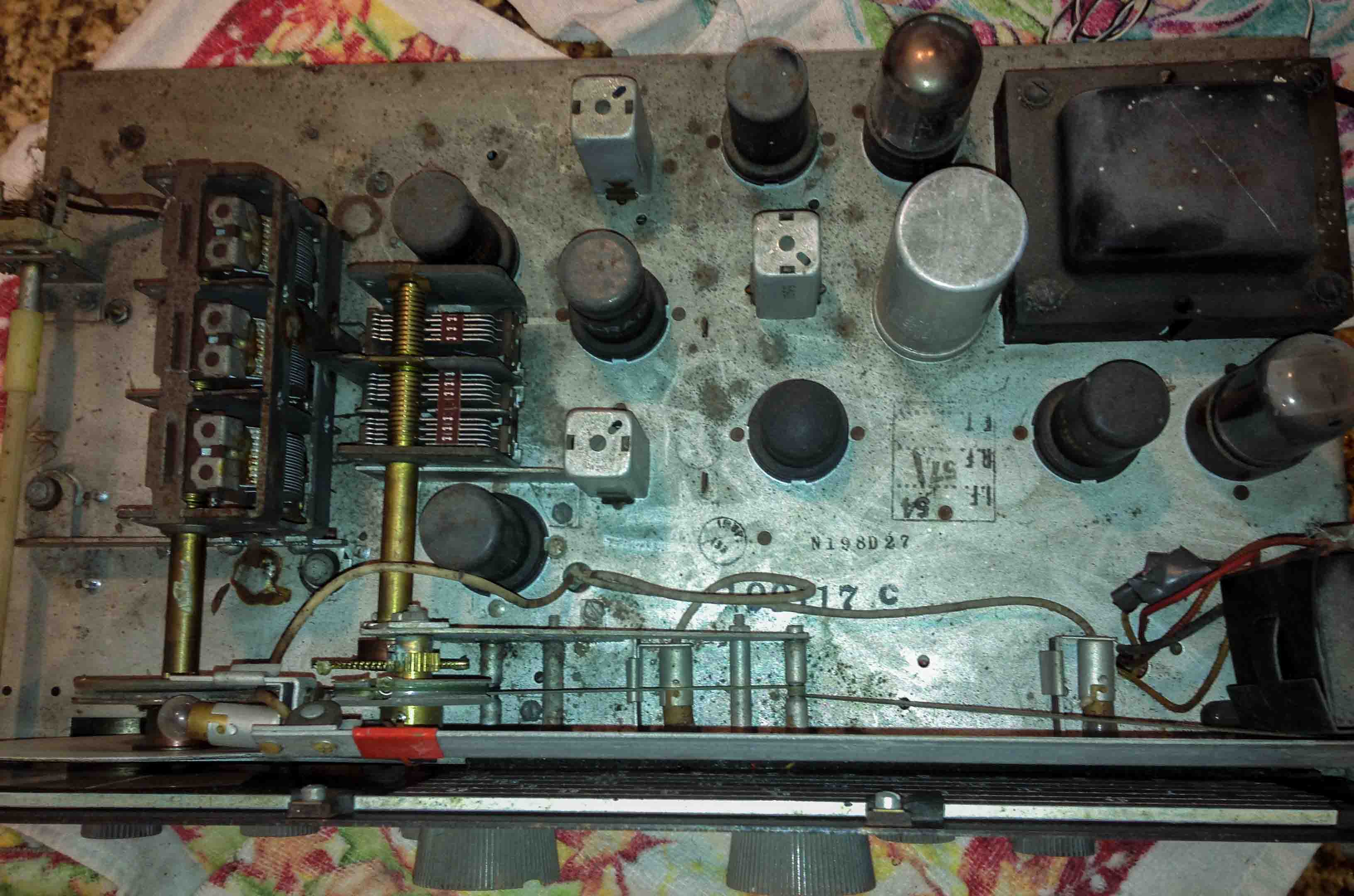
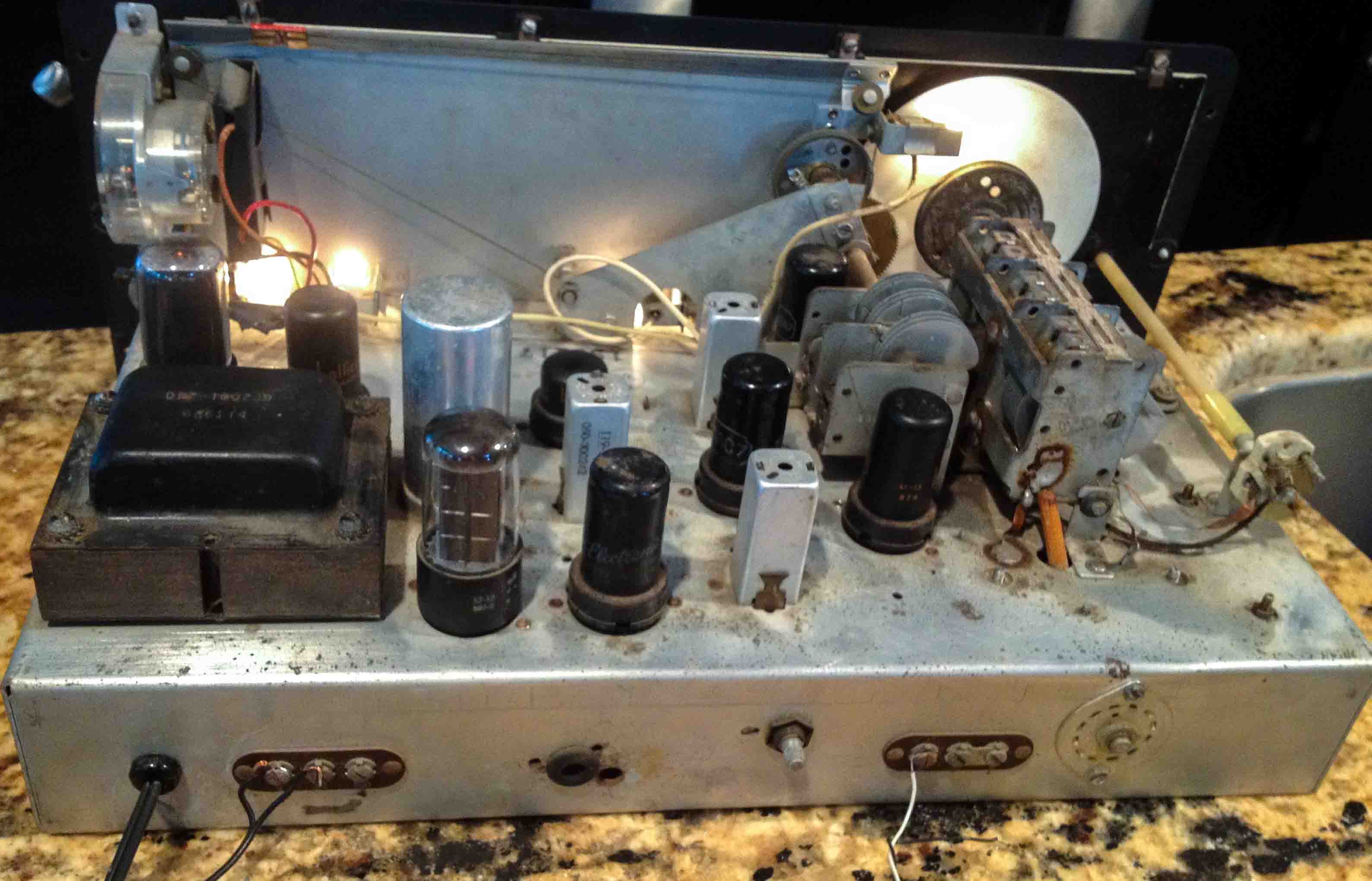
Bottoms up! Considering how old this receiver is, the chassis bottom (still with the original power cord) really is clean. This is how the bottom of the chassis looked when I removed the receiver from its metal cabinet.

As a teenager in the 1960s I spent a considerable amount of time SWLing on a Hallicrafters SX-110 communications receiver. I collected QSL cards from all over the world and loved being an SWL.

The SX-110 was purchased on 9 September 1961 from Gem Electronics in Farmingdale, Long Island, New York. My parents bought it for me, probably after a great deal of whining and cajoling on my part. Although much of my gear has long since been sent to some landfill by my parents, like my precious Lionel trains, I would not allow them to trash the SX-110.
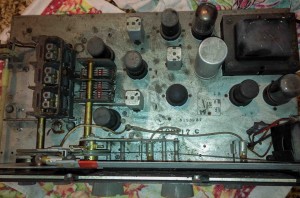
The top of the chassis, however, is not as clean. Some elbow grease will clearly be required.

The radio has been sitting in one basement or another, unused for the better part of 30 years.

Yesterday I decided to try bringing the radio back to life. Restoring this kind old receiver was a labor of love. The receiver was carefully looked over and tested with a VOM for bad components and the top of the chassis cleaned as best I could. The bottom was pristine. I just needed to clean out a few cobwebs and replace the power cord.
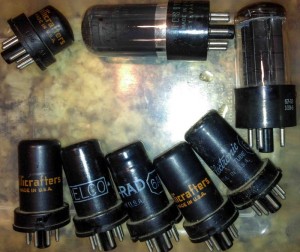
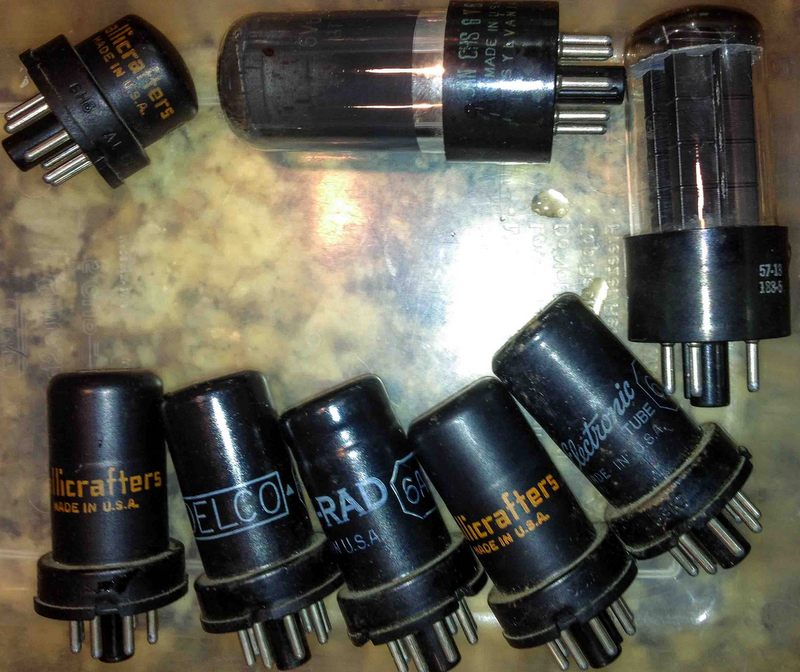
All eight tubes. Note the three original Hallicrafters tubes with the orange labeling.

After being cleaned up and several components tested, the SX-110 was slowly brought back to life on a Variac. I started at 10 volts AC and slowly increased the voltage every ten minutes by another ten volts. When I got to about 90 VAC, I could hear static and distorted audio coming out of the speaker. It was a good sign that the radio would come back to full operation once I reached the normal 110 VAC input–and that is exactly what occurred.

I am happy to report that, with a little patience and love (and a good cleaning) –and with three of the original Hallicrafters tubes still in place, my trusty old Hallicrafters SX-110 shortwave receiver is happily working today. I have it connected to its original Hallicrafters R-47 3.3 ohm speaker.
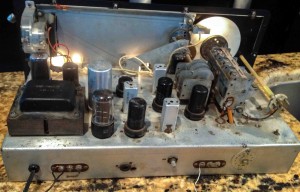
The top chassis is cleaned as much as possible. Not perfect, but a little cleaner than before. We now have about 110 volts applied through the Variac. No smoke but we do have lights!

Yesterday evening I listened to Radio Taiwan, Radio China International, Radio Havana Cuba, The Voice of Turkey and The Voice of Russia. The audio quality was rather decent without a hint of AC hum. The radio is probably due for a good alignment. I am running the radio on the Variac set at 110 volts AC and will probably keep it on the Variac because the AC voltages today in the U.S. are significantly higher than they were in 1961.

Even the XYL thinks that the radio sounds terrific! What better recommendation can there be for this old, vintage receiver?

73, Jeffrey Fritz, WB1AAL
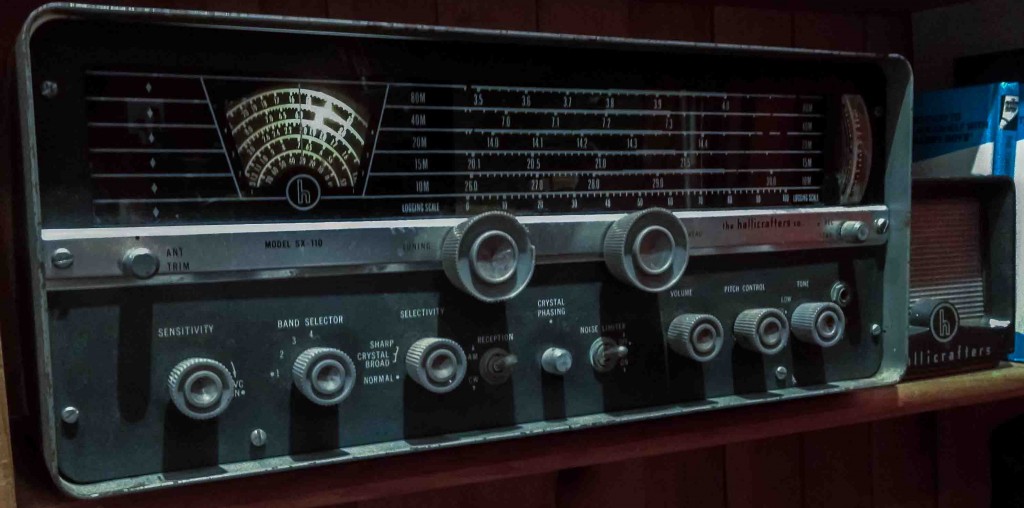
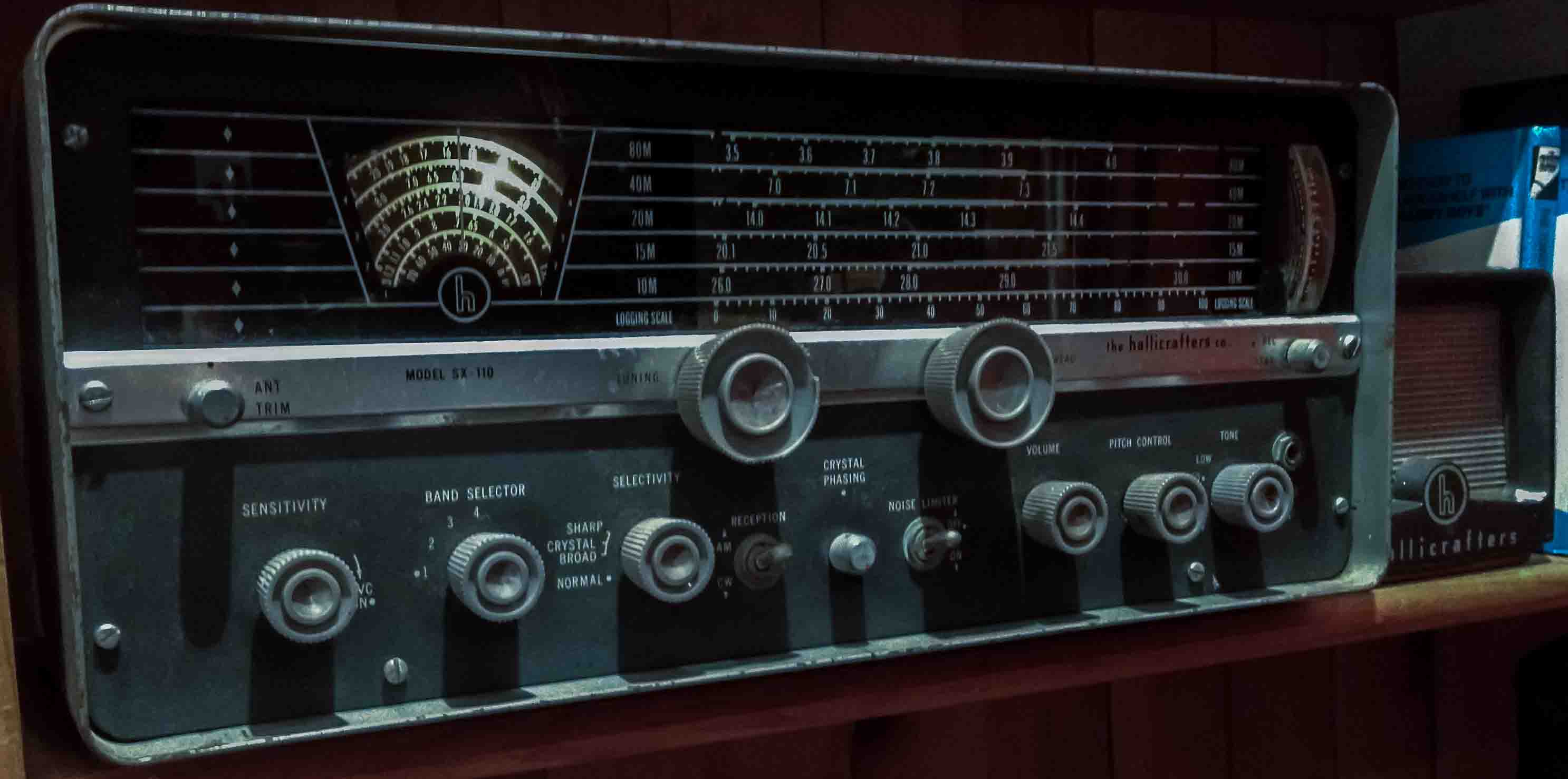
The restored SX-110 sitting on the bookshelf in the shack. No one would mistake this for a new receiver, but it works just fine.

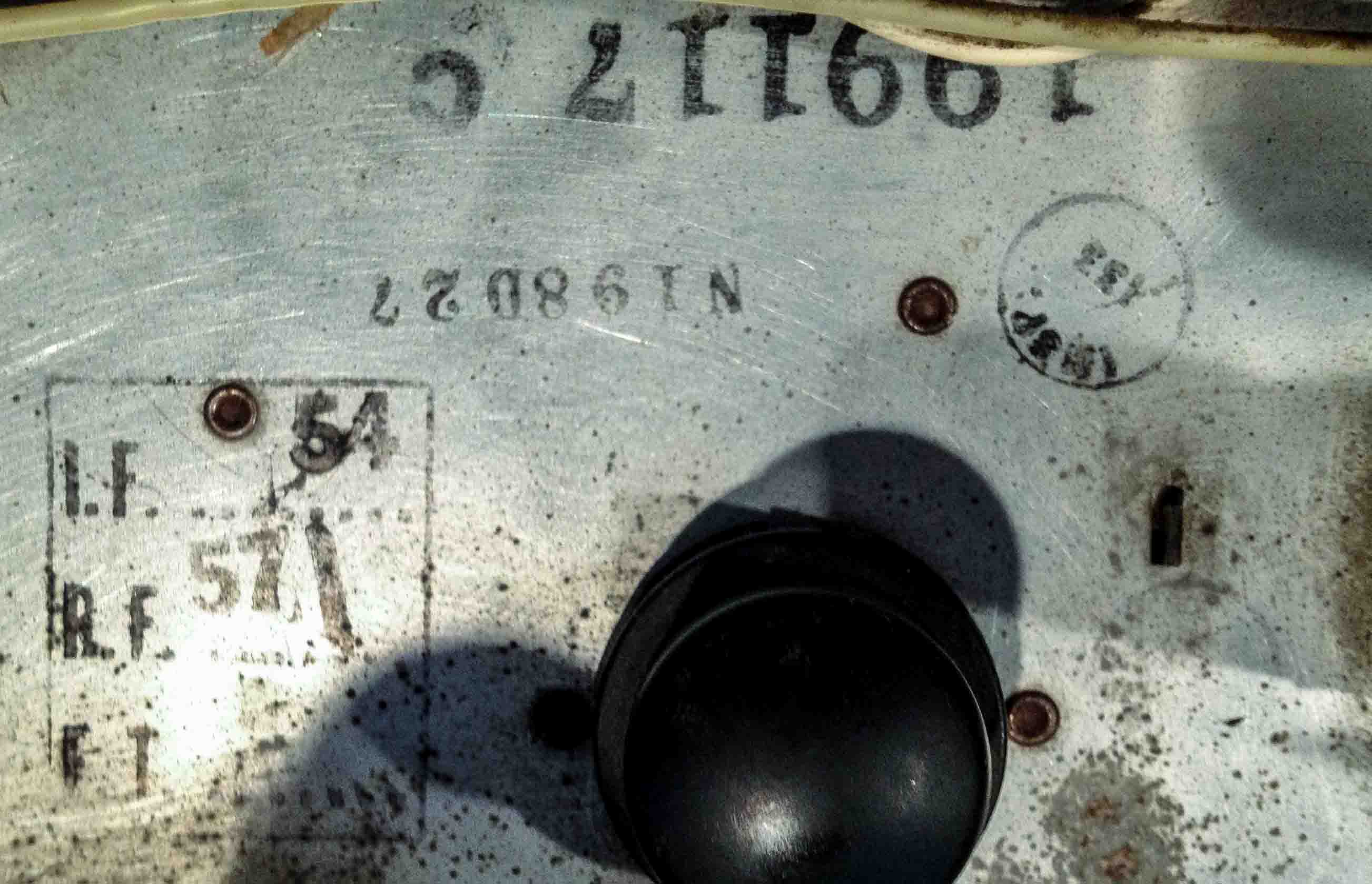
PS–Jeffrey also mentioned to me: “If you look closely at the chassis stamp photo of the SX-110, you can see a stamp that reads ‘199117 C.’ This is the manufacture date of the receiver. The fourth digit is the year, and the fifth and sixth digits are the week of the year. So, 199117 is the 17th week of 1961 or the week of 23 April 1961.”

Very interesting. Now I need to examine a few of my own Hallicrafters receivers…
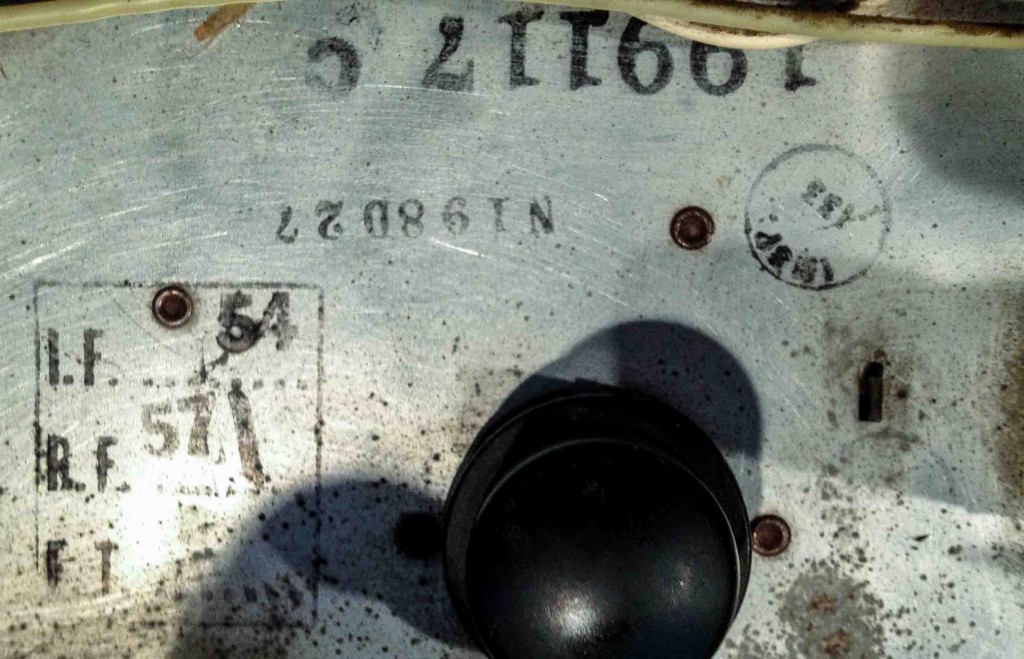
Close up of the inspection stamps. Do modern rig manufacturers take time to do this now?

Dan Lewis: RNI’s Mailbag archive

I just found out that Dan Lewis, from RNI’s Mailbag show, created a site to share and preserve his programs that aired over the years on WWCR, WBCQ, WRNO, and NYC area microbroadcasters such as Stereo 9 FM.

The first archived show is from December 23rd, 1990 and aired on WWCR.

Dan’s site can be found at: http://danlewisradioguy.blogspot.com/

As he says, “Give a listen if you dare.”

Ultimate gift for Dad: A professionally restored Hallicrafters S-20R

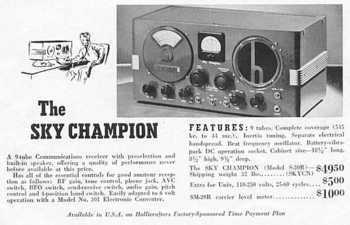
The Hallicrafters S-20R Sky Champion

On the subject of being reunited with a special radio, I found this story in the Illinois newspaper, the Quincy-Herald Whig:

For David Nagel of Quincy, it was Father’s Day in August.

The 81-year-old Nagel received an unexpected gift Wednesday night from his son, John, who lives in Texas.

David Nagel had just finished hearing — and taking part in — a discussion about a Hallicrafters S-20R receiver at a meeting of the Western Illinois Amateur Radio Club, a model that had first piqued his interest more than 60 years ago. At the end of the meeting, Nagel was presented with the genuine article — a Hallicrafters S-20R that his son had restored and shipped to Quincy to surprise his dad.

[…]David Nagel said he never thought he would ever own one of the Hallicrafters S-20R receivers again after letting his original model go in the mid-1960s.

[…]Over the past five years or so, John Nagel said, he had heard his father talk about his old radio, the Hallicrafters S-20R receiver and how he wished that he had not traded it in those many years ago.

“I had a great time with that receiver when I was young,” David Nagel said. “It kept me off the streets at night.”

Last year was when John Nagel got serious about trying and find his dad a replacement.

“After beginning to buy and build my own radio setup, last May I found an S20-R receiver listed on eBay,” he said. “I decided to buy the radio and make it a gift to my father. I purchased the radio, had it shipped to a guy in Michigan who restores them. The restoration included the cabinet as well as the inside electronics.”

Read the full article at the Quincy Herald Whig.

Bob Padula’s history of Australian shortwave broadcasting

Bob Padula at Warrandyte State Park, near Melbourne, Australia

I recently discovered that Bob Padula, long-time shortwave radio enthusiast and publisher of The Australian DX Report, has an online project entitled The History of Shortwave Radio In Australia. It’s a thorough and informative read and is available free of charge.

Check it out on Bob’s website.

BBC Bush House: auctioning bits of radio history

BBC World Service – Bush House

(Source: London Evening Standard)

Thousands of fragments of BBC history, ranging from “on air” lights to a picture of Sir Paul McCartney broadcasting live to fans in Russia, are going under the hammer in a huge auction.

The lots are all from Bush House, the Aldwych home of the BBC World Service for the past 71 years, which the Corporation vacates tomorrow. Entire studios are among the items for sale and are expected to attract bids of up to £10,000.

Elizabeth Sewell, managing director of specialist auctioneers Peaker Pattison, which is handling the sale, said: “A lot of overseas radio stations are interested in buying the large studios such as S6, which is the one Paul McCartney used to broadcast to Russia. We’ve had enquiries from India, Pakistan and all across the former eastern bloc.”

Turntables and reel-to-reel tape decks in the auction have attracted huge interest from club DJs who use them for mixing dance tracks. Online bidding for the first 1,500 lots has already started and will end on July 25. A second tranche of lots will be sold in September. The highest bid so far is £910 for a Steinway baby grand  piano.

Many of the lots reflect the huge diversity of cultures represented at Bush House, where 68 language services were broadcast, ranging from Maltese to Welsh for Argentinian Patagonia.

They include maps of India, Mexico, central Africa and the main theatre of the Second World War, as well as a painting of the BBC motto “Nation Shall Speak Peace Unto Nation”.

As well as the former Beatle’s famous 1989 broadcast, there are photographs of Mikhail Gorbachev, Bob Geldof, Charlton Heston, Sir Bobby Charlton and Yes Minister actor Paul Eddington.

Staff at Bush House have now relocated to the newly refurbished Broadcasting House in Portland Place. The BBC European Service moved into Bush House in 1941 after bomb damage at Broadcasting House, followed in 1958 by the rest of the Overseas Service.[…]

Read the full article at the London Evening Standard.

Recording Radio History: The Queen’s Diamond Jubilee via BBC World Service

Diamond Jubilee at Buckingham Palace (photo: BBC)

Ten years ago, my wife–then fiancée–and I lived in the UK, and were fortunate enough to attend The Queen’s Golden Jubilee celebration on the vast lawn at Buckingham Palace. It was without doubt the largest party I’ve ever attended, packed to the gills with the British public–a thoroughly amazing event, featuring a who’s who of past-and-present British musicians and personalities, encouraging attendees to join them in their bit of fun–and, of course, God save the Queen.

Yesterday, I re-lived the energy of that party as I heard (and recorded) the follow-up event these ten years later–The Queen’s Diamond Jubilee, on the BBC World Service–as heard from remote Ascension Island.

When hearing live events like this on shortwave–especially ones like this that celebrate national heritage–I know I’m listening to history in the making. The crowds applauding and cheering in a live broadcast over shortwave reminds me of a former era when British Expats across the globe relied on the BBC World Service to connect them with ol’ Blighty.
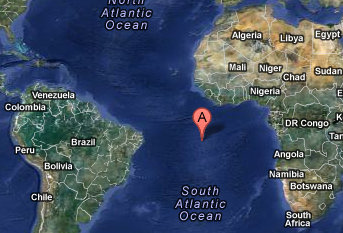
Ascension Island, marked with an "A" (image: Google Maps)

I recorded these broadcasts from my home in the southeastern US, hearing the BBC World Service relay station on the tiny, isolated Ascension Island in the South Atlantic. The broadcast was heard at first on 15,400 kHz, then moved to 9,915 kHz coinciding with their normal broadcast schedule. The broadcast, while completely intelligible, is weak in the beginning, but gains considerable strength by the end. There are summer static crashes heard as storms moved through the southeast US. I divided the broadcast into two parts, coinciding with my shift from one frequency to the other.

I also included a BBC WS news broadcast in Part 2 which followed the end of the show.

Either use the embedded Archive.org audio player below, or simply click here to download the mp3 files for Part 1 and Part 2.

I used the WinRadio Excalibur to record both of these segments. Its synchronous detection helped deal with fading (QSB) present at the beginning of the recording.

Once again, history is made…and archived on shortwave radio.  Enjoy!