Category Archives: Nostalgia

Dan notes a beautifully restored vintage Zenith in “Hunters”

Many thanks to SWLing Post contributor, Dan Robinson, who writes:

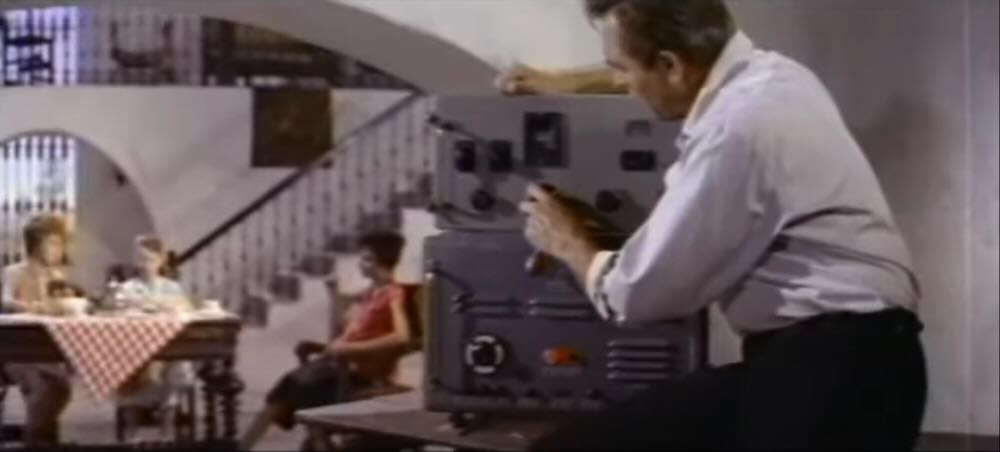
Following up on the item about the Grundig SAT 700 in a scene of Last of Us, the series “Hunters“, with Al Pacino, about Nazi hunters, featured a beautifully restored Zenith wood cabinet radio in the second to last of 8 episodes.

The Zenith is seen sitting between an elderly German couple who were helping to hide a Jewish family from the Nazis.

Hunters is an excellent, if sometimes hard to watch, series which brought Pacino back to TV. The scenes with the Zenith radio were almost as long as the one in Last of Us containing the Grundig 700.

What a gorgeous Zenith, Dan. Thank you for sharing this and your notes about Hunters.

Radio Waves: Binghamton Wireless Landmark, Broadcast Intrusions, LICWC on the BBC, and Blocking Radio Waves

Radio Waves:  Stories Making Waves in the World of Radio

Welcome to the SWLing Post’s Radio Waves, a collection of links to interesting stories making waves in the world of radio. Enjoy!

Many thanks to SWLing Post contributors Dennis Dura (K2DCD), Ulis (K3LU), Blake (K8LSU) for the following tips:


Radio history was made in Binghamton and one landmark still stands (Press Connects)

It was 1913, the year of the Binghamton Clothing Company Fire, and the year after the Triangle Shirtwaist Fire and the sinking of the Titanic.

Several major disasters that had left the region and the nation reeling from the loss of human life amidst a growing industrial base in the country. Thousands of immigrants were arriving to find new lives and work among the huddling masses. Many of those would make their way to the Binghamton area to find employment in the many cigar and shoe factories scattered on the landscape.

It was important to find a feel-good moment in the ever-rapidly increasing technology world that was changing the way we performed our work and lived our lives. Communication growth was one aspect of those changes. The number of newspapers and their influence was important, but so was the development of what we today call radio – originally known as wireless telegraphy, using radio waves to transmit telegraphic signals from point to point.

The first practical incarnation of wireless telegraphy was created by Guglielmo Marconi of Italy. The discovery of those waves had been made only about two decades prior to his use of those to transmit telegraph signals. In 1897, he formed the Wireless Telegraph & Signal Company in the United Kingdom. The company would later be called the Marconi Wireless Company, and continued to work on the ability to send these wireless signals farther and farther. Eventually, he also worked to see if these signals could be transmitted and received by moving objects, such as ships at sea and railroad trains. [Continue reading…]

Broadcast Signal Intrusions: When TV or Radio Stations Get Hacked (96.1 The Eagle)

Orson Welles’ contrived The War of the Worlds news bulletin “interrupted” a radio broadcast in 1938 to advise terrified listeners that aliens had invaded the Earth. As many as 12 million people were tuned in, according to NPR – and perhaps a million of them apparently worried that it was actually happening.

We’ve gained historical perspective on the stunt, even while the way we consume media has vastly changed over the decades that followed. Critics would later downplay the impact of The War of the Worlds, with some arguing that newspapers purposely over-sensationalized the broadcast to cast doubts on the trustworthiness of then-new technology that was siphoning off ad revenue.

What’s clear is that signal intrusions – including unauthorized hijacking of radio, television or satellite feeds – have continued ever since. They’ve served a variety of purposes, as you’ll see on the following list. Many were a form of political protest, while others were just looking to have a little fun. All of them trace back in some way to Welles’ fateful “interruption.”

Southern Television Broadcast
Nov. 26, 1977, England

Viewers of an early evening Southern Television broadcast in England were alarmed when an electronic voice purported to represent the “Ashtar Galactic Command” overtook the audio of a news segment for a full six minutes. The message, which was accompanied by a pulsating sound and eerie distortions, said: “For many years, you have seen us as lights in the sky. We speak to you now in peace and wisdom as we have done to your brothers and sisters all over this, your planet Earth.” This strange voice went on to advise humanity to “abandon its weapons” in order to participate in a “future awakening” and “achieve a higher state of evolution.” It also warned viewers that government officials weren’t who they claimed to be, and that they were leading the unwitting public into a New World Order. The hack ended with a final message: “Have no fear, seek only to know yourselves, and live in harmony with the ways of your planet Earth. We hear at the Ashtar Galactic Command thank you for your attention. We are now leaving the planes of your existence. May you be blessed by the supreme love and truth of the cosmos.” The interruption prompted a flood of phone calls from an understandably concerned audience then living under the threat of Cold War. A local newspaper said “thousands” of viewers were horrified; one man described the experience as “very eerie indeed” and said it “sounded very authentic.” A woman said she had to call her friends to make sure she wasn’t “hearing things,” adding that “it sounded like a genuine voice from outer space and was quite frightening.” An investigation revealed the Independent Broadcasting Authority’s Hannington transmitter had rebroadcast the signal from a nearby, unauthorized transmitter. The mastermind behind it all was never identified.

Read More: Broadcast Signal Intrusions: When TV or Radio Stations Get Hacked.

Long Island CW Club on BBC Radio 4

Howard (WB2UZE) with the Long Island CW Club was interviewed on the BBC Radio 4 program PM.

Although the show has already aired, you can listn to it for the next few weeks on BBC Sounds by clicking here.

Note that the segment with Howard starts at 51:42.

Keith (GW4OKT) captured the live, off-air recording of this segment via his Icom IC-705:

Click here to listen on YouTube.

Blocking radio waves and electromagnetic interference with the flip of a switch (Phys.org)

Researchers in Drexel University’s College of Engineering have developed a thin film device, fabricated by spray coating, that can block electromagnetic radiation with the flip of a switch. The breakthrough, enabled by versatile two-dimensional materials called MXenes, could adjust the performance of electronic devices, strengthen wireless connections and secure mobile communications against intrusion.

The team, led by Yury Gogotsi, Ph.D., Distinguished University and Bach professor in Drexel’s College of Engineering, previously demonstrated that the two-dimensional layered MXene materials, discovered just over a decade ago, when combined with an electrolyte solution, can be turned into a potent active shield against electromagnetic waves.

This latest MXene discovery, reported in Nature Nanotechnology, shows how this shielding can be tuned when a small voltage—less than that produced by an alkaline battery—is applied.

“Dynamic control of electromagnetic wave jamming has been a significant technological challenge for protecting electronic devices working at gigahertz frequencies and a variety of other communications technologies,” Gogotsi said.

“As the number of wireless devices being used in industrial and private sectors has increased by orders of magnitude over the past decade, the urgency of this challenge has grown accordingly. This is why our discovery—which would dynamically mitigate the effect of electromagnetic interference on these devices—could have a broad impact.”

[Continue reading at Phys.org…]


Do you enjoy the SWLing Post?

Please consider supporting us via Patreon or our Coffee Fund!

Your support makes articles like this one possible. Thank you!

Radio Waves: BBC Bangla Closure, QSL Book Review, Vintage Radio Enthusiast, and Radio Tirana

Radio Waves:  Stories Making Waves in the World of Radio

Welcome to the SWLing Post’s Radio Waves, a collection of links to interesting stories making waves in the world of radio. Enjoy!

Many thanks to Dennis Dura for many of these tips!


BBC Bangla issues its final broadcast after 81 years (Global Voices)

The new year was bittersweet for many Bengali radio fans this year, as listeners learned that BBC Bangla Radio would stop airing on December 31, 2022, after an 81-year run. In the years leading up to its closure, two sets of half-hour programs were aired each day on shortwave and FM bands in the morning and evening. The webpage was archived as soon as the night programs finished on the last day, closing the chapter on the iconic British Broadcasting Channel segment.

In an effort to cut spending and follow media trends, BBC World Service will be pivoting toward increased digital offerings, leading them to shut down radio-wave broadcasts in several international languages. BBC Bangla will continue as a digital-only multimedia channel in a limited capacity.

Bangla (Bengali) is the seventh most spoken language by the total number of speakers in the world. Spoken by approximately 261 million worldwide, it is the primary language in the region of Bengal, comprising Bangladesh (61 percent of speakers) and the Indian state of West Bengal (37 percent of speakers). [Continue reading…]

Ham Radio’s Paper Trail (Disquiet)

A new book from Standard Manual

A trove of more than 150 such QSL cards, formerly owned by an operator who went by the call sign W2RP, was obtained by designer Roger Bova. Bova then collaborated with the book imprint Standards Manual (full disclosure: I’ve done some work with the publisher’s parent company, the design firm Order) to collect them into a handsome volume. I’m reprinting some of the images here, with the publisher’s permission.

W2RP, as it turns out, was no ordinary “amateur.” W2RP was the late Charles Hellman, who lived to the age of 106. The cards obtained by Bova are both a visual map and a physical manifestation of the numerous conversations he participated in over what is said to have likely been the longest continuously active ham license, more than 90 years. Hellman first obtained his license at the age of 15. Some historical context: he was born in 1910, one year after the Nobel Prize in Physics went to Guglielmo Marconi and Karl Ferdinand Braun for their pioneering work in radio. Hellman himself taught physics in Manhattan and the Bronx, and two of his students reportedly went on to win the Nobel in physics. (More on his remarkable life at qcwa.org.) [Continue reading…]

Click here to read more about the book at the publisher’s website.

GUEST COLUMN: Vintage radios dial up a lesson in life (OrilliaMatters.com)

‘It would be the understatement of the year to say there were a lot of radios and radio-related paraphernalia’ at Chevy Halladay’s Orillia home

As I crossed the porch toward the side door of Chevy Halladay’s century home near Orillia, I had no idea what to expect. The door opened before I could knock, Chevy extended his arm to shake hands, and welcomed me into his home.

To my right was a small closet where I could hang my coat. I missed the hook, sending the coat to the floor. I was much too distracted to waste another second on hanging it neatly. To my left was a huge, free-standing mid-50s radio and TV tube testing machine stacked high with rare tubes, a six-foot-tall floor clock and radio with a built-in turntable, and a vintage Coca Cola vending machine. Each piece had been carefully restored for appearance and functionality.

A single step further into the room brought Chevy’s, and his wife Maggie’s, kitchen counter into view. Atop it were two partially restored radios, one a jumble of dusty tubes and a speaker early into the process, the other a spectacular and rare wood-cased Stromberg-Carlson, being prepared for final refinishing before being shipped to a friend in Bethesda, Maryland.

Don’t misunderstand. This was no hoarder’s enclave or home transformed into a ramshackle workshop. Their house is immaculate, and Maggie is on-side with Chevy’s mono-themed interior decorating style, yet it would be the understatement of the year to say there were a lot of radios and radio-related paraphernalia everywhere.

There was not an inch of wall that wasn’t shelved to display countless historic radios, or covered with hanging wall clocks that were used as promotional items by radio companies, steel promotional signs, framed advertising posters, or other memorabilia. [Continue reading…]

Voice from the East – an original hour long documentary from Monitor Production in Sound

Between 1970 and 1991 a woman, never named and with a sonorous antipodean accent, could be heard broadcasting some of the most extraordinary communist propaganda ever heard amongst the radio stations of the former socialist countries.

Radio Tirana broadcast from Albania – at one time Europe’s most secretive and closed country.

The transmissions were the source of enormous fascination for one 13 year old boy who listened to the programmes at bath time, with increasing amazement.

53 year old journalist John Escolme was that 13 year old.

We join his journey to track down the mystery broadcaster who not only recalls her life on-air, but her own extraordinary personal story – one that took her from remote New Zealand to an eccentric Stalinist regime rarely visited by anyone from the west. [Click here for original article.]


Do you enjoy the SWLing Post?

Please consider supporting us via Patreon or our Coffee Fund!

Your support makes articles like this one possible. Thank you!

Balazs spots vintage radios in film and in a Budapest pub!

Many thanks to SWLing Post contributor, Balázs Kovács, who writes:

Hi Thomas,

Happy New Year! Some pictures in two topics:

1.) First, a nice Zenith H511 Consoltone (MW) got a few seconds of screen time recently in the fourth episode of the third (final) season of “His Dark Materials” series:


2.) At the end of December in an old pub in Budapest (Helvecia) I ran into some more or less old radios as a part of the eclectic decoration. Since these are partly Eastern European, they may be less well known elsewhere (deep in the basement, so even if they were still functioning, not many radio signals would reach them anymore):

With best regards,
Balazs

Wow! I love those pub radios!  I especially love the dial markings on the R 926 A!

Thank you for sharing these images, Balazs!

Radio Waves: Absolute Radio Turns Off AM in UK, Carlos Latuff Interview, X-Class Flaring, and Morse Code Is Back!

Radio Waves:  Stories Making Waves in the World of Radio

Welcome to the SWLing Post’s Radio Waves, a collection of links to interesting stories making waves in the world of radio. Enjoy!


Absolute Radio to switch off all AM transmitters across the UK (Radio Today)

Bauer is removing Absolute Radio from Medium wave this month as it turns off all AM frequencies for the station across the country.

Absolute Radio launched exclusively on AM (as Virgin Radio) 30 years ago in 1993 using predominantly 1215 kHz along with fill-in relays on 1197, 1233, 1242 and 1260. Some of these have been turned off in recent years in places such as Devon, Merseyside and Tayside.

Whilst this is a historic milestone for the radio industry, it shouldn’t affect many listeners as just two percent of all radio listening currently takes place on AM.

Absolute Radio also lost its FM frequency in London in 2021 in favour of the ever-expanding Greatest Hits Radio network.

The move makes Absolute Radio a digital-only service, broadcasting nationally on DAB and online. [Continue reading…]

Coffee and Radio – with Carlos Latuff (Radio Heritage)

[…]Carlos Henrique Latuff de Sousa or simply “Carlos Latuff”, for friends, (born in Rio de Janeiro, November 30, 1968) is a famous Brazilian cartoonist and political activist. Latuff began his career as an illustrator in 1989 at a small advertising agency in downtown Rio de Janeiro. He became a cartoonist after publishing his first cartoon in a newsletter of the Stevadores Union in 1990, and continues to work for the trade union press to this day.

With the advent of the Internet, Latuff began his artistic activism, producing copyleft designs for the Zapatista movement. After a trip to the occupied territories of the West Bank in 1999, he became a sympathizer of the Palestinian cause in the context of the Israeli-Palestinian conflict and devoted much of his work to it. He became an anti-Zionist during this trip and today helps spread anti-Zionist ideals.

His page of Instagram (https://www.instagram.com/carloslatuff/) currently has more than 50 thousand followers, where of course you can see his work as a cartoonist and also shows his passion for radio. [Continue reading…]

X-CLASS SOLAR FLARE (Speaceweather.com)

A large and potentially dangerous sunspot is turning toward Earth. This morning (Jan. 6th at 0057 UT) it unleashed an X-class solar flare and caused a shortwave radio blackout over the South Pacific Ocean. Given the size and apparent complexity of the active region, there’s a good chance the explosions will continue in the days ahead. Full story @ Spaceweather.com ( https://spaceweather.com)

Looking to Ditch Twitter? Morse Code Is Back (Smithsonian Magazine)

For almost 20 years, Steve Galchutt, a retired graphic designer, has trekked up Colorado mountains accompanied by his pack of goats to contact strangers around the world using a language that is almost two centuries old, and that many people have given up for dead. On his climbs, Galchutt and his herd have scared away a bear grazing on raspberries, escaped from fast-moving forest fires, camped in subfreezing temperatures and teetered across a rickety cable bridge over a swift-moving river where one of his goats, Peanut, fell into the drink and then swam ashore and shook himself dry like a dog. “I know it sounds crazy, risking my life and my goats’ lives, but it gets in your blood,” he tells me by phone from his home in the town of Monument, Colorado. Sending Morse code from a mountaintop—altitude offers ham radios greater range—“is like being a clandestine spy and having your own secret language.”

Worldwide, Galchutt is one of fewer than three million amateur radio operators, called “hams,” who have government-issued licenses allowing them to transmit radio signals on specifically allocated frequencies. While most hams have moved on to more advanced communications modes, like digital messages, a hard-core group is sticking with Morse code, a telecommunications language that dates back to the early 1800s—and that offers a distinct pleasure and even relief to modern devotees.

Strangely enough, while the number of ham operators is declining globally, it’s growing in the United States, as is Morse code, by all accounts. ARRL (formerly the American Radio Relay League), based in Newington, Connecticut, the largest membership association of amateur radio enthusiasts in the world, reports that a recent worldwide ham radio contest—wherein hams garner points based on how many conversations they complete over the airwaves within a tight time frame—showed Morse code participants up 10 percent in 2021 over the year before.

This jump is remarkable, given that in the early 1990s, the Federal Communications Commission, which licenses all U.S. hams, dropped its requirement that beginner operators be proficient in Morse code; it’s also no longer regularly employed by military and maritime users, who had relied on Morse code as their main communications method since the very beginning of radio. Equipment sellers have noticed this trend, too. “The majority of our sales are [equipment for] Morse code,” says Scott Robbins, owner of ham radio equipment maker Vibroplex, founded in 1905, which touts itself as the oldest continuously operating business in amateur radio. “In 2021, we had the best year we’ve ever had … and I can’t see how the interest in Morse code tails off.”

Practitioners say they’re attracted by the simplicity of Morse code—it’s just dots and dashes, and it recalls a low-tech era when conversations moved more slowly. For hams like Thomas Witherspoon of North Carolina, using Morse code transmissions—sometimes abbreviated as CW, for “continuous wave”—offers a rare opportunity to accomplish tasks without high-tech help, like learning a foreign language instead of using a smartphone translator. “A lot of people now look only to tools. They want to purchase their way out of a situation.”

Morse code, on the other hand, requires you to use “the filter between your ears,” Witherspoon says. “I think a lot of people these days value that.” Indeed, some hams say that sending and receiving Morse code builds up neural connections that may not have existed before, much in the way that math or music exercises do. A 2017 study led by researchers from Ruhr University in Bochum, Germany, and from University Medical Center Utrecht in the Netherlands supports the notion that studying Morse code and languages alike boosts neuroplasticity in similar ways. [Continue reading…]


Do you enjoy the SWLing Post?

Please consider supporting us via Patreon or our Coffee Fund!

Your support makes articles like this one possible. Thank you!

Radio Waves: New Massive Over-The-Horizon Radar, Evolution of Receivers, Tour of Eisenhower’s Air Force One, and ABC on Cricket in 1930s

Radio Waves:  Stories Making Waves in the World of Radio

Welcome to the SWLing Post’s Radio Waves, a collection of links to interesting stories making waves in the world of radio. Enjoy!


US Begins Installing ‘Mighty’ Over-The-Horizon Radar In Palau That Can Detect Objects Thousands of KMs Away! (The EurAsian Times)

The United States has begun work on the deployment of a new long-range over-the-horizon radar system for the United States Air Force, which will be placed on the Pacific island of Palau.

The sensor station, known as the Tactical Mobile Over-the-Horizon Radar, or TACMOR, will be set up on the highly strategic island of Palau. The sensor station intends to improve the situational awareness of US and allied forces operating in the region in the air and maritime domain.

The Department of Defense announced on December 28 that it had granted Gilbane’s Federal business a $118.4 million contract to develop the structural foundation of a new US Air Force radar station to be built in the Republic of Palau.

Gilbane Federal will build reinforced concrete pads and other foundational components as part of the firm-fixed-price contract to set up the Tactical Mobile Over-the-Horizon Radar system, the Department of Defense said.

The Naval Facilities Engineering Systems Command Pacific acts as the contracting activity for what is known as the TACMOR infrastructure project. The work is anticipated to be finished by June 2026. [Continue reading…]

The Evolution of Radio Receivers (Euro Scientist)

Radio receiver is one such gadget that people have been using for many generations. After the invention of radio communication by Guglielmo Marconi in 1895, the first radio receiver was also invented by Marconi. A radio receiver is an electronic device that can only receive radio signals and can convert the radio signals to audio and sound. A radio receiver can receive radio signals of various frequencies by tuning to a particular frequency. These frequencies are of two types – Amplitude Modulation (AM) and Frequency Modulation (FM). A radio receiver capable of receiving any analog audio on AM/FM frequency is called analog radio receiver and for many years people were using analog radio receivers.

Since the invention of analog radio by Marconi in 1895, many companies started manufacturing radio receivers. First came the De Forest RJ6 in 1916, and later many analog radio receivers like Sony TR-63 (1957), and H.H. Scott 350 (1961) came in the market, and they were the first analog radio receivers of that kind. After the emergence of digital electronics and digital radio transmission, digital radio receivers started to capture the market – receivers capable of receiving Digital Audio Broadcasting (DAB) – digital radio transmission. In 2003, Pure launched the PocketDAB 1000 and It was the world’s first pocket digital radio capable of playing DAB radio stations. However, radio receivers became diversifying when internet technology was implemented in them, which made it possible for the companies to introduce internet radio receivers. An internet radio receiver can be either an app of a computer or can be a standalone receiver, connected to the internet to receive internet radio stations. Kerbango internet radio receiver from 3com was the first standalone internet radio receiver of 21th century. This change in the technology of radio receivers even went beyond internet radio – after the arrival of Software Defined Radio (SDR).

Continue reading

BBC World Service Celebrates 90 Years On The Air

This week, the BBC World Service celebrated 90 years. Enjoy these two programs from the BBC World Service chock-full of history and nostalgia:

The World Service is 90: The Documentary Podcast

For 90 years the BBC World Service has been broadcasting in dozens of languages to audiences so huge they are counted in the tens of millions all over the globe. World Service began transmitting on 19 December 1932. It was called the BBC Empire Service, speaking in slow English via crackly short-wave radio to a now-vanished Empire which then ruled a fifth of the globe.

The Second World War saw radio services expand massively, broadcasting in more than 40 languages to listeners hungry for truth and facts they could trust. In every crisis and conflict since, individual voices out of the air have offered news, but also drama, music, education and sometimes hope to their audiences.

In a special 90th anniversary programme, the broadcaster Nick Rankin, who worked for more than 20 years at the BBC, digs into a treasure trove of sound archive and talks to journalists who made and still make the BBC World Service such a remarkable network.

Over to You: Celebrating 90 years of broadcasting to the world

This weekend sees the WS celebrates a significant birthday – it’s become a nonagenarian! For 90 years it has been broadcasting in dozens of languages to audiences counted in the tens of millions all over the globe. We hear your memories of your listening experience and what the service means to you.

Presenter: Rajan Datar
Producer: Howard Shannon
A Whistledown production for the BBC World Service