Category Archives: Nostalgia

SWLing Post Contest Question #5: Our final question for a chance to win a piece of broadcasting history!

RCA Window from MI-7330

Four weeks ago, we announced a new contest to celebrate the SWLing Post‘s 10th Anniversary.

The prize is an amazing piece of broadcast history: a 75 year old round plate glass window that was fitted in the central main door of the RCA senders at the Woofferton, UK, transmitting site in 1943. This prize was generously donated by SWLing Post contributor and friend, Dave Porter (G4OYX).

Please read our original contest post (click here) which describes how you can enter to win.

The original post also contains the first of five contest questions which count as individual entries in the contest.  The second question can be found here, the third question by clicking here and the fourth here.

Today, we present our final question…

Please note: This contest will close on Friday December 14 at 12:00 UTC–you have until then to submit answers to all five questions. The winner will be announced once we verify contact with them.  If you have entered this contest, please check your email this weekend.

If you read the SWLing Post email digest, you will need to view our prize questions on the web to see the embedded form. If the form below does not display, click here to open it in a new window.

We will close all entry forms to responses

Our fifth and final question:

Click here to answer question #1.

Click here to answer question #2.

Click here to answer question #3.

Click here to answer question #4.

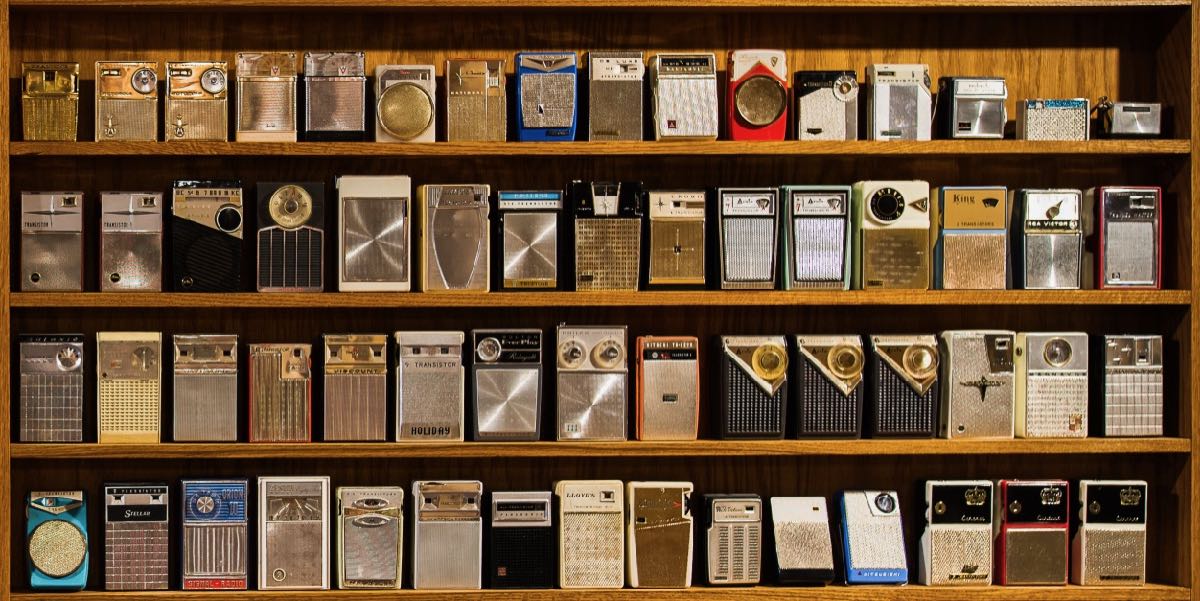
Mike’s impressive collection of early production transistor radios

Many thanks to SWLing Post contributor, Mike Thomas, who shares the following reply to our recently post highlighting a number of novelty radios. Mike writes:

That is a nice collection of novelty radios. I have a few of them but tend to focus on early production transistors.

[Here is a] picture of my collection:

This is a large photo–click to open and zoom in.

Wow! What a remarkable collection, Mike! Thank you for sharing!

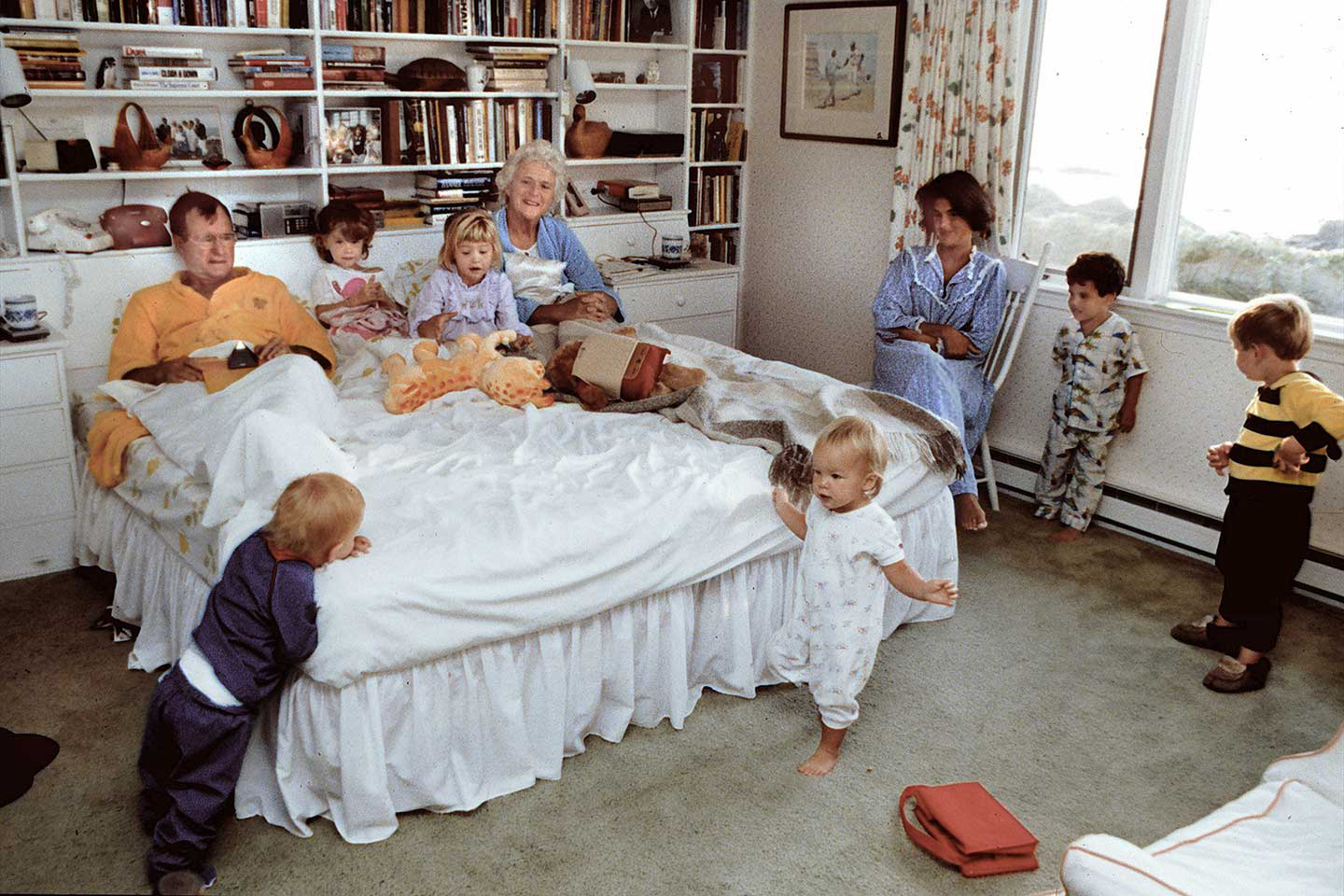
Photo shows that late President Bush kept a bedside shortwave portable

Photo by White House photographer David Valdez (Click to enlarge image)

Many thanks to SWLing Post contributor, Robert Sillett, who shares the following regarding late US President George H. W. Bush:

Firstly, thank you so much for providing such a great service to the shortwave community. Thanks so much!

I am dropping you a line because of something I noticed in the following article from the Washington Post concerning our late President Bush. If you look in the photo of President Bush (then Vice-President at the time) with his grandchildren, you can see a Sony ICF-2001 (update: Sony ICF-7600D) in the bookshelf behind him. Given its position, one can assume that he used it regularly.

[…]Here’s where I found the photo:

https://www.washingtonpost.com/graphics/2018/national/amp-stories/photos-of-george-hw-bush-white-house/?tid=a_inl_manual

I agree, Robert. You can tell by the radio’s position that it wasn’t staged for the photo. I understand that President Bush was an avid reader and had a desire to be well-informed about the world around him.  No doubt, shortwave radio played a role in that.

Thank you for sharing.

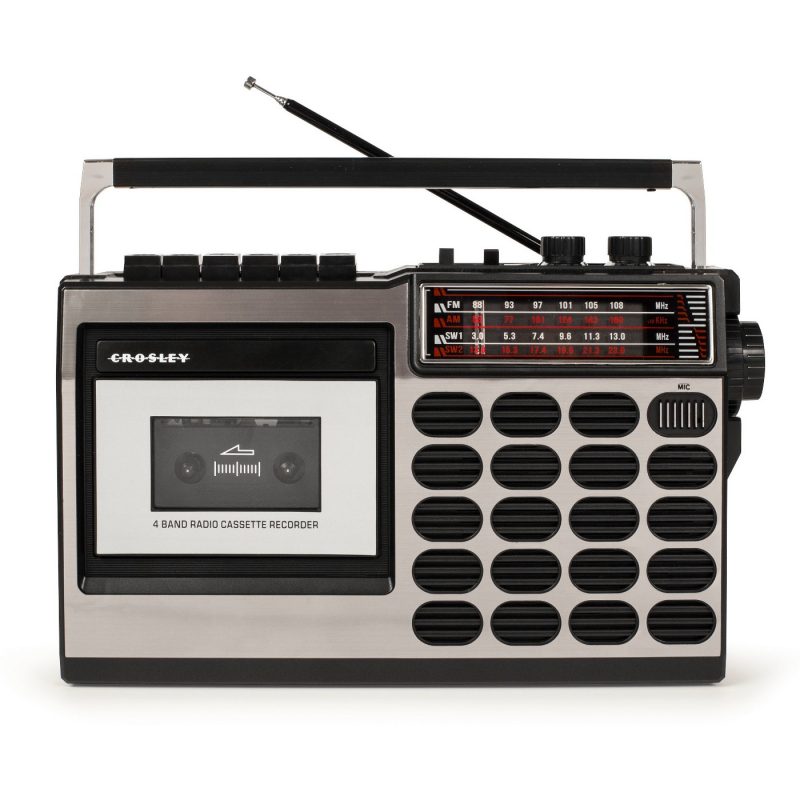
Crosley is bringing back the radio cassette portable

The Crosley CT100A

Many thanks to SWLing Post contributors Mike Hangen and Kim Elliott who share the following item from The Verge:

Crosley, the company best known for making those junky $100 turntables you can find at Target or Best Buy, is expanding into a different era of musical nostalgia: cassette decks, via TechCrunch.

The company is selling two tape decks. Both have the same basic specs for cheap hardware: there’s a single mono speaker, an AM/FM radio, an integrated mic, and a single-direction deck (so you’ll have to flip the tape yourself, just like the good old days). Odds are that you won’t get the best-sounding speaker, but that’s not really the point.

The $60 CT100 model can also get shortwave radio, and it adds some rather anachronistic support for playing music off SD cards and USB drives. The $70 CT200 skips those features but adds treble and bass dials and a VU meter, which looks cooler and thus commands a higher price.

Again, neither of these players are likely going to give you an audiophile-level experience. But if you’re looking for somewhere to play your retro Guardians of the Galaxy soundtrack cassette, they should work just fine.

Click here to read the full article at The Verge.

Amazon has both the Crosley CT100A and the CT200A–both are $52.77 shipped. I also see that Target has them online for $49.00 shipped. I find it interesting that Target doesn’t mention the shortwave bands in the basic item description–they simply list it as an AM/FM radio.

While I imagine these Crosley sets will have only mediocre shortwave reception, I bet they’ll sell a lot of them. Being so widely distributed, they’ll make for a unique gift or impulse buy.

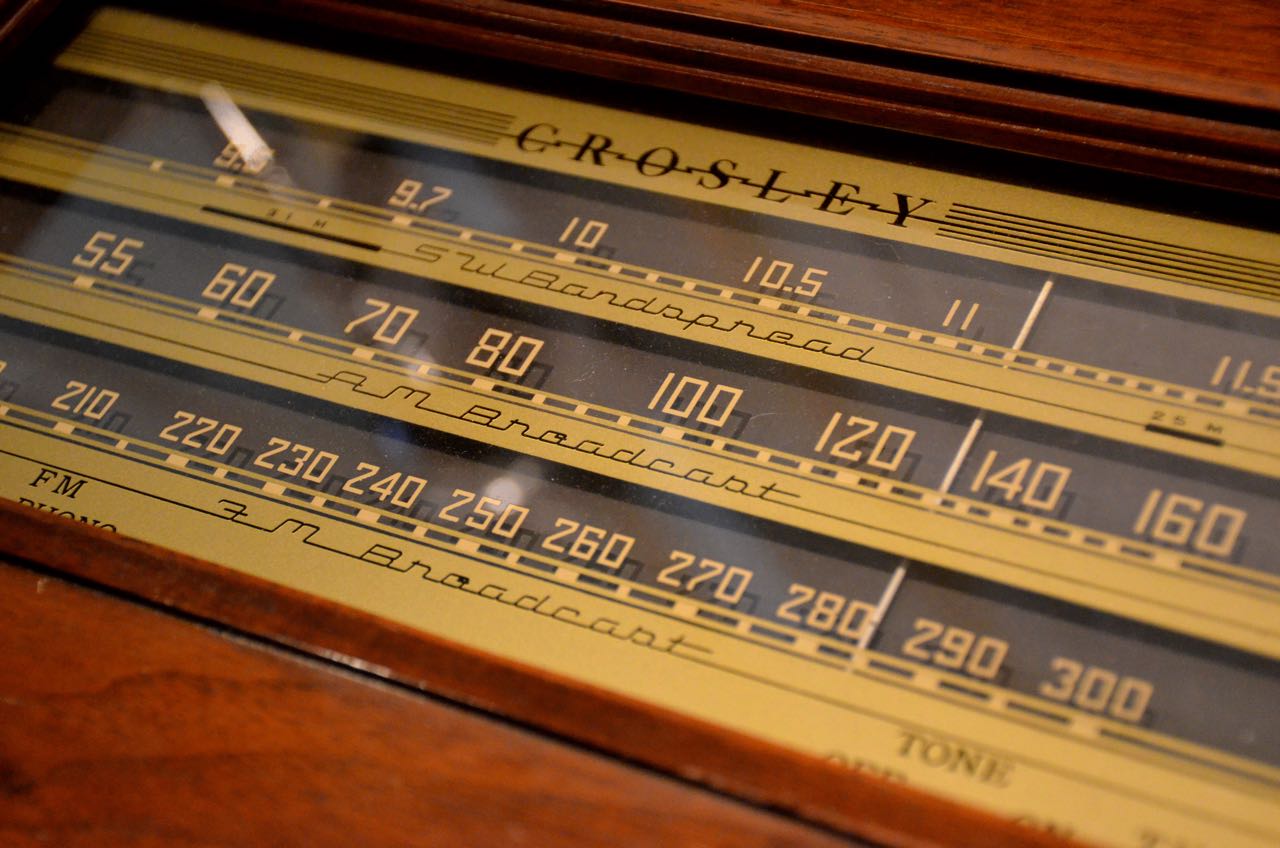
What’s really ironic is that those of us familiar with a little radio history know that Crosley was a giant in the radio business and produced some amazing sets (including this masterpiece).

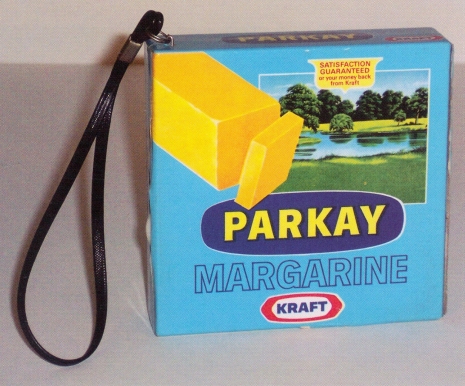
Interesting collection of novelty radios

Image source: Dangerousminds.net

Many thanks to SWLing Post contributor, Mike Addy, who shares a link to this large collection of novelty radios:

Click here to view on Dangerous Minds.

I recognize a couple of those radios, but there are so many promotional sets I had never seen before. Who would have thought of a canned Pineapple radio?  Love it!

Post readers: Do you have any interesting novelty radios?  Please comment!

Texas Standard explores the rich history of outlaw radio

Many thanks to SWLing Post contributor, Guy (KC5GOI), for sharing a link to the following (brilliant–!) radio feature from the Texas Standard:

Texas Standard For November 23, 2018

On this Black Friday, we explore how marketing created a legacy of pirates in the air over Texas – affecting music culture and politics. It’s a special edition of The Texas Standard.

With shopping season officially underway, we often think of hyper-commercialism as a creation of Madison Avenue. But one could make the case that America’s hype machine got its start along the border of Texas and Mexico, with a million watts of power leading to a revolution of outlaw broadcasters that’s still making a mark today.

You may have noticed that at the beginning of most of our programs, we say “no matter where you are, you’re on Texas Standard time.” How that came about it no accident. It’s a reference to something we haven’t touched on before here on The Standard – a callback to a time where no matter where you were, a particular sound with its roots along the Texas border, blanketed the country and changed the way we heard music, received distant messages and experienced media. It was outlaw radio – programming considered too dangerous for prime time. That’s the subject of today’s special edition of The Texas Standard:

– The Border Blasters’ Influence: how enormously powerful radio stations broadcasting from the border between the 1930s to the 70s, influenced musicians and music itself.

– Goat Glands And Freedom From The Law: Medical huckster and patent medicine seller J.R. Brinkley made his fortune selling his services via border radio.

– Selling Flour And Politics: In the 1930s, W. Lee “Pappy” O’Daniel used radio, and western swing pioneer, Bob Wills,  to market flour. Then, he used the same technique to run for Texas governor, and later senator. He won both those races. 

–  The British Get Invaded: In the middle of the swingin’ 60s, a group of Texas radio “blasters” used an old minesweeper to beam “Radio London” into England, subverting the BBC’s monopoly on the airwaves.

 Typewriter Rodeo: A Radio Dream.

–  Modern Pirates: The days of outlaw radio aren’t all in the past. The FCC has cracked down on those who run stations in defiance of the law, but broadcasters persist, especially in an era when the means of making radio are cheaper than ever.

Click here to listen to this feature at the Texas Standard or Soundcloud.

I should add that if you find the topic of border blasting fascinating, I encourage you to check out the book Charlatan: America’s Most Dangerous Huckster, the Man Who Pursued Him, and the Age of Flimflam which tells the story of Dr. John Brinkley and eventually (of course) blasting massive signals across the US/Mexico border.

Click here to view Charlatan on Amazon (affiliate link). 

On Thanksgiving, WPAQ will replay a 1948 Mount Airy H.S. Football Game

Many thanks to SWLing Post contributor, Kim Elliott, who shares this fascinating story from WBUR:

For the past 70 years, WPAQ out of Mount Airy, North Carolina — population 10,000 — has broadcast bluegrass and old-time string music.

But music isn’t all you’ll hear on WPAQ.

“If folks call in and say they’ve lost an animal or they’ve found an animal, we will be happy to announce that,” says Brack Llewellyn, a part-time announcer who’s worked on and off at the station since the ’80s.

[…]Kelly Epperson took over WPAQ from his father, Ralph Epperson, who died in 2006. A few weeks ago Kelly was digging around his father’s old office.

“My dad, he held onto everything — it drove my mom crazy,” Kelly says. “And actually in the corner, I saw a box that was sort of halfway open. And I kinda kicked at it a little bit — just to make sure there were no snakes around, ‘cause we have a lot of black snakes up here. But anyway — it was heavy. And I opened up the lid. There were some records in there. And I looked at the label and I couldn’t believe it. It said: ‘Mount Airy vs. Laurinburg. Football. Nov. 25, 1948.’ ”

It was the state championship game, held on Thanksgiving Day.

Kelly didn’t have the equipment at WPAQ to play the records — they’re old lacquer discs — but he took them to a woman who did.

[…]The 2018 Mount Airy Bears had a bye week coming up. There was a Friday night open on WPAQ’s calendar.

So on Sept. 28 at 7:30, when residents of Mount Airy, North Carolina, turned to 740 on their AM dials, they heard this.

“N.W. Quick — co-captain and right tackle of the Laurinburg Scots from Scotland County — the Fighting Scots they’re called — will be kicking off for Laurinburg on the 40-yard line.”

Kelly and Brack say they started hearing from listeners right away.

“We went about as viral as you can in this area with our broadcast,” Brack laughs.

“And I’m trying to concentrate — I was running the board — and I was getting all these messages,” Kelly says. “They were blowing up my phone. I couldn’t handle it. Saying, ‘This is unbelievable! I’m hearing my dad play. I never thought I could ever do this. My dad is playing a football game.’ “

Brack says he heard from one friend who grew up in Laurinburg and recognized the name of a player on the Scots roster.

“And the player whose name he heard grew up to be the doctor who delivered him,” Brack says.

[…]I’d tell you how the game ends, but I don’t want to spoil it — because you’re going to get another chance to listen. WPAQ is rebroadcasting the game one more time, this Thanksgiving Day at 2 p.m. ET.

“So who wants to watch the Detroit Lions when they can hear the 1948 North Carolina 1A State championship game?” Kelly laughs.

You can tune into WPAQ out of Mount Airy, North Carolina, via an online live stream. Click here to listen

Click here to stream WPAQ live on Thanksgiving Day (today at 2:00 EST).