Category Archives: Radio History

More 1968 recordings on the Shortwave Radio Audio Archive

IMG_0135I’ve now added a total of five recordings by David Firth, circa 1968, to the SW Radio Audio Archive. Click below for direct links:

Note that you can subscribe to the SW Radio Audio Archive as a podcast via iTunes or by using the following RSS feed: http://shortwavearchive.com/archive?format=rss

Eight new recordings in the Media Network Vintage Vault

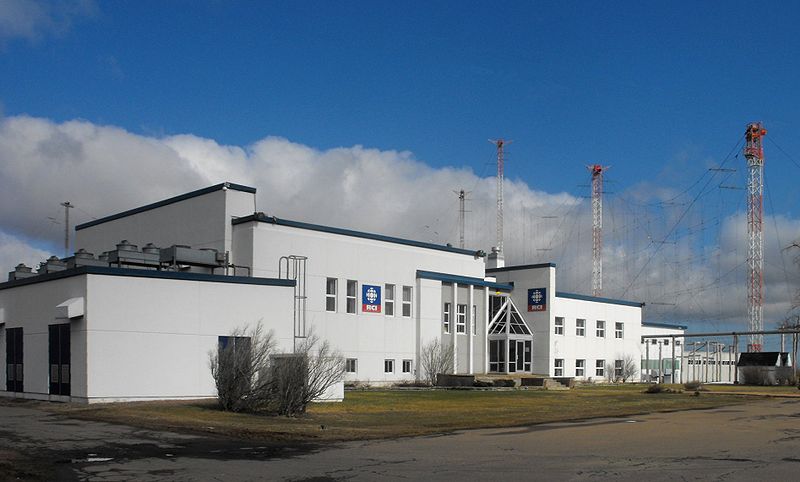
RNW headquarters in Hilversum, Netherlands (photo coutesty: RNW)

RNW’s former headquarters in Hilversum, Netherlands (photo: RNW)

Jonthan Marks has just informed me that he’s added new studio recordings  to the Media Network Vintage Vault.

They include:

Jonathan comments, “I think you might like the Radio New Zealand stuff. Sounds like it was recorded yesterday.”

The New Zealand Bellbird (Anthornis melanura) provides the interval signal for RNZI (Photo: Wikimedia Commons)

The New Zealand Bellbird (Anthornis melanura) provides the interval signal for RNZI (Photo: Wikimedia Commons)

Indeed it does!

To top it off, I’m still amazed RNZI is still on the air and pumping out an amazing signal into North America. Click here for a recording made only one week ago.

Having never heard a New Zealand Bellbird live, I was most impressed to hear how RNZI (in the 1950s!) modified the Bellbird’s call for the distinctive RNZI interval signal. Don’t want to give it away, though, listen for yourself.

Shortwave Radio Recordings: Voice of America, circa 1968

Willis Conover, The Voice of America (Source: Wikimedia Commons)

Many thanks to David Firth, who is kindly sharing shortwave radio recordings he made on reel-to-reel recording equipment in the late 1960s.

Firth is uncovering and digitizing these off air recordings as time allows and, thanks to his generosity, we will be posting these recordings on the Shortwave Radio Audio Archive.

The following is a recording of the Voice of America, which Firth recorded in 1968.

This seven minute recording will surely bring back memories with clips from VOA Jazz Hour (Willis Conover), the VOA Breakfast Show, and VOA Special English.

[Confession: the first time I heard this recording, the Willis Conover clip gave me chill bumps.]

Click here to download the recording as an MP3, or simply listen via the embedded player below:

Check out more recordings on the Shortwave Radio Audio Archive, also check out David Firth’s channel on YouTube.

Want to know more about Willis Conover? Check out David Goren’s podcast for Jazz At Lincoln Center.

WAMU Metro Connection visits the Mid-Atlantic Antique Radio Club

MAARC-ClubMany thanks to SWLing Post reader, Paul, who points out this episode of WAMU’s Metro Connection where reporter Rebecca Sheir visits the Mid-Atlantic Antique Radio Club (MAARC).

You can listen the report on Metro Connection, or simply click here to download the whole podcast (MAARC is the first piece).

Click here to check out the MAARC website.

The Amazing World of Short Wave Listening: Hallicrafters 45 RPM

(Source: WW2E on QRZ.com)

(Source: WW2E on QRZ.com)

SWLing Post reader, Michael Black, remembers the Hallicrafters 45 RPM promotional record in a comment:

All this talk of early listening, especially when it’s about the same period I joined in, reminds me of the Hallicrafter’s 45RPM record that was used as a promotional tool.  Send 25cents, get the record back, and hear what you could hear with a shortwave receiver.

I don’t think I ever had a copy.  But I did some searching, and it’s apparently available in multiple places on the internet.  I won’t add a link because I’m not sure which one would be most reliable.  But a search on “hallicrafter 45rpm” gave results.

One site pointed out that the average listener would not have been able to hear much of what was on the record.  But that too represents the image of the time.  My Hallicrafters S-120A had a horrible sliderule dial, but endless space to mark exotic places like “Antarctica” and things like “aeronautical mobile”.  The receiver was awful, you’d have a hard time hearing much other than the strongest of sw broadcast signals, but going into the hobby, some of that marketing was what made it exotic.  For those of us who were young at the time, it wasn’t just about this new world of shortwave, in some ways it was about “this new world” that was beyond our world that wasn’t much bigger than school.   Antarctica wasn’t just exotic because you might be able to hear it on shortwave, it was an exotic place to begin with.”

I took Michael’s advice and searched the term, “Hallicrafter 45RPM” and found this YouTube video. Enjoy:

Longwave Radio Recordings: WG2XFG

Brian Justin with his homebrew transmitter (Source: http://w4dex.com/500khz/wd2xsh31.htm)

Brian Justin with his homebrew transmitter (Source: http://w4dex.com/500khz/wd2xsh31.htm)

A few weeks ago, I posteded an article about Brian Justin’s holiday longwave broadcasts commemorating Reginald Fessenden’s Christmas Eve 1906 AM voice transmission.

I don’t spend a lot of time in the longwave portion of the radio spectrum, so this special event station gave me an excuse to venture a little lower on the radio dial.  Fortunately, LW propagation was in my favor, and Justin’s signal made it the 215 miles to my home. While it’s not armchair listening, it’s most impressive, especially considering the transmitter used is “home-brewed” with modest output power.

This recording of WG2XFG was made when the signal seemed to be at its strongest on December 26th, 2013 starting around 12:40 UTC (Christmas evening, EST). Click here to download the recording as an MP3, or simply listen via the embedded player below: