Category Archives: Radio History

Rare 1968 Radio Dzaoudzi QSL card fetches $158 at auction

Many thanks to SWLing Post contributor, Dan Robinson, who writes:

In recent years, a number of records have been set for QSL cards from former shortwave stations around the world. The latest example shows that there is still strong collector demand for one of the rarest stations on the air from Africa, Comoros Islands.

In this eBay auction, a classic photo QSL from the station at Moroni went for $158. That’s in the high end for QSL auctions — there have been higher, for example for QSLs from the former AFAN station at McMurdo, Antarctica, and for some other African and Asian cards.

This card shows the 90 meter band shortwave frequency for the station, 3,331 kHz which as veteran DX’ers who are still around recall could be heard with great difficulty from 0300 UTC when the station signed on for morning programming. The other frequency of 7,260 kHz was also heard, though the 90 meter frequency was the easiest for U.S. DX’ers.

– Dan Robinson

Wow! Thank you so much for sharing your insight, Dan. What a fascinating find!

RCI Sackville Antenna Farm Map and Legend

I’ve been going through some old paperwork recently and discovered this map of the antenna farm at Radio Canada International’s former Sackville, NB, transmitting site (click to enlarge):

I was given this printout by one of the staff members at Sackville when I visited there in the summer of 2012–only a few months before they closed, permanently.

I thought perhaps some others here in the SWLing Post community might enjoy checking out this map.

I do miss hearing RCI on the air. Hard to believe it’s almost been a decade.

1951 US Army Film: Independent Radio Station WMCA

Many thanks to SWLing Post contributor, Kris Partridge, who shares the following:

I belong to a FaceBook group “The Broadcasting Club” and [recently] there was posted a link to a YouTube video of a 70 year old 1951 US Army film called “The Independent Radio Station WMCA”. It’s worth a view to show what the thinking was 70 years ago:

From YouTube:

In 1951 the US Army made this film showing how an independent radio station operates. There was certainly a cold war propaganda motive for the US Army to produce this film, but today, when independent stations are a rarity, this film gives a detailed view of how a large market, independent radio station, WMCA New York, went about producing its programming and paying the bills in post war America.

If you enjoyed this video, consider becoming a member of the Antique Wireless Association at: https://antiquewireless.org/homepage/…

Subscribe to the Antique Wireless Museum channel and you’ll receive news of our latest video uploads.

Thank you so much for sharing this, Kris!

Free online lecture: “Aspidistra and the Broadcast Group of the Diplomatic Wireless Service”

Many thanks to SWLing Post contributor, Kris Partridge, who shares the following information about a free online lecture hosted by the The Institute of Engineering and Technology. This presentation will take place tomorrow (September 8, 2021 staring at 19:00 BST/18:00 UTC). You must register online to attend this lecture.

Here are the details from the IET website:


Aspidistra and the Broadcast Group of the Diplomatic Wireless Service including the wartime transmission of black propaganda.

The History of the Broadcast Group of the Diplomatic Wireless Service. The event starts at 19:00 BST on 8th September 2021

This is the story of Broadcast Group of the Diplomatic Wireless Service (DWS) which had its origins in the Political Warfare Executive (PWE) at the beginning of WW2. In 1972 it was amalgamated into the administrative structure of the Foreign and Commonwealth Office (FCO) and was renamed Communications Engineering Department (CED). The latter had two groups, Broadcast Group which was responsible for transmitters carrying many of the BBC’s World and Vernacular services, and Communications group which provided radio communications to embassies for diplomatic traffic. In 1986 CED’s Broadcast Group was taken over by the BBC.

In this illustrated talk we will learn first about the transmission of black propaganda and associated activities during WWII. Also such activities as trying to interfere with enemy rocket guidance systems. Then about the various Medium-Wave and Short-Wave transmitting stations of Broadcast Group with transmitter stations at Crowborough, Orfordness, Cyprus and the island of Masirah, a part of Oman. Transmitters ranged from 1?kW carrier power to 600 kW. Several of these were designed and manufactured in house. There will be many pictures and descriptions of the equipment and aerials used at these stations. Also covered will be an introduction to the progress of amplitude modulation techniques which enabled transmitters to become more compact.

So, what is Aspidistra? Please register to hear the story of Aspidistra and the Broadcast Group of the DWS with the engineering used to build and operate these stations.

About the Speaker

Roger Castle-Smith FIET

Mr Roger Castle-Smith FIET. Roger first became interested in radio when he joined the signals section of his school’s Combined Cadet force. This led to him gaining an amateur’s radio license at the age of 15, callsign G3IOT. Then on to the Royal Military Academy, Sandhurst, where he started an amateur station for the academy. Graduated into Royal Signals. Achieved a BSc(Eng) degree as an external degree from the University of London whilst at the Royal Military College of Science. Many of his army postings were of a technical nature. On retirement at the age of 37 he was made a MBE. Joined the Diplomatic Wireless Service then worked his way up to becoming Head of Broadcast Group in 1979 leading to Chief Engineer and Head of Communications Engineering Department (CED) in 1981. During his service a CBE followed his MBE. Retired age 66.


Click here to read more and to register for this event.

Kris also suggested this article and this article as a little background and worth reading prior to the lecture.

Thank you for the tip, Kris!

Radio Prague celebrates 85 years on the air

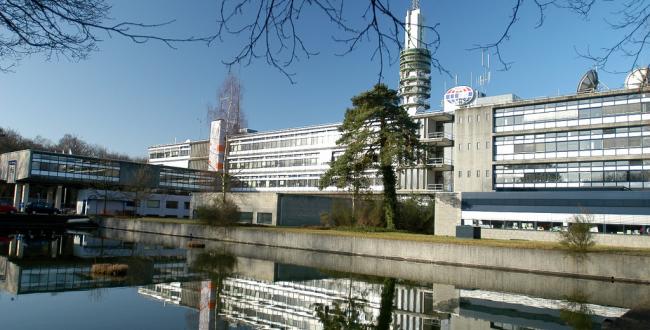
Many thanks to SWLing Post contributor, Jonathan Marks, who recommends this video tour of the Czech Radio Building from Radio Prague’s Facebook page.

Jonathan notes: “[The video os very] nicely done. It compliments episode 4 of the video I made with Olrich Cip”:

Many thanks for sharing this, Jonathan, and for documenting this important piece of our international broadcasting story.

Post readers: If you’d like more information about the 85th Anniversary of Radio Prague, check out this (and other) stories on the Radio Prague Website:

Radio Prague International celebrates 85 years on the airwaves

Although the origins of foreign language broadcasting on Czech Radio stretch as far back as 1926 – in the form of English and French lectures about Czechoslovakia – the birth of the foreign language service is traditionally dated to August 31, 1936, when the Technical Director of Czechoslovak Radio Eduard Svoboda officially announced the beginning of regular foreign language broadcasting.
Continue reading

Radio Waves: Radio Prague Special Broadcast, WNP Marks 100 Years, Ham Interference, and RTE on Longwave

Radio Waves:  Stories Making Waves in the World of Radio

Because I keep my ear to the waves, as well as receive many tips from others who do the same, I find myself privy to radio-related stories that might interest SWLing Post readers.  To that end: Welcome to the SWLing Post’s Radio Waves, a collection of links to interesting stories making waves in the world of radio. Enjoy!

Many thanks to SWLing Post contributors David Iurescia, Ronnie Smith, Troy Riedel, Jack Dully, and the Southgate ARC for the following tips:


Radio Prague asks, “Would you like to be featured on our broadcast?” (Radio Prague via Facebook)

Our 85th anniversary is coming up on August 31st! We’re celebrating the occasion with a special broadcast that day and would love to hear from you – our listeners. If you’d like to send us your greetings, please record a message and send an audio file via email (to [email protected]) or Facebook. Due to time constraints, your recording should be around 30 seconds long. Please include your first name, where you live, how long you’ve been listening, and what you like most about Radio Prague Int’l.

We look forward to hearing from you!

Sailing Vessel with Ham Radio History Marks 100 Years (ARRL News)

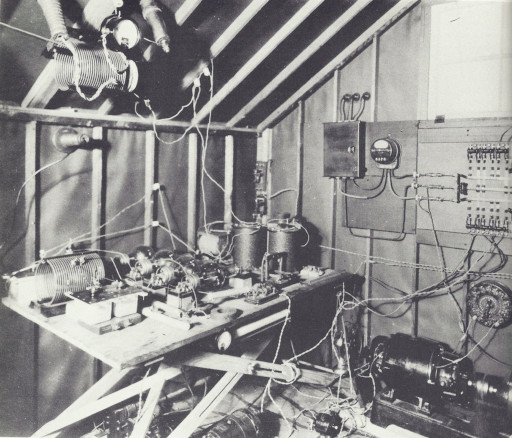
The schooner Bowdoin is a century old this year. Now owned by the Maine Maritime Academy (MMA) as a training vessel, the ham radio history of the 88-foot (LOA) Bowdoin is often neglected. Constructed in Maine specifically for Arctic exploration, the vessel relied on amateur radio for communication during explorer Donald B. MacMillan’s Arctic Expedition of 1923 and on the MacMillan-McDonald-Byrd Expedition of 1925 — thanks in part to ARRL co-founder Hiram Percy Maxim, W1AW. The venerable vessel, the official vessel of the State of Maine and the flagship of Maine Maritime Academy’s Vessel Operations and Technology Program, recently underwent a complete hull restoration and refitting and has done a little touring to mark its centenary. Its home port is Castine, Maine.

The longwave transmitters MacMillan used on his earlier missions had proved “unable to penetrate the screen of the aurora borealis,” then-ARRL historian Michael Marinaro, WN1M (SK), explained in his article, “Polar Exploration,” from the June 2014 issue of QST. In 1923, MacMillan turned to ARRL for help in outfitting his next expedition with better wireless gear. Marinaro recounted, “It was enthusiastically provided.” Maxim and the ARRL Board recruited Donald H. Mix, 1TS, of Bristol, Connecticut, to accompany the crew as its radio operator.

M.B. West, an ARRL Board member, designed the gear, which was then built by amateurs at his firm, Zenith Electronics. The transmitter operated on the medium-wave bands of 185, 220, and 300 meters, running 100 W to a pair of Western Electric “G” tubes. Earlier exploratory missions had used gear that operated on longwave frequencies. The shipboard station on board the Bowdoin was given the call sign WNP — Wireless North Pole. [Continue reading…]

The Machines That Built America (History Channel)

In 1893, sending information across America is a time-consuming process. Letters travel slowly by land, and those who can afford it, send telegrams along a limited network of fixed wires. But two rival inventors have the same idea for improving things: wireless communication. Nikola Tesla is one of the most famous and successful thinkers of his day, single-handedly changing the way electricity is supplied and generated. Guglielmo Marconi is a young, uneducated Italian inventor who ignores scientific consensus and goes with his gut. Both want to rid the world of wires and send messages through the air. With millions of dollars on the line, the two men battle to dominate the new market and bring radio to the masses. [Click here to view episode on the History Channel.]

Woman fights to have ham radio operations banned after potential interference with insulin pump (WFTV)

MARION COUNTY, Fla. — A Marion County woman is taking on her neighborhood association, in a matter she said puts her health at risk.

Michelle Smith, a Type 1 Diabetic, and a consultant determined that her neighbor’s ham radio hobby might have interfered with the doses of insulin being pushed out from her pump.

The 55+ community where she lives hired that consultant and told the neighbor to shut down his amateur radio station.

But a copy of the community’s rules shows a change was put in place that could pave the way for other similar antennas to be installed.

9 Investigates learned that Smith’s complaint went all the way to the state level.

She wants the Florida Commission on Human Relations to make a determination whether the community’s board and management is doing enough to protect her and others with medical devices.[]

RTE on long wave 252 kHz back on air (Southgate ARC)

RTE carried out essential maintenance of the Long Wave transmitter in Clarkstown, Co. Meath for two months during which period RTE Radio 1 was not available on 252 kHz.

This essential maintenance of the transmitter was due to be carried out in 2020, but was postponed due to Covid-19 restrictions. For the health and safety of those carrying out the works, the transmitter had to be switched off for the works period. Any overhaul has to be completed during the summer months when there is good light and weather conditions.

Transmissions commenced once again last Monday with an output of 500 kiloWatt during daytime and 100 kiloWatt at nighttime.

During this shutdown, one could receive Radio Algeria transmitting on the same frequency with 1.5 megaWatt during the day and 750 kiloWatt at night, broadcasting a varied program.


Do you enjoy the SWLing Post?

Please consider supporting us via Patreon or our Coffee Fund!

Your support makes articles like this one possible. Thank you!

Radio Waves: Radio Hats, FCC Fees in 2022, Ham Saves Friend’s Life, and Monitoring the fall of the Afghan Government

Radio Waves:  Stories Making Waves in the World of Radio

Because I keep my ear to the waves, as well as receive many tips from others who do the same, I find myself privy to radio-related stories that might interest SWLing Post readers.  To that end: Welcome to the SWLing Post’s Radio Waves, a collection of links to interesting stories making waves in the world of radio. Enjoy!


The story of the Radio Hat, 1949 (Rare Historical Photos)

In 1949, Victor Hoeflich held a press conference to introduce the “Man from Mars, Radio Hat”. Hoeflich knew a picture would tell the story so he had several teenagers modeling the radio hats for the reporters and photographers. Soon pictures and news stories appeared in newspapers coast to coast. The articles typically included a photo of a young lady wearing the hat and a six-paragraph story.

Although the radio hat had a futuristic appearance at the time, this was in fact due to technical limitations. While the transistor had been invented in 1947, it was still experimental and not widely available. The hat’s radio relied on vacuum tube technology, and Hoeflich made the tubes a prominent feature, as well as the loop aerial. The tuning knob sat between the two valves. The battery was carried in the user’s pocket.

Continue reading