Shortwave listening and everything radio including reviews, broadcasting, ham radio, field operation, DXing, maker kits, travel, emergency gear, events, and more
Many thanks to SWLing Post contributor David Iurescia who shares the following article from Radio Bulgaria–a retrospective that traces the history of the English Service of Bulgarian National Radio, marking nine decades of international broadcasting that brought Bulgaria’s news, culture, and music to listeners around the world.
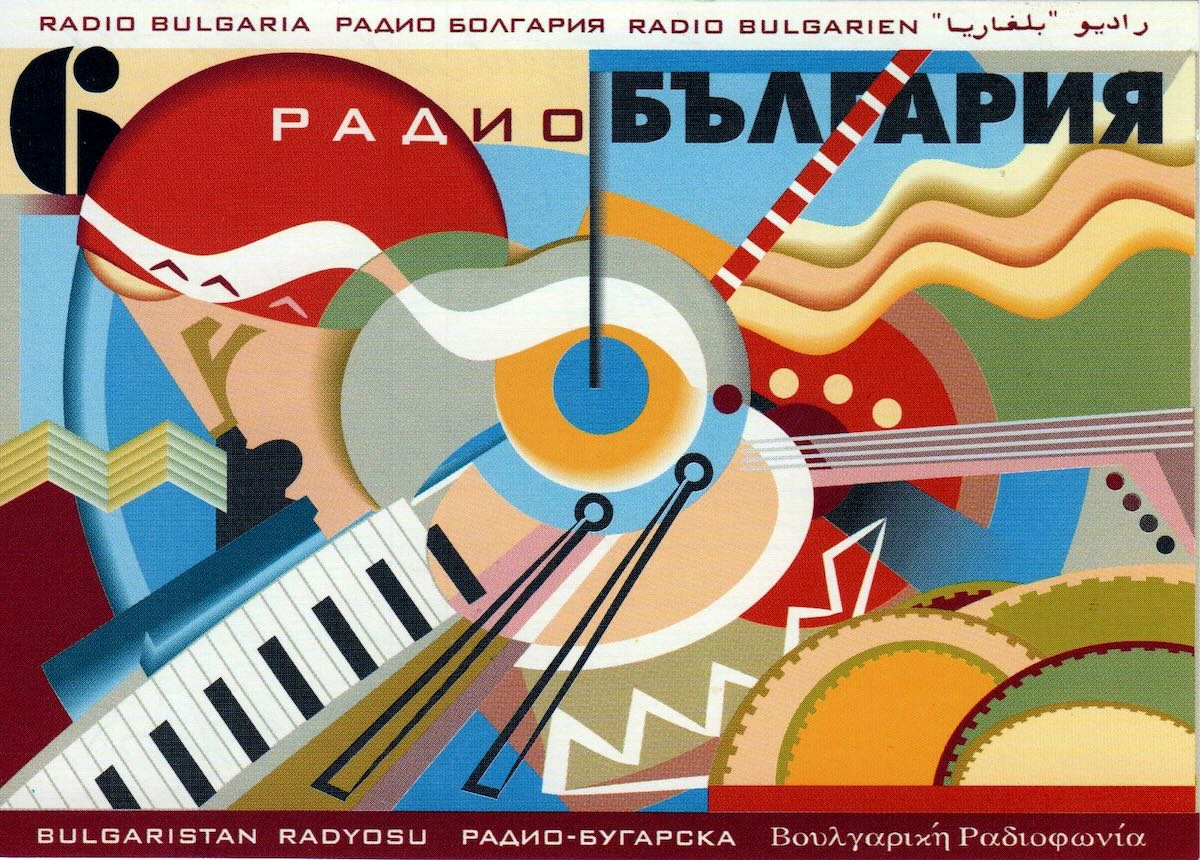
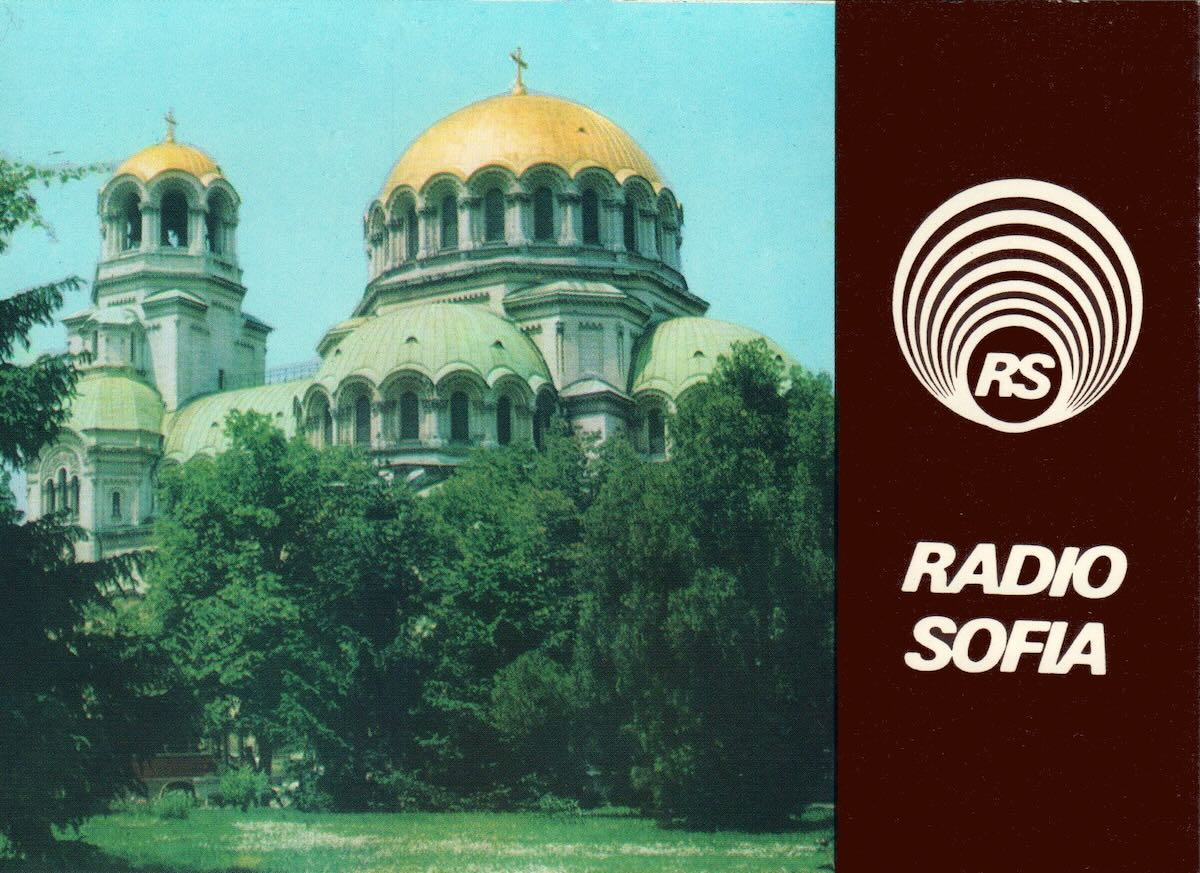
Many thanks to SWLing Post contributor Paul Jamet, who shares the following update and QSL card images related to Bulgarian National Radio (BNR) and Radio Bulgaria.
As Radio Bulgaria looks ahead to its 90th anniversary in 2026, Bulgarian National Radio has announced a new commemorative QSL card series for listeners who submit reception reports. The series will include 12 different QSL cards, each highlighting a key moment from the history of BNR and the Radio Bulgaria service. According to BNR, a new card will be released each month, along with a short publication explaining the historical background behind the featured image.
Paul also points to a broader retrospective titled “BNR at 90 – A Story of Pride and No Prejudice,” which looks back on nine decades of Bulgarian National Radio. The piece reflects on BNR’s history through periods of political change and technological transition, while underscoring the role of public broadcasting in preserving culture and maintaining a connection with international audiences.
Attached at the top and bottom of this post are two QSL cards from Paul’s own collection.
Many thanks again to Paul for sharing both the news and the QSL images!
Many thanks to SWLing Post contributor Dan Greenall, who writes:
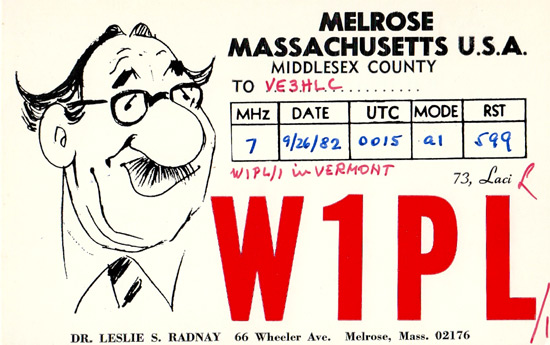
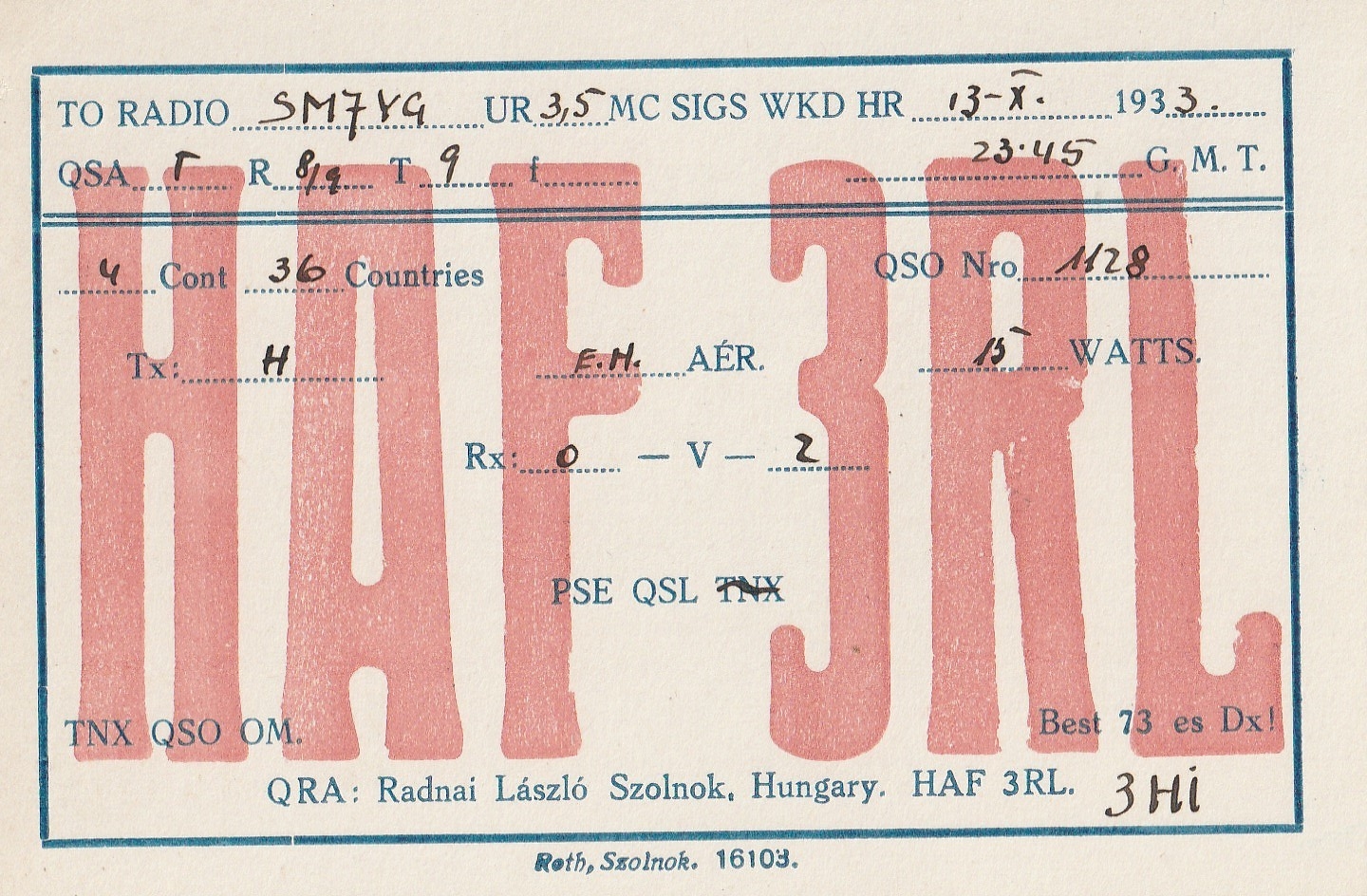
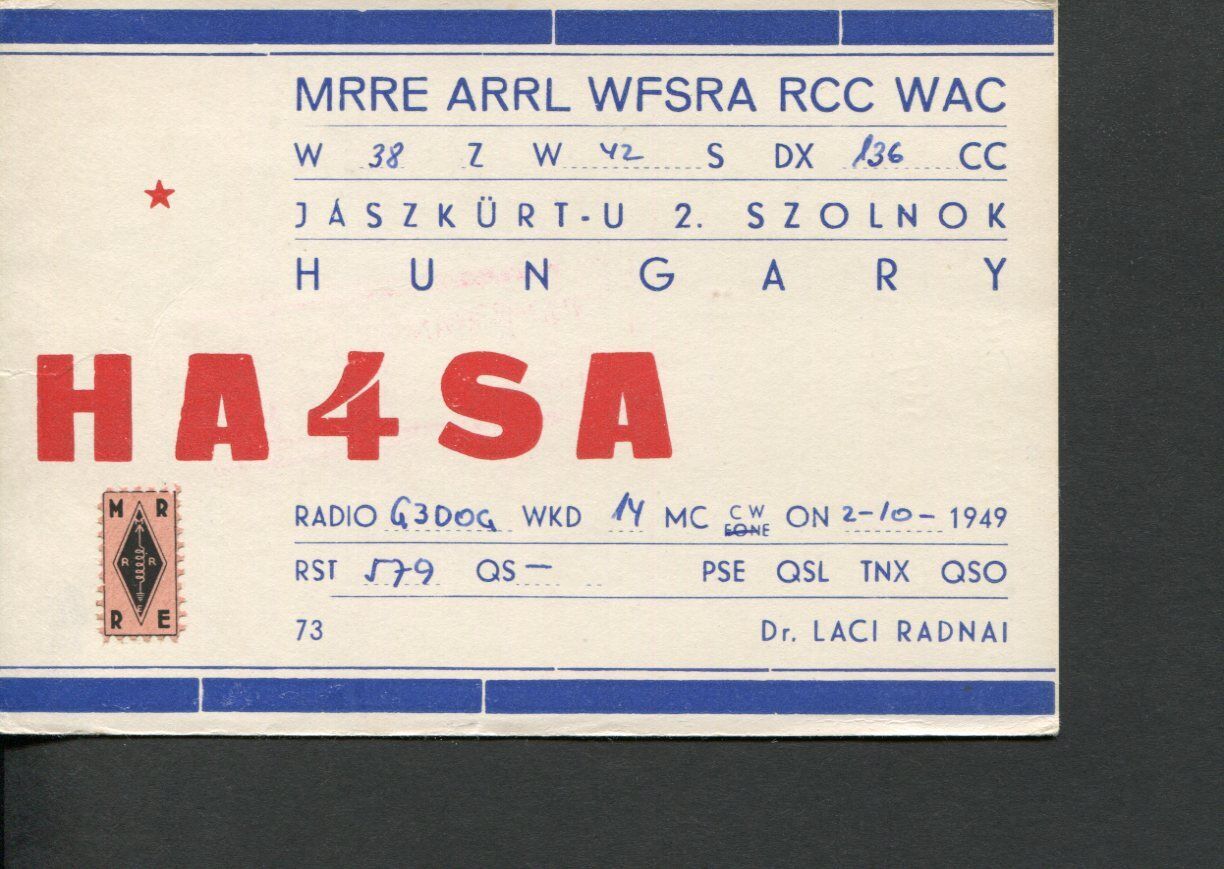
I know many of your readers are amateur radio operators and have a passion for all things radio. A couple of years ago, I was sorting through some of my old ham QSL’s and this one from W1PL caught my eye. A quick internet check confirmed he was indeed a silent key, however, I also uncovered his incredible story which I thought I would share here. Truly a remarkable individual.
Dr. Leslie (Laci) Radnay, W1PL
Dr. Leslie (Laci) Radnay, W1PL (1912-2008), is a story of how perseverance, determination, and the love of radio got him through the most challenging of circumstances imaginable, time and time again. In fact, it is truly the stuff that Hollywood movies are made of.
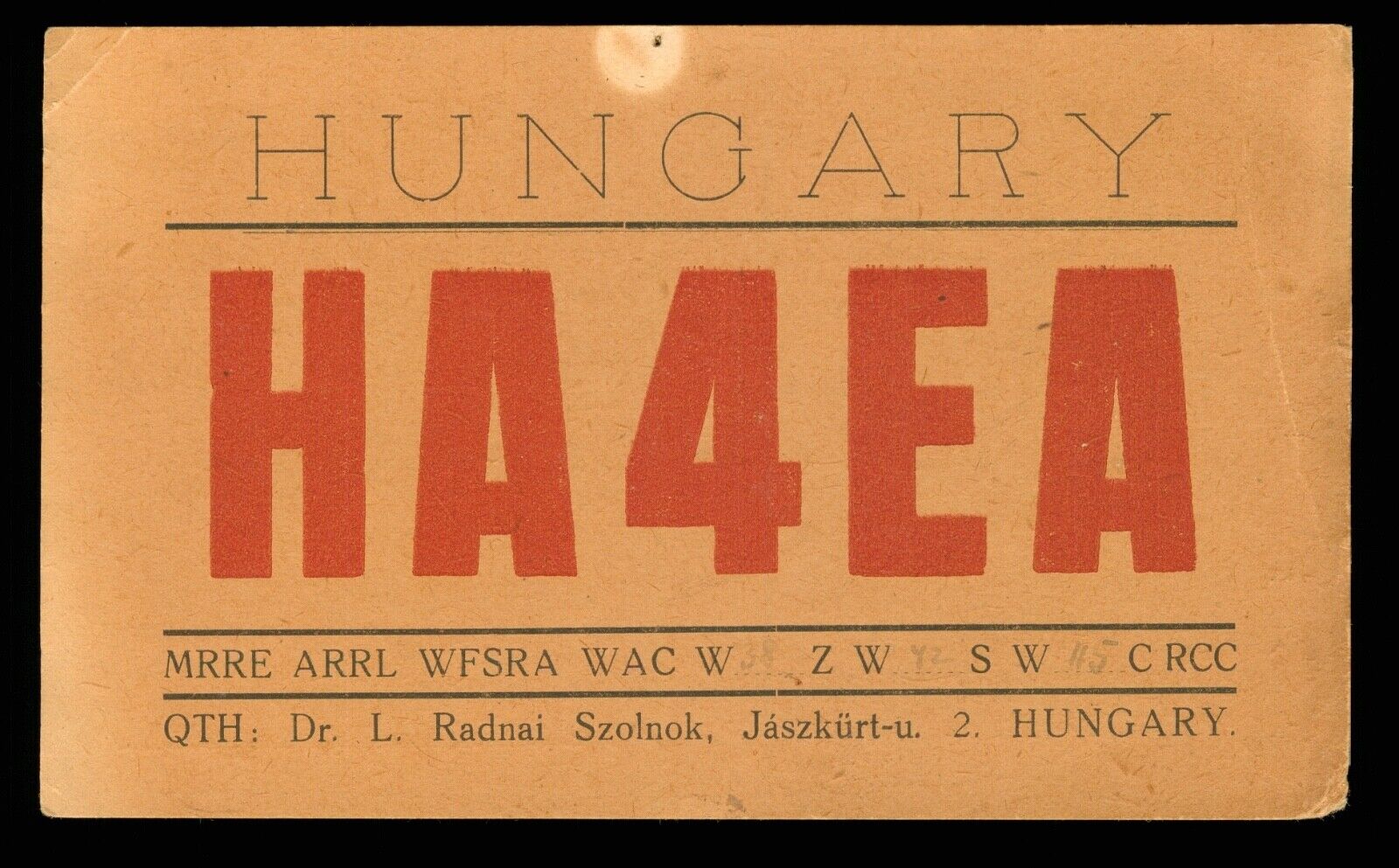
In spite of all of this, he was never too busy to help others. Certainly someone to look up to and admire for what he was able to accomplish, and I feel privileged to have had even just a brief contest-style QSO with him. He was instrumental in helping to start the Hungarian Radio Amateur Association and got on the air with a self-assigned callsign in 1928.
Attached are images of a number of QSL cards he issued over the years.
Thank you, Dan, for sharing.
Reading through Laci Radnay’s life story, I’m struck not only by the sheer scale of what he endured, but by how completely radio remained a constant thread throughout it all. Time and again, regimes changed, borders closed, equipment was confiscated, and lives were upended—yet radio, and the community surrounding it, always found a way back into his life.
W1PL’s story is a powerful reminder that amateur radio is far more than a technical pursuit; it is a human one. It builds resilience, forges lifelong friendships across borders, and, in Laci’s case, provided continuity, purpose, and connection through some of the darkest chapters of the 20th century.
I’m deeply grateful to Dan for sharing this remarkable story, and honored to help preserve the memory of an operator whose life so beautifully embodied the very best of our radio community. -Thomas
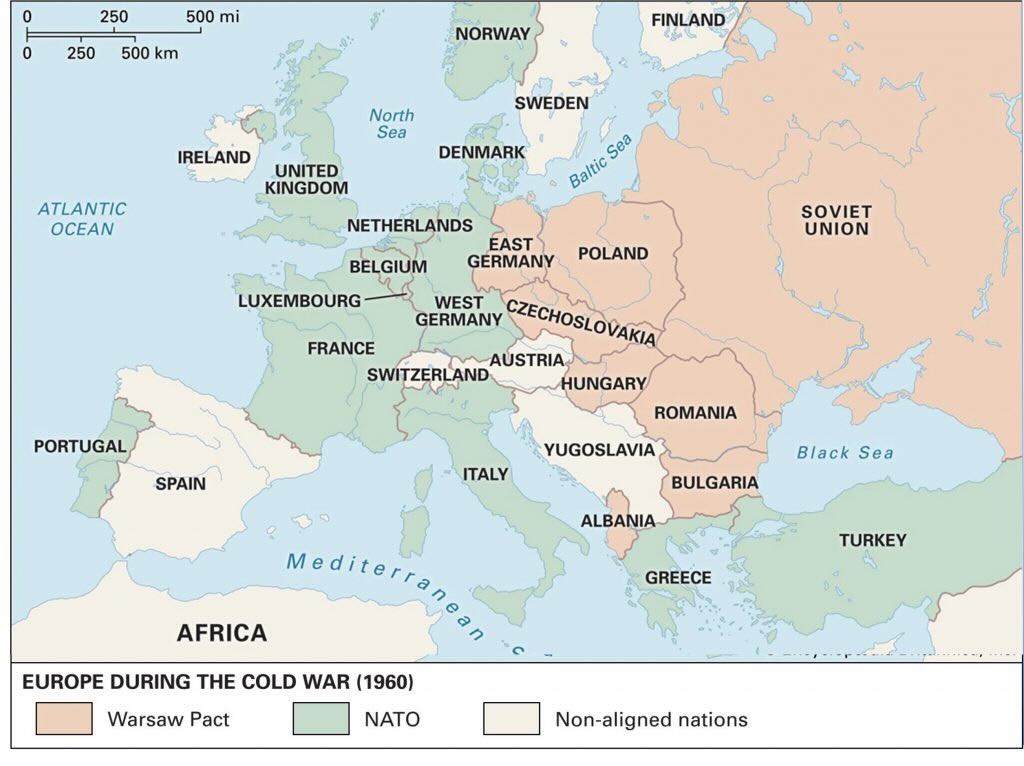
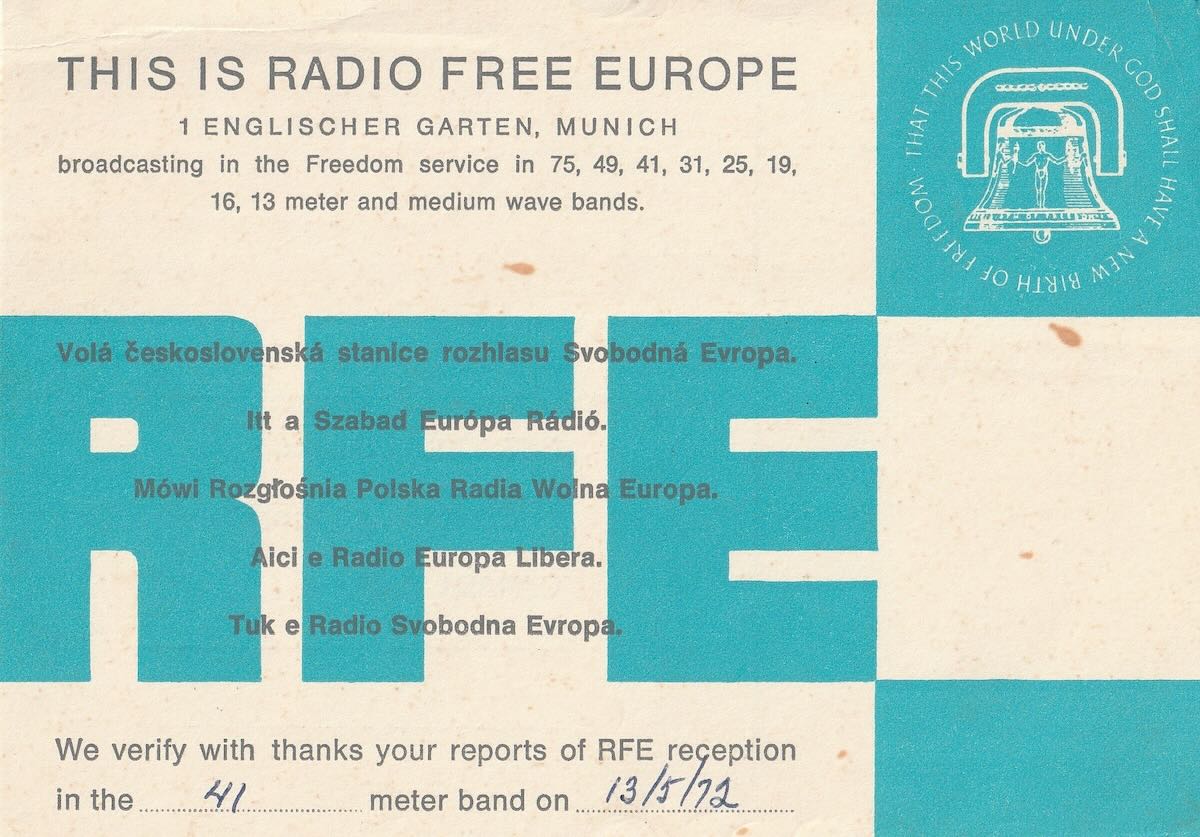
During the Cold War years, many different signals could be found on shortwave that cannot be heard today. For example, there were two Germanys, several broadcasters from the USSR not including Radio Moscow, Radio Free Europe and others.
I have uploaded audio clips of these stations and others to the InternetArchive.
If you were adventurous like me, willing to tune outside of the regular assigned broadcast bands, and flip the BFO switch “on”, stations with odd sounding names like Giant Step, Sky King, Fanfare or Ivanhoe could sometimes be heard. These were typically tactical calls used by the U.S. military.
I recently dusted off an old 3-ring binder to look up what were some of the tactical callsigns that I was able to log from my southern Ontario listening post. They included Missionary, Toreador, Democrat, Retail, and Capsule.
My old recordings of stations “Pawnee” and “Fanfare” can be found on the Internet Archive here:
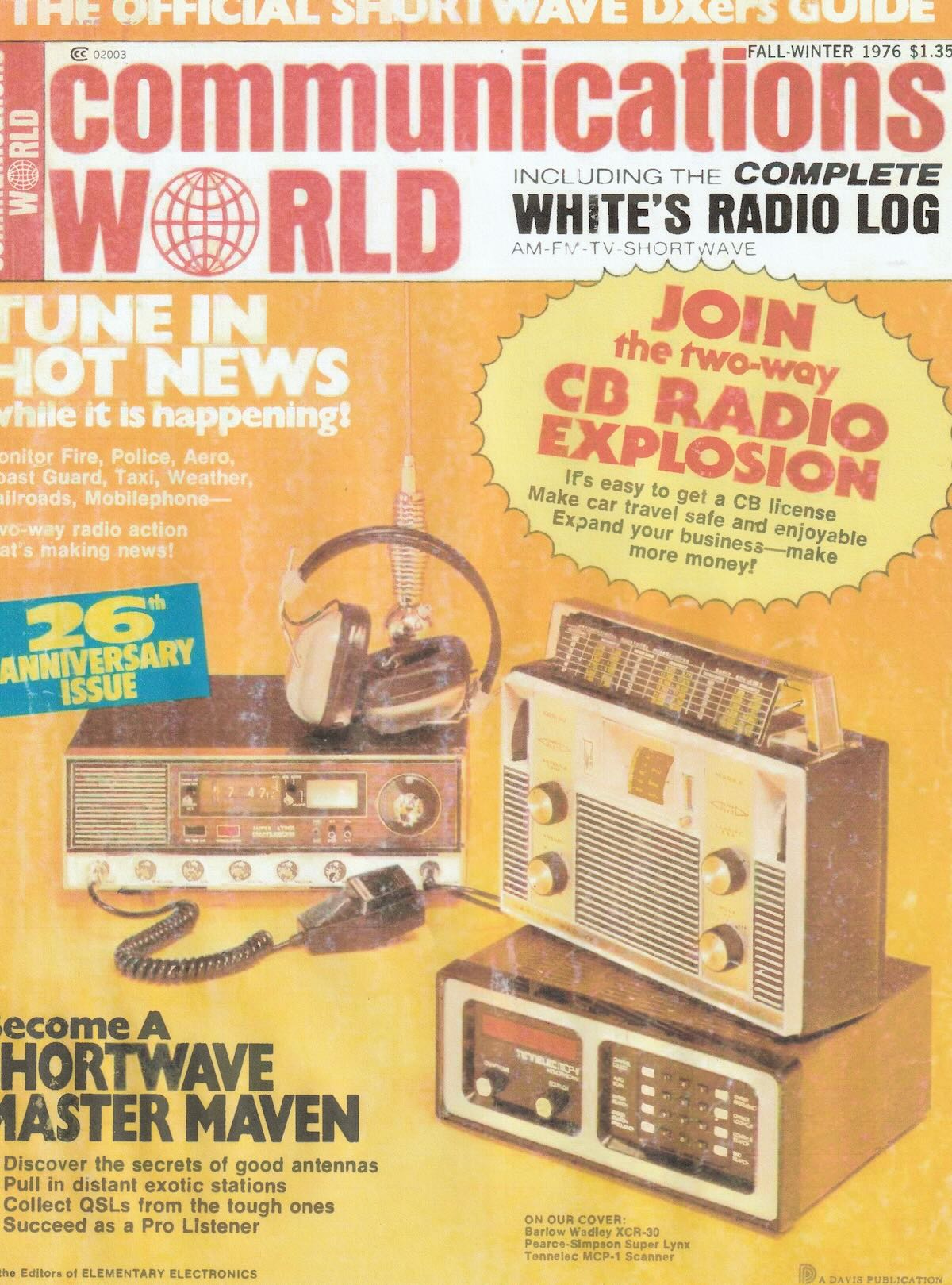
Information about these stations was hard to find, however, radio hobby magazines and SW club monthly bulletins were a good place to look. I have reprinted (below) some related material from Communications World magazine, which ran from 1971 to 1981.
If you would like to browse through all of their publications, follow this link:
“The Navy also has its point-to-pointers, including NSS, Washington D.C.; NPM, Pearl Harbor, Hawaii; and NPG, San Francisco. Overseas there are Navy stations in many locations, such as Naples, Italy (NNI), Londonderry, Northern Ireland (NST), Roosevelt Roads, Puerto Rico (NRR), San Miguel, Philippines (NPO), and elsewhere. Some military stations use tactical call names, rather than call letters, which makes the DXer’s hopes of identifying them rather slim. For security reasons these stations identify with names such as Overland, Kingfisher and the like. These call names are changed frequently and seldom is the hobby listener able to figure out just where the station he’s hearing is located. Some of these identifiers have been used so consistently, over the years. that DXers have managed to figure out their real identities. Toreador, for instance, is a name used by Navy Operational Radio, San Francisco; Pacific Radio is at Pearl Harbor; Ivanhoe is the U.S. Naval Communications Station, Norfolk, Virginia; and a whole series of stations using the code name Raspberry (as in Raspberry Jax, located at the Naval Air Station, Jacksonville”
CW Spring-Summer 1975 page 36
“SWLs will soon note that the armed forces don’t always use call letters. Instead, tactical call signs may be used to identify the station. You might, for instance, hear a station calling itself Ivanhoe or Capsule. Looking Glass or Migraine. Some tactical calls are changed frequently, others are used year after year and, as a result, no longer pose identification problems for the utility SWL. “Ivanhoe” is the identifier used by the Navy’s important Norfolk, VA base. Navy installations in Morocco. Iceland and Spain identify as “Fanfare,” “Port Call,” and “Pawnee,” respectively. The U.S. Air Force’s Strategic Air Command (SAC) has for years maintained a regular airborne alert. It is no military secret that at any time, day or night, SAC has jumbo bombers aloft—supposedly loaded with nuclear armaments—in readiness to retaliate should this country ever come under attack from an enemy. Clearly it is essential that these planes keep in continuous contact with ground command stations. Shortwave radio is one of the means employed. This SAC radio network is known as Sky King. Coded communications pass between SAC bases and the jets probably several times each hour. SWLs who stumble on these transmissions will hear, as part of the routine radio traffic, authenticator codes, usually two phonetic letters such as “Alfa-Tango.” The purpose of these codes is to assure plane commanders that the rest of the message is genuine. Various Air Force bases identify themselves in radio communications either by base name, such as “Hickam” (Hawaii’s Hickam Air Force Base), or by tactical calls. “Democrat” is used by March AFB, CA, and “Retail” is the call of Barksdale AFB, LA. SAC also has a flying command post, a back-up measure that supposedly would take command of SAC forces should “a nuclear attack wipe out the headquarters at Offutt AFB, NE. The command post in the sky uses the tactical call “Looking Glass.” Some SAC frequencies to watch are 6,762, 9,027, 11,220, 13,245, 14,744 and 17,875 kHz. There are other Air Force frequencies to watch for plane-to-ground. and vice versa, transmissions. Among them are 6,738, 8,764, 8,988, 9,020, 11,200. 13,201 and 17,993 kHz. “Raspberry” is a network tactical call used by naval air stations. “Raspberry Miramar” is the station at Miramar NAS, CA, and “Raspberry Jax” is Jacksonville, NASFL. You can find naval air communications in the 6.7, 8.7, 8.9, 11.2, 13.2 and 15.0 MHz frequency areas.”
CW (Fall-Winter 1976) pages 19-20
“The list of tactical calls is as long as your arm and most DXers find it very tough to connect a certain call with a particular service or military base. But here is a partial list of calls used by Air Force, Navy and a few Army operations. (Bergstrom AFB, TX), “Condor” (land mobile units), “Raymond 6” (George AFB, CA), “Raymond 24” (Little Rock AFB, 4LR). Pacific Missile Firing Range Network: “Plead Control” (Pt. Mugu, CA), “Outrider Control” (Barking Sands, HI). Strategic Air Command: “Skyking” (general call for airborne aircraft), “Outway” (Offutt AFB, NE), “Retail” (Barksdale AFB, LA), “Democrat” (March AFB, CA). Other Air Force “tacticals”: “Beaver Operations” (Ellsworth AFB, SD), “Letterman” (Hickam AFB, HI), “Hornpipe” (Cannon AFB, NM), Air Force Tactical Air Command: “Mainsail” (general call), “Fireside 1” (Langley AFB, VA), “Fireside 5” “Glucose” (Seymour -Johnson AFB, NC), “Lactose” (Shaw AFB, NC), “Fertile” (Homestead AFB, FL), “Acrobat” (Andrews AFB, MD), “Ringmaster” (NORAD Hq, Cheyenne Mt., CO), “Gull Monitor” (Keesler AFB, MS), “Format” (McGuire AFB, NJ). Navy Atlantic Command: “Ivanhoe” (Norfolk, VA), “Hampshire” (Ft. Allen, Puerto Rico), “Sheriff” (Bermuda) “Phenomenon” (Jacksonville, FL). Navy Pacific Command: “Butterfield” (San Diego, CA), “Dunkirk” (Honolulu) Other Navy “tacticals”: “Climax” (USS Enterprise), “Eagle Cliff” (USS .John F. Kennedy), “Jitterbug” (Balboa, Canal Zone), “Artesia” (Keflavik, Iceland) “Orange Juice” (Guam), “Missionary” (Norfolk, VA), “Top – hand” (Chief of Naval Operations), “T – Bone” (Adak, AK), “Sleepy Hollow” (Cutler, ME). Army “tacticals”: “Agitator” (Ft. Bliss, TX), “Civil Genius” (Ft. Huachuca AZ), “Popeye” (Ft. Bragg, NC), “Avon Studio” (Ohio National Guard), “Contact Tippic” (Indiana National Guard), “Flame Ivory” (Pennsylvania National Guard).”
I wonder if anyone else recalls hearing these? Please comment!
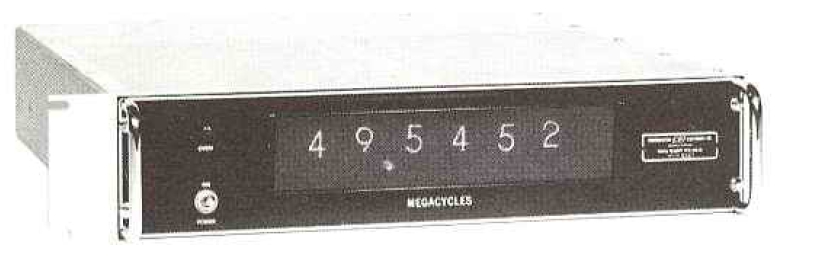
In the late ‘60s, I worked as a mechanical assembler at Communications, Electronics Inc. (CEI) in Rockville, Maryland (acquired by Watkins-Johnson Company). We produced military-grade receivers, mainly for the military (whom else?). These covered the spectrum from VLF through microwave. It was the early days of electronic digital readouts. There were no LEDs or LCDs. Instead, some of our models featured the Numeric Indicator eXperimental, or “nixie” tubes. These were glass tubes filled with low-pressure neon/argon gas, featuring stacked wire cathodes shaped like numerals (0-9) and a mesh anode. An analog-to-digital circuit encoded the frequency to illuminate the correct digits.
Below is shown a DRO-50 Digital Readout from the 1968 CEI catalog. It contained 6 nixie tubes for the frequency display, and the unit had an accuracy of ±100 Hz. Interestingly, this frequency display was designed specifically for the Hammarlund SP-600 Receivers (R-274A/FRR (Army), R-274B/FRR (Navy)). I never saw a DRO-50 come across our line and suspect it may not have gone beyond the prototype. About that time, the SP-600s were ending their military service, so there wasn’t much of a market for upgrades. It would still be a few years before I owned an SP-600 of my own, but how would I love to have one fitted with a DRO-50.
What I had instead of nixie tubes were variable capacitors or inductors, which changed the tuned frequency through a kluge of pulleys and strings, all these hidden behind a Raymond-Loewy-designed bezel and operated by the tuning knob.
What was visible on the front of the radio was an irregular representation of frequencies covering the tuning range of the radio, in other words, the dial. As you rotated the tuning knob, you set the whole tuning mechanism in motion. Signals were progressively tuned, processed, and reported through the speaker or headset as you advanced higher or lower.
Somehow the frequencies never quite agreed with the numbers or divisions on the dial. It could be that the circuits inside the radio were out of alignment. Just as likely, the design of the dial was determined using a preproduction prototype which could not possibly account for the tolerances of the components used on the assembly line.
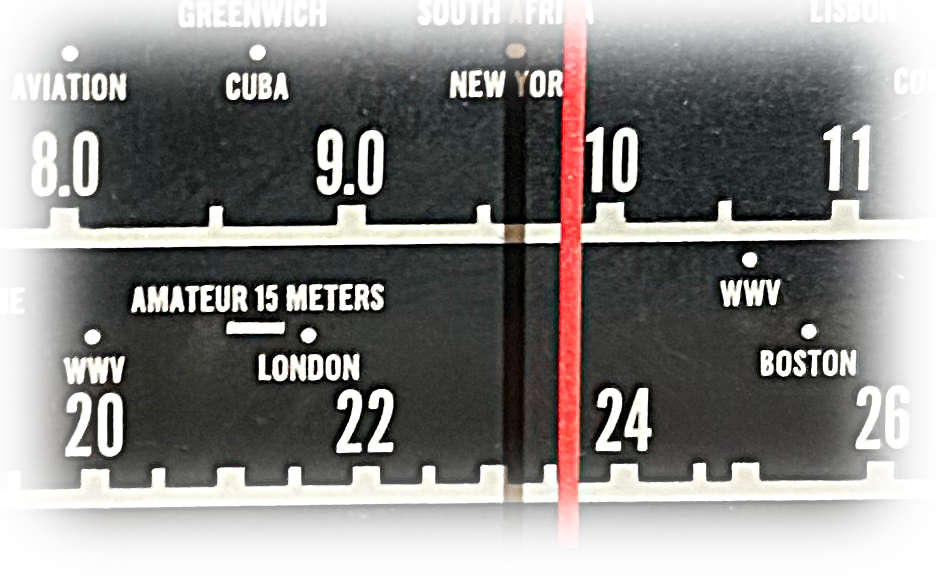
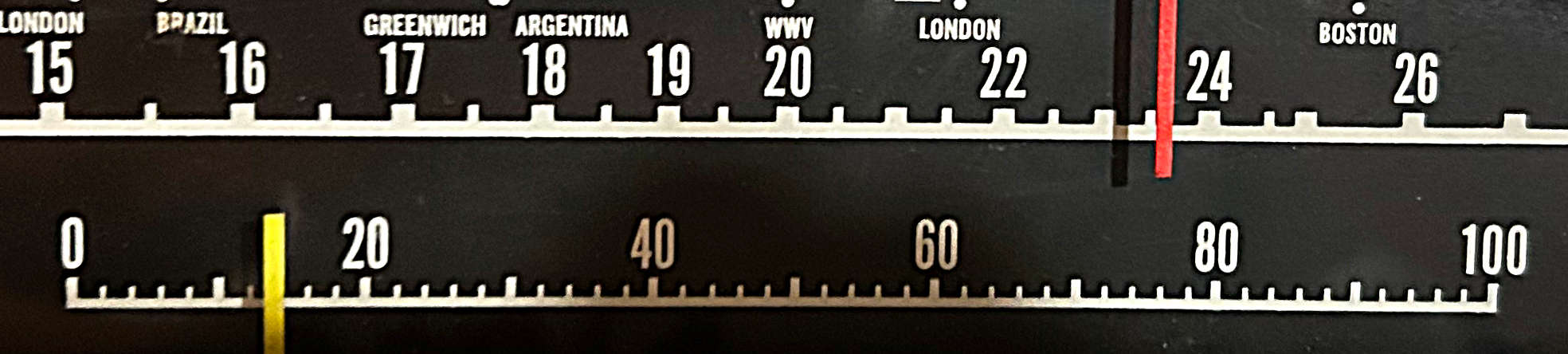
Consider the figure at the beginning of this posting. It is a portion of the dial on a Hallicrafters S-38E – magnified somewhat. The full dial on the E model was big and bright. It extended across the front panel of the radio and presented frequency readout about as well as was possible. Nevertheless, there were real shortcomings.
The figure is not only typical if communication receivers of the time but also living room console radios of an earlier period. Take the 31-meter band as an example. Broadcast stations were bunched roughly between 9400 kHz and 9800 kHz. At 5-kHz channel spacing, this resulted in roughly 80 channels. Of course, not all were in use at any given time, but still a smidgeon turn of the knob could traverse two or three stations.
This situation was relieved somewhat on communication receivers by the addition of a bandspread – a separate tuning mechanism which could effectively magnify a small portion of the main dial. The idea was to place the main tuning dial at the high end of the desired band and the bandspread at 0. Then, by tuning the bandspread toward the other end, lower frequencies could be tuned with greater separation.
Since the bandspread could be used at any place within the tuning range of the radio, a separate dial became a problem, so it was usually annotated with a simple logging scale incremented linearly from 0 to 100. Thus, one had to compile a log-to-frequency conversion table or graph to interpret the frequency. More sophisticated receivers could display the 80- through 10-meter ham bands on the bandspread dials.
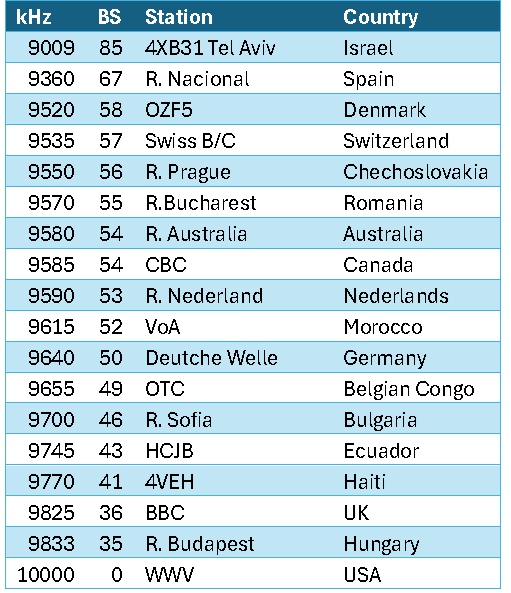
As an example, I located some notes made in 1959 using the S-38E. The table shows the frequency, bandspread reading, station and country. Thirty-one meters was an easy match for the bandspread, as WWV on 10000 kHz was a steady marker which you could use to calibrate the bandspread with the main tuning. For all practical purposes, the band was bounded by the Voice of Spain on 9360 kHz and R. Budapest on 9833 kHz. For many years, Tel Aviv was an outlier on 9009 kHz.
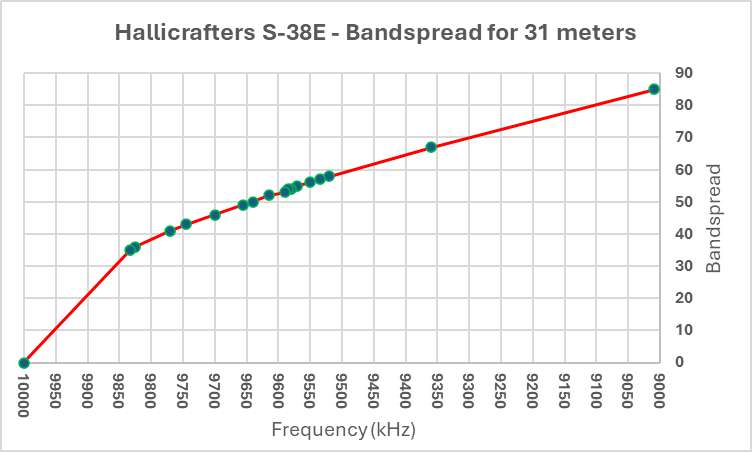
Alternately, one could construct a graph as shown below. Unfortunately, most inexpensive radios did not produce linear tuning, so you couldn’t simply draw a straight line between two points on a graph and expect to interpolate the intermediate frequencies with accuracy. Instead, graphs were constructed laboriously by hand adding intermediate points for known frequencies. The figure shows the resulting parabolic function where the slope is greater on higher frequencies and gradually levels off as the bandspread is tuned lower. Notice that most of the activity was mashed between 40 and 60 on the bandspread, then compare this with the picture of the bandspread above.
On the S-38E a bandspread was something of an improvement, but not the complete answer. The problem only got worse as you went higher in frequency. At 19 and 16 meters the band compression became quite severe.
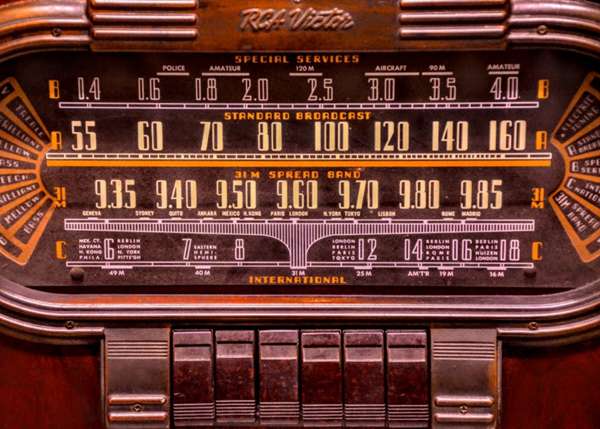
Our esteemed leader, Thomas, occasionally uses a picture of the dial shown below as a lead figure of a posting. It is possibly an RCA Victor Model 110k console radio. When I see this, I think, who wouldn’t give a king’s ransom to own that radio in its fully restored condition? Note the 31-meter band has been magnified as its own separate band and appears in a near linear progression. Thirty-one meters was arguably the center of international shortwave broadcasting in the golden age.
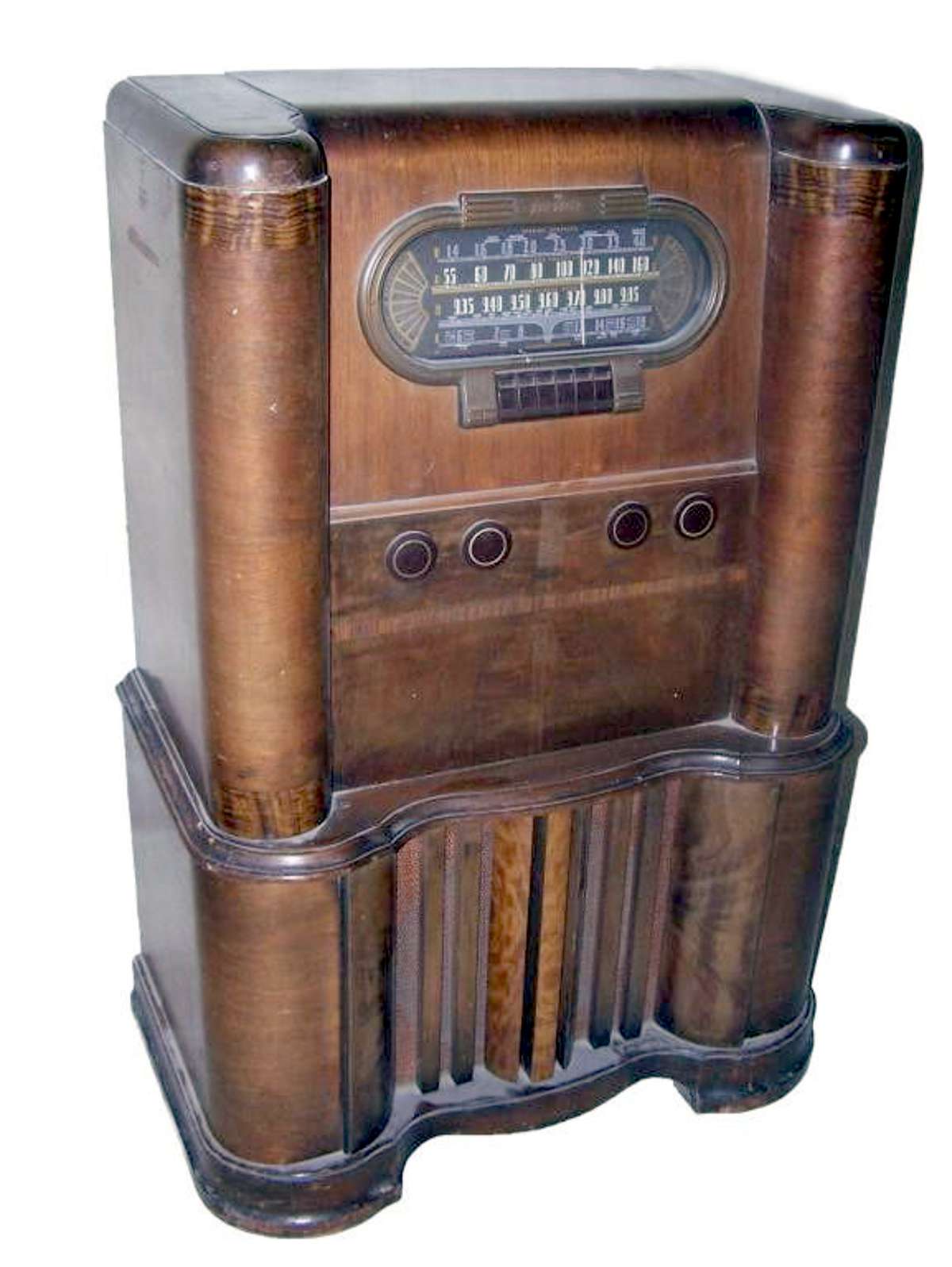
Have you ever wondered what the rest of that radio looks like? Here’s one in sore need of some Pledge. Now imagine yourself, perhaps 11 or 12 years old, perched in front of it on your grandmother’s needlepoint stool tweaking the dial. If you have experienced this, no explanation is necessary. If you haven’t, none is possible.
So, as it turns out, I have tempered my earlier conviction that a digital frequency readout is necessarily better than a classic dial. Not to say you can easily pry the PL-880 with 10-Hz resolution from my cold, stiff hands, but I have come to realize that intrigue and mystery of shortwave listening rested in the uncertainty of knowing exactly what frequency you were on. There was always the possibility that the elusive Nibi Nibi Islands lay somewhere near the shadow cast by the dial pointer. It was a land of enchantment, and once you left its borders, you could never return again.
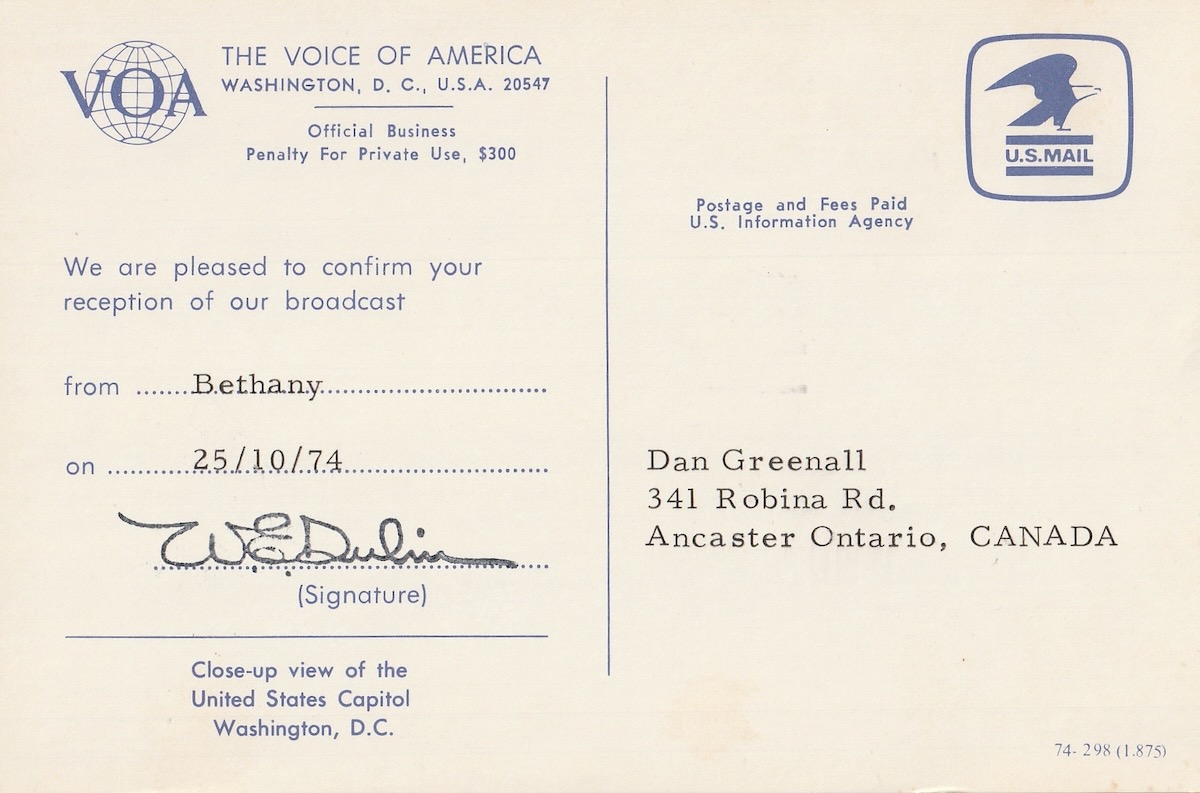
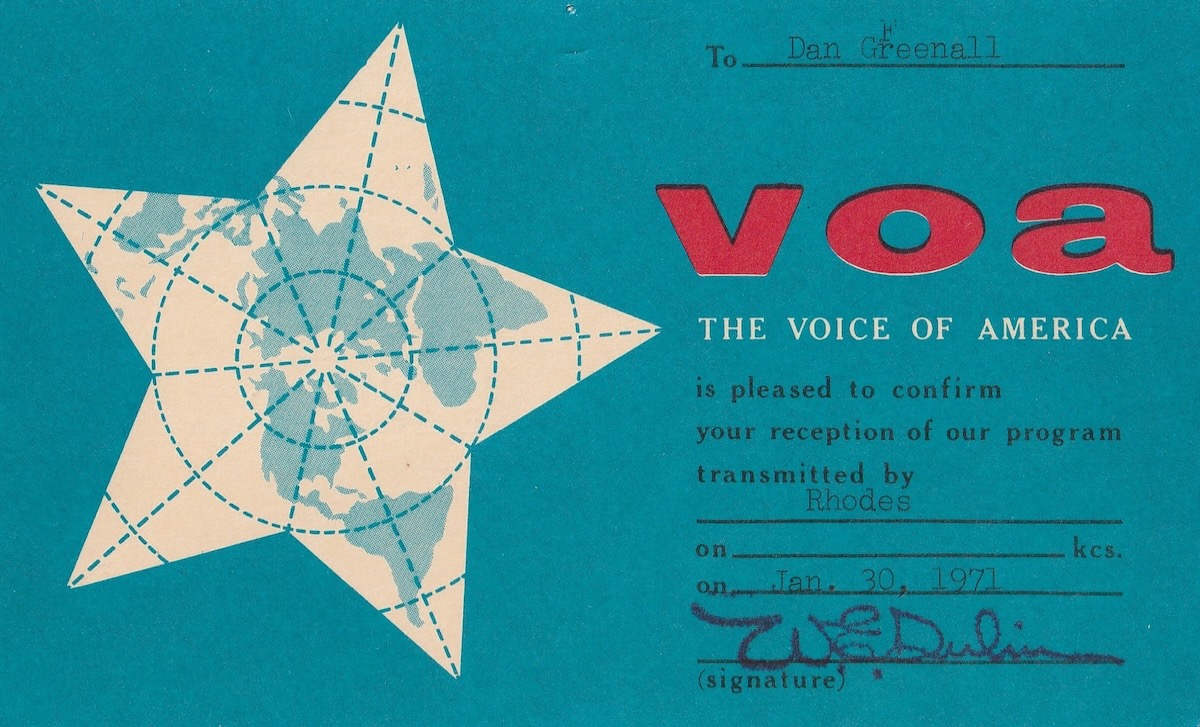
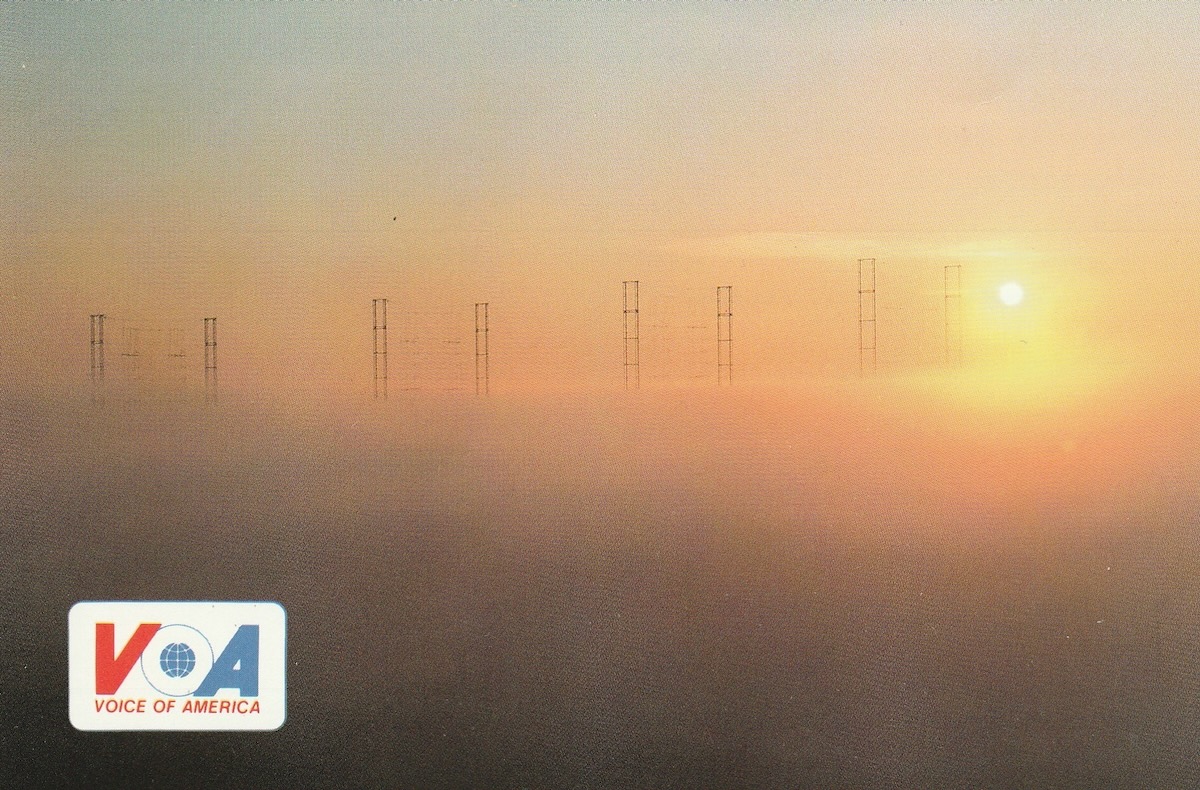
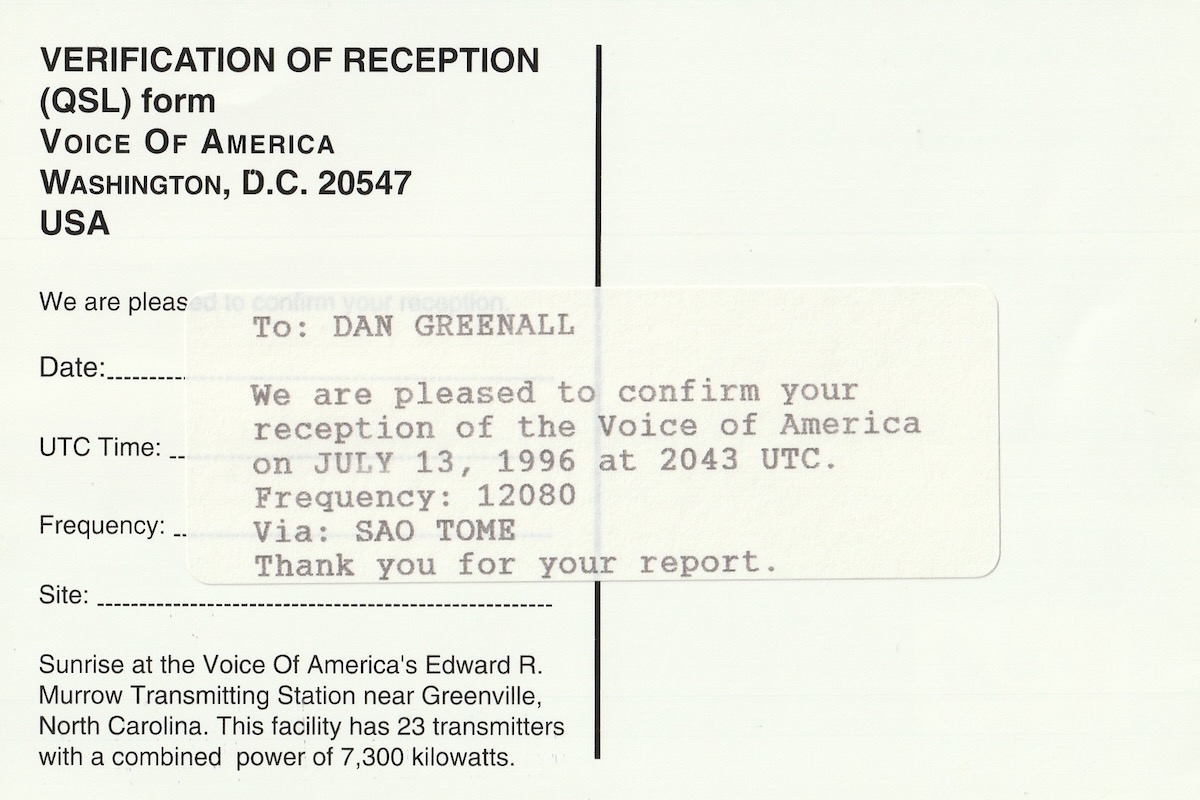
50 years ago, Voice of America broadcasts could be found all over the shortwave dial.
In addition to a number of transmitter sites located stateside, the VOA used to broadcast from a number of other facilities located in overseas countries in order to help get its signal into all corners of the globe. Many of these “relay” stations made for challenging DX catches and there was even an award offered by NASWA to those providing sufficient proof of reception of them all. An example of this can be found on this link: https://k5nd.net/2011/06/voice-of-america/
The familiar tune of Yankee Doodle (heard at the beginning and end of a transmission) along with station ID in English would often include the particular transmitter site in use. Several old recordings of these can be found on my links to these on the Internet Archive.
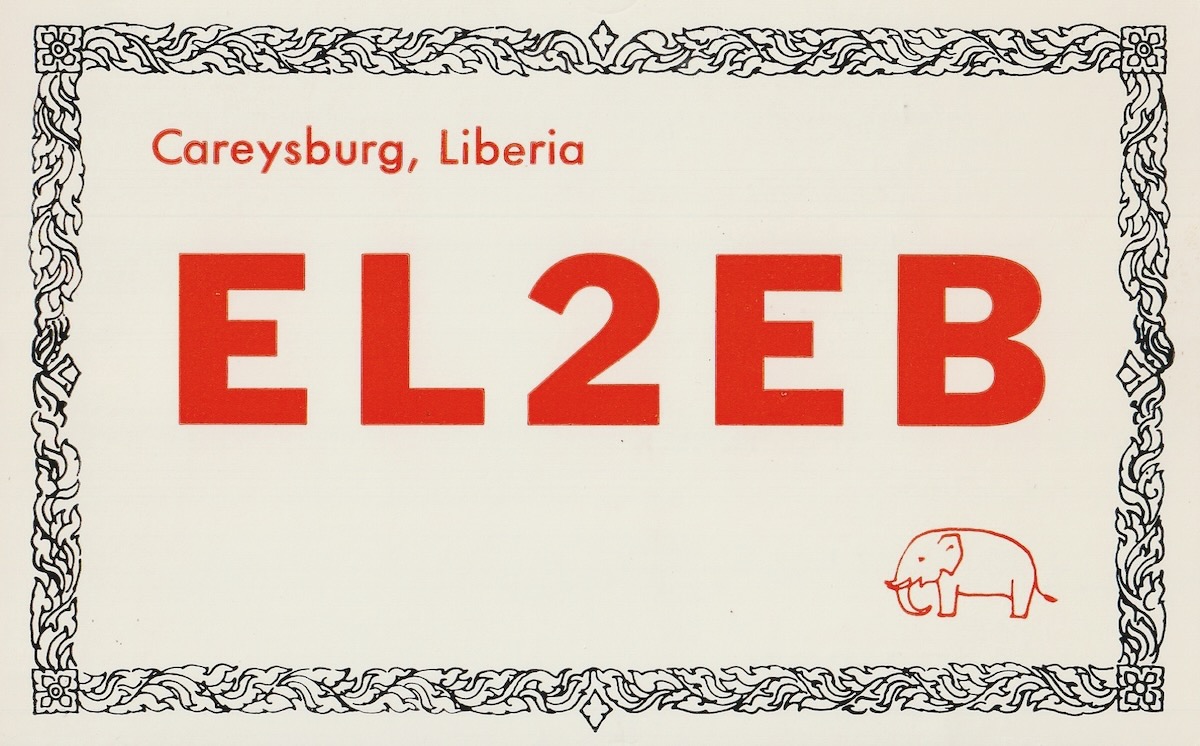
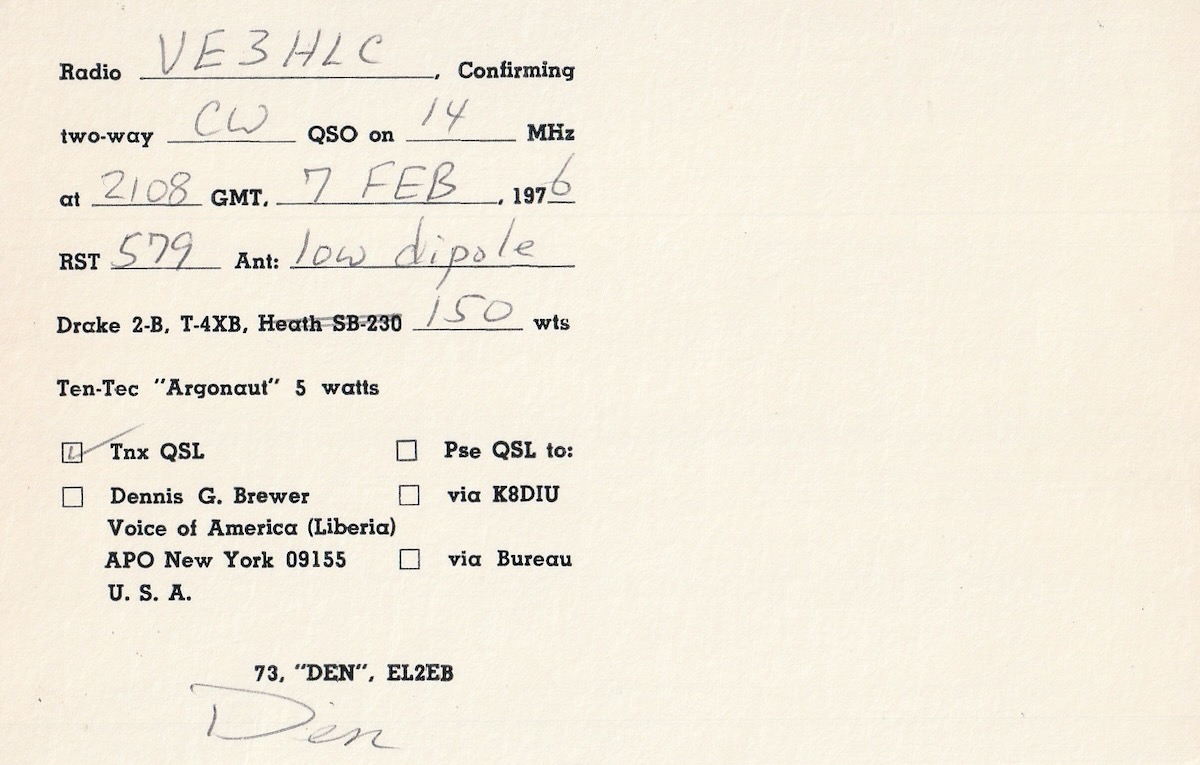
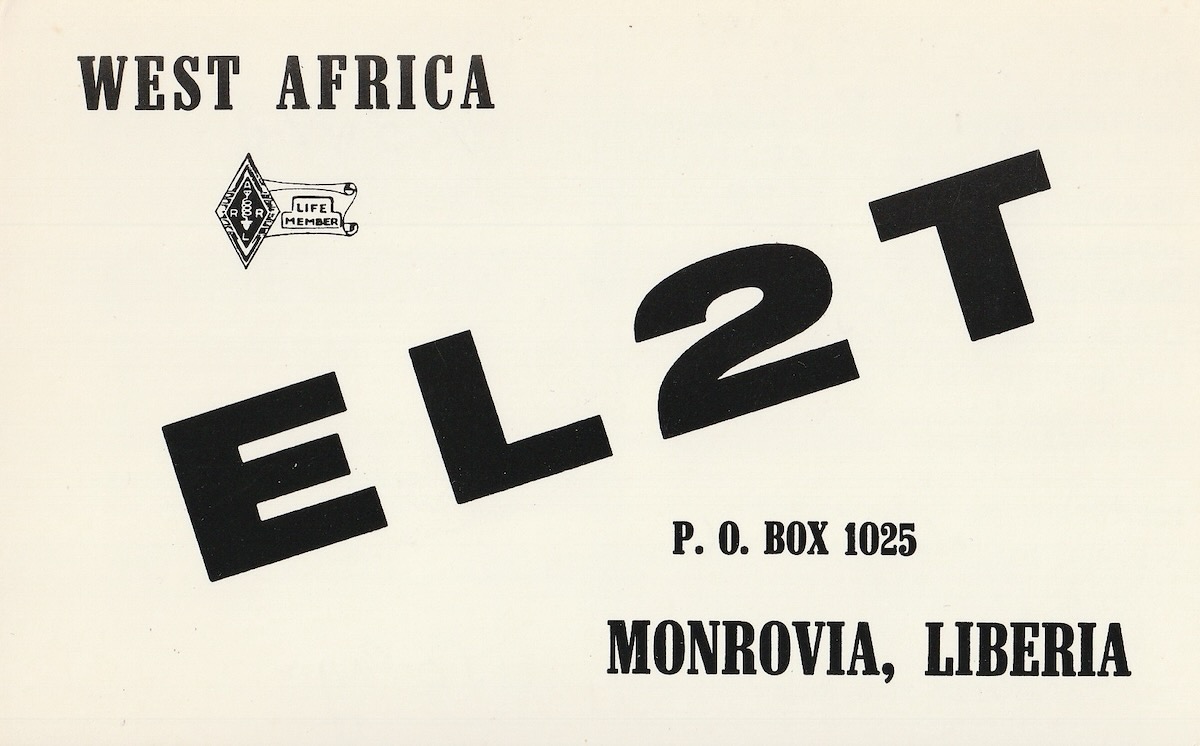
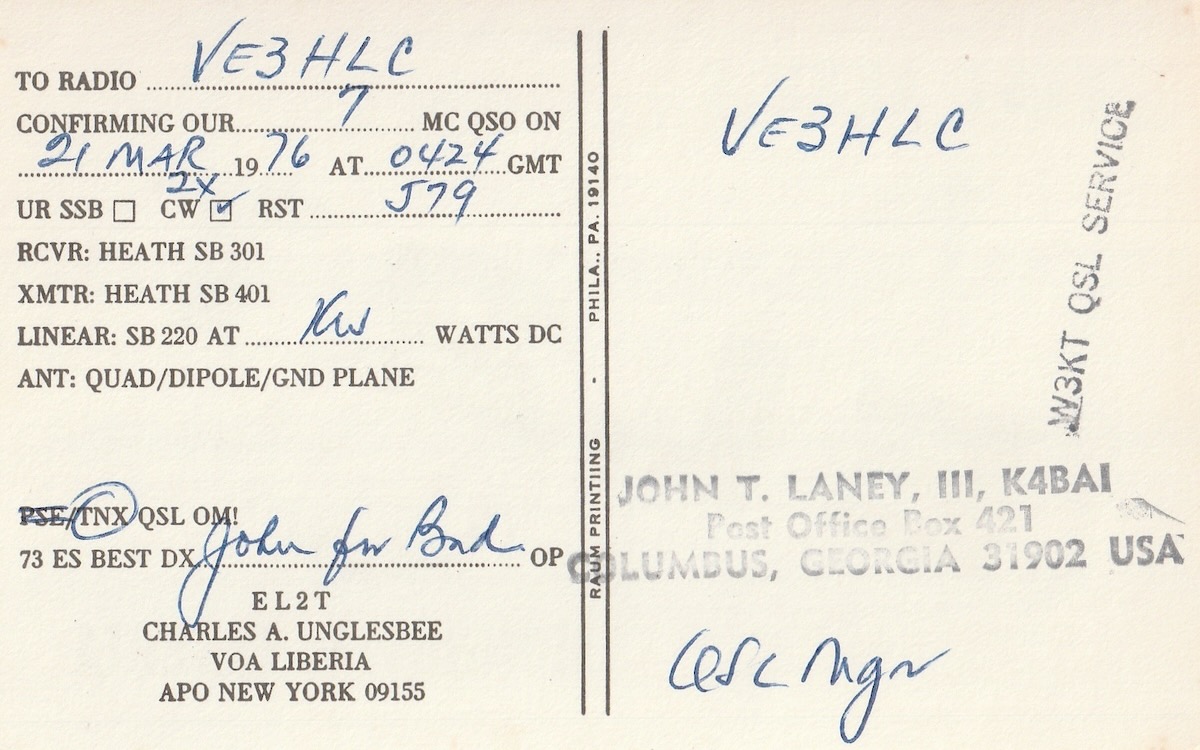
Technical staff hired to help maintain equipment at overseas facilities were often licensed amateur radio operators. See the attached scans of two QSL cards from amateurs who worked at the station near Monrovia, Liberia.
Most of the various VOA transmitter sites are listed below. Some include links that will lead to related historical information, articles and/or photographs and are well worth exploring.
A year ago, in January 2025, I made a couple of recordings, using remote SDR receivers, of some Voice of America programs being broadcast from their Botswana transmitter site. These have been uploaded to archive.org and can be found here: https://archive.org/details/voa-africa-via-botswana-relay-january-19-2025
Since March 16, 2025, it seems the only former VOA transmitters being used are Greenville, NC (Radio Marti), Tinang, Philippines (Radyo Pilipinas world service), and Wooferton, UK (BBC and others).
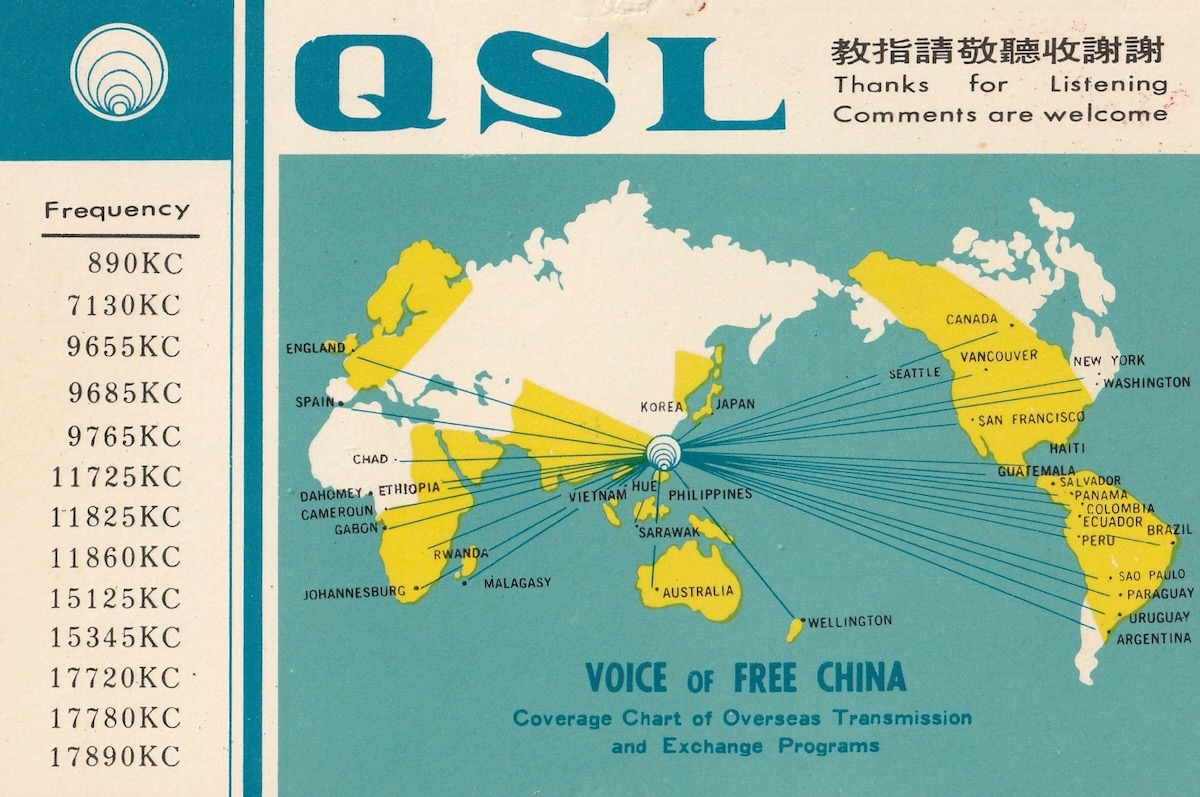
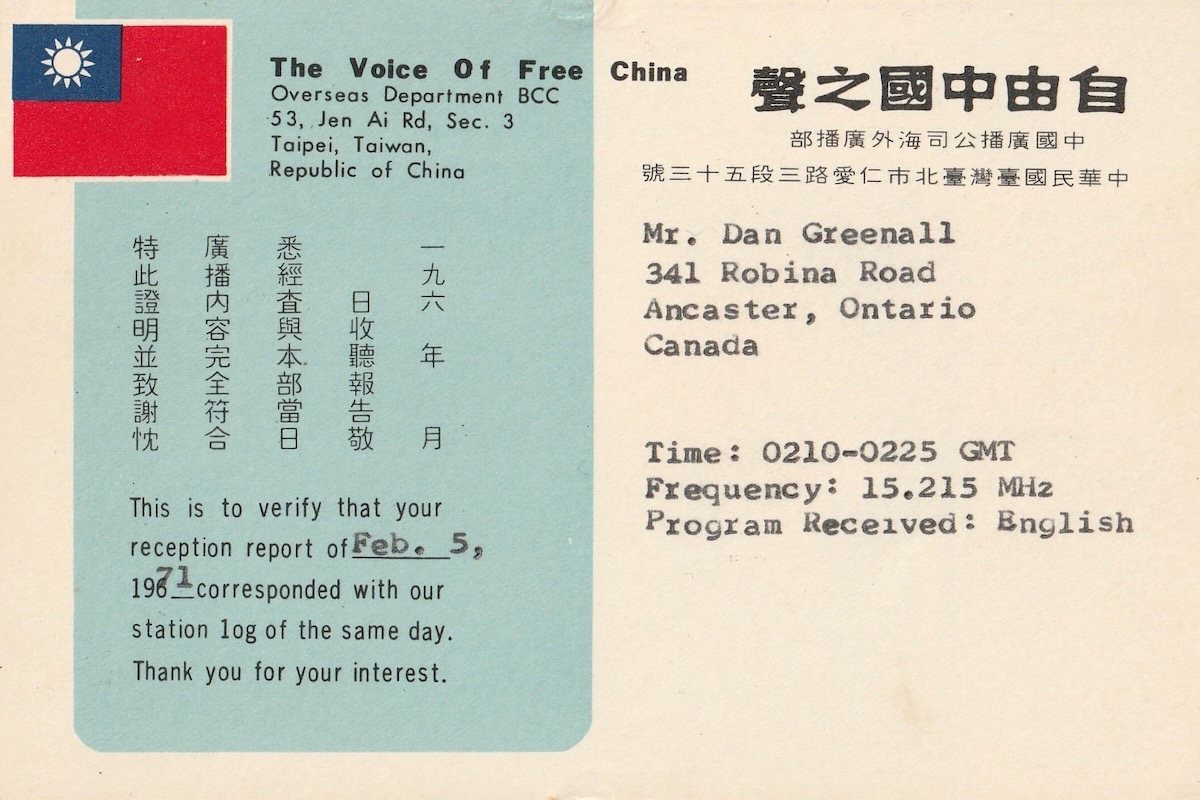
For nearly a half-century, The Voice of Free China broadcast programs via shortwave to a worldwide audience from Taipei, Taiwan. As a relatively new SWL in the early 1970’s, I was always excited to hear English language programs from that part of the world, far away from southern Ontario, Canada, where I lived. There was no relay from WYFR or Radio Miami International at that time, so the signal from Taiwan needed to travel over 12,000 km (7500 miles) to reach my receiver.
I made this recording of their interval signal and sign-on in early 1971.
In 1998, the name of the station changed to Radio Taipei International, then again in 2003 to Radio Taiwan International.
Today, Radio Taiwan International continues to offer programs on shortwave in a number of languages from a transmitter in Taiwan, though there appears to be only one English-language broadcast per day, that being from 1600 to 1700 hours UTC on 9405 kHz. Here is a recording of the station signing on at 1600 UTC on January 1, 2026 using a remote SDR located in Japan:
And here they are signing off for the day on December 27, 2025 at 1700 UTC on 9405 kHz, again using a Kiwi SDR in Japan.
The station is received well in southern Ontario during their daily 2200 UTC broadcast in Spanish on 15770 kHz. This transmission is aired using the facilities of Radio Miami International in Okeechobee, Florida. The Kiwi SDR used for this recording is located in my hometown of London, Ontario.

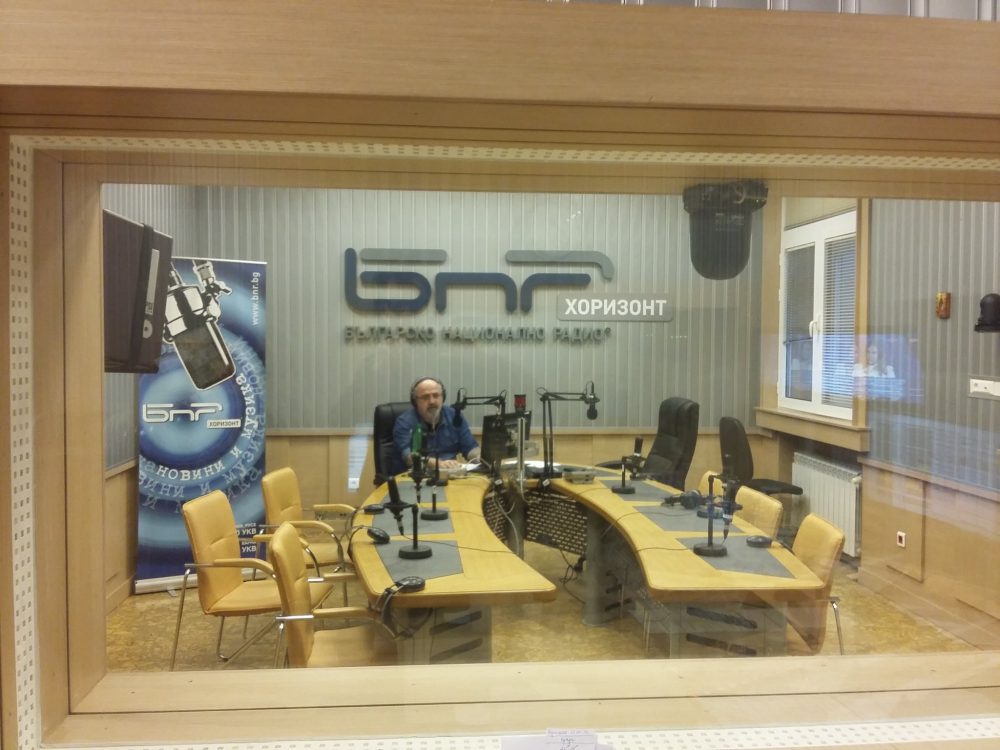 Many thanks to SWLing Post contributor David Iurescia who shares the following article from Radio Bulgaria–a retrospective that traces the history of the English Service of Bulgarian National Radio, marking nine decades of international broadcasting that brought Bulgaria’s news, culture, and music to listeners around the world.