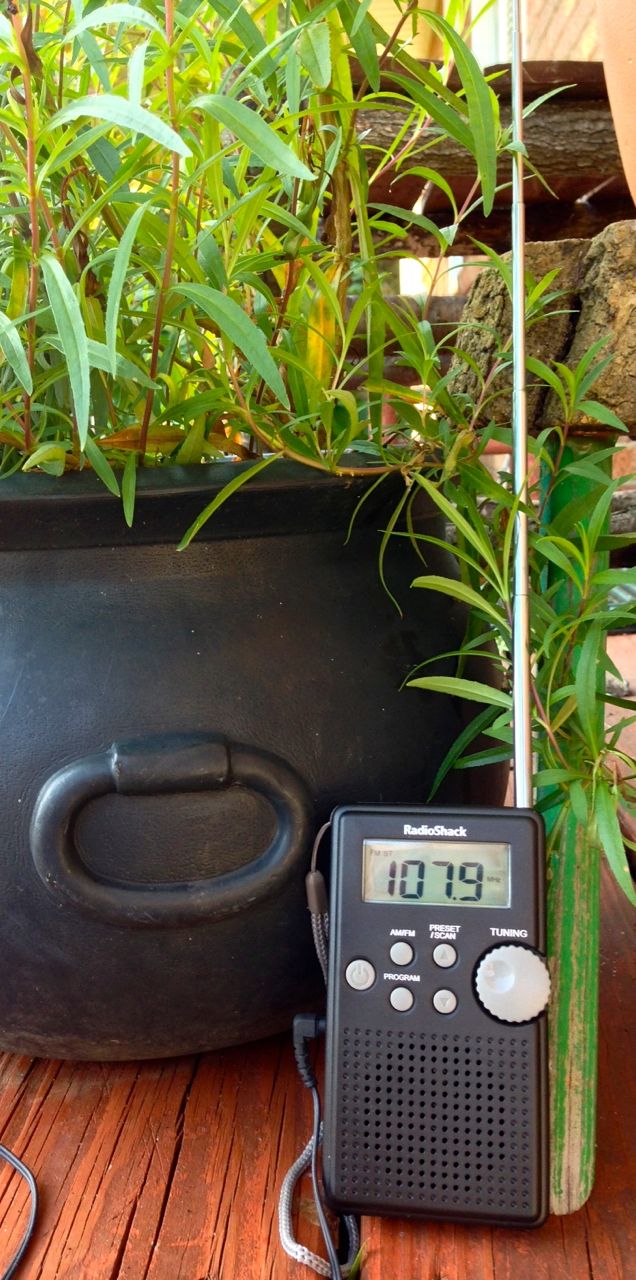
The RadioShack Model 12-587 AM/FM Radio
Three days a week, my father––now in his seventies––takes a three mile walk through his home town, revisiting the neighborhoods of his youth. He began the walks upon retirement, and in my opinion, the routine has helped keep him in great shape. When he first started walking I learned he was carrying around a heavy AM/FM radio with him. I bought him a bargain one-off Coby AM/FM portable that is not only lightweight but sports a handy neck strap. Dad’s loved it. Indeed––much to my surprise––it’s lasted about ten years, and is still playing, although starting to show signs of wear…
So I decided it was time to test drive a suitable replacement. After searching, I found the RadioShack Model 12-587 AM/FM radio. At a clearance price of $14.99 (US), there will be no loss of sleep if Dad misplaces it or drops it on the pavement.
Still, I couldn’t resist giving it the once-over, and thought I might share the mini review that resulted. As I always say for radios in this price range, my expectations were low.
Here’s a summary of this little AM/FM radio’s pros and cons:
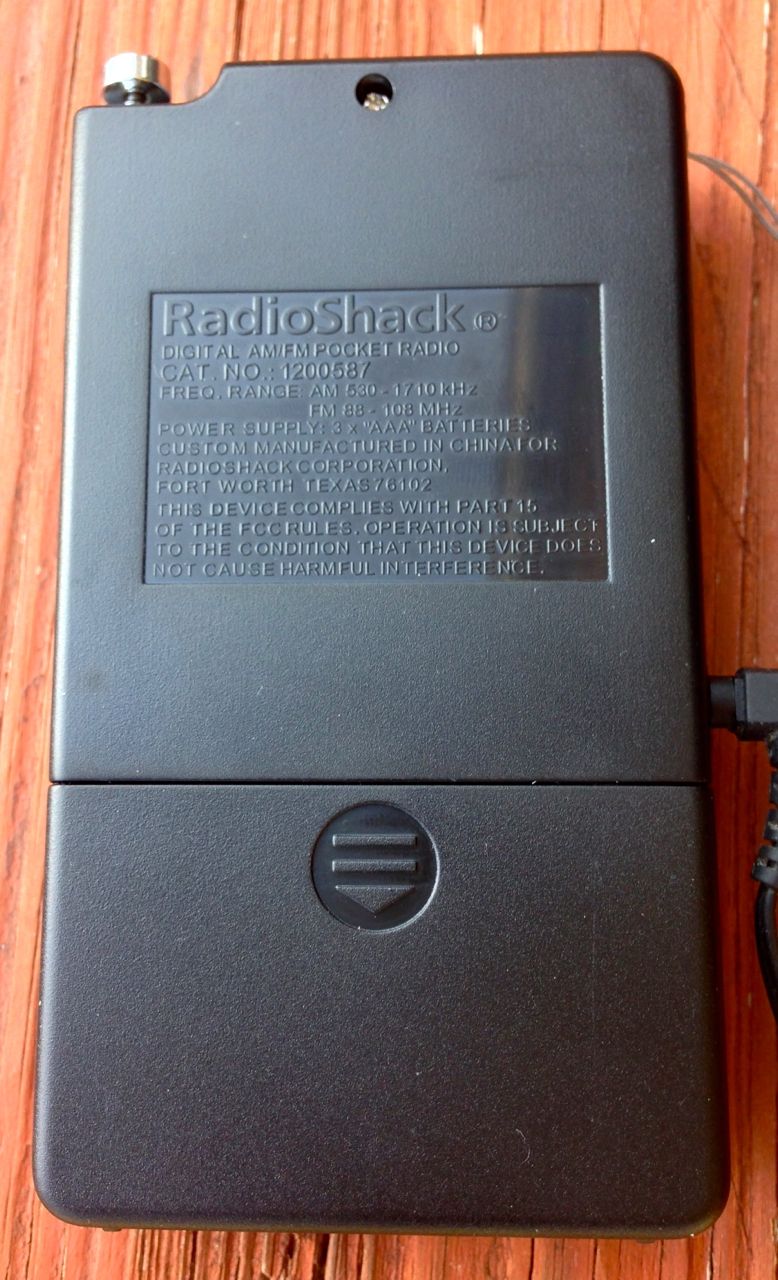
Back of model RadioShack 12-587
Pros:
- Very good FM selectivity and sensitivity
- Excellent FM stereo lock
- Scan function both useful and quick
- 10 AM and 10 FM memories (see con)
- Large, amber back-lit LCD display
- Simple control lock switch on right side
- AM (medium wave) sensitivity adequate
- AM nulling above average
- Plastic “blister” packaging very easy to open!
Cons:
- Tinny sounding audio via built-in speaker
- Headphone audio lacks high/low; mid-range only
- Memory allocations supposedly volatile (when batteries are replaced)
- AM frequency steps fixed at 10 kHz (cannot adapt to 9 kHz steps used in rest of the world)
- AM (medium wave) sensitivity mediocre at best
- Complete mute while tuning; not capable of band-scanning
- Dimple on tuning knob not useful
- Very sensitive to noise (QRM) on the AM band, resulting in static popping/crackling in audio
Obviously, this is not a radio for the radio hobbyist or world traveler, as it lacks any real medium wave sensitivity and cannot tune in 9 kHz steps. FM tuning is also locked on odd frequencies, thus will not work throughout parts of the world with even spacing. And though the radio is touted as having “extended bass,” the audio is tinny, even via headphones.
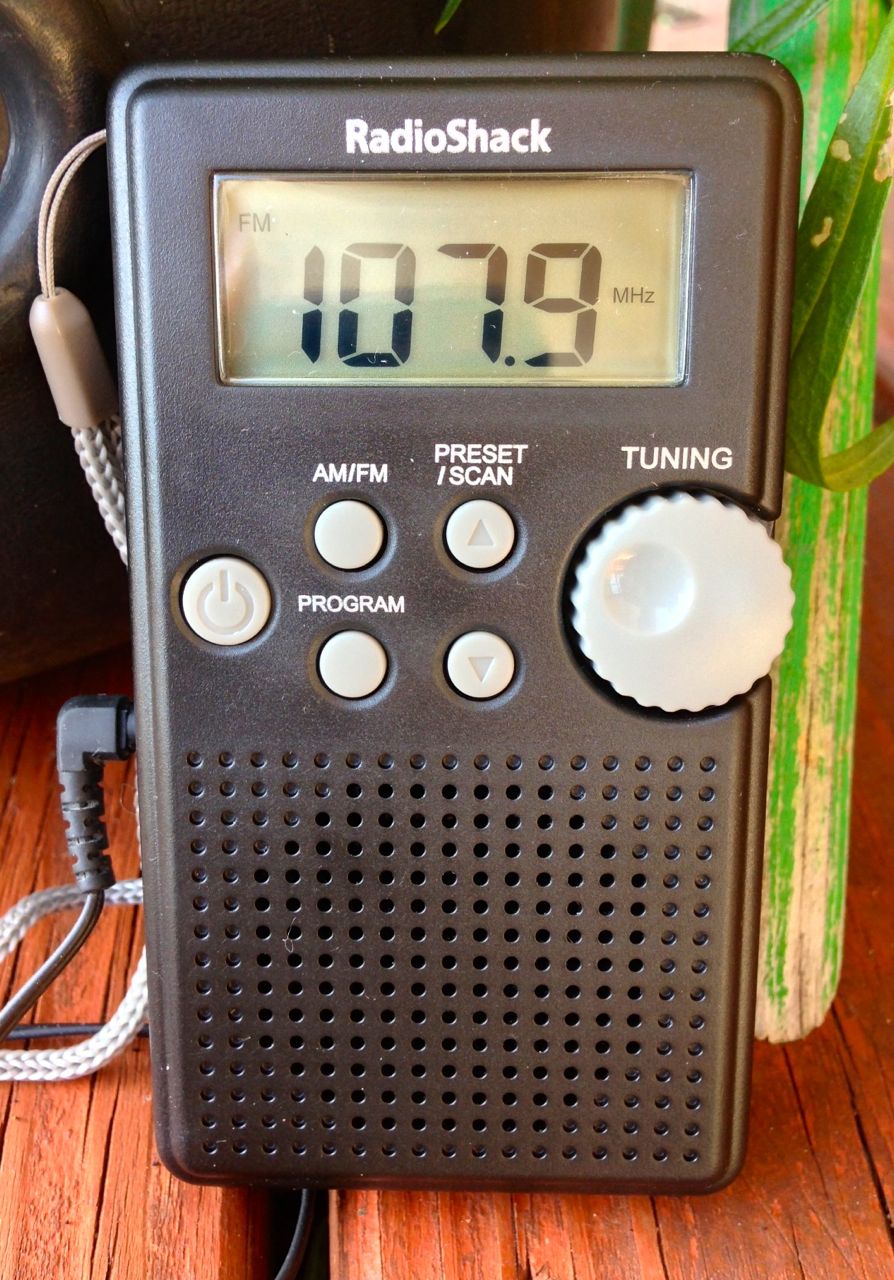 BUT. This is a perfect example of a situation in which, though cons outweigh pros, the RS Model 12-587 is a great match for its intended purpose: my father’s morning walks. Why? It’s a simple-to-operate radio with a large, back-lit display (Dad won’t need to put on his glasses to read it). It receives local AM and FM stations very well. The mid-range audio––while lacking ample fidelity for music––are perfect for the talk shows he listens to while walking. The radio is durable, lightweight, easy to tune, and has a lock feature. It is also remarkably easy to program memories: simply press the program button until preset flashes in the LCD display, use the scan up/down buttons to choose a memory number then press program again. It’s also very affordable, so no problem to replace as necessary.
In conclusion, the RS Model 12-587 is not a performance radio––and I wouldn’t generally recommend it––but it suits my father’s needs very well. Like to walk or run? Maybe it’s just what you’re looking for, too.