Category Archives: Radios

eBay find: Zenith Transoceanic in an Unopened Box

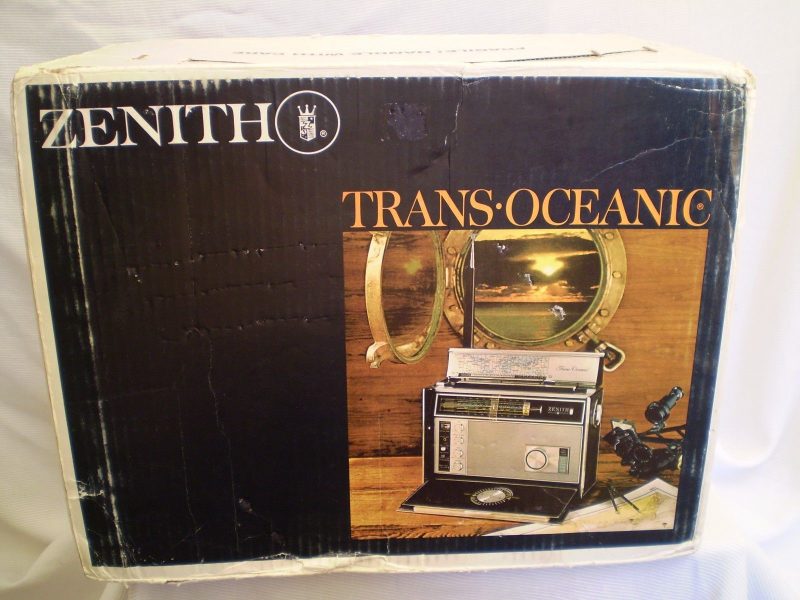
zenith-transoceanic

Many thanks to SWLing Post contributor, Robert Gulley, who shares this link to an eBay auction for a Zenith Transoceanic D7000Y in an unopened box!

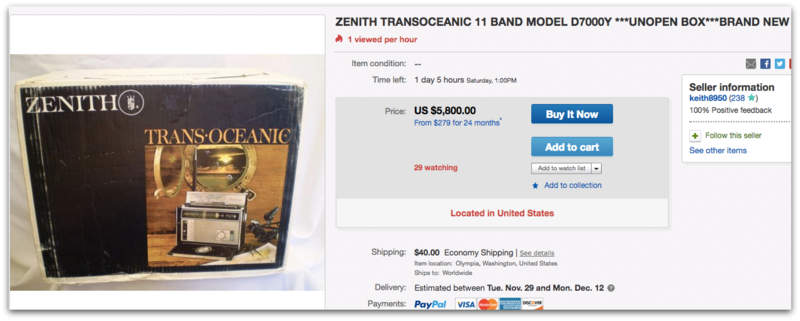
Let’s be clear here: this is no “Black Friday” deal. The seller has this gem listed at $5,800 plus shipping! I think this is the first time I’ve ever seen a Transoceanic listed at this price level.

zenith-transoceanic-ebay

Of course, as one friend always reminds me: “eBay is there to show you things you’d rarely stumble upon in daily life–you just need a chunk of change to snag it!”

The seller is listing this as-is since he isn’t going to open the box to test the unit. He does claim that if it arrives DOA, he’ll have is repaired free of charge (buyer pays shipping).

Still: $5,800 is hefty sum–several thousand over my threshold! No doubt, a Transoceanic collector will snag this eventually.

Click here to view this listing on eBay.

Review of the SDRplay RSP2 software defined radio

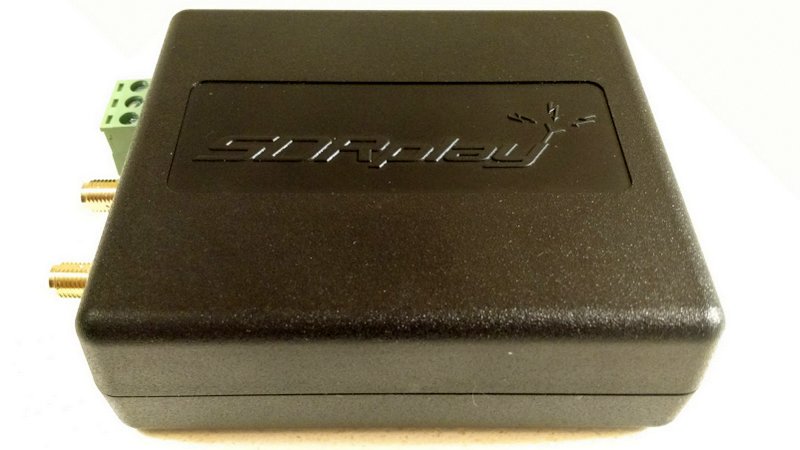
The SDRplay RSP2

The SDRplay RSP2

This morning, SDRplay Limited announced the release––and availability––of their second generation software defined radio, the RSP2.

Regular SWLing Post readers will note that I’m a pretty big fan of SDRplay’s first SDR, the RSP, or “RSP1,” as I’ll now call it (I published a review of the RSP1 in July 2015). To me, the $129 RSP1 has been the best wideband receiver you can buy under $200 US. Its HF performance, in particular, is sincerely impressive at this price point.

Introducing the RSP2

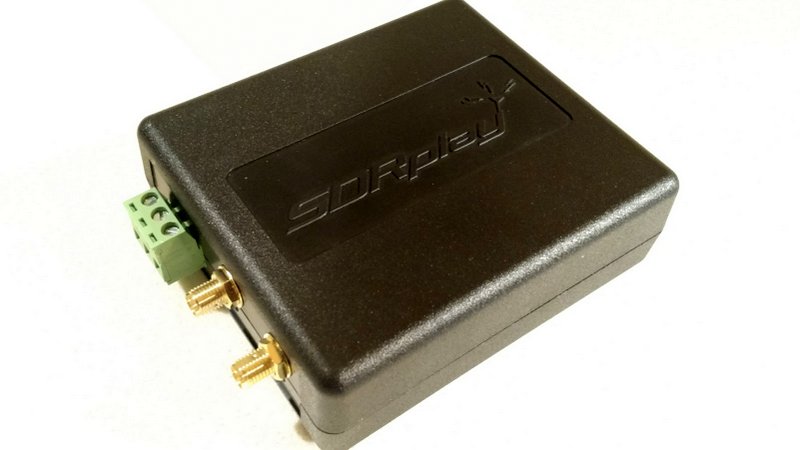
sdrplay-rsp2-top

So what’s the RSP2, and how does it differ from the original RSP?

In a nutshell, here’s how SDRplay describes the difference between the two:

“The RSP2 delivers a significant number of additional features which result in a higher spec for specialist amateur radio users as well as benefits for additional scientific, educational and industrial SDR applications.”

In a sense, the RSP2 gives the enthusiast and experimenter access to more receiver parameters and control, opening it to a wider array of possible applications. The RSP2 will also cover a broader range, from as low as 1 kHz to as high as to 2 GHz, and is designed with better selectivity across the spectrum. Enhanced selectivity will certainly benefit amateur radio operators and SWL DXers who might seek weak signals in crowded portions of the band.

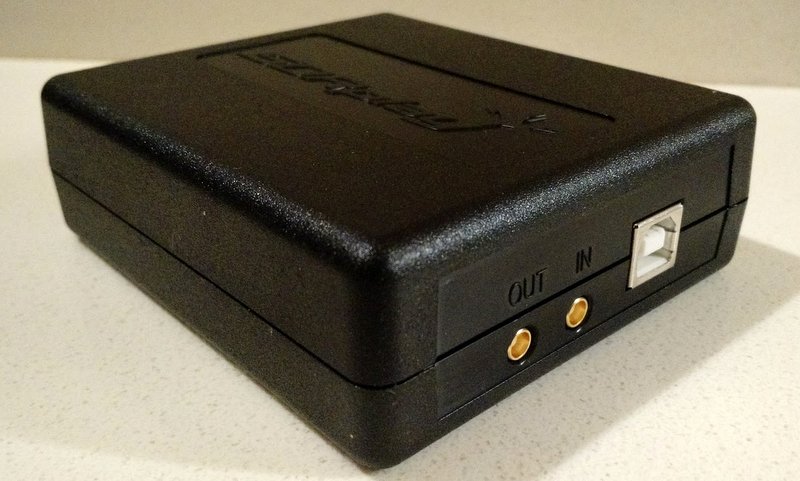
sdrplay-rsp2-usb-in-out

The following list outlines the primary additional features of the RSP2 (via SDRplay’s press release):

  • 10 built-in, front-end pre-selection filters, with substantially enhanced selectivity
  • Frequency coverage extended down to 1 KHz
  • Software selectable variable gain Low Noise Preamplifier
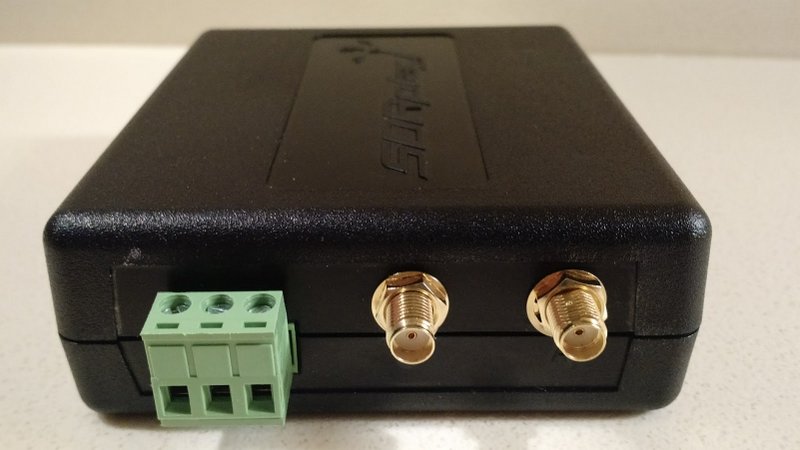
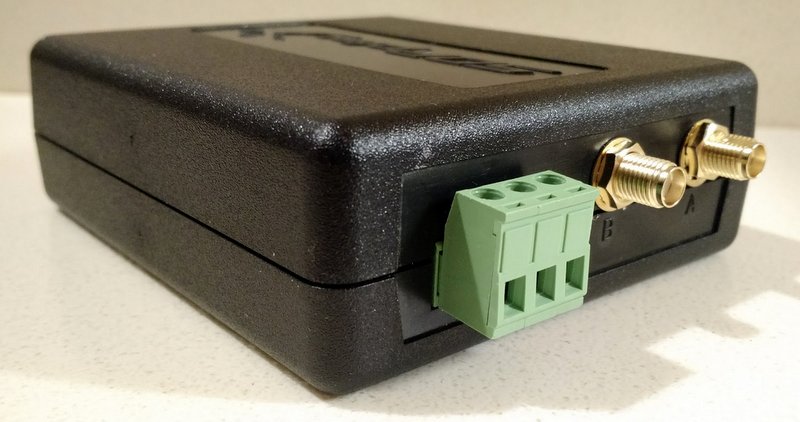
  • 2 x SMA Software Selectable 50? RF ports (1.5 MHz – 2 GHz)
  • 1 x High Impedance RF port (1 kHz – 30 MHz)
  • Built-in software selectable MW /FM notch filters
  • Highly stable 0.5PPM TCXO trimmable to 0.01PPM
  • 24MHz Reference clock input / output connections
  • 4.7V Bias-T option (on one of the software selectable antenna inputs)
  • RF screening within a strong plastic case for the standard RSP2
  • A Rugged metal box version –  the ‘RSP2pro’
The RSP2 has a total of three antenna ports: two SMA and one Hi Z for optimal LW/MW/SW performance

The RSP2 has a total of three antenna ports: two SMA and one Hi Z for optimal LW/MW/SW performance

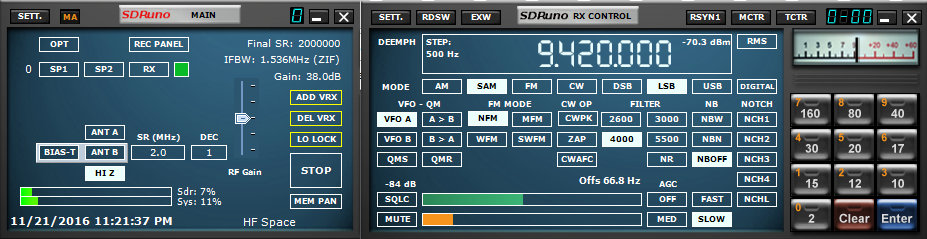
For the moment, the RSP2 only works with SDRplay’s own application, SDRuno. But SDRplay is already working with developers to make the RSP2 compatible with HDSDR, Gnu Radio, CubicSDR, and SDR Console. I appreciate that although the RSP series has an excellent free proprietary application (SDRuno), it was nonetheless developed with many open-source applications, also free, as well. This level of compatibility and support makes SDRplay rather unique among SDR manufacturers.

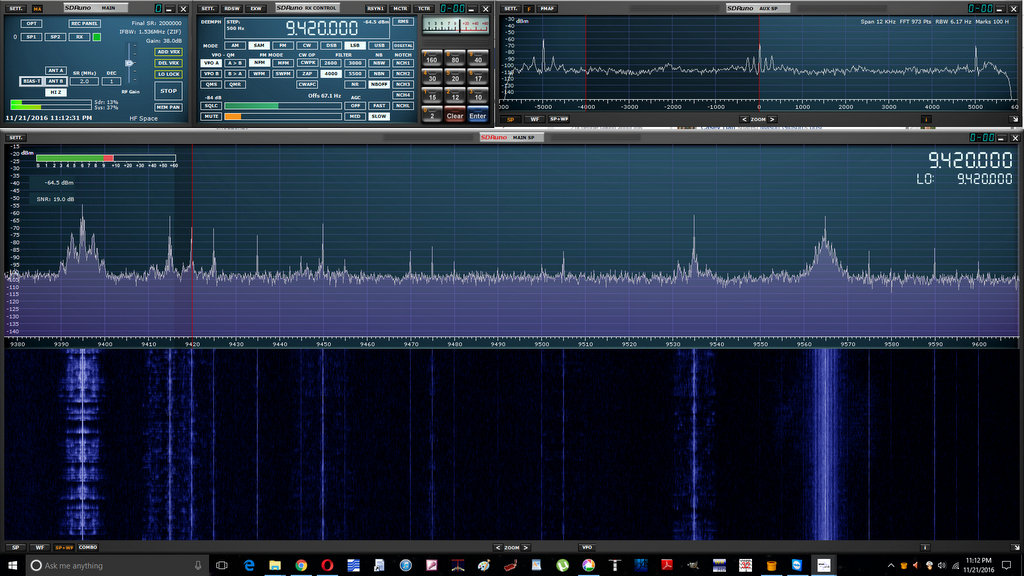
SDRuno running the RSP2.

SDRuno running the RSP2 (click to enlarge).

Of course, SDRuno is a great application in its own right, and pairing it with the RSP2 will provide you with out-of-the-box calibrated RF and S meters. So far I’m very pleased with native SDRuno features like virtual receivers, embedded time code, spectrum display options, and streamlined design.

Current SDRuno users will note the different antenna and filter options with the RSP2 which works natively with the latest versions of SDRuno

Current SDRuno users will note the different antenna and filter options with the RSP2 which works natively with the latest versions of SDRuno (click to enlarge).

SDRuno installs very easily and provides a plug-and-play experience. It does have a modest learning curve, but SDRplay has an excellent owner’s manual and “cookbook” available to help you set everything up the first time.

Preliminary impressions of the RSP2

SDRplay sent me a pre-release RSP2 (the base model, not the metal box “Pro” version) to evaluate and provide the company with feedback.

I installed SDRuno and put it on the air only this past week. In truth, as I’ve been traveling and must be on the road again this coming week, I prefer not to comment, at least in depth, on the SDRplay’s performance as I’ve had comparatively little dedicated time with the unit.

Yet I have had the RSP2 on the air a few hours of casual listening, and find that it performs as I would expect: low noise characteristics and sensitivity that seems to be at least as good as the RSP1, if not a bit better.  I’m looking forward to a side-by-side with the RSP1 running an install of SDRuno on my laptop!

I must say that I’m very pleased with the RSP2’s Mediumwave/FM notch filter. It happens that a local daytime 45kW AM broadcaster in our area is having transmitter issues which send wideband spurs across the entire HF spectrum; but at night, when the station lowers its power levels, the RSP2’s MW notch filter effectively mitigates the noisy signal. I imagine this filter will be a welcome addition for listeners living in RF-dense environments.

When the RSP1 was first introduced, it retailed for $149. As the economies of scale worked in their favor, SDRplay lowered the price to $129. The new RSP2, meanwhile, is expected to retail at approximately £130 (excluding taxes), or $169 US (excluding taxes). Quite a value, in my opinion: at $169, you’re getting a lot of SDR for the price––and an effective SDR application, to boot.

But if you already own an RSP1, I wouldn’t necessarily rush out and grab the RSP2 just yet.  Of course, if you like the added features mentioned above, or if you’d like an inexpensive SDR with no less than three switchable antenna ports and a MW/FM notch filter, $169 is a bargain and about the same level of investment as a good modern shortwave portable.

As for myself, I’m happy to see a mom-and-pop community-supported company like SDRplay continuing to innovate for our hobby. I’m pleased to support them, and am truly appreciative that they also support our SWLing Post. This is a win-win, in my view; I’d be pleased to support more such companies.

Again, check back here as I plan to compare the RSP2 with the RSP1 and several of my other SDRs.

sdrplay-rsp2-antennaports-2

Click here to read SDRplay’s full announcement and press release.

I plan to take the RSP2 with me on my travels this week. Time permitting, I might even pair it with my recently acquired PK magnetic loop antenna for some spectrum gathering and testing.

In the coming weeks, as my schedule permits, I’ll post updates here on the SWLing Post, including audio comparisons with some of my SDRs. If interested, bookmark the tag RSP2.

For more information about RSP2 pricing and availability, check out SDRplay.com.

Update: Check out RTL-SDR.com’s assessment of the RSP2.

SDRplay has also posted the following video:

Hermitshell Protective Travel Case for CC Skywave

CC-Skywave-Midwinter-Antarctica

Many thanks to SWLing Post contributor, Jim (W4FJT), who writes:

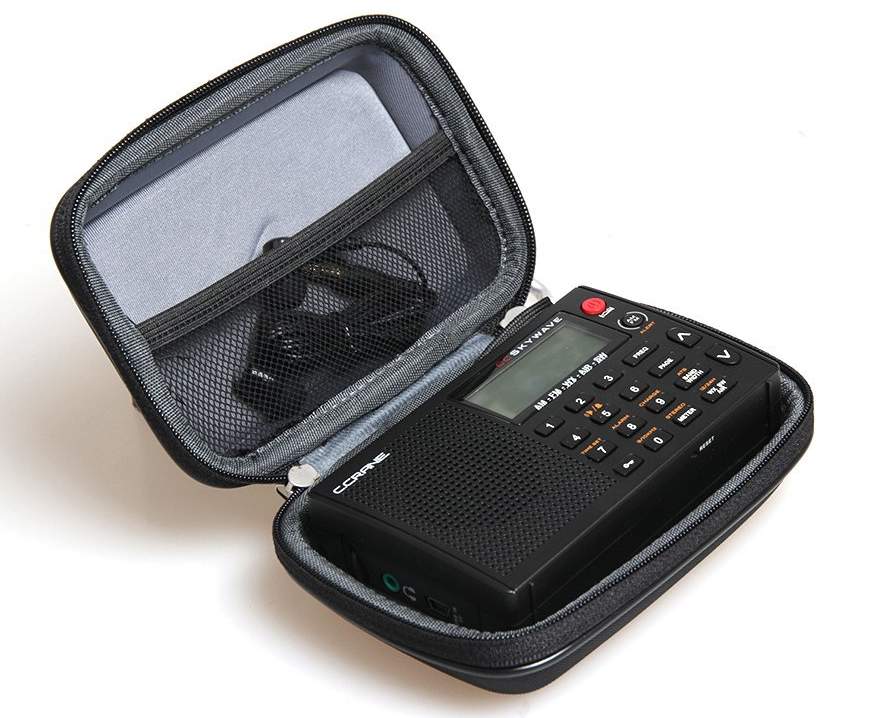
I was surfing Amazon.com and saw this hard shell case made specifically for the Skywave and thought this might be of interest to the travelers out there:

ccskywavecase

Click here to view on Amazon.com.

Thank you, Jim! I might grab on of these for my CC Skywave since I do travel with it a lot and am not a big fan of the included soft case.

The price is $14.99 shipped, which is pretty reasonable. I do note that while the 3rd party vendor claims the item is in stock, delivery seems to be out a few weeks. Perhaps this ships directly from China?

Have any Post readers purchased this hard shell case? Please comment.

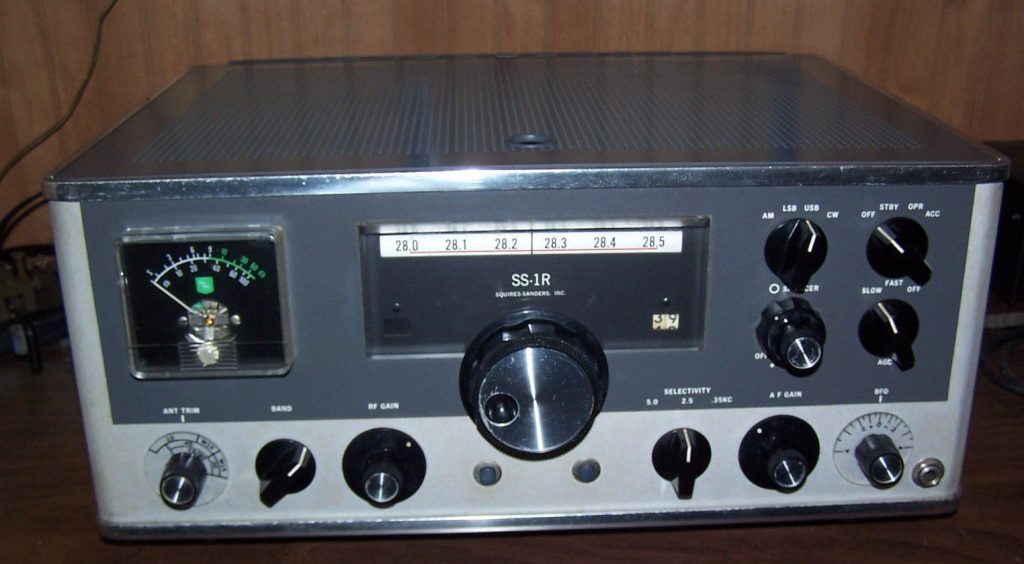
What made the Squires Sanders SS-1R receiver legendary?

ss-1r

Many thanks to SWLing Post contributor, Michael Black, who reminds us why the Squires Sanders SS-1R receiver (Dan recently spotted on eBay) was so innovative at the time:

It’s legendary because it leaped forward in receiver design, at least at the amateur level,  and there was the article in QST  in 1963 by Squires about the design.  So lots of people knew about the design, even if they weren’t owners.

There’s no RF  amplifier, the antenna feeds the mixer trough a tuned circuit.  There’s a q-multiplier on that tuned circuit, to improve selectivity (q-multipliers were mostly seen in 455KHz IFs).  The mixer was a 7360 beam deflection tube, hard to overload, and a balanced mixer, which was likely a first in ham receivers.  After, everyone was using 7360s for receiver mixers, at least until good solid state balanced mixers came along.

I keep forgetting that it is still a dual conversion receiver (except for one band), though presumably to avoid other issues while allowing for a fixed 500KHz tuning range.

But the second IF  is at 1 or 2 MHz, higher than the usual 455KHz, a sign of the future, though there were already some SSB transceivers with IFs in the HF range.

It does seem a relatively simple design now, but wasn’t fifty years ago.

The ham band version was the “big seller”, the shortwave version maybe offered because they could.  It’s not clear if the front end needed changes to cover the SW broadcast bands.  But it would have been an expensive SW receiver, and needing another crystal for each 500KHz tuning segment, a new concept at the time (though a few years later Drake had their SW receivers like that).  But that was the trade-off, most receivers did have a 2:1 tuning range, while some were like the R390 , very complicated mechanically and crystals for every band.  A subset of 3 to 30MHz meant fewer crystals and a simpler bandswitch but you spent a lot of money for a receiver that wasn’t “general coverage”.

Michael

Thank you, Michael, for the insight! At last glance, the bidding was only at $227.50. I suspect it will go much higher, but perhaps this will end up being a deal for someone.

Click here to view on eBay.

Which is the best? Sony ICF-2001D/2010 or ICF-SW77? Part two

sony-test

Hi there, after the first set of recordings were analysed, the score was 4-3 to the ICF-2001D, demonstrating how similar these two great receivers are in overall performance. There were a copule of notable differences however. The synchronous detection circuit on the ICF-2001D allows the user to effectively tune through a signal in 01. kHz steps, whilst the receiver automatically locks onto either the upper or lower sideband, depending on the frequency offset. The ICF-SW77 synchronous detection system differs in that the user must tune the signal and select the sideband. The results of this test confirmed that whilst the ICF-2001D almost always retained SYNC lock, the ICF-SW77 was very prone to losing lock, which of course affected the audio quality in many cases. The other issue was with the ICF-SW77 in that the narrow audio bandwidth filter often seemed to deliver ‘muddy’ audio. Whilst this feature proved to be excellent in terms of mitigating adjacent channel QRM, it also reduced signal clarity/ audio discernibility a little too much in my opinion. However, overall, sensitivity and selectivity was very similar between both radios – in fact, one recording had to be judged a draw (Radio Bandeirantes, Sao Paolo on 9645.4 kHz) – I simply couldn’t split them. Part two of the reception testing follows, using signals from Canda, DR Congo, Brazil, Cuba and Peru.

I hope you enjoy the recordings – text links and embedded videos follow below:


Clint Gouveia is the author of this post and a regular contributor to the SWLing Post. Clint actively publishes videos of his shortwave radio excursions on his YouTube channel: Oxford Shortwave Log. Clint is based in Oxfordshire, England.
What radio would you grab in a fire?

Scott-Marine-SLR-M

Lately, fires have been on my mind. No doubt, this is because there are so many wildfires in the greater southern Appalachian region right now, which is in the midst of a record drought. Brush fires start up almost daily, and no rain is in sight.  In the mountains, the air is hazy with smoke, and it’s become a struggle for fire departments to contain these blazes, even with help from outside the region.

Living, as we do, in a forest, we’ve always had to think through contingency plans if a forest fire should threaten our home:  with only a two hour (or so) warning, what items would we grab and load into our truck?

Of course, we’d likely focus on those things that are irreplaceable and thus essentially invaluable: our few family heirlooms, boxes of photos, documents––you know, stuff you can’t buy.

But what about radios?  I hope I’ll never be forced to choose the one thing I should save from my shack, because there are several to which I’m rather sentimentally attached…There’s my Zenith Transoceanic, for example–the first proper shortwave radio I ever owned. There are also a number of vintage radios as well as some SDRs which have become my staple receivers.

Scott-Marine-SLR-M-Dial

In the end, though, there’s no question which radio I’d grab. It would have to be my Scott Marine Radio Model SLR-M, affectionately nicknamed “Scottie.”. True, she’s not even close to portable at a solid 90 pounds, but I’d strap her to the roof of my vehicle, if I had to.

Why?  Well, it’s the most pristine vintage radio I own, and I use it daily. If it’s not tuned to Radio Australia in the morning, it’s tuned to my AMT3000 AM transmitter on 1570 kHz drawing in any of a number of stations I relay from my WiFi radio.

Scott-Marine-Radio-SLR-M

Scottie simply isn’t replaceable. Even though my Elecraft KX3 probably costs more in terms of monetary value, I could eventually scrape together the money to buy another KX3. But I couldn’t buy Scottie again. Not this one.

So, there you go: after we’ve saved those things important to our family, I’d grab a 1945 receiver and haul it to safety.

Post readers: Now I’m curious–if your home was threatened by fire or other disaster, what radio would you save? Please comment!