Category Archives: Shortwave Radio Reviews

The C. Crane CC Skywave SSB: first production run review

[IMPORTANT UPDATE (October 21, 2018): Please note that C. Crane have addressed issues that I found in the first production run of the CC Skywave SSB. Click here to read the update and click here to read my full review of the CC Skywave SSB.]

Just last month, the little radio that I found most exciting this year hit the market: the C. Crane CC Skywave SSB.

Why the appeal for me?  Frankly, since I do most of my portable radio listening while traveling, and since I typically travel out of one bag, having a compact radio with performance and features is an absolute must in my world.  Up to this point, the original CC Skywave is the radio I often choose when traveling, as it packs so many useful features: AM, FM, Shortwave, AIR band, Weather Radio, and like any good travel radio, clock, alarm, and sleep functions, lacking only SSB mode.  So it goes without saying that I was excited to see its newest edition.

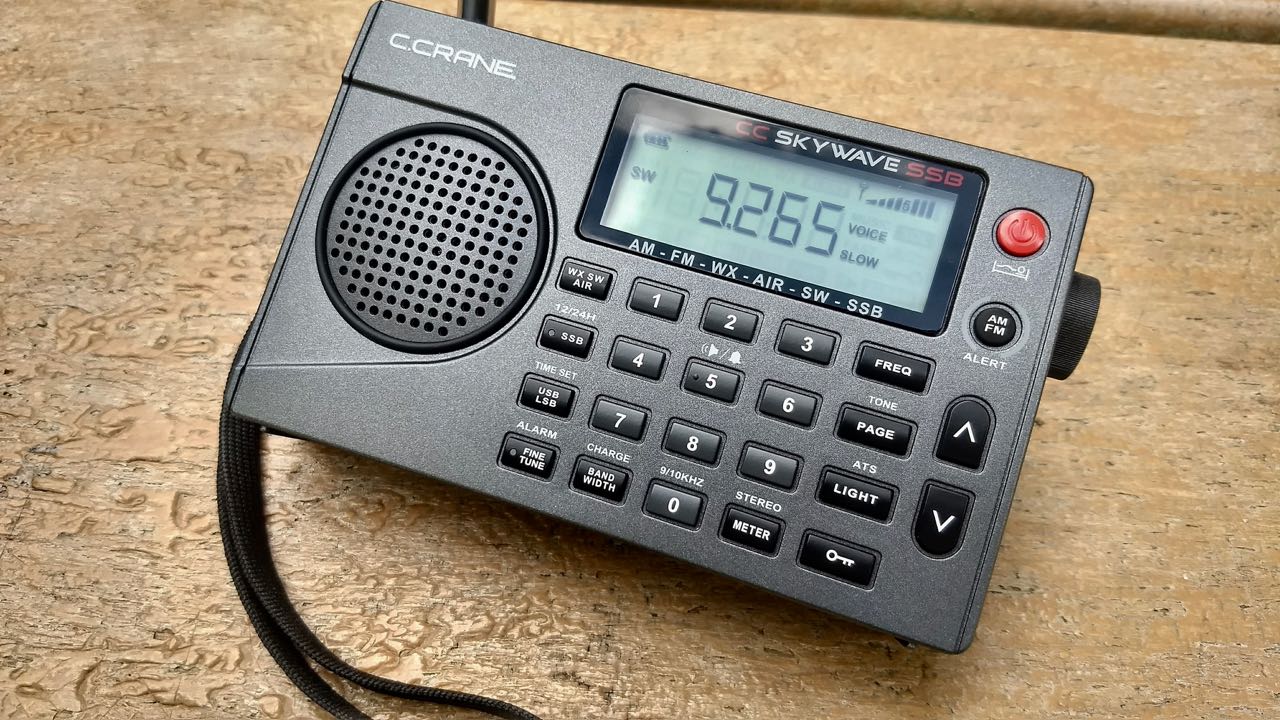
The CC Skywave SSB

What follows is an account of my experience evaluating CC Skywave SSB production units, and a brief summary of their performance.

My hope is that this summary review will help readers with purchase decisions. Note that this is merely preliminary to an extensive, unabridged review that will appear in a future issue of The Spectrum Monitor magazine, then in the SWLing Post the following month.

Pre-production Skywave SSB
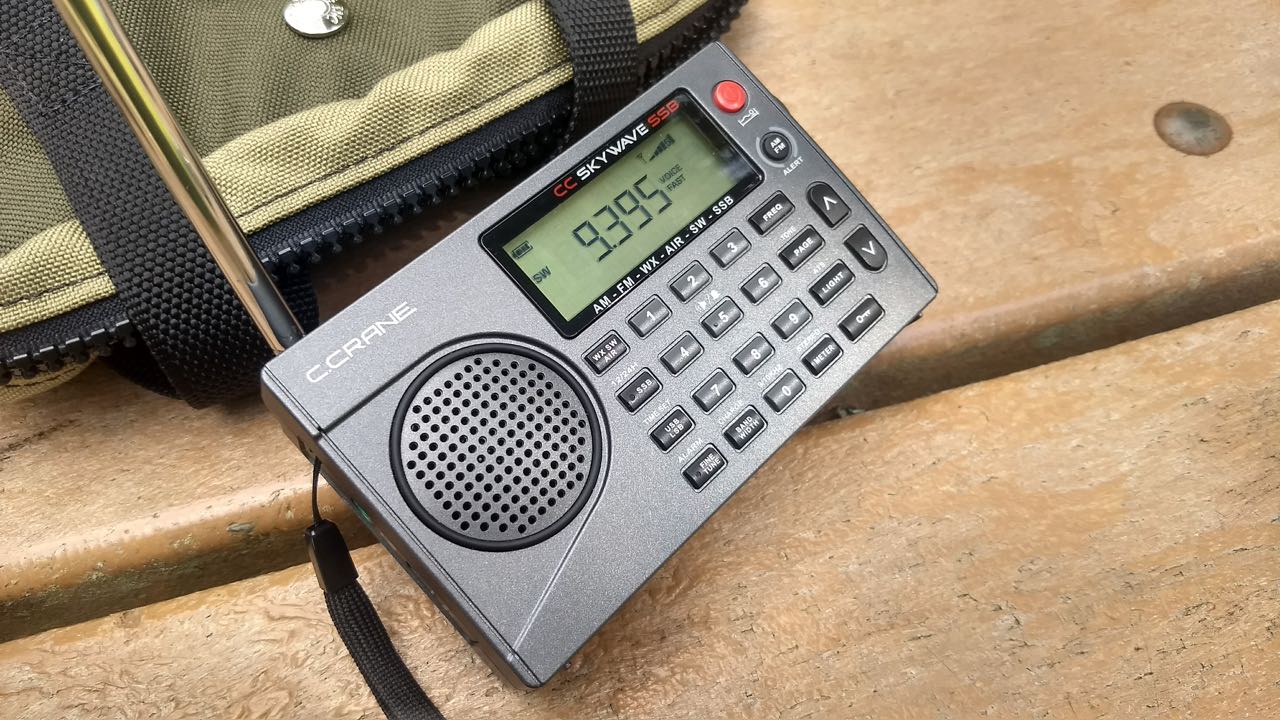
As many readers know, I was sent a pre-production model of the Skywave SSB for evaluation this summer.

As I mentioned in my sneak peek and reiterated to a number of inquisitive readers: I never base a product review or comment upon pre-production radios. I don’t comment about the performance of the pre-production model for an obvious reason: pre-production radios are quite simply not the versions that ship to customers upon the product release.

Now that the production model has been in the wild for a few weeks, I feel more at liberty to talk about my experience with the pre-production Skywave SSB.

In short: I have been very pleased, indeed, with the pre-production model’s performance. In terms of features, it is a nice incremental upgrade from the original Skywave. In terms of performance, it’s also tweaked in the right direction. As an early adopter of the original Skywave, I’ve been truly enthusiastic about this evaluation pre-production model.

All the notes I took while evaluating the pre-production Skywave SSB were made for C. Crane so they could hopefully implement any changes or address concerns prior to starting the first production run. But the truth is, I found the pre-production model in my possession to be quite solid, so my suggestions were minor.

Putting my pre-production model aside, I ordered an actual production unit on C. Crane’s website just like everyone else.

C. Crane kindly dispatched my unit as soon as they received the first production batch from the factory so I could get to work on the full review.

Quirks with the first production units
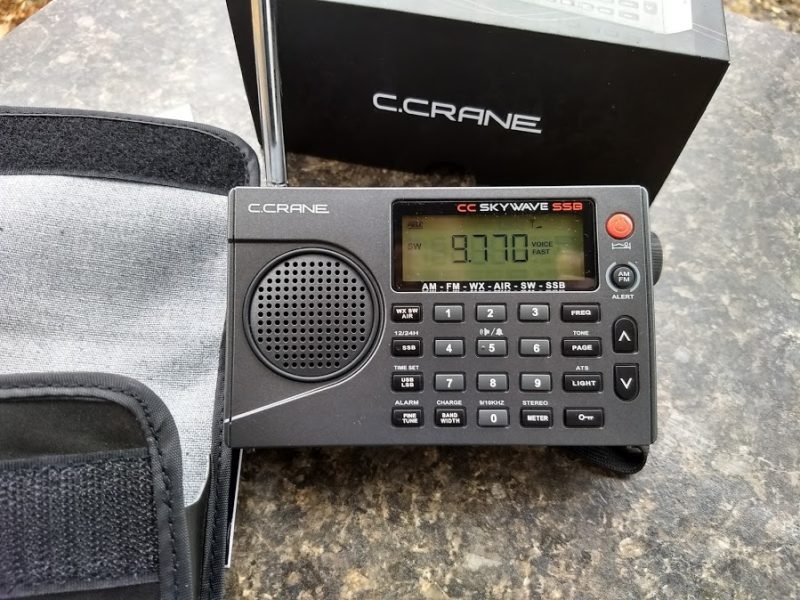
I was eager to get started on the review of the Skywave SSB, so as soon as I received it, I did what I always do: compared it with other radios.

I make my comparisons, by the way,  at least fifty yards from my house to separate the radios from any inadvertent sources of local noise.

Production Radio #1

My first comparison was with the Digitech AR-1780 and the original CC Skywave. I quickly noted that the Skywave SSB was very slightly less sensitive than the other radios. I had tested the pre-production unit enough to know that the Skywave SSB’s performance should at least be on par with the original Skywave.

Upon careful listening, I discovered the production unit had a very faint, internally-generated whine on some of the shortwave bands; when tuned to marginal signals, this whine manifested itself as variable background noise. Between signals it was audible as a faint background whine, hardly noticeable. With that said, the whine was most notable while tuning––since the Skywave SSB mutes between frequency changes, the whine was most conspicuous during audio recovery.

The pre-production unit had no trace of an internally-generated whine. Audio was very clean in comparison.

Here’s a sample of the first production radio being tuned down from 10,000 kHz in 5 kHz tuning steps:

Here’s a sample from the pre-production unit:

Hear the whine in the first sample? Yes, so do I.

I contacted C. Crane promptly, and to their credit, they immediately dispatched another unit from inventory, via UPS Next Day,  along with a return label to send my faulty unit back to their engineering team.

Production Radio #2

The second unit arrived while I was on Thanksgiving vacation, but was sent to me directly at my hotel.  The day I received the replacement Skywave SSB, I put it on the air. The first listening session with it, alone, revealed that this unit did not have the internally-generated whine, however, this unit had issues with sensitivity. All of my comparison receivers were outperforming this Skywave SSB on the shortwave broadcast bands. When I compared it with the pre-production Skywave SSB unit and the first production unit, the second production unit was about four to five S-units less sensitive. Odd.

I sent both production radios back to C. Crane with detailed notes and sample recordings. Their engineering team confirmed my findings and started looking into the variations in QC and double-checking their inventory to make sure none shipped with these problems.

Production Radio #3

A few days later, I was sent a third production unit. After putting it on the air, I immediately noticed the same faint noise characteristics of my first full production unit, which is to say, the notorious whine.

Once again, I contacted C. Crane.  This time, I requested that no less than three radios be sent to me, and they kindly expedite the request.

Production Radios #4, #5, and #6
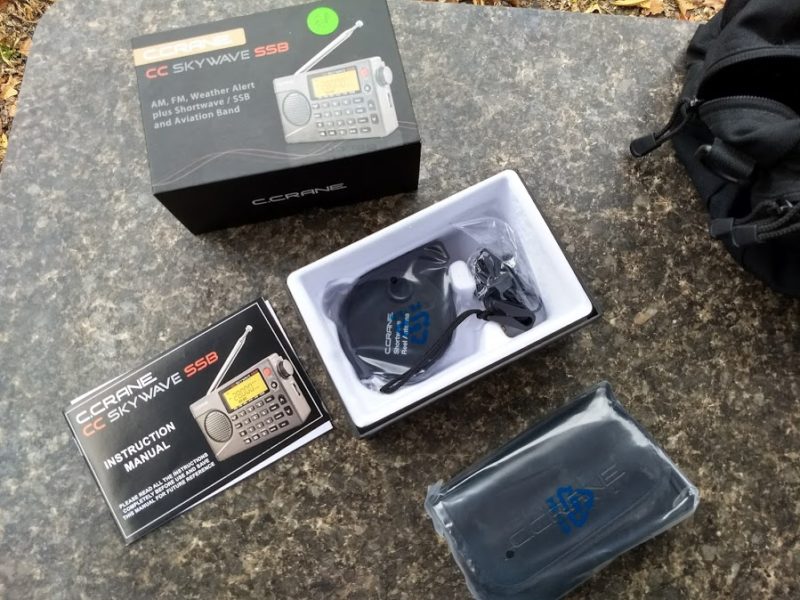
Yesterday, I tested all three radios. What follows is a quick assessment of those radios:

Performance

In a nutshell, the three production units I tested yesterday performed better than my second and third production radios on all bands. Strictly in terms of sensitivity, these were on par with the pre-production unit.  Very good.

But with that said, even the last three production units I received had internally-generated noises that I couldn’t help but notice. Disappointing.

At this point, I must assume these noises are prevalent throughout the first production run since all but one of the six CC Skywave SSB production units I tested have it. Meanwhile, the only one that didn’t have the noise had serious sensitivity issues.

Noises

Yesterday, I spent two full hours searching for birdies (internally generated noises) and other anomalies on the three CC Skywave SSB production units I received Monday. Each radio’s noise location varied slightly (within 20-40 kHz). The following locations are roughly the average of frequencies:

Birdies

Birdies are a fairly common occurrence among sensitive receivers, and the CC Skywave SSB has about an average number. The birdies I noted are outside the space where I do my broadcast listening:

  • 2,305 kHz
  • 9,220 kHz
  • 11,520 kHz

Background audio whine/tone

All of the production units (save Radio #2) have a very slight audio whine present––either via the internal speaker or headphones––on certain portions of the spectrum.

In my first full production unit, I believe this whine may have slightly affected the unit’s overall sensitivity. On the last three production units, it didn’t seem to have as much of an impact on overall sensitivity.

The whine is still there, however, and occasionally when tuned to a weak signal within one of these zones, other faint sweeping noises could be detected in the background.

Sometimes it’s even more noticeable when the broadcaster is weak and is located within one of the whine zones. Here’s an example of 10 MHz WWV time station comparing the original Skywave with the Skywave SSB. Note that yesterday we had terrible propagation due to a geo storm, so WWV was very weak indeed.

Listen for the sweeping tones:

Here are the frequency ranges where I noted the background whine:

  • 7,830 – 8335 kHz
  • 8,610 – 8,690 kHz (note: very faint)
  • 9,770 – 10,415 kHz
  • 11,585 – 11810 kHz

Another oddity is a noise I found prevalent on CHU Canada’s 7,850 kHz frequency. I’m guessing it may be due to the combination of a DSP birdie on top of a relatively strong broadcaster.

Here’s a video comparing the original Skywave with one of the production models:

I noted no birdies or noises on the mediumwave band. The FM, AIR band, and Weather frequencies perform beautifully.

Summary:  The bad news––and the good

At the moment, it appears the first production run of the CC Skywave SSB has some challenging QC issues. Therefore, unfortunately, I can only recommend it at present if you’re willing to check your unit very carefully for any of the internally-generated noises I noted above.

If, however, you’ve already purchased a Skywave SSB and have noticed the noises, then please contact C. Crane. I’ve been a C. Crane customer for many years and I’m confident they will take care of your issue.
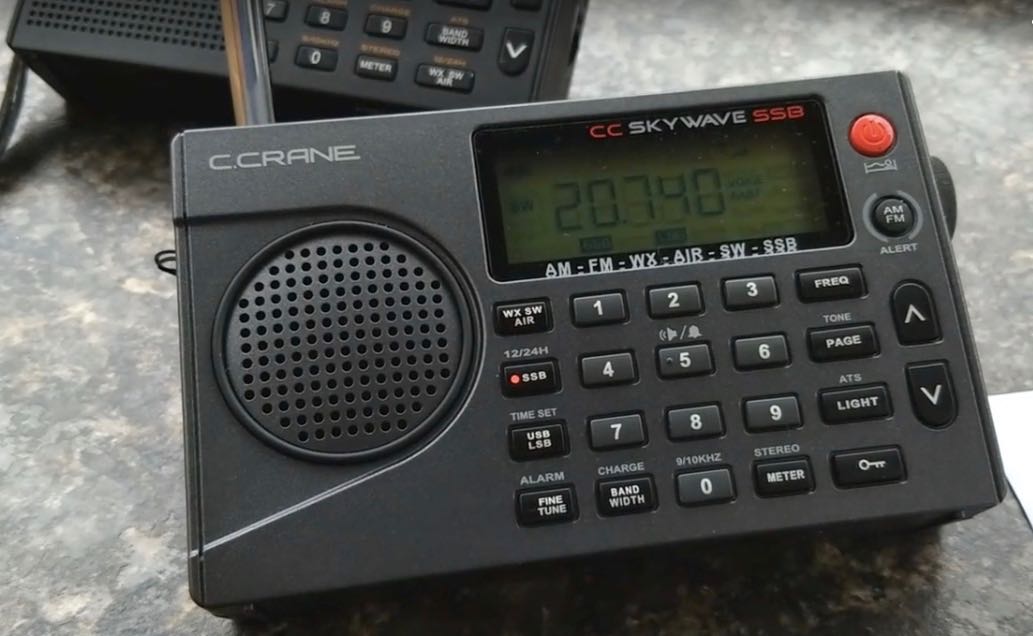
This being said, the truth is, I sympathize with C. Crane. It must be challenging to get things right and truly consistent on the first production run of a radio––especially on a tiny compact radio like the Skywave SSB.  It must be especially hard to keep noises out of the audio chain when so much is crammed into such a tiny package.

I fully suspect these issues will be sorted out in the second production run which, of course, I will test and review.

But the good news, and it’s sincerely good news, is this:  if C. Crane can produce a CC Skywave SSB as good as the pre-production unit, they’ll truly have a winner.  So let’s keep our fingers crossed that C. Crane can do it again…and again.
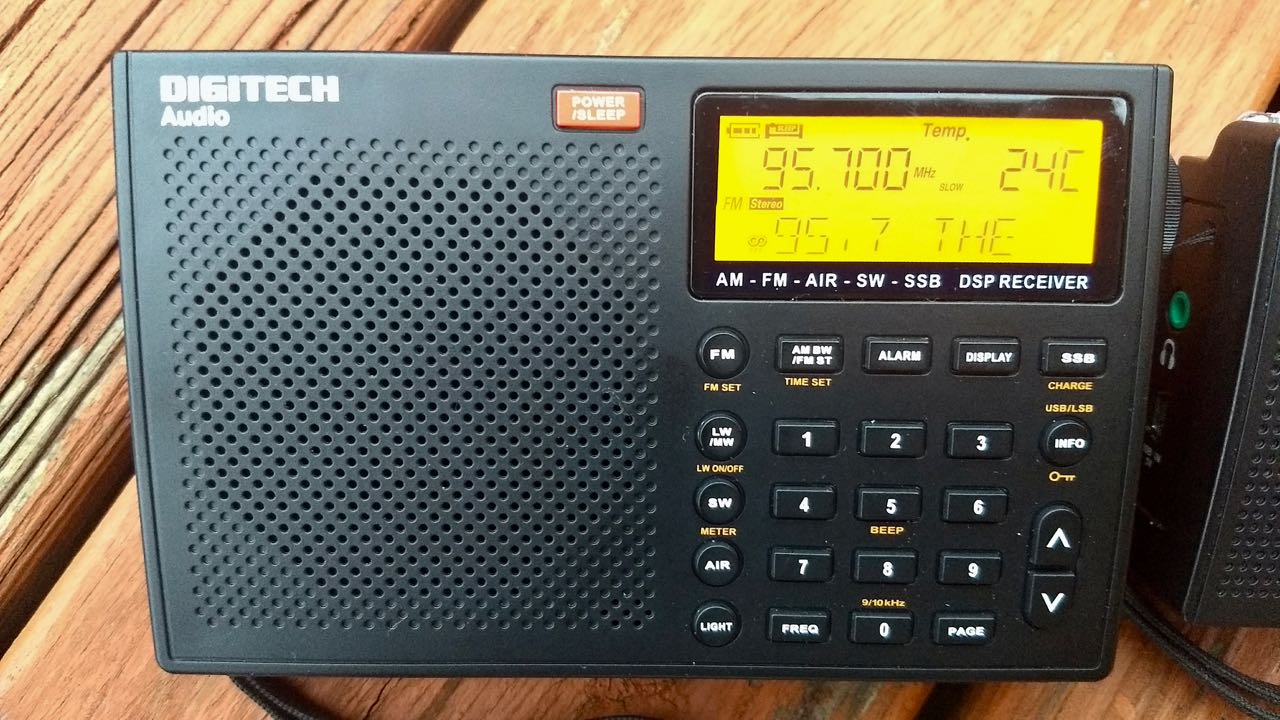
Keith is impressed with the Digitech AR-1780

Many thanks to SWLing Post contributor, Keith Batari, who shares the following:

I have just got the AR1780 and comparing with others I’ve had especially the PL-660 and PL-880 beats them both. Firstly the SSB does have an annoying mute when running, but the sensitivity and sound quality is fantastic, and that goes for all bands.

The airband sensitivity is also impressive with excellent squelch. Long wave sensitivity is low[…]. Tuning is without the quirks of the PL-880 and great on general coverage bands.

Headphones sound great. I’ve opened mine and the build quality is good with band trimmers and transformers.

If anyone has acquired the circuit diagram could the post it on the Google site.

If you want a radio with a lot of bang for your bucks, then look no further.

Agreed, Keith! The AR-1780 is certainly a value performer. Click here to read our comprehensive review.

I should add that while LW performance is not stellar on the AR-1780, it should suffice for LW listening in Europe, for example. The C. Crane Skywave series does not include longwave, so if you’re looking for a compact travel portable with LW service, the AR-1780 is a better bet.

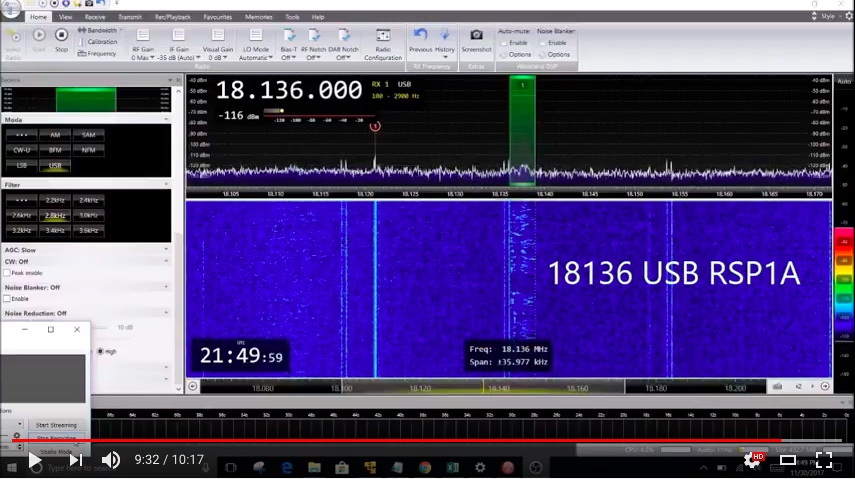
Video: Ivan compares the SDRplay RSP1 and RSP1A

Many thanks to SWLing Post contributor, Ivan Cholakov (NO2CW), who shares the following video and notes:

Comparing side to side reception performance on RSP1A vs. RSP1 on medium wave and shortwave using SDR Console 3.

Audio level is uneven because two laptops were used. Antenna is the same, 80m OCF dipole.

Click here to view on YouTube.

Rocky is pleased with the CC Skywave SSB

Many thanks to SWLing Post contributor,Rocky Robello (KA7EII), who writes:

Just got my new C. Crane Skywave SSB radio. Same size as my wife’s C. Crane Skywave. AM, FM, WX and Airband all work just as well on the Skywave SSB as the regular Skywave.

So far, I am very satisfied with the SSB reception on the new Skywave SSB. It has one strange quirk – when you press the SSB button, it takes about 3 to 4 seconds to go into SSB mode. Five dashes appear on the display during this wait. After that, it is great.

I enjoy aeronautical communications and I get good reception of San Francisco radio and aircraft flying between the west coast and Hawaii. This is on the built in whip antenna.

Also been tuning through the ham bands and it does a nice job. There is an extra 0.5 KHz bandwidth on SSB mode so it is possible to do some casual CW listening. I like how the “Band” button works on shortwave.

When in AM mode, it cycles through the shortwave broadcasting bands. In the SSB mode, it cycles through the ham radio bands. It even selects LSB on 160-30 meters and USB on 20 through 10.

The only other receiver I have to compare it with (other than my wife’s Skywave) is my 18-year old Sangean ATS-909. The ‘909 is a bit more sensitive on MW AM broadcast band but selectivity is as good or better on the Skywave SSB.

FM sensitivity is great and the FM selectivity of the Skywave SSB beats the ‘909 hands down. Using the built in whip antennas, the Skywave SSB is more sensitive than the ‘909 on shortwave. Haven’t tried the included roll-up antenna on the Skywave SSB yet.

Having a squelch is really nice for monitoring the VHF Airband. One thing the Skywave SSB does that the regular Skywave does not do – you can scan 10 VHF Airband frequencies on the Skywave SSB.

So far, I am very satisfied with this new, tiny shortwave receiver.

Many thanks for sharing your mini review, Rocky!

I’ll also post a CC Skywave SSB review here hopefully by the end of next week–after Thanksgiving travel. My review has been delayed a as my CC Skywave SSB production units have had some QC issues: a very slight internally-generated noise in one and subpar sensitivity in the other.

My pre-production CC Skywave SSB is as Rocky describes: a gem of a compact receiver with sensitivity equal to that of its predecessor and relatively good noise characteristics.

C. Crane engineering is looking into the issues with my early production units and dispatching a replacement. I’ll post an update and review when I receive the replacement.

Dave’s Digitech AR-1780 notes

Many thanks to SWLing Post contributor, David Morton, who comments with assessment of the Digitech AR-1780:

I’ve been using [the Digitech AR-1780] in Australia (southern Tasmania) for about 5 weeks.  In the last 10 or so days, I’ve got a 26m long wire hanging fairly reliably on a N-S bearing.  My history is that I trained as a marine radio operator in the early 1980s, but worked in commercial IT; so no real radio theory and I only just started listening to SW again since being a volunteer in the South Pacific in the mid 1990s.

Now, to this radio.  I quite like it although it has quirks I wish it didn’t have.  In the 1990s, I used a Panasonic RF-B45 and it was rock solid until it died a few years ago.  Every now and then, I try to fix it, but no luck…

Reception here is quite limited and that’s how I discovered the first quirk:  when it scans at SW frequencies it skips. For example it seems to jump from about 9400kHz to 11000kHz.  I also have an old Jaycar AR1747 and it also skips when scanning.  They also skip from about 26100 and restart at 2300kHz.  Whether it’s a design feature, or a fault, I don’t know. Other than that, I think it’s a great radio so far.  The AR1780 lets you type in the frequencies it skips, it just won’t scan them.

Until I start to find some reliable interesting stations (I’ve picked up some Radio NZ Int and BBC World Service), I’m doing a fair bit of listening to WWVH in Hawaii.  Sure listening to the time isn’t as fun, but it serves a purpose when comparing radios side by side.  WWVH broadcasts on 2500, 5000, 10000, 15000, 20000 and 25000 kHZ I think.  I can usually get 15000 subject to propagation at any time.

Until I gave it away, I also had a Jaycar AR1733 and it also skipped; they all probably share a common chip and skip the same frequencies although I haven’t checked closely.  This radio looks identical to the Skywave many of you mention.  The old AR1747 also had a Crane equivalent, and this was helpful as Crane’s manual was much better!

On the first tests with my long wire antenna, the AR1733 had a fairly clear signal, beat the old AR1747 and the AR1780 was the best.  The AR1747 is hard on its D batteries, so may have been handicapped.  As it got dark, I found the signal didn’t change much on 15000 kHz with any radio, but only the AR1780 would find 5000 kHz while scanning (since it skips over 10000 kHZ).  The AR1747 does not have a keypad, so all tuning is by a dial or the scan function.

Oh yes, a hint I’ve learned for Golan.  I gained the habit of punching  then the desired frequency, then .  The precludes the need to type in leading zeroes and trailing zeros.  For example, I get WWVH by  5000 , while 15000 is  15000.  This may go all the way back to the RF-B45, so I’ve had time to acquaint myself.

Next is batteries, the AR1733/Skywave needs 2xAA batteries, the AR1780 takes 4xAA as did the RF-B45.  I haven’t yet run down any batteries in the AR1780 yet, but all my radios with 4 batteries have always worked better than those with only two.  So the extra size is worth it, and the AR-1780 is a fair bit smaller than the old RF-B45.  The AR1747 was an exception, it took 4xAA and 4xD and AA’s were almost a waste of time in it.  But hey, it’s a telephone book size radio with a big speaker; so I keep it plugged in as much as I can.

Anyway, it’s almost 4PM here, we’re on DST so it’s GMT+11 hours.  The bands start opening up soon so I want to get back to the radio.  I’ve still got a lot of work to find the who, what and where of SW broadcasters.  At least logging them is easy these days, when you tune into something, just point the mobile and it and make a movie!

Thanks for your feedback, David!  I also think the AR-1780 is a gem of a little radio.

Click here to read our review of the Digitech AR-1780.

The thrill of the hunt even knowing there is no “perfect” radio

Though I own a number of portables that have better performance specs and ergonomics, I still gravitate to my ICF-SW7600GR.

Most recently, I received correspondence from Golan Klinger who has been bitten by the radio bug (he calls it “radioitis”). He has been acquiring portables and comparing them, seeking his favorite overall.

Golan had an epiphany he recently shared with me:

Thomas, in your “Mega Review” [summarizing your radio preferences] you wrote:

But this is my personal choice; you might have a completely different answer. I guess that’s the point I made earlier–it all depends on the listener.”

Of all the valuable advice I’ve gleaned from your website, that might be the most important.

Every radio seems to have its own personality and one can read and watch all the reviews in the world but there’s no substitute for sitting down and actually listening to a radio.

I just had an epiphany — there can be no perfect radio and even if there were, finding it wouldn’t be half as much fun as the search for it.

That’s why everyone has multiple radios and when asked which is their favourite they lean back and say, “Well…”

What a wonderful hobby this is turning out to be!

You nailed it, Golan.

Indeed, with most every review I post I receive both praise and criticism later from readers. To some, sensitivity is everything–to others, it’s audio fidelity. Some listeners seek optimal reception on particular bands: longwave, mediumwave, the 31 meter band, FM, etc. There are even some who place a great deal of importance on the design and aesthetics of the radio. When I write a review, I do my best to walk in the shoes of all of these folks. It’s not an easy task.

When I’m not writing a review and am only concerned with what I value in a radio, it’s a balance of performance, flexibility and ergonomics I seek.

But as you say, there is no “perfect radio” out there that could satisfy everyone. I doubt there ever will be.  Each listener has their own set of preferences–the checklist that matters to them most.

I’ll admit that part of what drives me to do radio reviews is my curiosity and the hope that each upcoming model might be a step closer to the elusive “Holy Grail” radio; for me and for you. It’s all about the thrill of the hunt!

Thanks for sharing, Golan!

Review of the Digitech AR-1780 portable shortwave radio

The following review first appeared in the October 2017 issue of The Spectrum Monitor magazine.


Earlier this year one of my readers in Australia noted the addition of the Digitech AR-1780 to the product offerings of the Australia and New Zealand-based retailer Jaycar.

One thing I’ve learned over the years is that there are few in-country sources of shortwave radios in both Australia and (especially) New Zealand. Jaycar, in a sense, represents what RadioShack and The Source have offered in the US and Canada––a more accessible electronics retailer with some shortwave radio selection.

Jaycar sells radios badged with the name Digitech. Unfortunately, none of Jaycar’s recent additions––and there have been a few––have been enormous hits among serious radio enthusiasts. The company currently offers five Digitech models: the AR1736 ($18.95 AUD), AR1721 ($25.95 AUD), AR1748 ($129.00 AUD), AR1945 ($159.00 AUD), and now the AR1780 ($129.00 AUD).

The Jaycar models are either very cheap sub-$30AUD digital portables, or pricier large portables with a form factor similar to the Grundig S350DL and S450DLX, or the C.Crane CCRadio-SW. The new AR1780 fits somewhere between––a compact portable that promises a compliment of features tailored for the radio enthusiast.

In this review, we’ll take a close look at the AR1780, starting with its feature set.

Features

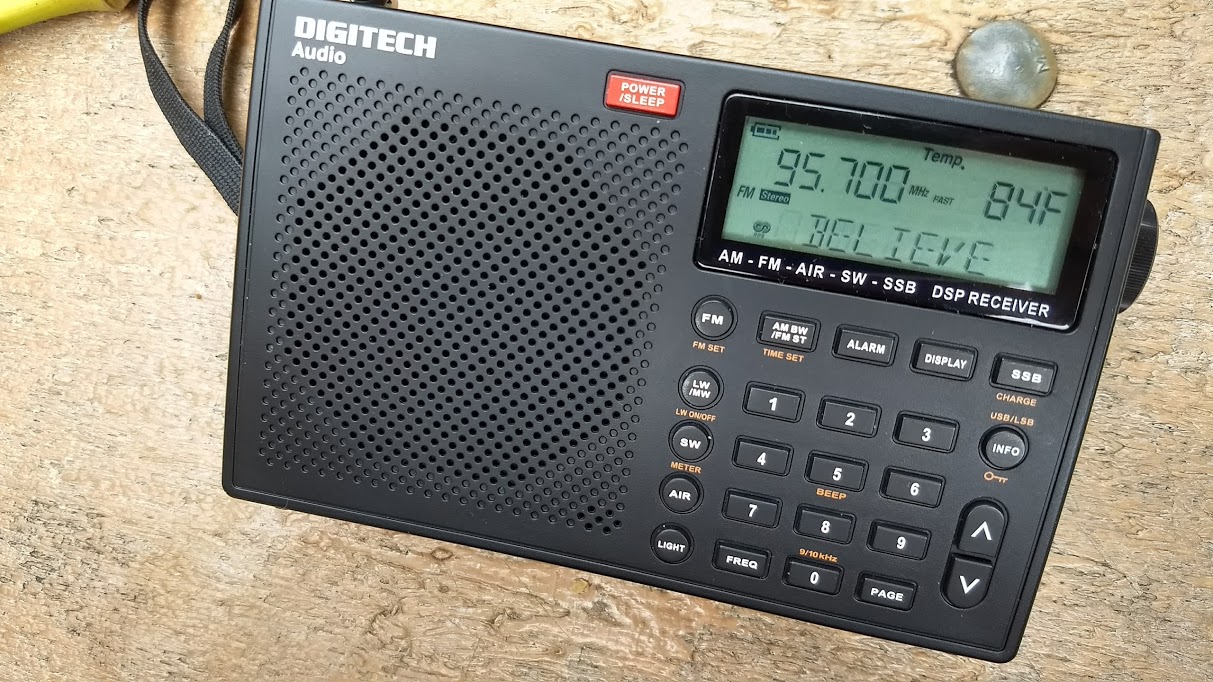
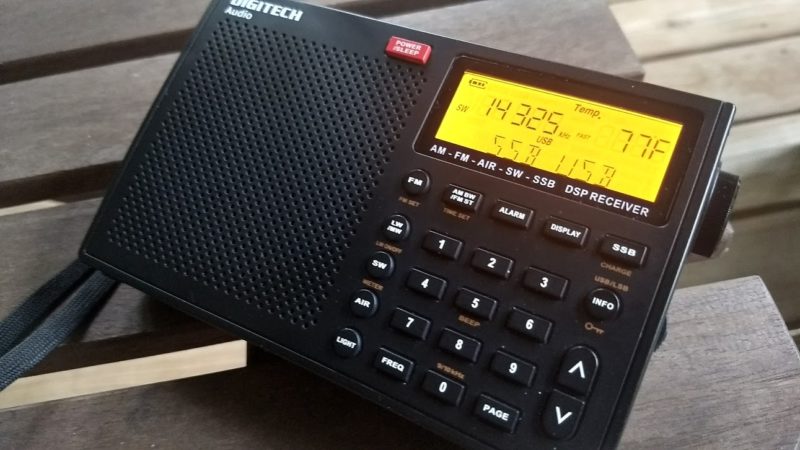
What appeals to me about the Digitech AR1780 is the amount of features provided by such a compact, traveller-friendly form factor.

Here’s a comprehensive list of the AR1780’s features and specs:

Frequency coverage:

  • FM 87.5 – 108 MHz
  • MW 522 – 1620 kHz or 520 – 1710 kHz
  • SW 1711 – 29,999 kHz
  • LW 150 – 450 kHz
  • AIR 118 – 137 MHz

Modes:

  • FM (including RDS)
  • AM
  • Single Sideband

Selectable Bandwidths:

  • AM mode: 6, 4, 3, 2.5, 2, & 1.81 kHz)
  • SSB mode: (4, 3, 2.2, 1.2, 1 & 0.5 kHz)

Convenient features:

  • Sleep timer
  • Clock/Alarm
  • Thermometer
  • Signal strength meter
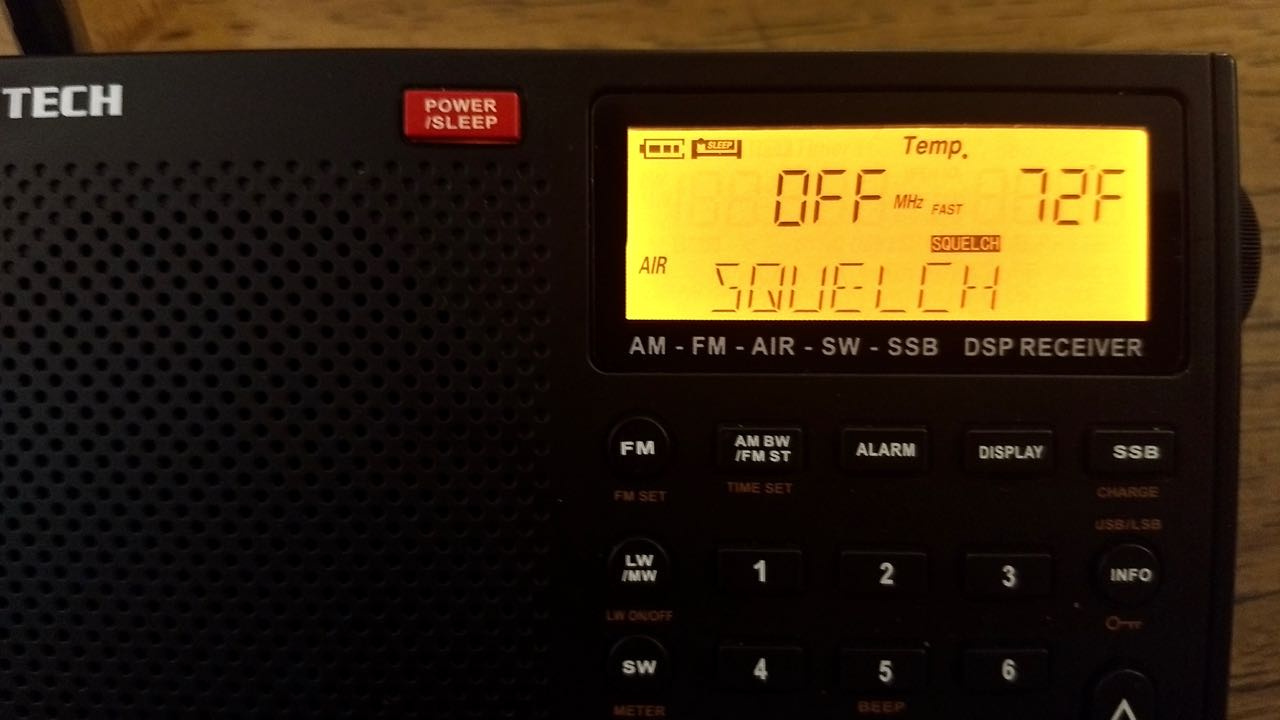
  • Squelch control
  • Voice/Music selectable audio filter
  • Dedicated fine tune control
  • Headphone jack (3.5 mm)
  • Key lock button
  • Key beep on/off
  • Tuning knob and tuning step up/down buttons
  • Display button cycles through alarm, time, temperature, and signal strength
  • FM mono/stereo selection
  • Backlight button
  • Selectable 9/10 kHz regional MW tuning steps
  • Flip-out backstand

Power source: 7 VDC or 4 x AA cells (not included, can be internally charged if NiMH cells)

Antenna: Built-in telescopic and 3.5mm socket for external antenna

Weight: 253g/0.56 lbs (excluding batteries)

Dimensions: 150(W) x 95(H) x 30(D)mm

Operation Manual

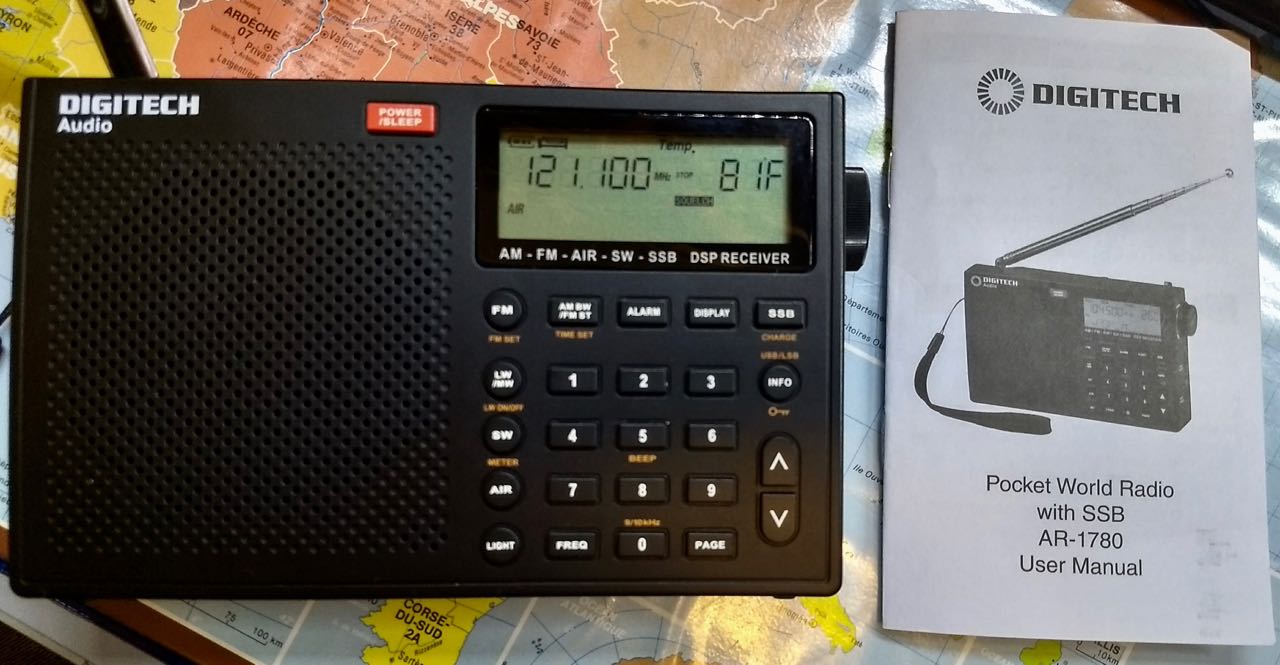
The Digitech AR1780 ships with a small user manual. In fact, other than the hand strap, the user manual is the only additional item in the box besides the radio itself.

The manual is quite thin––slightly smaller in height and width than the AR1780––and only contains about eight front-and-back mini pages.  Although readable, it’s littered with grammatical and punctuation errors.  While a manual is certainly a welcome reference item with this feature-packed radio, this manual comes up short, lacking detailed explanations of features and even leaving some out altogether:  it does not, for example, offer any explanation on the use of the excellent squelch control, nor does it fully explain the station memory set on multiple memory pages––!  Rather unfortunate, as these features deserve a clear explanation.

First impressions

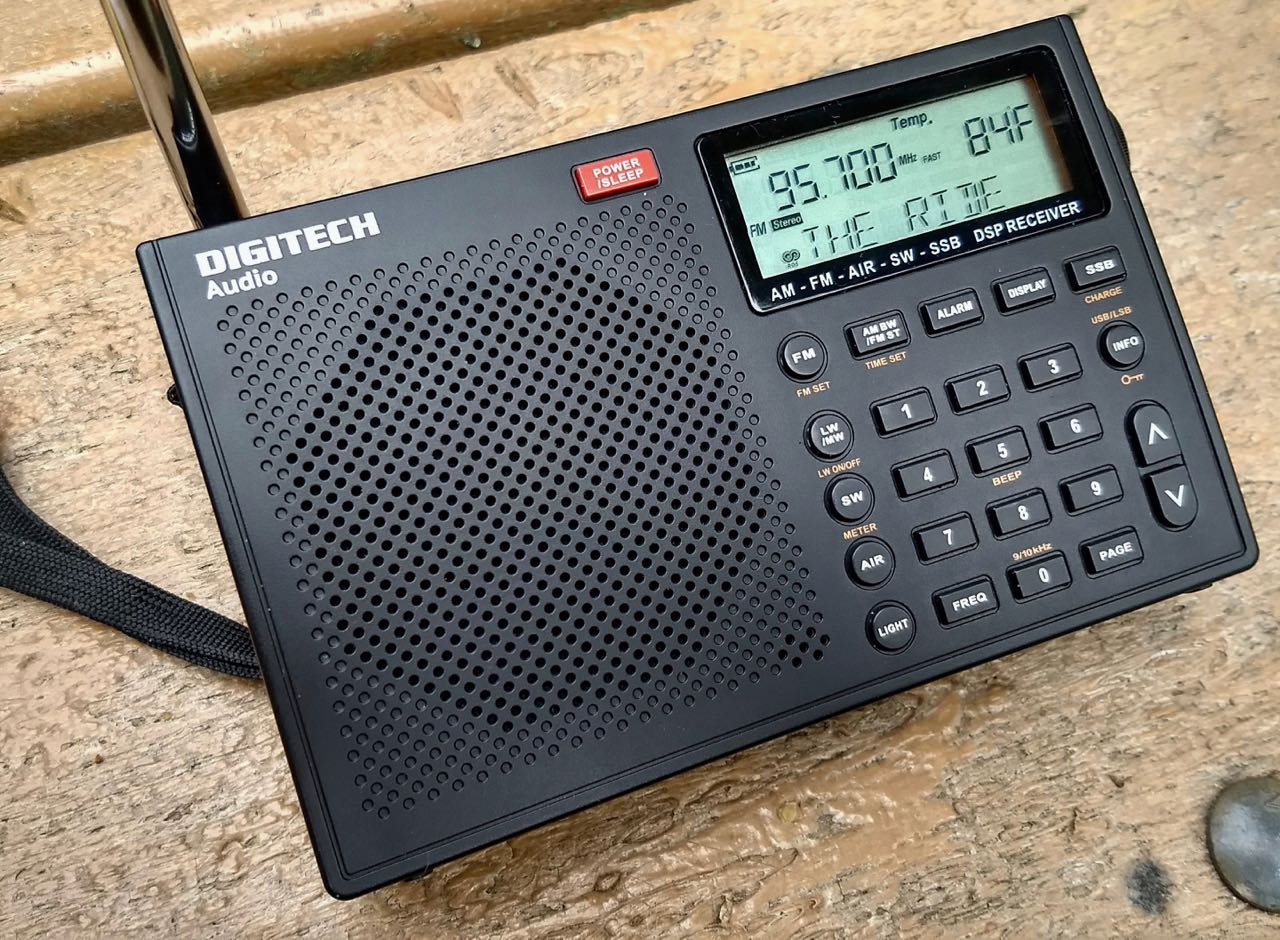
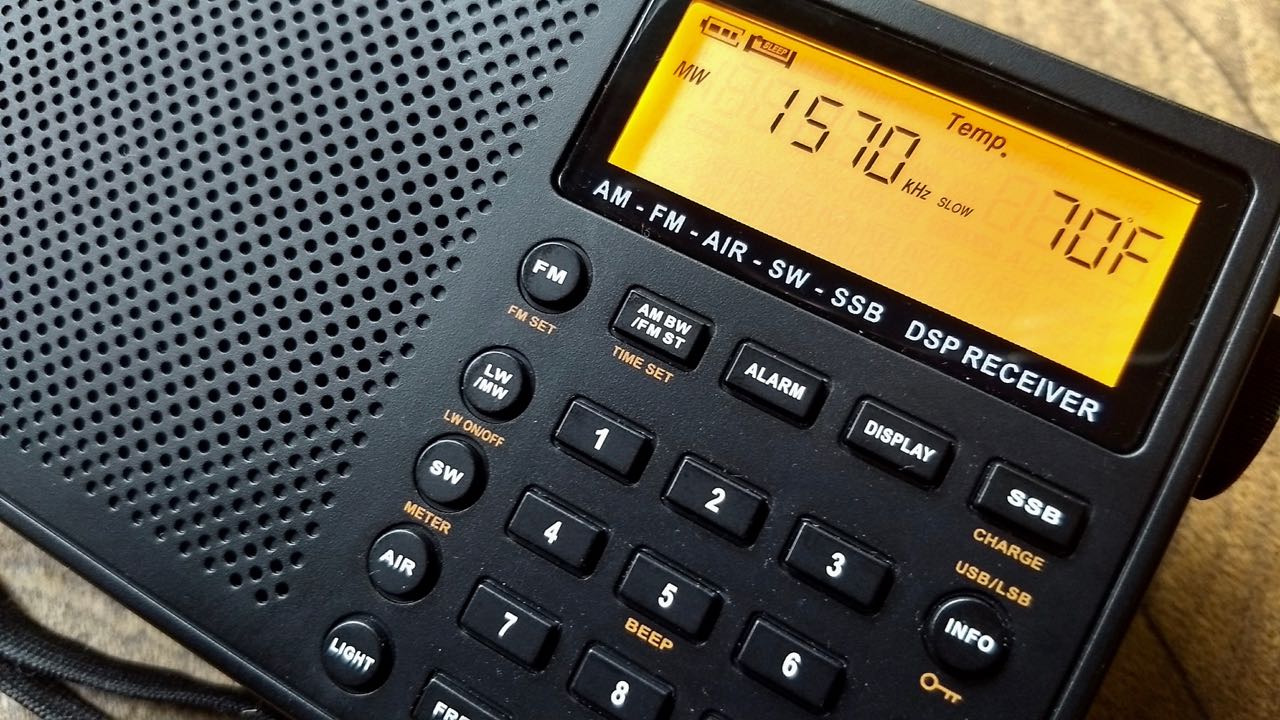
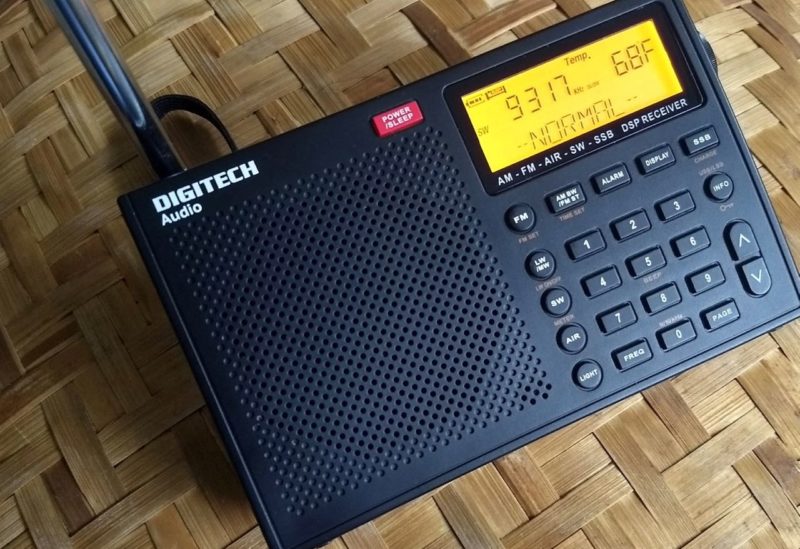
The Digitech AR-1780, like many DSP-based portables, includes a handy temperature display which can be toggled for Celsius or Fahrenheit.

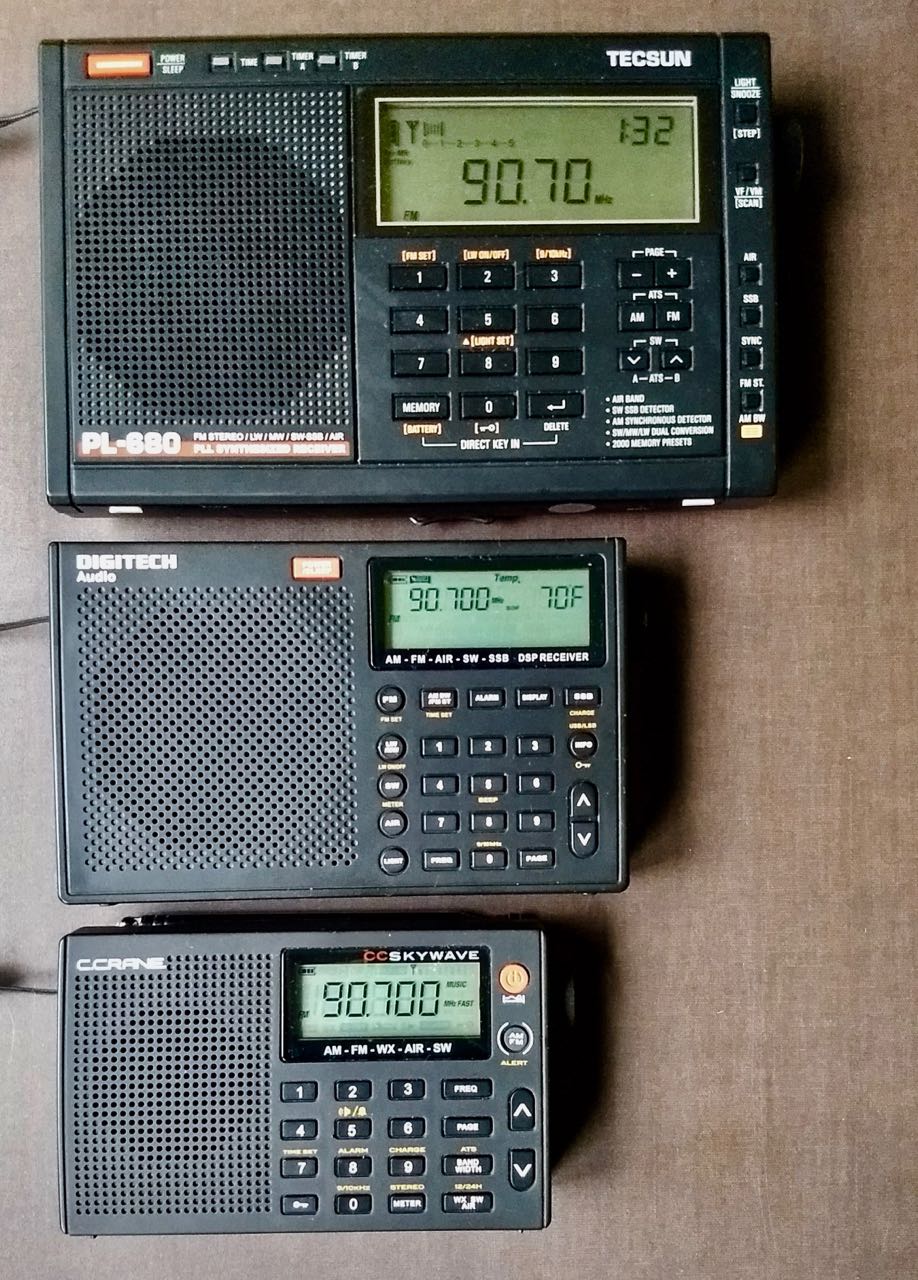
I really appreciate the modest, portable form factor of the AR1780, so it had that going for it before I even opened the box. I travel with portable radios a lot, so the compact body of the AR1780 is very appealing. It’s not as compact as the C. Crane CC Skywave series, or the Grundig G6, but is much smaller than my Tecsun PL-660 and PL-880, or my Sony ICF-SW7600GR.

Comparing size: The Tecsun PL-680 (top), Digitech AR1780 (middle), and the C. Crane CC Skywave (bottom)

Unlike the radios mentioned above, the AR1780 does not include some sort of protective case or bag. I believe this is an omission for a radio aimed squarely at the traveler.

Fortunately, the plastic chassis of the AR1780 feels substantial enough. With the key lock engaged, the only likely problem that could arise from having no protective case is damage to the display, such as scratching.

The buttons all have a tactile feedback and seem to respond quickly enough, save powering up the radio, engaging the SSB mode, or changing bands, each of which takes a couple of seconds to engage.

I especially like the fact the AR1780 has, on the right, a dedicated multi-function tuning knob. One can turn the tuning knob to scan frequencies or press it to cycle through fast or slow tuning steps (or to turn off this knob’s function entirely).

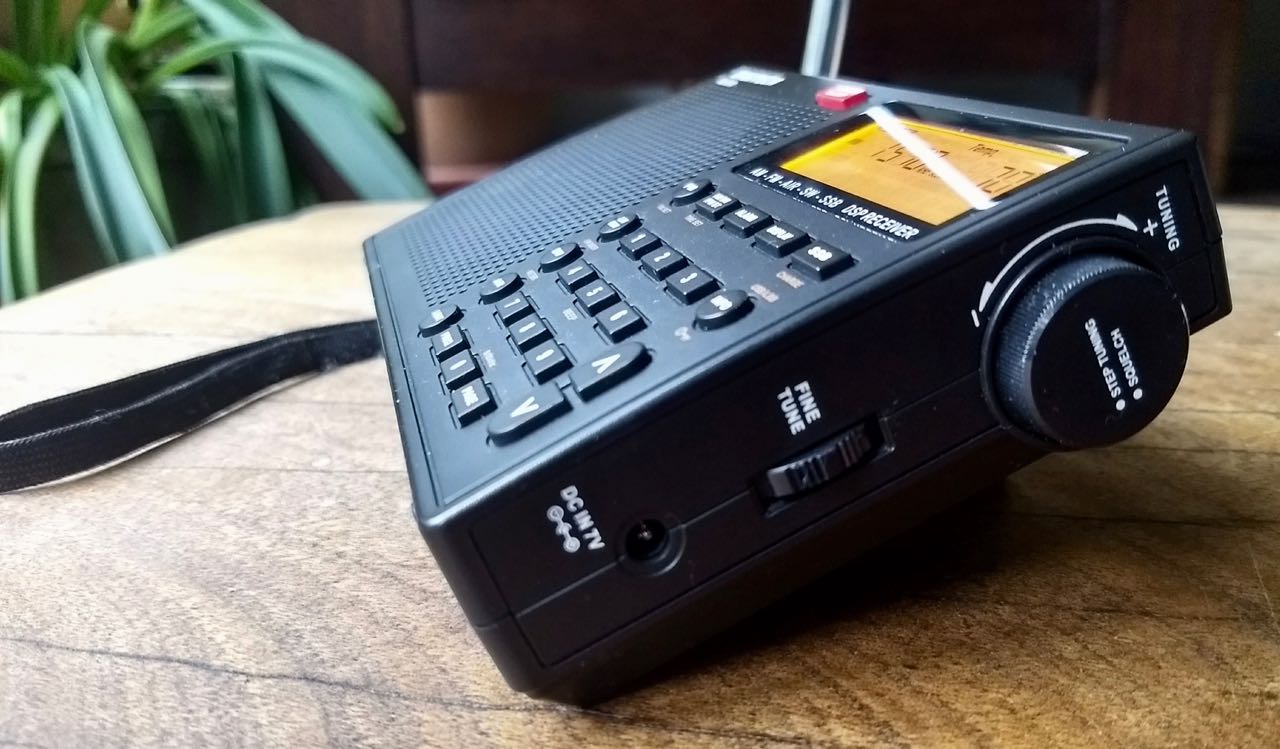
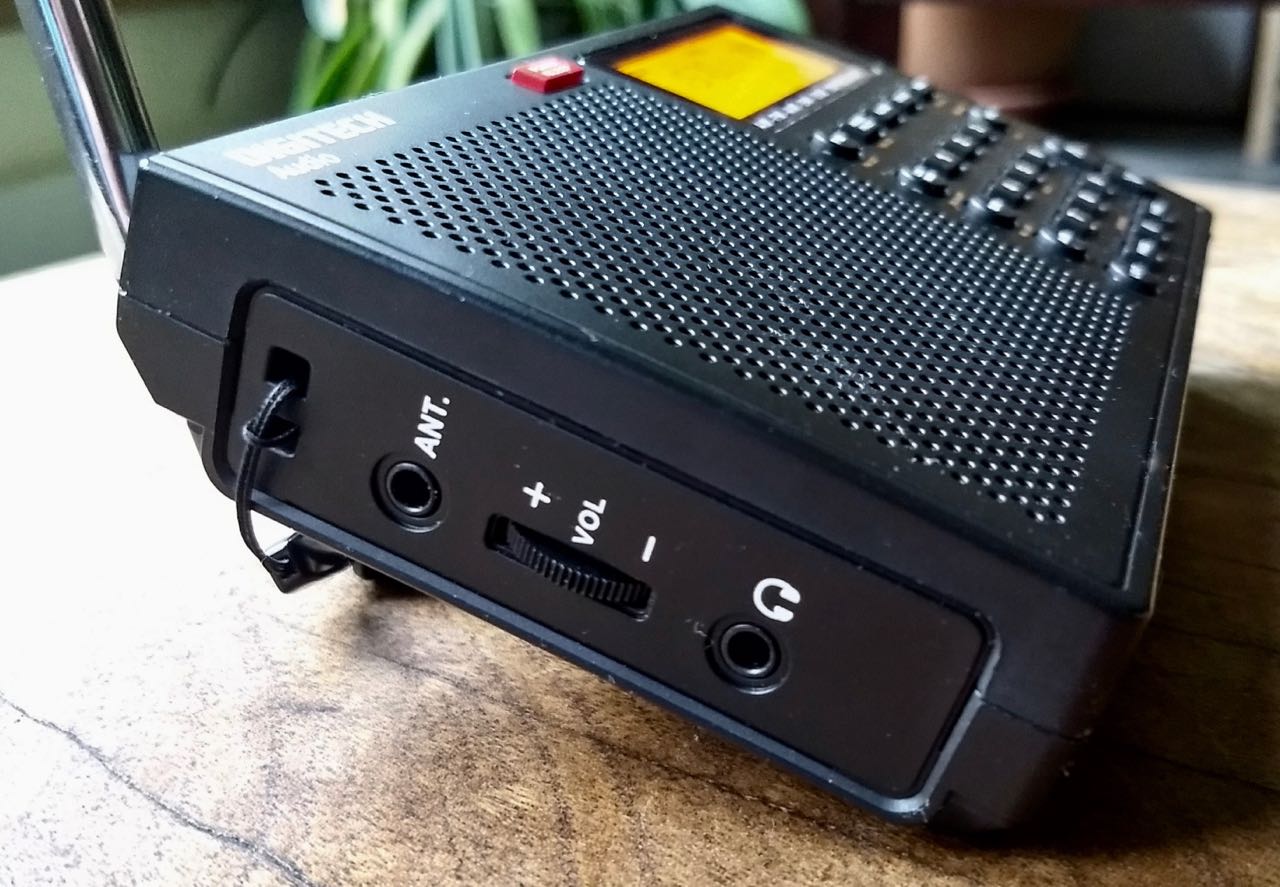
The AR1780 also has a dedicated fine tune control––a tuning wheel just beneath the main tuning knob also on the right side of the radio (see image above).  The only odd quirk about this is that this is where most radios have a volume control. Being a creature of habit, many times I’ve inadvertently shifted frequencies when I simply wanted to turn up or down the volume! The volume control, meanwhile, is in the same position on the left side panel of the radio between the antenna and earphone jack.

Speaking of volume, the AR1780 can provide plenty of it-––almost room-filling audio––via the internal speaker. Best yet, I like its balanced fidelity: mellow, with notes of bass, but ample treble when listening at moderate volume. The audio response curve is almost ideal for such a small package.

Something else worth noting: the AR1780 fits nicely in the hand. In general, it’s a great size for portable listening.

Major bonus for a travel radio: the AR-1780 is powered by standard, accessible AA cells. Note that the frequency range information silk-screened on the back stand is incorrect–shortwave coverage extends up to 29,999 kHz.

On the downside, however, one negative I noted shortly after beginning use: muting between frequency steps. In AM mode, this is not as distracting as in SSB mode. Muting makes band scanning a more tedious and fatiguing experience. Unfortunately, in this era of DSP-chip-based receivers, it seems muting has resurfaced.

Also, as with many other DSP portables, you can often hear “input” noise when pressing buttons. In other words, if while listening to one frequency I decide to key in another, I’ll hear a little clicking or buzz in the audio as each button is pressed. This is a very minor annoyance since it only happens when buttons are pressed, nonetheless, I thought it worth mentioning. I often wonder if it’s a result of poor shielding, something from which similar models suffer.

Performance

Over the past two weeks, I’ve had the AR1780 on the air almost every day. I’ve compared it with a number of receivers, but mainly The C. Crane CC Skywave, The CountyComm GP5-SSB, and even the Grundig G6. Below, I break down my notes by band.

AIR band

Let’s start with the “bonus” band: the VHF aviation band.

I’m sure there a number of readers who’ll never use this band, but I am not one of them. Personally, I really enjoy listening to aviation traffic, especially when I travel by air. Since the advent of the AIR band on ultra-compact radios, I no longer feel like I have to lug an additional scanner or receiver just to listen to the local air traffic control; that’s a plus.

Performance-wise, the AR1780 seems to be equal with the CC Skywave on the AIR band. Like the CC Skywave, the AR1780 has a squelch control––a fantastic feature, indeed. Simply tune the radio to your favorite aviation frequency, press and hold in the tuning knob on the side, and then use the tuning knob to adjust the squelch level. I find level 3 or 4 works well.

Note that unlike the squelch on the CC Skywave, the squelch control on the AR1780 actually carries over to the shortwave band. If you have squelch set on the AIR band, then switch to another band where squelch isn’t needed, you will need to turn it off. I never use squelch on the shortwave or mediumwave/AM broadcast bands; normal fading (QSB) can trick the squelch to open and close while tuned to a frequency.

Another convenient feature: press and hold the AIR button to start an automatic scan of the entire band. It’ll run through the AIR band once, saving any active frequencies. This is an ATS feature, so only makes one pass.  I wish you could set it to continuously scan the aviation band in a loop, much as a traditional scanner would.

FM

The AR1780 does a fine job on the FM band. It easily received my benchmark FM stations and even decoded the RDS from one broadcaster about 110 miles from my home base.

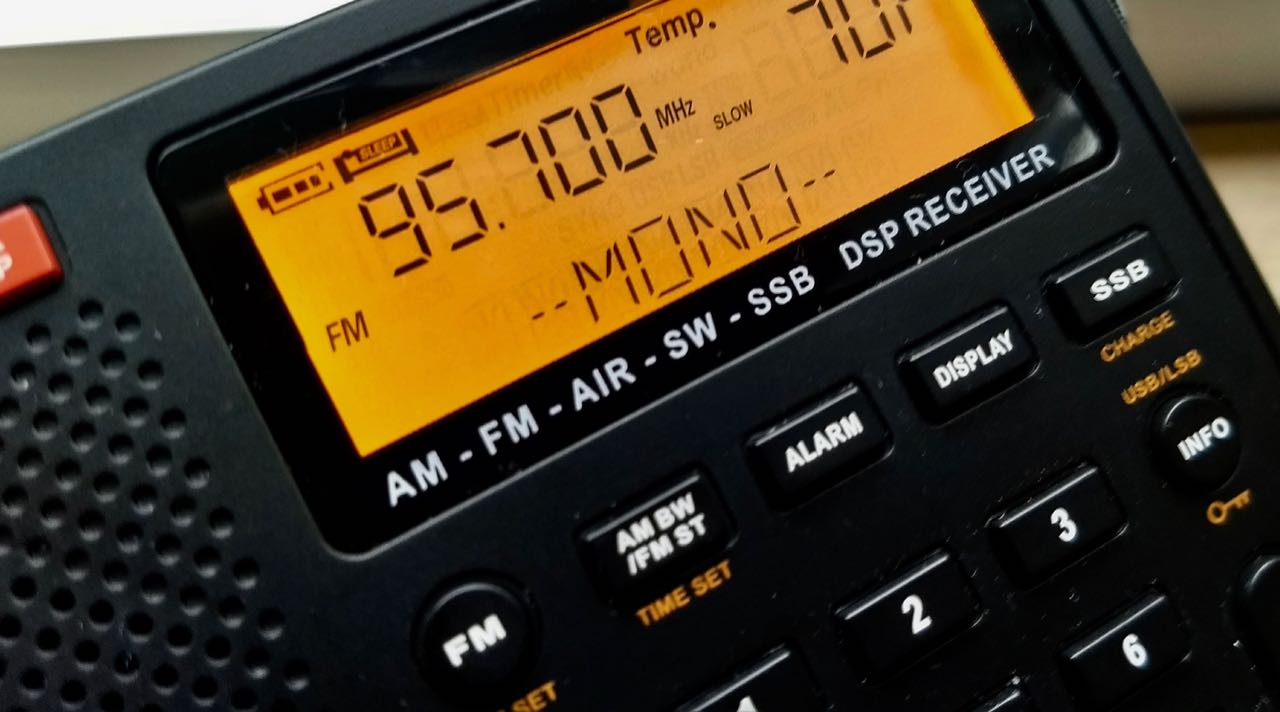
When listening to marginal FM signals, the AR1780 can be set to mono mode instead of default stereo mode.

What’s more, the internal speaker is exceptional at handling music––reasonably full fidelity given the limitations of the speaker size.

Longwave/Mediumwave

I’ll be the first to admit that longwave is not an easy band for me to evaluate. Here in North America, there are so few opportunities in the summer to log trans-Atlantic longwave stations. Indeed, unless I’m travelling to New England or the Canadian Maritime provinces, I never try to do so on a portable. I leave TA longwave DXing to my SDRs and tabletops back home where I can listen with the assistance of a large antenna.

But when I travel to Europe, longwave is a must, so my travel radio needs this capability. Based on my ability to receive benchmark LW airport beacons, I’m going to assume the AR1780 will do a fine job receiving European longwave stations while in Europe.

Likewise, the AR1780 should serve you well for both daytime and nighttime reception on mediumwave. Fortunately, switching between 10 and 9 kHz steps is simple: with the radio powered off, simply press and hold the “0” button to toggle between these steps.

On longwave and mediumwave, you can also use SSB mode (both upper and lower sideband). This could come in handy to reject adjacent signal interference on MW.

Likely an oversight on the part of the manufacturer, you can even engage the squelch feature, though why you would on LW and MW, I’m not sure.

Of course, with the fine-tuning control, you can navigate both bands in 1 kHz steps should you desire.

In short: the AR1780 is adequately sensitive on mediumwave and likely on longwave, as well. I wouldn’t rely on it for any serious DXing, but for a travel radio, it will serve you well.

Shortwave

Being first and foremost an avid shortwave listener, I spent the bulk of my AR1780 evaluation time on the shortwave bands and I’m overall very pleased with its performance.

In almost all of my comparisons on the shortwave bands, the AR1780 had a slight edge over its competition, namely, the CountyComm GP5-SSB, the Grundig G6, and the C. Crane CC Skywave.

To be clear, though, it was a very slight performance edge which I think may be attributed to the fact the AR1780’s telescopic antenna is longer, giving it a bit of gain over its competitors. For example, the AR1780’s antenna is about 17.7 cm (7 inches) longer than that of the smaller CC Skywave.

Still, placed on a table and not held in the hand, the AR1780 was able to pull in weak signals better than its competitors. I also compared it with the the Tecsun PL-680––one of my most sensitive shortwave portables––and, not surprisingly, the PL-680 outperformed the AR1780.

Again, I should stress that the sound from the AR1780’s internal speaker is more pleasant to listen to for extended periods than that of its smaller competitors.

SSB

Single sideband reception on the AR1780 is pretty impressive for a radio in this price class. On my particular unit, I found that the fine-tuning control was almost always needed to budge the frequency a few tenths of a kilohertz, even when I knew a particular signal was exactly on frequency. My Grundig G6 always had the same problem––indeed, sometimes in SSB mode, I had to listen “up” as much as 2 kHz on the G6.

The fine-tuning control works very effectively in SSB mode, nonetheless. Audio is quite pleasant, although the noise floor is not quite as low as it is on my larger portables like the Tecsun PL-680, PL-880, and the new S-8800. In my comparison tests, the AR1780 was slightly more sensitive than the CountyComm GP5-SSB, and about equal to that of the Grundig G6.

Click here to watch a short video of the AR-1780 in SSB mode.

In short? SSB is a welcome, capable addition on this compact portable.

Summary

Every radio has its pros and cons, of course. When I begin a review of a radio, I take notes from the very beginning so that I don’t forget my initial impressions. Following is the list I’ve formed over the time I’ve been evaluating the Digitech AR1780:

Pros:

  • Display is clear and easy to read
    • Time is always present via display button
    • RDS info scrolls on lower line
    • Backlit display easy to read
    • Viewing angle good, save from top
  • Dedicated fine-tuning control (even on FM)
  • External antenna jack
  • 9/10 kHz selectable MW steps
  • Time set is simple
  • Adjustable bandwidth in AM and SSB
  • Decent battery life from four standard AA cells
  • Audio from the built-in speaker has better fidelity than other radios in this size

Cons:

  • No bag or carry case
  • DC input voltage is an odd 7V
  • Muting between frequency changes, especially annoying in SSB
  • Sometimes keylock activates backlit display permanently
  • Scan function on AIR band doesn’t loop, it’s an ATS pass only
  • My AR1780 had incorrect information silk-screened on the back regarding frequency coverage
  • Minor: sluggish response when switching bands or modes

Conclusion

Is the Digitech AR1780 worth the price?  I think so. For $129.00 AUD (roughly $103 USD), you’re getting a full-featured radio that is, by and large, a pleasure to operate. It has its quirks, but so do so many ultra-compact portables in this price bracket. It’s certainly worth considering if you live in Australia or New Zealand.

I’d like the AR1780 to be a little more refined:

  • No muting while band scanning in AM or SSB modes
  • A proper scan function to accompany squelch on the AIR band
  • Squelch that doesn’t carry over when bands are switched

What I do think is impressive for this price:

  • Overall smooth audio from the internal speaker
  • Dedicated external antenna port
  • Dedicated tuning and fine-tuning controls
  • Useful screen which displays time and even RDS information
  • Sturdy, relatively long telescoping whip antenna

These are features that make the AR1780 stand out among radios in its price class.

Is it a benchmark performer?  No. But it does the job rather well for the price, and frankly, I think I’ll use this during travel occasionally, even though I have several other smaller portables.

Why?  Well, for one thing, this radio has better audio fidelity from the internal speaker than most of my ultra-compact portables. When I’m in a hotel and listening to a local radio station or even a shortwave broadcaster that’s punching through typical hotel RFI, I’ll appreciate the richer, mellower audio. Many of my smaller portables are lacking in this respect, thus I usually end up listening through headphones.

In fact, the only thing this little receiver lacks for us here in North America is NOAA weather/Environment Canada radio frequencies––but it’s no wonder it’s not included, as it was never intended for this market. But I’m glad the step size on the AM broadcast band can be switched to our 10 kHz spacing, which makes it useful here in North America.

In short, the AR1780 has exceeded my expectations––though admittedly, it may be because it was my first experience with a Digitech radio and I had heard so many lukewarm reviews of previous models.

Regardless, I’m happy I paid a small premium to order this little rig from Down Under.

If you’re a radio enthusiast in Australia or New Zealand who wants the best performance in a portable, and doesn’t mind a larger radio, then do splurge for the Tecsun PL-660, PL-880, or Grundig Satellite. There is a dedicated Tecsun distributor in New South Wales and there are always, of course, retailers on eBay and one of my favorites, Anon-Co in Hong Kong.

And if you’d like to order a Digitech AR1780 outside of Australia or New Zealand, you can purchase from this eBay seller, as I did.