Shortwave listening and everything radio including reviews, broadcasting, ham radio, field operation, DXing, maker kits, travel, emergency gear, events, and more
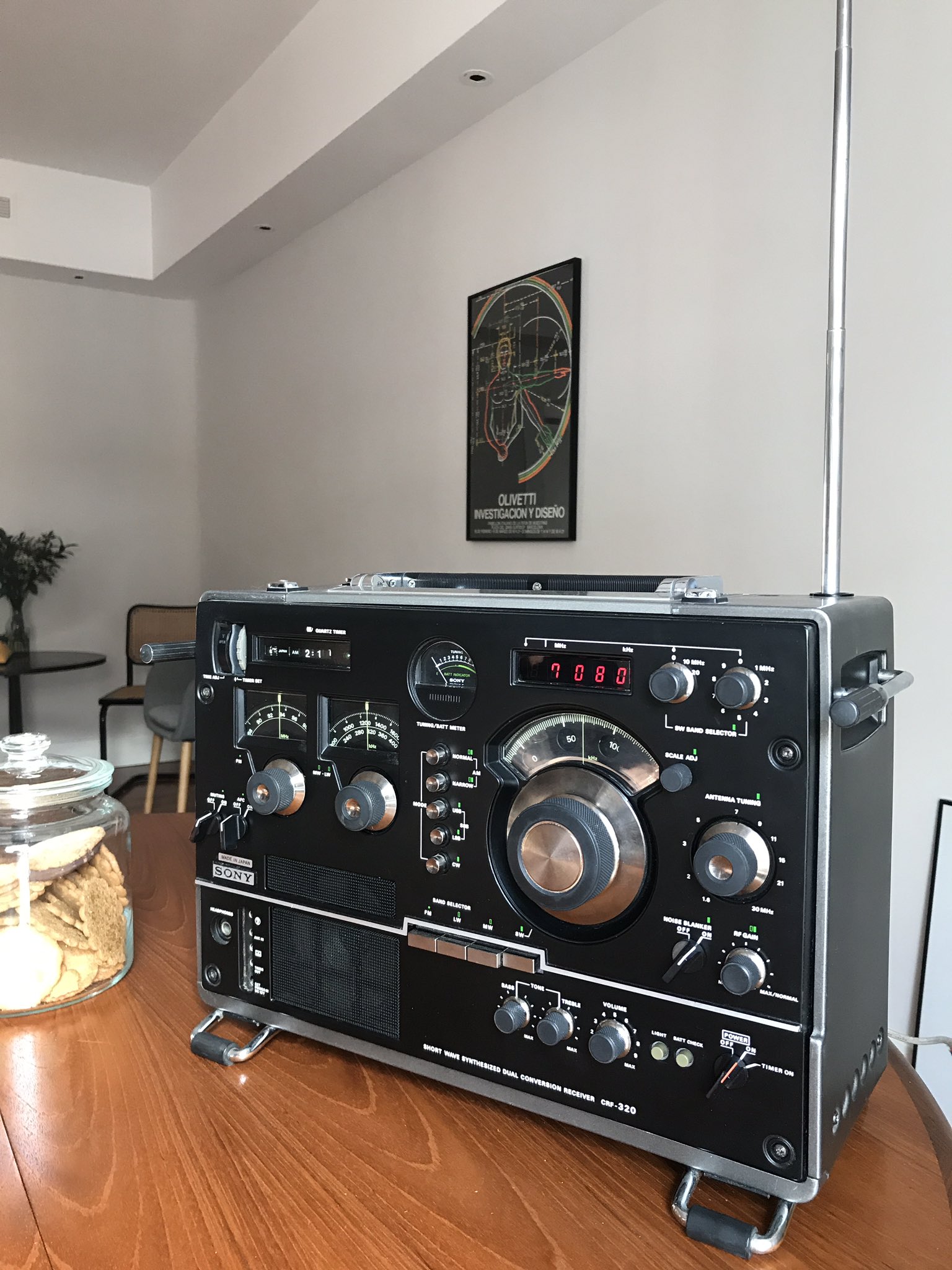
“Testing the good old Sony CRF-320 after many years not in use. It works flawlessly in all bands”
EA4HGN’s photo, above, reminds me that the Sony CRF-320 sports one of the best designs I’ve ever seen in a portable radio. A proper Apollo era aesthetic!
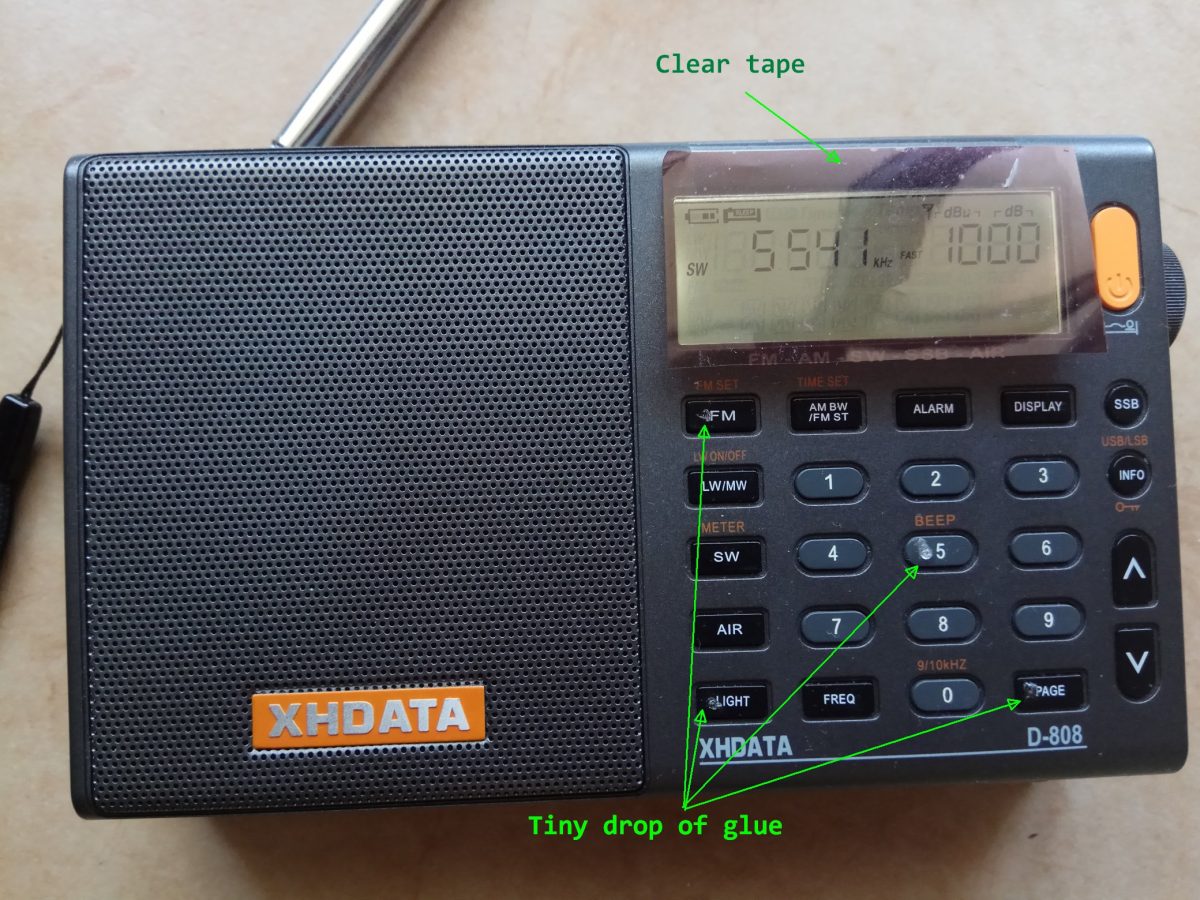
Many thanks to SWLing Post contributor, Adid, who shares two inexpensive mods he made on his XHDATA D-808 shortly after taking delivery of it in 2018. One is simply clear tape over the display to protect it from scratches. The second is applying three tiny drops of glue which create tactile points on the keypad for nighttime operation.
Many thanks to SWLing Post contributor, John K5MO, who writes:
Hi Thomas
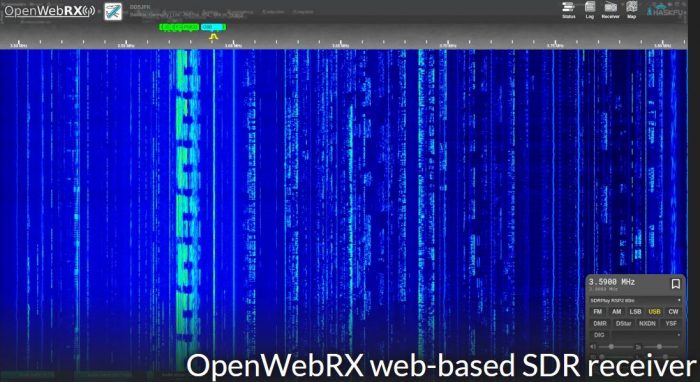
Just a heads up if you didn’t know…openwebrx has a new release and it’s a good one. No more muddling around with a text editor to change configurations, rather there’s a built in editor for this purpose. The release is V1.0 and it can be found
Many thanks to SWLing Post contributor, TomL, who shares the following guest post:
Comb Stereo on Shortwave
by TomL
Comb Stereo is an old technique being implemented over shortwave by the main sound engineer (Daz) at Radio Northern Europe International (RNEI). It ONLY works on Comb Stereo broadcasts which currently are RNEI, This Is A Music Show (WRMI), and one of the KBC broadcasts. It works in real-time or for SDR recorded files, too. It does NOT need a special HD/DAB+ radio.
A number of pluses for Comb Stereo on shortwave compared to digital:
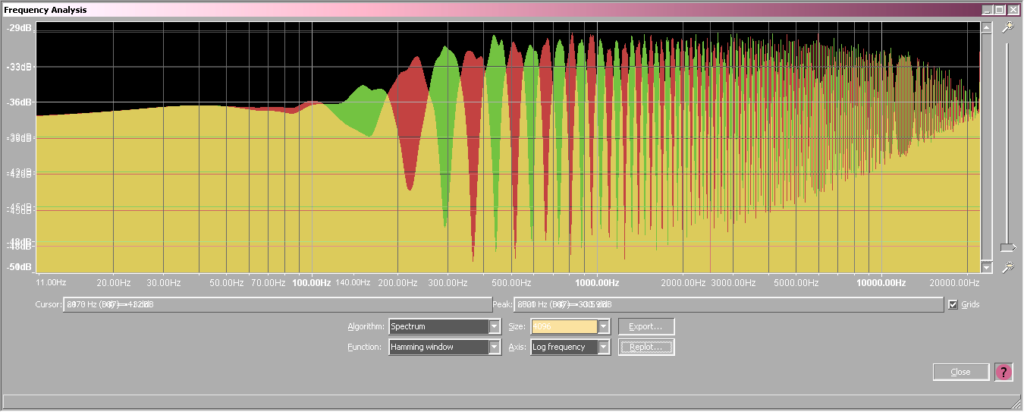
“The bandwidth is the same as mono – So the SNR should be about the same as mono.
Selective fading doesn’t affect the comb bands much, so the balance is largely unaffected by selective fading notches.
The Comb Stereo artifacts are much like typical music effects of echo, chorus, fast reverb or room reflections.”
An enhanced version is broadcast on WRMI for the RNEI time slot on Thursday morning (01:00 UTC) on 5850 kHz. It sounds very good and is not a pseudo-stereo like in my previous article, Music on Shortwave. For one thing, pseudo stereo is not real two-channel encoding and shifts vocals to one side, depending on which channels are chosen for high and low filters, which might get annoying after awhile. What seems amazing to me is that I have been able apply some minor noise reduction in Audacity and the Comb Stereo stays perfectly intact. It also still works after converting the WAV file to MP3 and sounds much like a regular FM broadcast. Furthermore, it does not require a special patented transmitter or receiver chip. It is compatible with regular mono transmitters.
If you want to try it, go to the RNEI web site; download and install the two files listed (VB Audio Cable and CombStereo Pedalboard x64):
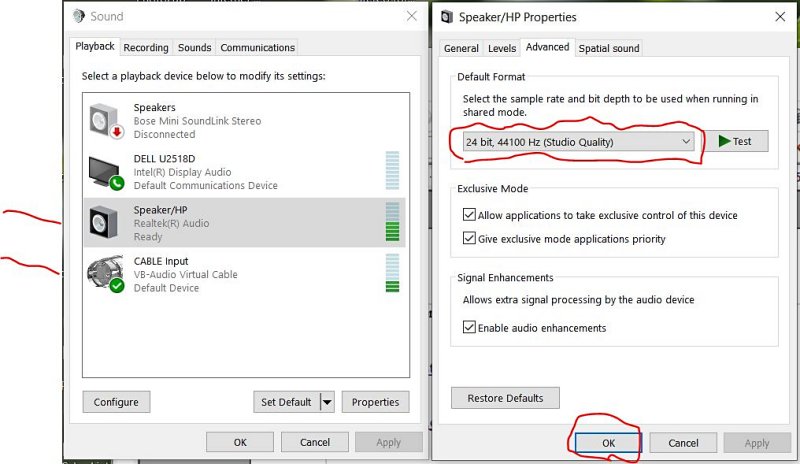
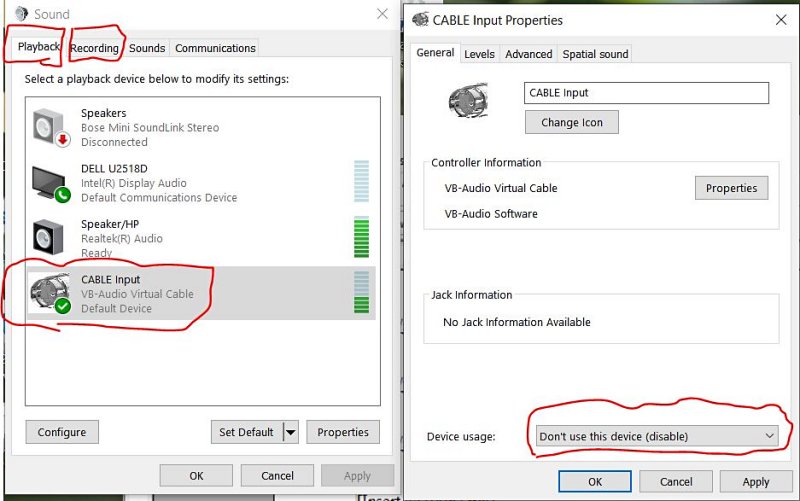
It is slightly tricky to setup and use or you will not hear anything (most Windows systems default to 48000 Hz these days). Right-click on the lower-right taskbar Sounds settings. Make sure to setup Properties – Advanced in both the VB-Audio Virtual Cable (Playback and Recording) and your output speakers (Playback) to 24-bit 44100 Hz processing.
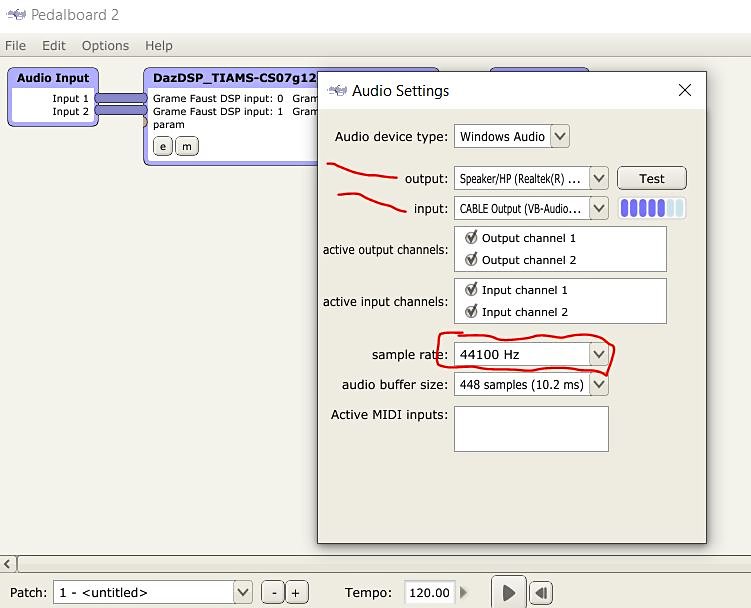
Now run the app Pedalboard BAT file which corresponds to the broadcast you recorded (in this example “Start Comb Stereo for WRMI.bat”). Set the Options – Audio Settings:
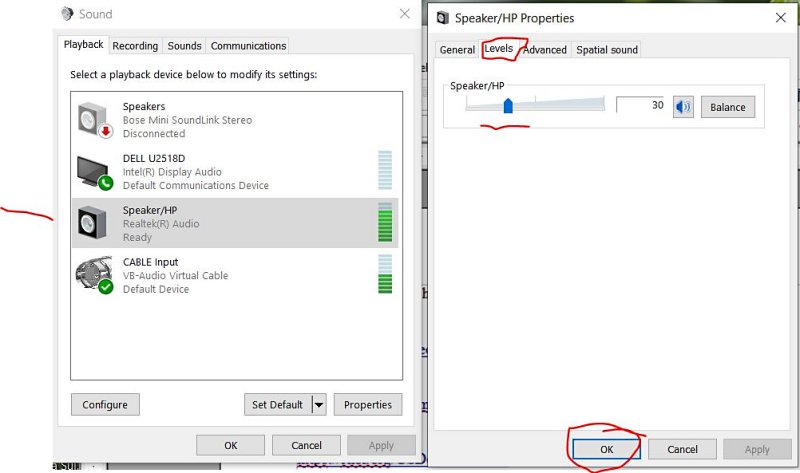
Since the VB-Audio Virtual Cable takes over your volume output, adjust the volume of your Speakers in Windows’ Sounds – Levels (or you can adjust the volume in the sound player you are using, too):
Play the mono WAV or MP3 file and you should be hearing stereo!
When you are done, close Pedalboard2 and then disable the VB-Audio Virtual Cable for Playback and Recording to get your Sounds back to normal:
I cannot demonstrate what it sounds like unless you have the VB-Audio Virtual Cable and the Comb Stereo app setup and working properly. Here are snippets from recent RNEI broadcasts captured by my noisy porch antenna:
Here are links to the artists’ YouTube videos for comparison:
What is nice is that I can create a space-saving MP3 mono file and this setup will decode the stereo when run from the computer (sounds really nice on a stereo system with a subwoofer). Unlike digital, this analog-friendly stereo seems mostly immune to fading, has a minimum of digital artifacts, and will not go silent and “drop out” like digital does for long, annoying periods of time. It is not perfect stereo but audio players with features like Stereo Widener or Windows Sonic for Headphones can overcome some limitations. Perhaps content providers should consider Comb Stereo for all their shortwave radio shows since it is perfectly compatible with mono AM transmissions!
Radio Waves: Stories Making Waves in the World of Radio
Because I keep my ear to the waves, as well as receive many tips from others who do the same, I find myself privy to radio-related stories that might interest SWLing Post readers. To that end: Welcome to the SWLing Post’sRadio Waves, a collection of links to interesting stories making waves in the world of radio. Enjoy!
Many thanks to SWLing Post contributors Marty, Richard Cuff, David Iurescia, and Doug Katz for the following tips:
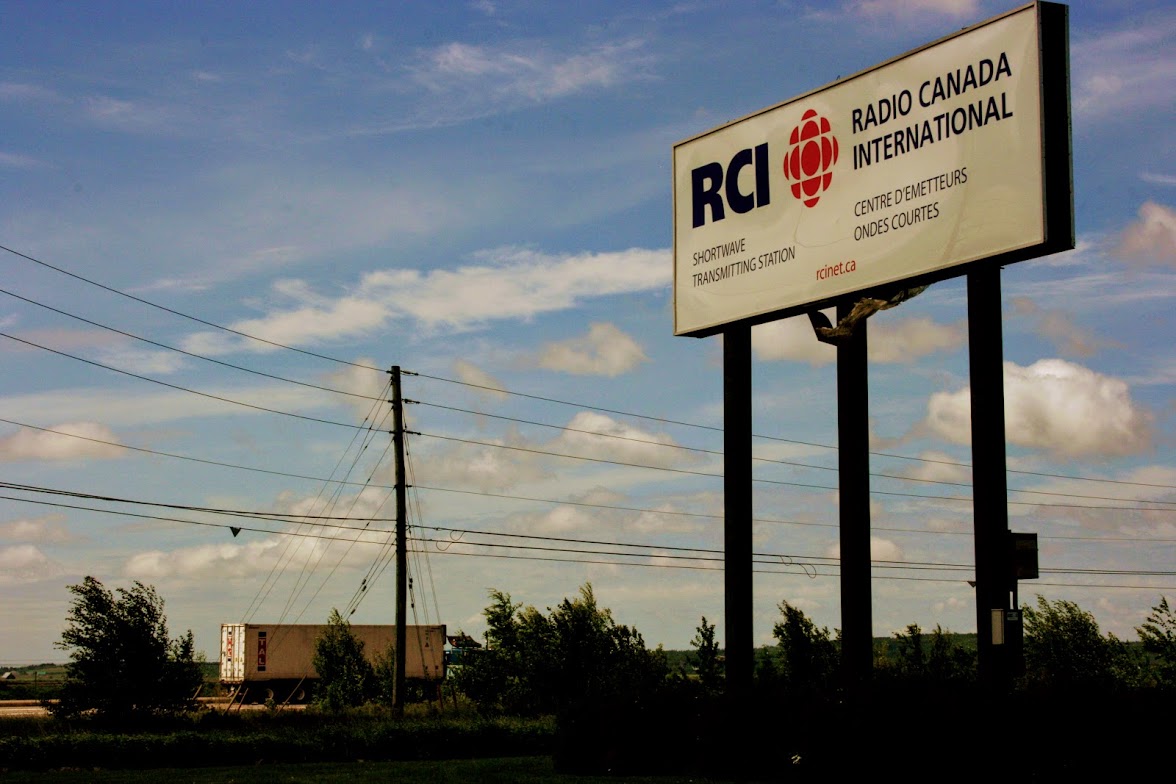
Canada’s international broadcast service from the English language team of Radio Canada International has come to an end.
RCI, (originally the International Service, CBC-IS) was initially created towards the end of the Second World War. The purpose was to broadcast news and information from home via shortwave to Canadian military personnel fighting in Europe. It also began providing reliable news and information to recently liberated countries and to Germans still in the war.
That reliable news and information was considered of great value during the subsequent Cold War years, as several more languages were added to the service such as Russian, Ukrainian, Czech, Hungarian and Polish. Other languages sections included as Brazilian Portuguese and Japanese. With 14 language sections in 1990, and some 200 staff, the full English and French newsroom provided news of interest and importance for each language section specifically targeted to each of the various broadcast regions around the world.
Following a major budget cut of some 80 per cent in 2012, the shortwave and satellite service was terminated along with the majority of staff including the newsroom and some language sections. In recent years, only Chinese (Mandarin), Arabic, and Spanish remained along with English and French. RCI was transformed into a much smaller internet-based operation consisting of three people per language section.
In December 2020, the domestic public broadcaster CBC / Radio-Canada announced that the English and French sections of RCI would close for good in May. In their place curated stories from the domestic English and French public broadcaster will be provided.
A manager will now oversee the staff of eight who will adapt curated stories from the CBC and Radio-Canada into Mandarin, Arabic, and Spanish, along with Punjabi and Tagalog.
An effort was and is being made by the RCI Action Committee to preserve and even expand the service which has garnered great support from a former prime minister, former diplomats and many academics, but the end date has come. This is the last entry by the RCI English section.
From the English Section consisting of Lynn, Marc, and Levon, faithful and long-time popular replacement Terry Haig, and recently also Vincenzo Morello, and the many others over the all those years, we thank you for having shared our stories over these many years.[…]
In 2018, David Goren, a radio producer and audio archivist, created the Brooklyn Pirate Radio Sound Map to collect the sounds of dozens of pirated broadcasts from across the borough. Pirate stations earn their name by hitching a ride on already licensed radio frequencies that typically cost commercial stations millions of dollars to acquire and set up. Nowhere in the country are there more pirate radio stations than in New York, where they provide a vital service to immigrant populations.
Goren estimates that New York has about a hundred pirate stations, transmitting from rooftops and attics to listeners seeking news from around the city and back home, as well as
entertainment and religious programming. The broadcasts bypass socioeconomic barriers and provide a means to seize control of the flow of information. But they are now at risk of extinction: Before Donald Trump left the White House, he signed the Pirate Act, which increased the authority of the Federal Communications Commission to fight pirate operations through mandatory sweeps in cities with high concentrations of pirate radio use. Pirate stations today face fines of up to two million dollars. “The people running these stations, they don’t have two million dollars,” Goren said. Broadcasters that don’t make it onto his sound map could be lost forever.
Inspired by espionage devices used during World War II and the Cold War, Shortwave transforms audio into clandestine operations of the past; Russian number stations, mysterious sounds transmitted by radio, and eerie sounds stored on early portable recorders.
Choose between 2 types of noise and interference, and control it with the Exposure parameter. Velocity and Focus control the amount of pitch stabilization. Shortwave will add an interesting emotional response and atmosphere to dry, simple sounds, or destroy a signal like no other fuzz pedal can.
Hand-made in Seattle, WA. Shortwave operates on a standard “Boss” style 9vdc power supply (not included), but can also run at 18vdc for additional headroom. True bypass switching. Included a limited-lifetime warranty.
Voyager 1 – one of two sibling NASA spacecraft launched 44 years ago and now the most distant human-made object in space – still works and zooms toward infinity.
As the craft toils, it has long since zipped past the edge of the solar system through the heliopause – the solar system’s border with interstellar space – into the interstellar medium. Now, its instruments have detected the constant drone of interstellar gas (plasma waves), according to Cornell-led research published May 10 in Nature Astronomy.
Examining data slowly sent back from more than 14 billion miles away, Stella Koch Ocker, a Cornell doctoral student in astronomy, has uncovered the emission. “It’s very faint and monotone, because it is in a narrow frequency bandwidth,” Ocker said. “We’re detecting the faint, persistent hum of interstellar gas.”
This work allows scientists to understand how the interstellar medium interacts with the solar wind, Ocker said, and how the protective bubble of the solar system’s heliosphere is shaped and modified by the interstellar environment.
Launched in September 1977, the Voyager 1 spacecraft flew by Jupiter in 1979 and then Saturn in late 1980. Travelling at about 38,000 mph, Voyager 1 crossed the heliopause in August 2012.
After entering interstellar space, the spacecraft’s Plasma Wave System detected perturbations in the gas. But, in between those eruptions – caused by our own roiling sun – researchers have uncovered a steady, persistent signature produced by the tenuous near-vacuum of space.
“The interstellar medium is like a quiet or gentle rain,” said senior author James Cordes, the George Feldstein Professor of Astronomy (A&S). “In the case of a solar outburst, it’s like detecting a lightning burst in a thunderstorm and then it’s back to a gentle rain.”
Ocker believes there is more low-level activity in the interstellar gas than scientists had previously thought, which allows researchers to track the spatial distribution of plasma – that is, when it’s not being perturbed by solar flares.[…]
Many thanks to Sean Gilbert, with the World Radio TV Handbook, who shares the following announcement:
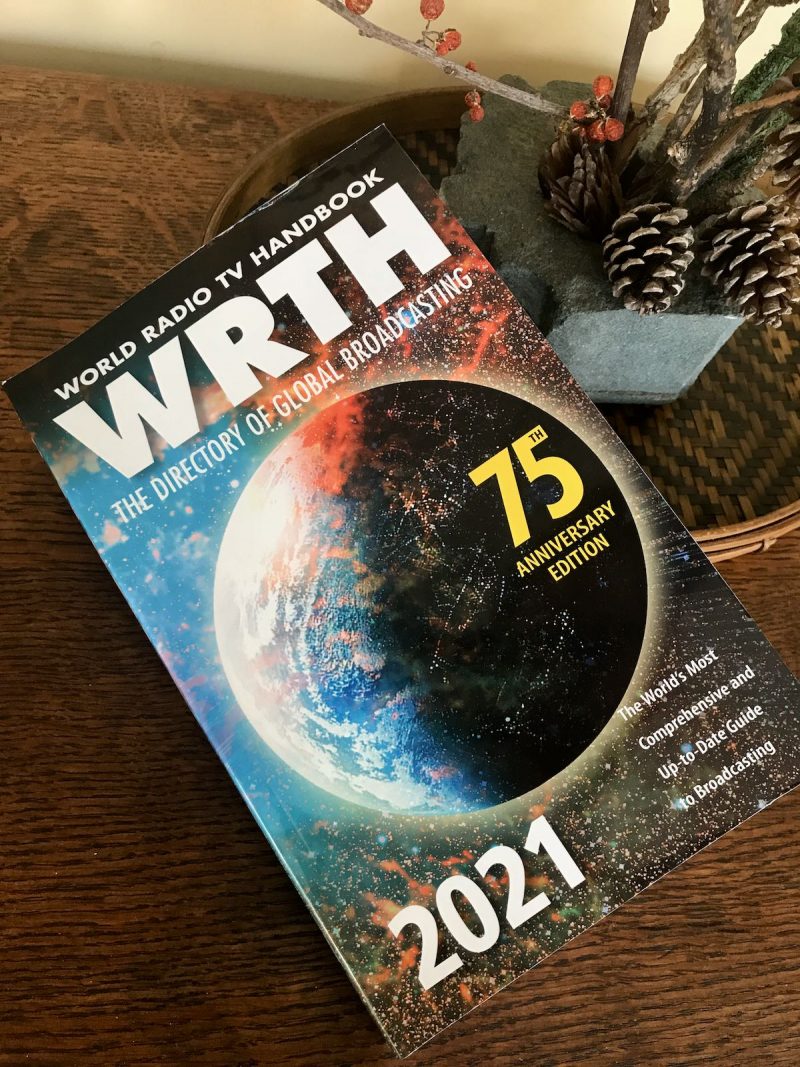
WRTH is pleased to announce that the A21 (Summer) season broadcasting schedules for International and Clandestine/Target broadcasters are now available for download, free of charge.
This file is in PDF format so you will need software capable of reading the Adobe PDF format (such as the free Adobe Acrobat reader, amongst others).
Not only do you get the full schedules, extras included with the file are: Broadcasts in Selected Languages (English. French, German, Portuguese, and Spanish); International DRM broadcasts (yes, there are still some around); International Broadcasting Frequency list; International Transmitter Sites, with lat/long; WRTH Target Areas and religious stations cross-reference table (You can find out which country each station is based in and where to find their schedule as that is not always as obvious as it may seem).
Please visit www.wrth.com and follow the links to the download page.
We hope you find this a useful file, both as a stand-alone product and as an accompaniment to the printed WRTH volume.
Feel free to pass this information on to all your radio friends and your social media groups, etc.
73 and happy listening from the WRTH Editorial Staff.