Category Archives: Shortwave Radio

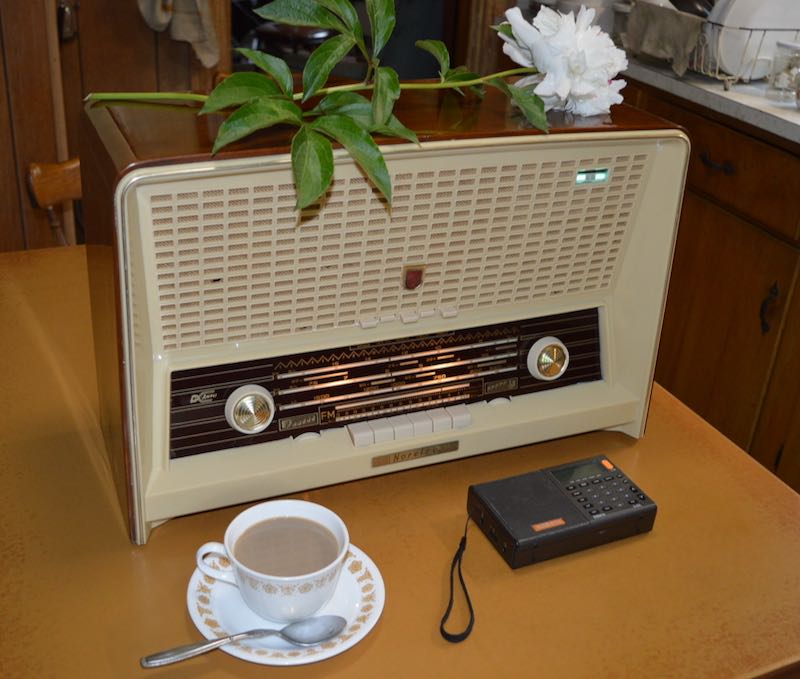
This Norelco B5X-88A/03 table radio has a story and a caretaker

Many thanks to SWLing Post contributor, Edward Ganshirt, who shares the following guest post:


Pamela’s radio


A neighbor gave me this radio. It had a story.

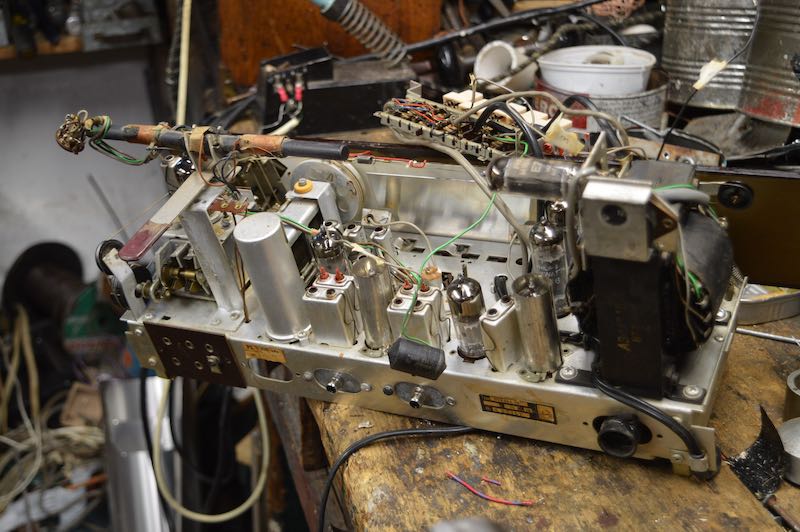
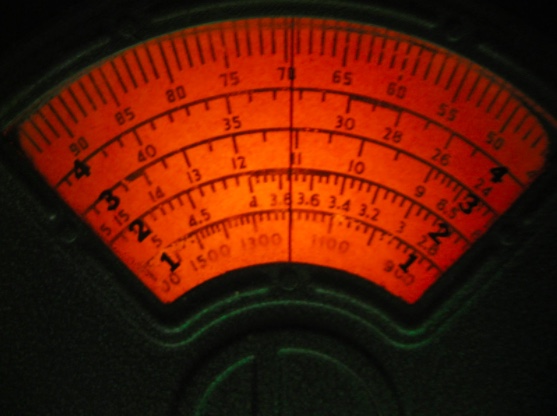
It is a Norelco B5X-88A/03 Table radio AM FM SW1 SW2. (You can see it takes up the whole kitchen table…that is why it is called a table radio). Has very good sound.

The speakers are 600 ohms, not 8 ohms, and uses bypass capacitors instead of an audio transformer.

Now about the carnation: I think my neighbor had thoughts that I may be giving it a Funeral and interring it in the backyard. (It has a nice finish you usually see on caskets)

Her Father was a Doctor who had his practice in the house and had this radio always playing low volume in the waiting room. He served in WW2 and brought this back in the late 1940’e. She inherited it and had it serviced a few times by a local repairman who since passed. Taking it apart I noticed several mechanical problems after removing an abandoned yellow jacket’’ nest.

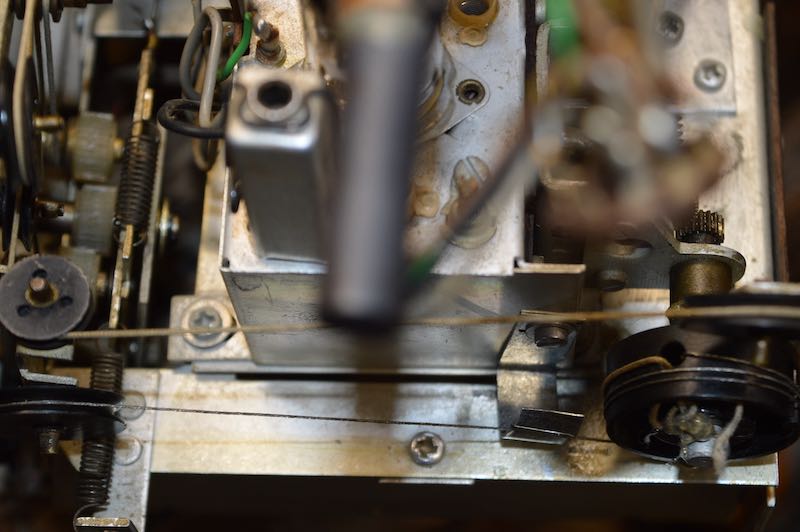
The FM dial string was wound wrong so 88 MHz is where 108 MHz should be and vice versa. I restrung the dial properly but when tuned the string flopped off the pulley, so I fabricated a string restrainer to prevent this.

Also the station selector was scratchy and intermittent. To solve this, I played the garden hose with a forceful stream of water on the switches then dried out the chassis in the hot summer sun. Sprayed volume control restorer on all the switch contacts. After that, it worked perfectly. The remaining issue was the walnut veneer I sanded with 400 grit paper then coated with clear Krylon .

Now what to do with it!

Well I used her same sweet talk charm she used on me to take it off her hands to take it back, this time fully functional and I even demo-ed it. It had the wonderful mellow sound that she remembered and was so pleased.


What a true gentleman you are, Ed! Thank you for sharing the story of this Norelco table radio–what a gorgeous machine! I’m so pleased you were able to surprise Pamela with her father’s radio,  fully restored! 

Top 10 DX of the Year SWL Contest

Many thanks to SWLing Post contributor, Kanwar Sandhu, who shares the following announcement/rules for the Top 10 DX of the Year Contest:

Top 10 DX of the Year Rules

The date of the contest:
From 1 December 2020, 00:00 UTC to 31 December 2020, 24:00 UTC

– The contest is open for all shortwave listeners. It is not obligatory to be a club member.

– The contest is free of charge and all costs are covered by TOP DX RADIOCLUB.

– The task of the contest:
Reception of 10 BROADCAST stations from 10 optional, DIFFERENT countries during the contest (according to the official DXCC list**).

– The aim of the contest:
Award of the best DX’er who really succeeded in receiving the year’s TOP 10 DX: it means that it received the smallest power station possible from the longest distance possible.

– It is not obligatory to register in advance. On the other hand, it would help the organizers if you sent an email with your name and 6-character Maidenhead QTH locator code*. If you don’t wish to do that it is enough to provide your data in the contest log. All personal data and email addresses are handled with care by TOP DX RADIOCLUB and they are never given to a third party. We also hate spammers. The data are used to inform the contestants in connection with the contest and the evaluation of the results.

– The rules of the contest:
Reception of 10 BROADCAST stations from 10 DIFFERENT countries. Excluding: unofficial, meteorological, DRM or other digital, military, spy, pirate, time etalon, amateur contacts and other technical receptions. It is strictly prohibited to use WEB SDR, internet radio and other remote-controlled equipment. The receiver antenna has to be attached to the radio physically and directly. One country can appear in the log only once. (Country=where the transmitter can be found)

The enabled frequency range: from 2300 kHz to 30000 kHz. The contest referees and organizers cannot take part in the contest.

– The obligatory content of the log:
Date (day, month, year),
Time (UTC),
Frequency (in kHz),
The ID name of the station,
Country (where the transmitter can be found),
ITU,
The language of the broadcast,
SINPO,
The geographical location (city) of the transmitter site,
The details of the broadcast (general description without specific details cannot be accepted)
The judges may ask for additional data from the contestants (eg. the power of the transmitter)

– The obligatory content of the log’s annex:
The name of the contestant,
Address (where the certificate can be posted)
Geographical location where he/she has participated from (according to the 6-character Maidenhead QTH locator)*
The type of the receiver(s),
The type of the antenna(s).

Example:
Name: Jean Sample
Address: France, Paris, Rue Parrot 2.
QTH locator: JN18EU
RX: Yaesu FRG-7000, Perseus SDR
Antenna: 80m Long Wire, Wellbrook ALA-1530

– The format of the log:
The logs have to be sent electronically to topdx.radioclub(at)gmail(dot)com in doc, docx, xls, xlsx, pdf, txt, or cabrillo format. We accept logs in English language and Hungarian language. All contestants get an email of confirmation after receiving the log in 24 hours.

– The deadline of receiving the logs:
5 January 2021. 24:00 UTC

All contestants declare by sending the logs that all data in the log are true and correct, all of the receiving were done by himself/herself within the given time range from the provided place according to the QTH locator and the adherence of the rules.

– Announcement of results: Before 31 January 2021.

– Scoring:
The distance between the contestant’s QTH locator and the transmitting tower’s QTH locator divided by the power of the transmitter.
The distance between QTH is dimensioned in kilometers and measured in short path. The transmitter power is dimensioned in kilowatts. Only official data are considered given by WRTH (World Radio TV Handbook – www.wrth.com). If more powers belong to a certain transmitter the higher power is considered. In case the owner of the station announces different power than WRTH, then we counting with the official (real) transmitter power.

For example:
The geographical location of the contestant: France, Paris, Rue Parrot 2. in this case the QTH locator is JN18EU*

The received station: Voice of America, from the city of Iranawila CLN. The QTH locator of the transmitter: MJ97VM. In this case the distance between the two QTH locators: 8459,38 km. For the calculation the following program is used: NØUK’s Maidenhead Grid Distance & Bearing Calculator ****

The power of the transmitter: 250 kW
Score: 8459,38 / 250 = 33,84 points (rounded to 2 decimals) According to the information above it can be clearly seen that more points are given if the station is far from the contestant AND the transmitter power is low.

Therefor if someone can receive broadcast from a station of 10 kilowatts from the distance of 12000 km it worth 1200 points.

The final points are made up by the sum of the 10 receiving.
The contestant with the highest points wins the contest.

– Awarding:
The contest has no monetary prize. The winner gets an elegantly designed, unique trophy addressed to his/her name. All contestants are posted a certificate according to result in the ranking.

In case of any questions about the rules, the parameters of the transmitter or anything else in connection with the competition, send us an e-mail and we try to respond asap. This opportunity is open before and during the competition.

The organizers wish good luck and outstanding DXs to all contestants.

*: The QTH locator can be easily found here
** The list of DXCC can be found here (Excel file, countries in alphabetical order)
***: Sample log can be downloaded from here (Excel)
****: The NØUK’s Maidenhead Grid Distance & Bearing Calculator can be find N0UK’s website

Thank you for the tip, Kanwar!

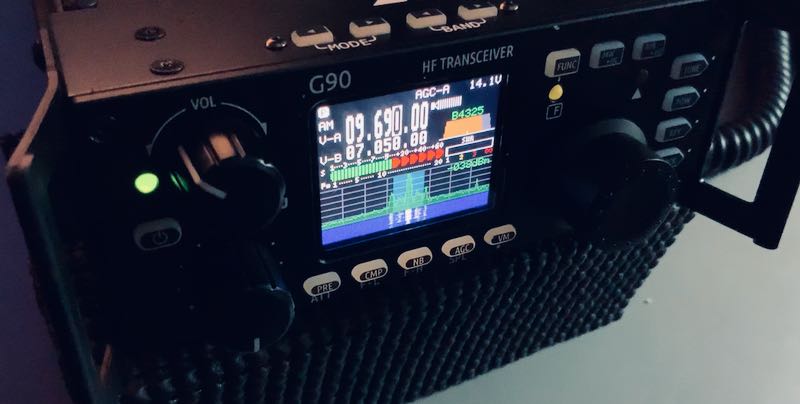
Using the new Xiegu GSOC and G90 transceiver combo for shortwave broadcast listening–?

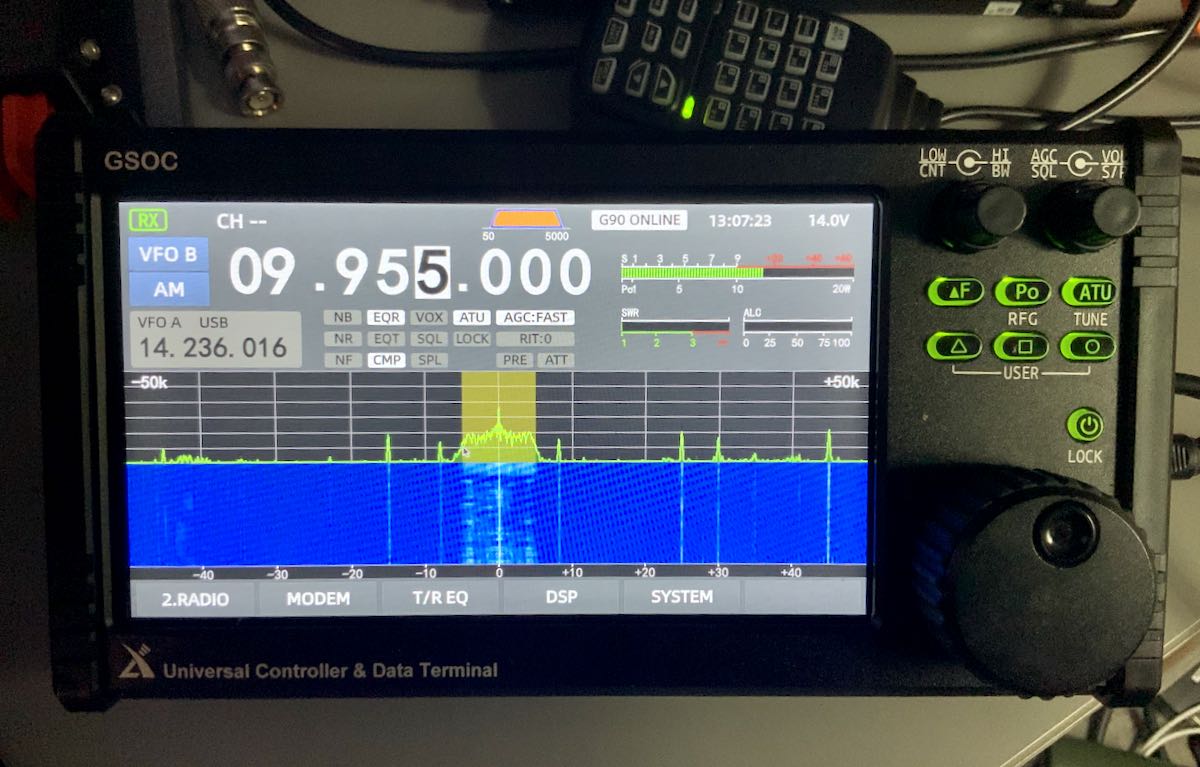
Listening to Radio Prague via WRMI with the Xiegu GSOC

Many thanks to SWLing Post contributor, Tim R, who writes:

Dear Thomas,

First of all thank you so much for the all of the energy you put into the SWLing Post. When crazy things are happening in the world it’s a very welcome sanctuary! Sending you some coffee money.

I plan to become a ham radio operator next year. Bought the book last week and once I finish a large project for work, I’m on it. Of course, the Tech license will only give me limited exposure to HF, but I’m already plotting an HF radio purchase because I can’t WAIT do do some SWLing with it. Up to this point, I’ve only owned portable radios and never really have used external antennas other than some cheap wire.

My question…

I’ve been considering grabbing a Xiegu G90 because it seems to be a nice comprehensive beginner’s HF rig and is very affordable. I read your review and understand your caveat that there’s no way to completely disengage the transmit so that it can’t be accidently hit if connected to an RX only antenna. I’m not worried about that because I’m going to hang a G5RV wire antenna and use it both for TX and RX. No problem if RF is accidently sent through it.

Of course, there’s a lot of buzz in the Xiegu community about the new GSOC controller. I had not planned to exceed $600 for my radio purchase, but I love the idea of the controller. But when I add $550 for the controller and $450 for the radio, all the sudden I’m at $1,000.

After some deep soul-searching (and let’s be frank here, a blessing from my wife and CFO) I’ve decided to raise my budget to $1,000.

All of this to ask, if you had $1,000, would you buy the G90 and GSOC controller, or would you get something else keeping in mind I want to use this as much for shortwave listening as for future ham radio work?

Any advice would be appreciated.

-Tim

Thanks for your question, Tim! And thanks for giving me a complete picture of your budget/radio requirements and the antenna you plan to use.

I’ll try to answer your question here, but understand this is more what I would do if I were in your shoes. This is a pretty simple question, but not simple to answer because there are so many options on the market.

Xiegu GSOC and G90 combo option
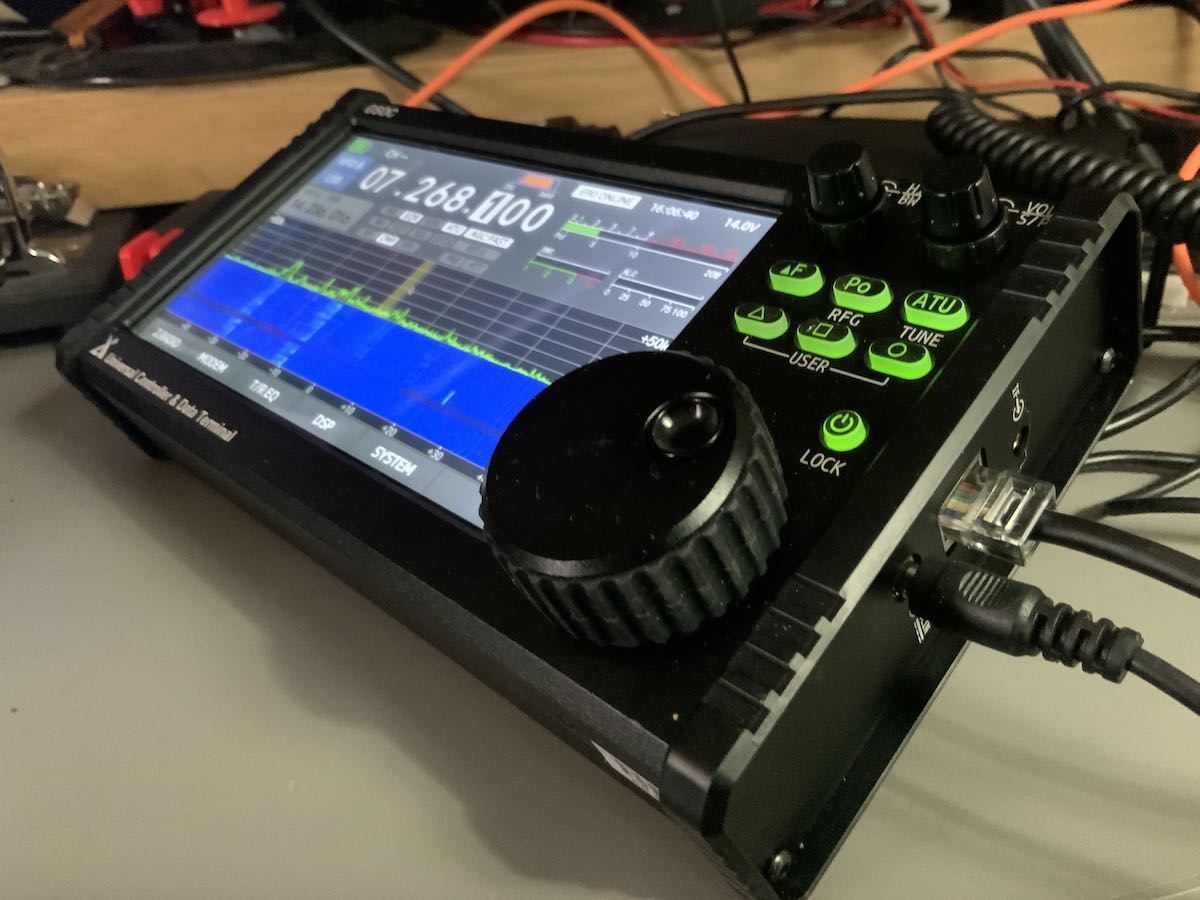
Keeping in mind, I feel like the GSOC is a work in progress at the moment and not fully developed–check out my initial review. Once the next firmware update is available it could certainly solve a number of small issues I found with the unit. It works, but it’s not a refined product yet.

It’s ironic, actually. When I received your message this morning, Tim, I was SWLing with the GSOC and G90–listening to Radio Prague on WRMI. In the end, though, the GSOC is primarily an enhanced interface for the G90. While it does add some extra functionality (and should, over time, add much more) it doesn’t really change the performance characteristics of the G90. I’d check out my G90 review for more info about performance.

Would I purchase the G90/GSOC combo if I were in your shoes? Again, it’s early days, so I don’t feel comfortable making a recommendation call yet. The G90 is, without question, a great value at $450 (often even less) investment. I like it primarily as a field radio, though, and once you add the GSOC to the mix, it’s a little less portable because it’s two units with quite a few interconnect cables. Of course, you can swap the GSOC unit for the G90 control head at any time, but that involves attaching and re-attaching the control head each time (there’s no accessible serial port on the back of the G90, for example)

If you’re a huge fan of the G90, the GSOC should eventually be a worthy addition. At present, for your use as a new ham and for SWLing, I’d perhaps consider other options too.

The Icom IC-7300
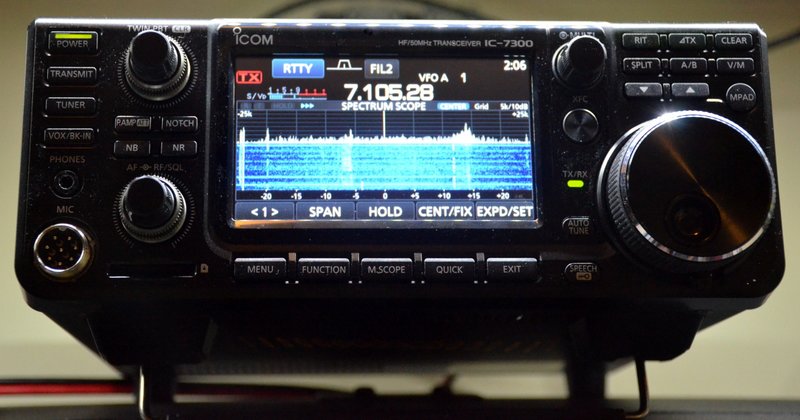
The Icom IC-7300 SDR transceiver

Since you’ve raised your budget to $1,000, I’d consider adding the Icom IC-7300 to your list. At present, via Universal Radio you can buy a new IC-7300 for a net price of $1039.95 after rebates. Sometimes, the price will go even lower although during the C-19 pandemic, I think that’s less likely to happen since supplies are lower than normal for many items.

The IC-7300 has better performance specs than the G90 and can output a full 100 watts if you like. The display is touch sensitive rather than capacitive like the GSOC. The display is also much smaller than that of the GSOC. The IC-7300 has a lower noise floor than the G90.

I think the IC-7300 is a great radio for SWLing, but the audio for broadcasts is sort of “flat.” You might check out this post where we did some audio comparisons. It does have native broadcast recording to an SD card, which I love. The GSOC should be adding this soon, too.

I would include the new Icom IC-705 as a recommendation here, too, but it’s $300 over your budget.

A PC-connected SDR and separate transceiver
 

This might be the option I’d take if I were in your shoes.

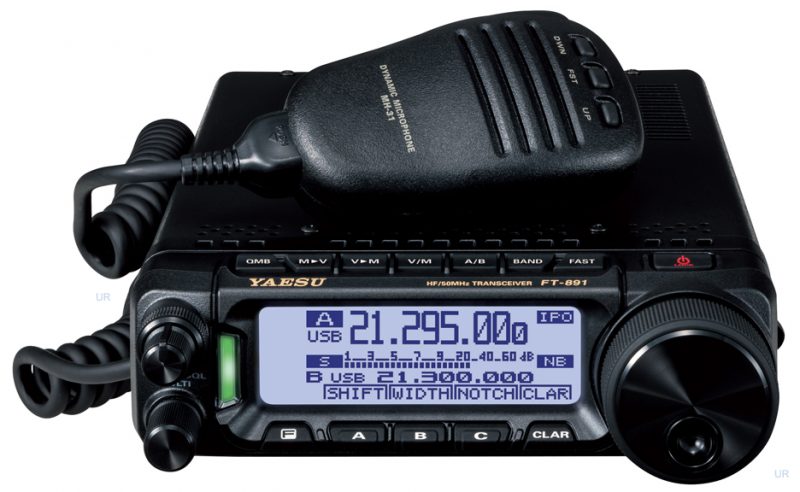
Get the 20 watt Xiegu G90 ($450) as planned or consider a radio like the 100 watt  Yaesu FT-891 ($640), Both of these radios are general coverage and would serve you well for SWLing and ham radio activities. I’d personally invest the bit extra and get the FT-891 since it would also give you 100 watts output and even has advanced features like memory keying.

We actually mentioned both radios in a similar post this year.

If you buy the pricier Yaesu FT-891, you’d still have $360 to invest in your shack!

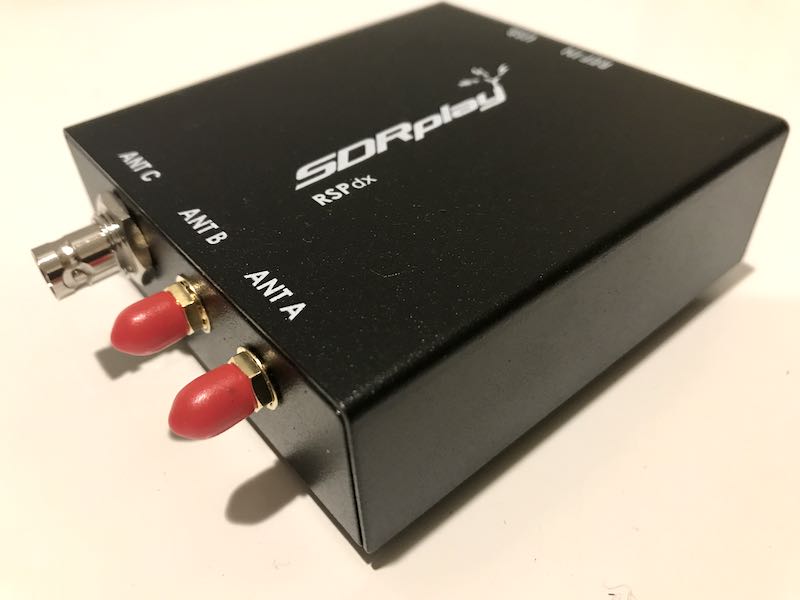
I’d then buy an Airspy HF+ Discovery ($170–my review here) or SDRplay RSPdx ($200–my review here) and get all of the benefits of a PC-connected SDR.
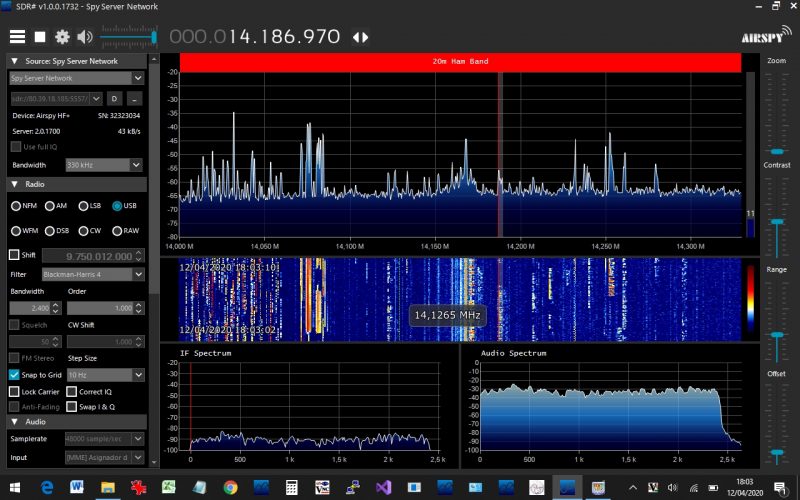
These SDRs would take your SWLing to the next level. They have uncompromised performance for the price.

Both companies continuously improve their products/applications based on customer feedback. Indeed, check out some of our recent posts about SDR# free upgrades. Mind blowing stuff–!!!

You could even use the SDR as a panadapter for your transceiver which would give you the ability to have a full-screen spectrum display on an external monitor at home.

More options?
Of course, these answers only scratch the surface. I haven’t even included used, late model gear in these recommendations.

I’d like to give you a firm recommendation about the GSOC and G90 combo, but I’m waiting to see how this next firmware upgrade goes–early days still.

Post readers: Please comment if you have even more options/suggestions for Tim. What works for you within a $1,000 budget.

Alan Roe’s B20 season guide to music on shortwave

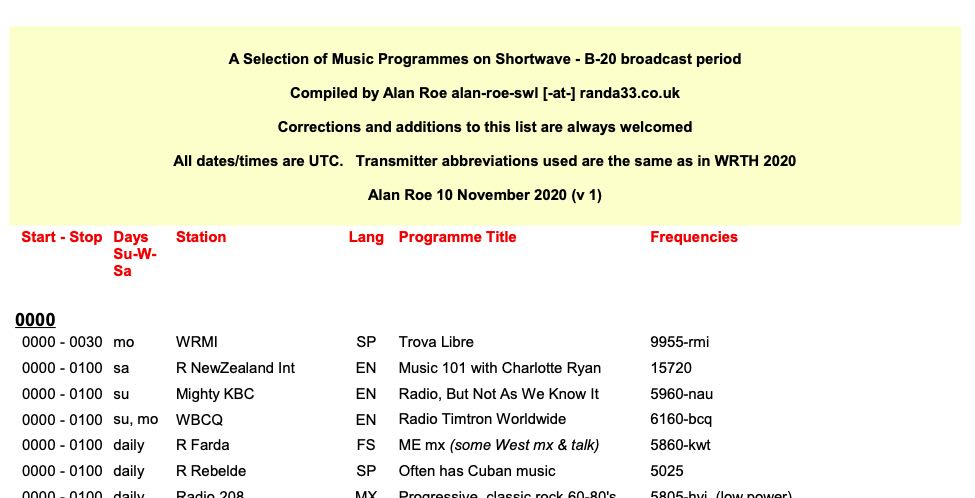
Many thanks to SWLing Post contributor, Alan Roe, who shares his much anticipated B20 broadcast season guide to music on shortwave.

Each time Alan releases a new guide, I print it and keep it and keep a copy in the shack–a valuable resource indeed!

Click here to download a PDF copy of Alan Roe’s Music on Shortwave A20.

Alan, thanks so much for keeping this brilliant guide updated each broadcast season and for sharing it here with the community.

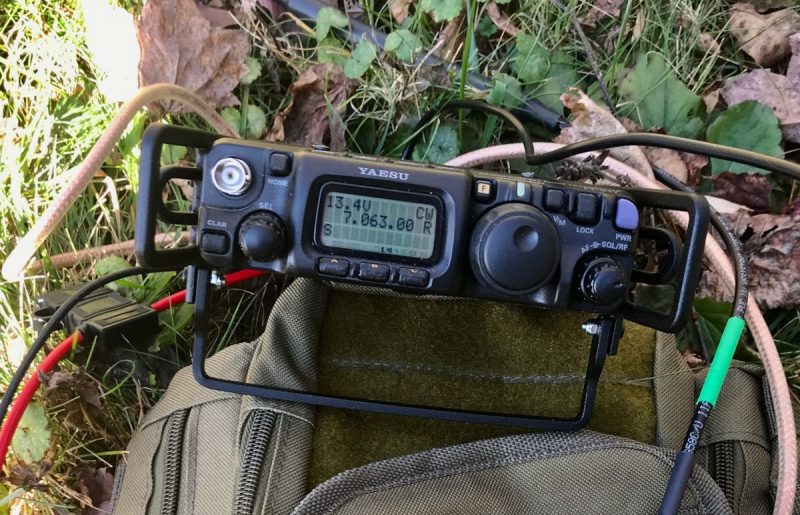
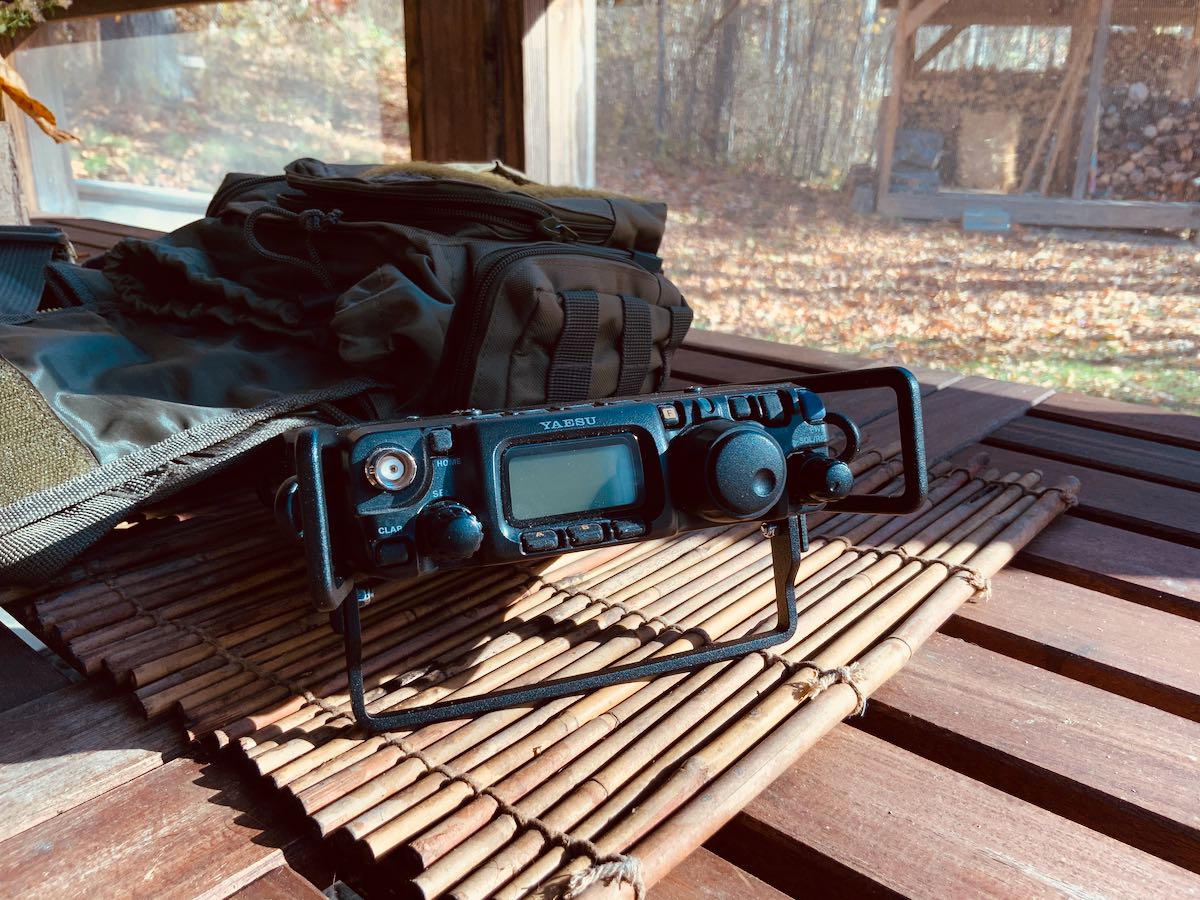
Shortwave listening with the Yaesu FT-817, FT-817ND, or FT-818–?

I recently re-acquired a Yaesu FT-817ND general coverage QRP transceiver. I wrote a post with some info about this radio and how it came into my possession over at QRPer.com, if you’re interested.

My question here: Have any folks in the SWLing Post community ever used the FT-817 or FT-818 series transceivers for serious shortwave broadcast listening?

I originally owned a first production run FT-817 back in 2000 when I lived in the UK. I did quite a bit of SWLing with it then, but I never compared it with other radios. I do recall feeling it was a very capable general coverage transceiver, though, and remember logging a number of broadcasters (although I can’t seem to find those logs these days). Of course, propagation was quite a bit better back then, too!

Please comment if you use or have used the FT-817/818 for shortwave listening!

Links for a deep dive into BBC radio history

Many thanks to SWLing Post contributor, Kris Partridge, who writes:

Last night I sent the link to the SWLing Droitwch item to a former colleague. He replied this morning, reply below, and includes a couple of useful links. I’m very sure the SWLing Post knows about MB21.

Thinking that maybe the item on Crowbourgh will be of interest to SWLing readers. It contains the ‘magic’ word “Aspidistra” ! Lot of SW history there.

[From my former colleague:]

You’re probably aware of the “Tricks of the Trade” articles that Dave Porter has also published. http://bbceng.info/Technical%20Reviews/tott/tott.htm

Dave was also able to provide some useful contacts for my mb21 colleague Martin Watkins who was compiling a page about the history of Crowborough. http://tx.mb21.co.uk/gallery/gallerypage.php?txid=2495

Thank you so much for the link to Dave Porter’s “Tricks of the Trade” and MB21! What a wonderful deep dive into radio history!