Category Archives: Shortwave Radio

Rob Sherwood’s presentation: “Transceiver performance for the HF/DX operator”

Many thanks to SWLing Post contributor, Paul, who shares the following video of a recent presentation by Rob Sherwood (NC0B) for Ham Holiday Oklahoma.

I love Rob’s presentations because not only is he an authority on testing receivers and transceivers, but he also has a very pragmatic approach to operating radios. Rob speaks to the importance of using pre amps, attenuators and adjusting your receiver for band conditions. I’ve been with lifelong ham radio operators and SWLs who never use pre amplification, attenuation, or adjust their RF gain control–these are very powerful tools, especially during the noisy summer months.

If you’ve never seen one of Rob’s presentations before, I highly recommend checking out this one:

Thanks again for the tip, Paul!

Click here to check out Rob Sherwood’s home page and receiver test data table.

New Dragonfly wide band SDR with 32 MHz bandwidth

Many thanks to SWLing Post contributor, Franco (K4VZ), who writes:

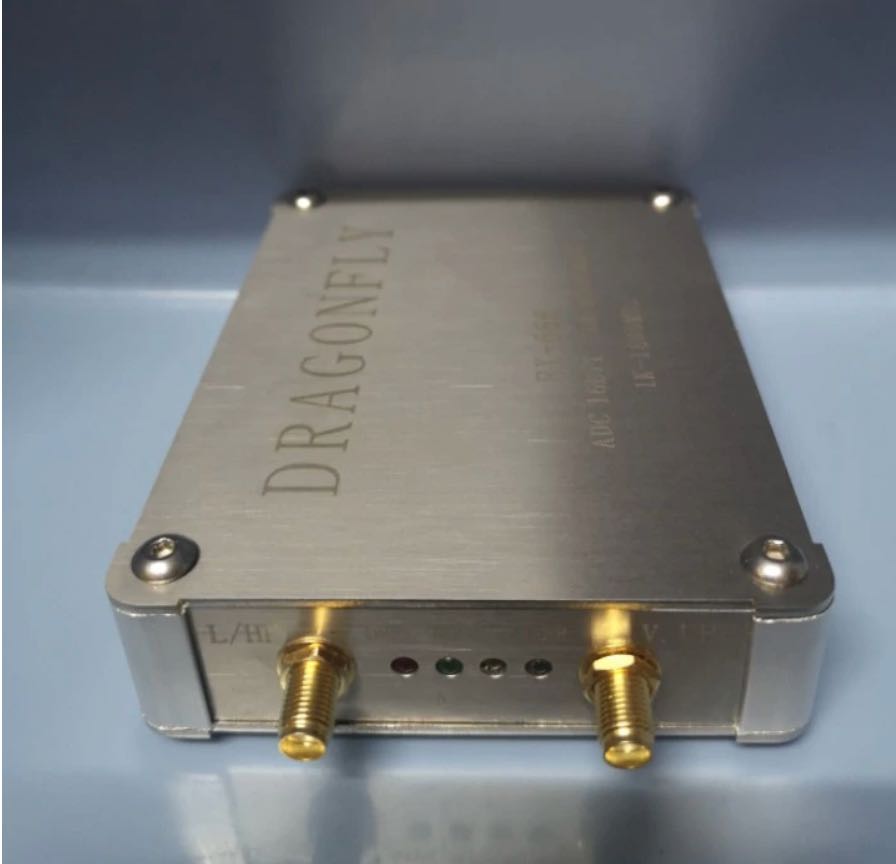
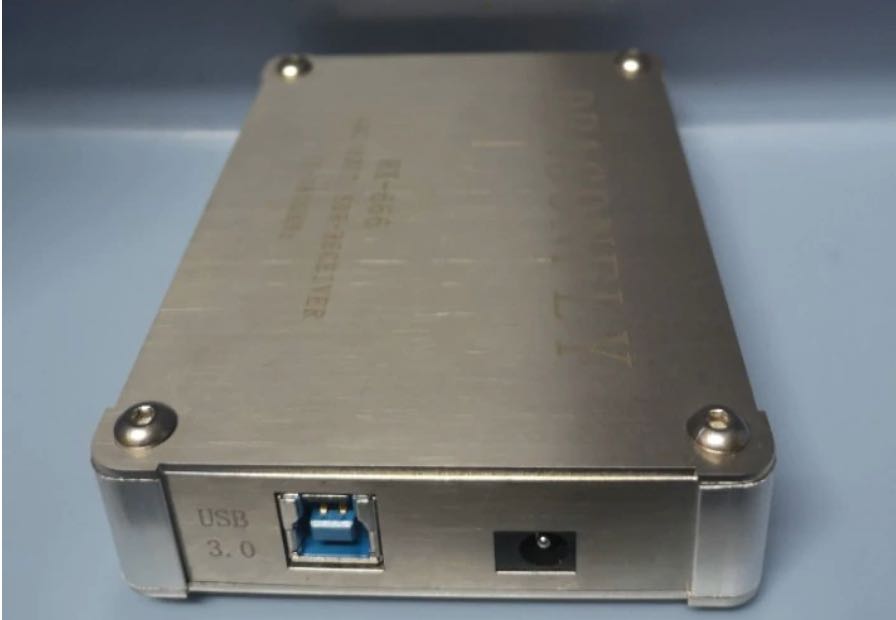
Last night I came across a new SDR receiver from China called ‘RX-666’. On paper its specs are interesting: 16bit ADC, max sample rate 32MHz (in theory one could sample the whole LW+MW+SW bands at the same time), USB 3 interface, and tunable from 1kHz to 1.8GHz.

Its design seems to be a “derivative” of Oscar Steila’s (IK1XPV) BBRF103 SDR – see this post from Oscar – it looks like they upgraded the ADC, made use of a better voltage regulator, and moved to a 4-layer PCB (the original was a 2-layer PCB).

Unfortunately (for Linux people like me) they only have proprietary drivers running on Windows.

Besides the AliExpress store, I saw it is also available on eBay – the AliExpress vendor has two versions, a cheaper one with a ‘standard crystal’, and a more expensive one with an ‘upgraded crystal’; I messaged them earlier to find out what is the difference between the two, but I haven’t heard back yet.

I thought some of those readers of the Post who are interested in capturing large parts of the radio spectrum to decode later might want to look into this SDR receiver.

Thanks for the info on this SDR, Franco. I was not familiar with it. A 16 bit wide band SDR with a 32 MHz working bandwidth is most impressive–I’m sure FM DXers will be following this closely. I’m glad they’re using a USB 3.0 port but am very curious if it can even handle the amount of data should a user initiate a really wide spectrum recording. Perhaps recordings have capped bandwidths?

As a side note, someone should tell the manufacturer that their model number “RX-666” is…well…a culturally sensitive number!

Post Readers: Please comment if you’re familiar with this SDR.

Which would you choose as a first radio–the Icom IC-7300 or Xiegu G90?

Many thanks to SWLing Post contributor, Paul, who writes:

This came to me from a friend; he is curious about choosing between the Xiegu G90 and the Icom IC-7300 for his first rig. He has money to buy the Icom which is $999 right now after rebates, but wants to know if he is really getting twice the radio for the Icom, vs the Xiegu, or are there other good reasons to get the 2016-introduced Icom, vs the newly introduced Xiegu.

Maybe this can be a posting to ask your readers? Greatly appreciate it.

Thanks very much
Paul

Thank you for passing along the question, Paul.

While I almost consider this to be an “apples to oranges” question, let’s approach this from a couple of different operator perspectives and truly explore the decision.

I like both radios for different reasons, but first, I’ll tell you what my decision would be if I were in in his shoes…
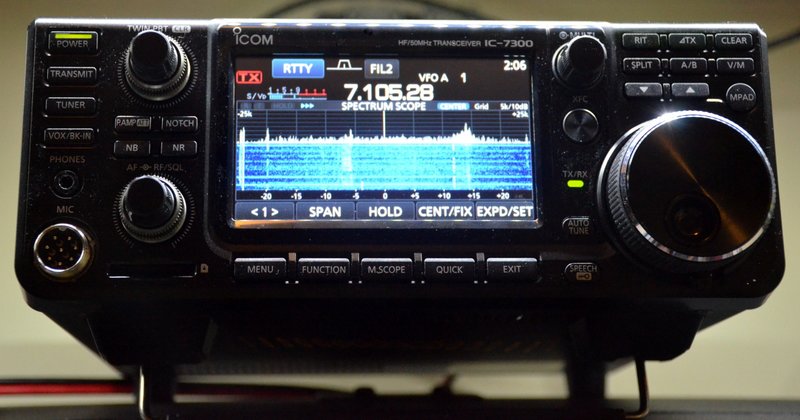
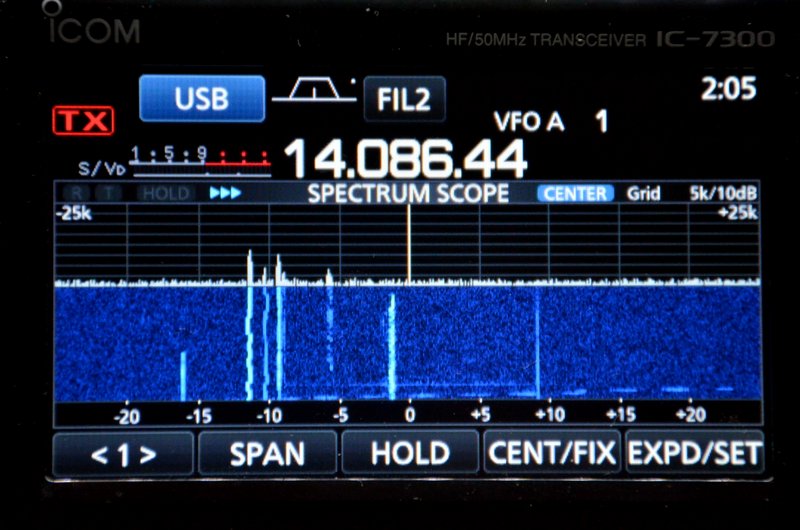
The Icom IC-7300 SDR transceiver

I would choose the Icom IC-7300

While the Icom IC-7300 does cost twice the amount of a Xiegu G90, it’s a much more versatile transceiver. There are almost too many IC-7300 features to list here, so I’ll mention a few that immediately come to mind, focusing on features the G90 lacks.

For one thing, the IC-7300 is a 100 watt radio, thus the max rated power output is five times that of the Xiegu G90.

The IC-7300 doesn’t require an external sound card for digital modes. Simply plug the radio into you PC with a USB cable, and with your favorite application (like WSJT), you can operate any number of digital modes. (I found configuring the G90 for digital modes to be a bit frustrating.)

The IC-7300 also covers the 6 meter band–the G90 tops out at 10 meters.

The IC-7300 has useful features for contests and field operation like:

  • voice and CW memory keyers with beacon mode,
  • native transmit and received audio recording,
  • a large touch screen display to quickly enter frequencies and adjust settings,
  • audio EQ on both transmit and receive,
  • a built-in bail
  • notch filters and Icom’s twin passband tuning

Again, by no means is this a comprehensive list–just some of the features that come to mind.

As a first rig, the IC-7300 can take you into any aspect or mode of the HF band your friend cares to explore. It must be one of the most popular HF radios on the market right now, so there’s also a massive user and knowledge base out there on the web.

The IC-7300 also has better transmitter specs, producing a cleaner signal than the G90, especially in CW (the G90 is known to produce key clicks and not recommended for use with an amplifier). It also can handle close-in signals better than the G90 and has a higher dynamic range. Overall, it has better specs than the G90.

For a more detailed look at the IC-7300, check out my full review.

Why one might choose the Xiegu G90 over the Icom IC-7300
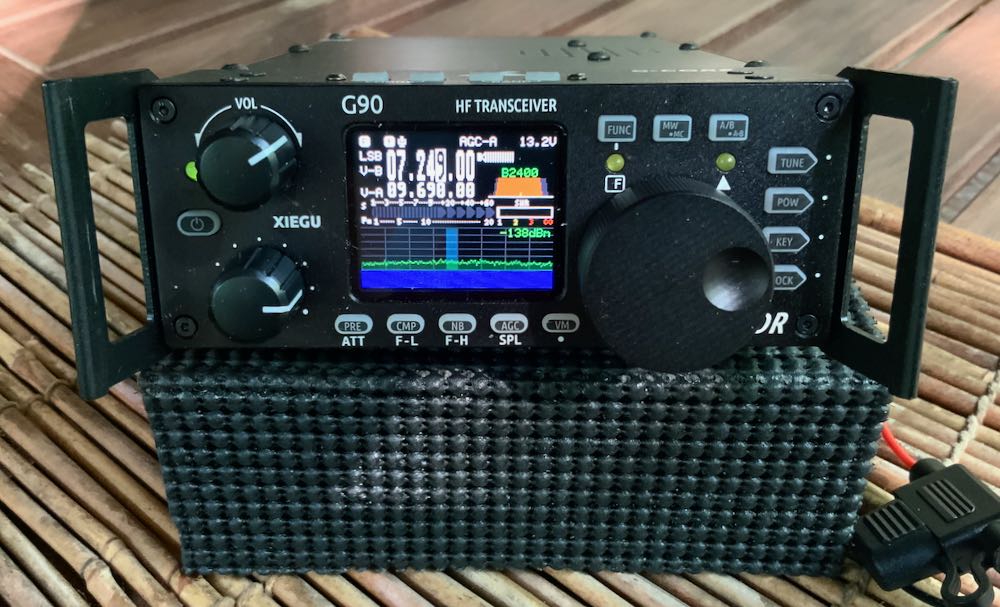
The Xiegu G90 with upgraded encoder

Let’s get an an obvious point out of the way first: the G90 costs half that ($450) of the IC-7300 (generally $900-1,100). This could leave your friend with even more money to invest in an antenna. As I’ve said so many times before, a radio is only as good as its antenna!

If your friend plans to operate primarily in the field, the Xiegu G90 is much more portable option. The G90 is very compact and weighs a fraction of the IC-7300. The G90 also draws less current in receive mode, so is much kinder on a battery. It also has built-in side extensions to protect the front and back panels while being transported.

The Xiegu G90 has a detachable face plate which would come in handy for mobile installations (although, admittedly, there are a number of better mobile transceivers on the market).

My full review of the Xiegu G90 is in this month’s issue (Aug 2020) of The Spectrum Monitor magazine. It’s nearly a 4,000 word review so is one of the longer ones I’ve produced. If your friend wants to make a decision soon, he/she might purchase this issue to fully explore this rig.

Another option: Yaesu FT-891 and LDG Z-11 Pro 2 external antenna tuner combo
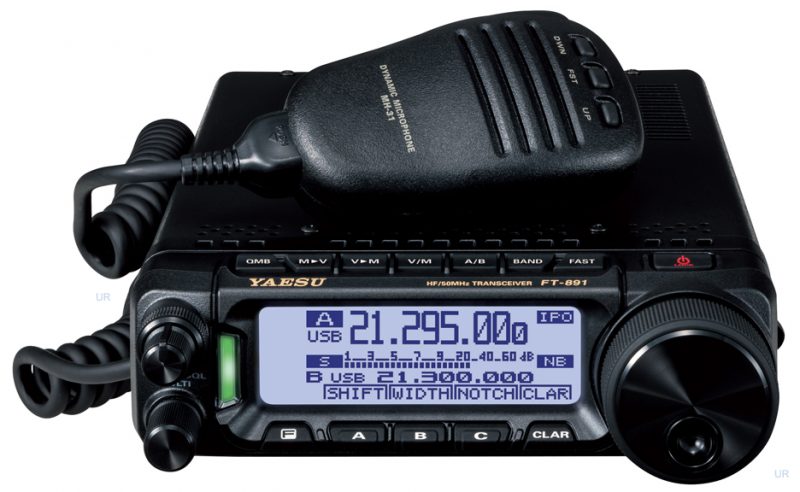
If your friend is seriously considering the Xiegu G90, then I have to assume he/she has portable operation in mind.

Making this assumption, I would also suggest they check out the Yaesu FT-891. Like the IC-7300, it has a full 100 watts output and also covers the 6 meter band. Like the G90, the front panel can be separated from the radio body for easy mobile installation.

Although I have never reviewed the FT-891 (although I plan to before the end of the year), the radio has an almost cult-like following among SWLing Post readers. It’s also a favorite rig of Parks On The Air (POTA) activators because of its 100W output, relatively compact footprint, and great audio characteristics. The G90 and IC-7300 both are based on SDR architecture, the FT-891 is a triple conversion superheterodyne general coverage receiver.

Unlike the IC-7300 and G90, however, the FT-891 lacks an internal antenna tuner (ATU) and I’m guessing your friend wants one based on the fact both the G90 and IC-7300 have one.
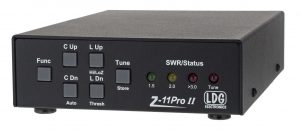
The LDG Z-11 Pro 2 ATU

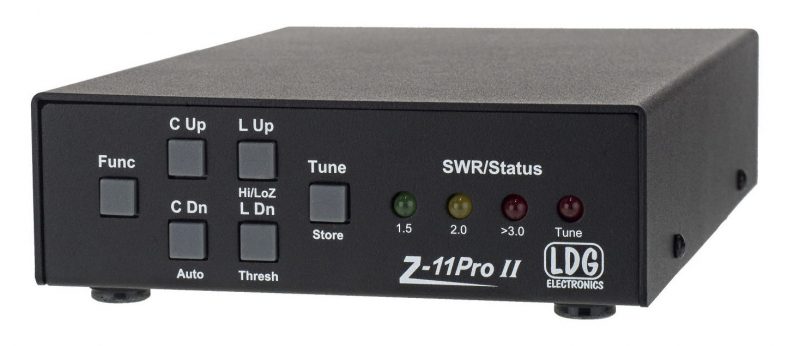
No problem! The Yaesu FT-891 is one of the best bang-for-buck transceivers on the market. The price at time of posting is $609 after rebates. That leaves room to purchase a benchmark portable HF+6 meter antenna tuner. I personally love the LDG Z-11 Pro 2 which would only set them back $169. I’ve owned one of the predecessors of this ATU for nearly a decade. It’s located outdoors, in an enclosure and serves as a remote antenna tuner for my multi-band sky loop. It has operated flawlessly through seasonal temperature extremes and powered by a 15 year old  12V gel cell battery that is charged off of a 5 watt PV panel and Micro M+ charge controller.

The FT-891 and Z11 Pro 2 ATU combo would total $778 which is a nice compromise between the $1,000 IC-7300 and $450 G90.

If your friend wanted a more compact option than the IC-7300, and better specs and more power output than the G90, this FT-891/Z-11 Pro 2 combo would be hard to beat.

Don’t Forget Antennas and Power

As I mentioned before, do your friend a favor and remind him/her to set aside a budget for an antenna.

If you build your own wire antenna, you can create an amazing one for $50 or so in quality ladder line and wire–at least, that’s about what I put into my sky loop antenna. Retailers like Universal Radio, HRO, and Gigaparts stock quality pre-made wire antennas that cost a bit more, but are pre-tuned, durable and very easy to deploy. The type of antenna you can install is totally dependent on the environment around your home, access to your radio room, and any local interference you might need to mitigate.
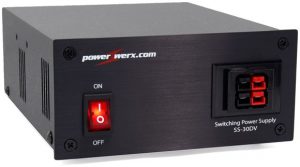
Of course, all of the radios mentioned above need a DC power supply. There are many on the market from lightweight switching power supplies to heavy linear supplies.

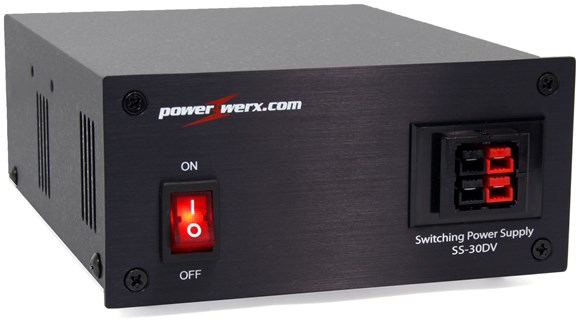
I would not choose one of the cheapest ones you can find because switching power supplies especially can inject noise. I’m a big fan of the Powerwerx SS-30DV which will typically cost around $110 at ham radio retailers (although, at present, it’s one of the many items out-of-stock due to the Covid-19 pandemic). It hits the sweet spot for me and is a little workhorse!

What do you think?

As I always say: radios are a personal choice. Specifications and features make for convenient points of comparison, but often choices are made based on a user’s own needs and operating style.

Between the Xiegu G90 and Icom IC-7300, which would you choose as a first rig? Can you think of a better compromise?  Please comment!


Do you enjoy the SWLing Post?

Please consider supporting us via Patreon or our Coffee Fund!

Your support makes articles like this one possible. Thank you!

Covid-19: Popular Yaesu and Alinco rigs meet early demise


No doubt, the Covid-19 global pandemic has had a mostly negative impact on our daily lives. 

Surprisingly, I found that the impact on the amateur radio world, at first, was quite minimal. Not only did sheltering at home seem to increase the number of operators on the air, but I found that most of the radio items I needed to purchase were largely available.

Since mid-May, however, radio retailers have struggled to maintain inventory on certain items mainly due to shipping issues from manufacturers (especially when international shipping was involved). Covid-19 issues have also delayed the introduction of a number of transceivers and portable shortwave radios we should have seen in production already.

Most recently, however, I learned from a trusted source that Covid-19 has lead to the early demise of at least two popular radio models.

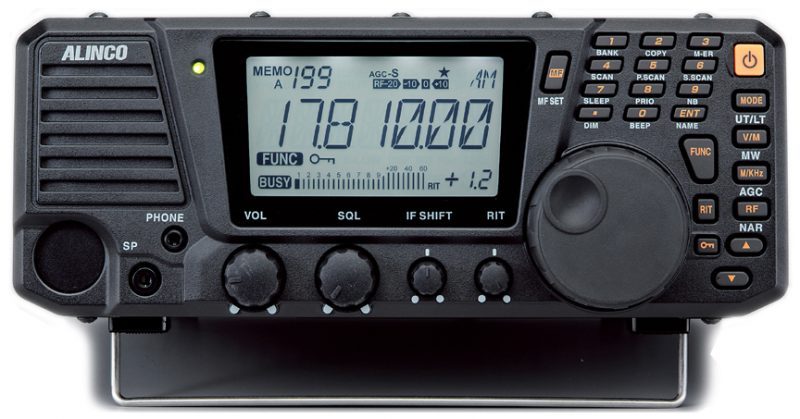
Alinco DX-R8T: Discontinued

The Alinco DX-R8T has enjoyed a long product life. I recall reviewing this fine tabletop receiver back in 2011. It has been a very popular radio because it’s been one of the only “legacy” tabletop receivers still in production.

I recently learned that Alinco will no longer produce the DX-R8T due to “parts issues.” One would have to assume that this will also affect the DX-R8E (EU version) and eventually the DX-SR8T which is the transceiver version of this model.

Retailers may still have some inventory of these models, but once those models have been purchased, there will be no more. I would certainly suggest purchasing the DX-SR8T transceiver as an alternative since the price difference is modest and it’s built on the same receiver as the DX-R8T.

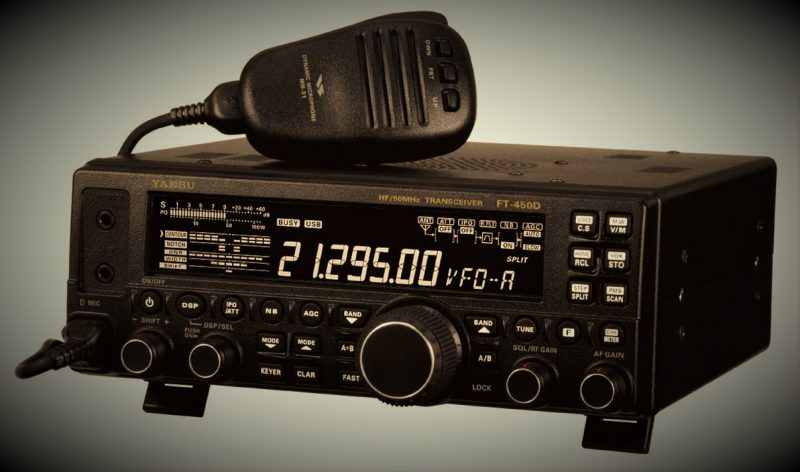
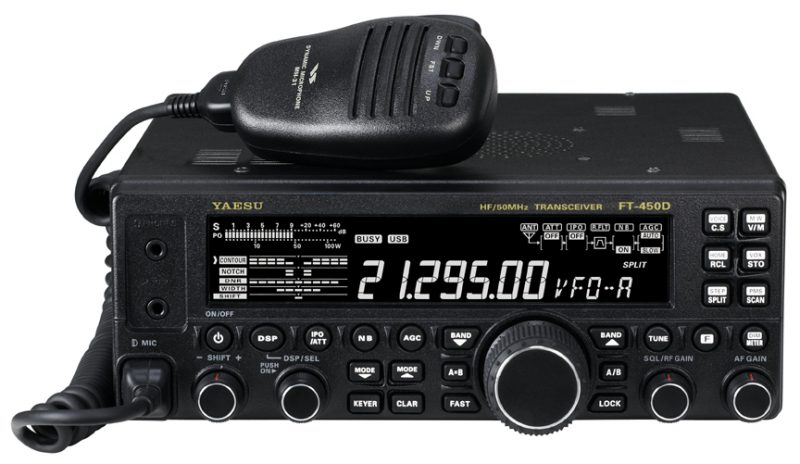
Yaesu FT-450D: Discontinued

Like the Alinco above, Yaesu has announced that they are discontinuing production of the popular Yaesu FT-450D general coverage transceiver due to “parts issues.”

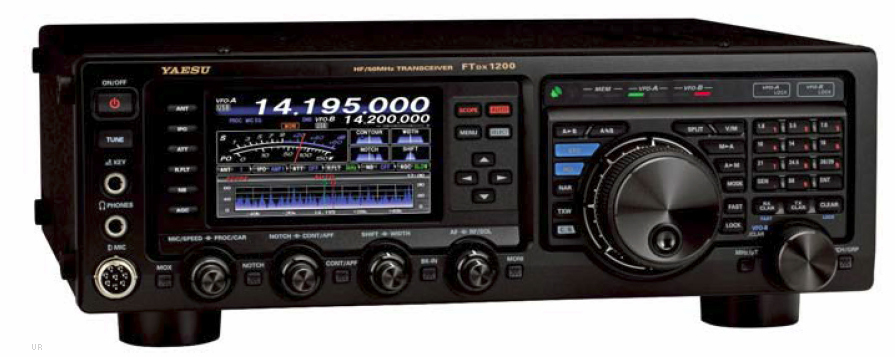
Yaesu FT-DX1200

It’s worth noting the venerable Yaesu FT-DX1200 recently met the same fate.

To be clear: parts obsolescence happens in the best of times.  Covid-19 has simply accelerated the issue.

If you’ve been considering the purchase of one of these models, you might bite the bullet now if you can find a retailer with inventory.

If I learn of any other radios being discontinued, I’ll publish updates here on the SWLing Post.

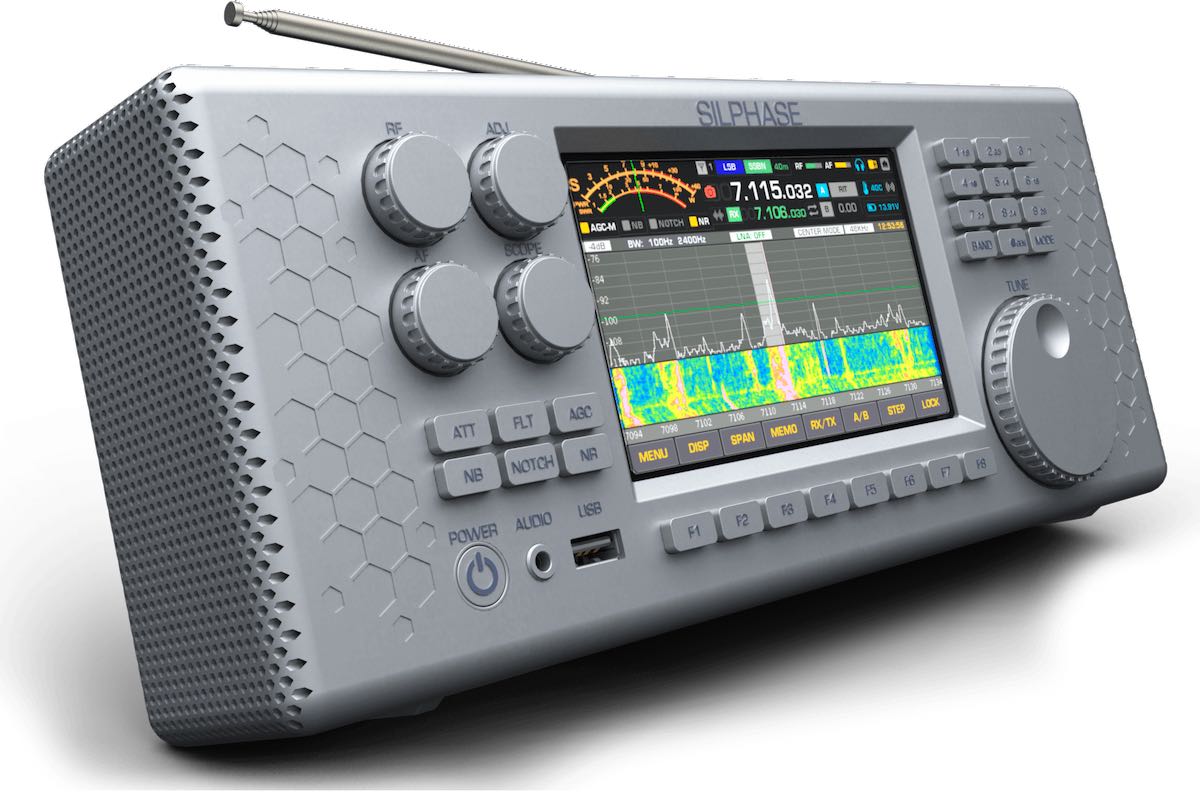
Silphase R1 videos and information about power and antenna ports

We’re starting to get a little more info about the recently posted Silphase R1 SDR receiver. At this point, the radio isn’t in production and is obviously only in a prototype stage so there are a lot of question marks–including if it’ll ever come to fruition. The pandemic is obviously not an ideal time to launch and produce a new high-end radio. I, for one, certainly hope they do!

Many thanks to SWLing Post contributor, Mark Hirst asked Silphase about R1 external antenna support and power options. A Silphase representative replied:

“We are constantly redesigning the rear panel receiver Silphase R1, so we
can say for sure that there are 4 connectors – antenna F-type connector,
12.6 V power/charging, RJ-45 and USB”

And thanks to SWLing Post contributor, Paul, who received the following info from Silphase:

You can watch real videos on our YouTube channel.

https://www.youtube.com/channel/UCQN8YbKULHlkA4KBFt76Hhg

Sample videos:

Click here to view all of the videos on the Silphase YouTube channel.

As we learn more about the Siplase R1, we’ll publish it on the Post with the tag: R1.

Converting Tecsun signal meter numbers into five strength units?

Many thanks to SWLing Post contributor, Chris Rolfe (M3OZP), who writes with the following inquiry:

Don’t know if anyone can help.

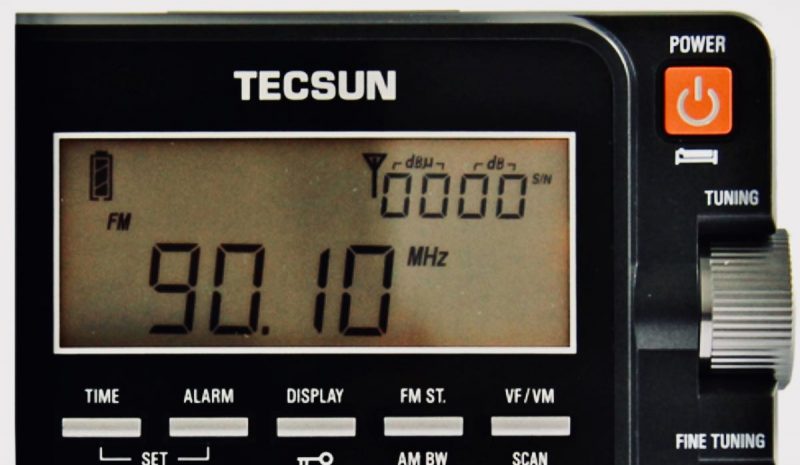
I have a Tecsun PL-880, and it shows signal strength in db. How can I work out the signal strength as 1 to 5? All my other radio have 1 to 5 signal strength meters which is what I have always been used to.

Many thanks.

Chris Rolfe
M3OZP

Thank you for your question, Chris. The signal meter on the PL-880 and a number of other late-model Tecsuns that use similar DSP chips share the signal display which indicates both the signal strength and signal-to-noise ratio.  I believe the dBu number indicates the conducted voltage across the receiver’s internal resistance.

It’s perhaps one of my quirks, but as a listener I actually pay little attention to signal displays on portables unless I’m evaluating signal strength for a report or even using it to locate a local noise. Converting those numbers into an S1 to S5 number is simply something I would do by “guesstimating.” Yeah, not terribly scientific.

There are folks in the SWLing Post community who can do a much better job explaining the readout and how to interpret/convert signal strength across the MW, SW and FM bands.

Post Readers: Please comment if you can shed some light on simplifying signal strength for Chris.

Giuseppe’s reception of the LRA36 test broadcast

Photo from the Argentine Antarctic Base (LRA36) – Source: RAE

Many thanks to SWLing Post contributor, Giuseppe Morlè (IZ0GZW), who shares the following:

Dear Thomas

Here is the link of to video regarding the transmission of LRA 36 in USB mode Saturday July 25, 2020 from 17.00 UTC on 15.476 MHz.

A good result if I think it was almost impossible to listen to it with the sun still high … the place where I listen, in Formia, Italy, is really excellent.

73. Giuseppe Morlè iz0gzw.

Thank you for sharing this, Giuseppe! I’m always impressed with the DX you catch there at your location in Formia! Grazie e ciao!