Category Archives: Shortwave Radio

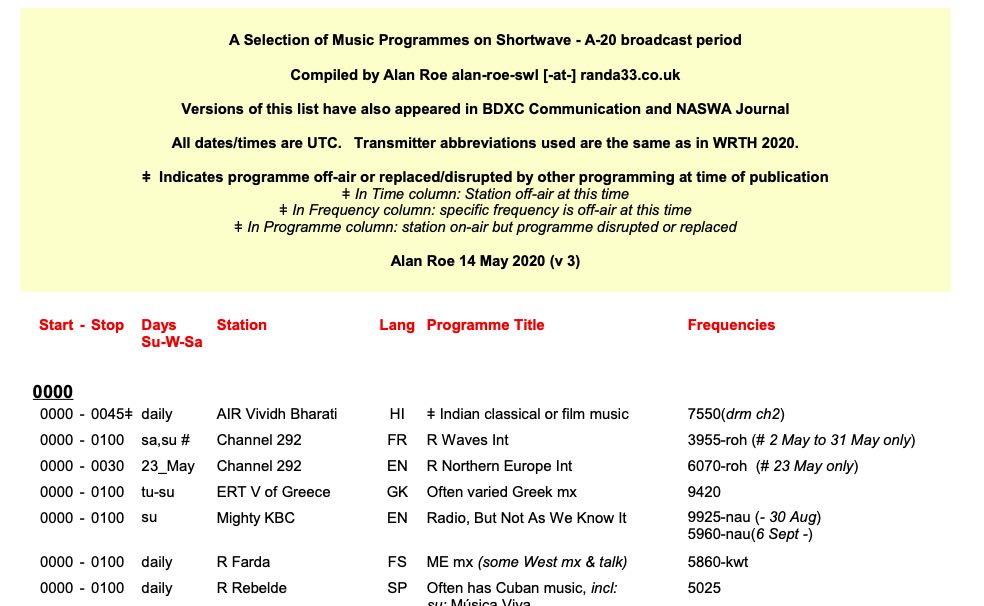
Alan Roe’s updated A20 season guide to music on shortwave

Many thanks to SWLing Post contributor, Alan Roe, who shares his latest update to his A20 season guide to music on shortwave.

Click here to download a PDF copy of Alan Roe’s Music on Shortwave A20.

Alan, thanks so much for keeping this brilliant guide updated each broadcast season and for sharing it here with the community!

Return of “radio six international” to shortwave June 6, 2020

(Source: radio six international via Gérard Koopal)

Shortwave broadcast on June 6th

After an absence of five years, Scottish station radio six international returns to the HF bands to mark the outlet’s 57th anniversary.

Saturday Sounds with Tony Currie will air from 22:00 to 24:00 UTC on 6,070kHz (49.39m) via Channel 292’s 10kW transmitter in Germany. The programme will largely feature independent and unsigned music from around the world. QSL cards will be issued on receipt of either one Euro of one US dollar for return postage, with Reception Reports requested to be sent to Radio Six International, 21 Sherbrooke Avenue, Glasgow G41 4HF, Scotland. E-QSLs will happily be sent free of charge.

Launched in 1963 as an afternoon’s entertainment by a group of primary school children, it never went away and after various incarnations – including a spell as Europe’s first commercial cable radio network in the 1980s – the station has been webcasting round the clock for the past twenty years.

For a time, the station maintained a daily shortwave presence from 2004, using the facilities of both IRRS and WBCQ, switching to weekly transmissions from Ulbroka, Latvia in 2005 and daily programmes on medium wave and satellite via RTI in Tatras, Slovakia.

In 2008 the various transmissions were ended to concentrate on the internet service and the provision of syndicated programming around the world. 58 stations now take some or all of our output, with 9 hours a week simulcast on FM in New Zealand and 4 hours on FM in Taiwan.

Our broadcast on June 6th is currently on one-off; however we are considering a more regular return to the HF bands in the future.

Note: Radio Six International is an internet station at www.radiosix.com with audited listeners in 200 countries worldwide. It’s been webcasting since 2000, and syndicates up to 9 hours a week of programmes to its affiliate network of 58 AM, FM and DAB Digital stations around the world.

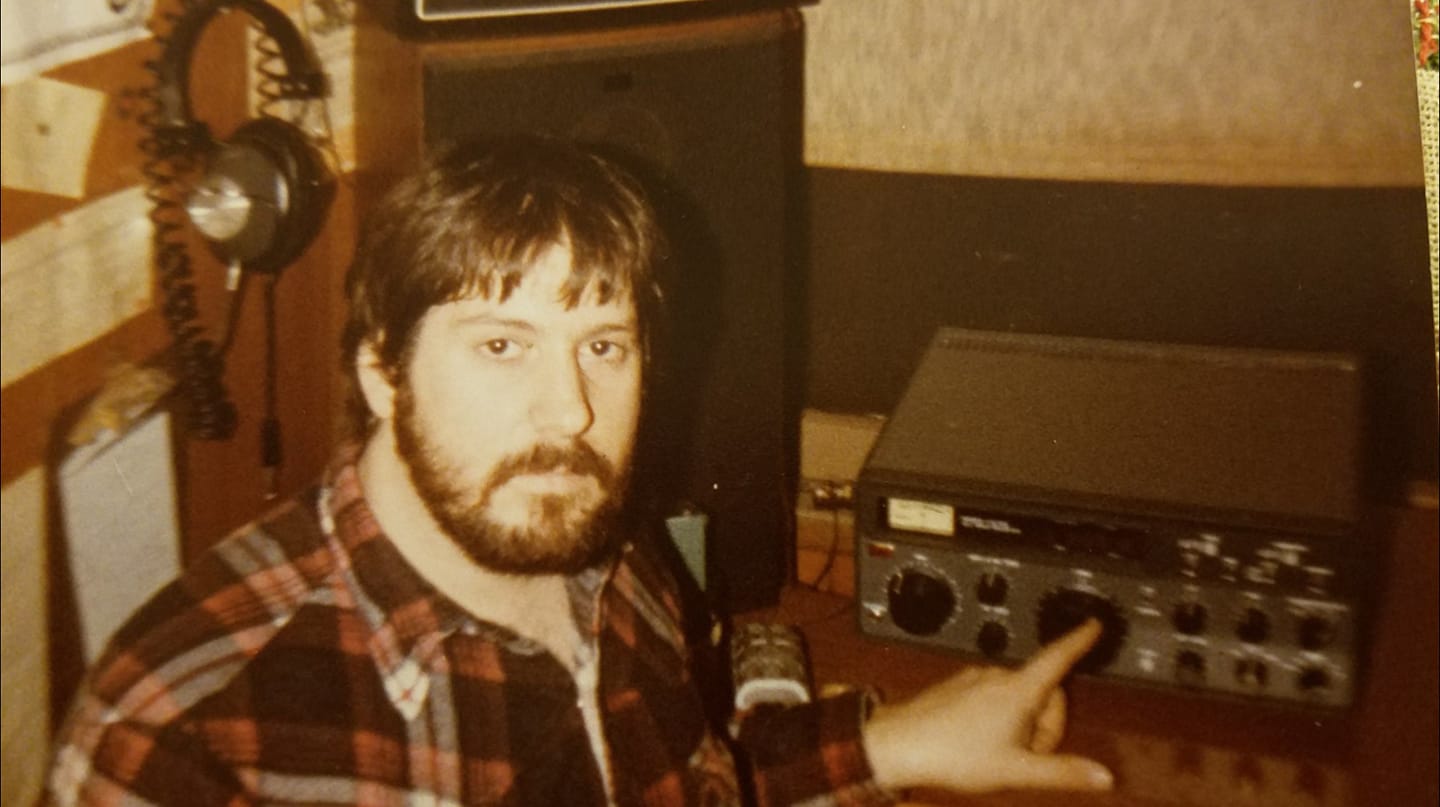
Dean’s love of the JRC NRD-515 spans 35 years…

Many thanks to SWLing Post contributor, Dean Bianco, who kindly allowed me to share his note which accompanies the photo above:

Me and my then brand-new JRC-NRD-515 in 1985.

Thirty-five years later in 2020, it is still with me. It works today as it did when it was first taken out of its box! This fact is a testament to the 515’s precision engineering, high-quality components, and tank tough build! The only trouble in these 35 years was the gummy 2.4 kHz mechanical filter issue that all 515’s eventually suffer. However, that was an easy fix and other than de-oxit every five years in the controls, and dusting the interconnect circuit wire RCA plugs, it performs flawlessly. It was used two hours ago.

I have an advanced SDR stand-alone, the astounding Icom R-8600 that has better sound, better specs, and more facilities to peak and tweak a flea-powered signal out of a huge pile of powerhouse flamethrowers than does the old 515. But, when I want to experience the old-school large knobs, the large tuning wheel and the sheer enjoyment that only an old heavy metal radio can provide, I turn to the classic NRD-515!

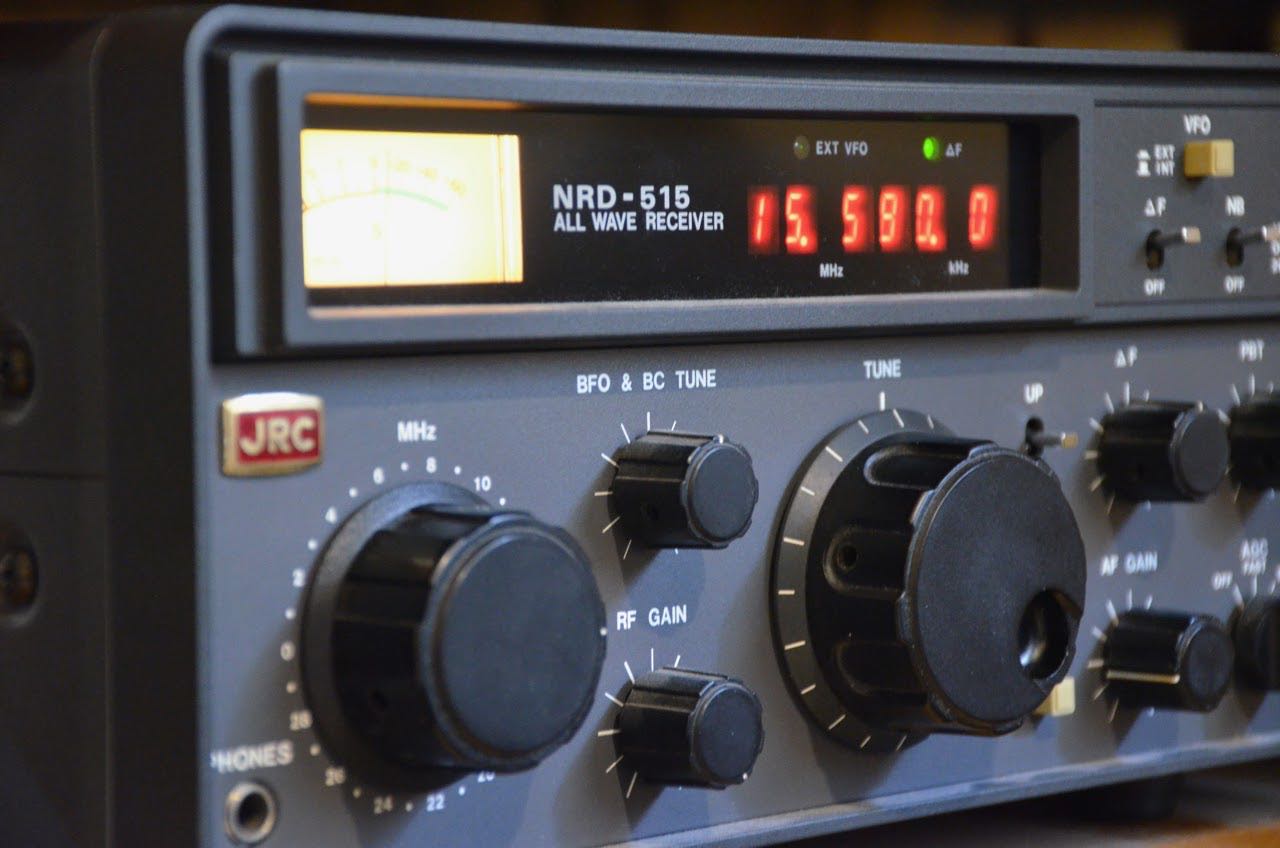
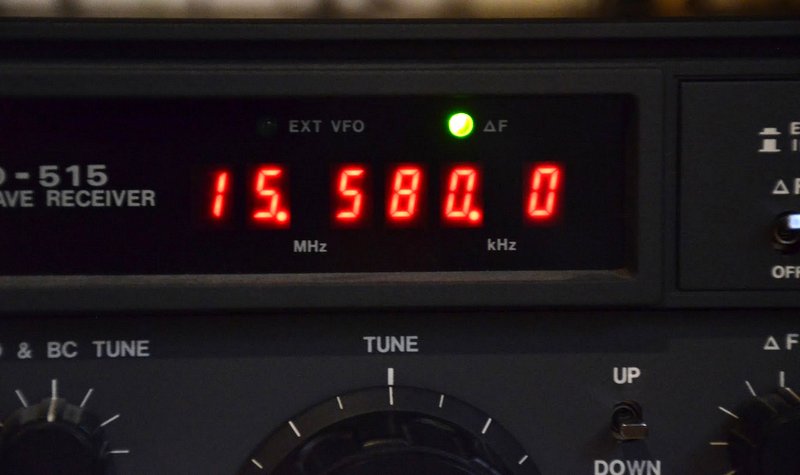
I don’t blame you, Dean.  I have never owned an NRD-515, but I have always admired its design and layout. It has such an all-business, military/rugged look.  One thing I really love about the NRD-515 is how the RF and AF gain pots flank either side of the main encoder. The controls spacing is also ideal, in my book. Check out the following photo I took of Dan Robinson’s NRD-515:

Thanks so much, Dean!

Any other NRD-515 owners or lovers out there?  Please comment!

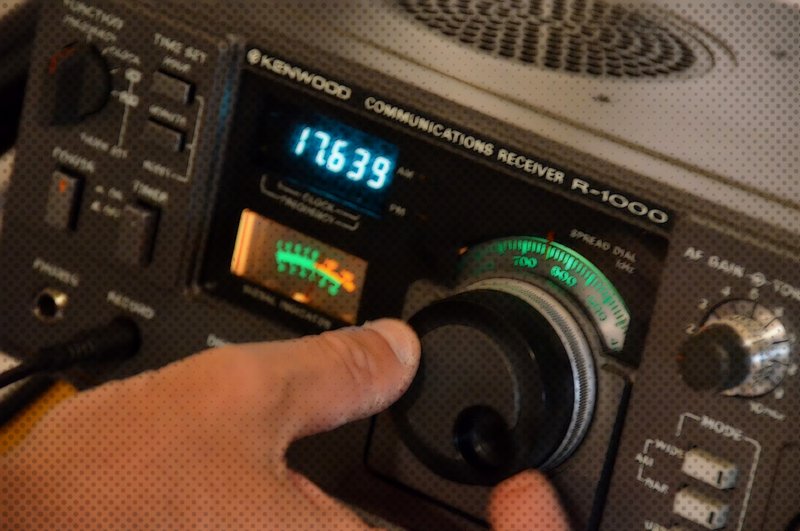
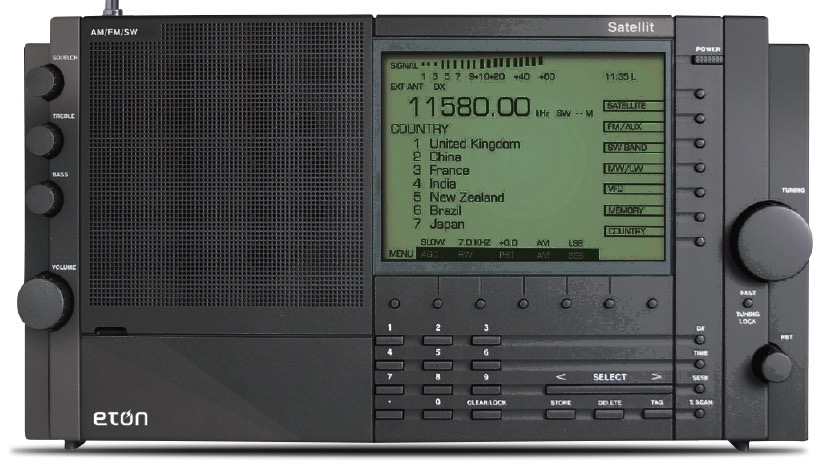
Eton Elite Satellit delayed until 2021

Many thanks to a number of SWLing Post readers who have pointed out the recent update from Universal Radio regarding the availability of the Eton Elite Satellit.

Per Universal Radio:

05/11/20
Eton expects this new model to be available in 2021. Beacause of the date uncertainty we are not accepting web pre-orders at this time. Please check back in 2021.

i can’t say I’m very surprised by this since we really haven’t had an update on this model in such a long time. That and, of course, the Covid-19 pandemic has really botched up design, production, and the supply chain for so many products.

I’ll admit it: I’m a bit bummed. I was really looking forward to comparing the new Elite Satellite with my recently acquired E1 XM.

Ed discovers a shortwave portable marketed to visually impaired listeners

Many thanks to SWLing Post contributor, Ed, who writes:

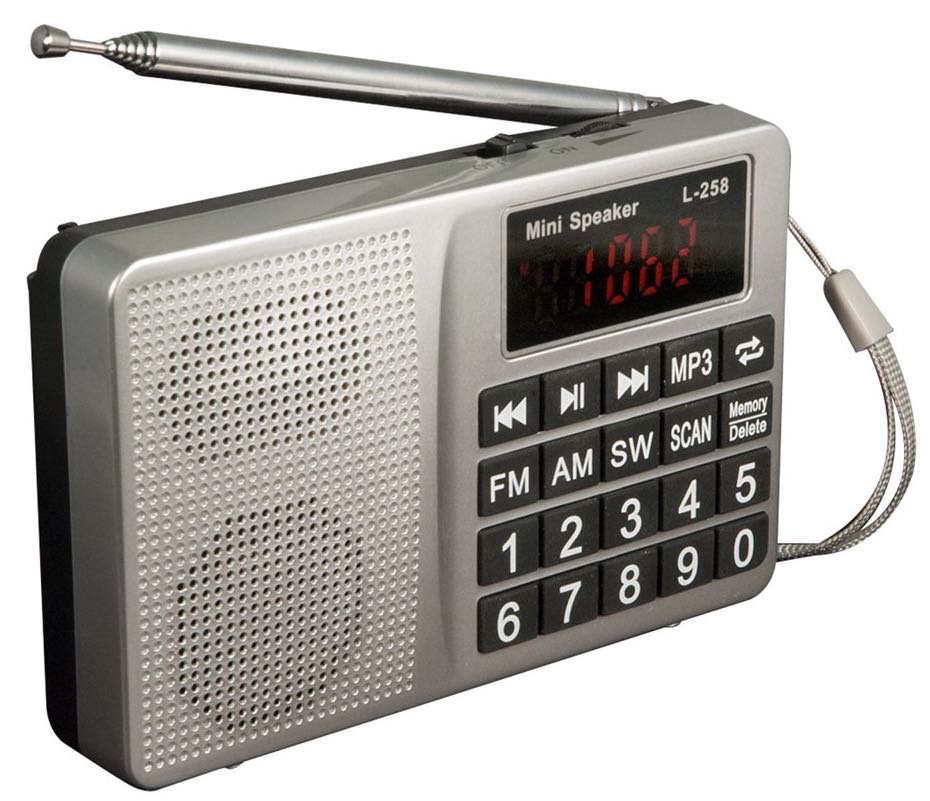
While perusing products for a disabled family member, I came across this shortwave portable for visually impaired listeners. Its HF coverage is limited to 2300 – 21950KHz, but it also receives
standard AM & FM and plays mp3 files from a microSD card. Interestingly, its advertised features include, “Large easy to see buttons, Large LED display screen, Unique memory and delete design”!

This could be a piece of Chinese junk, but I’ve long been drawn to weird and unusual radios, no matter how well they perform. For $39.95 this radio might be fun to play with and give to a
visually-impaired friend or family member if it works. Do you or any SWLing Post readers know anything about this strange radio?

https://www.maxiaids.com/ez-fm-am-sw-multiband-radio-mp3-speaker

Post readers: Please comment if you have any experience using this radio!  I’m pretty sure I’ve seen this model marketed under other brand names.

Thanks, Ed!

Dan’s Fridge Counterpoise and Butter Cookie Signal Booster

Many thanks to SWLing Post contributor, Dan Van Hoy, who writes:

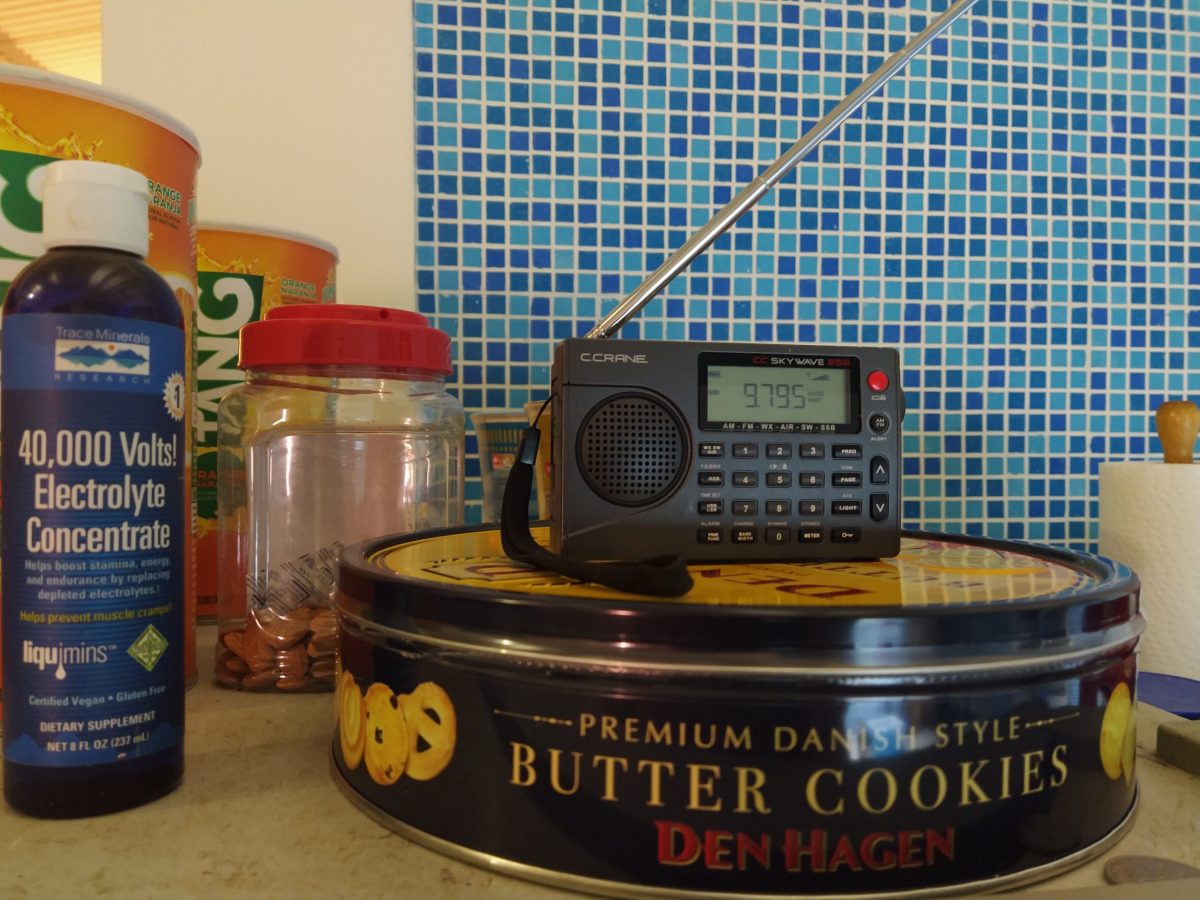
Here’s something you and the SWLing Post bunch might enjoy. My latest innovation in signal enhancement. Listening to KNLS from Anchor Point, Alaska on the 30m band. Not sure how much signal gain is achieved with the butter cookie tin, but it looks intriguing! And the 40 KV electrolyte just happened to be in the area. I’m sure it adds at least another 3dB to the received signal strength. ??

Continuing the relentless pursuit for better radio!

Ha ha! I had no idea that Danish Butter Cookies could help with DX! So much better than setting the Skywave SSB on an Altoids tin! Thanks for the chuckle, Dan!

Listener Post: Fabien’s love of radio which lead him to collecting

Fabien’s radio story below is the latest in our series called Listener Posts, where I place all of your personal radio histories.

If you would like to add your story to the mix, simply send your story by email!

In the meantime, many thanks to Fabien who writes:


I’ve been a radio listener since the age of 14. I was an SWL and a listener of local VHF free stations too.

In the beginning, my receiver was a poor radio-cassette, with a little segment of the shortwave bands. I used it for two years.

Then, for 16th birthday I received a Philips AL 990 shortwave receiver.

It was a great receiver because the sound was clear and it was easy to identify the stations when listening with my usual headphones–even those broadcasts with very weak signals and an unidentified language. The negative of this receiver was the frequency was not easy to see/read and I was at the same display for hours.

After my school period, I worked for two years and with my savings I was able to buy a JRC NRD 525 in Swizterland, where this receiver was less expensive and easier to find than in my country of France at the time.
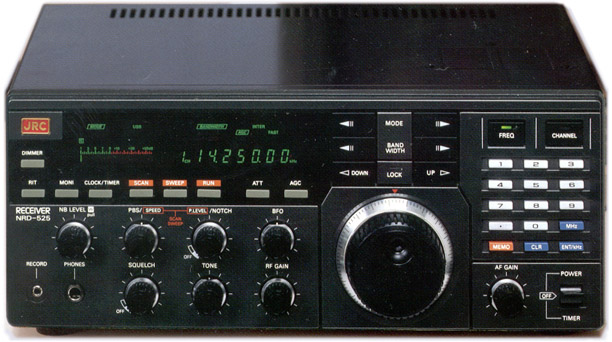
The Japan Radio Company NRD 525 receiver. Photo: Universal Radio

The good with the NRD 525 is that it was easy to tune to a frequency, easy to read the display and easy to connect the receiver to another unit for decoding RTTY signals with an old computer monitor and a small EPSON dot printer.

I was in paradise!

But the NRD 525 has a problem with its sound. Even with my best headphones, I was not able to understand the station voices when the signal was poor and the language was not mine, so it was difficult to have sufficient details to make a good reception report for sending it proudly to the logged radio station.

My solution was strange but the only one possible : I searched for rare signals with the NRD 525 and after I found them, listened to those signals with the AL 990 and my headphones.
With this solution, I was able to send a lot a reception reports and receive some beautiful QSLs from official, pirate and clandestine stations (clandestines were my favorites).

This SWL period was until 1988. In 1988 I was obliged to move from my city to a new location where it was more difficult to be a SWL. The following years, I was more a BCL (Broadcast Listener) than an SWL.

I did BCL DX until 1999, and after 1999 most of my radio listening time was only BCL easy listening, without looking for weak signals.

Because of the Internet, online SDRs, and the closing down of a lot of broadcasters, I’m less  interested in contact stations directly, save from time to time. For me, the chase of weak signals was the most important part; now we can listen to a station via the Internet (online on a website or with a SDR online)…even the pirates stations.

My actual interest today is to have all of the receivers I was dreamed about when I was a teenager. In 2020, at 53 years old, I am now more a collector of receivers than a real BCL. I like all electronics, including many hifi systems/components and radio items.

I also love black and white film photography/laboratory too and I collect stickers from French radio stations.

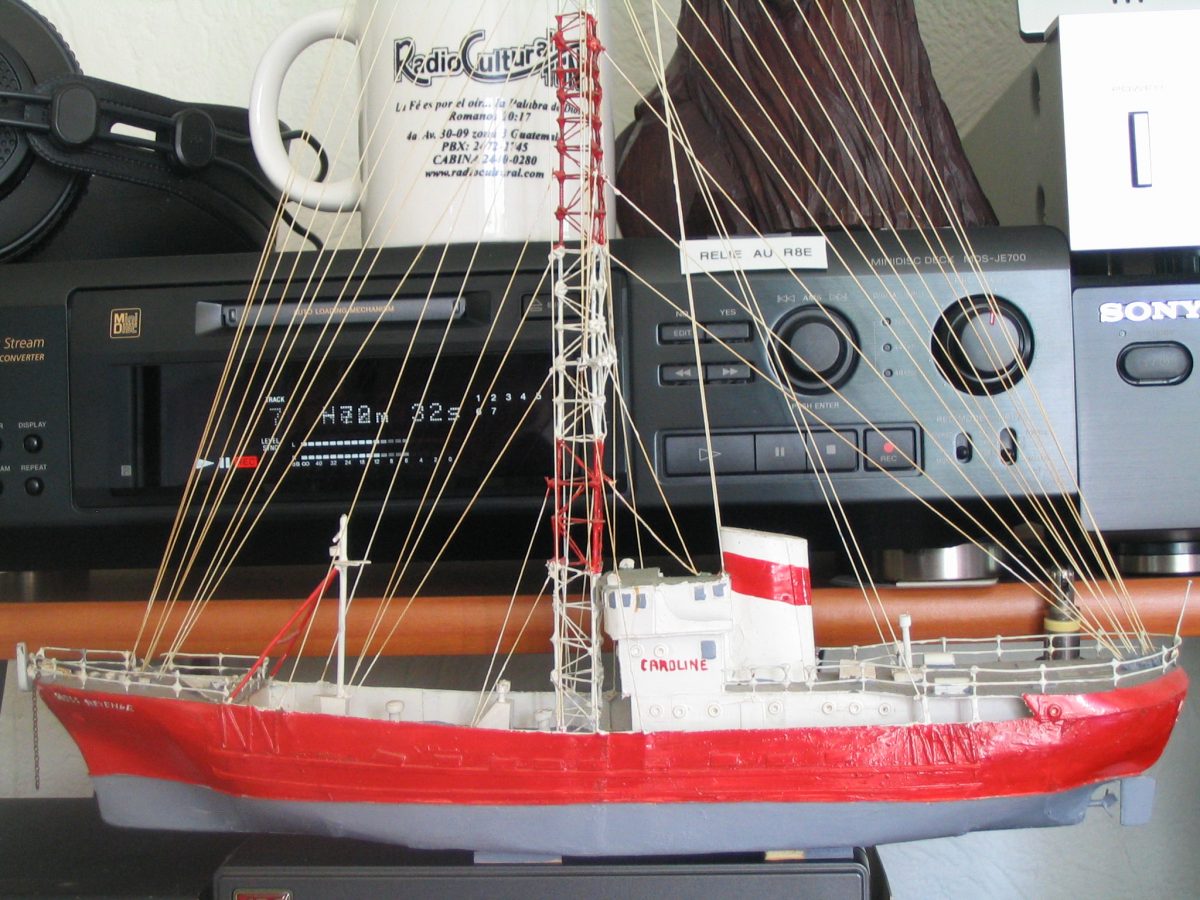
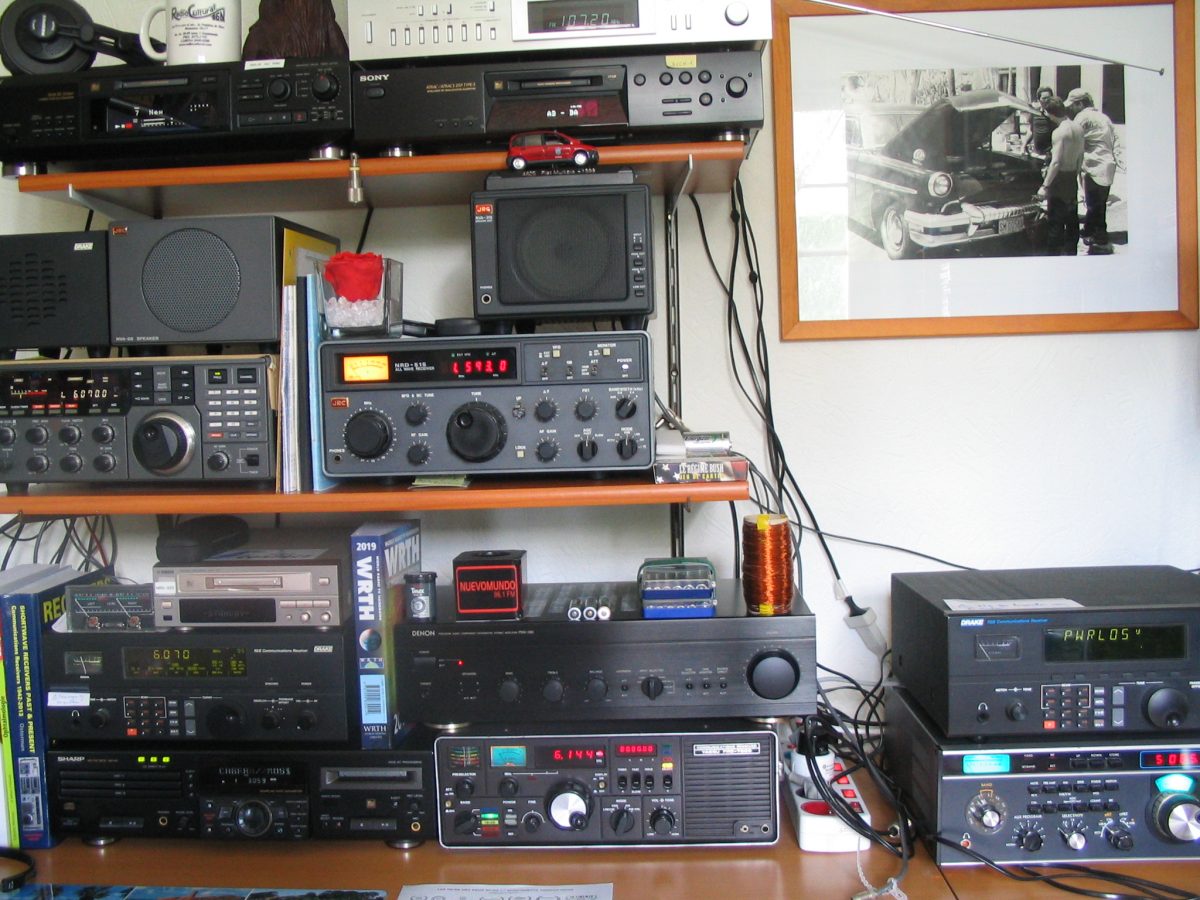
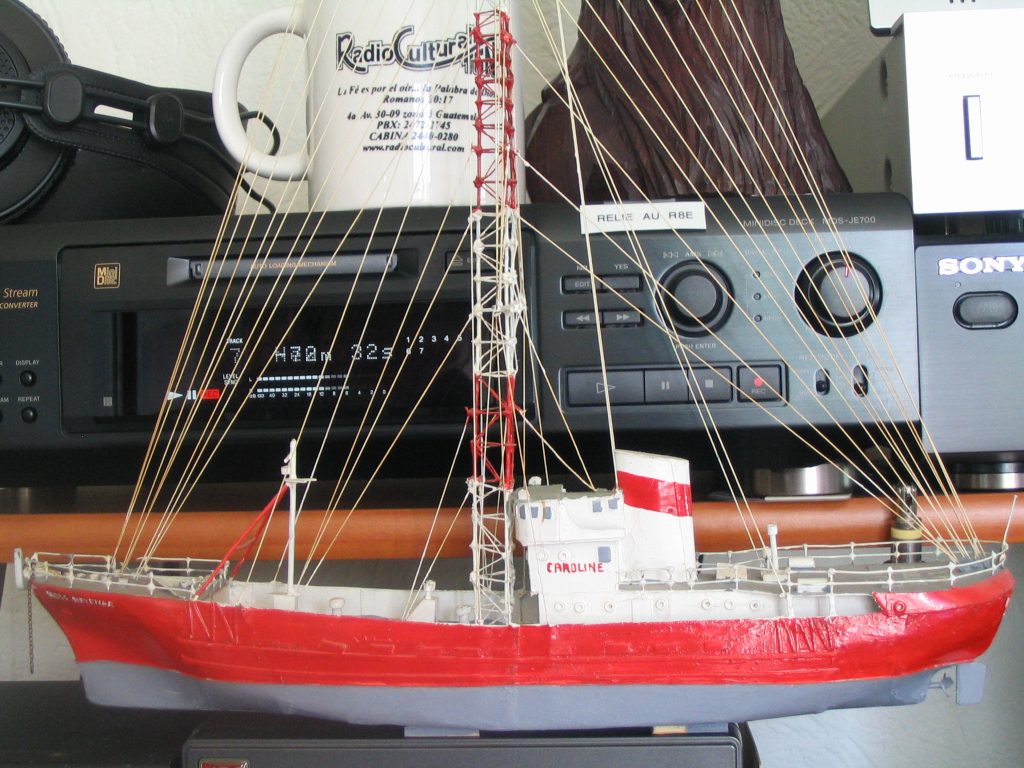
Here are two pictures of part of my actual listening post. On one, you could see a model boat of the famous offshore radio station ” Radio Caroline “.
My favorite shortwave receivers are the Drake R8-E (European version of the R8), the BEARCAT DX-1000 and the Yaesu FRG-7.
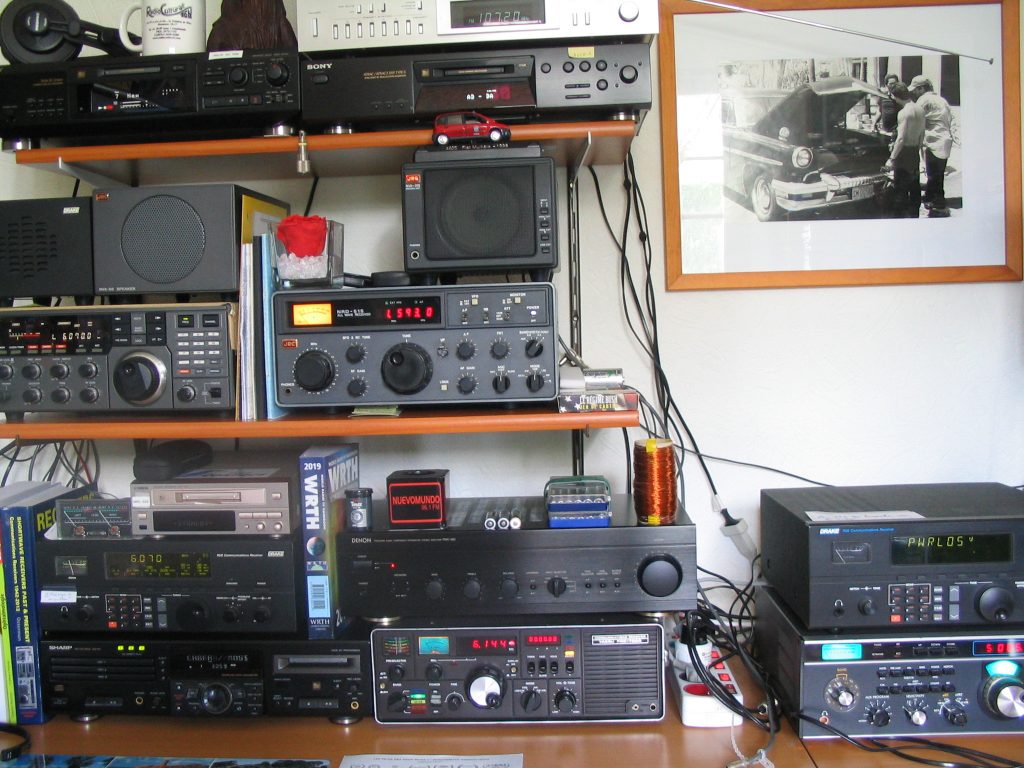
My favorite receiver for synchronous detection reception is the SONY ICF-2001D (the European version of the ICF 2010).

To receive mediumwave stations, I prefer my JRC NRD 515 connected with an Australian active loop antenna.

For travel, I use a small Lowe HF 150.

For VHF FM-commercial band, I use my Grundig Satellit 500 and a Sony ICF 6800W.

Some of my best souvenirs/memories of SW reception are Radio La Voz de Alpha 66 (USA), Radio Venceremos (El Salvador), Radio Botswana, Radio Bardaï (Tchad or Libia), Radio RFO Tahiti, and Radio Bandeirantes (Brasil).

My regrets from the years 1981-1988 are not being able to receive the signal of Radio BHUTAN and the signal from The Faklands Islands.

I don’t like to travel outside my beloved country, but for the pleasure of visiting some radio stations, I made an effort and I traveled to Phnom Penh (Cambodia), La Habana (Cuba), San Salvador (El Salvador) and Ciudad Guatemala (Guatemala).

Truly Yours,
Fabien SERVE, in France


Thank you, Fabien, for sharing your story! You’ve added some truly classic receivers to your collection over the years!  I love the Radio Caroline model too! 

I encourage other SWLing Post readers and contributors to submit their own listener post! Tell us how you became interested in radio!