Category Archives: Shortwave Radio

Remembering Arthur Cushen

Many thanks to SWLing Post contributor, Alfred, who shares the following:

I have taken my DX-150 off the shelf and renewing a long-ago hobby. Circumstances have certainly changed since my introduction to SWLing.

One of the major changes is my operation of the receiver non-visually. To re-acquaint myself with the technology and new operational mode, I have been gathering literature (on the computer using screen reading software). I came across this link about Arthur Cushen, who I was not aware of – and you may be, and pass the link on to you to enjoy the aspects of his life and profession as a DXer.

(Source: NFB.org from April 11, 1998)

Arthur Cushen Dies

by Timothy Hendel

From the Editor: Tim Hendel is a member of the Huntsville chapter of the NFB of Alabama. Since he was a student at the New York State School for the Blind in Batavia, he has been interested in travel, languages, and short-wave radio. That is how he first became acquainted with Arthur Cushen and his story.

This is what he says:

A large group of sighted people would tell you that the only blind person they know is Arthur Cushen. These people share the hobby of tuning around on their short-wave radios to pick up unusual stations. Hard-to-get stations are often referred to as “DX,” and people who have this hobby are called “DX-ers.” Arthur Cushen was called “the world’s only professional DX-er.” On September 20, 1997, he died in Invercargill, New Zealand.

Arthur Thomas Cushen was born on January 24, 1920, in Invercargill. This community is at the extreme southern tip of the South Island of New Zealand. It is about as far as you can get from most European and North American cities.

As a young boy Arthur is said to have suffered from poor eyesight. I do not know if he would have been classified as visually impaired in modern parlance. It is true that while in school Arthur did not receive any special educational training. During the 1930’s his sight became much worse. He lost all vision in the early 1950’s. Somewhere along the way Arthur learned Braille.

On Christmas morning, 1932, Arthur got up at 3:00 a.m. with his father and the rest of his family. They tuned their battery-powered radio to the BBC on short-wave to hear the Christmas address of King George VI, from far-away England. A couple of years later as a teen-ager Arthur picked up Suva, Fiji Islands, on his radio. By that time he was bitten by the bug and saved his money to buy better radios. He probably climbed around in his yard, putting up better antennas. Many of us have tuned around on our radios to see what we could pick up, but from his earliest explorations Arthur kept careful and detailed records of what he heard.

All of this might have remained little more than a pastime for a young man in a very isolated community, if it had not been for World War II. During that war most men of military age in New Zealand, as well as in other English-speaking countries, were called away to fight the Germans and Japanese. It was the nature of that war that many of these fighters were taken prisoner.

In the early 1940’s, Germans, Japanese, and Allies were all beginning to learn about international radio and trying to use it for their own propaganda ends. The Japanese were fond of sending out nightly broadcasts in English, touting their victories. These broadcasts went out from what was then called Radio Tokyo, but also from Manila, Singapore, and Batavia (now Jakarta, Indonesia). To give their broadcasts more realism, they often read out the names and addresses of prisoners of war whom they were holding. Perhaps the Japanese felt that these details would increase the believability of their programs. They surely never knew that they were providing great comfort to the families of those prisoners.

Sitting almost at the bottom of the world, listening to his radio, was Arthur Cushen. He had been rejected for military service due to his vision. Arthur, together with his wife Ralda, copied down the names and addresses of the soldiers and civilians as they were broadcast from Tokyo, Singapore, and Batavia. (Arthur says that those were the strongest stations and had the greatest number of prisoners, but that he also monitored Shanghai, Chungking, and many other smaller stations.) Then Arthur would try to track down the families and tell them that he had heard news of a relative on the radio. True, the man might be a prisoner, but at least families got word that their loved one was alive.

To understand how Arthur did his work during World War II, we should bear in mind that there was no Internet, no cassette recorder, no word processor. I cannot even find any mention of his having had a typewriter. He dictated his messages to his wife and other helpers, who would often go to the local telegraph office and send telegrams or write letters to the families. Even long-distance telephoning seems to have been limited, perhaps because Arthur could not afford it. After the war letters of thanks poured into Arthur’s home. In 1970 Queen Elizabeth awarded Arthur the MBE (Member of the British Empire) for his service during the war.

During the Vietnam War Arthur monitored the Voice of Vietnam (Radio Hanoi) and contacted many U.S. families whose loved ones had spoken over that station. By this time the actual voices of the prisoners were broadcast, and tape recorders were common, so Arthur was often able to provide recordings to the families.

In 1953 Queen Elizabeth made a trip to New Zealand. She made it known that she wanted to spend at least one night alone in her hotel room. She also requested a radio and asked that someone provide her with a list of frequencies on which she could hear the BBC. Arthur Cushen was called upon to do this and has kept the special souvenir card on which he listed the frequencies for Her Majesty. Another scoop came to Arthur on November 23 (New Zealand time) 1963. After President Kennedy was shot, Arthur monitored many U.S. AM broadcast band stations and relayed the news he heard to the local New Zealand stations. In that era before satellite coverage, they would not have had so much news if it had not been for Arthur.

In February, 1942, Arthur was contacted by the BBC in London, who had heard of his radio work. They wanted someone in New Zealand to check on reception of their programs and send them a cable each week, telling them how the station was doing. After the war Voice of America, Radio Canada, Radio Netherlands, Radio Sweden, and many other stations made similar arrangements with Arthur.

Between 1952 and 1954 Arthur had several eye operations. He hoped that they would restore his sight. Instead, he lost most of the vision which he had. At that time he felt that he could not continue the work he was doing and needed to find another source of income. He asked the stations for which he had already been doing monitoring if he could be taken on their payroll as a regular staff member. This is how it came to pass that Arthur Cushen became the world’s only professional DX-er.

In addition to his work for the large broadcast stations, Arthur wrote many articles talking about radio. Some of these were published in radio hobby magazines, others in newspapers in New Zealand. Arthur wanted as many people as possible to discover the magic of tuning their radios to far-away stations. He also wanted people to know that they could do this with whatever radio they had on hand, instead of going out and spending lots of hard-earned cash for a special receiver. Victor Goonetilleke of Sri Lanka said, during a tribute to Arthur by Radio Netherlands, “Arthur always put in stuff that was easy to pick up, as well as the rare, hard-to-find stuff. He was a great encouragement to those of us who were starting out, especially us who lived in Asia. No one else was talking about stations that we could hear.”

Glenn Hauser of the well-known short-wave program “World of Radio,” said, “Arthur is the only person who was active in the hobby when I started in 1957 and is still heard.”

I was a boy at the New York State School for the Blind when I first heard Arthur giving reports over Radio Netherlands, talking about stations he had heard. It is hard to describe the thrill I felt when, as a teen-ager living in what I thought to be boring Upstate New York, I heard Arthur talking about picking up Fiji, Tonga, or New Guinea. It certainly whetted my appetite for travel, languages, and radio—interests which I still have.

In the early 1970’s I lived in Hawaii, and I had the thrill of exchanging tapes with Arthur. He wanted to know how well Radio New Zealand was received in Honolulu. I was able to fulfill his request. In 1986 I met Arthur at a short-wave convention in Montreal. It was wonderful to see everybody, blind and sighted, clustered around Arthur as he told stories of World War II and radio in the exotic islands of the Pacific.

Arthur wrote two books. The World in My Ears is a combination autobiography and beginning guide for those who want to know about short-wave radio. NLS has recorded it as RC15856. Another book, Arthur Cushen’s Radio Listening Guide, has not been recorded.

Most of the tributes to Arthur have focused on his radio activities. In passing they have mentioned that he “did a lot for the blind of New Zealand,” but I have been able to obtain very little information about this facet of his life. Apparently he helped found the Royal New Zealand Foundation for the Blind. During the early 1960’s he and his wife Ralda began some kind of simple newspaper-reading service for the blind. Ralda would read articles on tape. These tapes were placed on an answering machine, where people could call in and hear them. Today most of New Zealand, as well as Australia, is served by radio reading services which operate on open channel, usually on the AM broadcast band.

In the tributes which many short-wave stations broadcast about Arthur, his wife Ralda was always mentioned. It was said that Ralda was “his eyes” and his greatest help. It is certain that Arthur and Ralda worked a great deal together, but I do not know how much of this reflects some sighted people’s ideas about what we can and cannot do without sighted help and how much reflects the actual way this couple chose to work together. A careful reading of his book reveals some gentle chiding of certain sighted people who, he felt, were trying to take over the running of some organizations in New Zealand, putting into place what they thought was “necessary for the blind,” rather than consulting with blind consumers.

It is true that Arthur grew up in a time and place when the special tools we take for granted were not available. I have no evidence that he used talking computers and other modern devices. I do know that he used Braille during his broadcasts. I used to fancy sometimes that I heard him rattling his Braille paper, though I don’t know if this was true.

Arthur’s family has requested that any contributions in his memory be sent to the Royal New Zealand Foundation for the Blind, 172 Queens Drive, Invercargill, New Zealand.

Tributes and condolences to Ralda Cushen may be sent to Ralda Cushen, 212 Earn Street, Invercargill, New Zealand.

Condolences and recollections of Arthur may be e-mailed to

[email protected]

Radio New Zealand ended its tribute to Arthur Cushen with a beautiful Maori sacred song. A very well-known blind person has passed from among us.

Thank you for sharing this remembrance, Alfred. I’m willing to bet there a number among the SWLing Post community who remember Arthur Cushen even though he passed away in 1997.
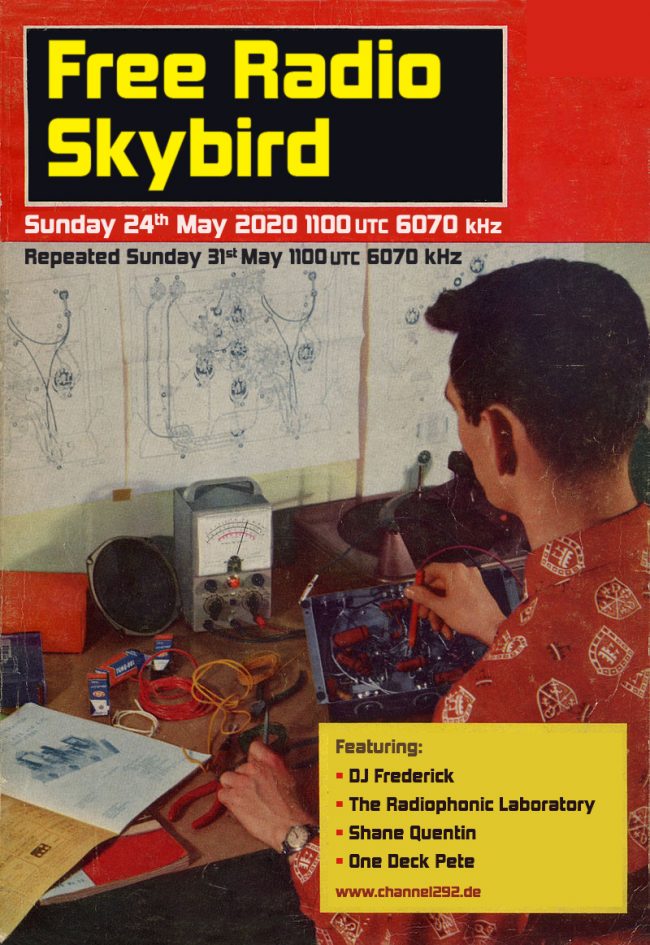

Free Radio Skybird: May 24 & 31, 2020

SWLing Post contributor, Pete Madtone just shared the Free Radio Skybird graphic above announcing their broadcasts on Sunday, May 24th, and repeated on Sunday, May 31st, 2020 at 1100 UTC on 6070 kHz (Channel292).  Thanks again for another excellent show graphic Pete! We look forward to tuning in!

Massive photo galleries of the Dayton Hamvention

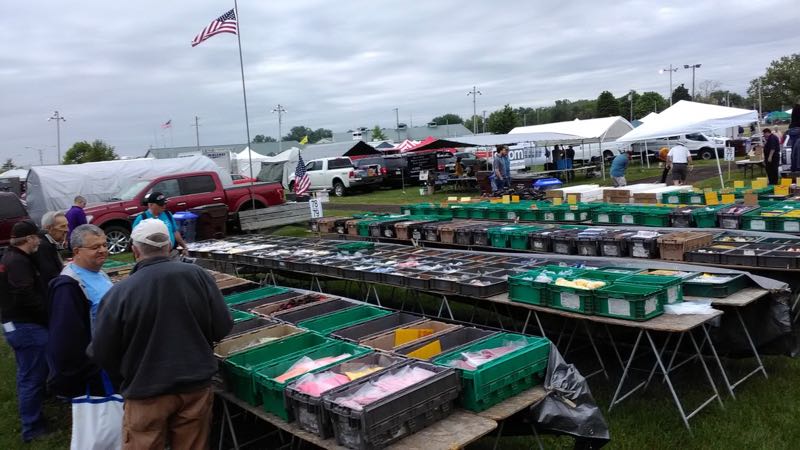
This is the first year I’ve missed the Dayton Hamvention since 2009. As I mentioned in a previous post–besides hanging with my friends–I really enjoy browsing the flea market and inside exhibits looking for deals and cool innovations.

In 2016, I took loads of photos of both the Hamvention Flea Market and Inside Exhibits. I did this partly thinking it would be our last year holding the Hamvention at Hara Arena (turns out, I was absolutely correct).  Post readers asked that in 2017, I take photos of the new venue at the Greene County Fairgrounds in Xenia, OH, so I did.

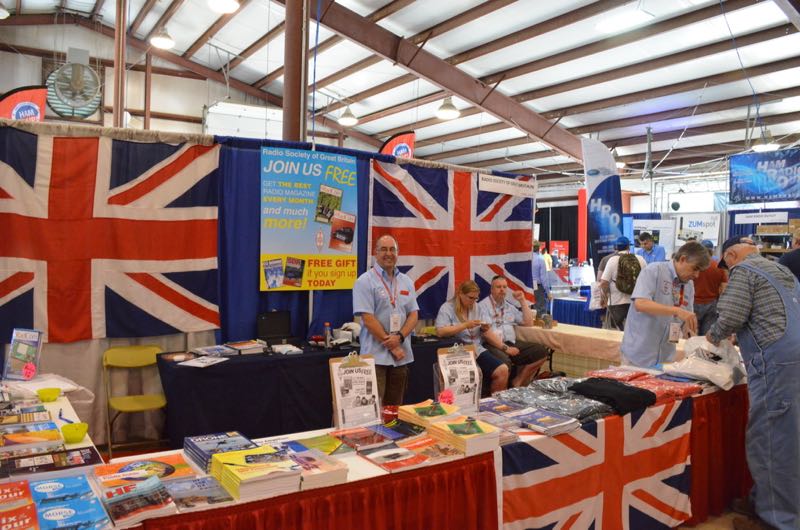
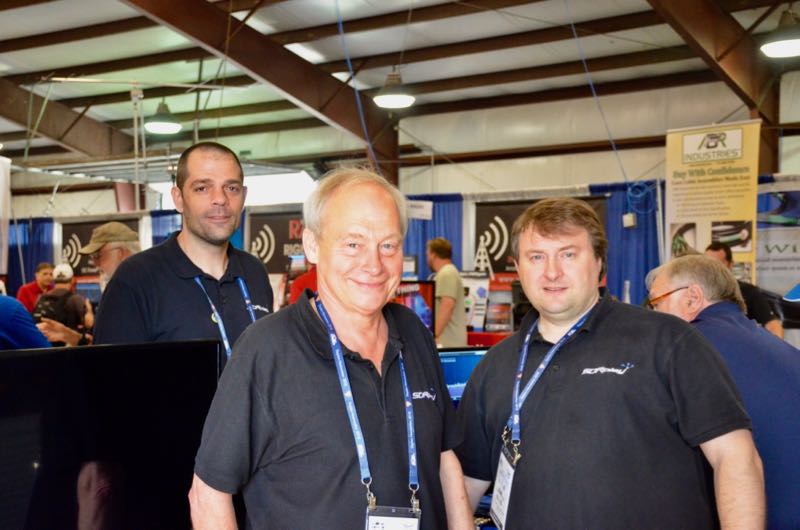
I enjoy taking and sharing these photos so much, I’ve continued to collect hundreds of photos every year since to help document how the largest ham radio gathering event changes over time.

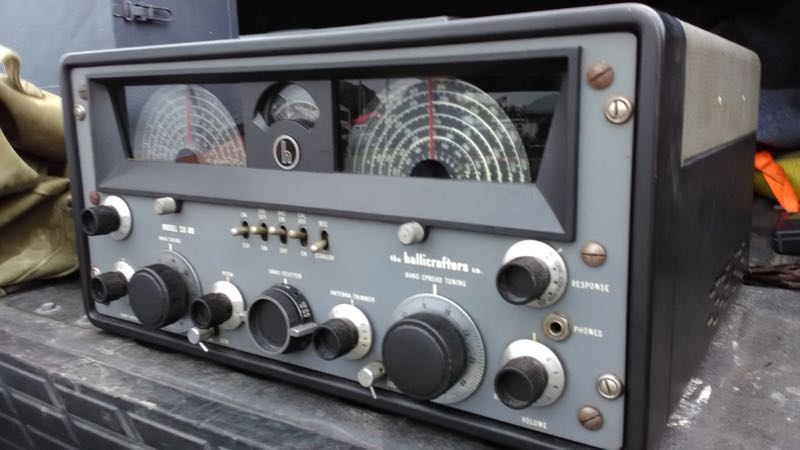
In the flea market, I try to include price tags when possible to give our international readers an idea of how much vintage gear costs.

If you’d like to take a trip down memory lane with me, check out the linked photo galleries below:

Hamvention Photos

2019

2018

2017

2016

2015 (smaller gallery)

2014 (smaller galleries)


Do you enjoy the SWLing Post?

Please consider supporting us via Patreon or our Coffee Fund!

Your support makes articles like this one possible. Thank you!

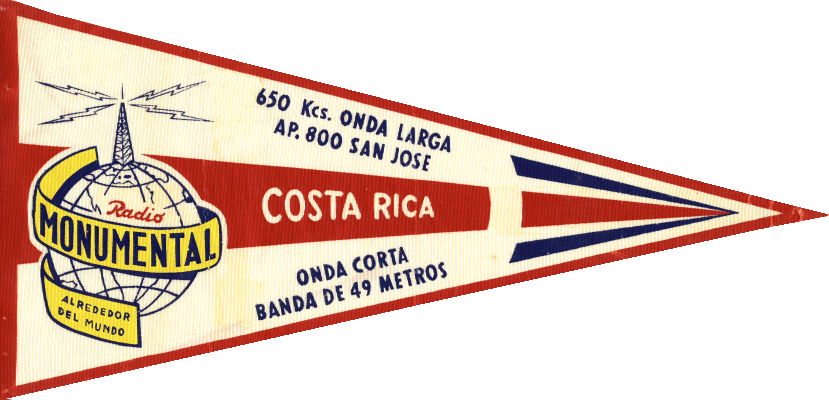
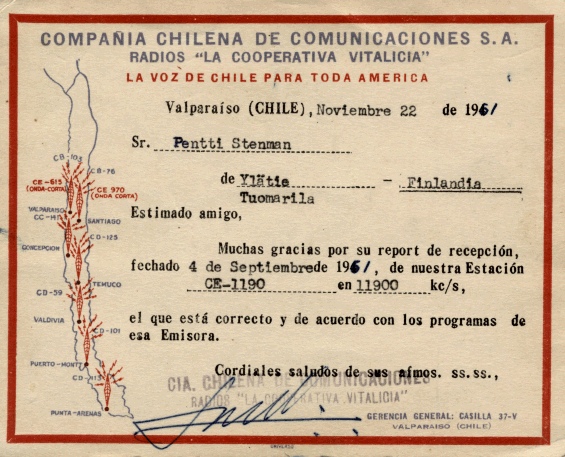
Pentti Stenman’s impressive collection of SWL recordings, QSLs, and pennants

Many thanks to SWLing Post contributor, Dan Robinson, who writes:

Just ran across this guy’s site Pentti Stenman, who is in Finland.
Check out his audio and QLS, pennants as well…

http://www.penan.net/dx-kuuntelu

Pentti’s collection is impressive indeed! Since he’s in Finland, some of his site is in Finnish, but it’s still quite easy to navigate and you can have Google translate it into any language.

I have pasted direct links below to Pentti’s various galleries.

QSL Gallery

Pennants

Recordings:

Thanks again, Dan, for the tip!

Radio Waves: Canada Radio Stamps, Across the Pacific, Satellite Talk Presentation, and BBC Radio 6 Breaks Records

Radio Waves:  Stories Making Waves in the World of Radio

Because I keep my ear to the waves, as well as receive many tips from others who do the same, I find myself privy to radio-related stories that might interest SWLing Post readers.  To that end: Welcome to the SWLing Post’s Radio Waves, a collection of links to interesting stories making waves in the world of radio. Enjoy!

Many thanks to SWLing Post contributors Richard Langley, Charlie Liberto, and Mike Terry for the following tips:


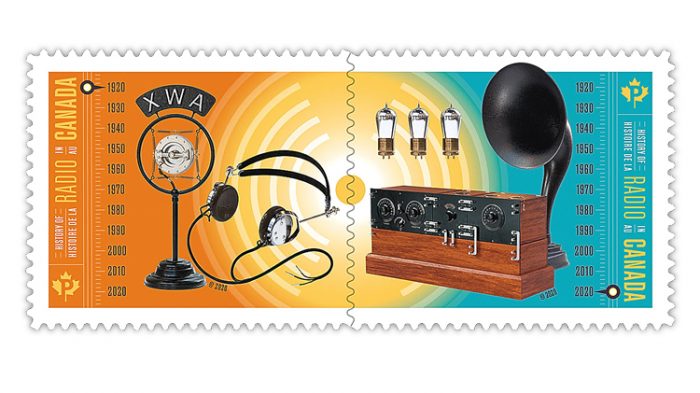
History of Radio in Canada stamps available May 20 (Linn’s Stamp News)

On May 20, Canada Post is issuing a se-tenant (side-by-side) pair of nondenominated permanent-rate (currently 92¢) History of Radio in Canada stamps. The new issue comes in a self-adhesive booklet of 10.

The stamps commemorate Canada’s inaugural radio broadcast, which hit the airwaves a century ago on the evening of May 20, 1920. According to Canada Post’s Details magazine for collectors, the radio program came from Marconi Wireless Telegraph Company’s studios in Montreal, Quebec, and was a closed broadcast for a Royal Society of Canada gathering at the Chateau Laurier hotel in Ottawa, Ontario.

The show featured a live performance by soprano Dorothy Lutton.

“As reported in the Ottawa Journal by one of the journalists invited to listen in, when ‘the latest one-step’ was played, the clarity was so impressive that several of the newspaper writers began to dance,” the May Details magazine said.

The stamp designs list the 10 decades of radio from 1920 to 2020 on the outside edges.[]

A New PBS Documentary Series about Pan American Airways  (Pan Am Historical Foundation)

When the China Clipper took off for the first scheduled flight to Manila on November 22, 1935, it riveted the attention of people around the world. At that moment Pan Am vaulted to a commanding position and the world changed forever as a result. That’s the story brought to life in “Across the Pacific.” Newly unearthed archival motion pictures, photographs, and original sound recordings as well as stunning graphics, help bring this history back to life. The film by Moreno/Lyons Productions tells the epic story of how Pan American Airways became the first to bridge the mighty Pacific – the first airline to cross any ocean. Focusing in particular on the contributions of Pan Am’s visionary leader Juan Trippe, aircraft designer Igor Sikorsky, and radio engineer Hugo Leuteritz, the three-part program will be broadcast on public television, beginning May 18th, 2020.[…]

Charlie notes that this documentary series will feature radio as seen in the following trailer:

Zoom satellite talk now on YouTube (Southgate ARC)

A video of the talk on amateur radio satellites, EME, Meteor scatter and the International Space Station by Robin Moseley G1MHU given via Zoom on Wednesday, May 13 is now available on YouTube

Watch G1MHU talk on satellites
https://www.youtube.com/watch?v=MKjCXepCK_s

The talk was organised by the Denby Dale Amateur Radio Society, their next talk on Zoom will be by the Editor of Practical Wireless, Don Field G3XTT, at 7:30pm BST on Wednesday, May 20, Zoom meeting ID 278 609 9353

http://www.ddars.net/

AMSAT-UK https://amsat-uk.org/

BBC Radio 6 Music breaks its audience record as UK’s biggest digital-only station (BBC Media Centre)

BBC Radio 6 Music reached a record 2.56 million listeners (from 2.49m last quarter and 2.52m last year), with the station’s weekday breakfast show with Lauren Laverne also seeing its biggest audience ever with 1.3 million listeners, according to the latest Rajars.
The figures released today covering the first quarter of 2020 also reveal that BBC Radio 1’s Breakfast show with Greg James gained 343,000 young 10+ listeners on previous quarter, and BBC Asian Network saw a boost in its audiences.

Figures released earlier this week for the same three months show the audience on BBC Sounds is growing, with a record 3.5 million weekly users in March. The total number of plays of live and on-demand content on BBC Sounds between January and March was 275 million, up 25 million on the previous quarter, and there was a record 123 million plays of on-demand radio programmes and podcasts.

James Purnell, Director of BBC Radio and Education, says: “It’s wonderful that listeners have granted BBC Radio 6 Music the top spot as the UK’s biggest digital only station by tuning in in record numbers. It’s no surprise that the station’s brilliant presenters and talented teams are proving a winning formula with their love and passion for music.

“We’ve been holding on to our younger audiences with more than 13 million 15-44 year olds listening to our stations every week whilst competition for their time has continued to intensify. And with more than a quarter of the population now listening to live radio online every week, it shows what an important role BBC Sounds plays for our stations and for our audiences, with record numbers of both live and on-demand plays in the first three months of the year.”

Overall, BBC Radio had 33.54 million listeners and a share of 49.7% (from 33.58m/51% in last quarter and 34.44/51.4% last year).

BBC Radio 1 posted a reach of 9.81 million listeners aged 10+ (from 9.72m last quarter and 10.18m last year). There were 8.92 million 15+ listeners (from 8.79m last quarter and 9.30m last year). The Radio 1 Breakfast Show now attracts 5.47 million listeners 10+ (Mon-Thu), from 5.13m last quarter and 5.44m last year. This quarter saw 4.87 million 15+ listeners (Mon-Thu), compared to 4.81m last quarter and 5.04m last year.

BBC Radio 2’s weekly audience was 14.36 million (from 14.44m last quarter and 15.36m last year). The Zoe Ball Breakfast Show attracted 8.11 million listeners per week, compared to 8.24m last quarter and 9.05m last year.

BBC Radio 3’s audience was 1.98 million (compared with 2.13m last quarter and 2.04m last year).

BBC Radio 4 posted a weekly reach of 10.76 million during the quarter (10.98m last quarter and 11.01m last year). The Today programme (Mon-Sat) has 7.12 million listeners each week, from 7.37m last quarter and 7.32m last year.

BBC Radio 5 Live posted a reach of 5.22 million listeners (5.41m last quarter and 5.40m last year).

Amongst digital-only stations, BBC Radio 1Xtra had a reach of 1.05m weekly listeners 10+ from 1.06m last quarter and 1.13m last year (986,000 weekly listeners 15+ from 987,000 last quarter and 1.05m last year). BBC Radio 4 Extra attracted 1.98 million listeners per week (from 2.27m last quarter and 2.24m last year). BBC Radio 5 Live Sports Extra attracted 601,000 listeners per week (from 914,000m last quarter and 708,000 last year).

BBC Asian Network drew 543,000 listeners, compared to 519,000 listeners last quarter and 536,000 last year.

The BBC World Service posted a weekly UK audience of 1.35 million (from 1.38m last quarter and 1.48m last year). BBC local radio reached 7.8 million listeners per week, from 7.5m last quarter and 7.86m last year.[]


Do you enjoy the SWLing Post?

Please consider supporting us via Patreon or our Coffee Fund!

Your support makes articles like this one possible. Thank you!

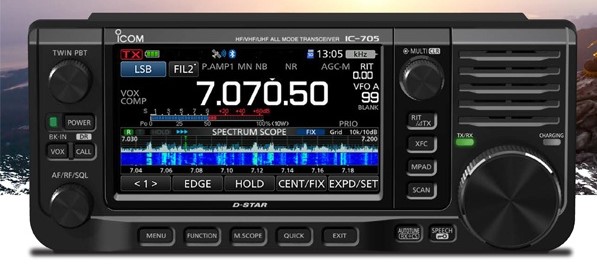
Icom IC-705 International Availability

(Icom Press Release)

Icom Inc. will begin to ship the IC-705, a new all mode portable transceiver covering HF, VHF and UHF, for the Japan domestic market from the middle of June 2020.

Shipments of the IC-705 for international markets will follow the release of the Japan domestic model.

Timing of availability depends on the schedule of type approvals in each region.

For the latest information about the availability in your country, please contact to your authorized dealer in your country.

Icom Inc. is continuing to effect delivery of the IC-705 in the soonest time possible under the current circumstances caused by COVID-19.

We thank you for your patience.

Radio Waves: Radio Listeners Key to Economy, DXcamp Updates, Coronavirus Hospital Radio, and Hamvention QSO Party

Radio Waves:  Stories Making Waves in the World of Radio

Because I keep my ear to the waves, as well as receive many tips from others who do the same, I find myself privy to radio-related stories that might interest SWLing Post readers.  To that end: Welcome to the SWLing Post’s Radio Waves, a collection of links to interesting stories making waves in the world of radio. Enjoy!

Many thanks to SWLing Post contributors Dennis Dura, Martin Butera, and Dan Van Hoy for the following tips:


Nielsen: Heavy Radio Listeners Are Key To Restarting U.S. Economy. (Inside Radio)

With 39 states beginning to relax restrictions imposed to diminish the spread of the coronavirus, many Americans are ready to pick up the pieces and get back to their previous lifestyles. An online survey of 1,000 persons aged 18+, conducted from April 30-May 2, found nearly two thirds (63%) say they plan to resume normal activities next month. Conducted by Nielsen, the survey also shows heavy radio listeners are key to driving commerce and supporting the economy since they’re more likely to go out and shop once COVID-19 eases in their market.

Presenting the findings during a client webinar Friday afternoon, Tony Hereau, Nielsen VP of Cross-Platform Insights, summed up the top takeaway succinctly: “AM/FM radio is the soundtrack of America’s re-opening and reemergence.”[]

Marajo Dxcamp updates

Ivan Dias and Martin Butera inform us about their most recent update on the receptions of the last DXcamp on the Amazonian Island of Marajo, in the north of Brazil.

Interesting medium wave receptions from the following link
https://dxcamp-marajo2019.blogspot.com/p/only-log.html

Be sure to visit the official website of the Dxcamp, where you will find a lot of material about this important event
https://dxcamp-marajo2019.blogspot.com/

The Tiny Radio Stations That Lift Spirits in Hospitals (NY Times)

LONDON — Last Wednesday, Steve Coulby, a D.J. for Nottingham Hospitals Radio in England, read out a request from a patient battling Covid-19.

“Brian, you’ve given me an awesome responsibly, as you’ve asked for ‘any jazz,’” Mr. Coulby said. “I have to admit,” he added, “what I know about jazz is limited.”

Mr. Coulby then told his listeners he’d spent much of the day searching jazz tracks online, looking for one that might aid Brian’s recovery, or at least lift his mood. He decided on “Let Me Into Your Heart” by the British singer Isaac Waddington.

“I hope it’s good enough, Brian,” Mr. Coulby said, with a nervous laugh. “To be honest, it’s all you’re getting.”

Britain’s hospital radio stations are one of the less well-known features of its health system: tiny operations, staffed by volunteers, that you would never know existed unless you’d been a patient here.

Patients can normally listen to the shows, which are heavy on chart music and old hits, using headphones connected to an entertainment unit beside their beds. In some cases, the shows are even played out of speakers on the wards or in the emergency room waiting area.

The end of hospital radio has been declared many times over in Britain. Some hospital stations have struggled to raise funds, while the rise of smartphones filled with music and radio apps has meant patients have less need for them. But there are still over 200 such stations, according to the Hospital Broadcasting Association, and some claim they have found themselves more useful than ever during the pandemic, providing a human connections to patients who would otherwise be alone.[]

Hamvention QSO Party Saturday May 16! (Hamvention.org)

Let’s celebrate the many years we have all had at the Great Gathering we call Hamvention. We also want to remember Ron Moorefield W8ILC who never missed a Hamvention and contributed to our club until his recent death.Let’s light up the airwaves with our remembrances of Hamventions of the past! See you on the air! K3LR, Tim Duffy and W8CI, Michael Kalter.

Here is the deal: 12 hour event, 8 a.m. to 8 p.m. EDST on Saturday of Hamvention May 16, 2020.  Operate CW or SSB on 160, 80, 40, 20, 15 and 10 meters. The exchange is a signal report and first year you attended Hamvention. If you have never attended Hamvention you send 2020.

Send your score (number of QSOs) to 3830scores.com within 5 days of the event. You can print a certificate on line via www.HVQP.org. More details will appear on the Hamvention QSO Party web site being set up now.

Special bonus: W8BI, the club call of the Dayton Amateur Radio Association (DARA is the host of Hamvention) will be activated by designated DARA members from their home stations. You can add 10 points for each band/mode QSO with W8BI (12 available). So you can earn 120 bonus points (like having 120 additional QSOs).


Do you enjoy the SWLing Post?

Please consider supporting us via Patreon or our Coffee Fund!

Your support makes articles like this one possible. Thank you!