Category Archives: Shortwave Radio

Let’s solve another interval signal mystery!

Last month, we published a post asking SWLing Readers to help Brian (W9IND) identify an elusive interval signal. Turns out, the interval signal belonged to the Voice Mirror of the PTT Habana, Cuba station.

This month, SWLing Post contributor, David Crawford is asking for help to ID another interval signal which likely belongs to a utility station. David writes:

In follow-up to the La Habana utility mystery, here’s another one from the same era, 14985 kHz or thereabouts. Somewhere along the line I came to the conclusion that it might be El Salvador, but I don’t remember what led to that. The [recording embedded below] isn’t my own recording of it.

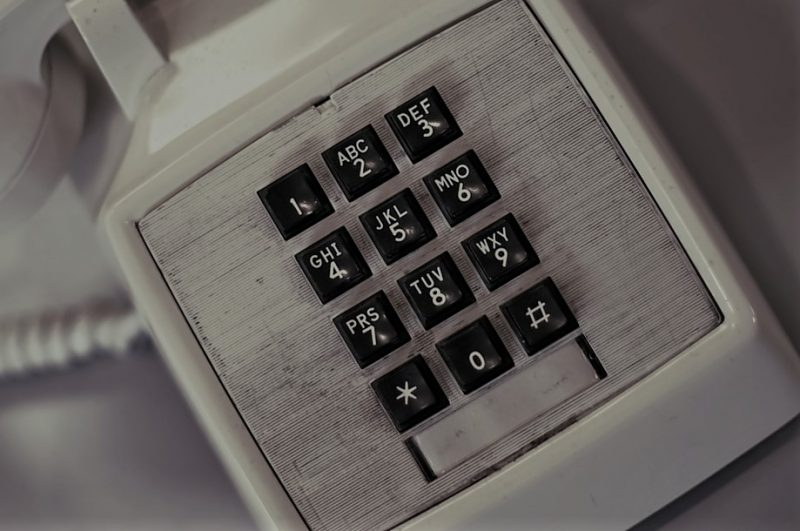
The tune is composed of individual DTMF tones, and when I was a bored youth I discovered that it could be played on an AT&T desk touch tone phone by pressing two keys at a time to remove the second tone. This one would repeat for hours at a time, interrupted by manually patched telephone calls.

Readers: Can you positively ID this interval signal? If so, please comment!

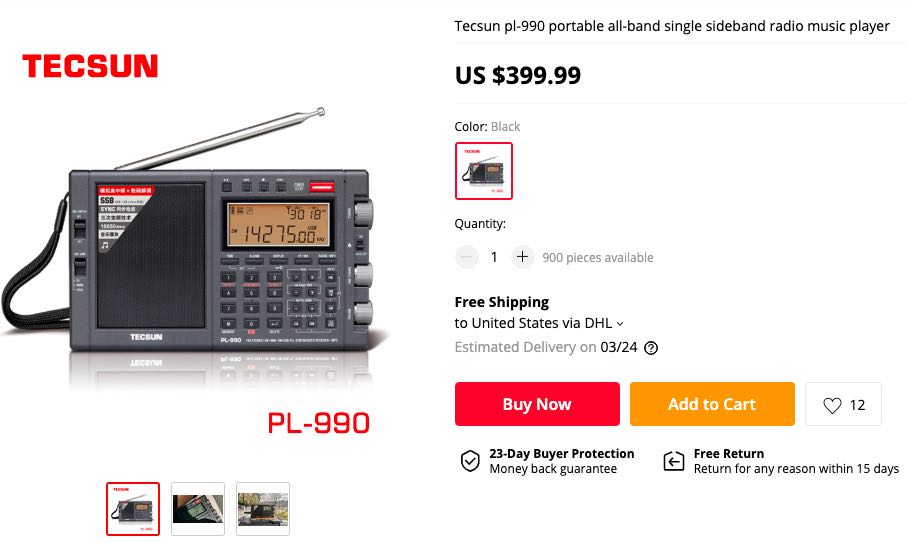
Tecsun PL-990 (pilot run) now on AliExpress

Many thanks to SWLing Post contributor, Dan Robinson, who notes that the Tecsun PL-990 has now appeared on AliExpress.com.

The price is a steep $399 US shipped via DHL with an estimated delivery of late March. They claim to have about 900 units available.

You can check out the PL-990 on the AliExpress website, but it might require registration even via this direct link.

Frankly, I would wait until the PL-990 is available at Anon-Co since they’re an authorized Tecsun distributor, have proven customer service, and will likely have a more competitive price. I would also question if the AliExpress units are the new export version we’ve been waiting for, or simply the units that were available within China last year. The AliExpress page gives us no clear indication of the production version at time of posting.

UPDATE: Turns out, these are the pilot Chinese versions of the PL-990. I can’t recommend purchasing one–especially at this price.

I hope this might indicate that the PL-990 is close to release. Covid-19 has certainly stopped much production and development in China. Thanks again for the tip, Dan!

Radio Waves: Plant-powered Satellite Comms, BBC Pips, Filter Basics, and Replacing Shortwave

Radio Waves:  Stories Making Waves in the World of Radio

Because I keep my ear to the waves, as well as receive many tips from others who do the same, I find myself privy to radio-related stories that might interest SWLing Post readers.  To that end: Welcome to the SWLing Post’sRadio Waves, a collection of links to interesting stories making waves in the world of radio. Enjoy!

Many thanks to SWLing Post contributors Marty, Dennis Howard, Dennis Dura, Kris Partridge and Richard Langley and for the following tips:


Plant-powered sensor sends signal to space (Phys.org)

A device that uses electricity generated by plants as its power source has communicated via satellite—a world first.

[…]The device can inform farmers about the conditions of their crops to help increase yield, and enable retailers to gain detailed information about potential harvests.

It transmits data on air humidity, soil moisture and temperature, enabling field-by-field reporting from agricultural land, rice fields or other aquatic environments.

The extremely low power device sends signals at radio frequencies that are picked up by satellites in low Earth orbit. It was developed by Dutch company Plant-e and Lacuna Space, which is based in the Netherlands and the UK, under ESA’s programme of Advanced Research in Telecommunications Systems (ARTES).[]

The eccentric engineer: a tale of six pips and how the BBC became the national arbiter of time (Engineering and Technology)

This edition of Eccentric Engineer tells the story of the BBC Time Signal and how, over the years, it has just got more complicated.

Every engineer needs to know the time, if only so as to not miss lunch. Since 1924, many Britons have been checking their watches against the BBC time signal, known affectionately as ‘the pips’.

The history of the ‘pips’ is almost as long as the history of the BBC itself. The first transmissions from what was then the British Broadcasting Company began in late 1922 and soon afterwards there were suggestions of broadcasting a time signal under the control of the Royal Observatory at Greenwich – then the arbiter of time in the UK.

No one seems to have seen a need for this degree of precision, but early broadcasts did use their own ad hoc ‘pips’, marking the 8pm and 9pm news programmes with a time signal consisting of the announcer playing the Westminster chimes on a piano and later a set of tubular bells. This proved rather popular with listeners, who could now adjust their clocks and watches daily, so the BBC decided to invest in some more high-tech clocks from the Synchronome Company. These provided audible ‘ticks’, which the announcer then simply counted down.[]

What Is Replacing Shortwave? (Radio World)

A joint effort is necessary to bring the digitization of radio to a successful end

Analog shortwave will celebrate about 100 years of existence in 2028 when many hope 5G will have been properly defined, tested and applied, though broadcasting is low on its long list of perceived advantages.

It’s true that shortwave was typically a medium of the Cold War that peaked in 1989 and that afterward its listenership dwindled. Many international broadcasters gave up on it as the post-war transmitters got rustier and the energy bills kept mounting.

After all, when budget cuts are needed, no transmitter will go on strike or write to the press, as happened when the BBC World Service tried to unsuccessfully close its Hindi shortwave transmissions in 2011. In 2020 these broadcasts stopped, when committed BBC Indian listeners, writers and thinkers who opposed it in 2011 did not protest too much.

The slow death of shortwave has been blamed on the internet and satellite. As technology and content are inextricably linked, shortwave created its type of content that is no longer favored by the savvy FM listener, internet user and cellphone obsessed.[]

Filter Basics: Stop, Block and Roll(off) (Nuts and Volts)

A casual observer might think that wireless systems consist primarily of filters connected by the occasional bit of circuit! Block diagrams of transceivers often include as many filters as any other function. This is true at the system level, just as it is at the circuit level — and many circuits behave in a filter-like way, whether intended to be a filter or not! That makes understanding filter basics important for wireless success.[]


Do you enjoy the SWLing Post?

Please consider supporting us via Patreon or our Coffee Fund!

Your support makes articles like this one possible. Thank you!

Rescuing the Eton E1 from a sticky situation

I’m back from a week of travels and the 2020 Winter SWL Fest. In short, is was another amazing Fest and so much fun. I hope to write more about it in the coming days, when I have a few moments to catch up and after I shake a nasty bug (chest cold) I picked up.

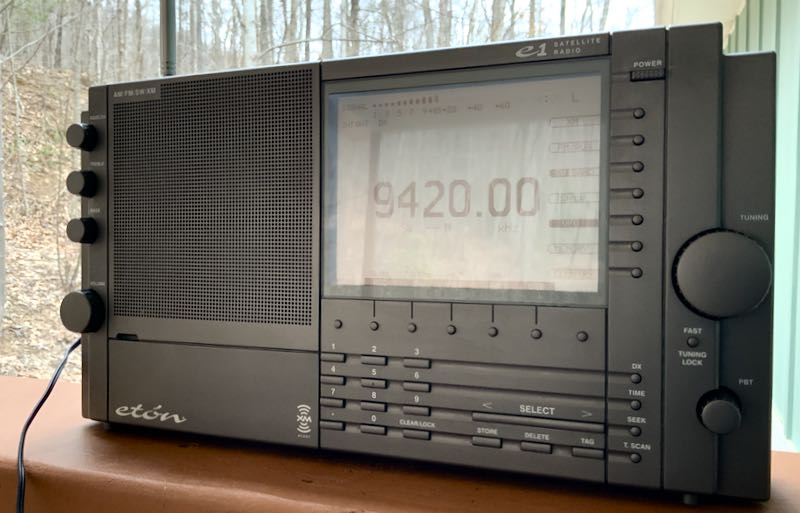
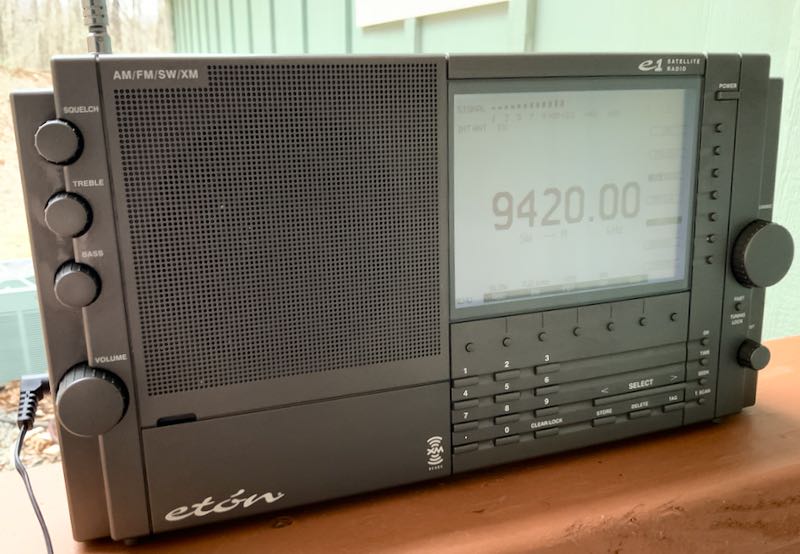
Although I had no intention of making purchases at the Fest beyond a few raffle tickets, I couldn’t resist snagging an Eton E1 (XM version) at a silent auction from the estate of our recently-departed friend, Tony Pazzola (WB2BEJ). Tim Moody kindly organized the silent auction.

Tony was an amazing friend to all and an avid radio collector, so there were some excellent radios offered up in the silent auction–I could have easily easy bid on each and every one of them! In the end, though, only one really caught my eye: the Eton E1 XM.
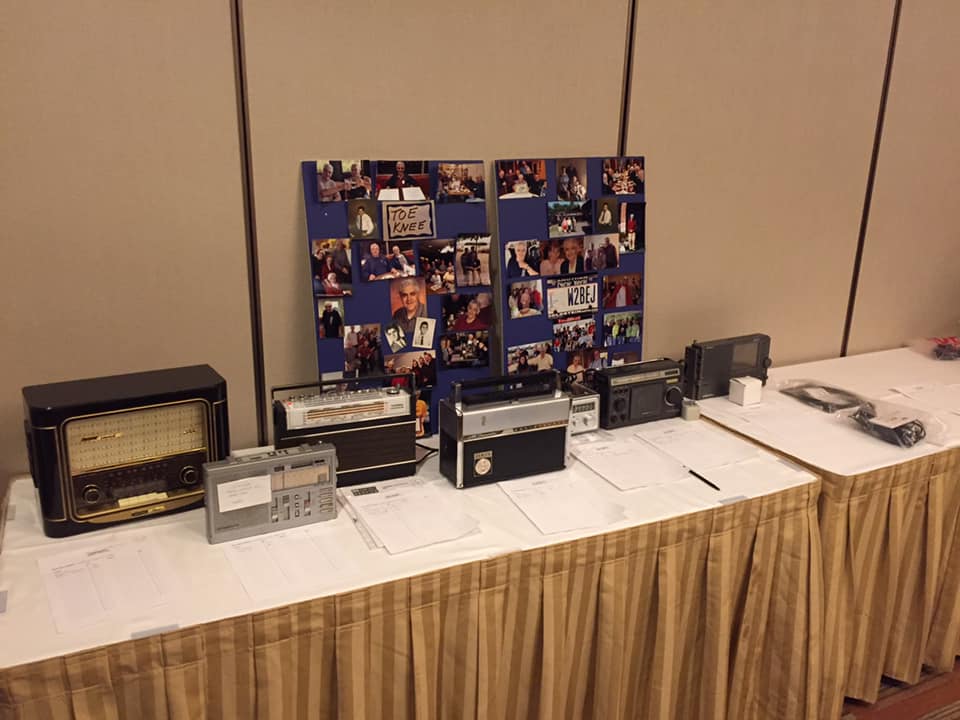
A small sampling of the radios from Tony’s estate.

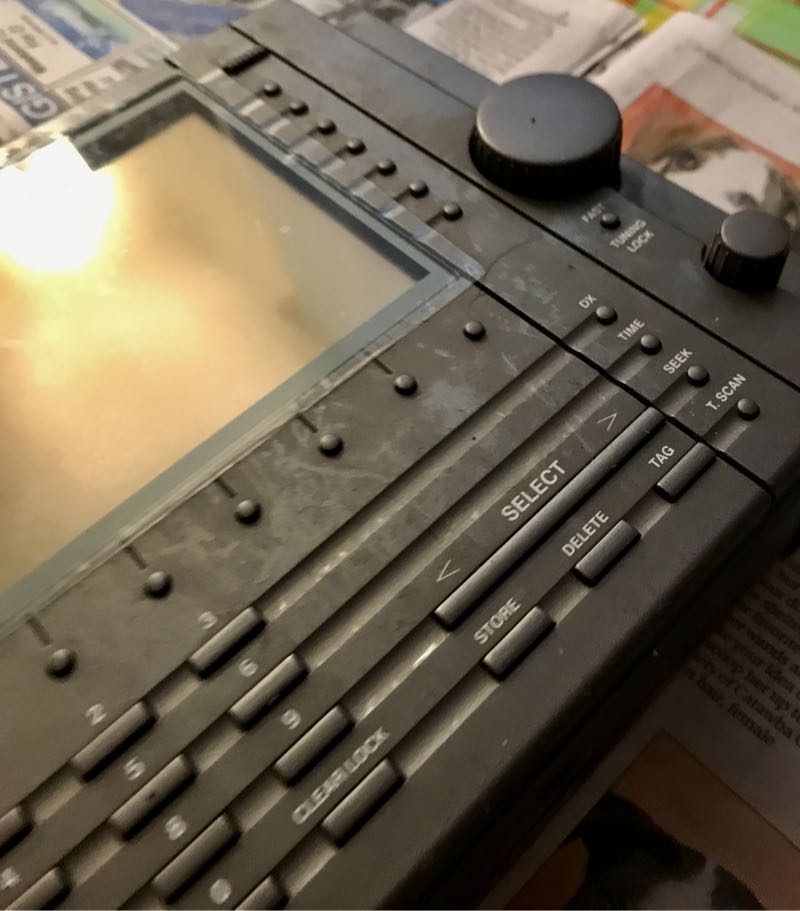
Tony took amazing care of his radios, but his Eton E1 XM suffered from what all of those models eventually do: a sticky chassis.

Back in the day (roughly 2009 to 2013) Eton/Grundig covered a number of their radios models with a rubberized coating that unfortunately breaks down over time and becomes tacky or sticky to the touch.

I think this E1’s sticky coating put off potential bidders.

It was particularly nasty–if you picked up the radio, you had to immediately wash your hands.
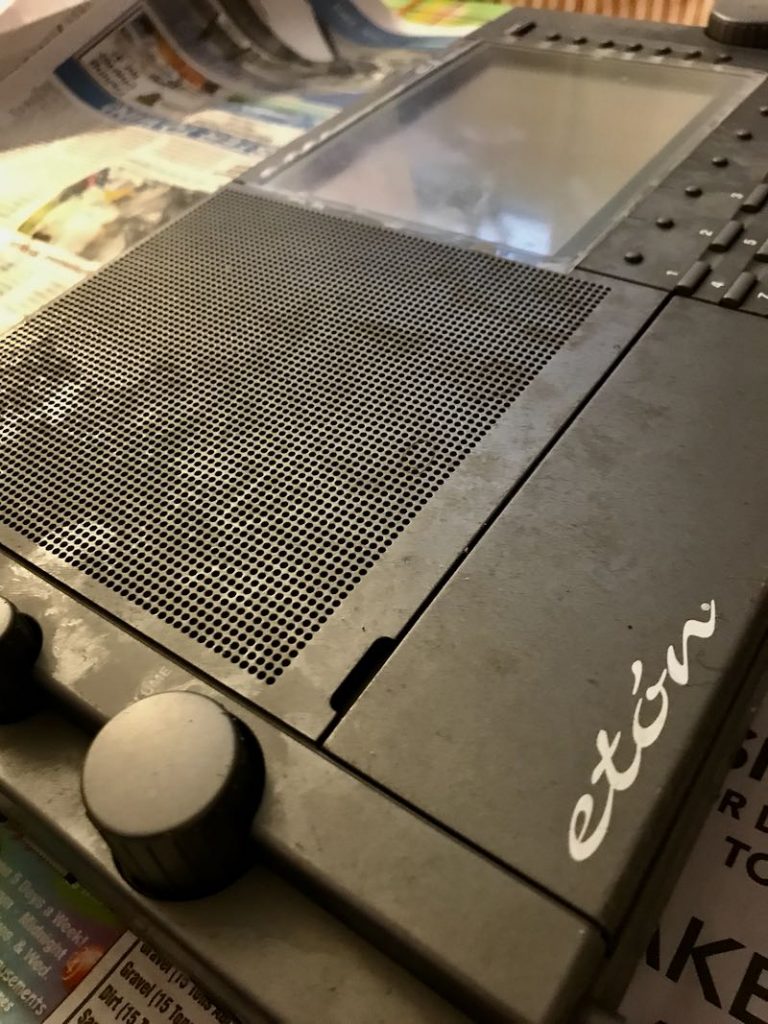
The E1’s starting bid on Friday was $200–quite fair considering this unit is fully-functional and comes with all software, cables, manuals and a SiriusXM radio antenna. By Saturday, the starting bid had been decreased to $150. I resisted putting in an offer, but after seeing that it didn’t sell after all bidding had ended, I couldn’t resist. That E1 needed a good home, right? Plus the proceeds go to Tony’s family.

The sticky coating didn’t scare me. If you’ve been an SWLing Post reader for long, you’ve no doubt read our numerous posts about cleaning off this mess. There are a number of solutions, but I’ve heard the most positive long-term results by employing a de-greasing product called Purple Power (click here to read archived posts). Indeed, it’s the solution Eton Corporation recommends.

On the way home Monday, I stopped by a big box store and grabbed a bottle of Purple Power.
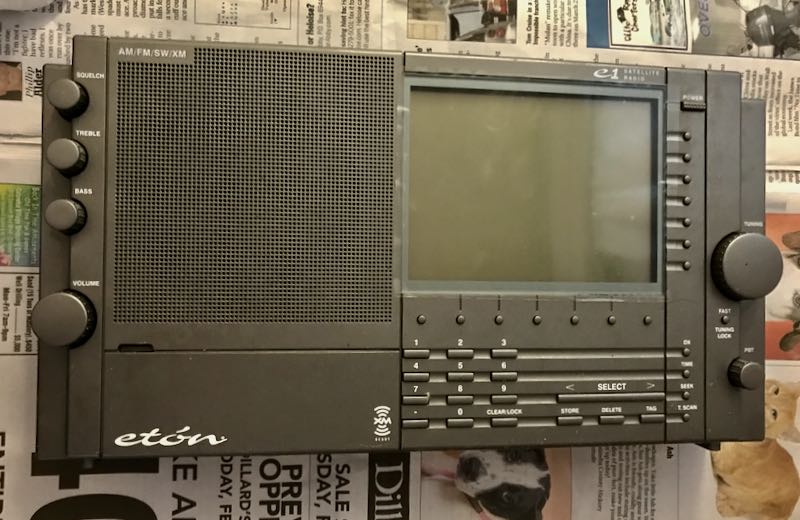
Tony still had the original plastic film on the large backlit display.

Sporting a pair of nitrile gloves, I grabbed a bunch of paper towels and a few cotton swabs, then started the cleaning process. I spent the better part of an hour carefully going over the entire body of the E1and trying to remove residue in every crevice without allowing the Purple Power solution to creep under buttons.
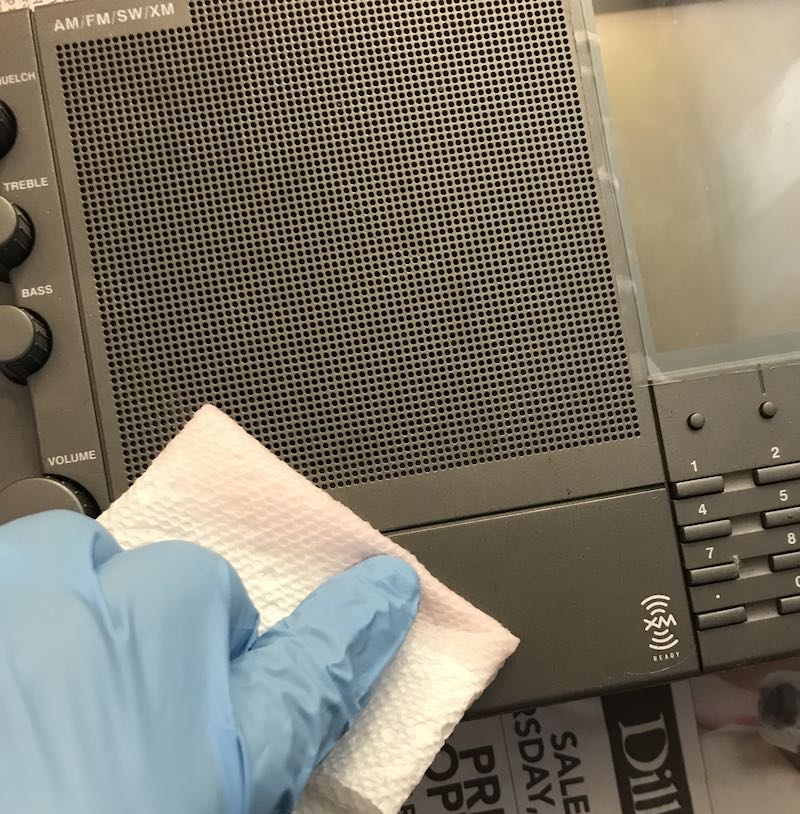
In short?  I’m very pleased with the results and am now a solid believer in Purple Power.

As others have reported, Purple Power breaks down the sticky residue and allows it to be removed with a cloth or towels with very little scrubbing. Indeed, the process was much easier than I anticipate.

Now I have a super-clean Eton E1 XM to put on the air!
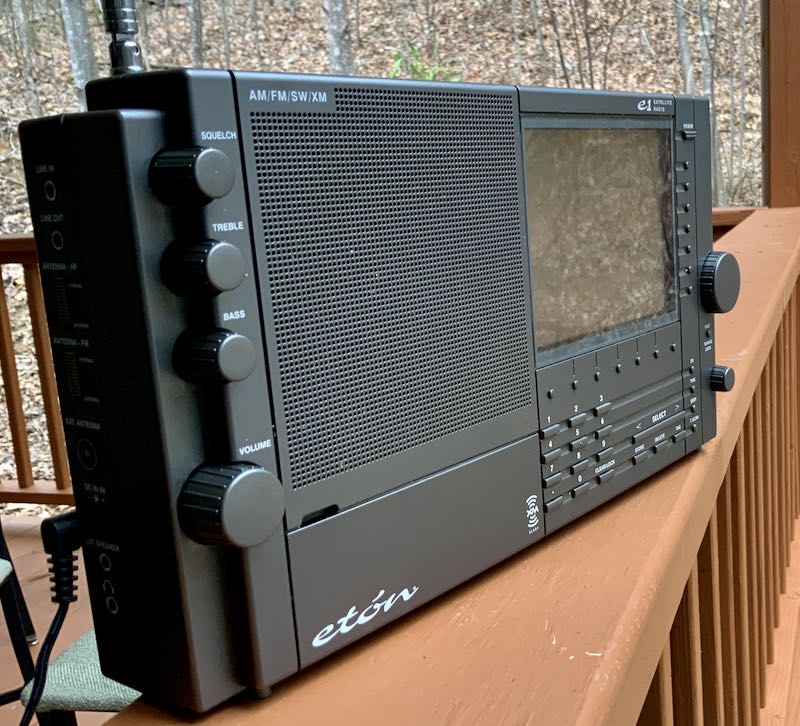
Now I have no excuse to finally remove the sticky residue from both my Grundig G6 and G3!

So far, I’m loving the Eton E1. It is, no doubt, a benchmark portable. Of course, another motivation behind snagging this E1 is so that I can compare it with the Eton Elite Satellit once it eventually hits the market.

Do you have an Eton E1?  What are your thoughts about this receiver? Please comment!


Do you enjoy the SWLing Post?

Please consider supporting us via Patreon or our Coffee Fund!

Your support makes articles like this one possible. Thank you!

Radio Waves: B&W to Color, Antenna Wins, Hearing Voices in the Walls, and Beached Whales

Radio Waves:  Stories Making Waves in the World of Radio

Because I keep my ear to the waves, as well as receive many tips from others who do the same, I find myself privy to radio-related stories that might interest SWLing Post readers.  To that end: Welcome to the SWLing Post’sRadio Waves, a collection of links to interesting stories making waves in the world of radio. Enjoy!

Many thanks to SWLing Post contributors Ron, Paul Walker, and Troy Riedel for the following tips:


Colorizing black and white photos (Antique Radio Forum)

Ron shares this link to a discussion about vintage black and white photos that have been auto-colorized.[]

State law protects ham radio operator, frustrates neighbors in Windsor Twp. (York Dispatch)

A Windsor Township resident whose neighbors are upset over her amateur radio tower is within her rights to have the antenna on her property, township officials confirmed Monday.

An engineer went out to the site in the 400 block of White Rose Lane to inspect the 40-foot tower and ensure it didn’t pose a safety threat to neighbors, township engineer Chris Kraft told the board of supervisors at a meeting Monday.

“Based on that review, we feel the tower is structurally safe,” he said.

Lindsey Fowler is the homeowner who built the tower on her property last September. Fowler is a licensed amateur radio operator, according to Federal Communications Commission records, and her license is valid through December 2021.

[…]Marc McClure, one of the neighbors who lives near Fowler, told the board in October that he and several other neighbors were opposed to the tower and said it should be removed, according to minutes from the Oct. 21 board meeting.

McClure said the tower was an eyesore in the neighborhood and that he and others were concerned about the structural safety of the tower were it to fall, as well as the potential unknown health hazards from exposure to radio frequencies.

The neighbors were also worried about a decrease in their property values, McClure said.

[…]In Pennsylvania, amateur radio operators’ rights are protected by state statute, and municipalities are not allowed to unreasonably restrict the installation of towers fewer than 65-feet high.

And now that the township has confirmed there’s no safety risk to Fowler’s neighbors, township officials said the dispute is outside of their purview.[]

Lockport family says mysterious voices, music come from house’s walls; local radio station may be source (ABC 7)

LOCKPORT, Ill. (WLS) — A family in Lockport said strange sounds, including music and talk radio, has been coming out of their walls and keeping them up at night off and on for about six years.

“There are voices in the wall and I don’t know what it is,” said 9-year-old Brianna Smith.

It may sound like an episode of the popular Netflix show “Stranger Things,” but the mysterious sounds Brianna is hearing are real.

“It has been waking me up at night,” she said.

The sounds are coming from the bedroom walls of her home in the middle of the night.

“It kind of keeps us up at night,” explained Brianna’s father Richard.

Richard said the family doesn’t have any speakers in their walls. He captured some of the late night noise on his phone and sent it to the ABC7 I-Team. The music was faint, but the I-Team could hear it.

“It’s one of our favorite songs, but not at 10 o’clock at night,” Richard said.

Richard Smith called Lockport police, who took two detailed reports about the bizarre problem. In one, the officer noted that he could hear “voices and music” and “talking about Christ.” Then the officer said he heard a commercial for the Christian radio station AM 1160.[]

The Surprising Way Solar Storms Can Beach Whales (Spaceweater.com)

Space weather isn’t just for humans. Whales are experiencing it, too. A new study published this week in the research journal Current Biology shows that solar storms can confuse whales and cause them to strand on beaches–and the mechanism is surprising. Get the full story on Spaceweather.com.[]


Do you enjoy the SWLing Post?

Please consider supporting us via Patreon or our Coffee Fund!

Your support makes articles like this one possible. Thank you!

Shortwave Shindig live stream tonight via the Wave Farm

David Goren hosts the annual Shortwave Shindig at the Winter SWL Fest

Many thanks to SWLing Post contributor, David Goren, who notes that the Winter SWL Fest Shortwave Shindig will stream live via the Wave Farm this evening.

The Shortwave Shindig will begin on February 28, 2020 at 9:15 pm EST (or February, 29 at 2:15 UTC).

The stream link will be accessible at the Wave Farm website, but only when the show is live.

To listen to the Shortwave Shindig live, simply click on this link to view the Shindig page at the Wave Farm Website.

You can also access the Shortwave Shindig live stream by clicking on the “Listen” link at the top left corner of the Wave Farm website. Note the stream link will only appear and play when the show is live.

Here’s a description of the 2020 Shortwave Shindig from the Winter SWL Fest website:

ANNUAL SHORTWAVE SHINDIG – David Goren

Come join our informal and popular late night hang as David Goren and friends celebrate the short wavelengths with stories, songs, and vintage sounds.

Shortwave Shindig Opening Ceremonies
2115 – 2200
Our resident folk music laureate Saul Broudy opens the show with old radio favorites and specialties from his vast repertoire followed by a revue of shortwave sounds in popular culture and specially commissioned works.

Meet the Archivists
2200 – 2245
Our panel of radio archivists Thomas Witherspoon, Mark Fahey and David Goren share rarities from their archives including some gems from the recently rescued collection of the late Michael Pool aka The Professor.

NYC FM Pirate Radio Update
2245 – 2330
A sneak peek at a major update to the Brooklyn Pirate Radio Sound Map and related news and discussion about urban pirate radio in the U.S.

Mercy! So Much Noise
2330-????
Tom Miller aka Comrade Squelch and David Goren weave a dense mix combining live radio with archival air checks.

Many thanks, David, for sharing this info!  I look forward to participating in the Shortwave Shindig once again!

Viva la radio!

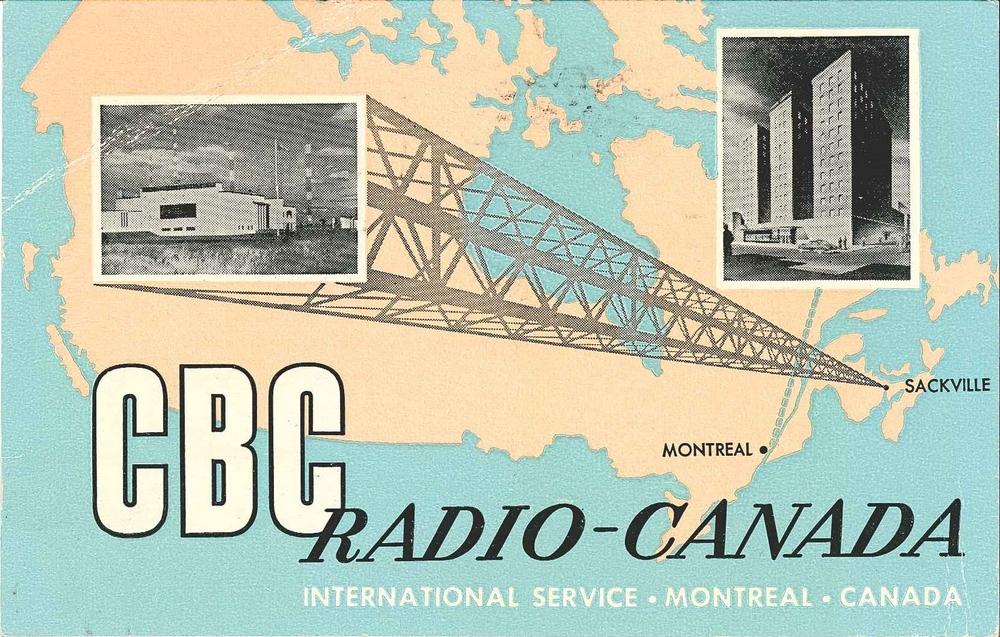
Radio Canada International at 75 years

(Source: RCI.net via David Iurescia)

Today is an auspicious day for RCI. It was February 25, 1945 that the CBC International Service began shortwave broadcasting to Europe. It was designed at the time to provide accurate news to occupied areas in

English French and German, and to provide news from home for the huge contingent of Canadian military personnel serving and fighting in the Second World War.

Since then the “IS” has gone through a variety of changes, including the name which was changed to Radio Canada International in 1970. It has been through several moves, from its first location in a former brothel, to the converted Ford Hotel a few years later, to rented office tower space, to the main headquarters of the French service, Radio-Canada.

It has also gone through a number of language-service changes, from 14 languages during the cold war broadcasting to formerly free countries then under the control of Moscow, to its current five languages, Mandarin, Spanish, Arabic, English and French.

Other changes include the drastic cuts of 2012 which saw some 80 per cent of staff cut and the cessation of shortwave to become its current online operation.

Throughout it all RCI continues to inform on Canadian issues including political, scientific, cultural and societal and provide Canadian viewpoints and positions on world affairs.

Click here to read the full article at RCI.net.