Category Archives: Shortwave Radio

Shortwave broadcasters step up Covid-19 awareness and news

Several private shortwave broadcasters have been adding Coronavirus information and news to their scheduled programs.

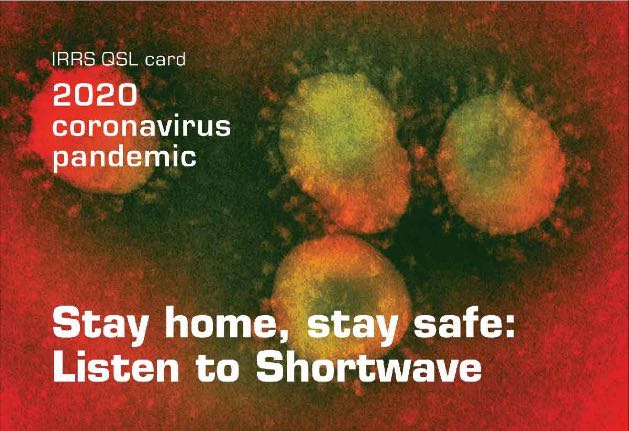
One of the first broadcasters to make an announcement was the IRRS–they have even made a special QSL card available. Here’s their release via the WRTH Facebook page:

Hello There from IRRS & EGR,

1.) While most of Northern Italy has come (nearly) to a halt due to the recent coronavirus outbreak, we have just extended our global coverage with daily broadcasts to reach out to Europe, the Middle East, Asia/Pacific and Africa with daily news and commentaries on COVID-19 in English.

Here are our new (daily) frequencies as of Feb. 21, 2020 (@ 150 kW):

9640 kHz (1400-1500 UTC) to Asia and Middle East
7290 kHz (1800-2000 UTC) to Europe
9660 kHz (2000-2100 UTC) to Africa
594 kHz (2100-2200 UTC/2200-2300 CET) AM/Medium Wave to N Italy and Southern/Central Europe

Please check our blog for more details at:
https://nexus.org/coronavirus-qsl/

You may find our updated B19 frequency schedule at:
https://nexus.org/schedules

2.) On the occasion we have released our new QSL card available electronically for all reception reports.

3.) Additionally, new broadcasts have been started as of today March 4, 2020 in Oromo language to Ethiopia on 11990 from 1500-1600 UTC (@ 250 kW).

You may send your reception report for any of our broadcasts to [email protected]. We will gladly acknowledge all verified reception reports with our new electronic QSL.

When requesting our QSL card, please consult our Privacy Policy at https://nexus.org/privacy and learn how we process your personal data according to the GDPR.

Stay home, stay safe: listen to Shortwave!

73s,
Ron

John with VORW has also shared the following announcement:

As the Coronavirus Pandemic continues to develop, I am now including 20 minutes of news and discussion concerning the virus in every broadcast. This new segment features a recap of the day’s major news developments regarding COVID-19, updated infection totals, analysis of the situation and common-sense tips and things to consider during this outbreak. Our main frequency to North America is 5850 kHz with new shows at 0200 UTC every Friday, Saturday, Sunday and Monday (10 PM Eastern every Thursday, Friday, Saturday and Sunday).

Additional times & frequencies are listed below.

1300 UTC Thursday – 15770 kHz to Europe
2000 UTC Thursday – 7780 kHz to Eastern North America
2100 UTC Thursday – 7780 kHz to Europe
2200 UTC Thursday – 9955 kHz to South America
0000 UTC Friday – 9395 kHz, 5950 kHz to North America
0100 UTC Friday – 7780 kHz to Europe
0200 UTC Friday – 5850 kHz to North America
2100 UTC Friday – 9955 kHz to South America
0200 UTC Saturday – 5850 kHz to North America
2200 UTC Saturday – 9395 kHz, 6115 kHz to North America
0200 UTC Sunday – 5850 kHz to North America
2200 UTC Sunday – 7780 kHz to Europe
0200 UTC Monday – 5850 kHz to North America

Listener comments and QSL Reports are welcome at [email protected]

Feel free to comment on this post with any additional special shortwave broadcasts.  Thanks to several readers who have forwarded tips!

Radio Waves: WNPV Off Air, Privat-Ear, End of Radio, and China COVID-19 shut-ins tune-in

(Source: JamesButters.com)

Radio Waves:  Stories Making Waves in the World of Radio

Because I keep my ear to the waves, as well as receive many tips from others who do the same, I find myself privy to radio-related stories that might interest SWLing Post readers.  To that end: Welcome to the SWLing Post’sRadio Waves, a collection of links to interesting stories making waves in the world of radio. Enjoy!

Many thanks to SWLing Post contributors Ron, Tracy Wood, and Dennis Dura for the following tips:


WNPV Radio preparing to go off air April 30 (The Reporter)

TOWAMENCIN — When April ends, the airwaves above the North Penn valley region will be emptier, and so will a little brick building on Snyder Road in Towamencin.

Sitting below five 165-foot-tall radio antennas and one cell tower, that brick building has been the home for six decades of WNPV, the local radio station found at 1440 AM and 98.5 FM.

“We’ve been at it for 60 years, and our mission and our core values are really no different today than they were in October of 1960. It literally is to serve the community,” said Phil Hunt, the station’s General Manager.

“It’s gotten to the point where it’s not sustainable for us to continue to do that. It takes resources to do it properly; those resources, primarily, are people, and we were having trouble making ends meet,” he said.

Hunt announced Wednesday that WNPV will go off the air on April 30, bringing an end to an era of live, local news that began on Oct. 17, 1960. The station’s coverage of local sports, politics, breaking news, and key issues have earned dozens of awards, a handful of which greet visitors as you walk past an old teletype machine through the station’s front door.[]

Privat-ear Subminiature Tube Pocket Radio (JamesButters.com)

The Privat-ear pocket radio was manufactured in the USA and released onto the market by Electronics Systems Corporation in 1949 (1a, b, c). Although small enough to fit in a shirt pocket this is not a transistor radio; it owes its small size to the use of subminiature tubes developed during WWII and was designed as an earphone only model. It predates the first commercially available transistor radio by five years and was an innovative, but ultimately doomed, attempt at realizing an American cultural objective; the creation of a portable shirt pocket radio with mass appeal.

The Privat-ear was invented by Frank L Stuck, a Minister of Lakeland Florida. Born in Washington, Pennsylvania on October 13 1904 to William and Maise Stuck, he was the second youngest of four children (1d, e). He studied Theology at Bethany College, West Virginia from 1924 – 1927 and received a Doctor of Divinity degree from the American Theological Seminary at Wilmington Delaware (1f). Whilst attending College he was one of the founding members of Alpha Pi Alpha, was a member of the Student Volunteers and met and married Iva Myrtle Driggs.[]

IN CASE YOU MISSED IT – The End Of Radio. Really? (Radio Ink)

(By Mike Bustell) I try to keep my head down and quietly work behind the scenes helping our salespeople make a killing for our advertisers and our company. However, I had to react to Roger Lanctot’s “Technology Tyranny and the End of Radio” LinkedIn article published in last Friday’s Radio Ink headlines.

How Tesla and Silicon Valley (and other tech giants) feel about local radio is not much different than what our salespeople hear when talking with their local garden center or auto dealer group — that local radio is no longer relevant to bother putting it on their 2020 dashboards.

All these objections are happy opportunities to educate, bond, and sway hearts, minds, and advertising budgets. We have to be happy well-armed warriors with targeted customer-specific information every time we ask for a decision-maker’s valuable time. Once we earn an advertiser’s business we can never stop educating, bonding, or working on helping them grow their business.

Below is the most up-to-date look at the audio sources that $100K+HHI purchasers and lessees for new hybrid and electric vehicles are using. Like Mike Bloomberg taking the salt shakers off of New York City restaurants’ tables, Tesla’s removing easy access to local AM/FM radio stations on their new vehicles’ dashboards shows a similar out-of-touch-with-the-people attitude. Ninety-four and a half percent of $100K+ Age 25+ adults who plan to buy or lease a new hybrid or electric vehicle in 2020 listen to Local AM/FM radio every week — nearly three times that of Spotify, the second most-listened-to audio source every week used by these consumers.[]

China COVID-19 shut-in tunes in to the world via radio (Marketplace)

The battle to contain the COVID-19 virus in China has kept most people at home since the end of January.

Life is slowly returning to streets in cities like Shanghai, but face masks are now required in nearly all public spaces, even though they are not recommended for the general public by the Centers for Disease Control or World Health Organization.

Since there is a shortage of masks, most people are still effectively forced to stay home. As Marketplace’s China correspondent, this includes me. My window to the world for a better part of a month has been through radio.[]


Do you enjoy the SWLing Post?

Please consider supporting us via Patreon or our Coffee Fund!

Your support makes articles like this one possible. Thank you!

Tecsun PL-990: How to distinguish pilot run and final export versions

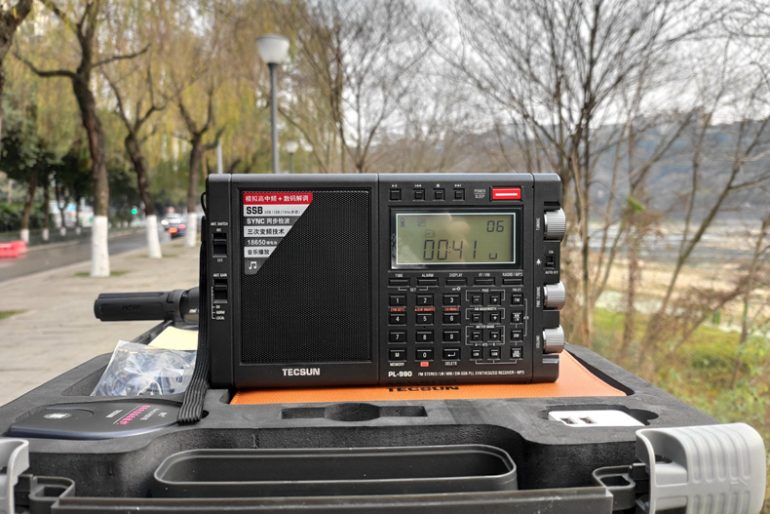
The Tecsun PL-990

As I suspected, it appears the Tecsun PL-990 batch that showed up recently on AliExpress for $399 each are the preliminary pilot run units that Tecsun offered in China last year. The final export version of the PL-990 is not ready for production yet and has been severely delayed by Covid-19 quarantines.

Anna at Anon-Co reports that Tecsun factories have been closed since mid-January 2020 and have only recently recommenced production, “but at a very slow pace.”

Since there will eventually be two different versions of the Tecsun PL-990 in the wild–the pilot run for China, and the finalized export version–I thought I’d share a trick Anna has described to tell the difference between the two.

Anna notes:

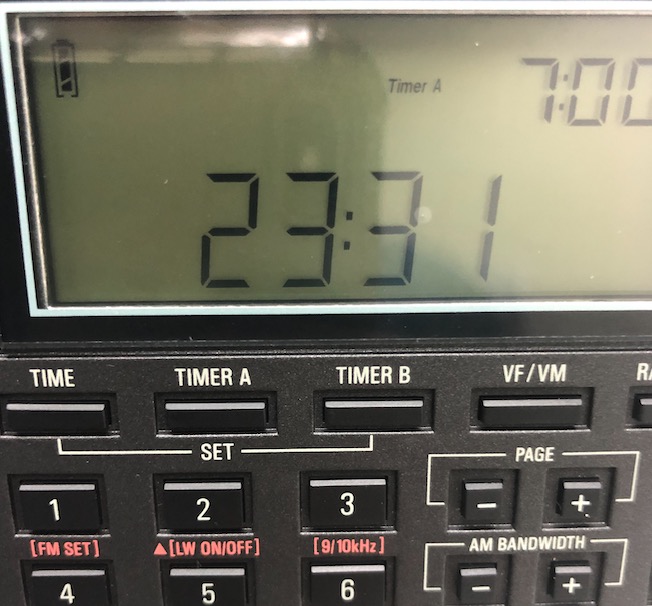
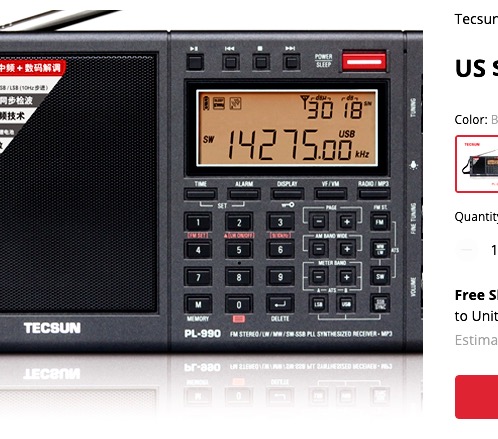
One way to easily see this is from the labels for the buttons above the keypad, these should be

[ TIME ], [ TIMER A ], and [ TIMER B ] (see picture below)

Tecsun PL-990 Final Export Version:

Tecsun PL-990 Final Export version

Tecsun PL-990 Final Export Version

Pilot Tecsun PL-990 (preliminary China domestic version):

Preliminary Pilot Tecsun PL-990 distributed in China — image from AliExpress.

Anna adds:

I highly recommend [no one] buy these pilot versions, because the software on those devices is also not developed.

There still isn’t a final version or any price indication available yet, but it will definitely not be US$399.99.

So in case it’s not clear: don’t purchase a PL-990 until you can confirm you’re receiving a final export version which has the TIME, TIMER A, and TIMER B labels.

Again, at time of posting, the final PL-990 export version is not yet in production.

When the final export PL-990 is available, I will announce it here on the SWLing Post with links to authorized retailers like Anon-Co.

Patreon Code


Do you enjoy the SWLing Post?

Please consider supporting us via Patreon or our Coffee Fund!

Your support makes articles like this one possible. Thank you!

Free to a good home: A Vintage Grundig Satellit 600 Professional

I was recently contacted by Allan Rosenbluth, a particularly generous SWLing Post reader.

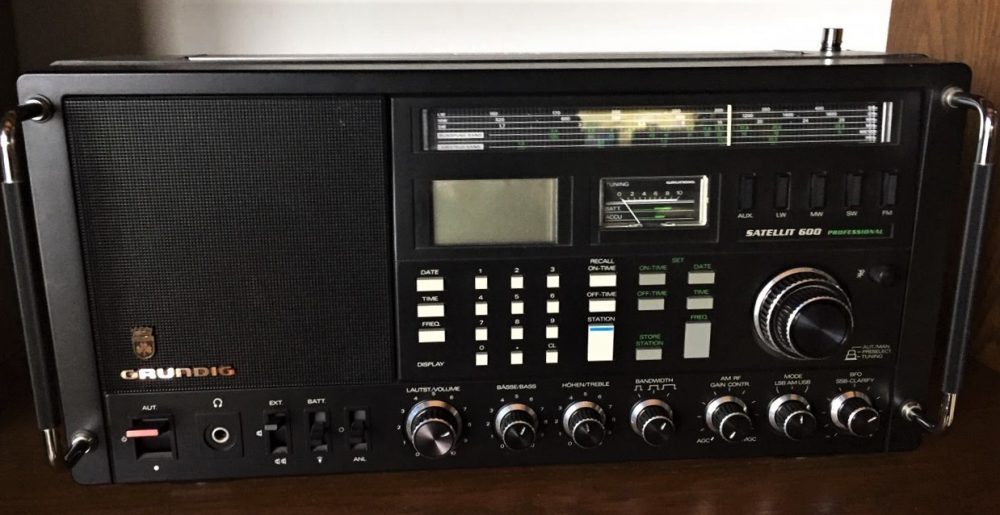
Allan contacted me because he would like to give away his cosmetically excellent Grundig Satellit 600 Professional (see photo above) with all the original paperwork. He said that the radio turns on, but does not work or produce sound.  Allan purchased this radio for his father who has sadly passed away.

I would assume the 600 might need to be re-capped, or it might only need a little DeOxit on some of the contacts.

We’re not looking for someone to fix the 600 and flip it on eBay, we would simply like his dad’s Satellit 600 Pro to find a good home.

Allan is not interested in the hassle of shipping this radio–he only want to arrange a local pickup.

If you live near Encino, CA (91436) and are interested, simply contact Allan via his email address.

Thanks again, Allan!


Do you enjoy the SWLing Post?

Please consider supporting us via Patreon or our Coffee Fund!

Your support makes articles like this one possible. Thank you!

Airspy Youloop and Homebrew Passive Loop Antenna designs

Almost two weeks ago, at the 2020 Winter SWL Fest, I gave a presentation called “A New Era in Portable SDR DXing.

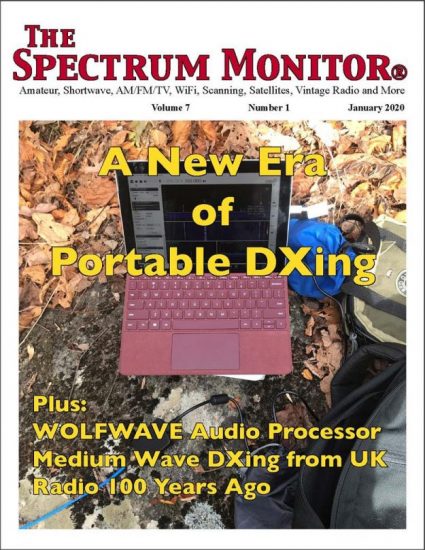
The presentation was essentially an in-depth version of an article I published in the January 2020 issue of The Spectrum Monitor magazine (see cover above).

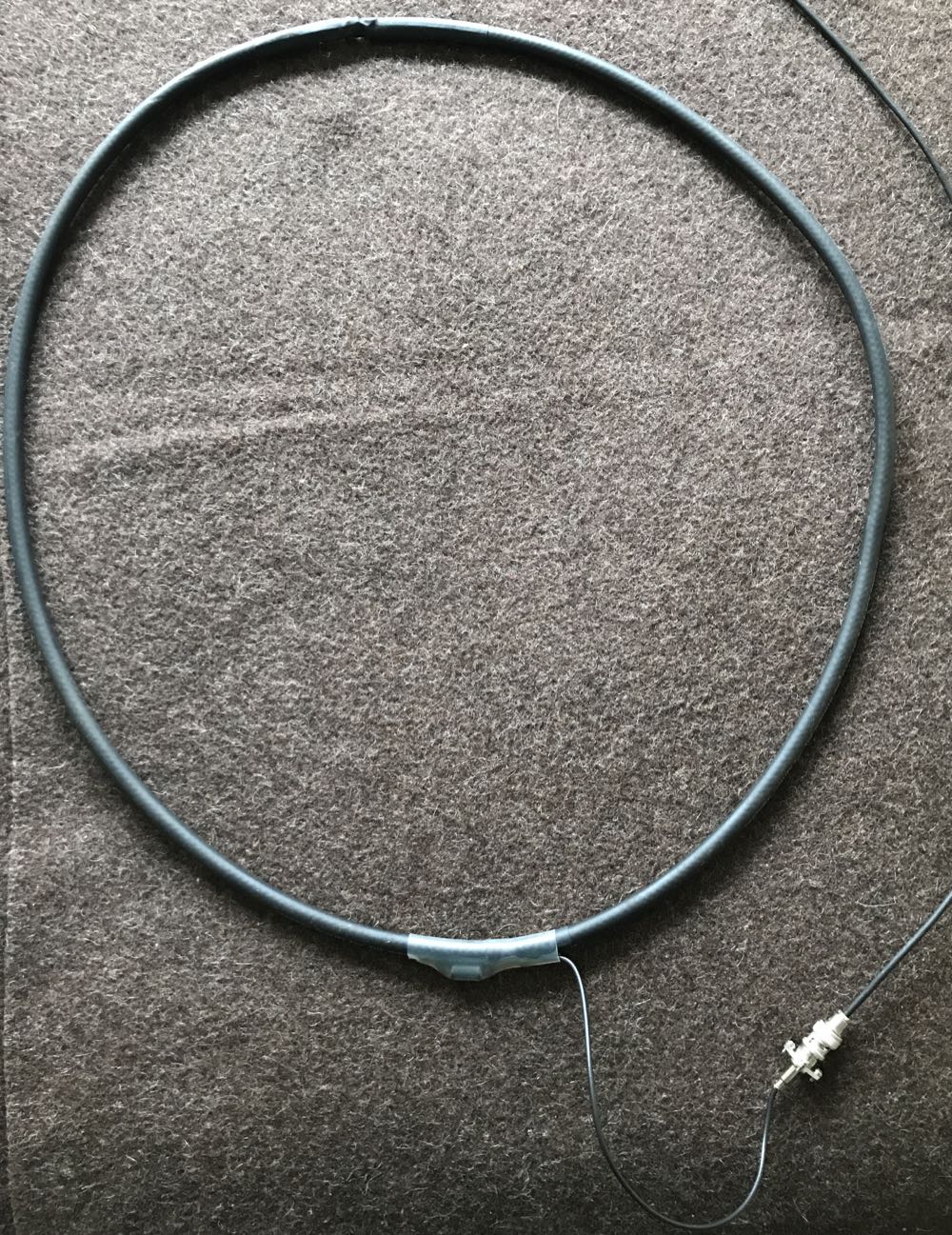
I devoted a good portion of the presentation describing how to build a passive loop antenna design by Airspy’s engineer and president, Youssef Touil. This passive mag loop takes advantage of the Airspy HF+ Discovery‘s exceptionally high dynamic range and is an impressive performer.

The homebrew loop on the balcony of a hotel.

You may recall, I posted a short article about this loop in November after enjoying a little coastal DXing.

In short? This passive loop antenna pairs beautifully with the Airspy HF+ Discovery. I’ve also been very pleased with results using the new SDRplay RSPdx on the mediumwave band where the receiver now sports a high dynamic range mode.

Overdue corrections…

After returning from the Winter SWL Fest last week, I was hit with an upper respiratory bug. No doubt, a souvenir of my travels!  It wasn’t the flu (I was tested), nor COVID-19, but it did knock me off my feet for a few days with fever, coughing, and headaches. You might have noticed a lot less posts last week and almost no replies from me via email. I’m only now feeling totally human again and trying to catch up with my backlog.

Shortly after my SWL Fest presentation, I realized I made (at least!) two mistakes. I had planned to post corrections here on the SWLing Post last week, but the bug delayed all of that, so here you go:

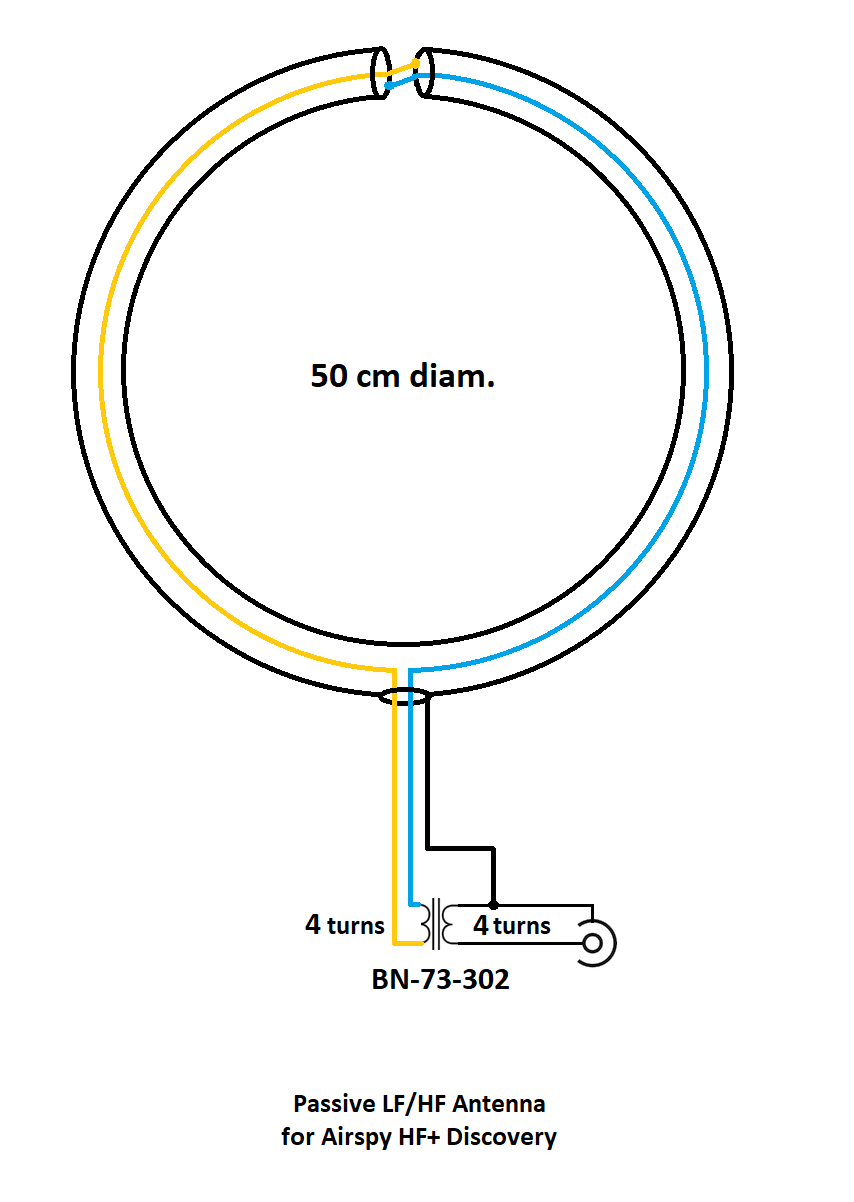
#1 Schematic of my homebrew passive loop antenna

When Youssef started experimenting with passive loop antenna designs, he posted a few schematics of at least three build options.

Although I described how to build my passive loop antenna, I grabbed the wrong schematic for my presentation slides. Many thanks to those attendees who noticed this.

Here is the schematic I should have shared:

Note that the transformer has four turns on both sides (the one in the presentation had 4:2).

Again, apologies for any confusion.

#2 The Airspy Youloop passive loop antenna

If you’re not inclined to build your own passive loop antenna per the diagram above, Airspy is planning to manufacture and sell a lightweight, high-performance loop of a similar design.

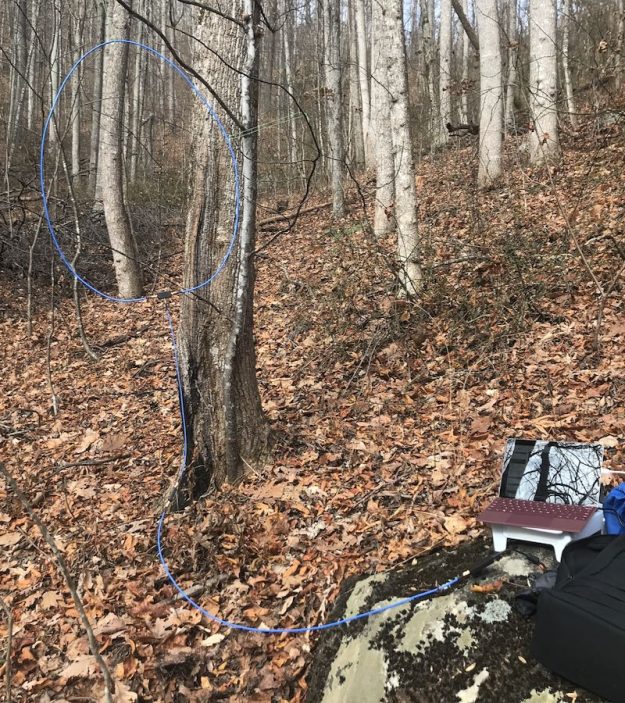
Prototype of the Airspy Youloop in the field (note bright blue cable jacket)

During the presentation, I called the future AirSpy antenna, the “Spytenna.” I was incorrect. (Turns out, I got this name from an early antenna schematic and somehow it stuck in my head!)

Airspy is calling their passive loop antenna the Youloop. Youssef posted the following note in the Airspy email discussion group:

We are currently arranging the shipping of the affordable passive version to Airspy.us and RTLSDR Blog.

Btw, It’s called “Youloop”

Many thanks to Richard Langley and a number of other readers who pointed this out last week.

I’ve had a prototype of the Youloop since November and brought it to the SWL Fest and presentation. It’s a quality antenna and incredibly compact when disassembled and rolled up.

When the Youloop is available to order, we’ll post links here on the SWLing Post.

More to come!

Once I catch up here at SWLing Post HQ, I plan to publish detailed construction photos of the homebrew loop antenna.

Many of you have questions about how to tap into the center conductor at the mid-point of the loop. These photos should help guide you.

Stay tuned!


Do you enjoy the SWLing Post?

Please consider supporting us via Patreon or our Coffee Fund!

Your support makes articles like this one possible. Thank you!

Dean solves second interval signal mystery

(Image source: Madrid.org)

In response to our second mystery interval signal challenge, SWLing Post contributor, Dean Bianco replies:

Mystery solved!

This is the “interval signal” (more accurately, a placeholder with a musical station identifier) for the Compañía Telefónica Nacional de España (CTNW) from Madrid, Spain.

They were a point-to-point HF radiotelephone terminal that provided overseas telephone and telegraph services in the days before satellites became common.

As a young SWL, I would receive all manner of strange musical identifiers for these utility stations. Most of these HF telecommunication services had gone to satellite by the early 1980’s. The HF bands were chock-a-block with signals, whether they be broadcast or utility services.

Glad to help!

To verify his claim, Dean shares the following embedded audio file made by Willi Passmann in the mid 1970s (via the excellent UtilityRadio.com website):

Well done, Dean! Thank you once again for coming to the rescue!

In case you didn’t know, dear readers, Dean Bianco is a force to be reckoned with in the shortwave radio world. 🙂 This year, he won the 3rd Annual Fest Trivia Quiz at the 2020 Winter SWL Fest! An impressive accomplishment, indeed. Not only that, but Dean’s an incredibly nice guy, great friend, and always willing to help out those new to the hobby!

Thank you, Dean!

Radio Northern Europe International and This is a Music Show broadcasts

Many thanks to SWLing Post contributor, Roseanna, who shares the following announcement posted on her blog [with apologies for the late plug!]:

Radio Northern Europe International has worked with This is a Music Show to make a broadcast consisting of 30 minutes of RNEI and 30 minutes of TIAMS, that’s 1 hour of great music!

We really love what TIAMS has made for us and we can’t wait to share it with you!!

Radio Northern Europe International show #2 will have music from Iceland, Norway, Ireland, Sweden, Denmark and Finland this month, I really love the music we are playing and we hope to introduce you to some new music this month!
Songs 4,5 and 6 are my favourites this show!

Broadcast Times:
We have good news to those of you not in Europe and those of you nearer the transmitter, multiple times throughout the month! RNEI #2 will broadcast 5 times on 6070 kHz at the following times:

Saturday the 7th of March 2020, 10-11UTC
Saturday the 7th of March 2020, 19-20UTC
Friday the 13th of March 2020, 11-12UTC
Saturday the 21st of March 2020, 19-20UTC
Sunday the 29th of March 2020, 01-02UTC (this time is very experimental!)

Digital modes:
In RNEI Show #2 the final song will have the MFSK32 embedded into it. This time: text, Emoji and some Icelandic art! (Note, an app like TIVAR shows the emoji!)
TIAMS’ contribution will contain some MFSK64 text and an MFSK64 image!
Many thanks to one of our listeners for suggesting our final MFSK song!

Audio Processing:
This show Daz has been working hard making an audio processor to try and expand the audio range of RNEI! We have decided on trying to broadcast a flat signal to combat the noise floor. This means that the highs might come across a bit too bright and the bass might feel bit lacking.
Don’t worry, a little bit of EQ on the receiver should reverse it ending up with a better frequency range than before! Most standalone radios should already apply a high frequency reduction however SDRs can omit this!

You can send your reception reports, feedback and suggestions for RNEI to [email protected]!
Wishing you good reception conditions and all the best,
-Roseanna

For more info, check out Roseanna’s blog.